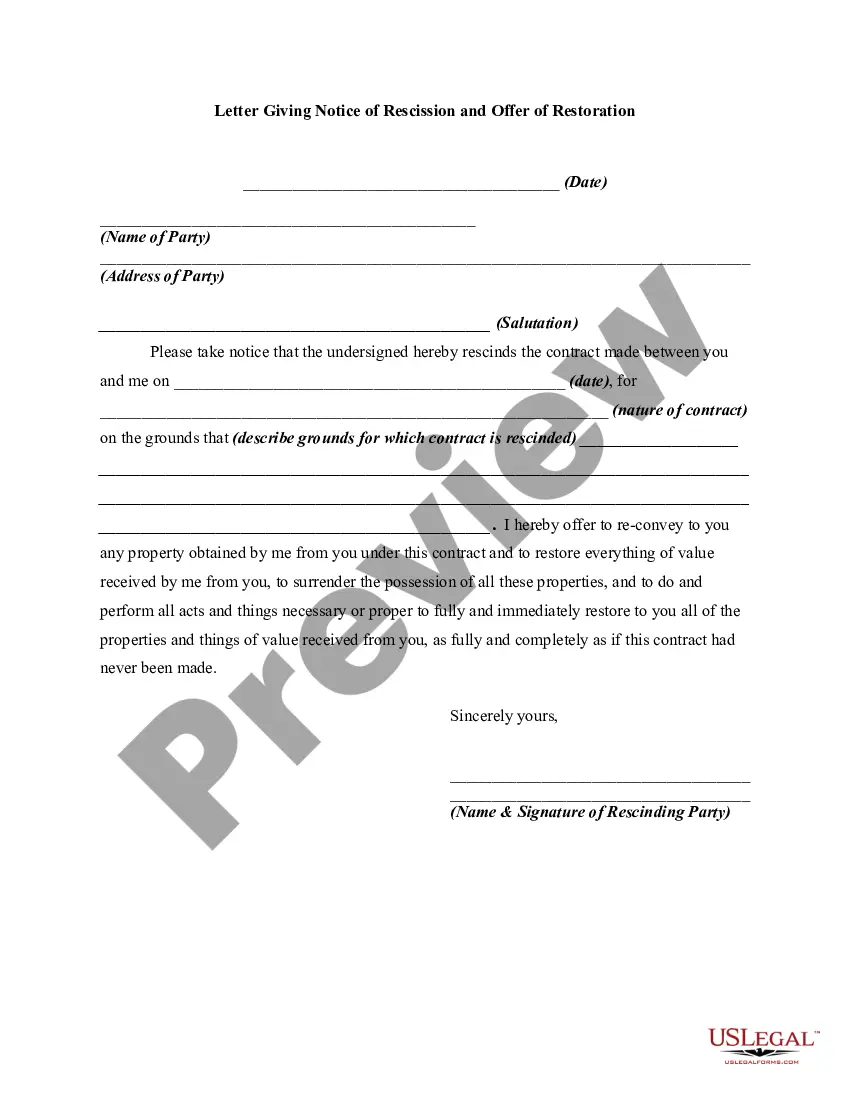
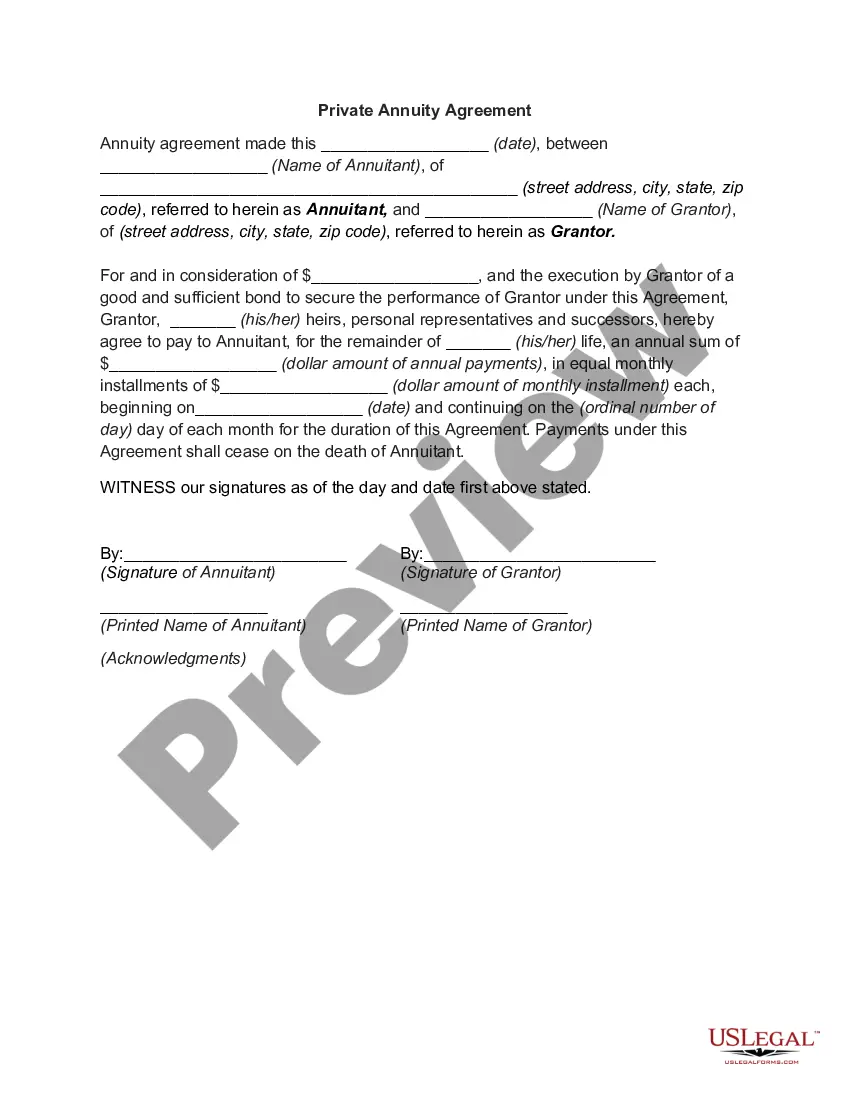
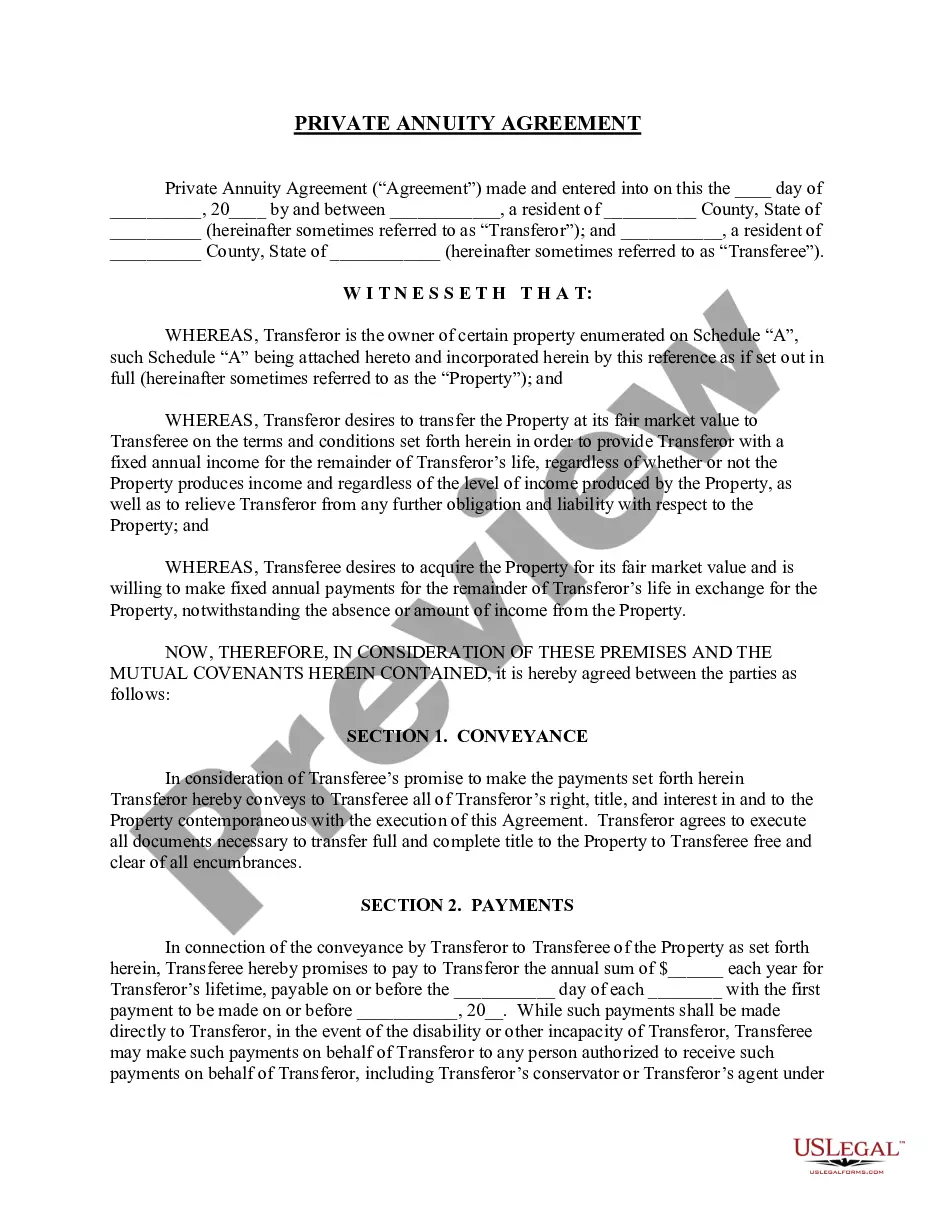
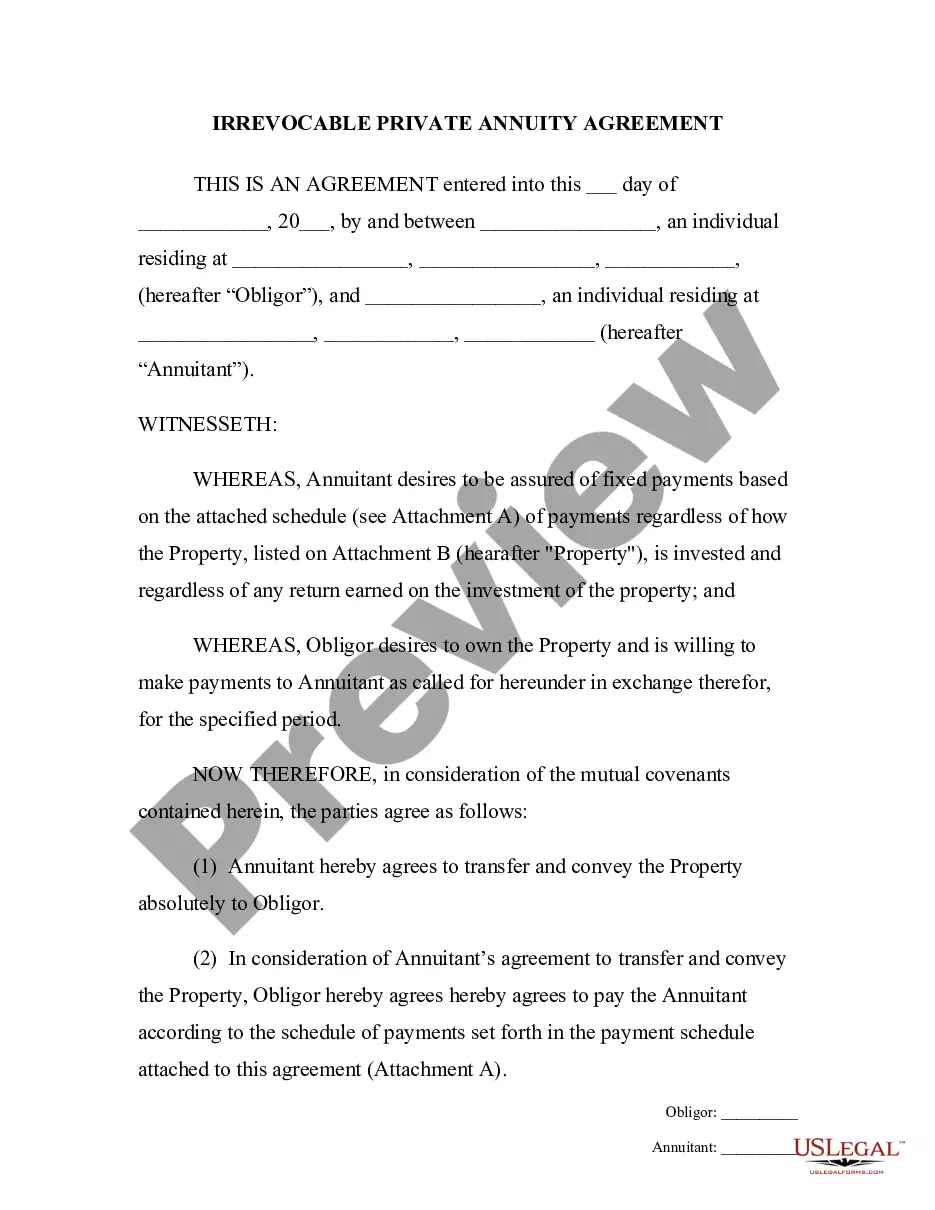
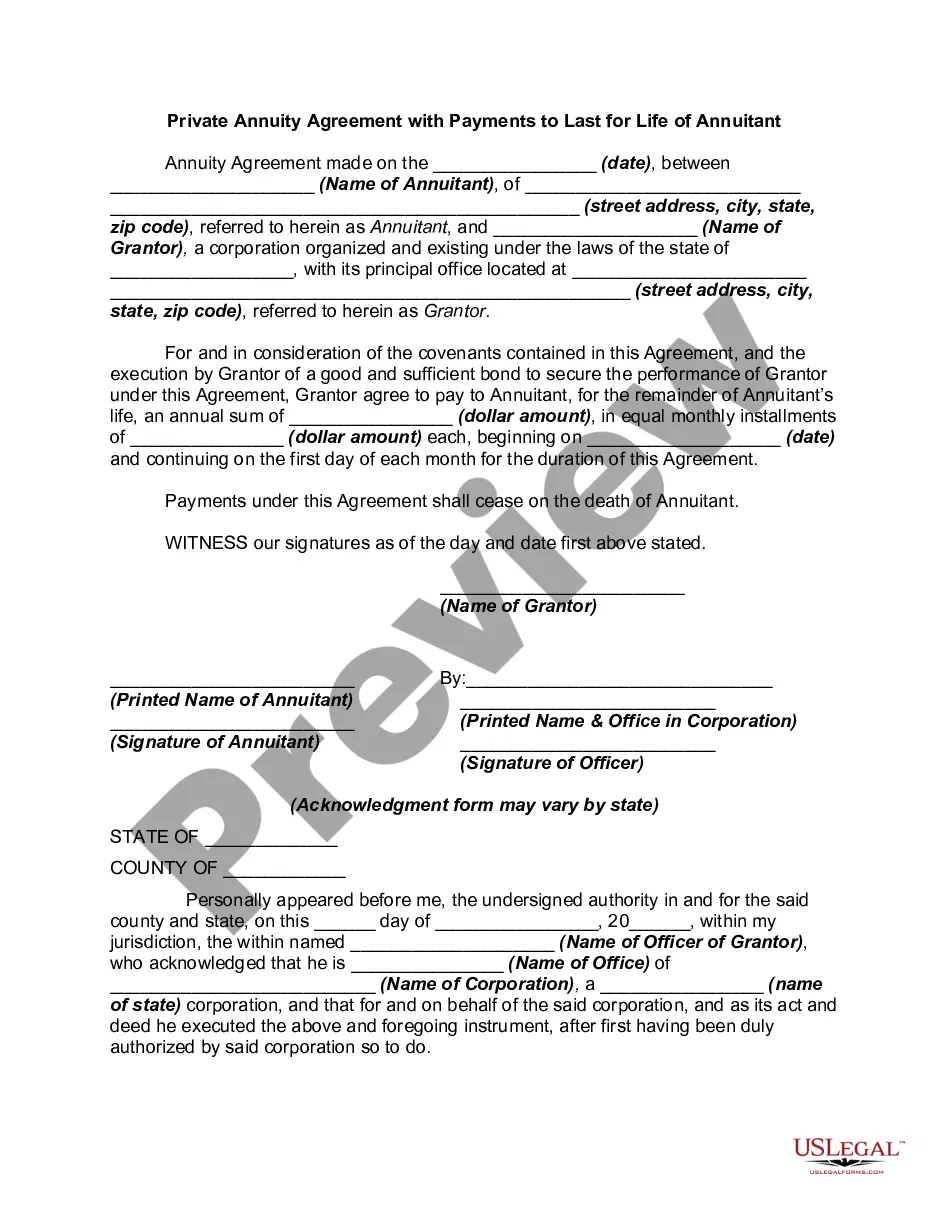
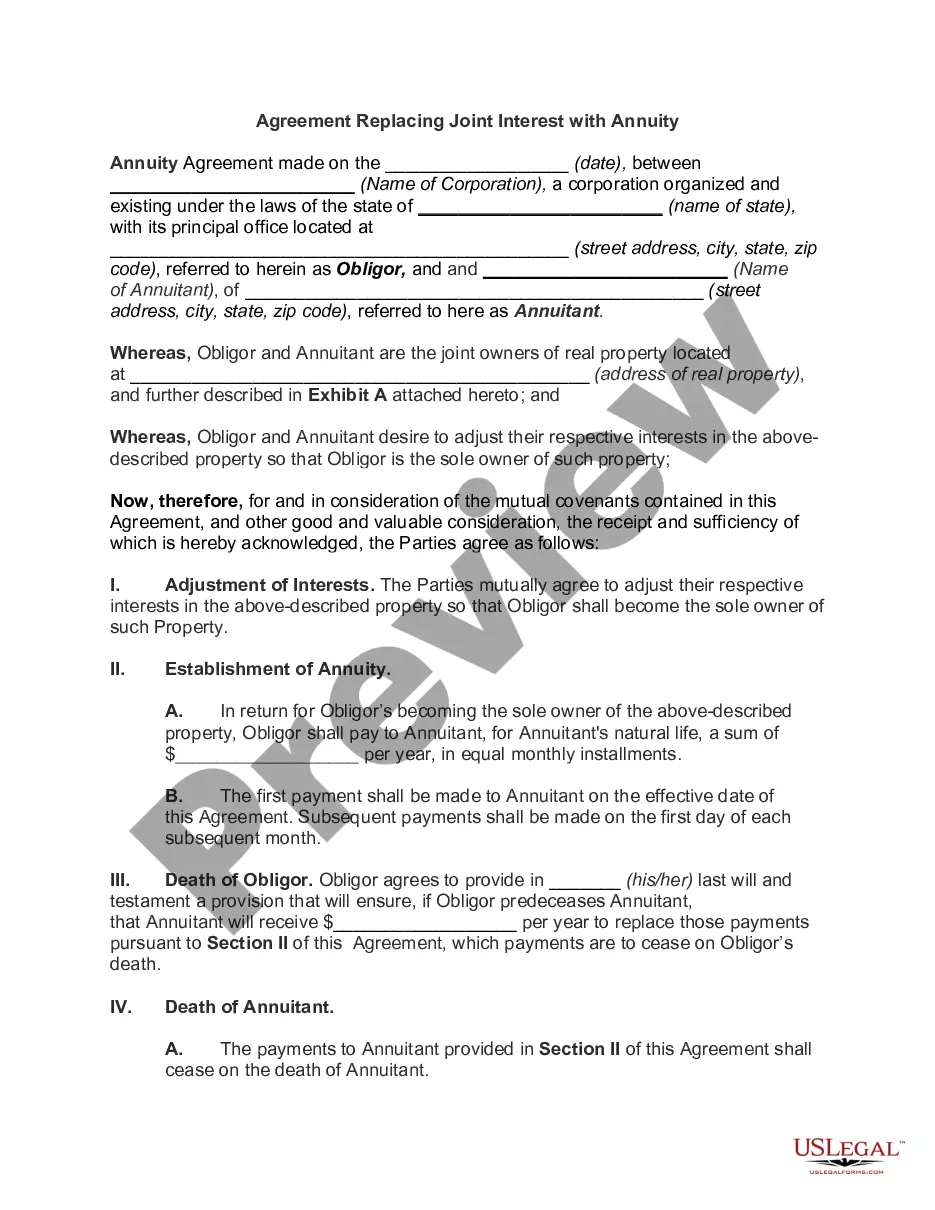
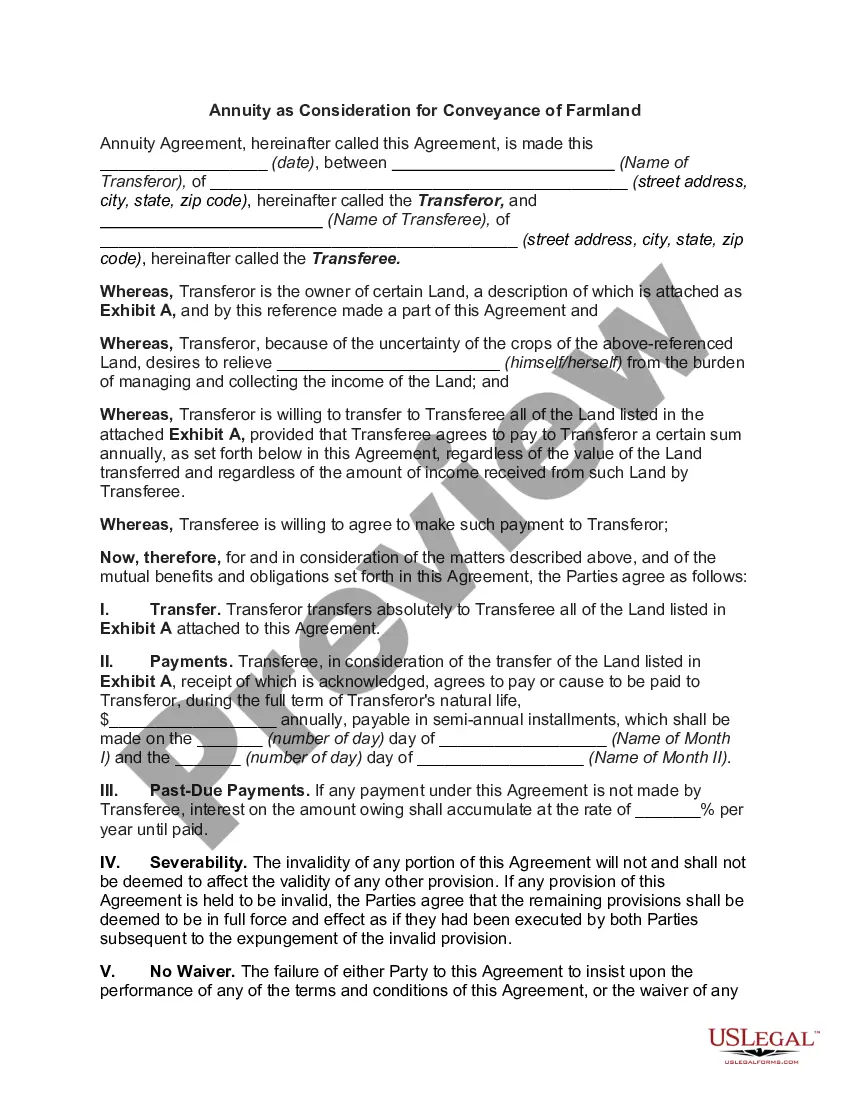
North Dakota Private Annuity Agreement
Description
Get your form ready online
Our built-in tools help you complete, sign, share, and store your documents in one place.
Make edits, fill in missing information, and update formatting in US Legal Forms—just like you would in MS Word.
Download a copy, print it, send it by email, or mail it via USPS—whatever works best for your next step.
Sign and collect signatures with our SignNow integration. Send to multiple recipients, set reminders, and more. Go Premium to unlock E-Sign.
If this form requires notarization, complete it online through a secure video call—no need to meet a notary in person or wait for an appointment.
We protect your documents and personal data by following strict security and privacy standards.

Make edits, fill in missing information, and update formatting in US Legal Forms—just like you would in MS Word.

Download a copy, print it, send it by email, or mail it via USPS—whatever works best for your next step.

Sign and collect signatures with our SignNow integration. Send to multiple recipients, set reminders, and more. Go Premium to unlock E-Sign.

If this form requires notarization, complete it online through a secure video call—no need to meet a notary in person or wait for an appointment.

We protect your documents and personal data by following strict security and privacy standards.
Looking for another form?
How to fill out Private Annuity Agreement?
US Legal Forms - one of the largest repositories of legal documents in the United States - offers a variety of legal form templates that you can download or print.
By using the website, you can access thousands of forms for business and personal use, categorized by types, states, or keywords. You can find the most recent versions of forms like the North Dakota Private Annuity Agreement in moments.
If you already have an account, Log In and obtain the North Dakota Private Annuity Agreement from the US Legal Forms archive. The Download button will appear on every document you view. You can access all previously downloaded forms in the My documents section of your account.
Process the transaction. Utilize your credit card or PayPal account to complete the transaction.
Choose the format and download the form to your device.
- To begin using US Legal Forms for the first time, here are simple instructions to get started.
- Ensure you have chosen the appropriate form for your location/state.
- Click the Review button to examine the form's details.
- Check the form information to confirm you have selected the correct form.
- If the form does not meet your needs, use the Search box at the top of the screen to find one that does.
- Once you are satisfied with the form, confirm your selection by clicking the Get now button.
- Then, select the pricing plan you prefer and provide your details to create an account.
Form popularity
FAQ
The monthly payout from a $100,000 annuity depends on several factors, including your age, the length of the payment period, and the specific terms of your North Dakota Private Annuity Agreement. Generally, longer payment periods may result in lower monthly payouts, while shorter periods offer higher amounts. To get precise figures, consider using an annuity calculator or consulting a financial advisor. This will help you make informed decisions about your investment.
A private annuity is a special agreement in which an individual (annuitant) transfers property to an obligor. The obligor agrees to make payments to the annuitant according to an agreed-upon schedule in exchange for the property transfer.
Each annuity payment is treated as part tax-free return of basis, part capital gain, and part ordinary income until your entire basis is recovered. Once your basis is recovered, the entire annuity is treated as part capital gain and part ordinary income until you have surpassed your life expectancy.
The owner of the annuity is the person who pays the initial premium to the insurance company and has the authority to make withdrawals, change the beneficiaries named in the contract and terminate the annuity. The annuitant is the person whose life determines the annuity payouts.
Insuring the life of the transferee is an available option; however, any connection of the life insurance policy to the private annuity will be deemed as a secured transaction.
Thus, annuity payments to an annuitant who was outliving his life expectancy is taxed as ordinary income. Additionally, the annuity payment must be based on IRS actuarial tables and cannot be related in any way to the amount of income earned by the asset; otherwise, the asset will be included in the annuitant's estate.
For estate tax purposes, the value of property sold for a private annuity is removed from the Annuitant's gross estate.