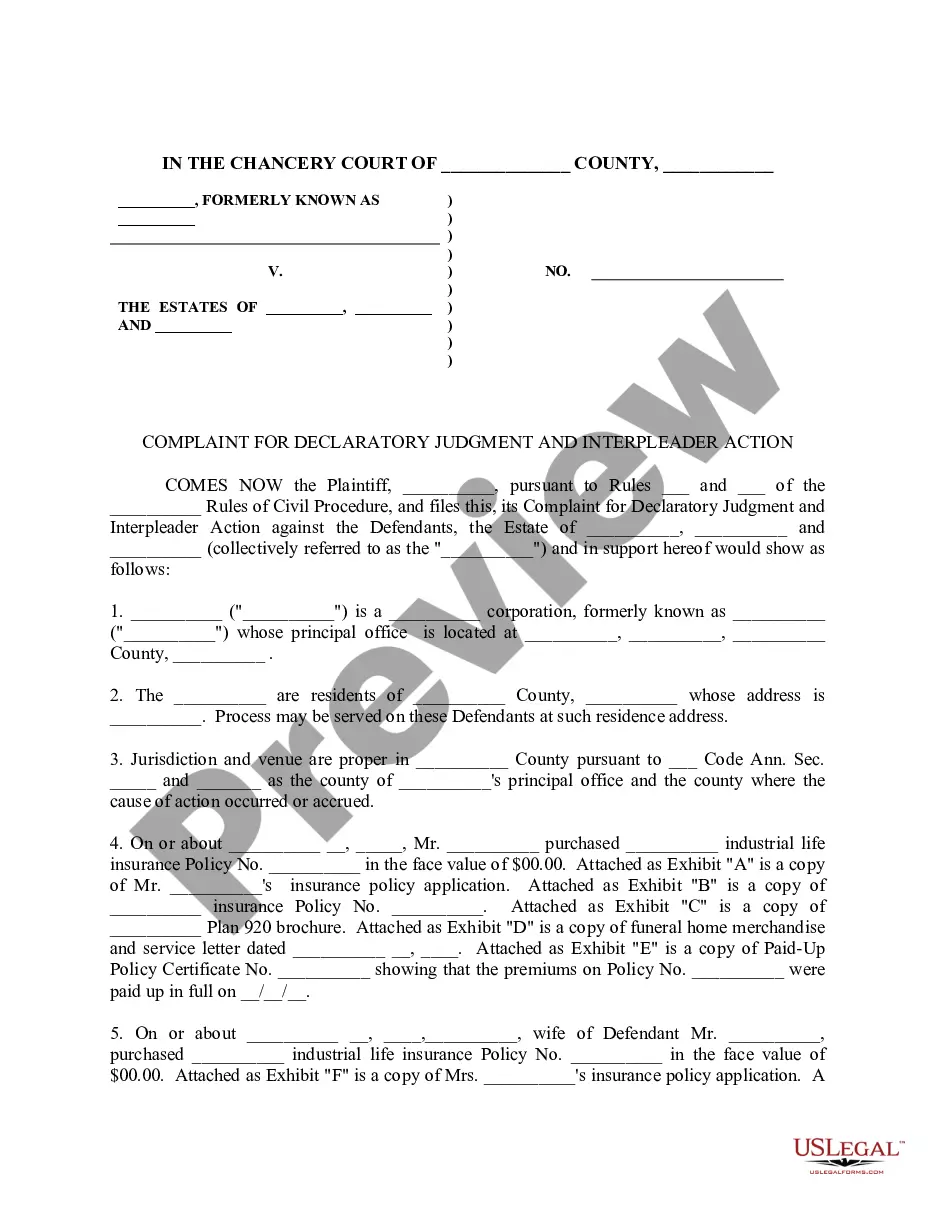
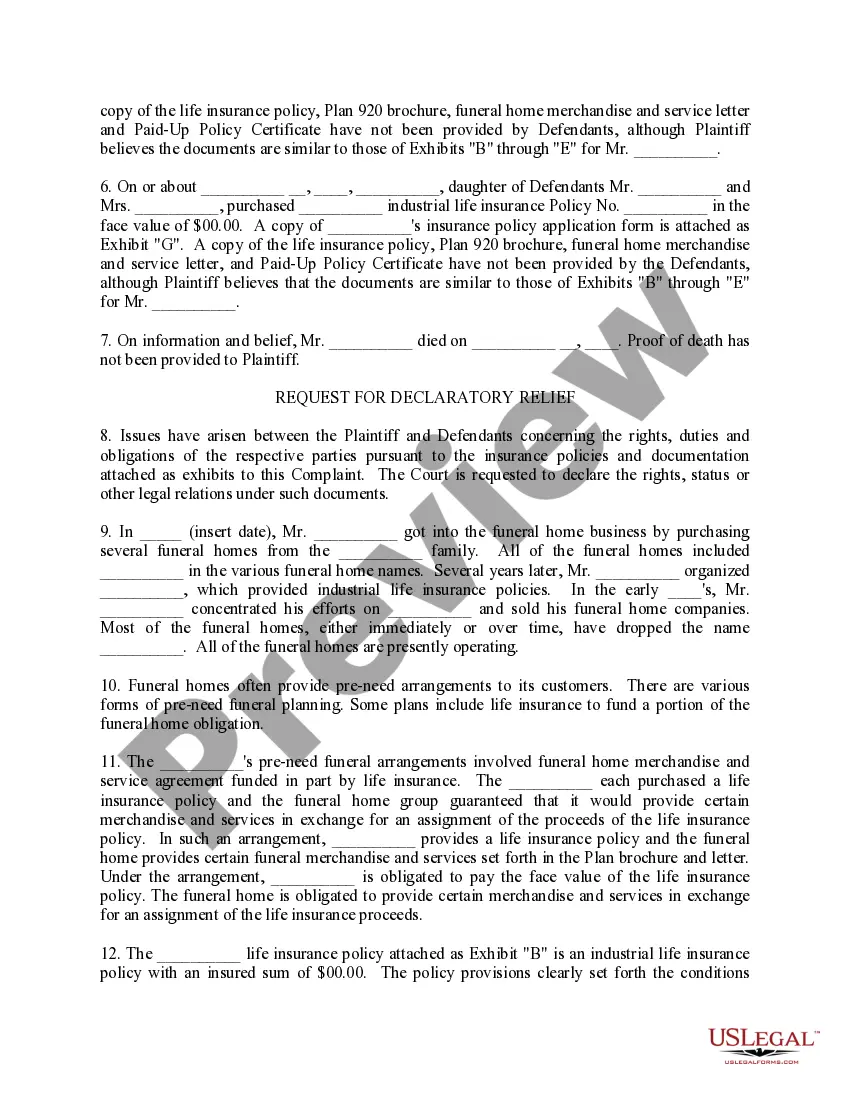
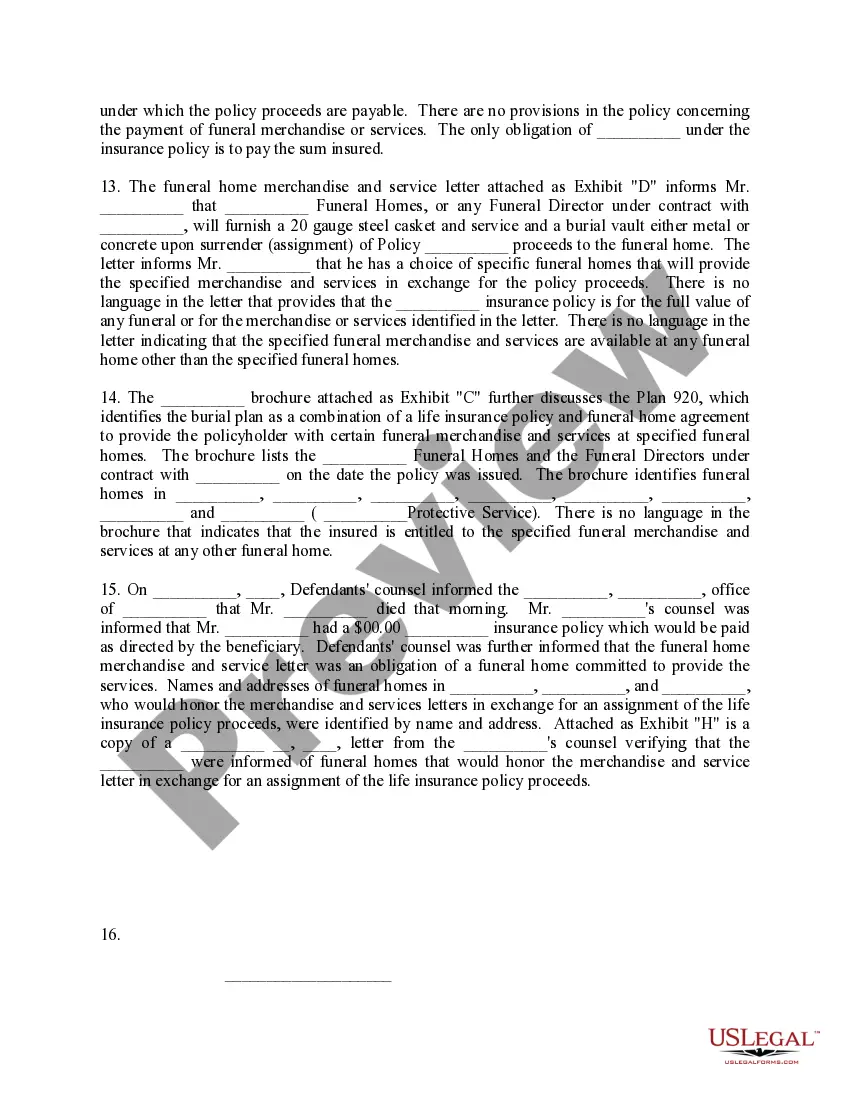
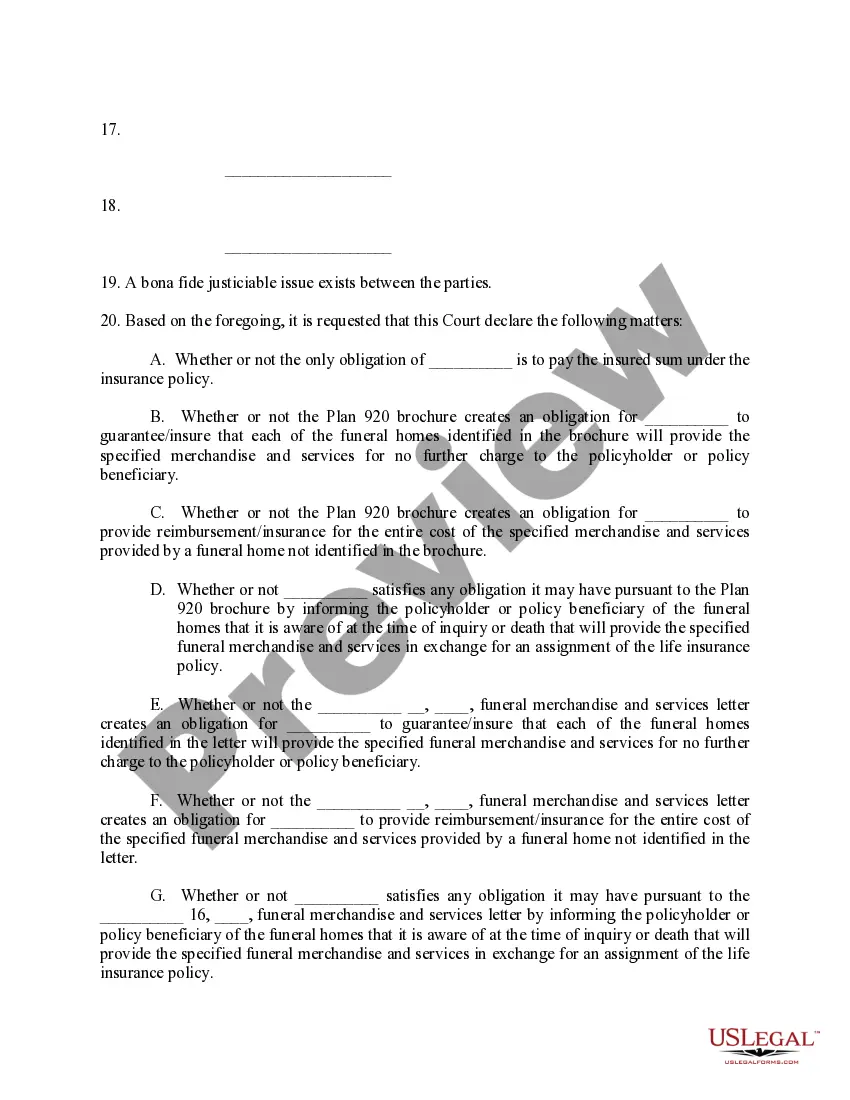
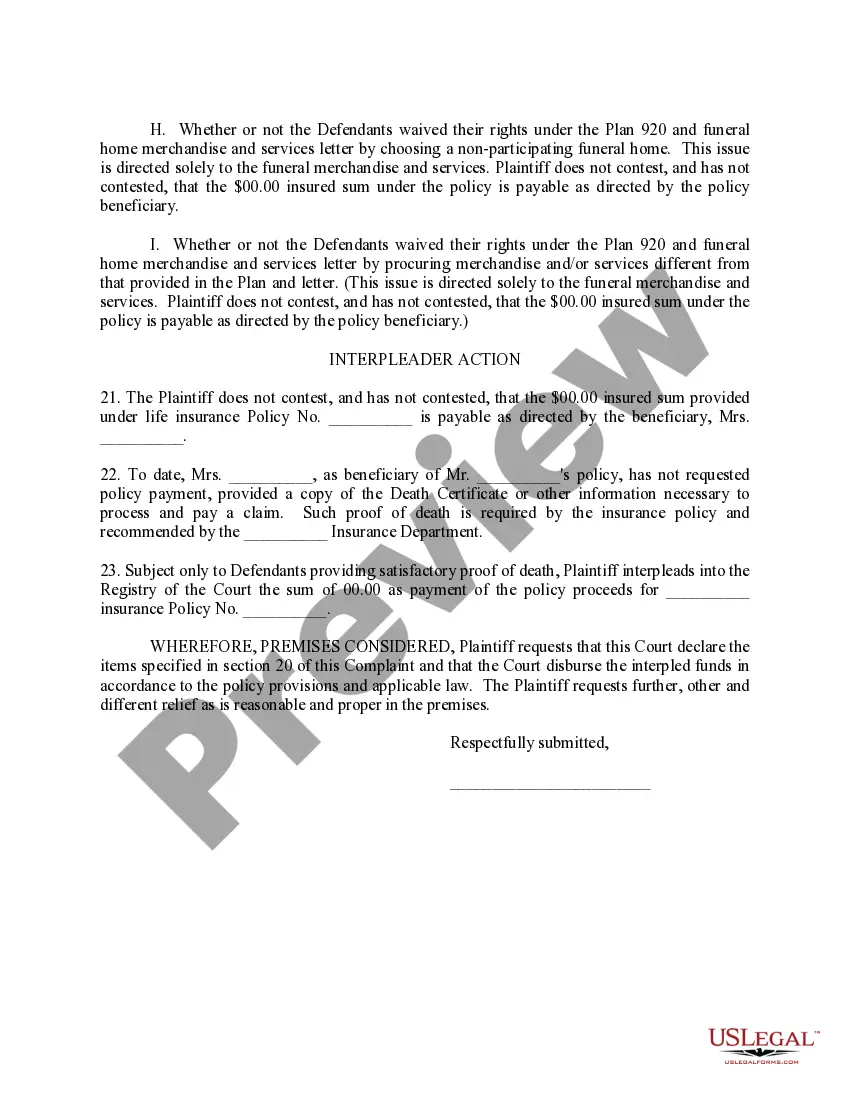
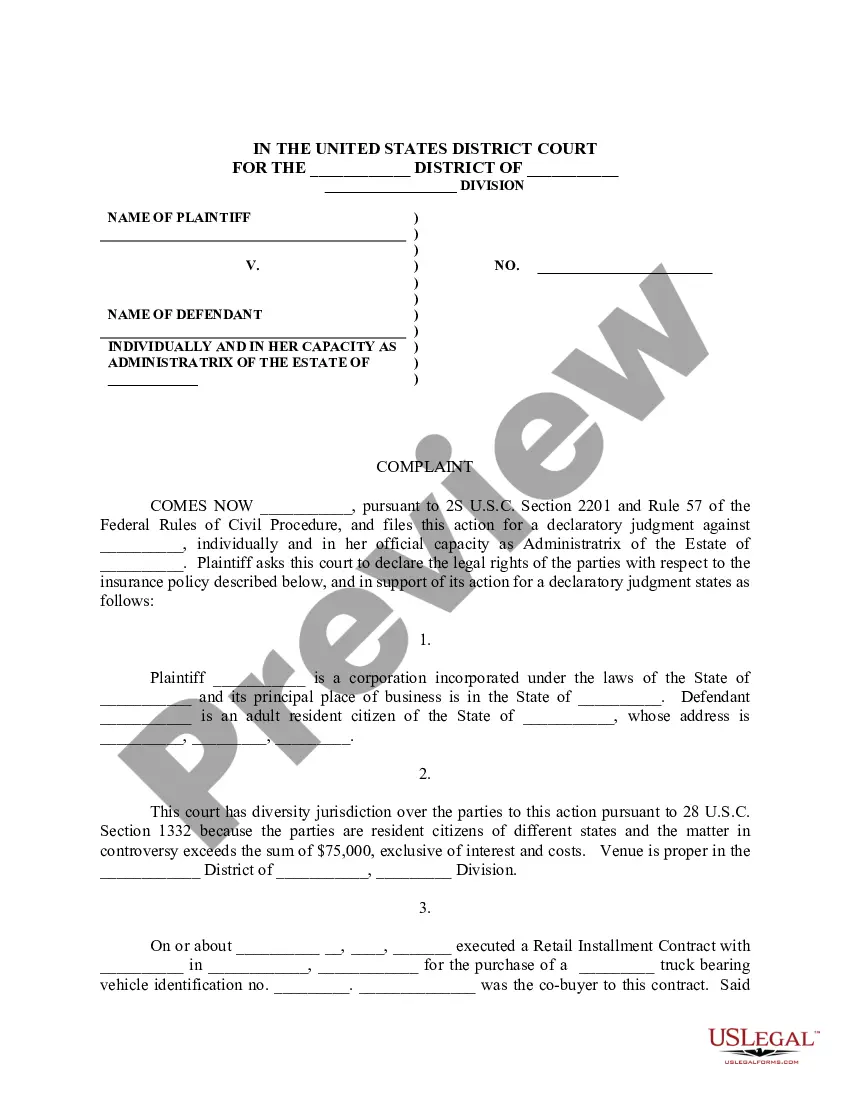
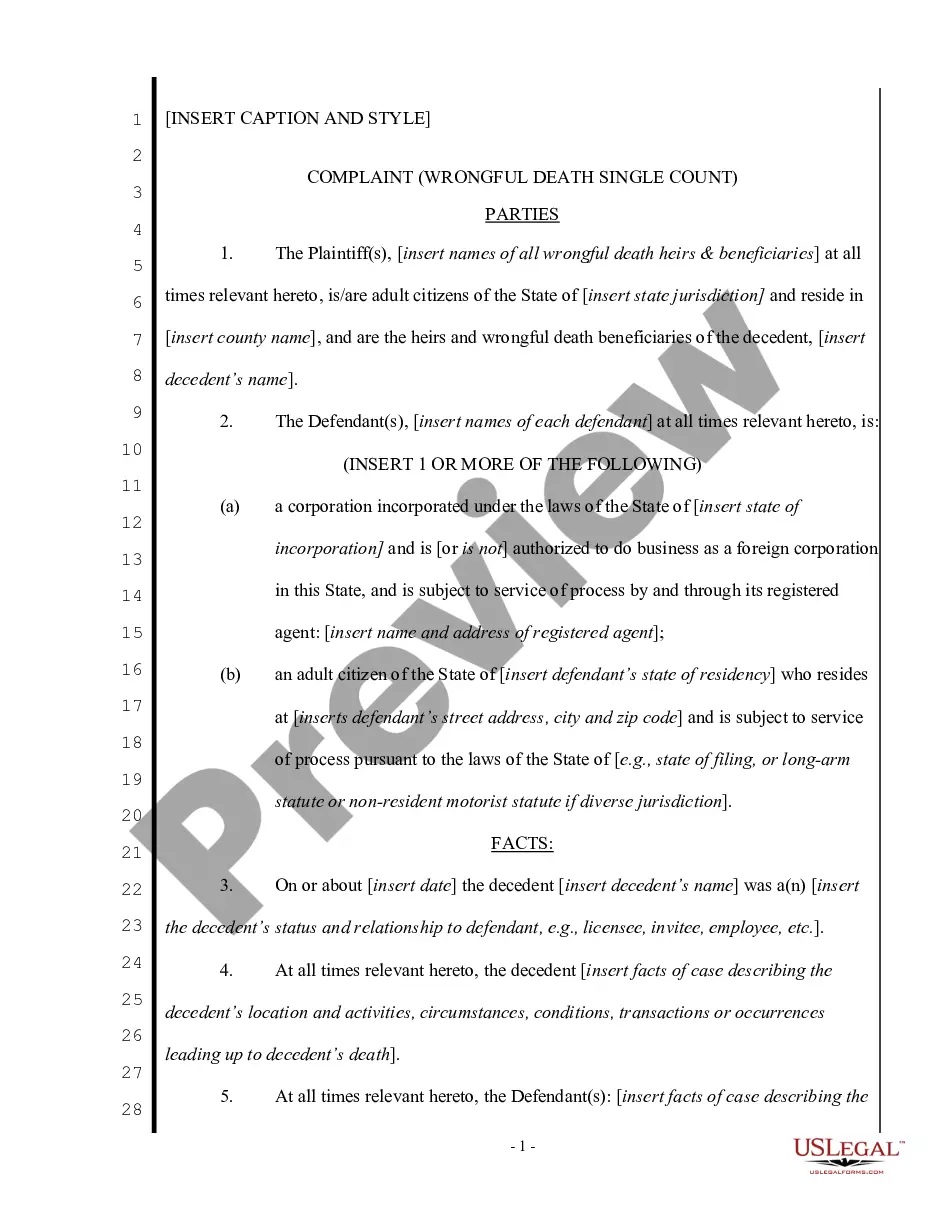
North Dakota Complaint for Declaratory Judgment and Interpleader Action or Burial Policy
Description


Get your form ready online
Our built-in tools help you complete, sign, share, and store your documents in one place.
Make edits, fill in missing information, and update formatting in US Legal Forms—just like you would in MS Word.
Download a copy, print it, send it by email, or mail it via USPS—whatever works best for your next step.
Sign and collect signatures with our SignNow integration. Send to multiple recipients, set reminders, and more. Go Premium to unlock E-Sign.
If this form requires notarization, complete it online through a secure video call—no need to meet a notary in person or wait for an appointment.
We protect your documents and personal data by following strict security and privacy standards.

Make edits, fill in missing information, and update formatting in US Legal Forms—just like you would in MS Word.

Download a copy, print it, send it by email, or mail it via USPS—whatever works best for your next step.

Sign and collect signatures with our SignNow integration. Send to multiple recipients, set reminders, and more. Go Premium to unlock E-Sign.

If this form requires notarization, complete it online through a secure video call—no need to meet a notary in person or wait for an appointment.

We protect your documents and personal data by following strict security and privacy standards.
Looking for another form?





How to fill out Complaint For Declaratory Judgment And Interpleader Action Or Burial Policy?
US Legal Forms - one of the most prominent collections of legal documents in the United States - offers a vast selection of legal form templates that you can download or print. By using the website, you can locate thousands of forms for business and personal purposes, categorized by types, states, or keywords.
You can find the latest editions of forms such as the North Dakota Complaint for Declaratory Judgment and Interpleader Action or Burial Policy in moments. If you already have a monthly subscription, Log In and download the North Dakota Complaint for Declaratory Judgment and Interpleader Action or Burial Policy from your US Legal Forms collection. The Download button will appear on every form you view. You have access to all previously acquired forms in the My documents section of your account.
If you wish to use US Legal Forms for the first time, here are straightforward steps to get started: Ensure you have selected the correct form for your city/state. Click the Preview button to review the form’s content. Read the form description to confirm that you have chosen the correct form. If the form doesn’t meet your needs, utilize the Search box at the top of the screen to find one that does. If you are satisfied with the form, confirm your selection by clicking the Purchase now button. Then, choose the pricing plan you prefer and provide your information to register for an account. Process the transaction. Use your Visa or Mastercard or PayPal account to complete the transaction. Select the format and download the form to your device. Make changes. Fill out, modify, and print and sign the downloaded North Dakota Complaint for Declaratory Judgment and Interpleader Action or Burial Policy. Each template you added to your account has no expiration date and is yours indefinitely. So, if you want to download or print another copy, just go to the My documents section and click on the form you need.
- Access the North Dakota Complaint for Declaratory Judgment and Interpleader Action or Burial Policy with US Legal Forms, the most extensive collection of legal document templates.
- Utilize thousands of professional and state-specific templates that cater to your business or personal needs and requirements.
Form popularity
FAQ
An application to the court for an order shall be made by motion which, unless made during a hearing or trial, shall be made in writing, state the grounds therefor, and set forth the relief or order sought. The requirement of writing is fulfilled if the motion is stated in a written notice of the hearing of the motion. RULE 47. MOTIONS - North Dakota Court System ndcourts.gov ? rules ? ndrcrimp ndcourts.gov ? rules ? ndrcrimp
If a party dies after a verdict is rendered or an order for judgment is made, the action does not abate, and substitution of parties must be allowed.
All persons may be joined in one action as defendants if there is asserted against them jointly, severally, or in the alternative, any right to relief in respect of or arising out of the same transaction, occurrence, or series of transactions or occurrences and if any question of law or fact common to all defendants ... RULE 20. PERMISSIVE JOINDER OF PARTIES ndcourts.gov ? rules ? ndrcivp ndcourts.gov ? rules ? ndrcivp
In a non-felony case, if the defendant pleads guilty without appearing in court, a written form must be used advising the defendant of his or her constitutional rights and creating a record showing that the plea was made voluntarily, knowingly, and understandingly.
Unless this rule provides otherwise, the defendant must be present at: (1) the initial appearance, the arraignment, and the plea; (2) every trial stage, including jury impanelment and the return of the verdict; and. (3) sentencing. Presence by interactive television is presence for the purposes of this rule. RULE 43. PRESENCE OF THE DEFENDANT North Dakota Supreme Court (.gov) ? rules ? ndrcrimp ? 43-4 North Dakota Supreme Court (.gov) ? rules ? ndrcrimp ? 43-4
(1) By a Plaintiff. Persons with claims that may expose a plaintiff to double or multiple liability may be joined as defendants and required to interplead.
In an interpleader action, a party who knows two or more other parties are making a claim on some asset controlled by the party can ask the court to decide who has what rights to the asset, deposit the asset into the custody of the court or a third party and remove itself from the litigation.
Rule 43 of the Federal Rules of Criminal Procedure deals with the presence of the defendant during the proceedings against him. It presently permits a defendant to be tried in absentia only in non-capital cases where the defendant has voluntarily absented himself after the trial has begun. Rule 43. Defendant's Presence | LII / Legal Information Institute LII / Legal Information Institute ? rules ? frcrmp ? rule_43 LII / Legal Information Institute ? rules ? frcrmp ? rule_43