North Dakota Identity Theft Prevention Package
Understanding this form package
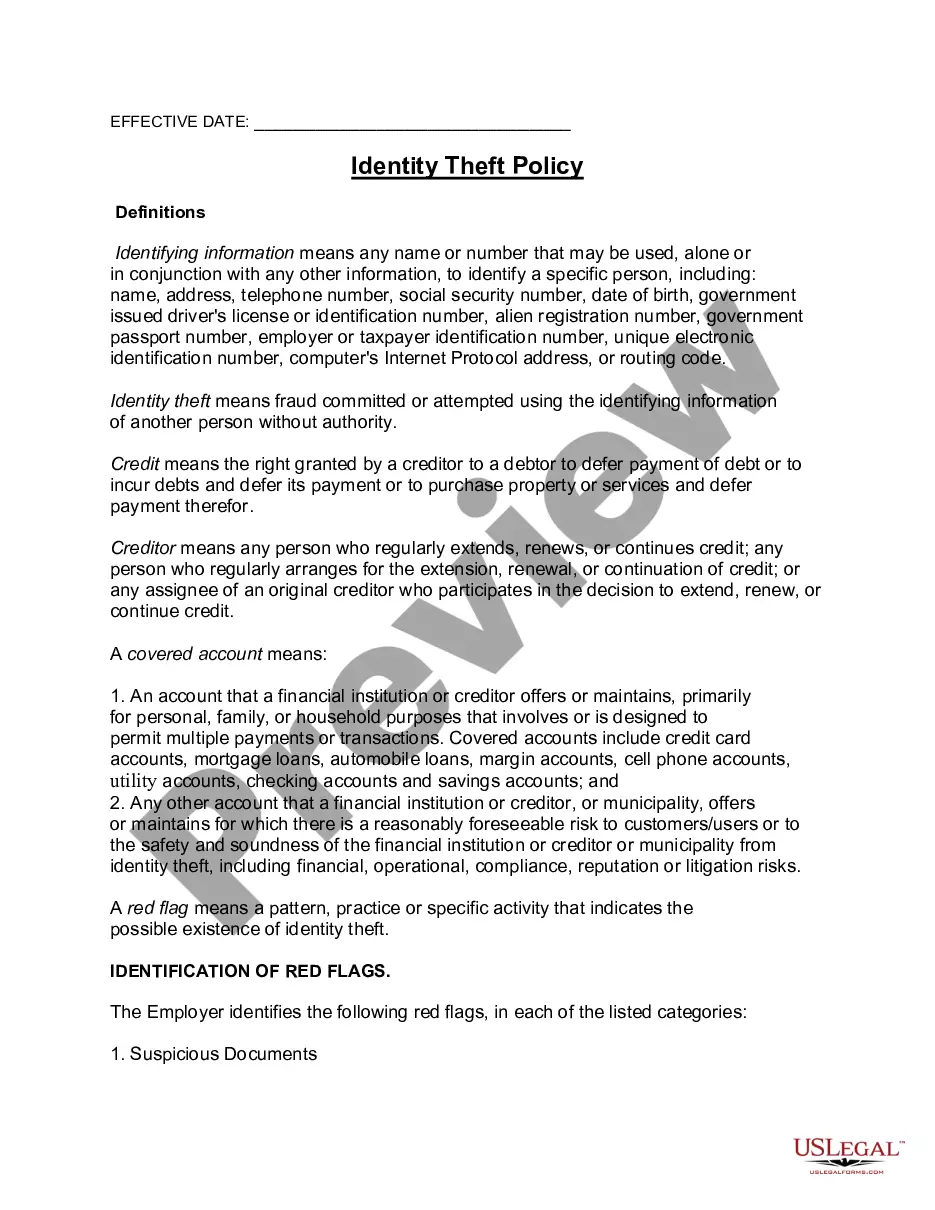
The North Dakota Identity Theft Prevention Package is a collection of essential legal forms designed to help individuals protect their personal and financial information from identity theft. This package stands out by offering comprehensive resources that not only guide users in safeguarding their information but also include specific letters to communicate with creditors and credit reporting agencies. By utilizing this form package, users can take proactive steps to mitigate the risks associated with identity theft.
Forms provided in this package
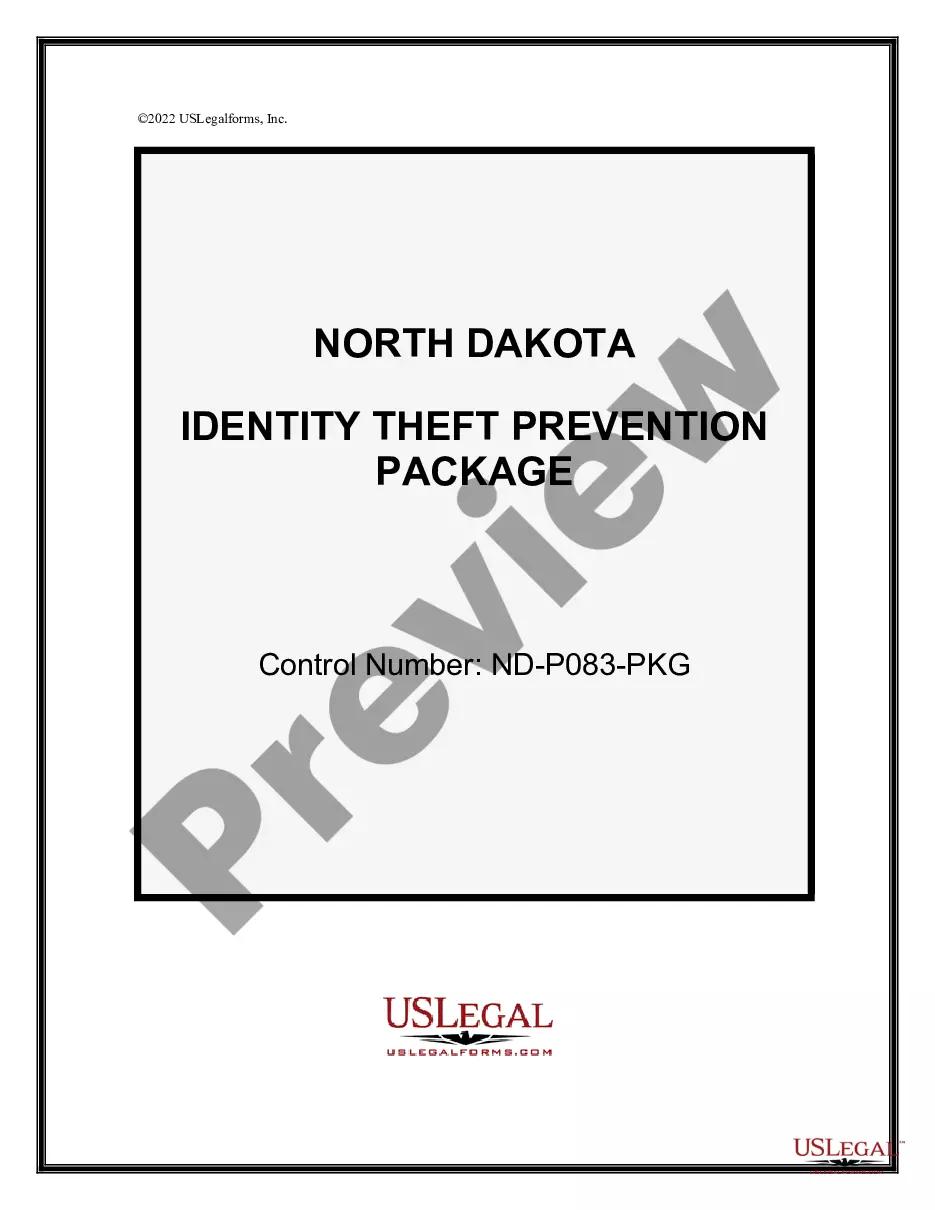
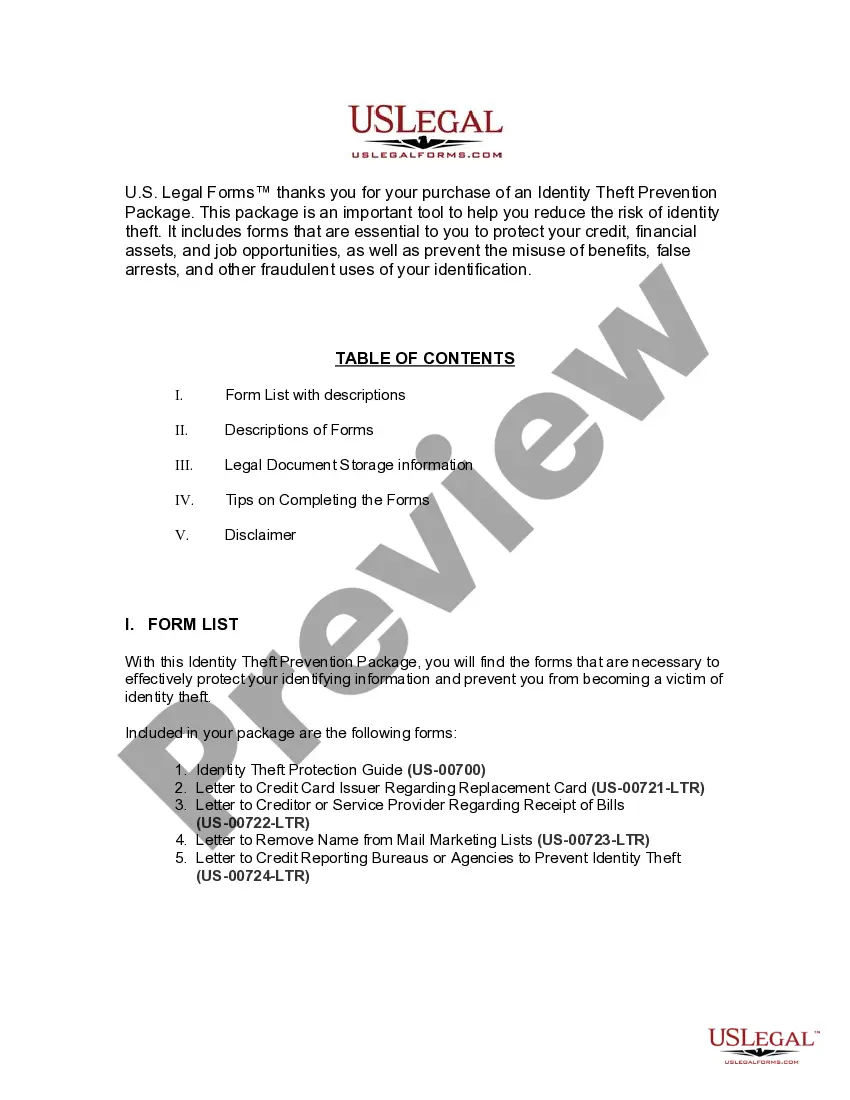
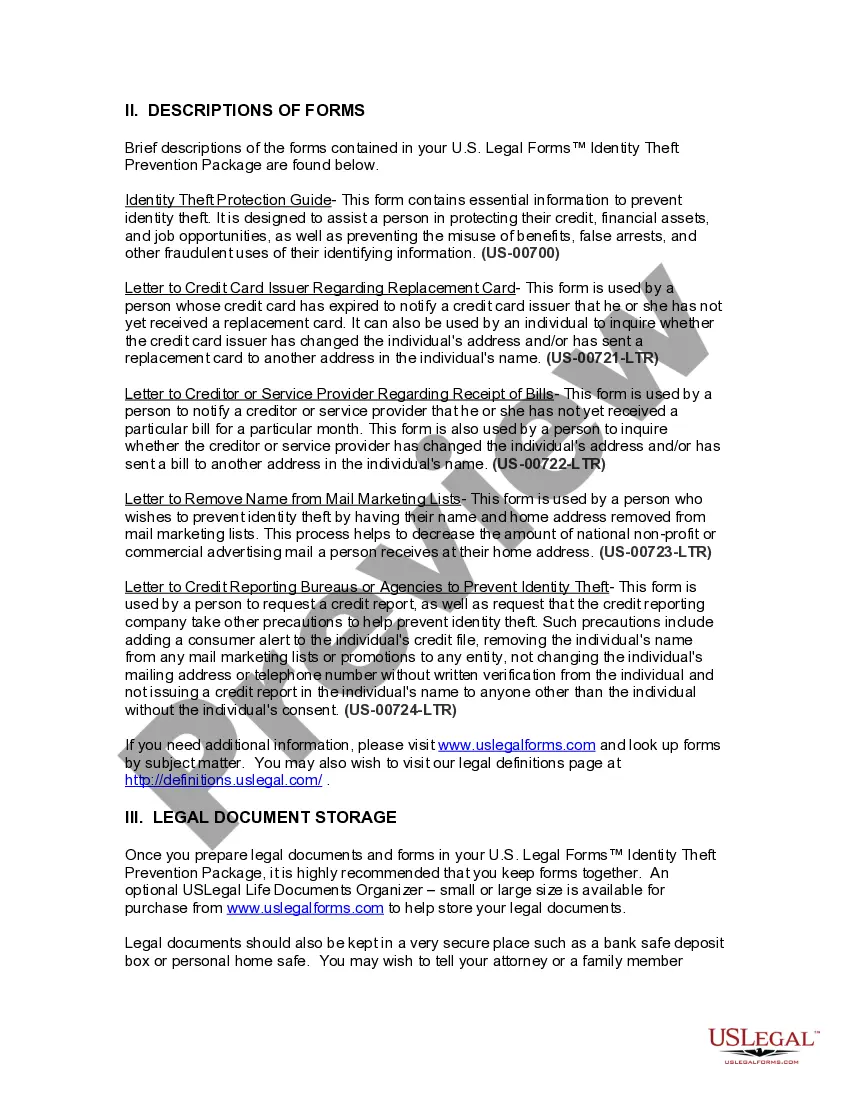
- Identity Theft Protection Guide
- Sample Letter to Credit Card Issuer Regarding Replacement Card
- Sample Letter to Creditor or Service Provider Regarding Receipt of Bills
- Sample Letter to Remove Name from Mail Marketing Lists
- Sample Letter to Credit Reporting Bureau or Agency to Help Prevent Identity Theft
When this form package is needed
This form package is particularly useful in various situations, such as:
- If you believe your identity has been compromised or if you are at risk of identity theft.
- When you need to communicate with credit card issuers or creditors about lost or stolen cards.
- If you want to request the removal of your name from marketing lists to reduce unsolicited offers that could lead to identity theft.
- When you need to place alerts with credit reporting agencies to prevent fraudulent activities on your accounts.
Who needs this form package
- Individuals who want to proactively prevent identity theft.
- People who suspect that their personal information has been exposed.
- Anyone who wishes to take steps to secure their financial and personal information.
- Victims of identity theft looking to restore their identification and credit status.
How to prepare this document
- Review the included Identity Theft Protection Guide for important information and tips.
- Identify which letters need to be completed based on your specific situation.
- Enter the required information in the provided forms, ensuring accuracy.
- Make copies of all completed documents for your records.
- Follow the instructions for sending the letters to the appropriate recipients.
Do forms in this package need to be notarized?
Most forms in this package do not require notarization. However, local laws or specific situations may demand it. Our online notarization service, powered by Notarize, lets you complete the process through a verified video call, available anytime.
Get your form ready online
Our built-in tools help you complete, sign, share, and store your documents in one place.
Make edits, fill in missing information, and update formatting in US Legal Forms—just like you would in MS Word.
Download a copy, print it, send it by email, or mail it via USPS—whatever works best for your next step.
Sign and collect signatures with our SignNow integration. Send to multiple recipients, set reminders, and more. Go Premium to unlock E-Sign.
If this form requires notarization, complete it online through a secure video call—no need to meet a notary in person or wait for an appointment.
We protect your documents and personal data by following strict security and privacy standards.

Make edits, fill in missing information, and update formatting in US Legal Forms—just like you would in MS Word.

Download a copy, print it, send it by email, or mail it via USPS—whatever works best for your next step.

Sign and collect signatures with our SignNow integration. Send to multiple recipients, set reminders, and more. Go Premium to unlock E-Sign.

If this form requires notarization, complete it online through a secure video call—no need to meet a notary in person or wait for an appointment.

We protect your documents and personal data by following strict security and privacy standards.
Avoid these common issues
- Failing to update personal information in the forms before sending.
- Not keeping copies of sent letters for personal records.
- Overlooking required actions recommended in the Identity Theft Protection Guide.
- Assuming that one form of protection is sufficient; using multiple forms together is more effective.
Why complete this package online
- Convenience of downloading and filling out forms at home.
- Editability allows you to customize forms according to your specific needs.
- Access to professionally drafted forms created by licensed attorneys.
- Time-saving as forms can be completed quickly without waiting for professional assistance.
Looking for another form?
Form popularity
FAQ
You have limited liability for fraudulent debts caused by identity theft. Under most state laws, you're not responsible for any debt incurred on fraudulent new accounts opened in your name without your permission. Under federal law, the amount you have to pay for unauthorized use of your credit card is limited to $50.
69 percent reported feelings of fear related to personal financial safety. 60 percent reported anxiety. 42 percent reported fearing for the financial security of family members. 8 percent reported feeling suicidal.
Federal identity theft charges usually carry a maximum sentence of 15 years in federal prison, but ID theft cases often include additional charges that can add to prison time.
The FTC's IdentityTheft.gov can assist attorneys who counsel identity theft victims. The site provides victims with a personal recovery plan, walking through each step to take. It also provides pre-filed letters and forms to send to credit bureaus, businesses, and debt collectors.
If prosecuted as a misdemeanor, the maximum punishment for identity theft in California is a year in county jail and a $1,000 fine. As a felony, the penalty can be as high as three years in jail and a $10,000 fine.
Keep your mail safe. Read your account statements. Check your credit reports. Shred! Store personal documents at home. Be wary of unknown phone calls and emails. Create difficult logins and passwords. Use one credit card for online shopping.
Place a Fraud Alert on Your Credit Report. Freeze Your Credit Report. Order Your Free Credit Reports. Buy Your Credit Reports. Monitor Your Accounts Online. Enroll in Credit Monitoring. Keep Your Social Security Number Safe. Pick Up Your Check Order.
Aggravated identity theft is punishable by a mandatory minimum sentence of imprisonment for two years or by imprisonment for five years if it relates to a terrorism offense. At least thus far, the government has rarely prosecuted the five-year terrorism form of the offense.
You may be able to have your identity theft charges dropped if: You didn't obtain use a person's information unlawfully If you did not obtain or use someone else's personal information unlawfully, you are not guilty of identity theft.