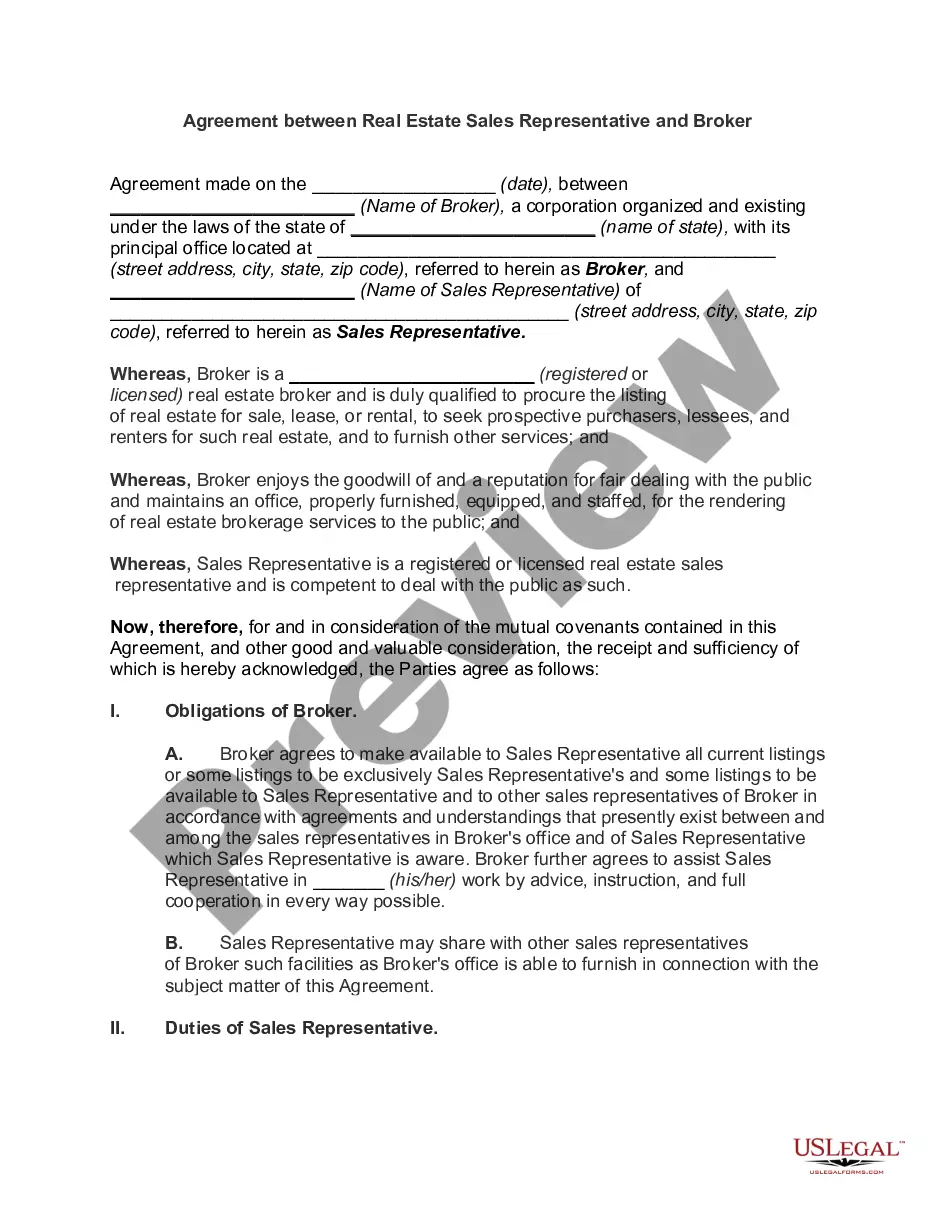
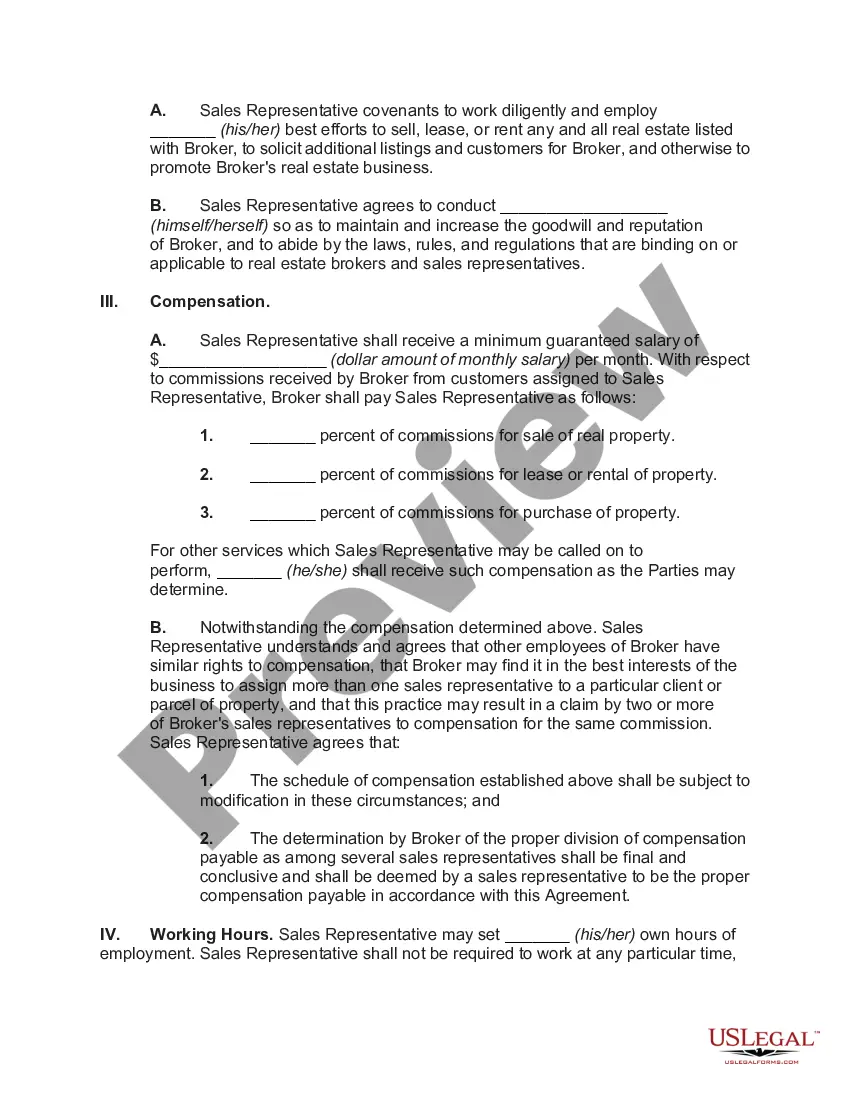
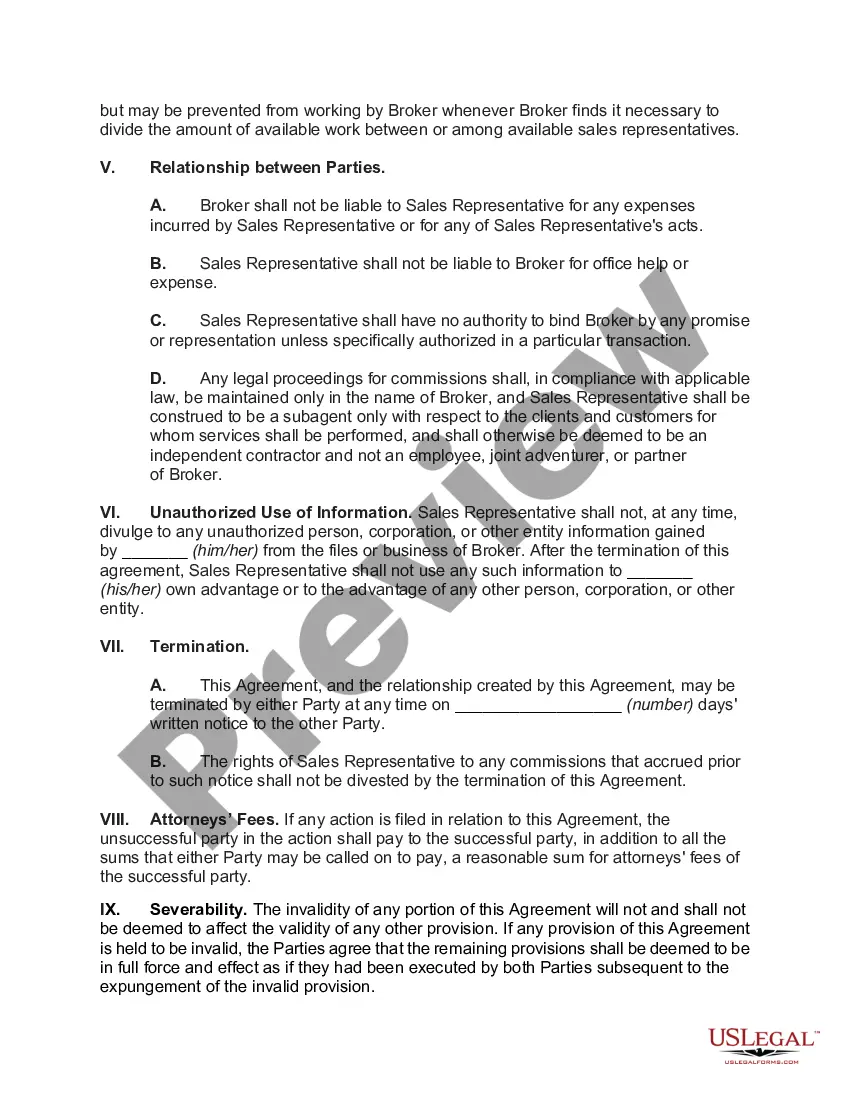
North Carolina Agreement between Real Estate Sales Representative and Broker
Description
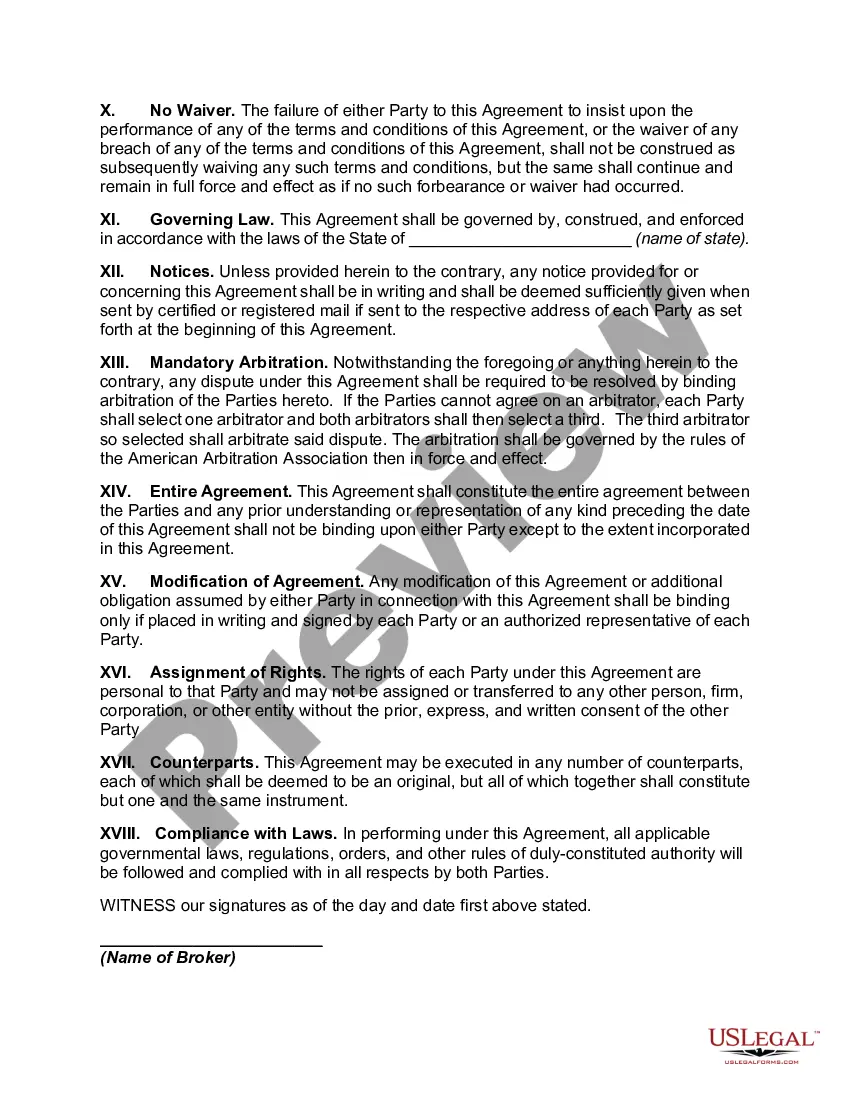

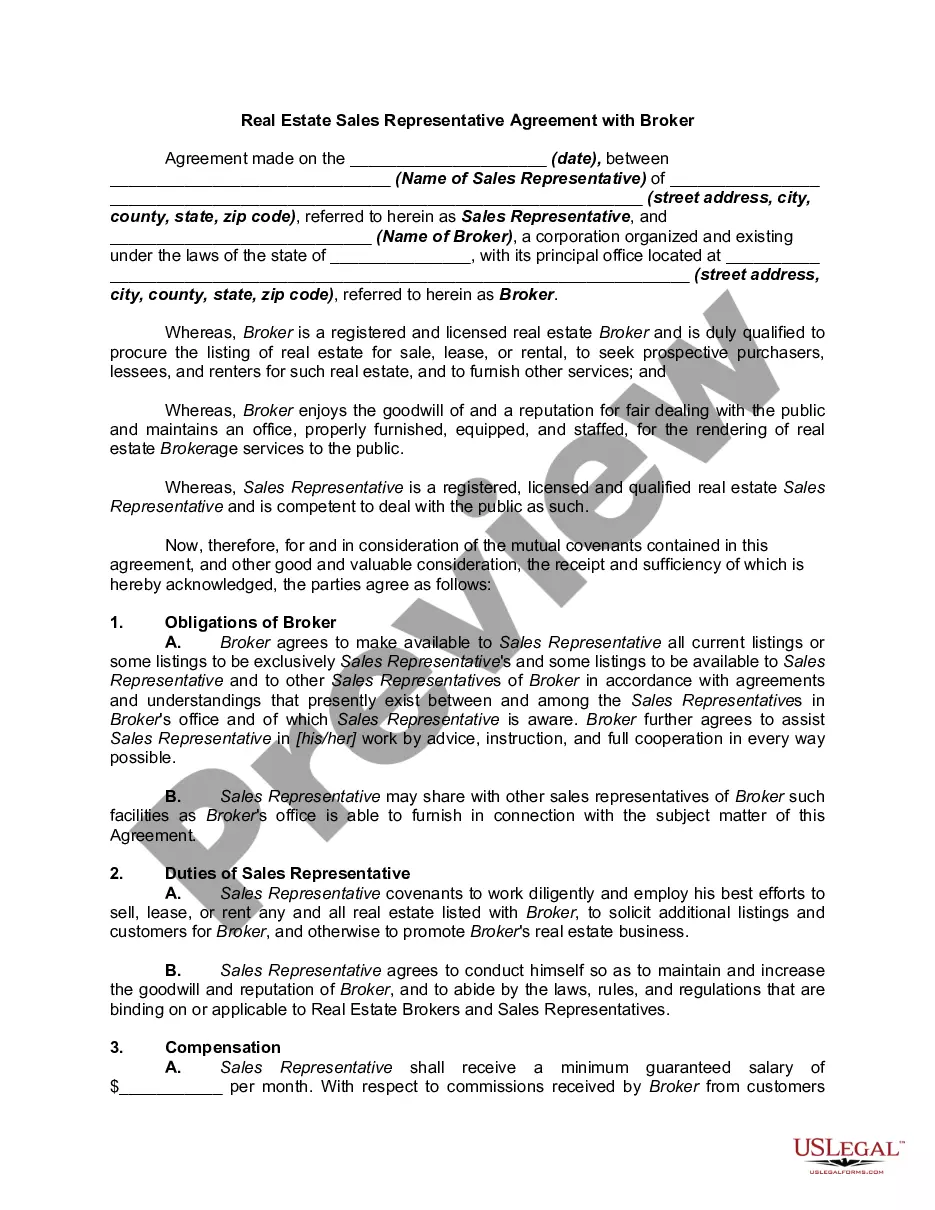
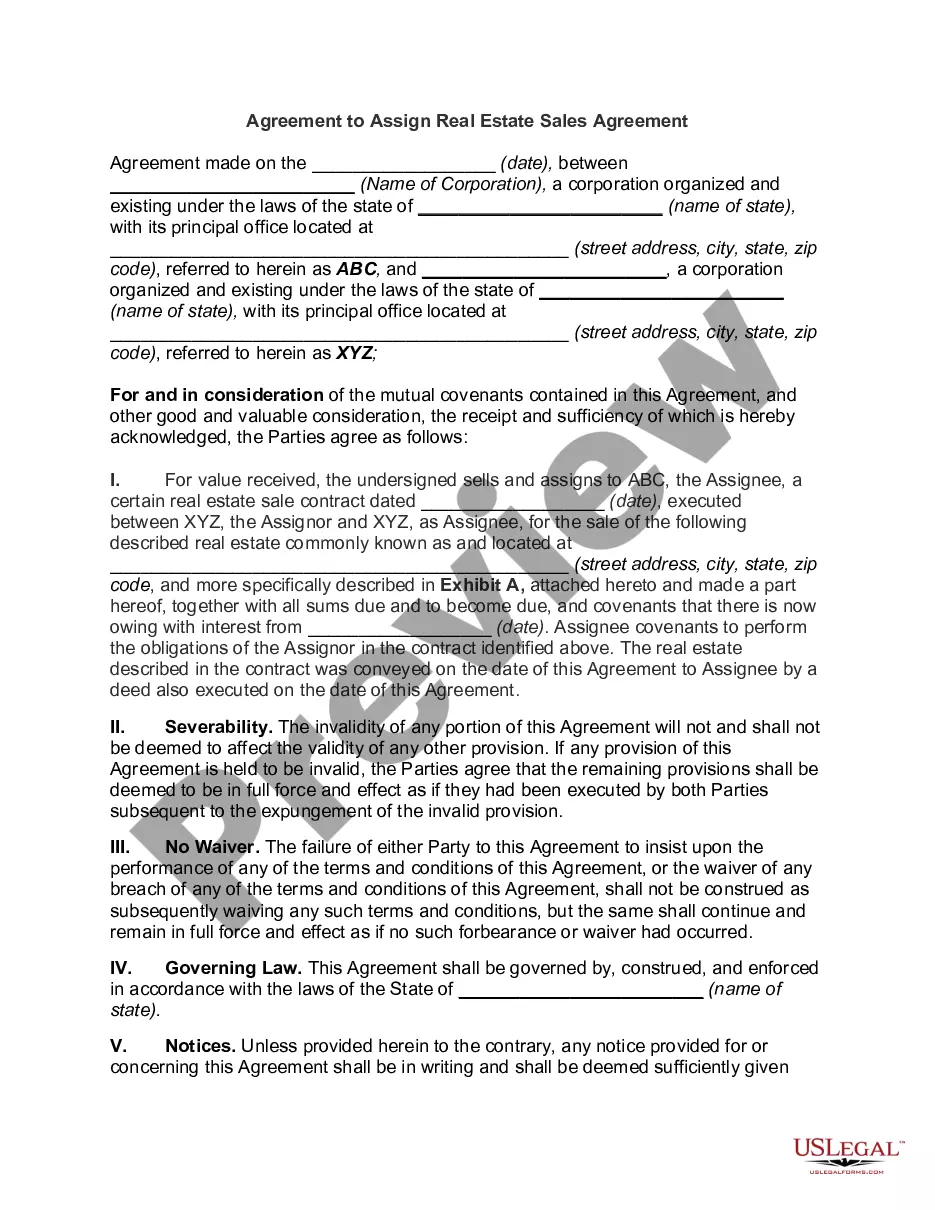
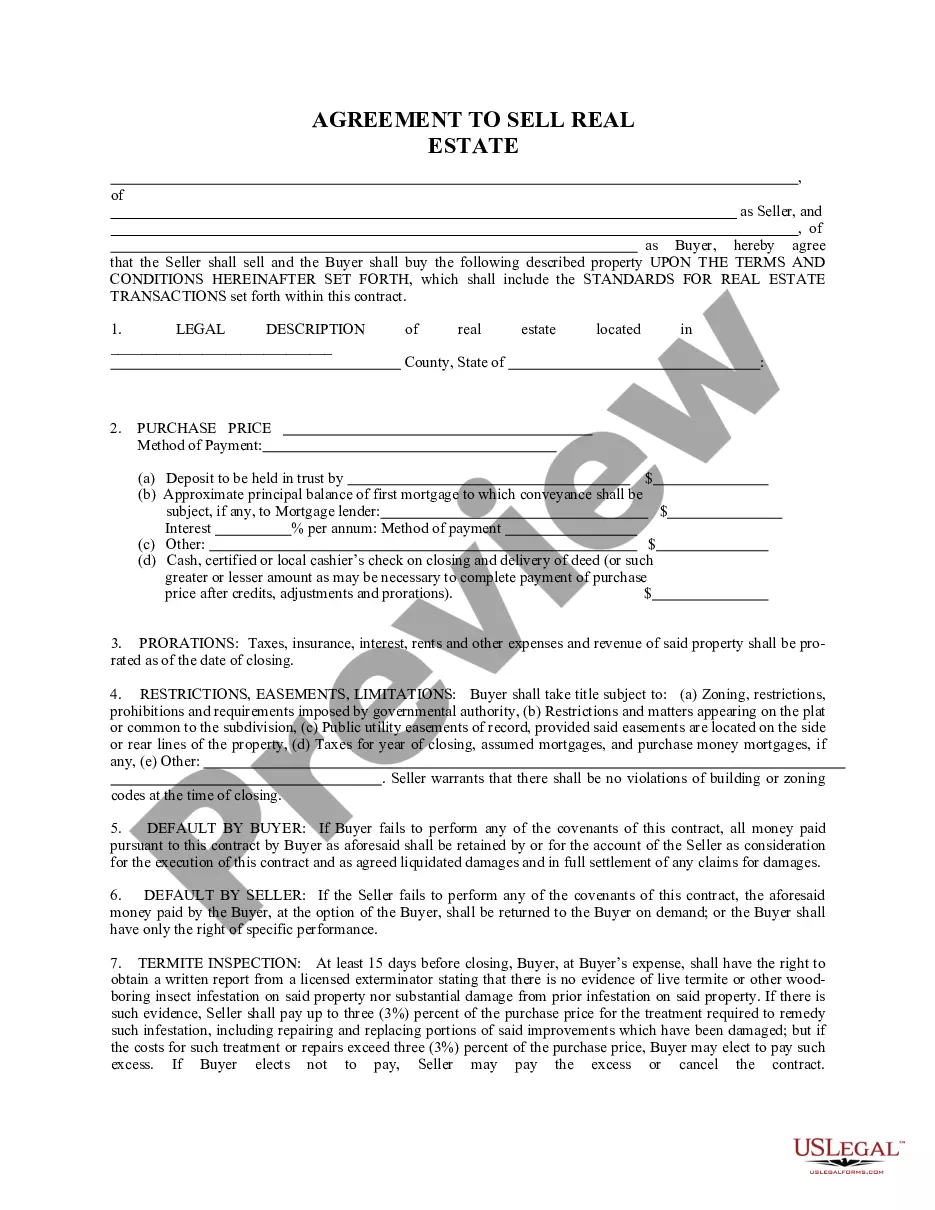

How to fill out Agreement Between Real Estate Sales Representative And Broker?
If you require to compile, obtain, or generate authentic document templates, utilize US Legal Forms, the largest repository of legal forms available online.
Take advantage of the site’s straightforward and convenient search to locate the documents you need.
Various templates for business and personal purposes are organized by categories and jurisdictions or keywords.
Step 4. Once you have found the form you need, select the Get now option. Choose the pricing plan you prefer and enter your details to register for an account.
Step 5. Process the transaction. You can use your credit card or PayPal account to finalize the transaction.
- Use US Legal Forms to acquire the North Carolina Agreement between Real Estate Sales Representative and Broker in just a few clicks.
- If you are already a US Legal Forms customer, Log In to your account and click the Download option to retrieve the North Carolina Agreement between Real Estate Sales Representative and Broker.
- You can also access forms you previously downloaded from the My documents section of your account.
- If you are using US Legal Forms for the first time, follow the instructions below.
- Step 1. Ensure you have chosen the form for the correct city/state.
- Step 2. Use the Review option to check the form’s details. Don't forget to read the summary.
- Step 3. If you are dissatisfied with the form, use the Search field at the top of the page to find other types in the legal form template.
Form popularity
FAQ
Dual agency can be beneficial in certain situations, but it requires careful consideration. It may streamline the process if both parties agree and understand the terms clearly. To navigate the complexities, refer to your North Carolina Agreement between Real Estate Sales Representative and Broker, as it provides insights into the nature of this arrangement and your responsibilities.
No, dual agency is not illegal in North Carolina, but it comes with specific requirements. Agents must disclose their dual role and get consent from both parties involved in the transaction. Understanding the terms laid out in the North Carolina Agreement between Real Estate Sales Representative and Broker can help ensure all parties are informed, minimizing conflicts of interest.
Yes, double closing is legal in North Carolina. This process involves two separate transactions, allowing an investor to buy a property and immediately sell it to another buyer. Having a clear North Carolina Agreement between Real Estate Sales Representative and Broker is essential for understanding your obligations during these transactions, ensuring compliance with all state regulations.
Yes, you can be an independent real estate agent in North Carolina. To do so, you need to establish a North Carolina Agreement between Real Estate Sales Representative and Broker with a brokerage. This agreement defines your relationship with the broker, outlining responsibilities and commissions, which is crucial for operating independently in the market.
The document that defines the relationship between the broker and the seller is typically the listing agreement, which includes important details about the transaction. In North Carolina, the North Carolina Agreement between Real Estate Sales Representative and Broker serves as an essential framework that outlines the roles, obligations, and expectations of both parties. This agreement helps to mitigate misunderstandings and promotes a smoother transaction process.
The legal relationship between a broker and a seller is established through agency law, which designates the broker as a fiduciary. This means the broker has a legal obligation to act in the best interests of the seller throughout the transaction. The North Carolina Agreement between Real Estate Sales Representative and Broker outlines this fiduciary duty and helps ensure both parties understand their rights and responsibilities.
The agreement between a broker and the seller is known as a listing agreement, which formalizes the broker's role in selling the property. This agreement specifies the terms of the sale, the broker's commission, and other important details about the transaction. The North Carolina Agreement between Real Estate Sales Representative and Broker is a key document that clearly defines these aspects and ensures that both parties are aligned in their objectives.
Yes, North Carolina does allow dual agency in real estate, but it comes with specific guidelines and requirements. In a dual agency situation, the broker represents both the seller and the buyer, which requires full disclosure and consent from both parties. The North Carolina Agreement between Real Estate Sales Representative and Broker plays a crucial role in outlining the terms of dual agency and protecting the interests of all involved.
The new NC Form 715 is a standardized document that outlines the listing agreement between the seller and the broker in North Carolina. This form helps clarify the expectations and obligations of both parties involved in a real estate transaction. Utilizing the North Carolina Agreement between Real Estate Sales Representative and Broker, this form ensures compliance with state regulations and promotes transparency in the sales process.
The relationship between a broker and a seller is commonly referred to as an agency relationship. This relationship establishes a legal and professional bond wherein the broker acts on behalf of the seller to facilitate the sale of a property. In North Carolina, this relationship is defined through the North Carolina Agreement between Real Estate Sales Representative and Broker, ensuring that both parties understand their roles and responsibilities.