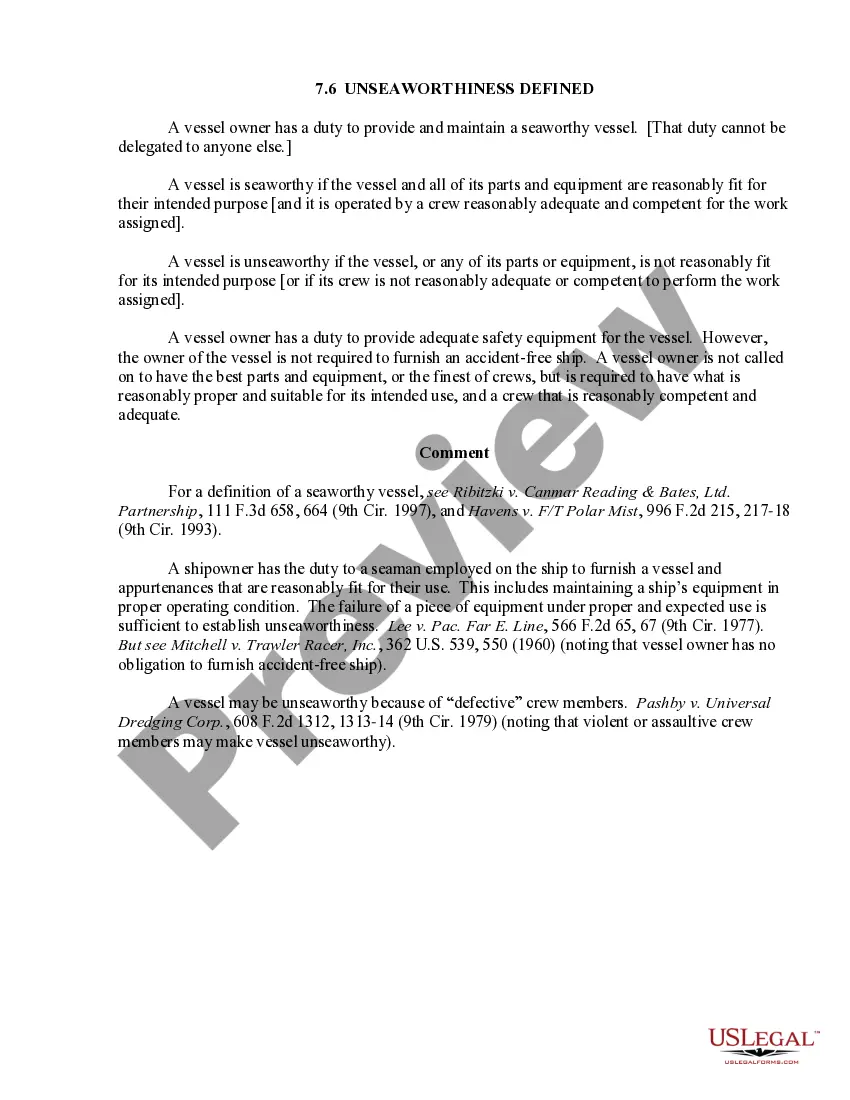
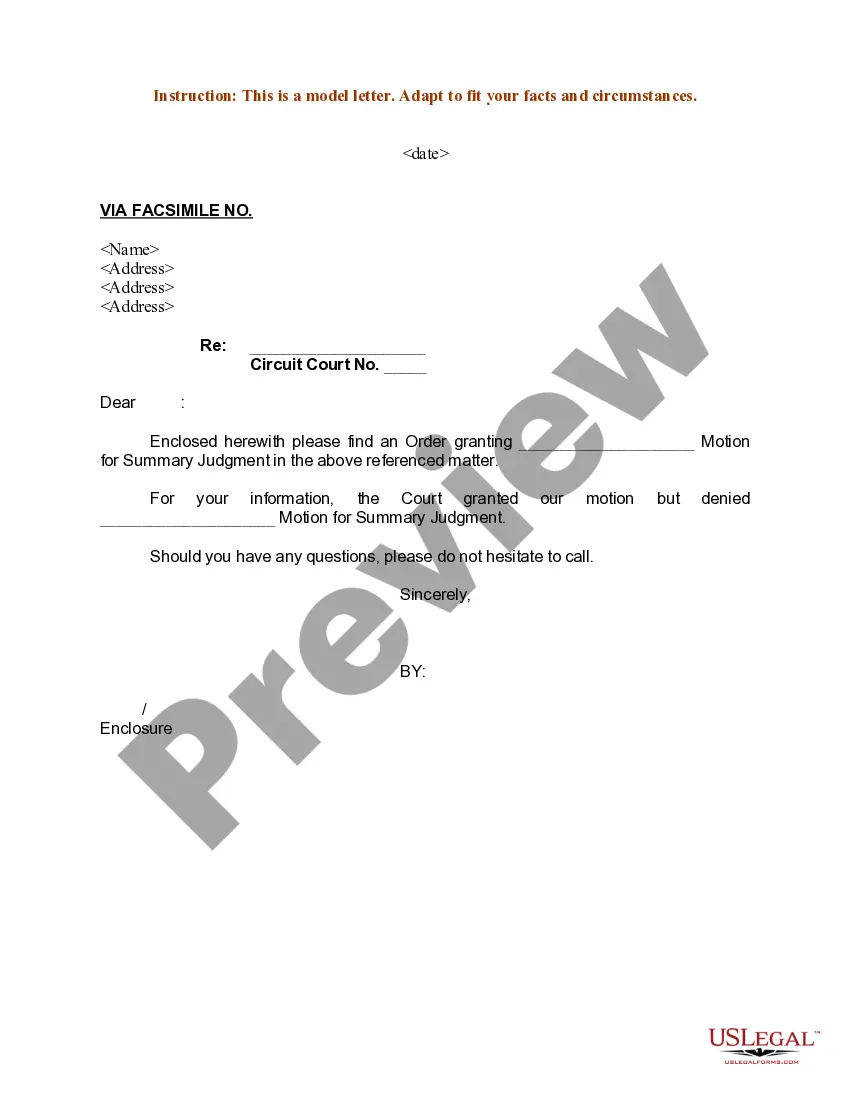
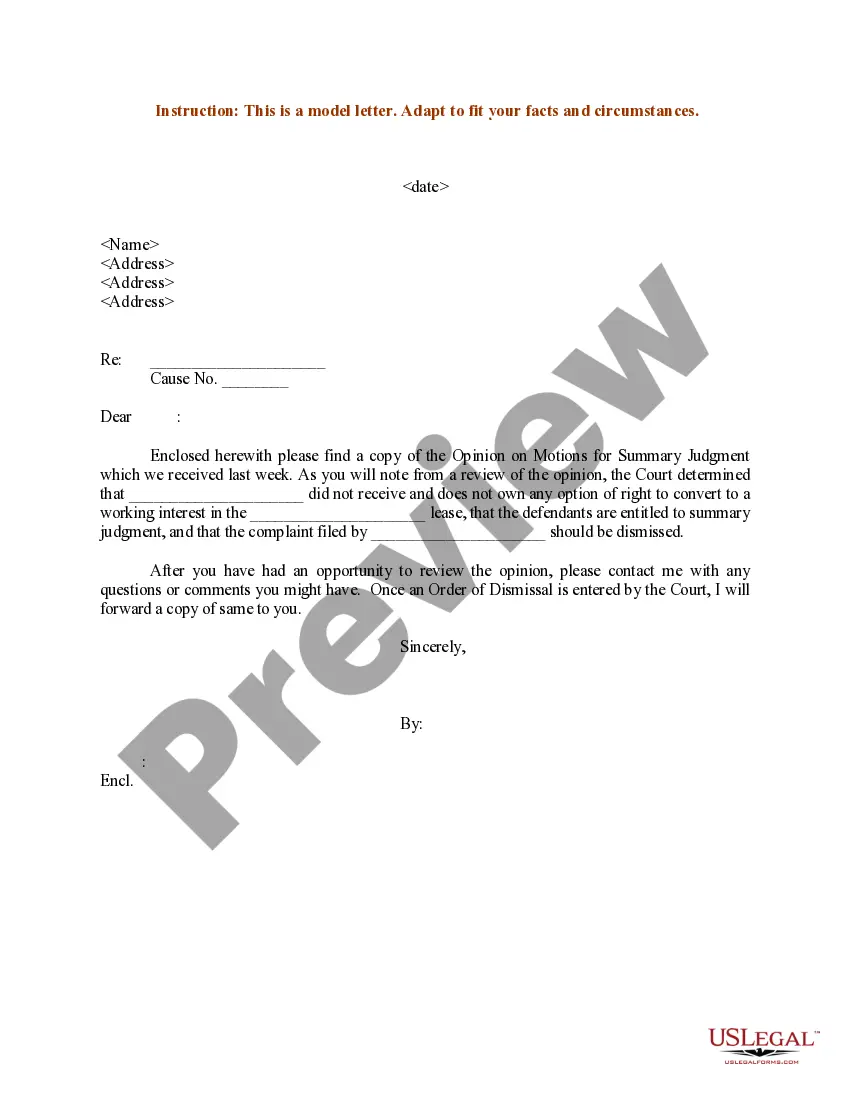
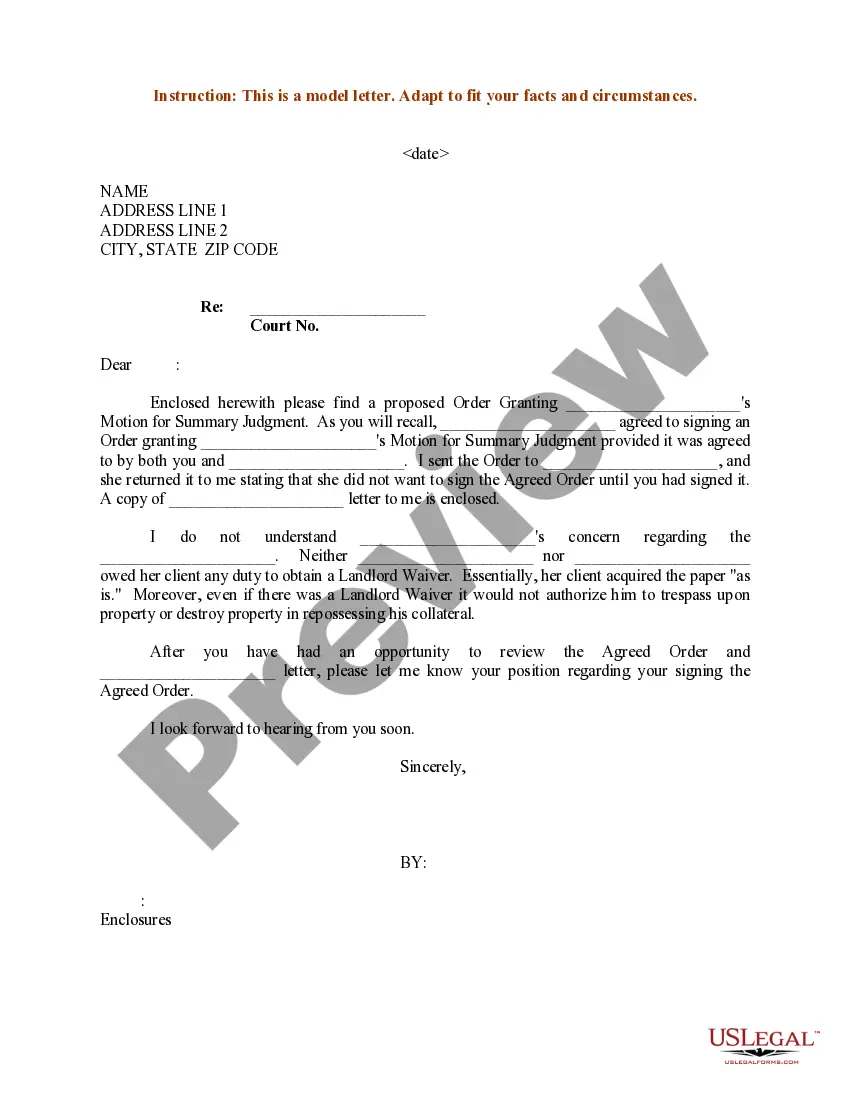
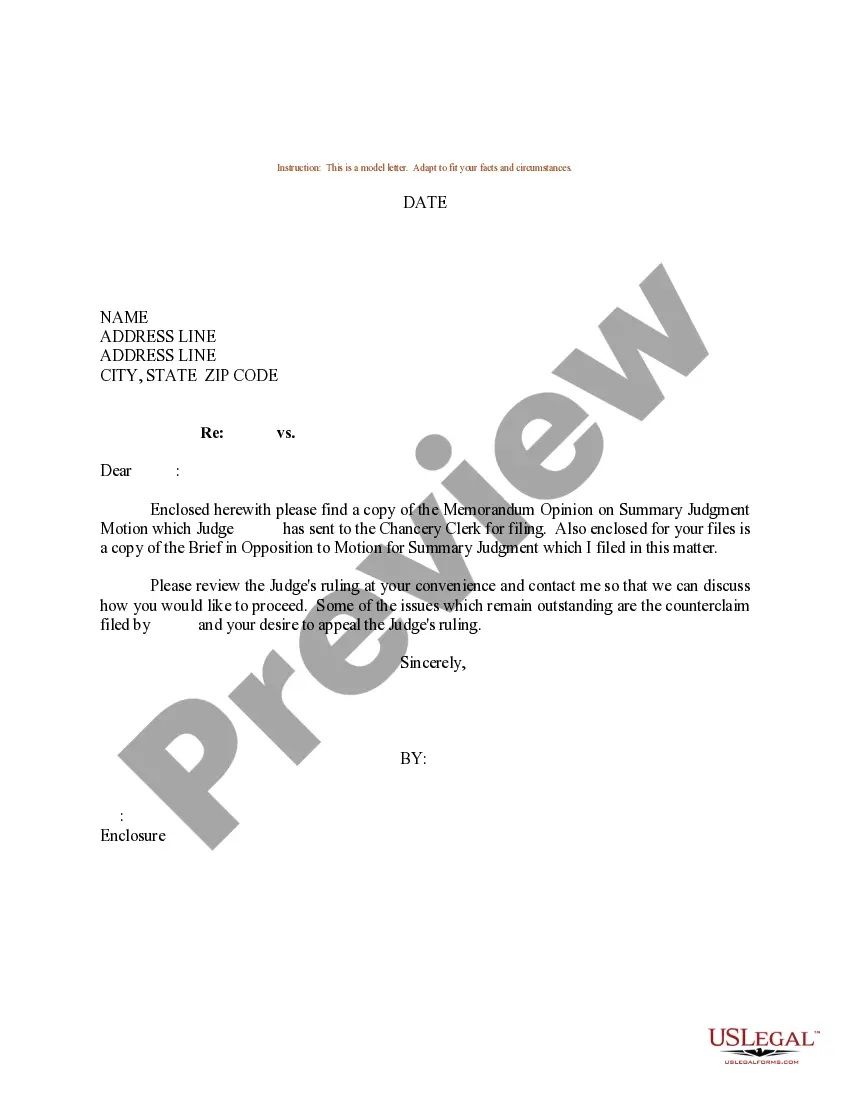
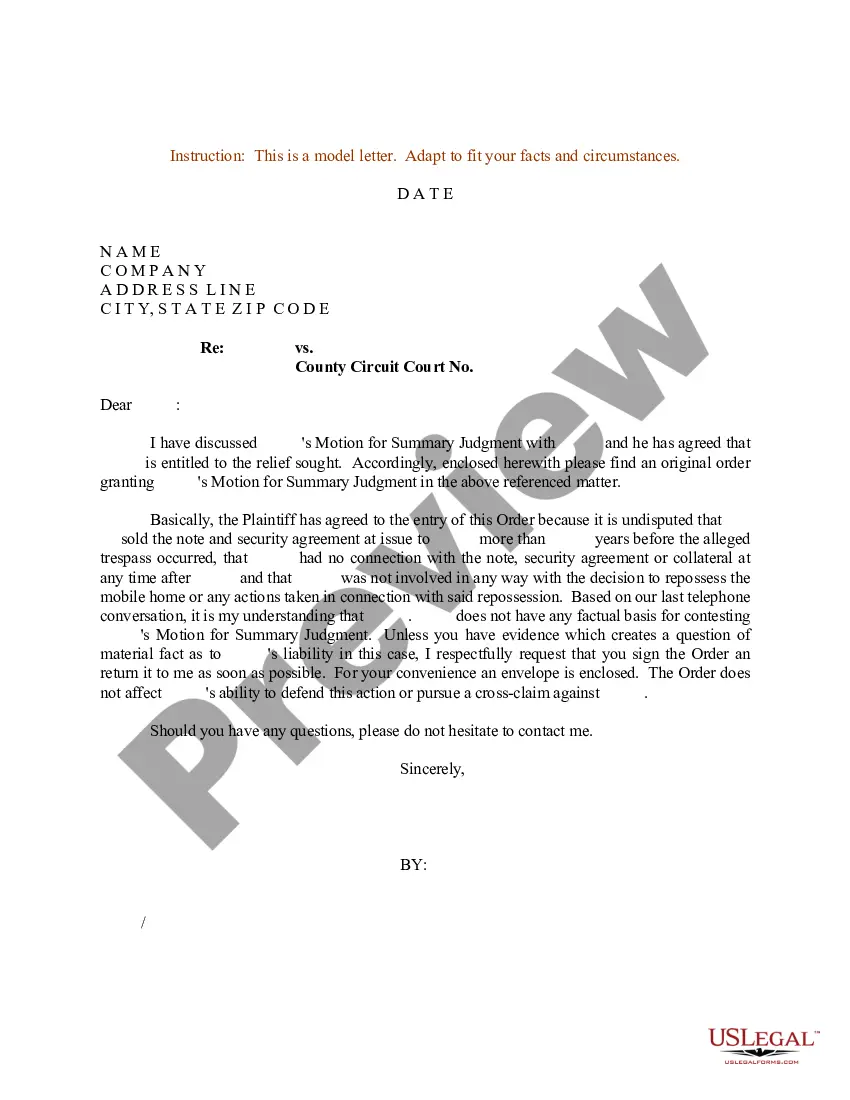
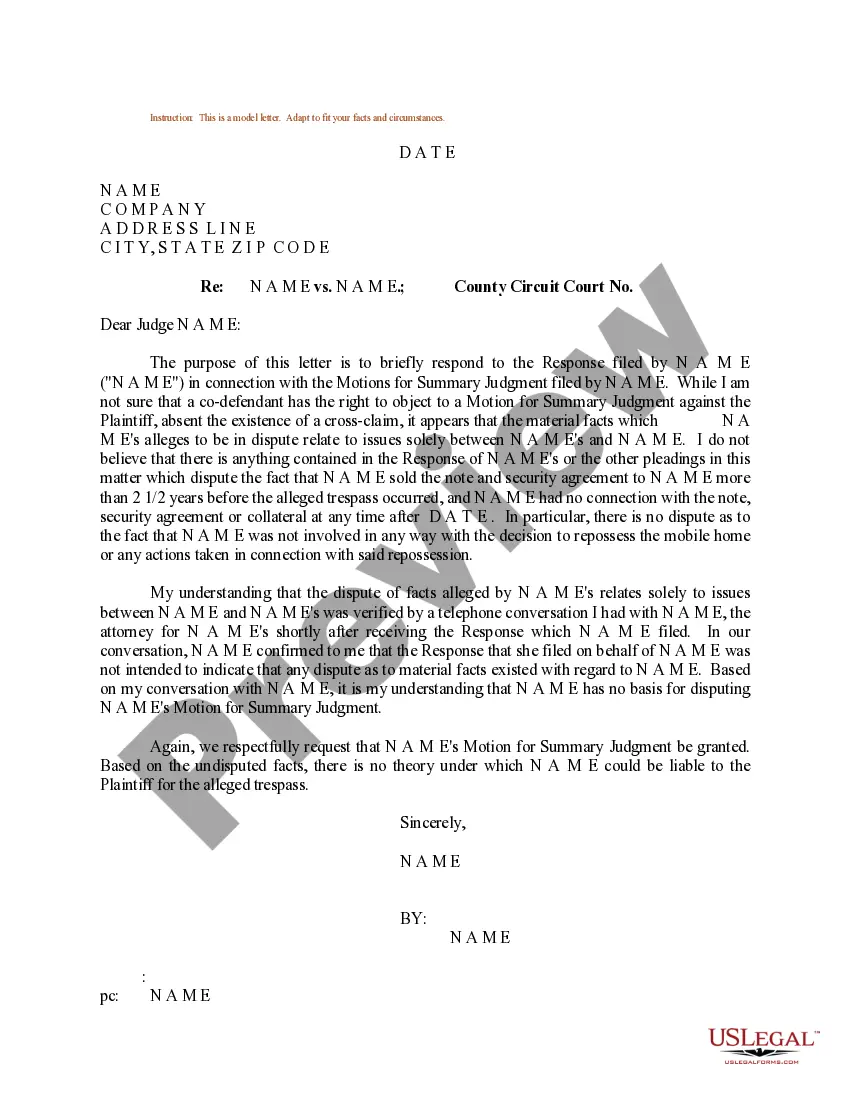
North Carolina Sample Letter for Order Granting Motion for Summary Judgment
Description
Get your form ready online
Our built-in tools help you complete, sign, share, and store your documents in one place.
Make edits, fill in missing information, and update formatting in US Legal Forms—just like you would in MS Word.
Download a copy, print it, send it by email, or mail it via USPS—whatever works best for your next step.
Sign and collect signatures with our SignNow integration. Send to multiple recipients, set reminders, and more. Go Premium to unlock E-Sign.
If this form requires notarization, complete it online through a secure video call—no need to meet a notary in person or wait for an appointment.
We protect your documents and personal data by following strict security and privacy standards.

Make edits, fill in missing information, and update formatting in US Legal Forms—just like you would in MS Word.

Download a copy, print it, send it by email, or mail it via USPS—whatever works best for your next step.

Sign and collect signatures with our SignNow integration. Send to multiple recipients, set reminders, and more. Go Premium to unlock E-Sign.

If this form requires notarization, complete it online through a secure video call—no need to meet a notary in person or wait for an appointment.

We protect your documents and personal data by following strict security and privacy standards.
Looking for another form?






How to fill out Sample Letter For Order Granting Motion For Summary Judgment?
If you want to gather, download, or print legal document templates, utilize US Legal Forms, the largest selection of legal forms available online.
Take advantage of the site's straightforward and user-friendly search to obtain the documents you require. Various templates for business and personal purposes are categorized by types and states, or keywords.
Use US Legal Forms to access the North Carolina Sample Letter for Order Granting Motion for Summary Judgment in just a few clicks.
Every legal document template you purchase is yours permanently. You will have access to every form you saved in your account.
Navigate to the My documents section and select a form to print or download again. Be proactive and download, and print the North Carolina Sample Letter for Order Granting Motion for Summary Judgment with US Legal Forms. There are millions of professional and state-specific forms available for your business or personal needs.
- When you are already a US Legal Forms member, sign in to your account and click on the Download button to locate the North Carolina Sample Letter for Order Granting Motion for Summary Judgment.
- You can also retrieve forms you previously saved in the My documents section of your account.
- If you are using US Legal Forms for the first time, follow the steps below.
- Step 1. Ensure you have selected the form for the correct city/state.
- Step 2. Use the Preview option to review the form's content. Don't forget to check the summary.
- Step 3. If you are not satisfied with the form, use the Search field at the top of the screen to find alternative versions of the legal document template.
- Step 4. Once you have located the form you need, click on the Get now button. Choose your preferred payment method and enter your information to register for an account.
- Step 5. Complete the transaction. You can use your Visa or Mastercard or PayPal account to finalize the payment.
- Step 6. Select the format of the legal document and download it to your device.
- Step 7. Complete, modify, and print or sign the North Carolina Sample Letter for Order Granting Motion for Summary Judgment.
Form popularity
FAQ
Standard: Court ?shall? grant a motion for summary judgment if ?there is no genuine issue of material fact? as shown by ?the pleadings, depositions, answers to interrogatories, and admissions on file, together with the affidavits, if any.?
Federal appellate practitioners are readily familiar with the principle that a district court's order denying summary judgment is generally not immediately appealable. Instead, an appeal regarding the summary judgment denial must wait until a final judgment has been rendered.
Rule 9.300 of the Florida Rules of Appellate Procedure contains the requirements for appellate motions. A motion filed in an appeal should: explain what the party is asking the appellate court to do (the ?relief sought?); explain why the appellate court should grant the relief sought (the ?argument?); and.
(1) A response to the motion for summary judgment which includes a concise statement, not to exceed two pages in length, as to why the motion should not be granted. (2) A response to the statement of undisputed material facts either admitting or denying or disputing each of the facts in the movant's statement.
A party opposing a summary judgment motion must, within 28 days after the movant serves the motion, file and serve a response brief and any evidence (that is not already in the record) that the party relies on to oppose the motion.
A party may move for summary judgment at any time after the expiration of 20 days from the commencement of the action or after service of a motion for summary judgment by the adverse party. The movant must serve the motion for summary judgment at least 40 days before the time fixed for the hearing.
At least 20 days before the time fixed for the hearing, the nonmovant must serve a response that includes the nonmovant's supporting factual position as provided in subdivision (1) above.
You must include a summary of the legal basis for your opposition, explain the reason you are opposing the motion, and state what you would like the judge to order.