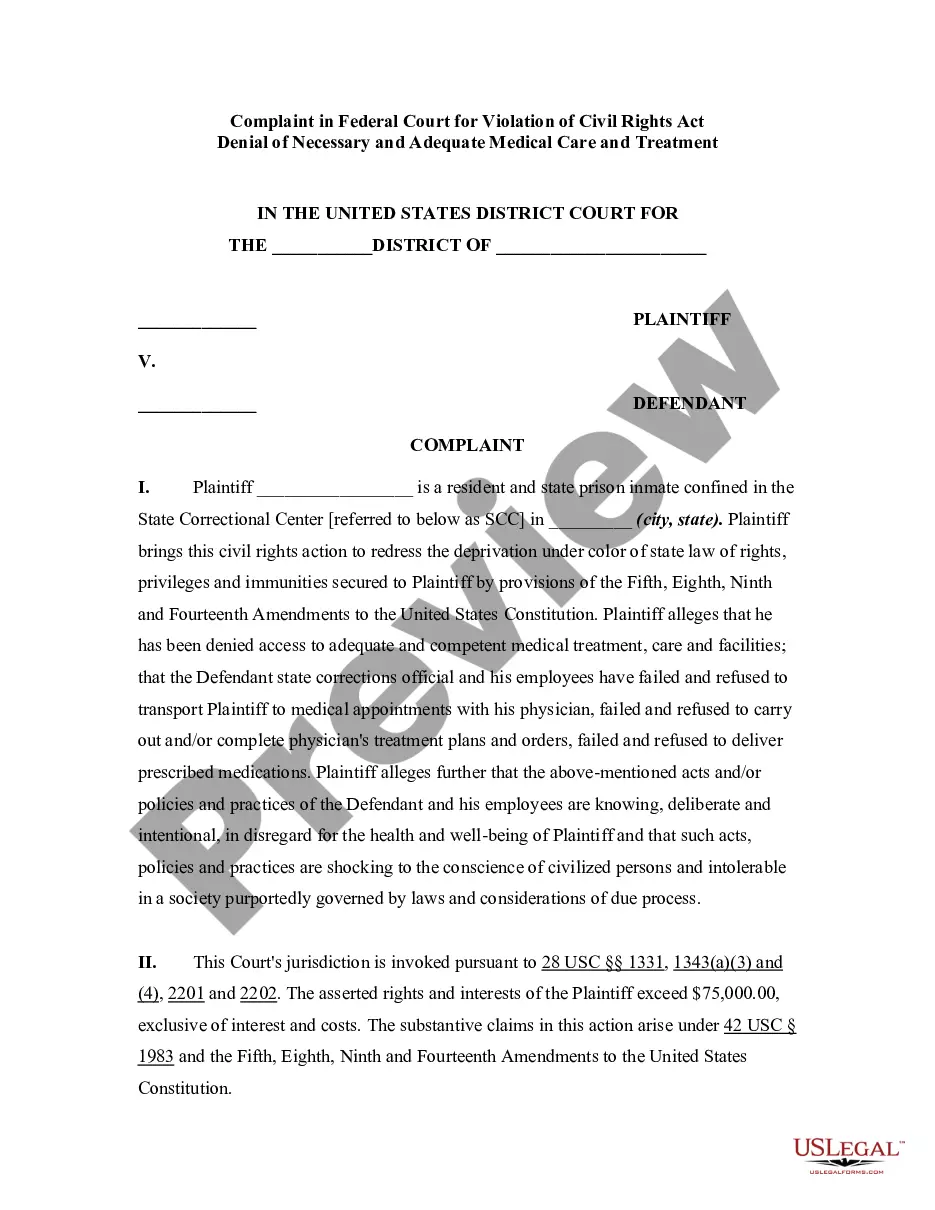
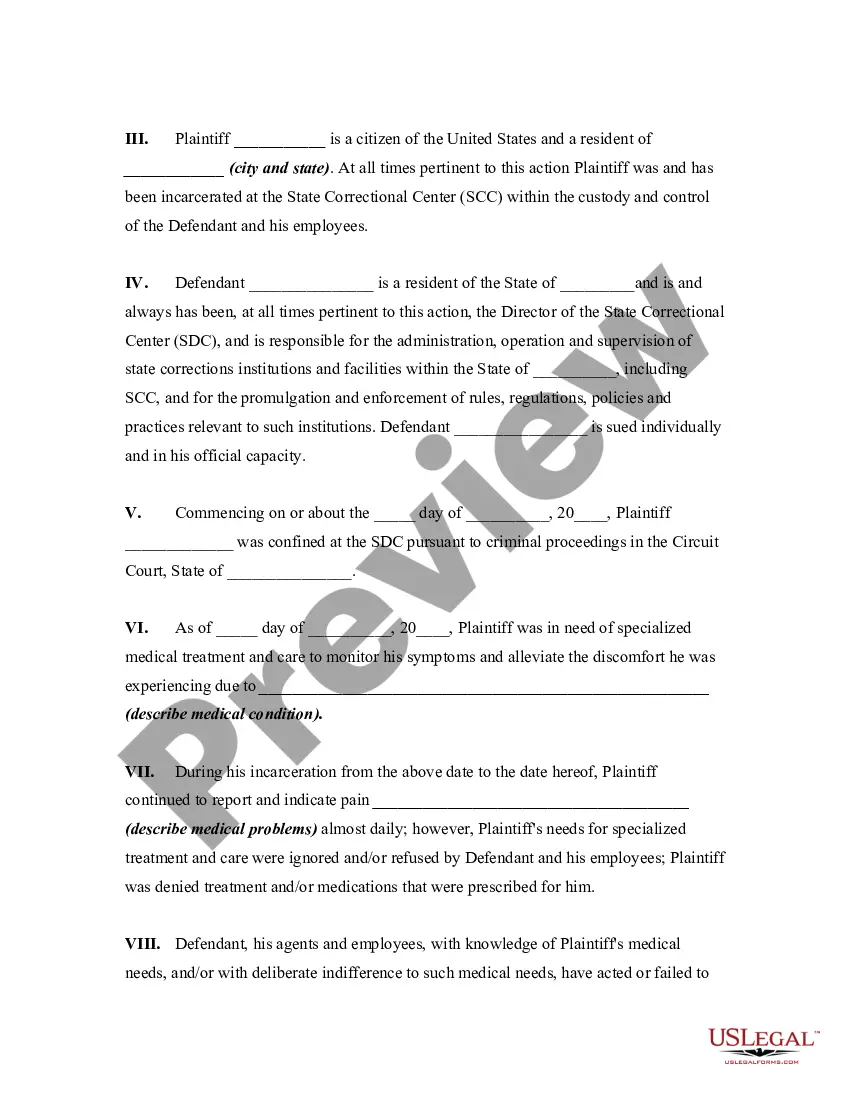
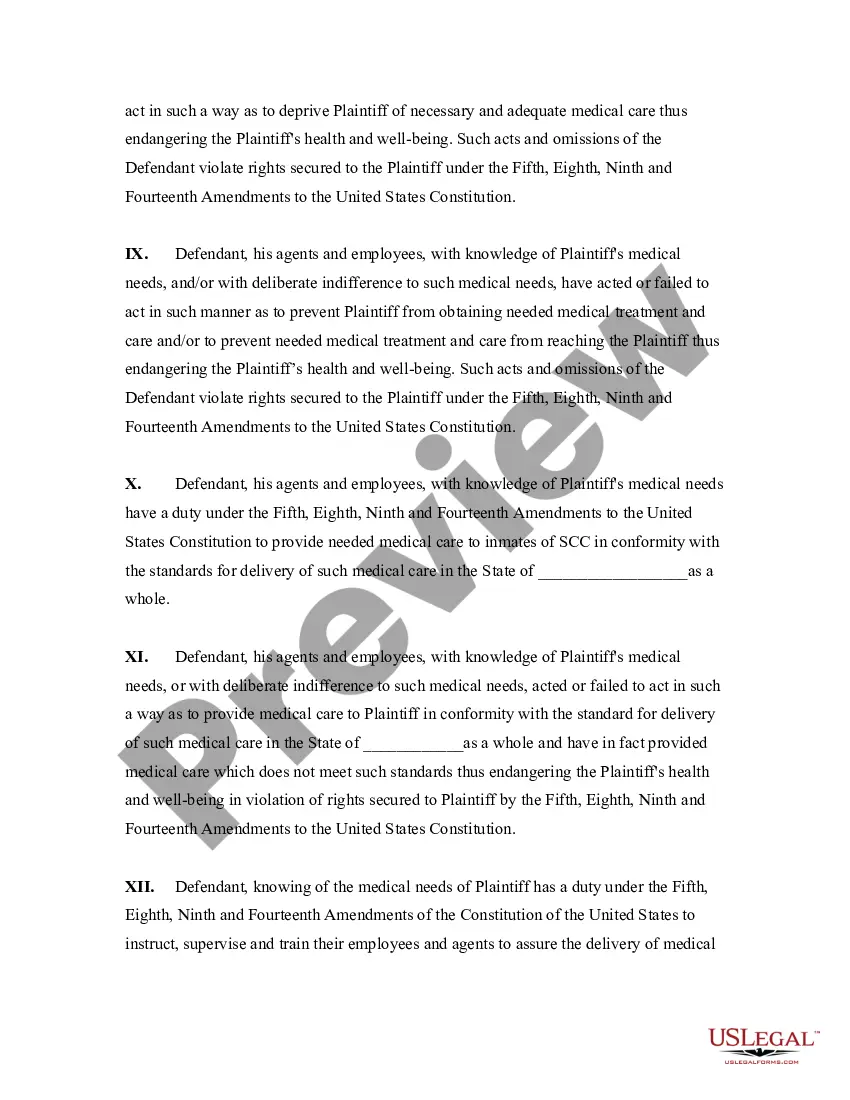
North Carolina Complaint in Federal Court for Violation of Civil Rights Act Denial of Necessary and Adequate Medical Care and Treatment for a State Inmate
Description
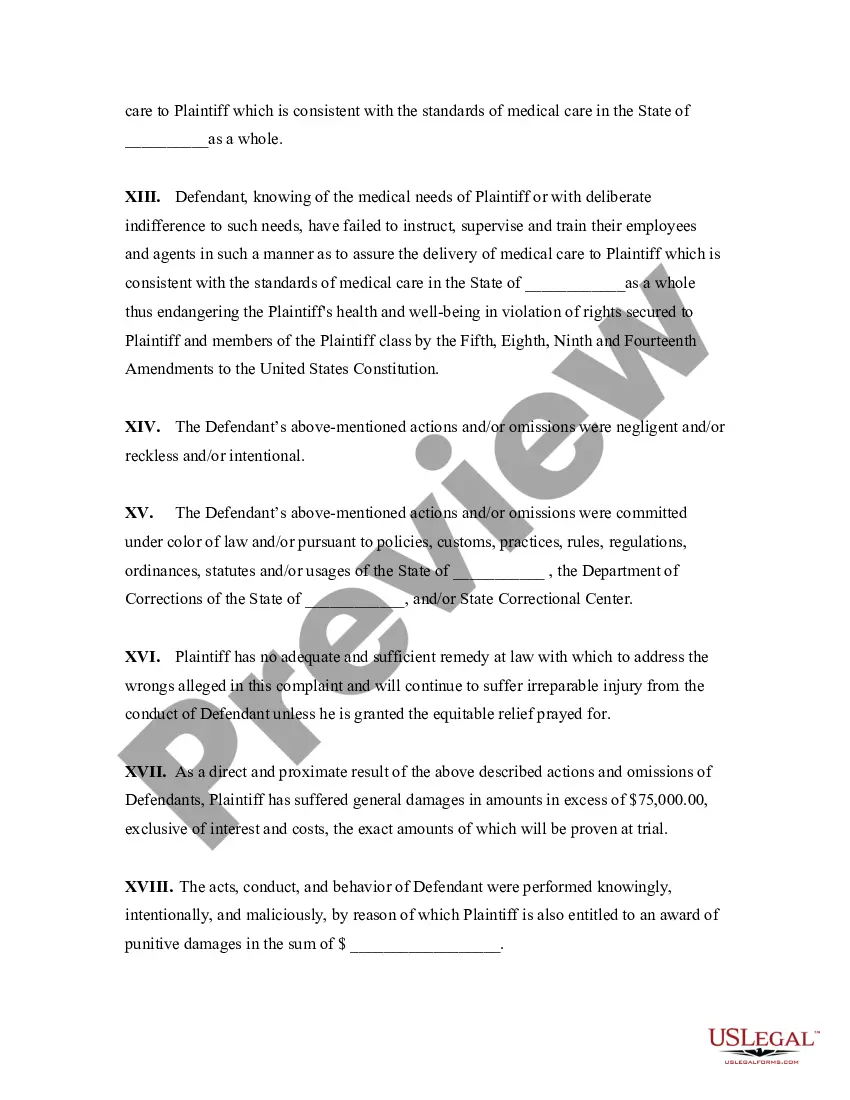
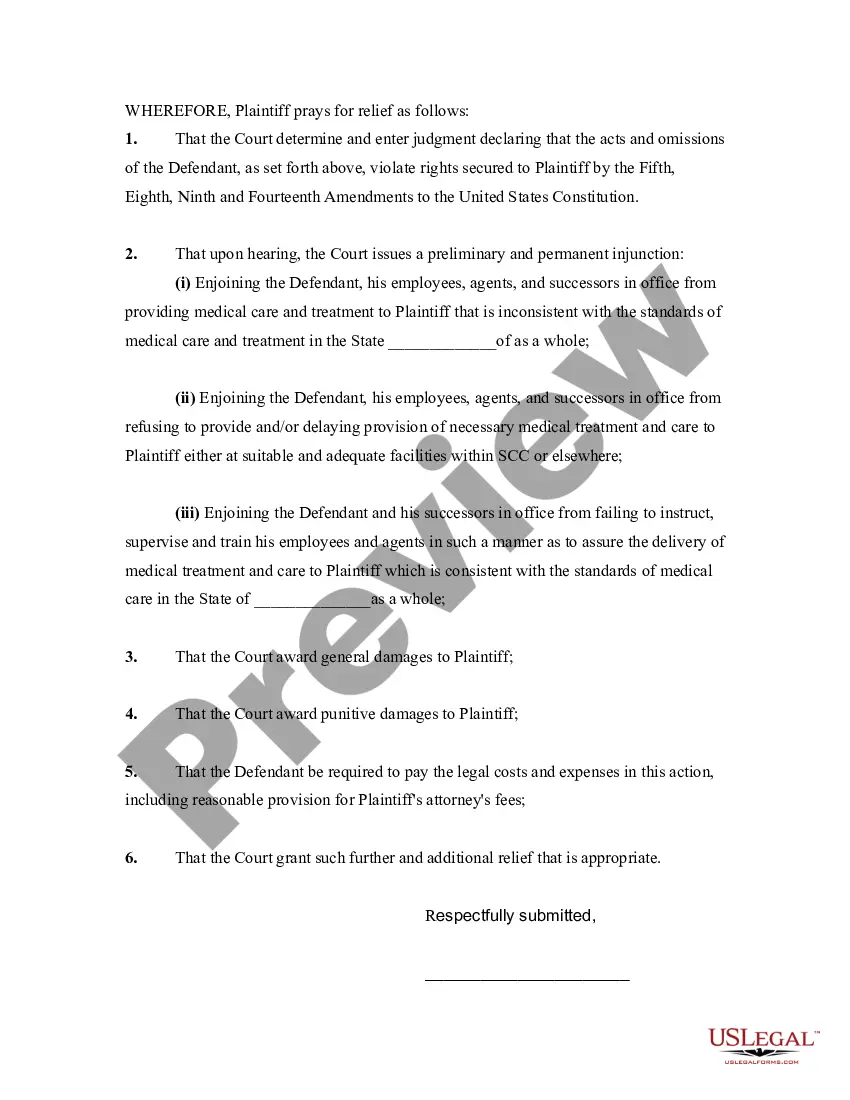
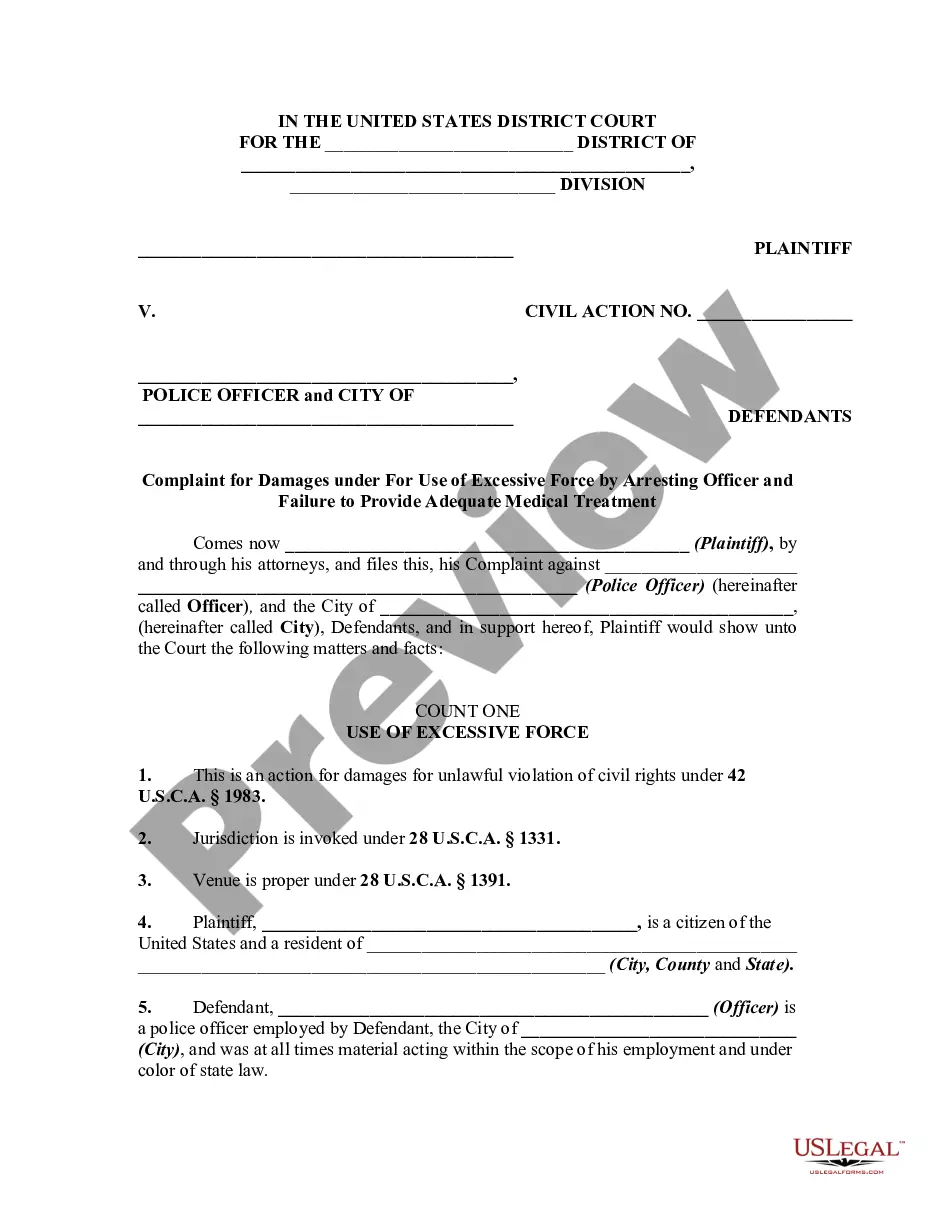
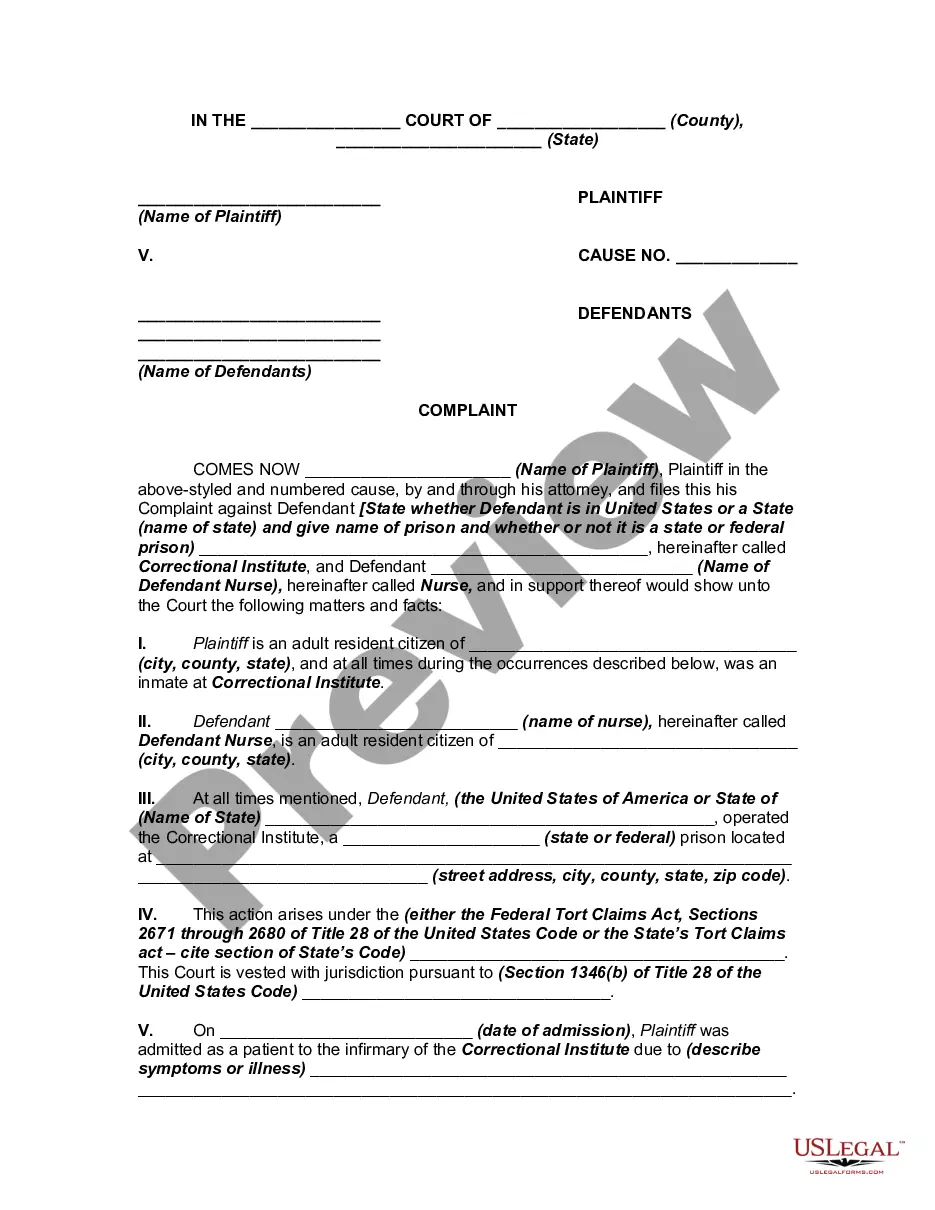
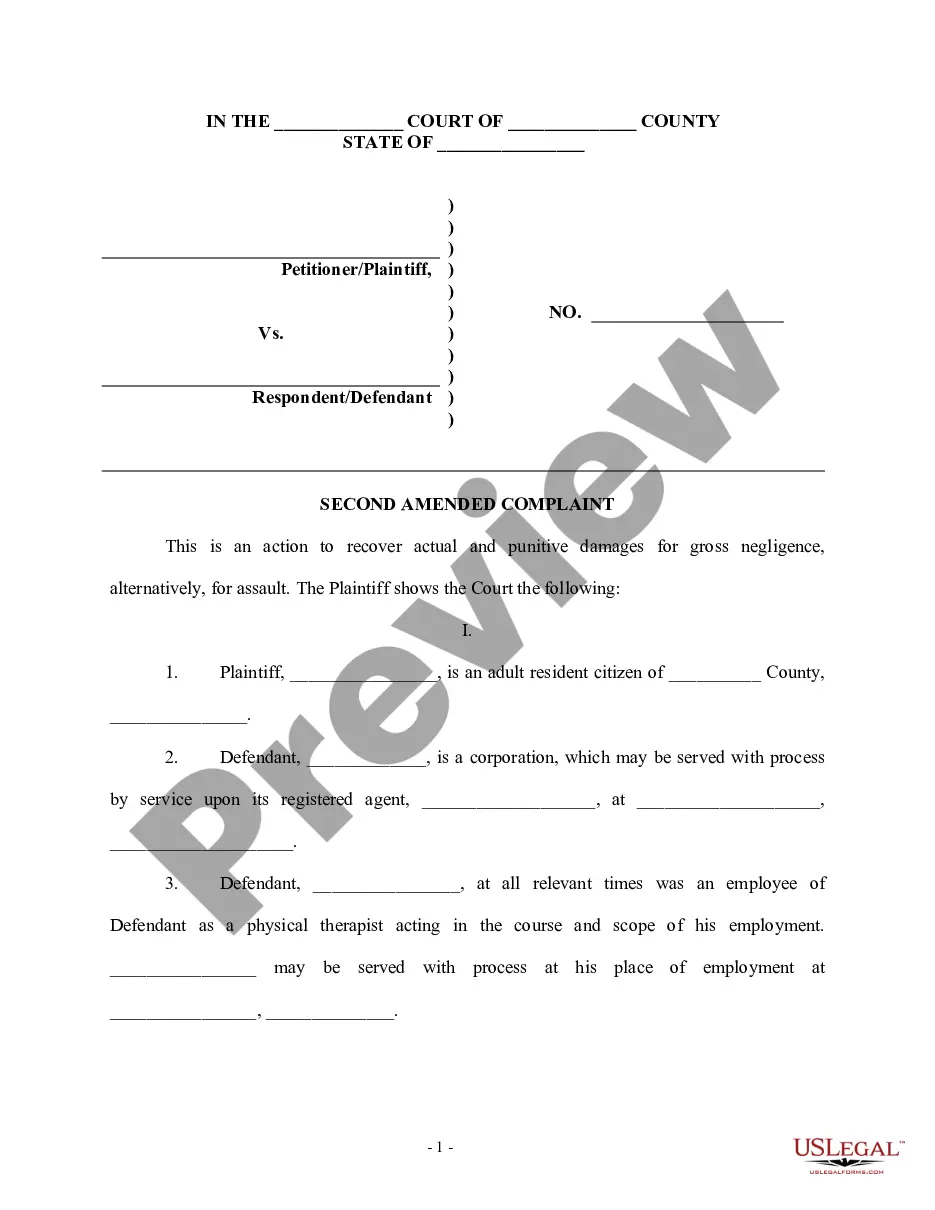
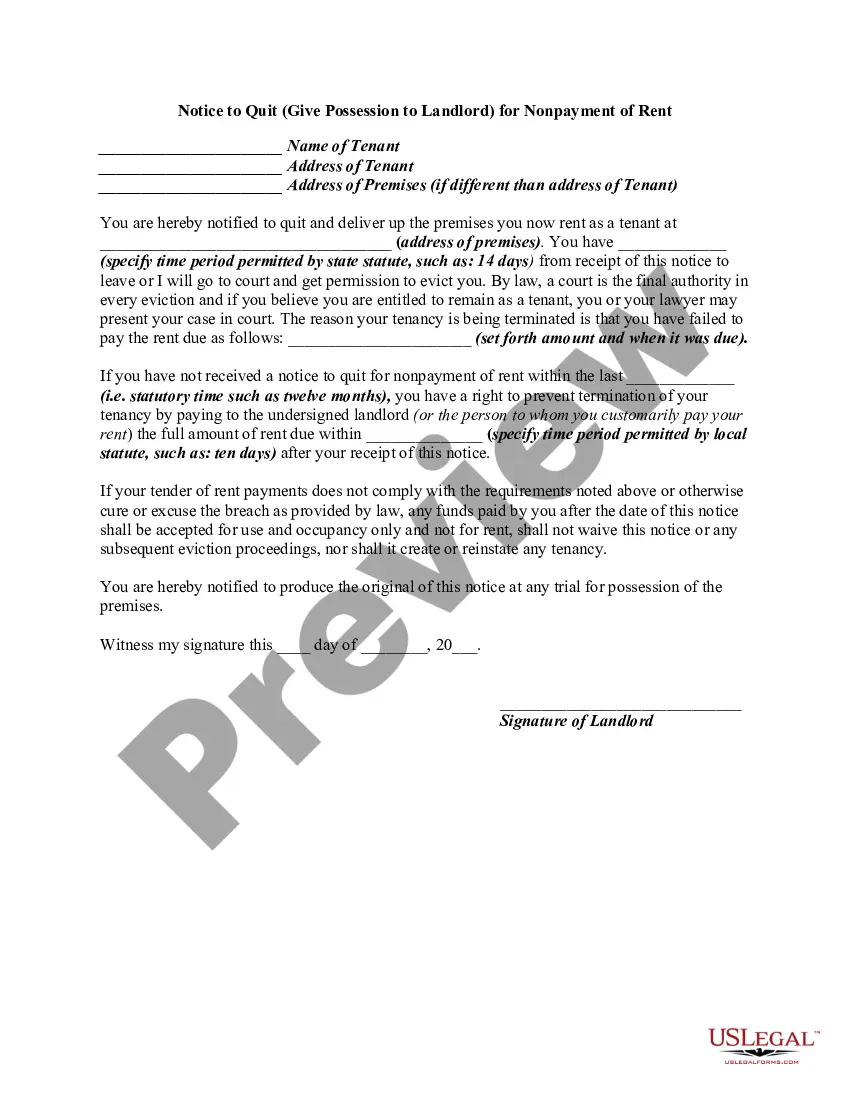
How to fill out Complaint In Federal Court For Violation Of Civil Rights Act Denial Of Necessary And Adequate Medical Care And Treatment For A State Inmate?
Selecting the optimal legal document format can be quite challenging. Certainly, there are numerous formats available online, but how do you locate the legal document you require? Utilize the US Legal Forms website. The service offers a vast collection of templates, including the North Carolina Complaint in Federal Court for Violation of Civil Rights Act Denial of Necessary and Adequate Medical Care and Treatment for a State Inmate, which can be utilized for both business and personal purposes. Each of the templates has been reviewed by experts and complies with federal and state regulations.
If you are currently registered, Log In to your account and click the Download button to access the North Carolina Complaint in Federal Court for Violation of Civil Rights Act Denial of Necessary and Adequate Medical Care and Treatment for a State Inmate. Use your account to browse through the legal documents you have previously purchased. Navigate to the My documents section of your account and obtain another copy of the document you need.
If you are a new user of US Legal Forms, here are straightforward instructions for you to follow: First, ensure you have selected the appropriate document for your city/state. You can review the form using the Review option and check the form details to confirm it is suitable for your needs. If the form does not meet your requirements, utilize the Search field to find the correct form. Once you are certain that the form is correct, click the Purchase now button to obtain the form. Select the pricing plan you prefer and enter the necessary information. Create your account and pay for the order using your PayPal account or credit card. Choose the file format and download the legal document format to your device. Complete, modify, print, and sign the acquired North Carolina Complaint in Federal Court for Violation of Civil Rights Act Denial of Necessary and Adequate Medical Care and Treatment for a State Inmate.
US Legal Forms provides an extensive array of legal document formats that cater to diverse requirements.
- US Legal Forms is the largest collection of legal templates available for various document formats.
- Utilize the service to obtain properly crafted documents that adhere to state regulations.
- Make sure to review the details of each form before finalizing your selection.
- Take advantage of the search feature to quickly find the necessary legal documents.
- Ensure your payment method is secure and reliable.
- Access your previous purchases easily through your account.
Form popularity
FAQ
YANG: The landmark Supreme Court case Estelle v. Gamble established that failure to provide adequate medical care to incarcerated people as a result of deliberate indifference to serious medical needs violates the Eighth Amendment's prohibition against cruel and unusual punishment.
In short, this means that the authorities knew about the problem or knew that a problem most likely existed, recognized it as potentially serious, but failed to act. Ignorance, poor judgement, or medical malpractice are serious charges, but not sufficient to warrant deliberate indifference.
Forbidden by the Eighth Amendment. 7 Therefore, if prison officials treated your serious medical needs with ?deliberate indifference,? they violated your constitutional right to be free from cruel and unusual punishment.
Nearly forty years ago, the U.S. Supreme Court ruled in Estelle v. Gamble that ignoring a prisoner's serious medical needs can amount to cruel and unusual punishment, noting that ?[a]n inmate must rely on prison authorities to treat his medical needs; if the authorities fail to do so, those needs will not be met.
The U.S. Constitution requires prison officials to provide all state and federal prisoners as well as pretrial detainees (people in jail waiting for trial) with adequate medical care.
EIGHTH AMENDMENT RIGHTS OF PRISONERS - ADEQUATE MEDICAL CARE AND PROTECTION FROM THE VIOLENCE OF FELLOW INMATES.
Additionally, the Equal Protection Clause of the Fourteenth Amendment applies to incarcerated individuals, protecting them against unequal treatment on the basis of race, sex, and creed, and the Model Sentencing and Corrections Act, created by the Uniform Law Commission in 1978, provides that a confined person has a ...