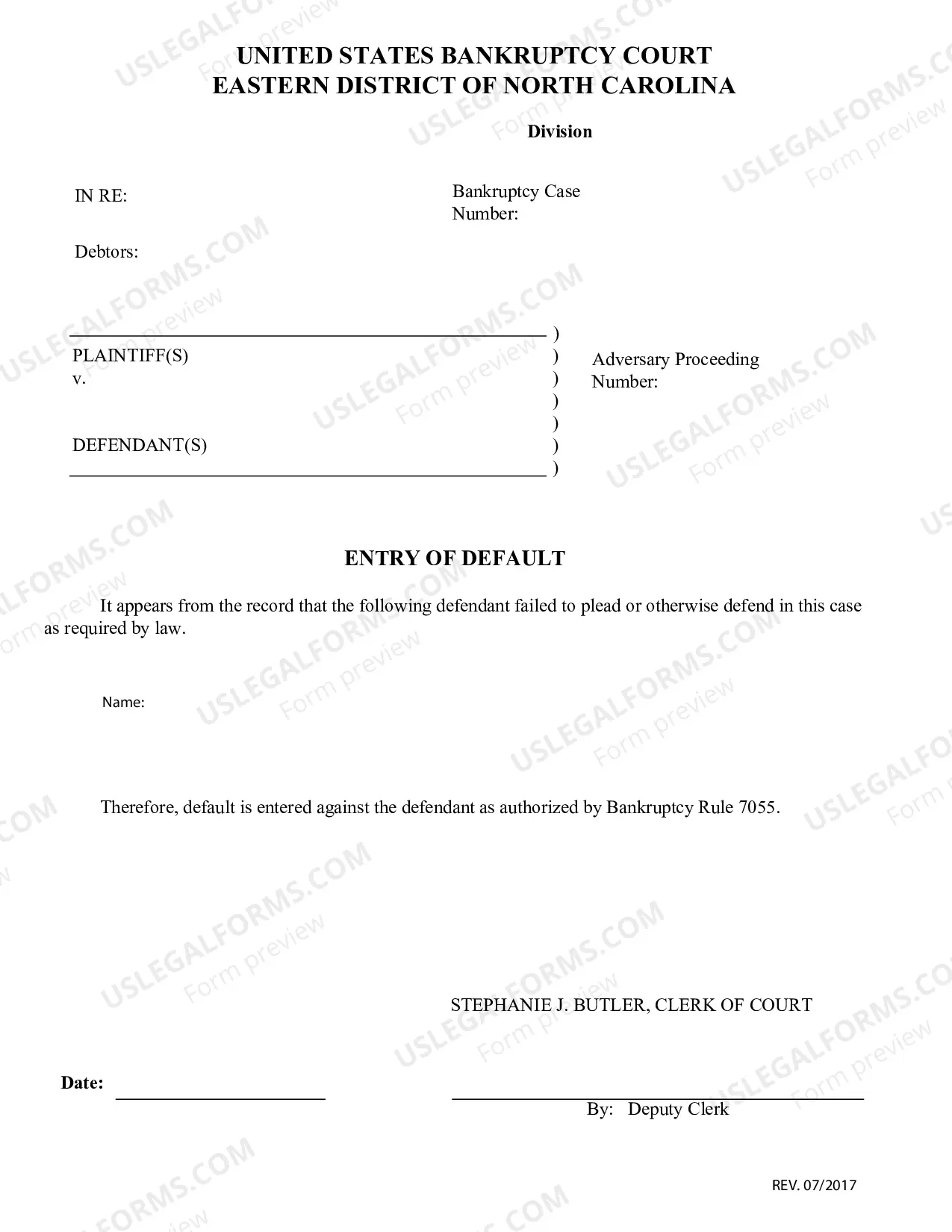
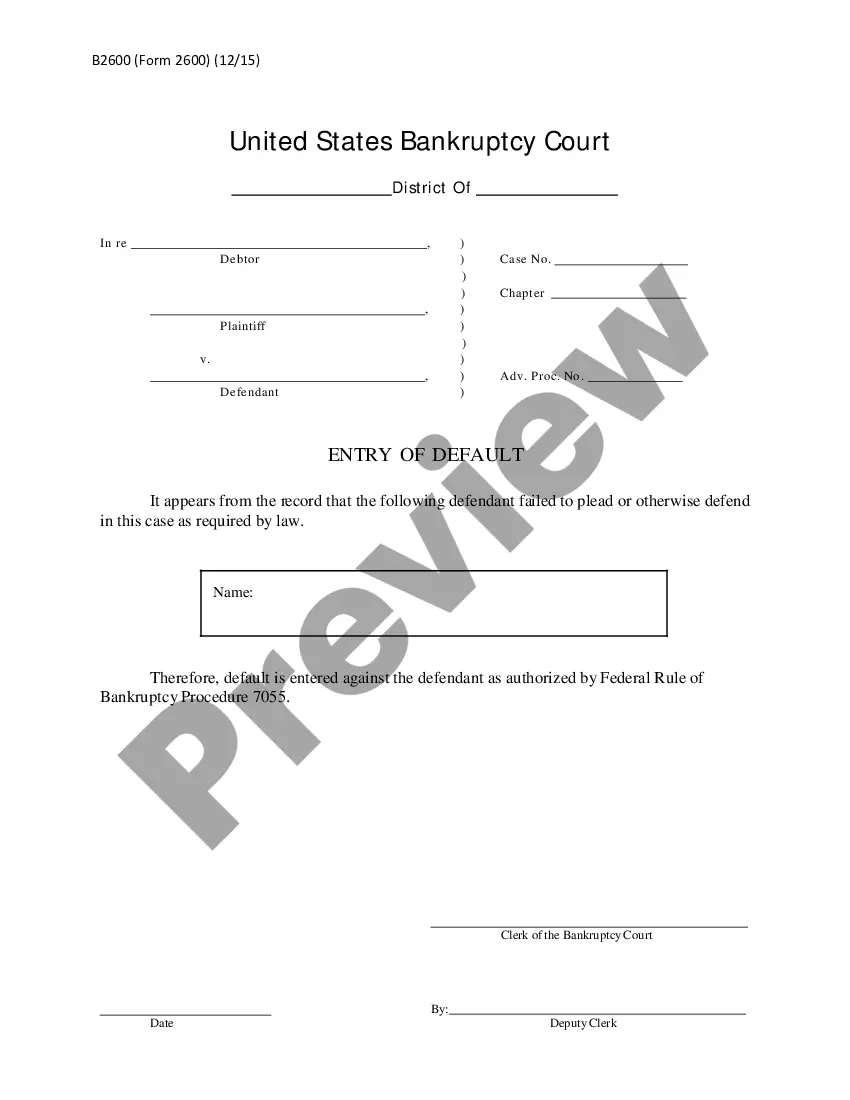
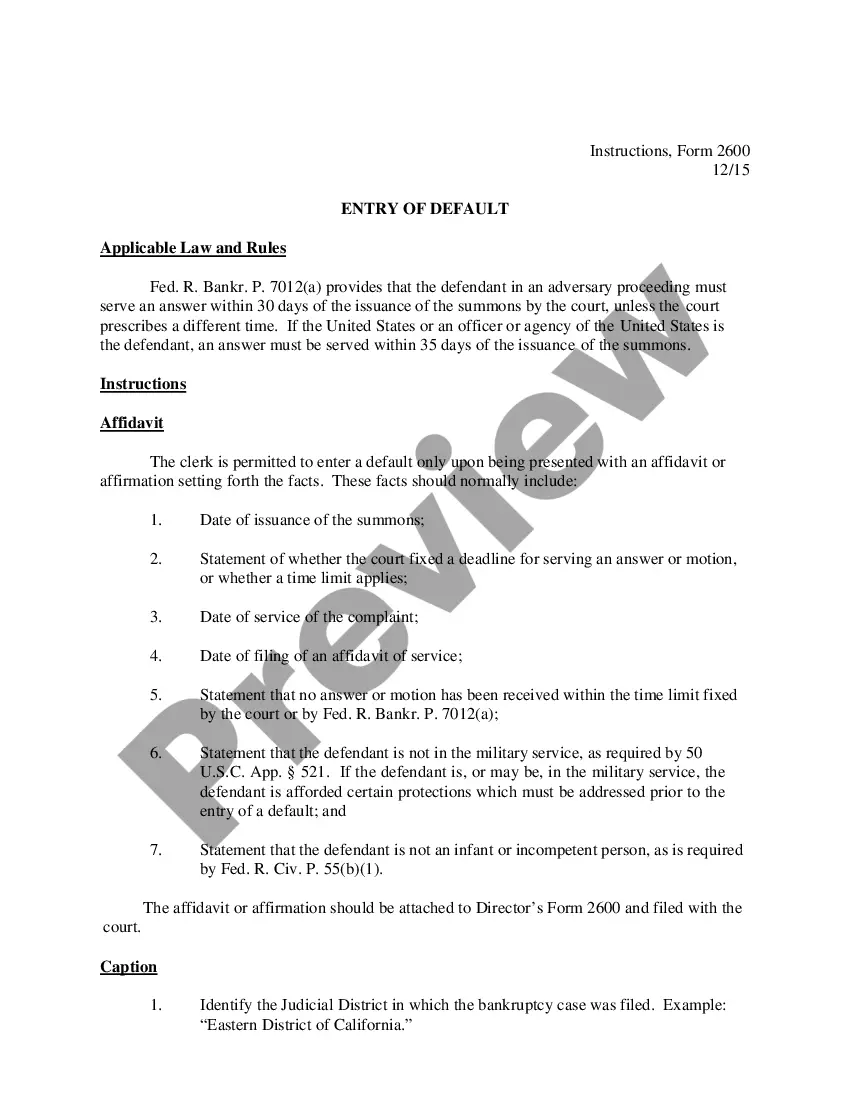
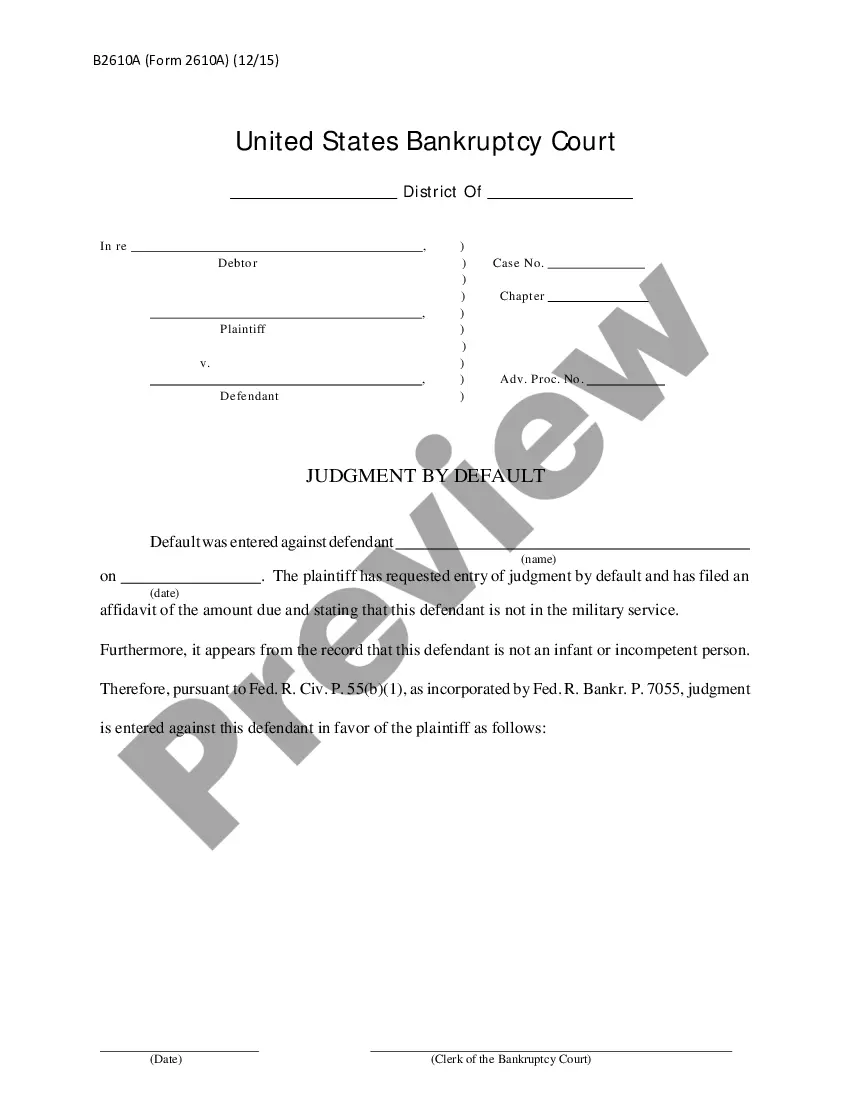
A North Carolina Entry of Default is a legal document that is filed with the court to establish that the defendant in a civil lawsuit has not responded to the complaint filed against them. It is a form of default judgment, which is a court ruling in favor of the plaintiff when the defendant does not appear in court or otherwise respond to the lawsuit. There are two types of North Carolina Entry of Default: Default Judgment of Absolute Divorce and Default Judgment of Absolute Nullity of Marriage. The Default Judgment of Absolute Divorce is used when the defendant fails to respond to the complaint for divorce, and the Default Judgment of Absolute Nullity of Marriage is used when the defendant fails to respond to the complaint for the annulment of the marriage. Both of these documents must be filed with the clerk of court in the county where the lawsuit was filed.
North Carolina Entry of Default
Description
Get your form ready online
Our built-in tools help you complete, sign, share, and store your documents in one place.
Make edits, fill in missing information, and update formatting in US Legal Forms—just like you would in MS Word.
Download a copy, print it, send it by email, or mail it via USPS—whatever works best for your next step.
Sign and collect signatures with our SignNow integration. Send to multiple recipients, set reminders, and more. Go Premium to unlock E-Sign.
If this form requires notarization, complete it online through a secure video call—no need to meet a notary in person or wait for an appointment.
We protect your documents and personal data by following strict security and privacy standards.

Make edits, fill in missing information, and update formatting in US Legal Forms—just like you would in MS Word.

Download a copy, print it, send it by email, or mail it via USPS—whatever works best for your next step.

Sign and collect signatures with our SignNow integration. Send to multiple recipients, set reminders, and more. Go Premium to unlock E-Sign.

If this form requires notarization, complete it online through a secure video call—no need to meet a notary in person or wait for an appointment.

We protect your documents and personal data by following strict security and privacy standards.
Looking for another form?

How to fill out North Carolina Entry Of Default?
How much time and resources do you typically allocate to creating official documentation.
There’s a more efficient approach to obtaining such forms than engaging legal experts or spending hours searching online for an appropriate template. US Legal Forms is the premier online repository that offers expertly crafted and validated state-specific legal documents for any purpose, including the North Carolina Entry of Default.
Another benefit of our library is that you can access previously downloaded documents that you securely store in your profile under the My documents tab. Retrieve them anytime and redo your paperwork as often as necessary.
Save time and effort handling official documentation with US Legal Forms, one of the most dependable online solutions. Register with us today!
- Review the form content to ensure it complies with your state regulations. To do this, examine the form description or utilize the Preview option.
- If your legal template does not meet your requirements, search for an alternative using the search bar located at the top of the page.
- If you already possess an account with us, Log In and download the North Carolina Entry of Default. Otherwise, continue to the next steps.
- Click Buy now once you locate the correct template. Choose the subscription plan that best fits your needs to gain access to our library’s complete offerings.
- Create an account and process your payment for the subscription. You can pay with your credit card or via PayPal - our service is entirely trustworthy for that.
- Download your North Carolina Entry of Default onto your device and complete it on a printed hard copy or electronically.
Form popularity
FAQ
The entry of a default order is a judicial declaration that a party has failed to respond to legal action within the required time. This order allows the plaintiff to request a judgment without the defendant’s involvement. It is an important legal mechanism in North Carolina that enables plaintiffs to seek resolution when faced with unresponsive defendants. Familiarizing yourself with the North Carolina Entry of Default can empower you to take the necessary steps in your legal matters.
A request to enter default is a formal petition to the court, indicating that the defendant has not responded to the complaint. This request initiates the process for obtaining a default judgment, allowing the plaintiff to proceed without the defendant's participation. It is a critical step in the North Carolina Entry of Default process, and understanding its significance can help you navigate your legal proceedings more effectively.
Filling out a request for entry of default involves completing a specific form that includes details about the case and the defendant's lack of response. You must provide relevant information, such as the case number, parties involved, and the reasons for default. It's essential to ensure that the form is accurate and submitted to the correct court. Resources like US Legal Forms can guide you through the North Carolina Entry of Default process, making it easier to manage.
If you receive notice of an entry of default against you, it is crucial to act quickly. You can file a motion to set aside the default, providing a valid reason for your failure to respond. This response must be filed in the appropriate court, along with any necessary documentation. Understanding the North Carolina Entry of Default process can help you safeguard your rights and navigate the situation effectively.
To put a default on someone in North Carolina, you must first file a complaint against them and ensure they are properly served. If the person does not respond within the legal timeframe, you can file a request for entry of default. This process is straightforward, but it’s important to follow specific legal procedures to avoid any complications. Utilizing resources like US Legal Forms can simplify your experience with the North Carolina Entry of Default.
Rule 55 of the North Carolina Rules of Civil Procedure addresses the entry of default and default judgment. This rule allows a plaintiff to request a default judgment if the defendant fails to respond to the complaint within the specified time frame. It is essential to follow the guidelines outlined in Rule 55 to ensure the process is executed correctly. By adhering to these rules, you can navigate the North Carolina Entry of Default effectively.
The entry of a default order signifies that a defendant has failed to respond to a complaint in a timely manner. In North Carolina, this allows the plaintiff to seek a judgment without the defendant's input. This process streamlines the legal proceedings, making it easier for plaintiffs to obtain relief when a defendant does not engage. Understanding the implications of the North Carolina Entry of Default can be crucial for any party involved in a lawsuit.