North Carolina Authorization to Consent for Health Care for a Minor - Statutory Form
What this document covers
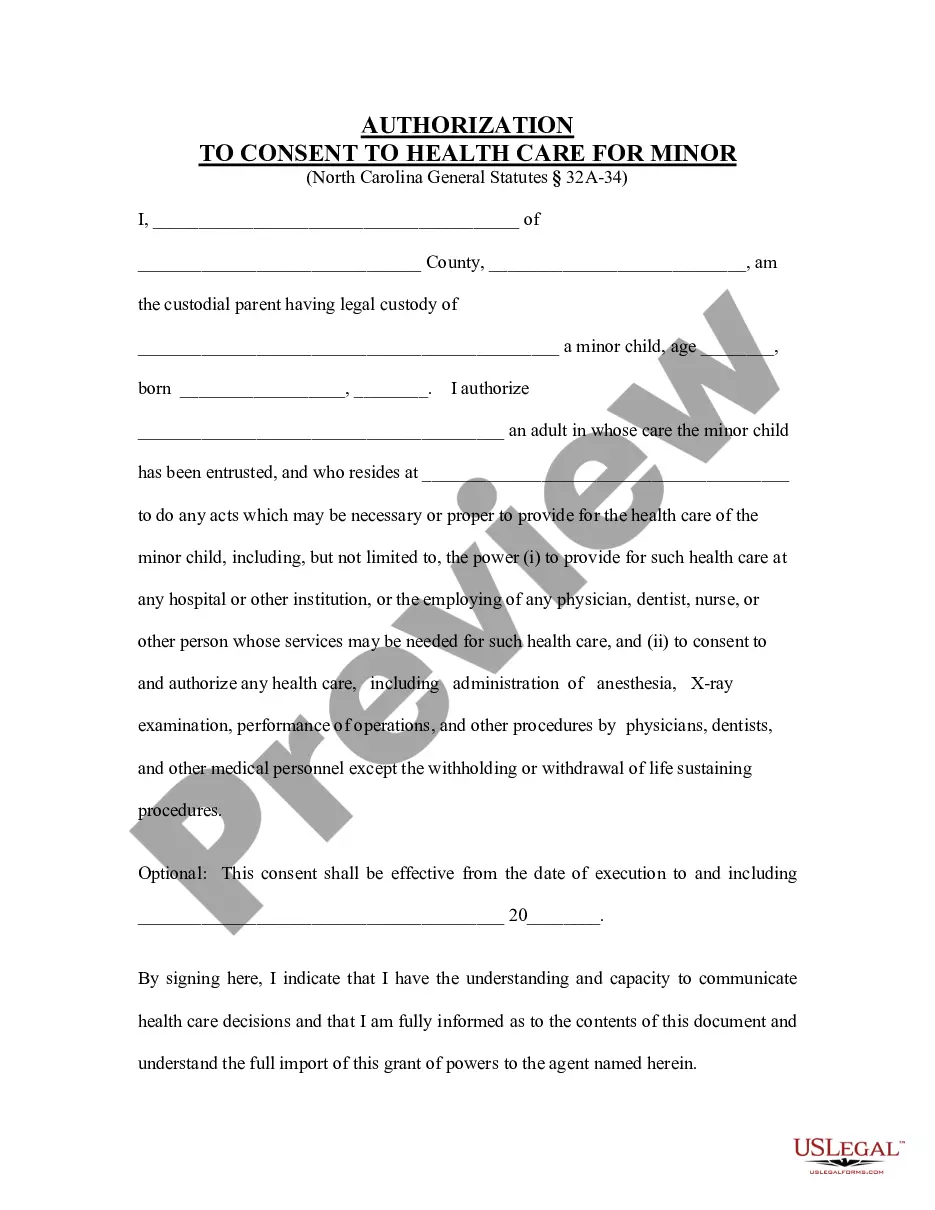
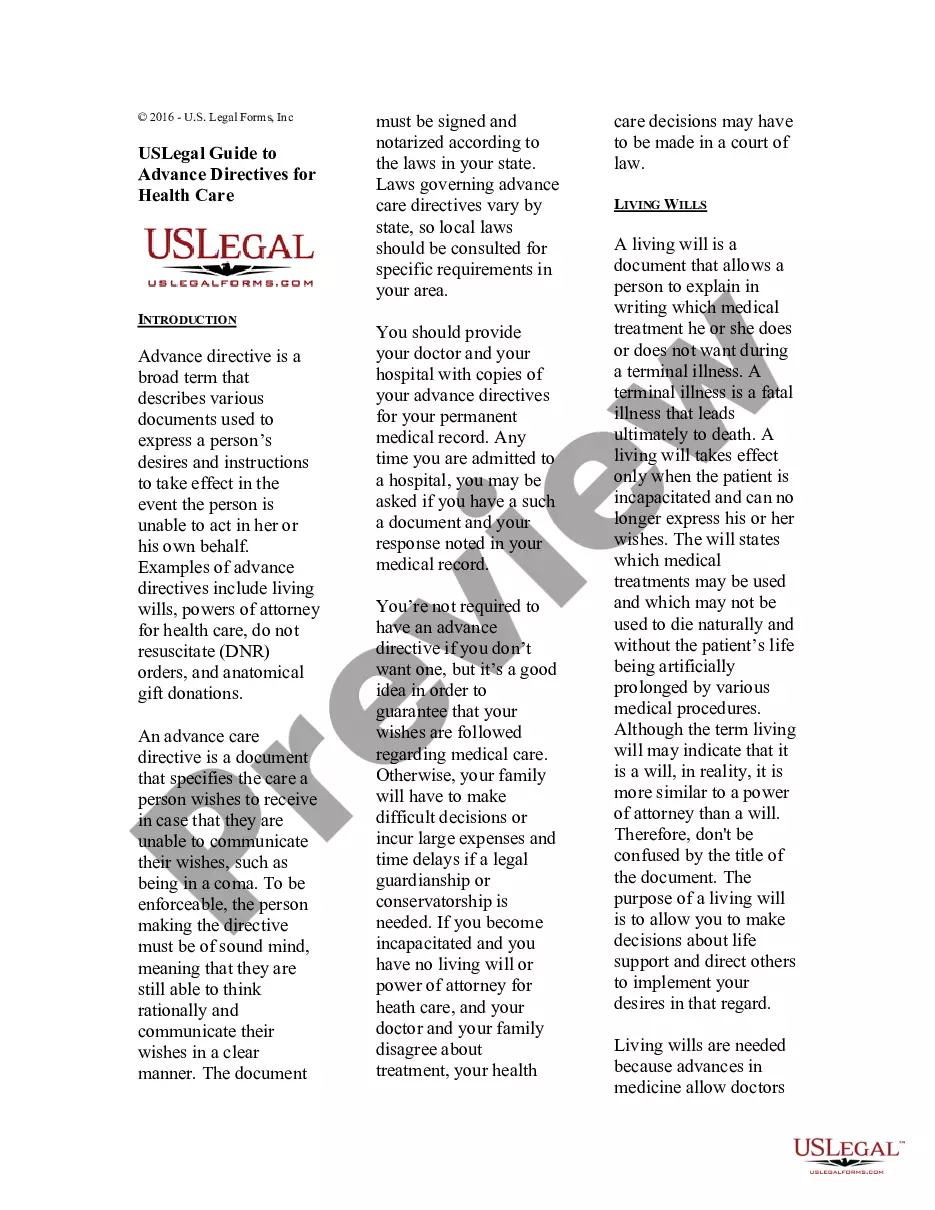
The Authorization to Consent for Health Care for a Minor is a statutory form outlined in the North Carolina General Statutes. This form allows a custodial parent to delegate authority to another adult to make necessary health care decisions for their minor child. Unlike similar forms, this specific document is tailored to comply with North Carolina law, ensuring that the consent given is valid and recognized in the jurisdiction.
Key components of this form
- Identification of the custodial parent with legal custody.
- Details about the minor child, including name, age, and date of birth.
- Identification of the adult authorized to make health care decisions.
- Scope of authority granted for health care decisions and actions.
- Effective date of the consent and duration of authority.
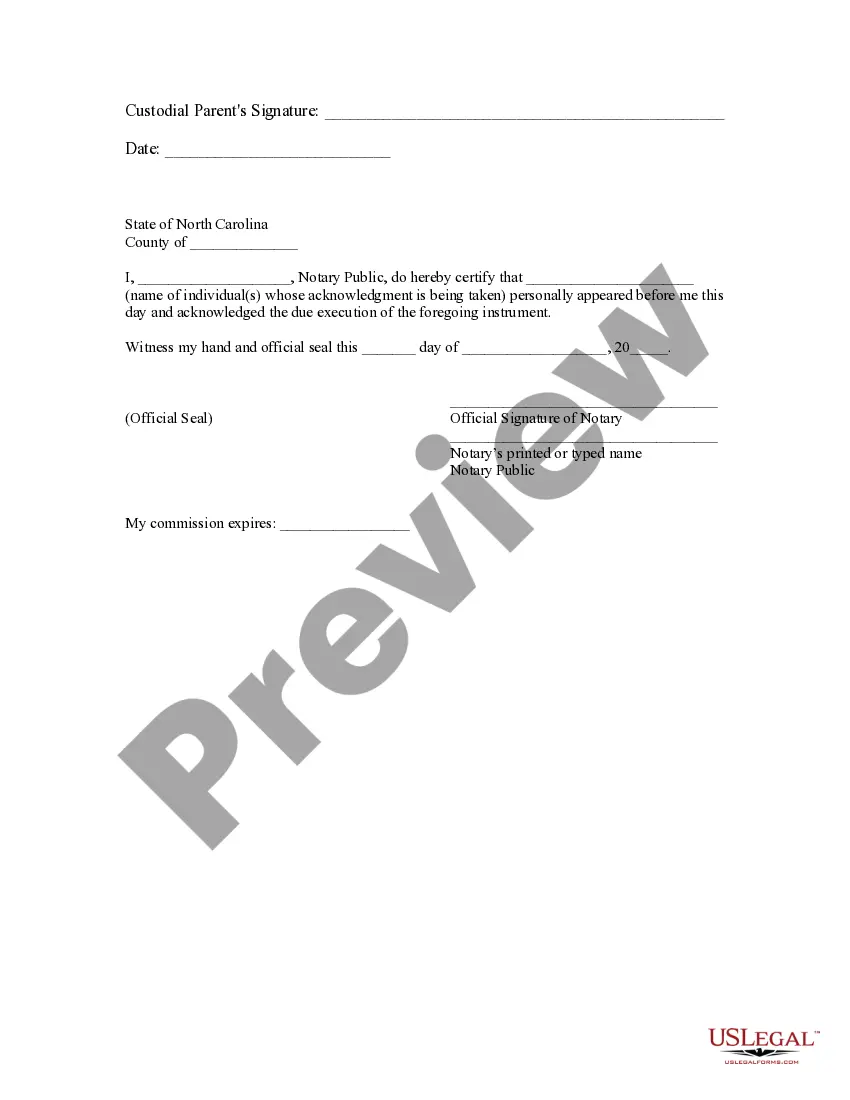
- Signatures of the custodial parent and a notary public for verification.
When to use this form
This form should be used when a custodial parent is unable to personally attend to their child's medical needs and wishes to appoint another responsible adult to act on their behalf. Situations may include hospitalization, urgent care visits, or when traveling away from home, where immediate health care decisions might be necessary.
Who can use this document
This form is intended for:
- Custodial parents who hold legal custody of a minor child.
- Parents who need to temporarily transfer health care authority to another adult.
- Guardians or custodians looking to formalize their capacity to make health care decisions for a minor.
Completing this form step by step
- Identify yourself as the custodial parent and provide your county and address.
- Enter the full name, age, and date of birth of the minor child.
- Specify the name and address of the adult being authorized to make decisions.
- Indicate the duration for which the consent is effective.
- Sign and date the form, followed by having it notarized to ensure its legal validity.
Notarization guidance
To make this form legally binding, it must be notarized. Our online notarization service, powered by Notarize, lets you verify and sign documents remotely through an encrypted video session.
Get your form ready online
Our built-in tools help you complete, sign, share, and store your documents in one place.
Make edits, fill in missing information, and update formatting in US Legal Forms—just like you would in MS Word.
Download a copy, print it, send it by email, or mail it via USPS—whatever works best for your next step.
Sign and collect signatures with our SignNow integration. Send to multiple recipients, set reminders, and more. Go Premium to unlock E-Sign.
If this form requires notarization, complete it online through a secure video call—no need to meet a notary in person or wait for an appointment.
We protect your documents and personal data by following strict security and privacy standards.

Make edits, fill in missing information, and update formatting in US Legal Forms—just like you would in MS Word.

Download a copy, print it, send it by email, or mail it via USPS—whatever works best for your next step.

Sign and collect signatures with our SignNow integration. Send to multiple recipients, set reminders, and more. Go Premium to unlock E-Sign.

If this form requires notarization, complete it online through a secure video call—no need to meet a notary in person or wait for an appointment.

We protect your documents and personal data by following strict security and privacy standards.
Mistakes to watch out for
- Failing to specify the full name and address of the authorized adult.
- Not including the minor child's complete information (name, age, birth date).
- Omitting the duration for which the authority is granted.
- Not having the document notarized, if required by local laws.
- Forgetting to sign and date the form before completion.
Advantages of online completion
- Convenience of downloading the form and completing it at your own pace.
- Editability allows for customization to fit specific needs.
- Access to reliable legal templates drafted by licensed attorneys.
- Streamlined process for notarization, saving time and effort.
Quick recap
- The Authorization to Consent for Health Care for a Minor is essential for custodial parents needing to delegate medical decision-making.
- Filling out the form correctly and ensuring it is notarized is key to its validity.
- This form is specific to North Carolina and should be used by parents residing in or traveling within the state.
Looking for another form?
Form popularity
FAQ
Adults and emancipated minors sign their own authorization form as long as they have authority to make health decisions for themselves. HIPAA defers to state law to define who signs an authorization on behalf of an unemancipated minor.
For example, California gives minors the right to control their own health care information when they otherwise have the right to consent to care.When a parent has signed an agreement to respect the confidentiality between the health care provider and the minor.
In fact, HIPAA offers no protection to minors and requires healthcare providers to release a minor patient's medical records to the child's parent or guardian when requested.
For example, California gives minors the right to control their own health care information when they otherwise have the right to consent to care.When a parent has signed an agreement to respect the confidentiality between the health care provider and the minor.
California law authorizes the parent(s) or guardian of a minor to give informed consent for most medical decisions, including mental health treatment, on behalf of the minor.
The law authorizes parent(s) or guardian(s) of a minor (anyone under the age of 18) to give informed consent for most medical decisions on behalf of the child. Laws vary from state to state, but here is a general approach to the situation.
In most states, age 18 is the age of majority and thus, before treating a patient under the age of 18, consent must be obtained from the patient's parent or legal guardian.
Medical, dental and health services may be rendered to minors of any age without the consent of a parent or legal guardian when, in the physician's judgment, an attempt to secure consent would result in delay of treatment which would increase the risk to the minor's life or health.