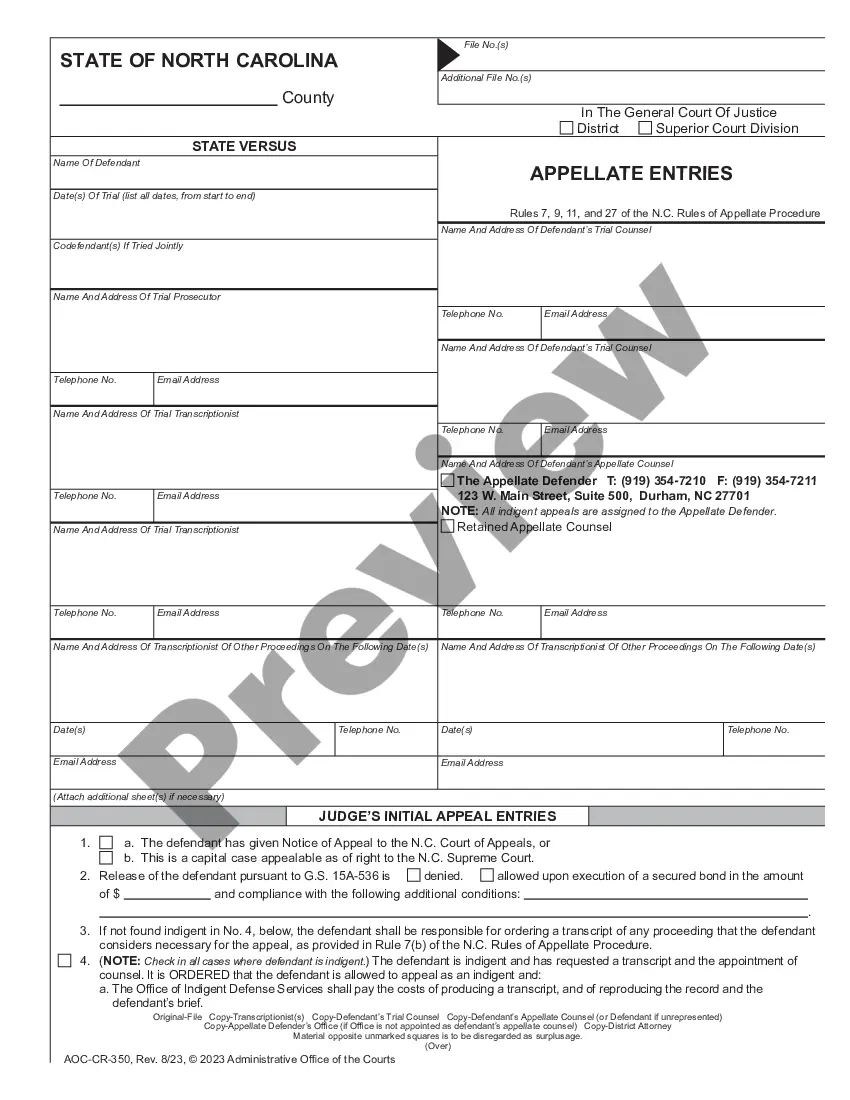
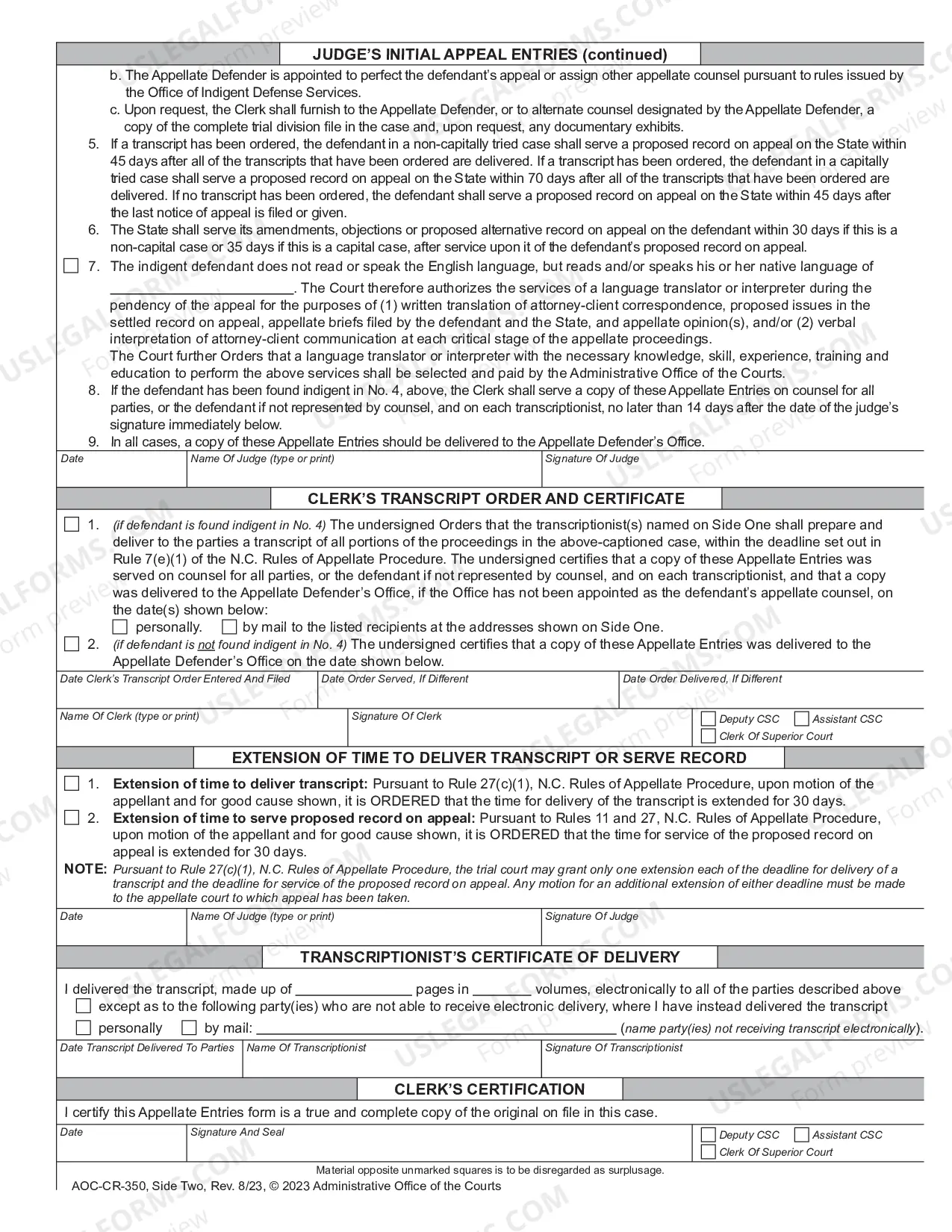
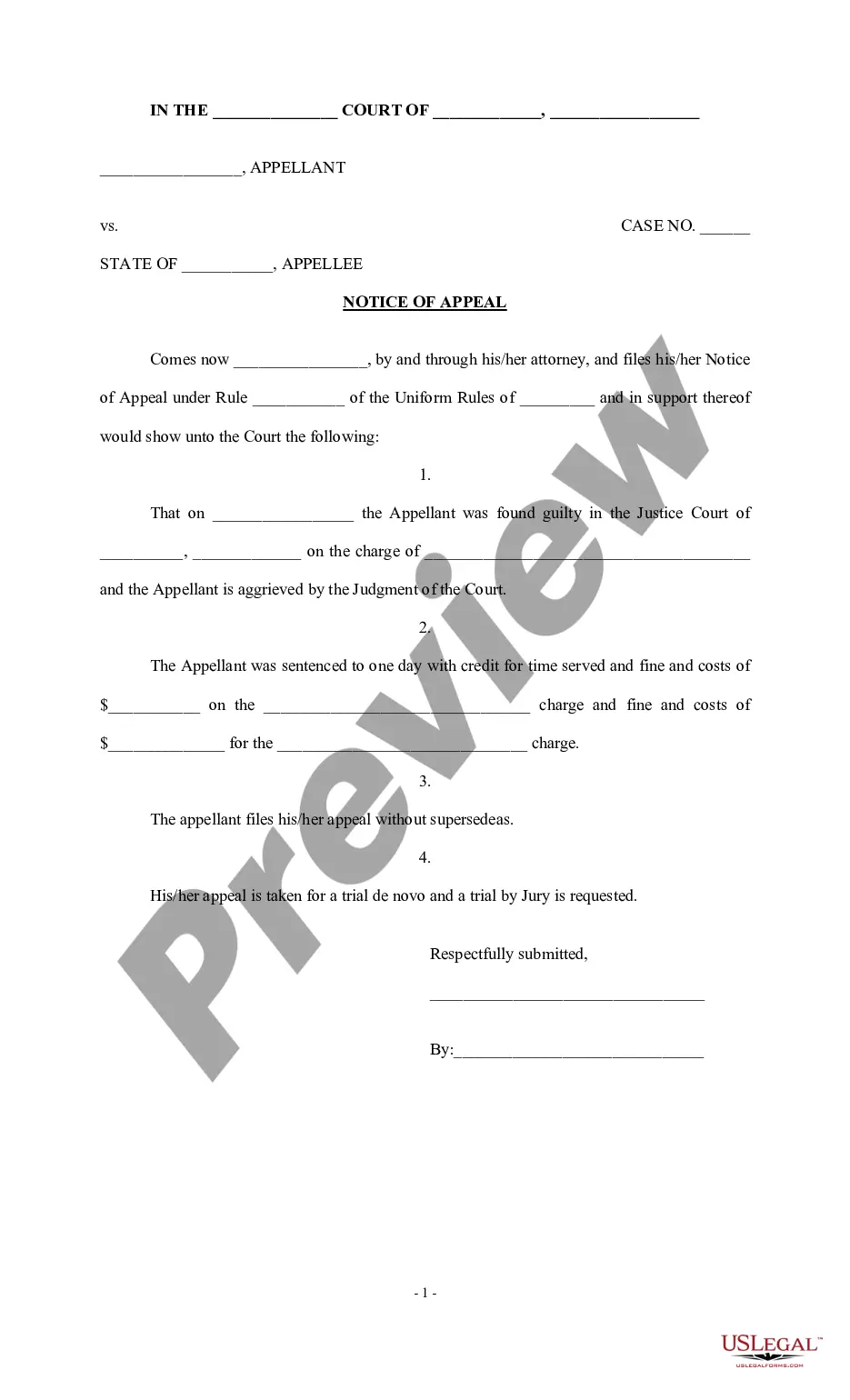
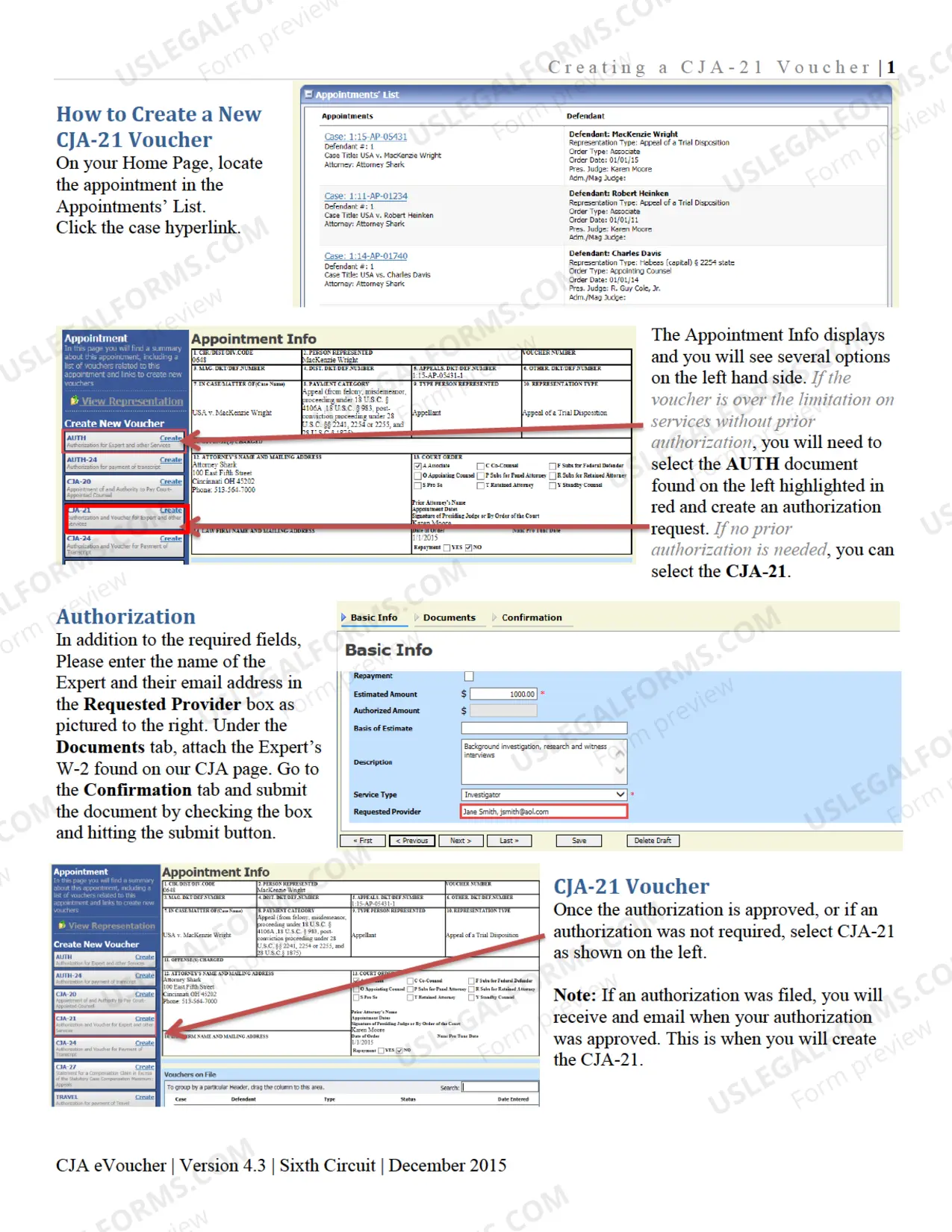
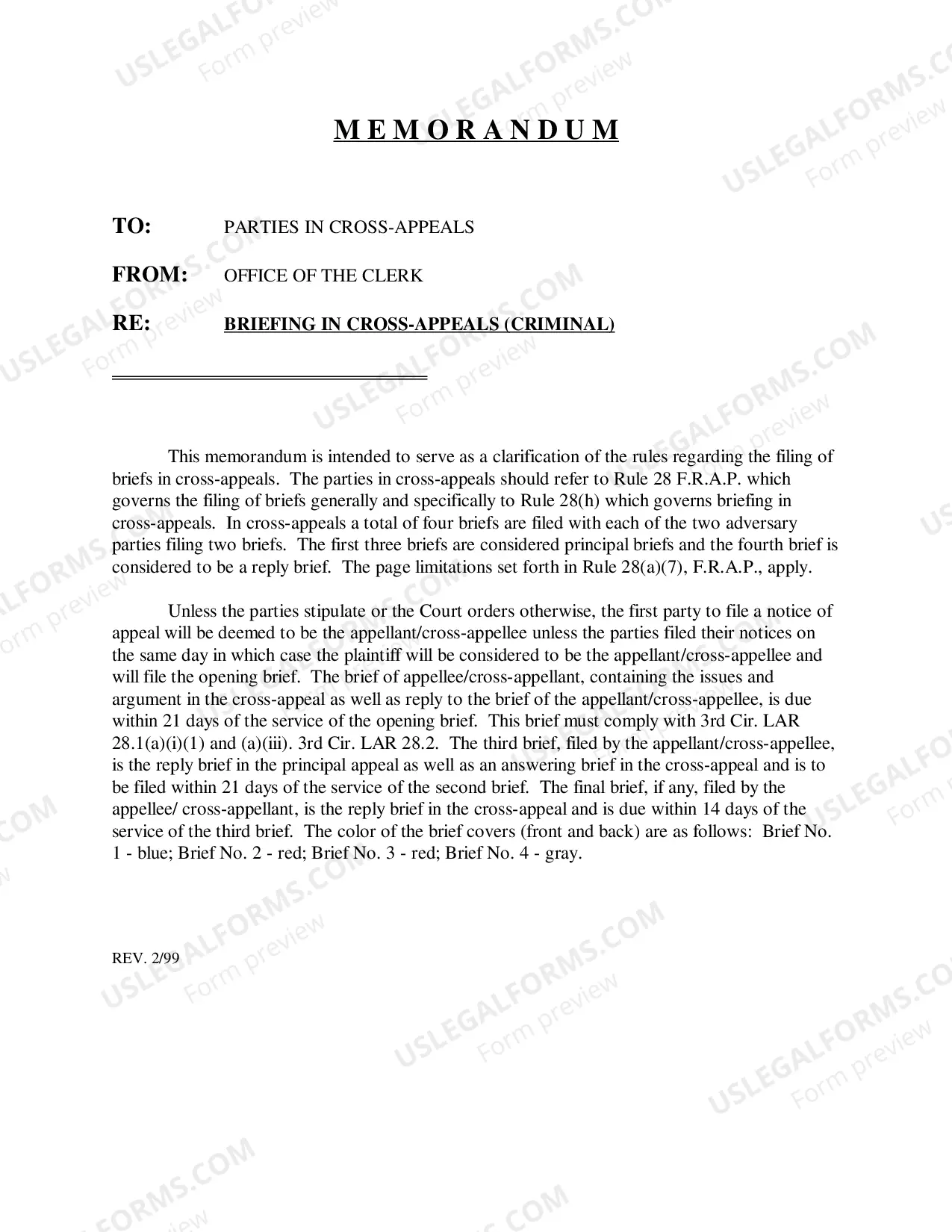
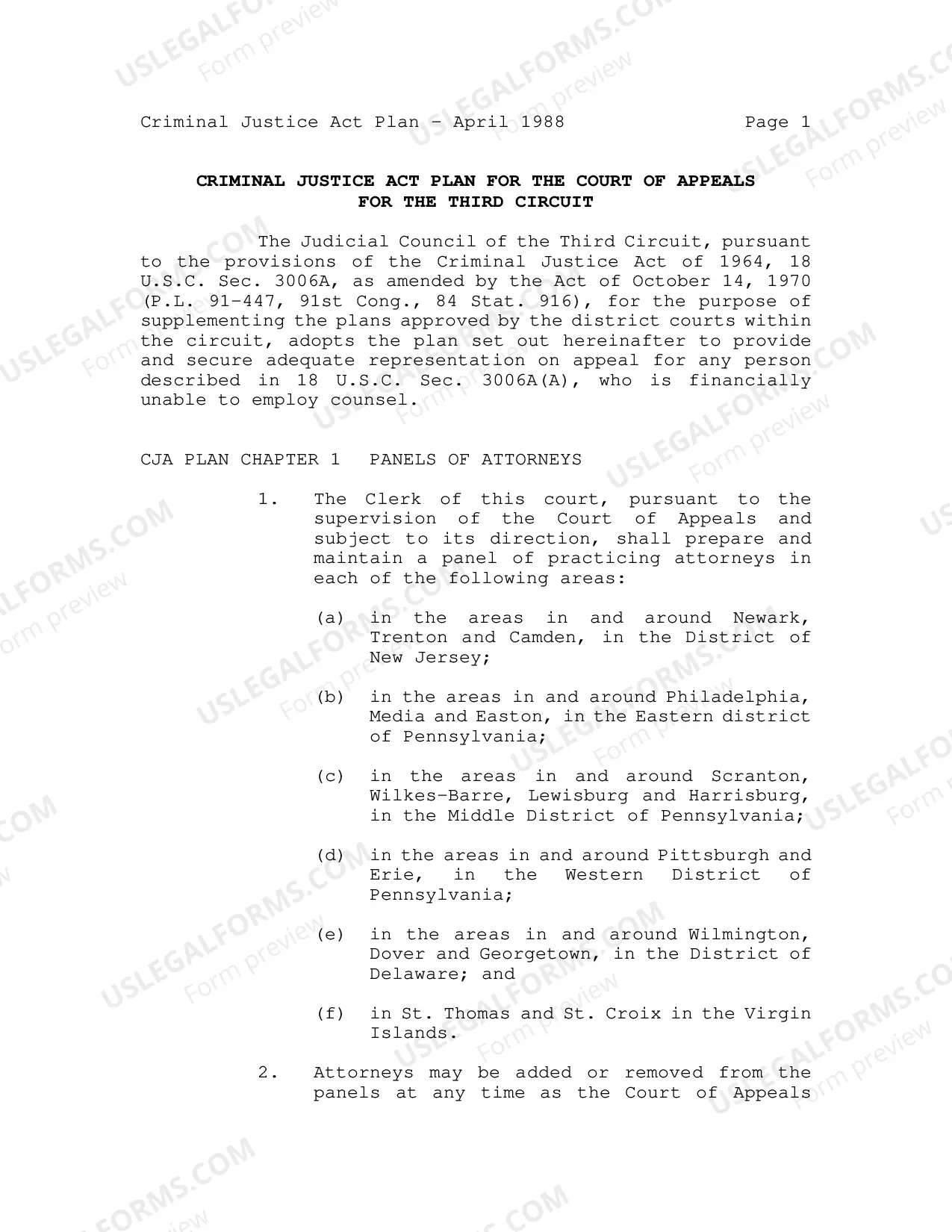
Appellate Entries: This is an official form from the North Carolina Administration of the Courts (AOC), which complies with all applicable laws and statutes. USLF amends and updates the forms as is required by North Carolina statutes and law.
North Carolina Appellate Entries
Instant download
This website is not affiliated with any governmental entity
Public form
Description
Free preview
Get your form ready online
Our built-in tools help you complete, sign, share, and store your documents in one place.
Built-in online Word editor
Make edits, fill in missing information, and update formatting in US Legal Forms—just like you would in MS Word.
Export easily
Download a copy, print it, send it by email, or mail it via USPS—whatever works best for your next step.
E-sign your document
Sign and collect signatures with our SignNow integration. Send to multiple recipients, set reminders, and more. Go Premium to unlock E-Sign.
Notarize online 24/7
If this form requires notarization, complete it online through a secure video call—no need to meet a notary in person or wait for an appointment.
Store your document securely
We protect your documents and personal data by following strict security and privacy standards.

Make edits, fill in missing information, and update formatting in US Legal Forms—just like you would in MS Word.

Download a copy, print it, send it by email, or mail it via USPS—whatever works best for your next step.

Sign and collect signatures with our SignNow integration. Send to multiple recipients, set reminders, and more. Go Premium to unlock E-Sign.

If this form requires notarization, complete it online through a secure video call—no need to meet a notary in person or wait for an appointment.

We protect your documents and personal data by following strict security and privacy standards.
Looking for another form?
How to fill out North Carolina Appellate Entries?
Steer clear of expensive lawyers and locate the North Carolina Appellate Entries you seek at an affordable rate on the US Legal Forms site.
Utilize our straightforward categories feature to discover and download legal and tax documents. Examine their details and preview them prior to downloading. Additionally, US Legal Forms provides users with detailed guidance on how to obtain and complete each form.
Simply click Download and locate your form in the My documents section. You can save the form to your device or print it out. After downloading, you can fill out the North Carolina Appellate Entries manually or with the assistance of editing software. Print it and reuse the template multiple times. Achieve more for less with US Legal Forms!
- US Legal Forms users simply need to Log In and download the specific form they require to their My documents section.
- Those who do not have a subscription yet should follow the guidelines below.
- Ensure the North Carolina Appellate Entries is permissible for use in your jurisdiction.
- If possible, review the details and utilize the Preview feature before downloading the forms.
- If you believe the form meets your requirements, select Buy Now.
- If the form is inaccurate, utilize the search box to find the correct one.
- Next, create your account and choose a subscription option.
- Make a payment via card or PayPal.
- Choose to receive the document in PDF or DOCX format.
Form popularity
FAQ
Appellate courts hear and review appeals from legal cases that have already been heard and ruled on in lower courts. Appellate courts exist for both state and federal-level matters but feature only a committee of judges (often called justices) instead of a jury of one's peers.
North Carolina's only intermediate appellate court. The North Carolina Court of Appeals is the state's only intermediate appellate court. Our judicial system has three levels of courts: Trial courts (District courts and Superior courts), the Court of Appeals, and the Supreme Court of North Carolina.
Information about criminal cases in the North Carolina court system can be accessed by visiting a public, self-service terminal located at a clerk of court's office in any county. You can use the terminal to search for cases by defendant name, case number, or victim or witness name.
To obtain access to those records, researchers must contact the appropriate federal court. Online access to case and docket information is provided for a fee by the Administrative Office of the U.S. Courts through PACER. The court may refer you to a Federal Records Center to obtain copies.
Select the 'Search online' button. Register or log in to the NSW Online Registry. Search for a civil case to which you are a party. Select the relevant case. View the different types of information by clicking the tabs (Proceedings, Filed Documents, Court Dates, Judgments and Orders).
Information about criminal cases in the North Carolina court system can be accessed by visiting a public, self-service terminal located at a clerk of court's office in any county. You can use the terminal to search for cases by defendant name, case number, or victim or witness name.
In North Carolina, the Appellate Division is comprised of both the NC Supreme Court and the NC Court of Appeals. The Supreme Court is the highest court in the state.
Generally, on these grounds, litigants have the right to an appellate court review of the trial court's actions. In criminal cases, the government does not have the right to appeal.
The North Carolina Department of Public Safety provides statewide criminal histories and charges a $14 processing fee. To obtain criminal records at county level, contact the various County Clerks of Court. The breadth of criminal records for North Carolina available at StateRecords.org varies from county to county.