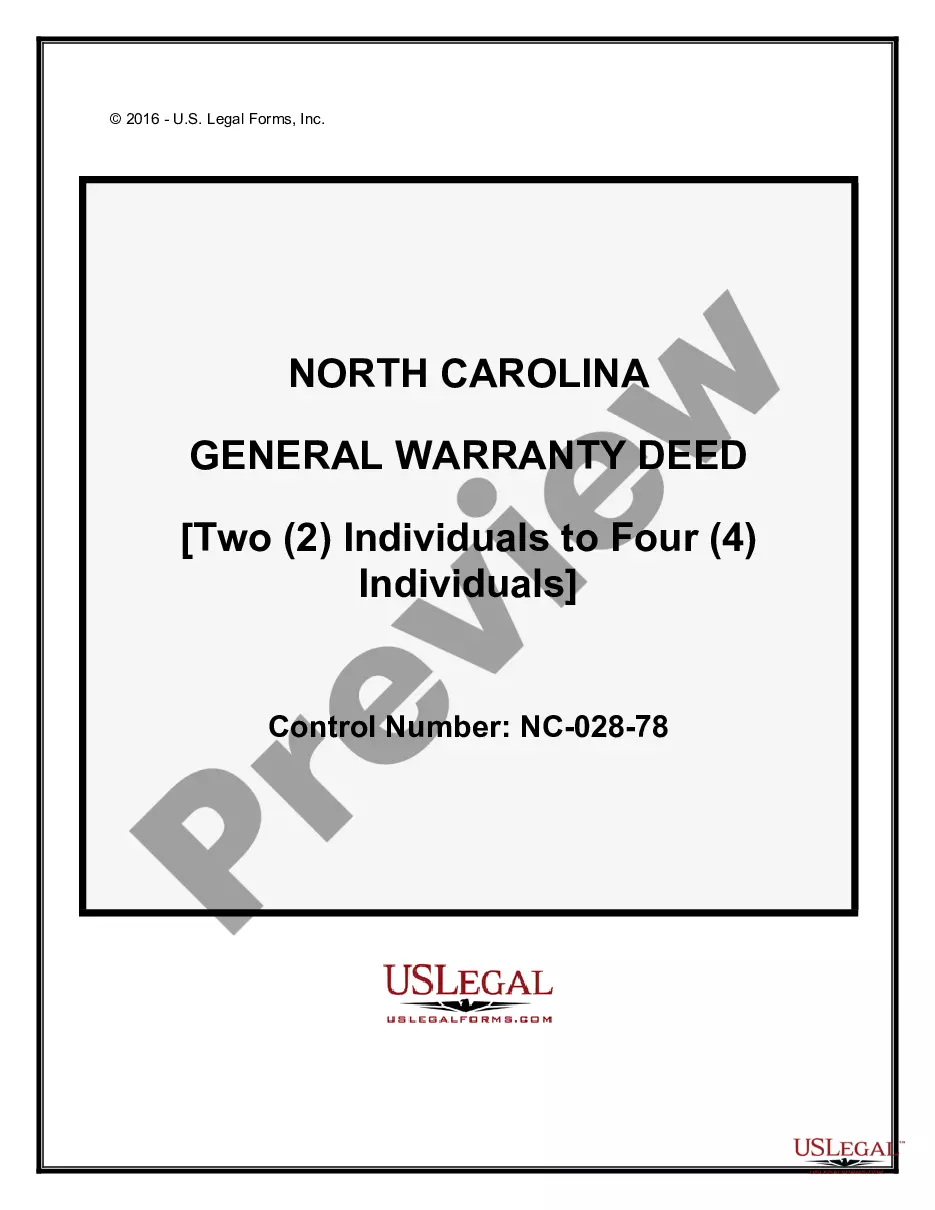
North Carolina General Warranty Deed from Two Individuals to Four Individuals
What is this form?
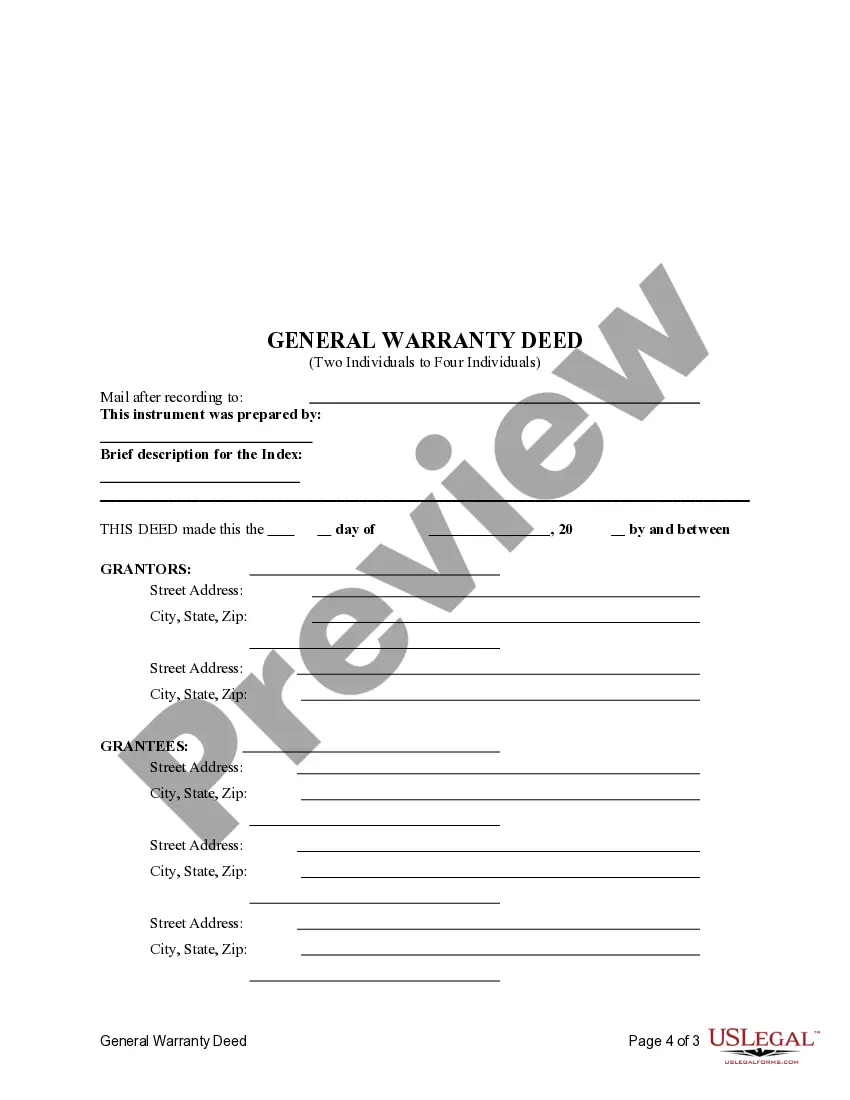
This General Warranty Deed allows two individuals (the Grantors) to convey property ownership to four individuals (the Grantees). It ensures the Grantees receive clear, marketable title to the property, with the Grantors warranting that there are no defects in the title. This deed differs from other deed types as it offers the highest level of protection for the Grantees, including a guarantee against future claims on the property.
What’s included in this form
- Identification of Grantors and Grantees
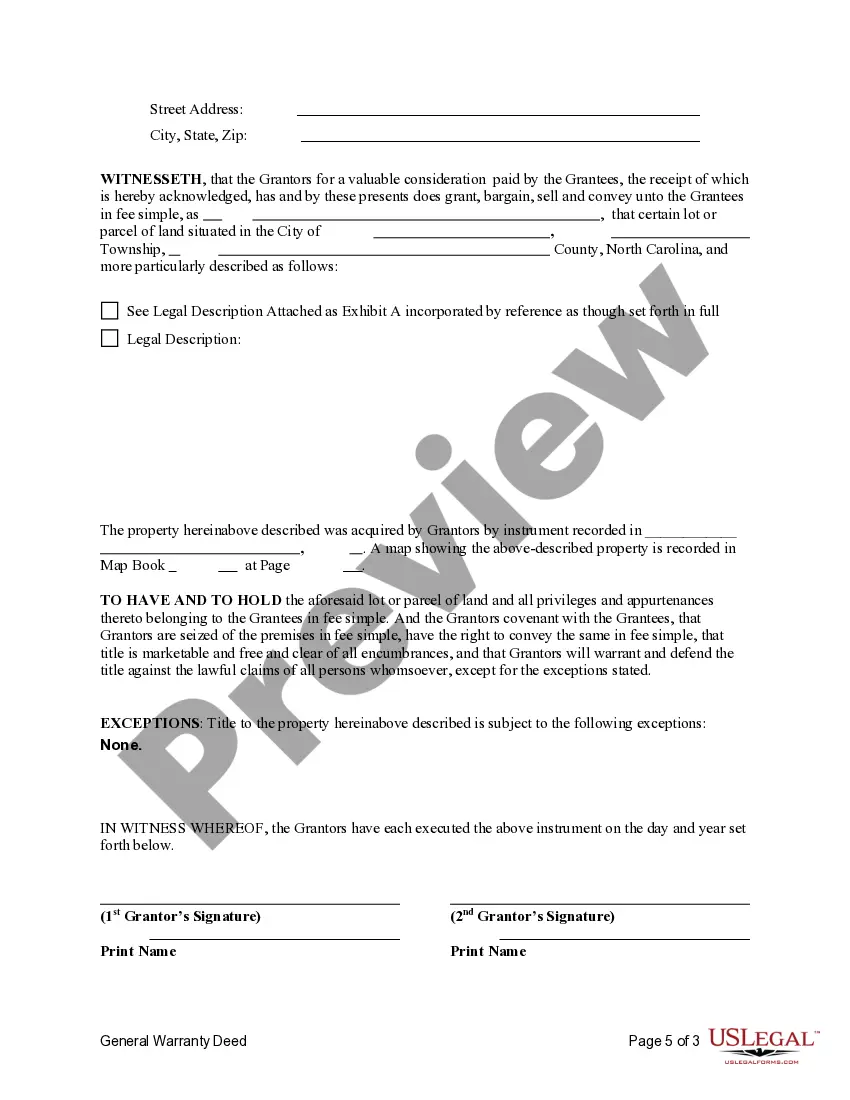
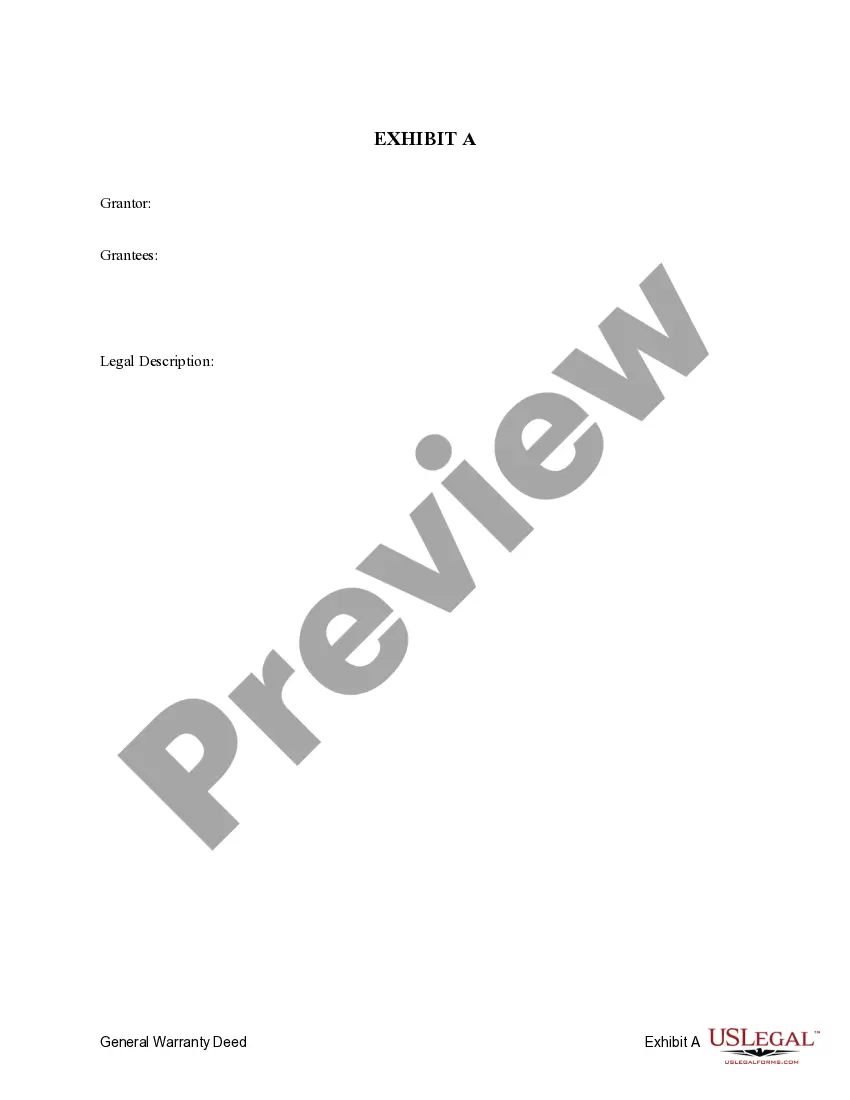
- Description of the property being conveyed
- Warranties made by the Grantors regarding the title of the property
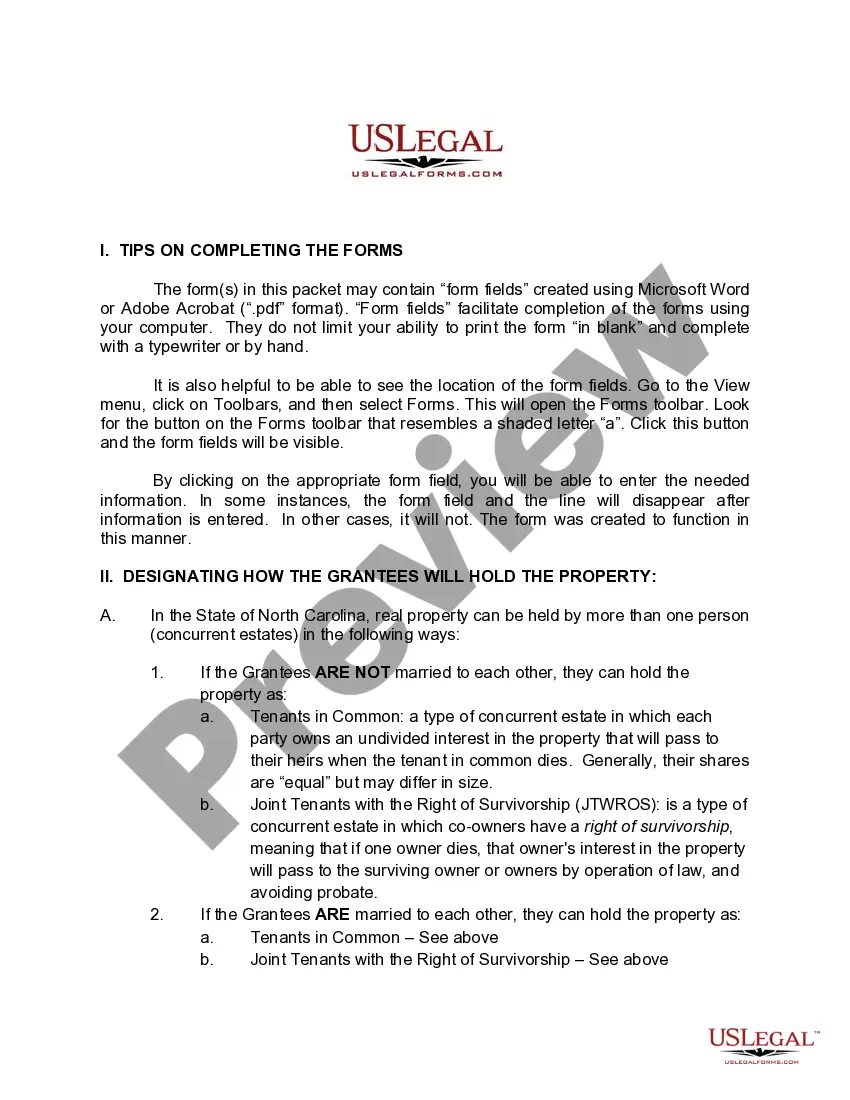
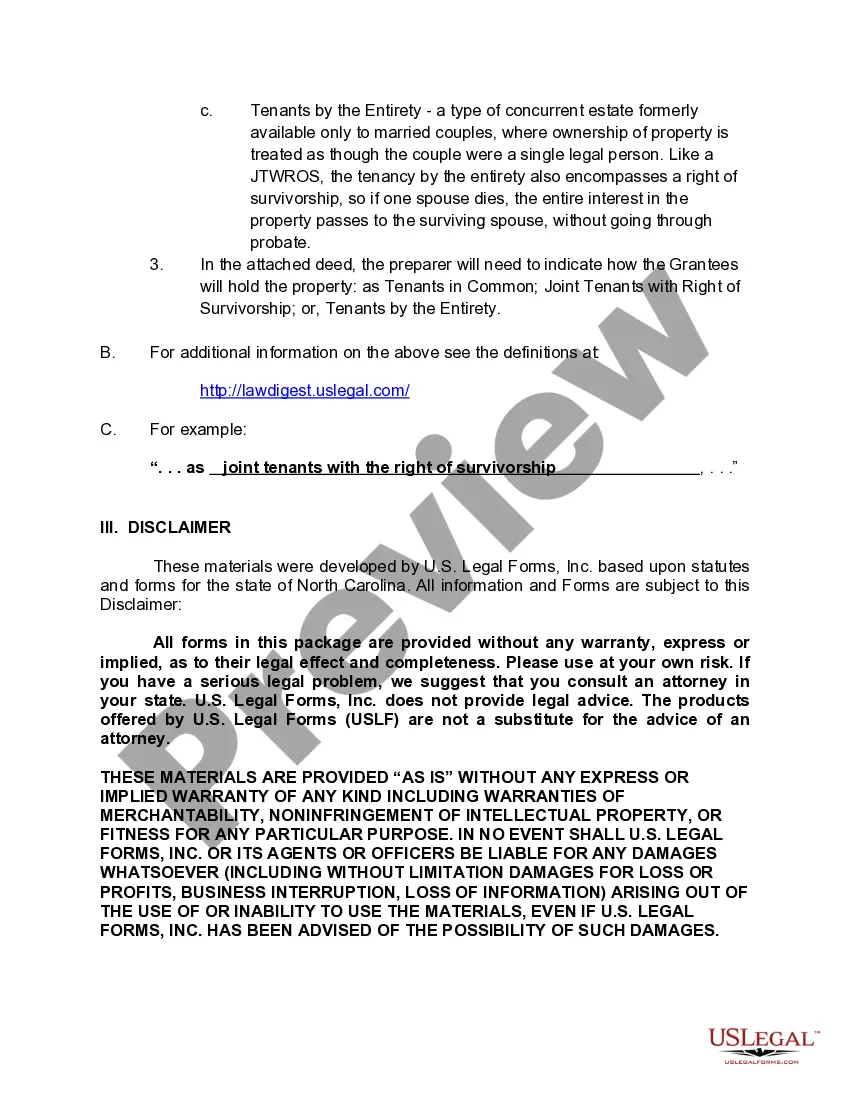
- Designation of how the Grantees will hold the property (e.g., Tenants in Common, Joint Tenants with Right of Survivorship)
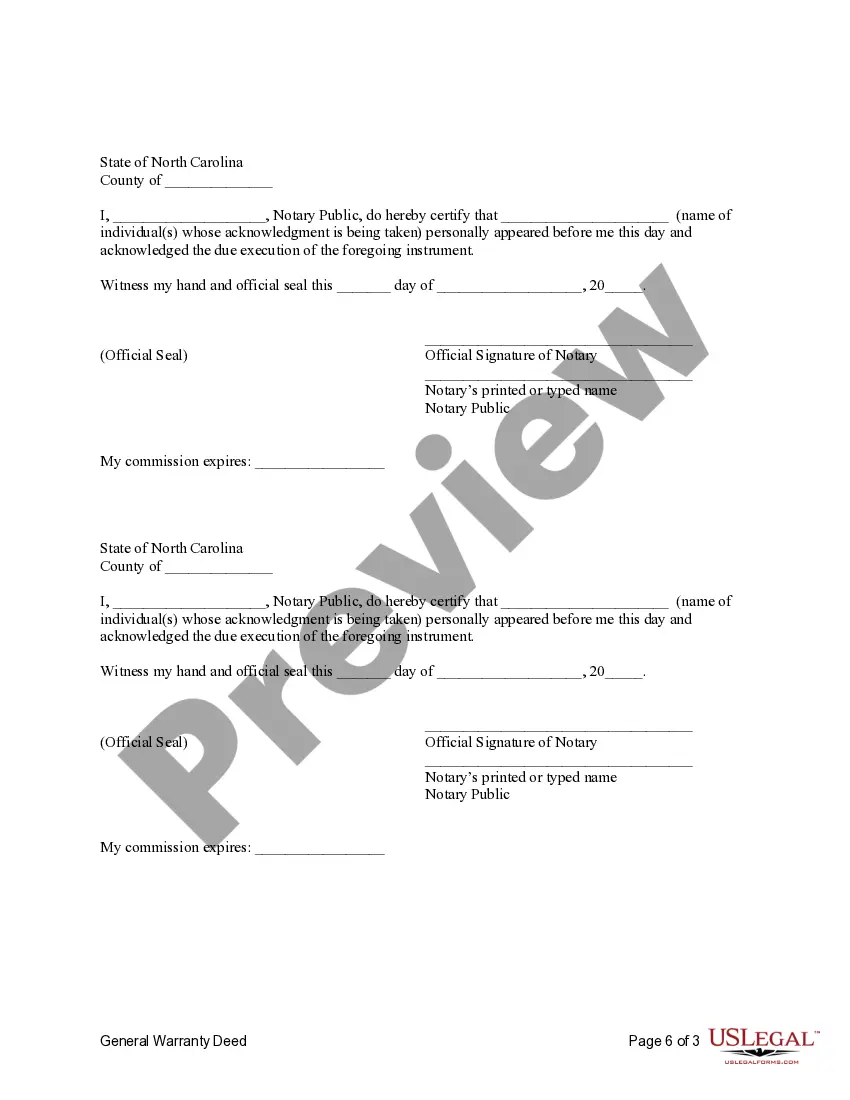
- Notary acknowledgment section for legal validation



Situations where this form applies
This form is typically used when two individuals wish to transfer property ownership to four individuals. Situations may include family arrangements, joint investments, or co-ownership arrangements. It provides legal assurance that the title is free from disputes or claims, making it essential in real estate transactions between multiple parties.
Who needs this form
- Individuals transferring property ownership to a group
- Couples or co-owners looking to formally designate how property will be held
- Real estate agents or lawyers needing a form for property transactions
- Anyone seeking to ensure protection and clarity of title in property transactions
How to complete this form
- Identify the parties by entering the names of the Grantors and Grantees.
- Provide a detailed description of the property being conveyed.
- Select how the Grantees will hold the property: as Tenants in Common, Joint Tenants with Right of Survivorship, or Tenants by the Entirety.
- Ensure all Grantors sign the deed in the appropriate sections.
- Have the deed notarized to validate the signatures and execution.
Does this document require notarization?
Yes, this form must be notarized to be legally valid. It is essential to have the signatures officially witnessed by a notary public, ensuring that the document holds legal weight in property transactions.
Get your form ready online
Our built-in tools help you complete, sign, share, and store your documents in one place.
Make edits, fill in missing information, and update formatting in US Legal Forms—just like you would in MS Word.
Download a copy, print it, send it by email, or mail it via USPS—whatever works best for your next step.
Sign and collect signatures with our SignNow integration. Send to multiple recipients, set reminders, and more. Go Premium to unlock E-Sign.
If this form requires notarization, complete it online through a secure video call—no need to meet a notary in person or wait for an appointment.
We protect your documents and personal data by following strict security and privacy standards.

Make edits, fill in missing information, and update formatting in US Legal Forms—just like you would in MS Word.

Download a copy, print it, send it by email, or mail it via USPS—whatever works best for your next step.

Sign and collect signatures with our SignNow integration. Send to multiple recipients, set reminders, and more. Go Premium to unlock E-Sign.

If this form requires notarization, complete it online through a secure video call—no need to meet a notary in person or wait for an appointment.

We protect your documents and personal data by following strict security and privacy standards.
Mistakes to watch out for
- Failing to include all Grantors' signatures.
- Not specifying how the Grantees will hold the property.
- Omitting or incorrectly describing the property details.
- Neglecting to notarize the deed, potentially invalidating it.
Why use this form online
- Convenient access to legally vetted form templates provides peace of mind.
- Editability allows for customization according to specific needs.
- Fast and efficient completion process without the need for in-person appointments.
- Secure storage and retrieval of documents ensure important papers are always accessible.
Legal use & context
The General Warranty Deed is a legal instrument that establishes a thorough jurisdiction over the property being transferred. It offers protections and warranties to the grantees, minimizing risks associated with property ownership disputes in the future. However, users should be aware that state-specific laws may impact the enforceability of the deed.
Main things to remember
- A General Warranty Deed provides strong assurances regarding property ownership.
- Proper completion of the form is crucial for legality and effectiveness.
- Understanding how grantees will hold property is important to future ownership rights.
- Always verify local regulations to ensure compliance and avoid common pitfalls.
Looking for another form?

Form popularity
FAQ
The name and address of the seller (called the grantor) The name and address of the buyer (called the grantee) A legal description of the property (found on the previous deed) A statement that the grantor is transferring the property to the grantee.
Typically, the lender will provide you with a copy of the deed of trust after the closing. The original warranty deeds are often mailed to the grantee after they are recorded. These are your original copies and should be kept in a safe place, such as a fireproof lockbox or a safe deposit box at a financial institution.
To transfer ownership of land in North Carolina, the owner must execute and file a new deed with the register of deeds for the North Carolina county where the property is located.
Fill out the "grantor" section of the warranty deed. The grantors are the givers, or current owners, of the property. Use the legal name of each grantor and insert current addresses after each grantor's name.
If you've recently married and already own a home or other real estate, you may want to add your new spouse to the deed for your property so the two of you own it jointly. To add a spouse to a deed, all you have to do is literally fill out, sign and record a new deed in your county recorder's office.
Under the Grantor section of the deed, write the name of the person transferring title. Under Grantee, write the name of the person receiving title. Describe the parcel of land. Use the street address and include the North Carolina County where the land is located.
The North Carolina general warranty deed is used to transfer property in North Carolina from one person to another legally. A warranty deed comes with a guarantee from the seller that the property has clear title.
To make the form legally binding, you must sign it in front of a notary public. You must then file your signed and notarized deed with the county office that's in charge of recording property documents. Once the grantee signs the warranty deed, he/she legally has ownership and claim to the property.
Recording All deeds must be filed in the Register of Deeds in the County where the real estate is located. Signing (§ 47-38) All deeds must be signed with the Grantor(s) signing in front of a Notary Public.