North Carolina Quitclaim Deed - Husband and Wife to Three Individuals
What is this form?
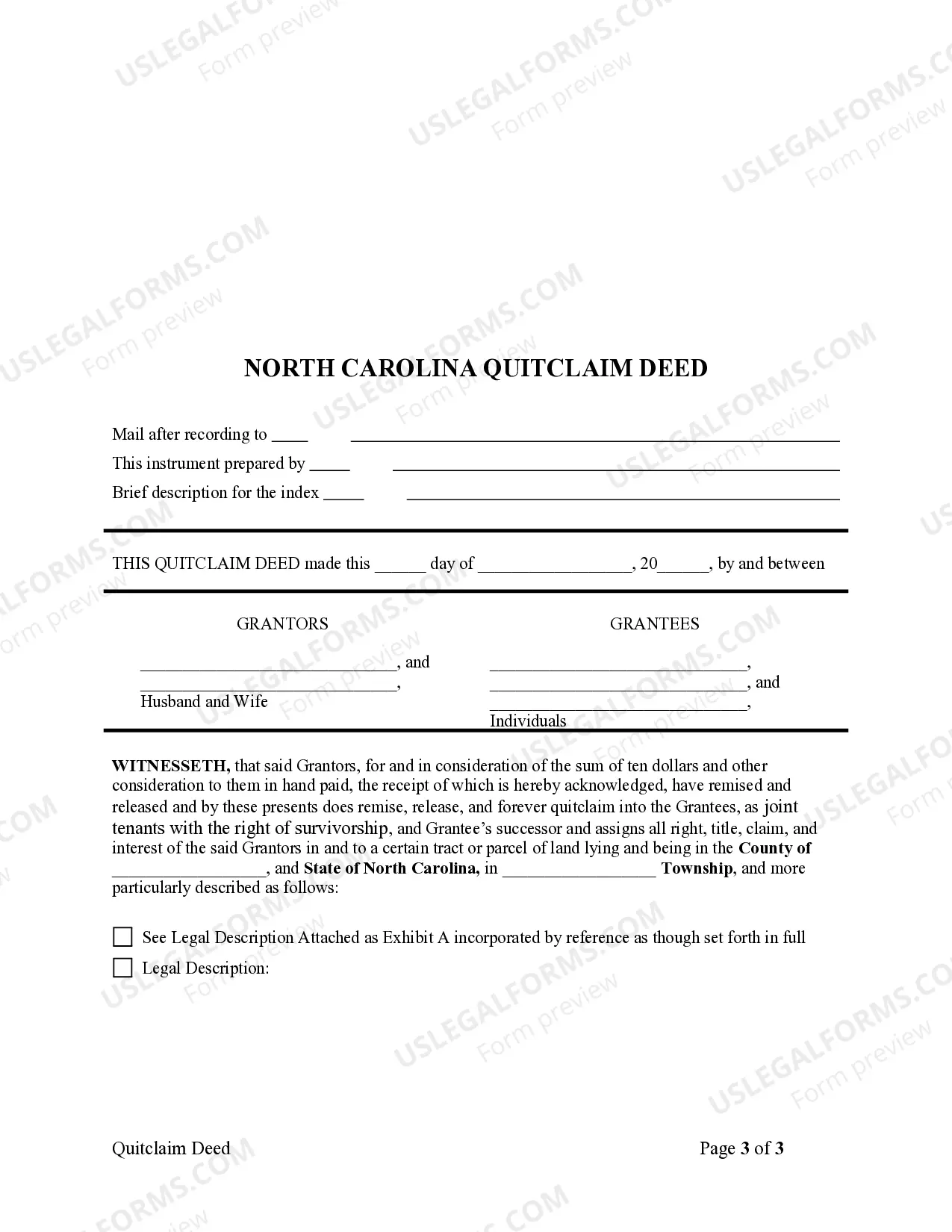
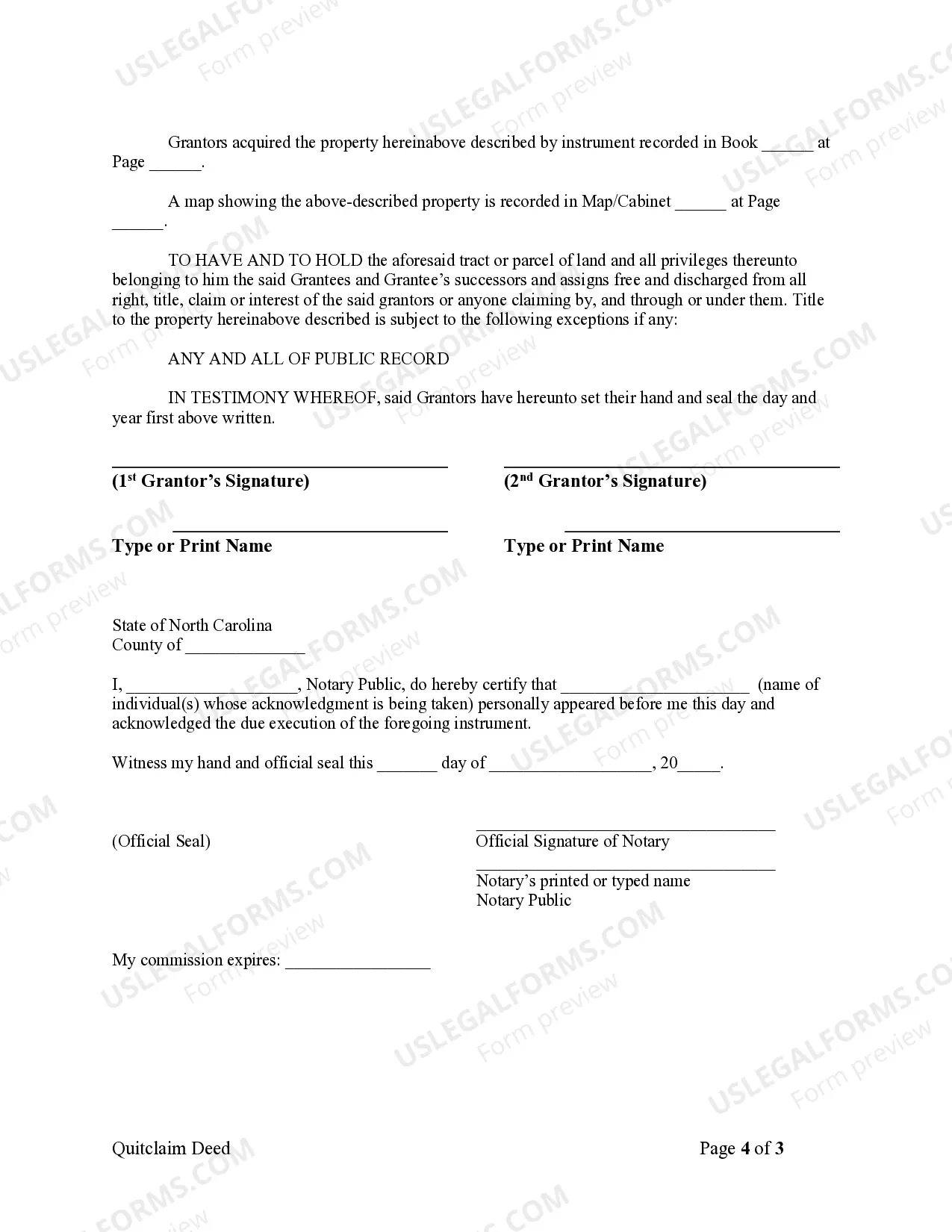
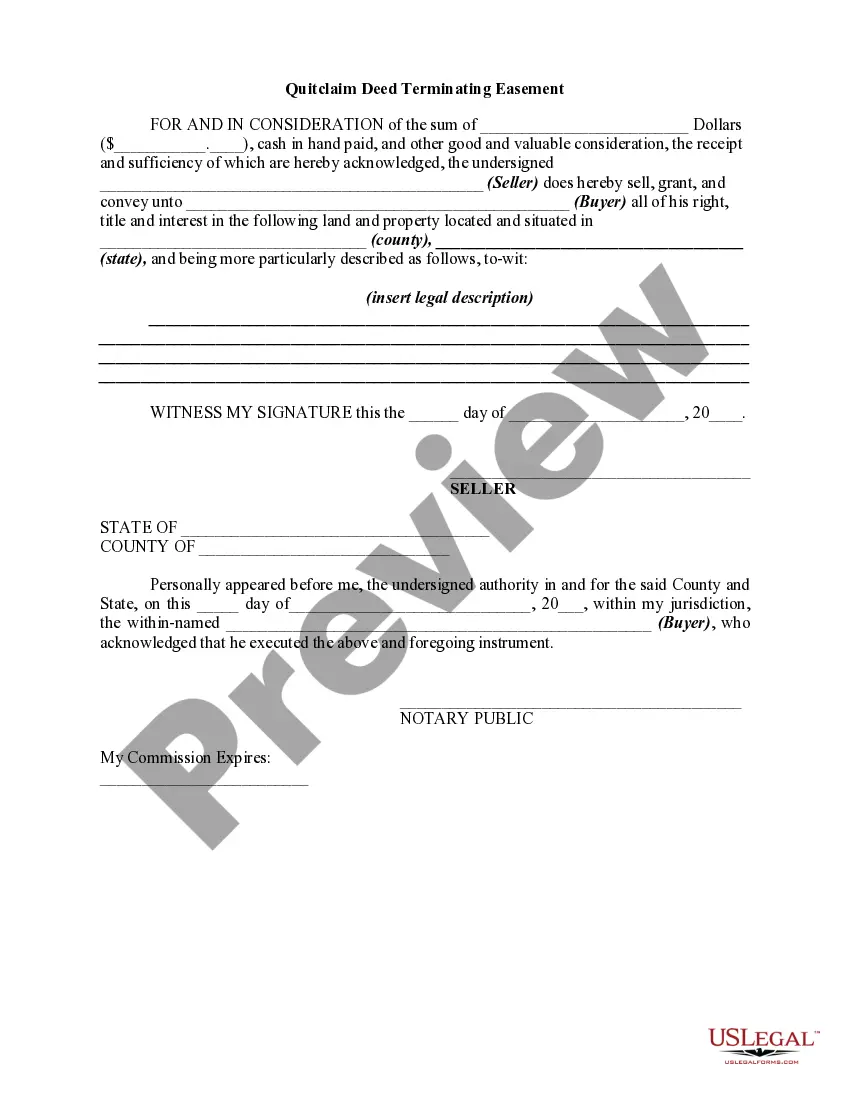
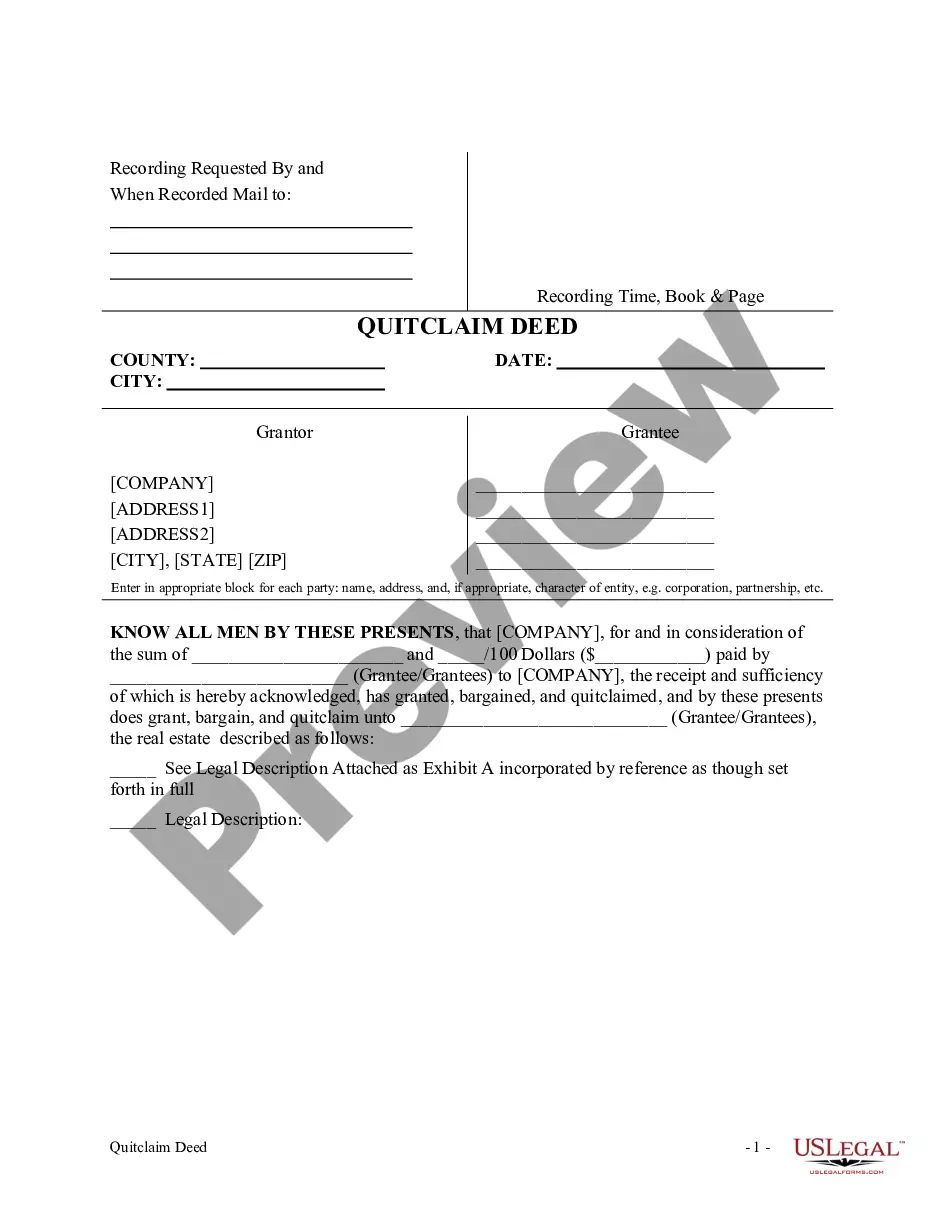
The Quitclaim Deed - Husband and Wife to Three Individuals is a legal document that allows a husband and wife (the grantors) to transfer any interest they have in a property to three individuals (the grantees). This type of deed is different from other deeds, such as warranty deeds, because it does not guarantee any title or claim against the property, rather it simply relinquishes any interest the grantors might have. The property can be taken as either tenants in common or joint tenants with the right of survivorship, depending on how the grantees choose to hold the title.
Form components explained
- Grantor and grantee information: Names and roles of the husband, wife, and three individuals are clearly captured.
- Property description: An accurate, legal description of the property being conveyed is included.
- Consideration clause: A statement of consideration, often as nominal values, acknowledging the transfer.
- Signature lines: Spaces for the grantors' signatures and date of execution.
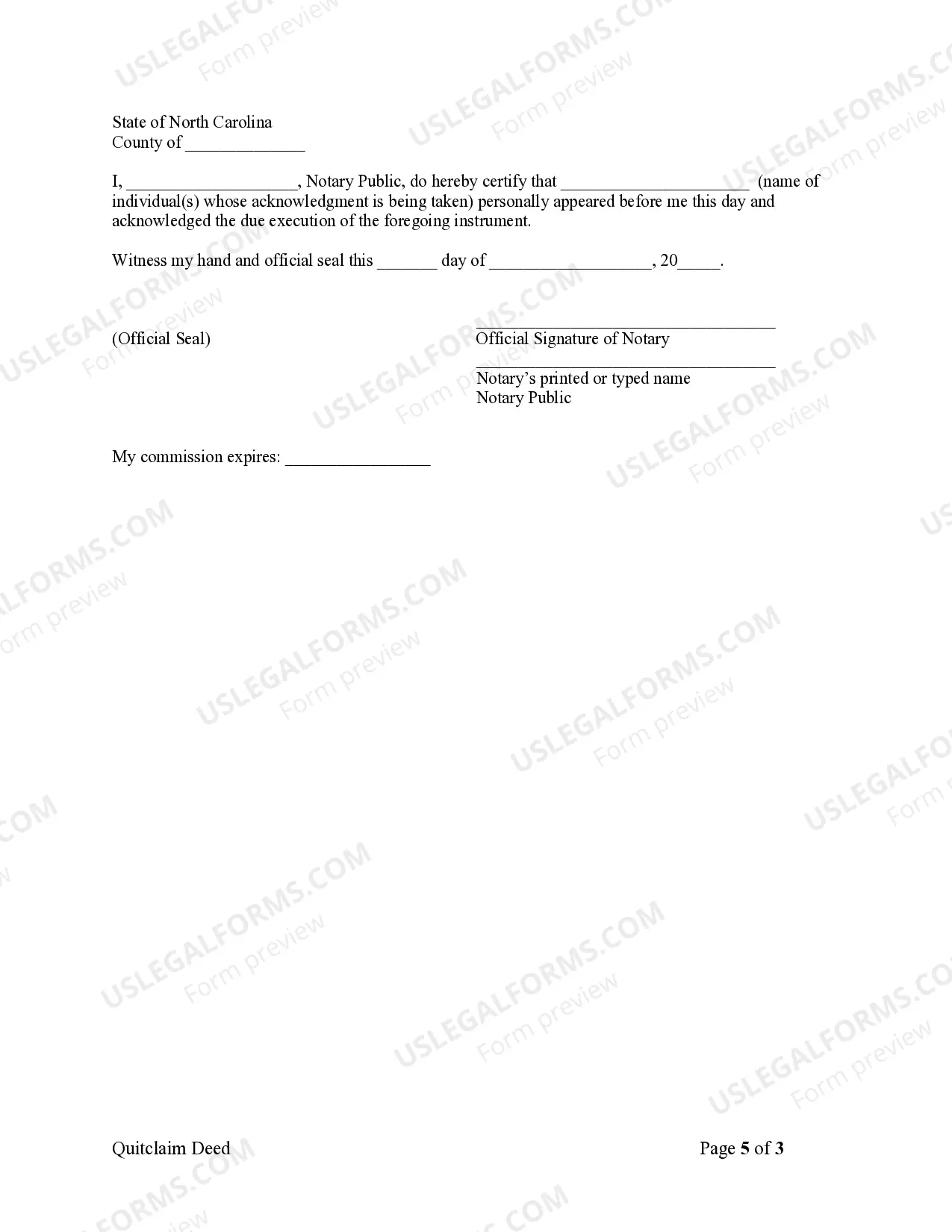
- Notary section: A section for notarization, confirming authenticity of the signatures.


Common use cases
This form is typically used when a husband and wife wish to transfer ownership of a property to three other individuals without the complexities involved in a warranty deed. Situations may include transferring property to family members, friends, or business partners, or clarifying interests within an estate plan by specifying how property is shared among multiple owners.
Who can use this document
This form is intended for:
- Married couples looking to convey property.
- Individuals seeking to simplify the transfer of property interests to multiple parties.
- Those who may not need a warranty deed but still wish to formalize the transfer of property.
Instructions for completing this form
- Identify the parties: Write the names of the husband, wife, and the three individuals receiving the property.
- Specify the property: Provide a full legal description of the property being conveyed, as outlined in the deed.
- Enter consideration: Fill in the nominal consideration being exchanged, usually a small sum like ten dollars.
- Sign the document: Both grantors must sign the deed in the designated areas to make it legally binding.
- Notarize the deed: If required, have the deed notarized to validate the signatures and comply with local laws.
Does this form need to be notarized?
To make this form legally binding, it must be notarized. Our online notarization service, powered by Notarize, lets you verify and sign documents remotely through an encrypted video session.
Get your form ready online
Our built-in tools help you complete, sign, share, and store your documents in one place.
Make edits, fill in missing information, and update formatting in US Legal Forms—just like you would in MS Word.
Download a copy, print it, send it by email, or mail it via USPS—whatever works best for your next step.
Sign and collect signatures with our SignNow integration. Send to multiple recipients, set reminders, and more. Go Premium to unlock E-Sign.
If this form requires notarization, complete it online through a secure video call—no need to meet a notary in person or wait for an appointment.
We protect your documents and personal data by following strict security and privacy standards.

Make edits, fill in missing information, and update formatting in US Legal Forms—just like you would in MS Word.

Download a copy, print it, send it by email, or mail it via USPS—whatever works best for your next step.

Sign and collect signatures with our SignNow integration. Send to multiple recipients, set reminders, and more. Go Premium to unlock E-Sign.

If this form requires notarization, complete it online through a secure video call—no need to meet a notary in person or wait for an appointment.

We protect your documents and personal data by following strict security and privacy standards.
Common mistakes
- Failing to include a full legal description of the property.
- Not having signatures from both grantors.
- Skipping notarization if required by local law.
- Providing an incomplete or incorrect grantee name, which can lead to future ownership disputes.
Why complete this form online
- Convenience: Download and complete the form from the comfort of your home.
- Editability: Easily fill out the form fields using your computer or print and complete by hand.
- Reliability: The form is drafted according to state laws, ensuring compliance and validity.
Quick recap
- The Quitclaim Deed allows for the transfer of property interests without warranties.
- It is ideal in scenarios involving straightforward transfers between married couples and multiple individuals.
- Proper completion, including notarization, is crucial for the deed's legality.
Looking for another form?

Form popularity
FAQ
If a home is owned by only one person then it is not registered with the Land Registry as either Joint Tenants or Tenants in Common. It is registered as a Sole Owner, you can only be a joint tenant or tenant in common if there is more than one owner of the property.
' Spouses typically acquire title as tenants by the entireties, which only applies to spouses. Sometimes you will see a couple who acquired the property before marriage. In some states, a premarital joint tenancy automatically becomes tenants by the entireties upon marriage.
In estate law, joint tenancy is a special form of ownership by two or more persons of the same property. The individuals, who are called joint tenants, share equal ownership of the property and have the equal, undivided right to keep or dispose of the property. Joint tenancy creates a Right of Survivorship.
A quitclaim deed affects ownership and the name on the deed, not the mortgage. Because quitclaim deeds expose the grantee to certain risks, they are most often used between family members and where there is no exchange of money.Quitclaim deeds transfer title but do not affect mortgages.
Tenancy by the entirety, another joint-owned property option, is when the parties are husband and wife. In this case, each spouse has an equal and undivided interest in the property. If one spouse dies, the full title of the property automatically passes to the surviving spouse.
Tenancy by the entirety in North Carolina is a hybrid of common law and statutory law. The basic elements of a tenancy by the entirety in North Carolina are: It can exist only between a husband and wife. Two people who are not husband and wife cannot own real property together as tenants by the entirety.
Deciding on Asset Ownership Can Start When You Marry You can own the property as joint tenants or as tenants in common. In a joint tenancy, the partners own the whole property and do not have a particular share in it, while tenants in common each have a definite share in the property.
A quitclaim deed transfers title but makes no promises at all about the owner's title.A person who signs a quitclaim deed to transfer property they do not own results in no title at all being transferred since there is no actual ownership interest. The quitclaim deed only transfers the type of title you own.
Joint Tenancy Two or more people, including spouses, may hold title to their jointly owned real estate as joint tenants. There is a so-called right of survivorship, which means that when one dies, the property automatically transfers to the survivor without the necessity of probating the estate.