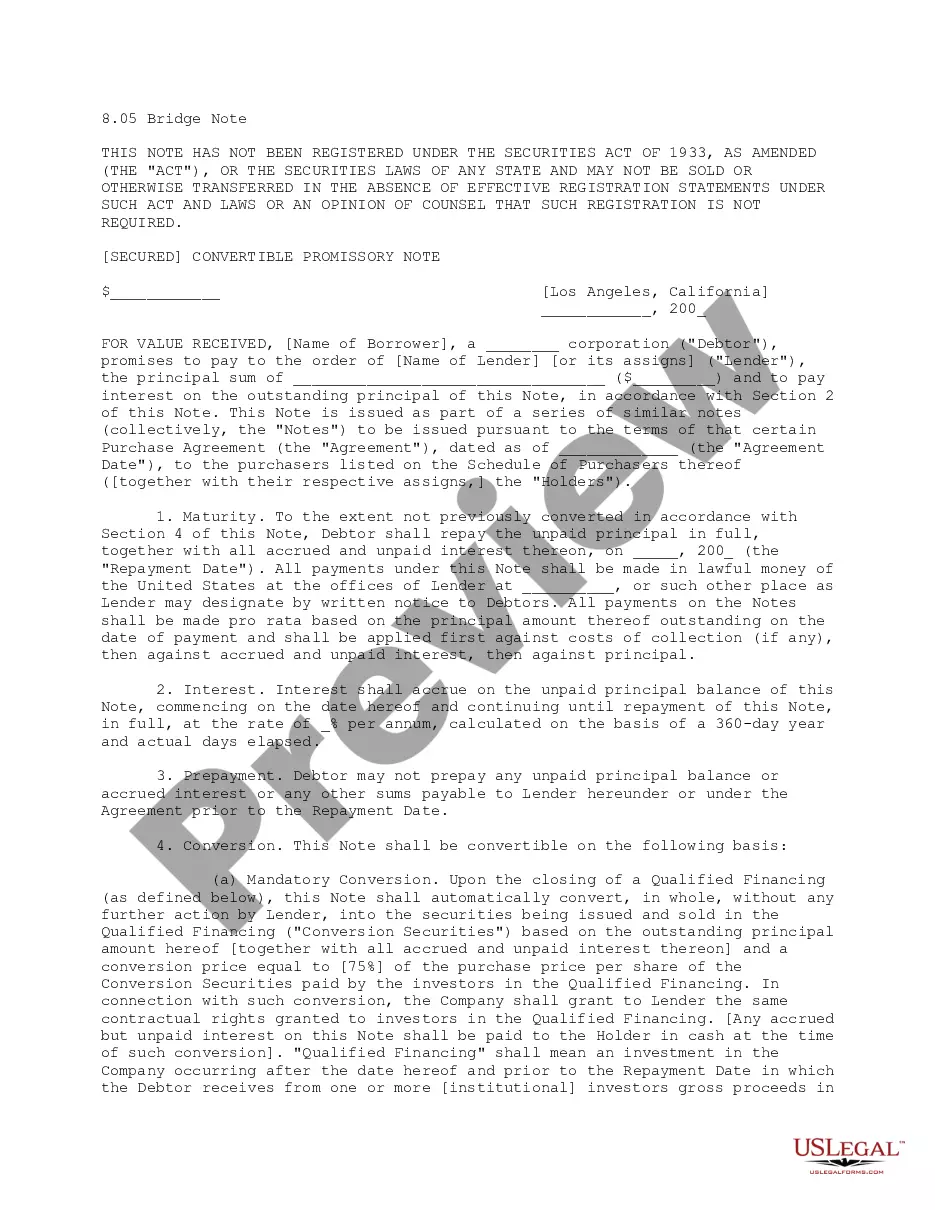
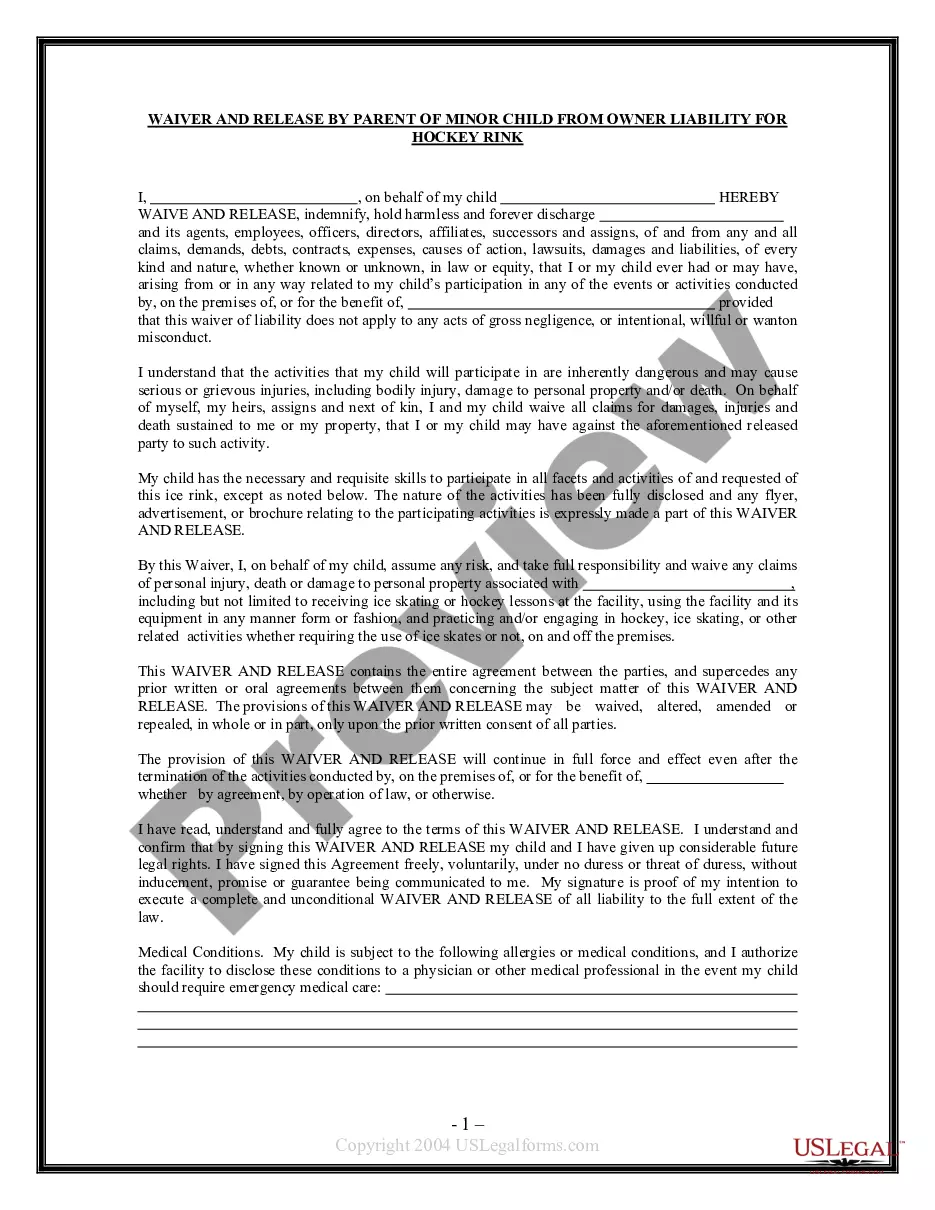
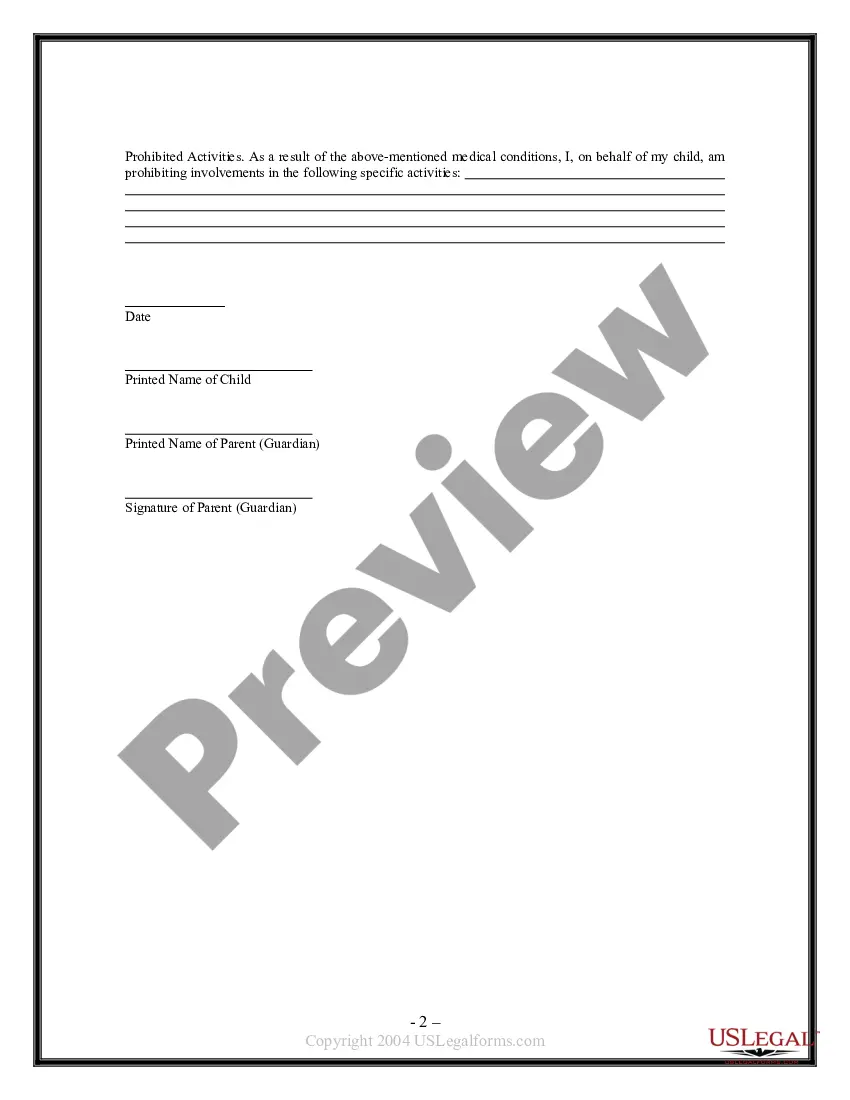
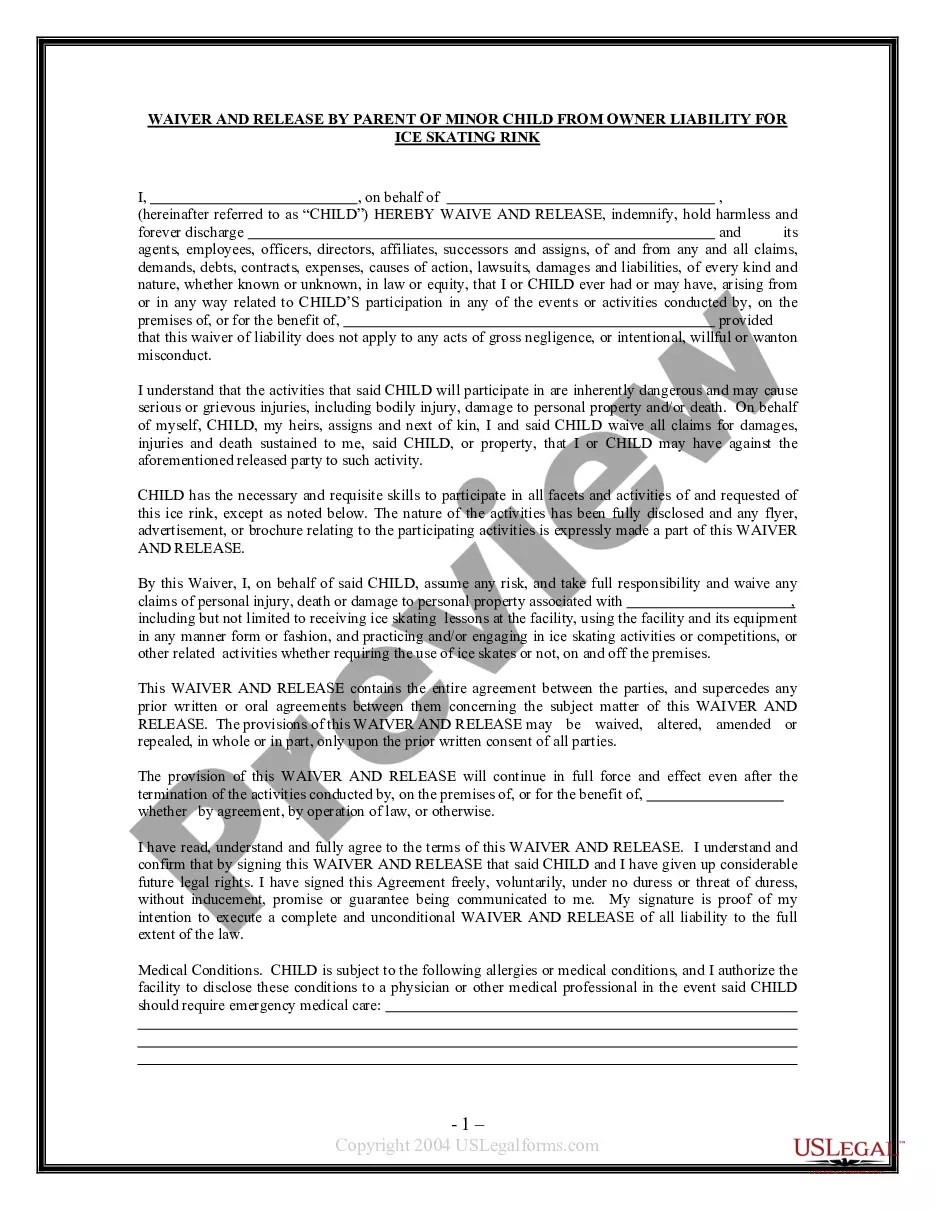
This form allows a parent or guardian to release an hockey rink facility from liability for injuries which may be incurred by a minor child while on the premises, taking part in activities, etc.
Montana Waiver and Release From Liability For Minor Child for Hockey Rink
Category:
State:
Multi-State
Control #:
US-WAV-09M
Format:
Word;
Rich Text
Instant download
Description
Free preview
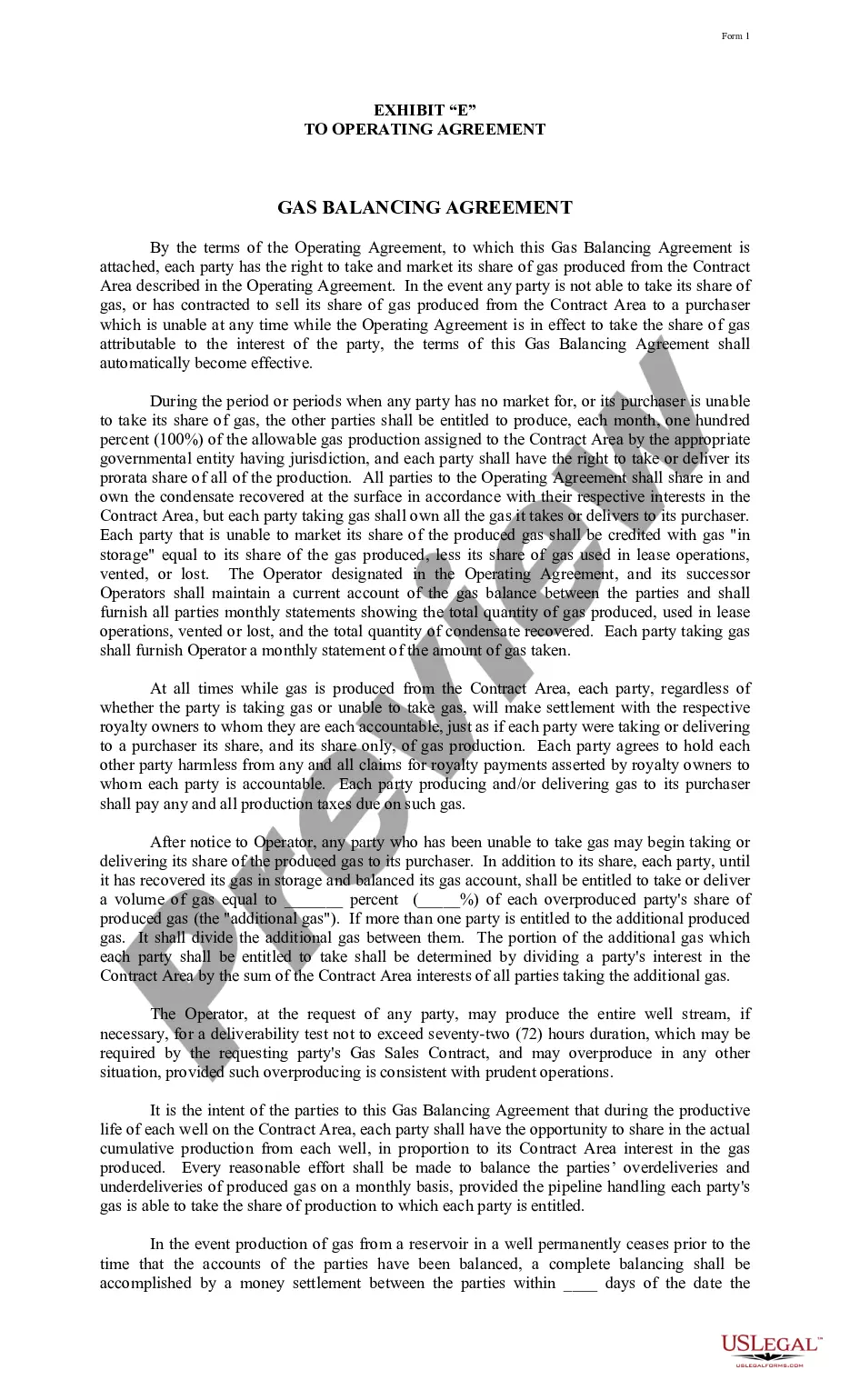
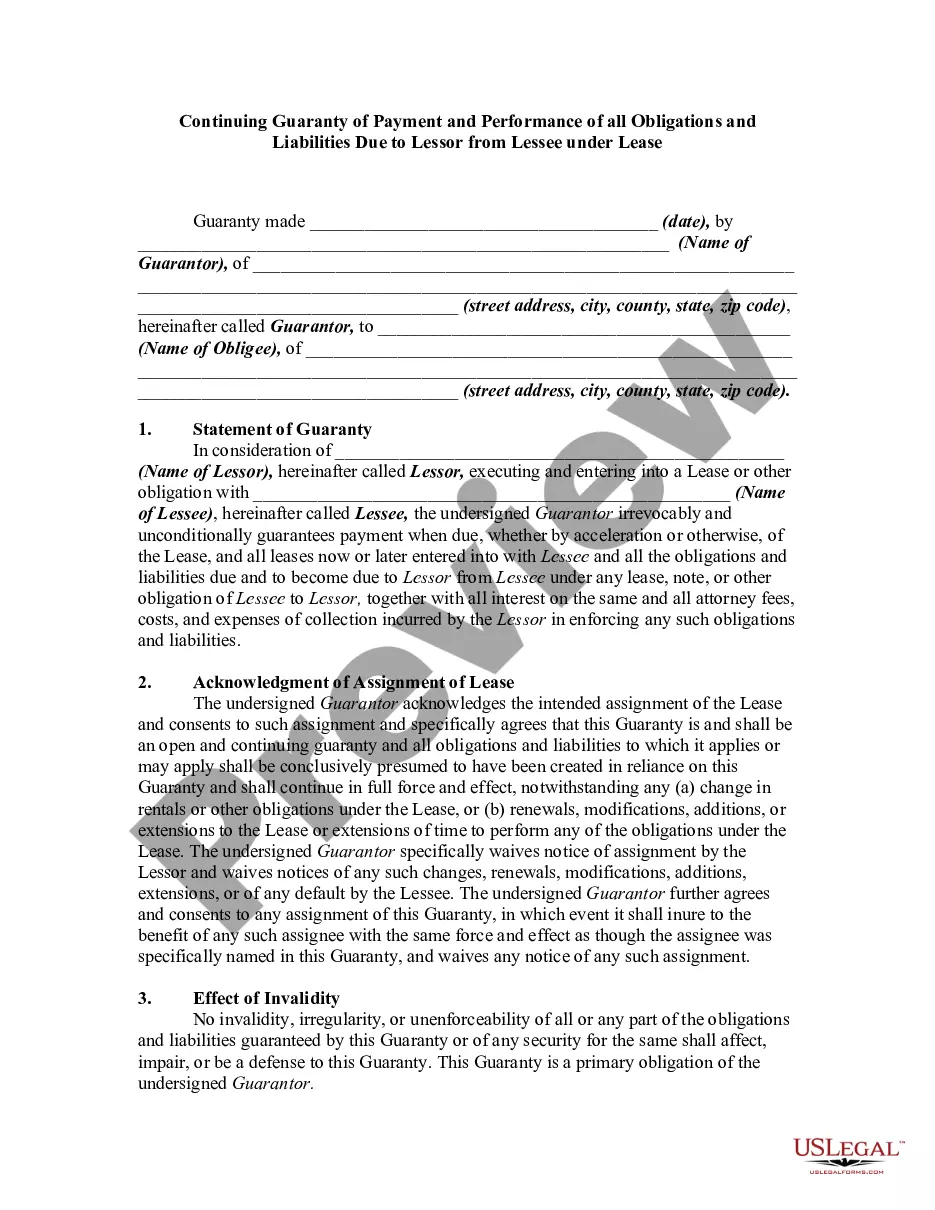
How to fill out Waiver And Release From Liability For Minor Child For Hockey Rink?
Selecting the optimal legal document format can be quite a challenge. Naturally, there are numerous templates accessible online, but how can you find the legal form you require.
Utilize the US Legal Forms website. This service provides thousands of templates, such as the Montana Waiver and Release From Liability For Minor Child for Hockey Rink, which can be utilized for business and personal purposes. All of the forms are reviewed by professionals and meet state and federal requirements.
If you are already registered, Log In to your account and click on the Download button to obtain the Montana Waiver and Release From Liability For Minor Child for Hockey Rink. Use your account to review the legal forms you have previously acquired. Visit the My documents section of your account and obtain another copy of the document you need.
Complete, edit, print, and sign the received Montana Waiver and Release From Liability For Minor Child for Hockey Rink. US Legal Forms is the largest library of legal forms where you can discover a variety of document templates. Utilize the service to download professionally crafted documents that meet state requirements.
- If you are a new user of US Legal Forms, here are simple guidelines for you to follow.
- First, ensure you have chosen the correct form for your area/county. You can view the form using the Review option and check the form description to confirm it is the right one for you.
- If the form does not meet your needs, use the Search area to find the correct form.
- When you are certain that the form is accurate, click on the Acquire now button to obtain the form.
- Select the pricing plan you desire and input the necessary details. Create your account and complete your order using your PayPal account or credit card.
- Choose the document format and download the legal document format to your device.
Form popularity
FAQ
A waiver of liability, such as the Montana Waiver and Release From Liability For Minor Child for Hockey Rink, can limit liability but may not eliminate it completely. Courts often scrutinize these waivers to ensure they are fair and reasonable. While they can protect providers from negligence claims, they typically do not cover gross negligence or intentional acts. It is essential to understand the specifics of any waiver and consult legal resources, like US Legal Forms, to ensure it meets your needs.
The Montana Recreation Responsibility Act outlines the legal framework for liability concerning recreational activities in Montana. This act emphasizes the importance of waivers, like the Montana Waiver and Release From Liability For Minor Child for Hockey Rink, which help protect recreational providers from lawsuits. By signing such waivers, parents acknowledge the inherent risks involved in hockey and agree not to hold the rink liable for certain injuries. This law aims to encourage safe participation in sports while informing participants of their rights.
Liability waivers are enforceable in California solely to the extent they shift to the customer the risk of ordinary negligence. Under California law, a liability waiver cannot excuse an injury caused by a defendant's gross negligence, recklessness or intentionally wrongful act.
A release of liability, also known as a liability waiver or a hold harmless agreement, is a contract in which one party agrees not to hold another party liable for damages or injury. These contracts are common in fields that involve some risk to property, finances, or health.
Liability waivers are enforceable in California solely to the extent they shift to the customer the risk of ordinary negligence. Under California law, a liability waiver cannot excuse an injury caused by a defendant's gross negligence, recklessness or intentionally wrongful act.
The waiver/release is properly drafted or worded according to the law in the state of the sports organization. It does not violate any state laws or public policy.
Liability waivers are enforceable in California solely to the extent they shift to the customer the risk of ordinary negligence. Under California law, a liability waiver cannot excuse an injury caused by a defendant's gross negligence, recklessness or intentionally wrongful act.
Ambiguous language or missing information can invalidate a waiver. The waiver contains errors that make it invalid. The language of the waiver must obey relevant state laws. An improperly worded or drafted waiver, as well as one that violates the law or public policy, may not hold up in court.
A liability waiver, or release waiver, is a legal document that a company or organization requires members of the public to sign in order to protect their organization from being sued if you sustain an injury.
Last year, a new law took effect in Montana that allows waivers/releases to be enforceable, except against claims of gross negligence or against defective equipment claims.