Montana Covenant Not to Sue
Description

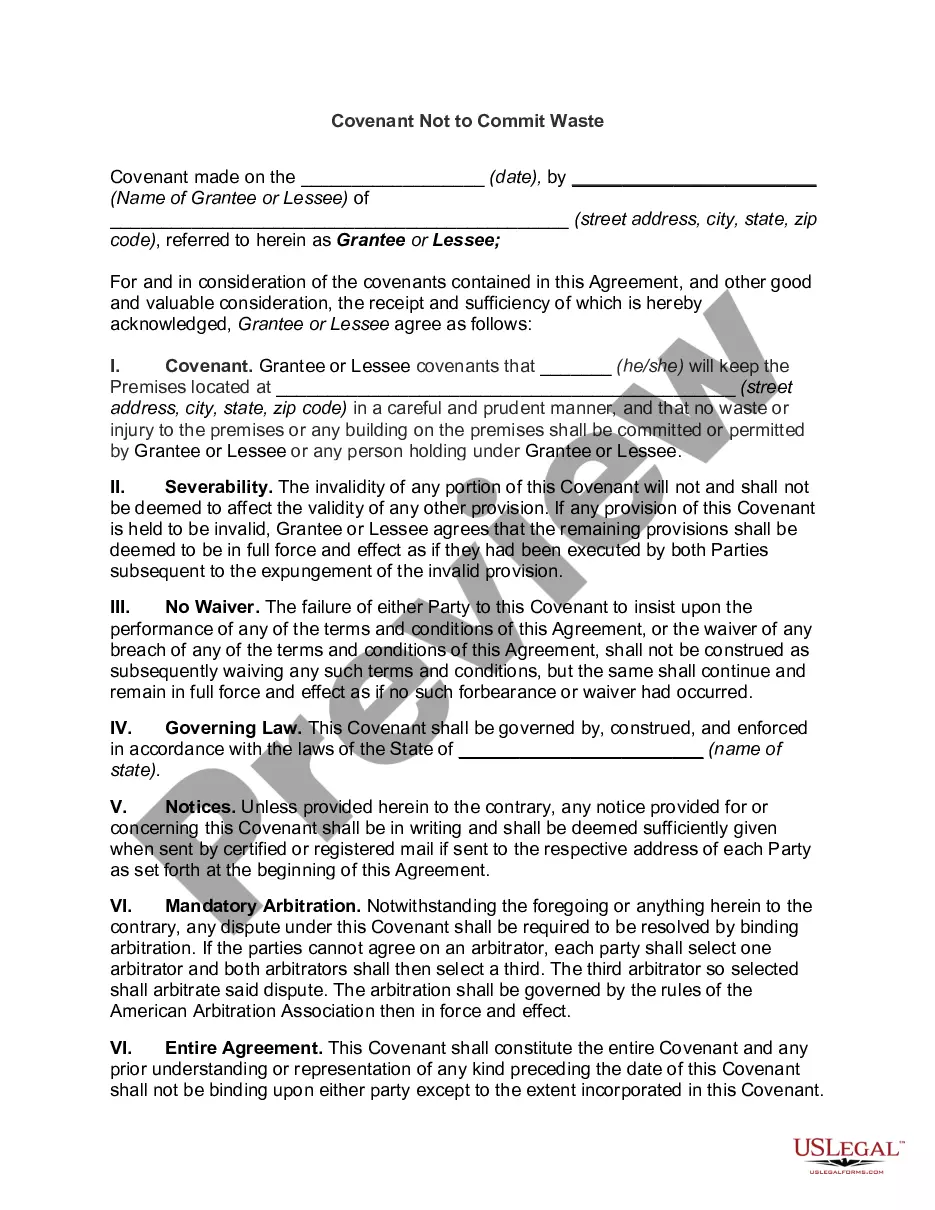
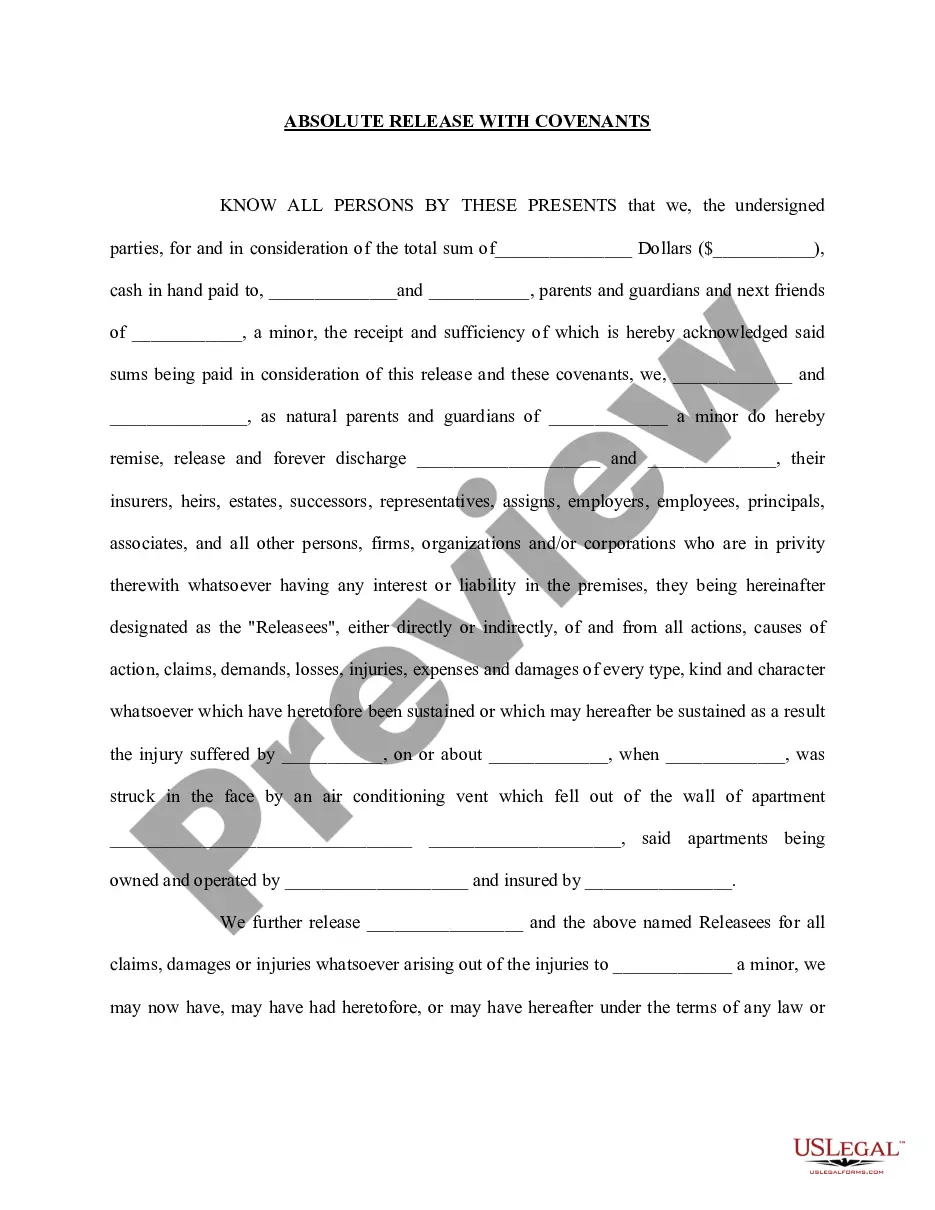

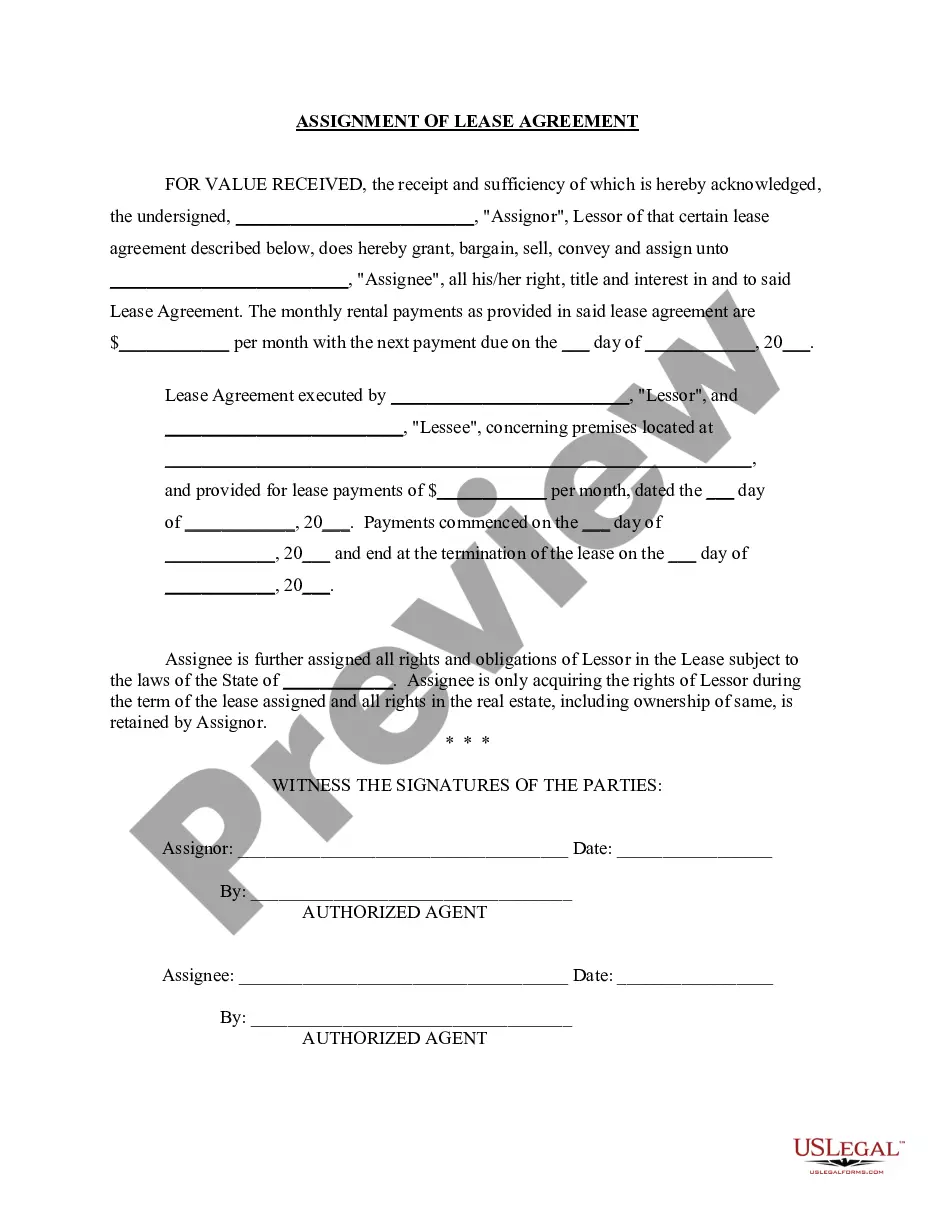


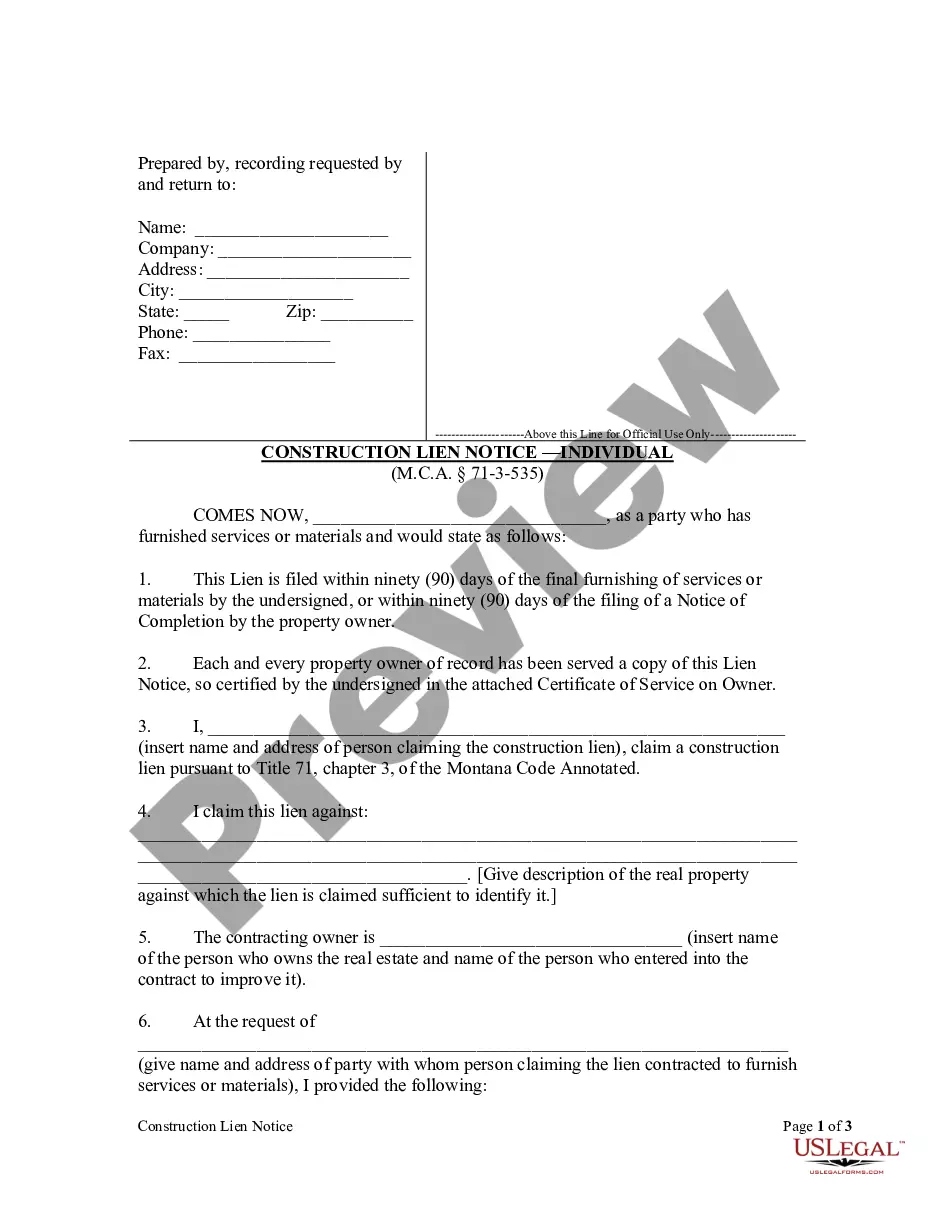
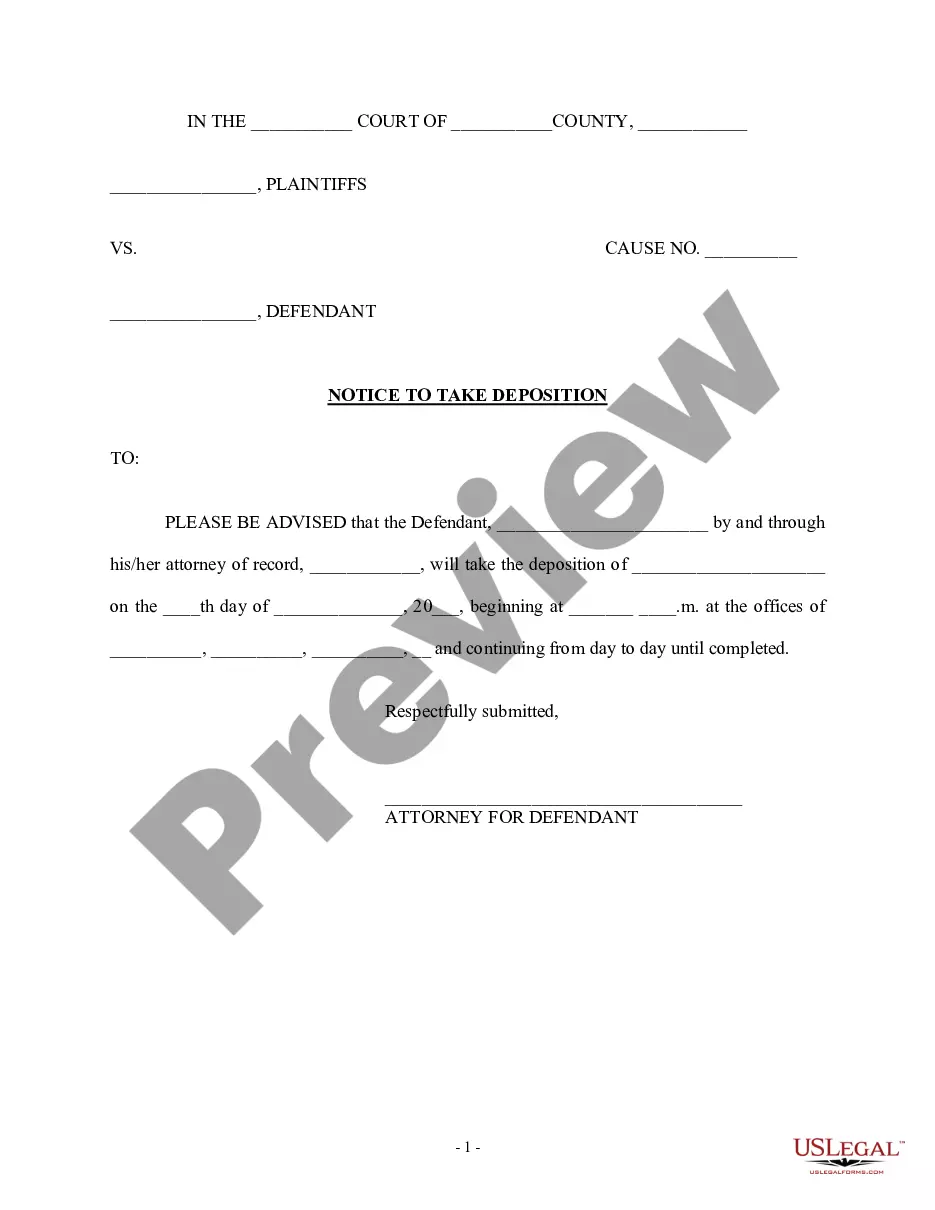

How to fill out Covenant Not To Sue?
You can spend countless hours online attempting to locate the proper legal document template that meets the state and federal standards you require. US Legal Forms provides a vast array of legal forms that can be reviewed by experts.
You can easily obtain or print the Montana Covenant Not to Sue from the services. If you already possess a US Legal Forms account, you can Log In and press the Obtain button. After that, you can complete, modify, print, or sign the Montana Covenant Not to Sue. Every legal document template you purchase is yours indefinitely.
To acquire another version of a purchased form, navigate to the My documents tab and click the appropriate button. If you are accessing the US Legal Forms website for the first time, follow the simple instructions below: First, ensure you have selected the correct document template for the region/city of your choice. Review the document description to confirm you have chosen the right form. If available, use the Preview button to examine the document template as well.
- To find another variation of the form, utilize the Search field to discover the template that fulfills your needs and requirements.
- Once you have identified the template you need, click on Get now to continue.
- Select the pricing plan you desire, enter your details, and create an account on US Legal Forms.
- Complete the transaction. You can utilize your Visa or Mastercard or PayPal account to pay for the legal document.
- Choose the format of the document and download it to your device.
- Make modifications to your document if necessary. You can complete, revise, and sign and print the Montana Covenant Not to Sue.
- Access and print numerous document templates using the US Legal Forms website, which offers the largest selection of legal forms. Utilize professional and state-specific templates to address your business or personal needs.
Form popularity
FAQ
While a covenant not to sue restricts future claims from being made, the party signing the document is still free to file a lawsuit if it breaches the terms of that agreement. If one or more parties don't sign a covenant not to sue, then they are open for any claim and lawsuit.
A covenant not to sue can be beneficial to both parties in a transaction. For example, a business may enter into a covenant not to sue in order to protect itself from future legal action. The business may also use the covenant to avoid costly litigation if a dispute arises.
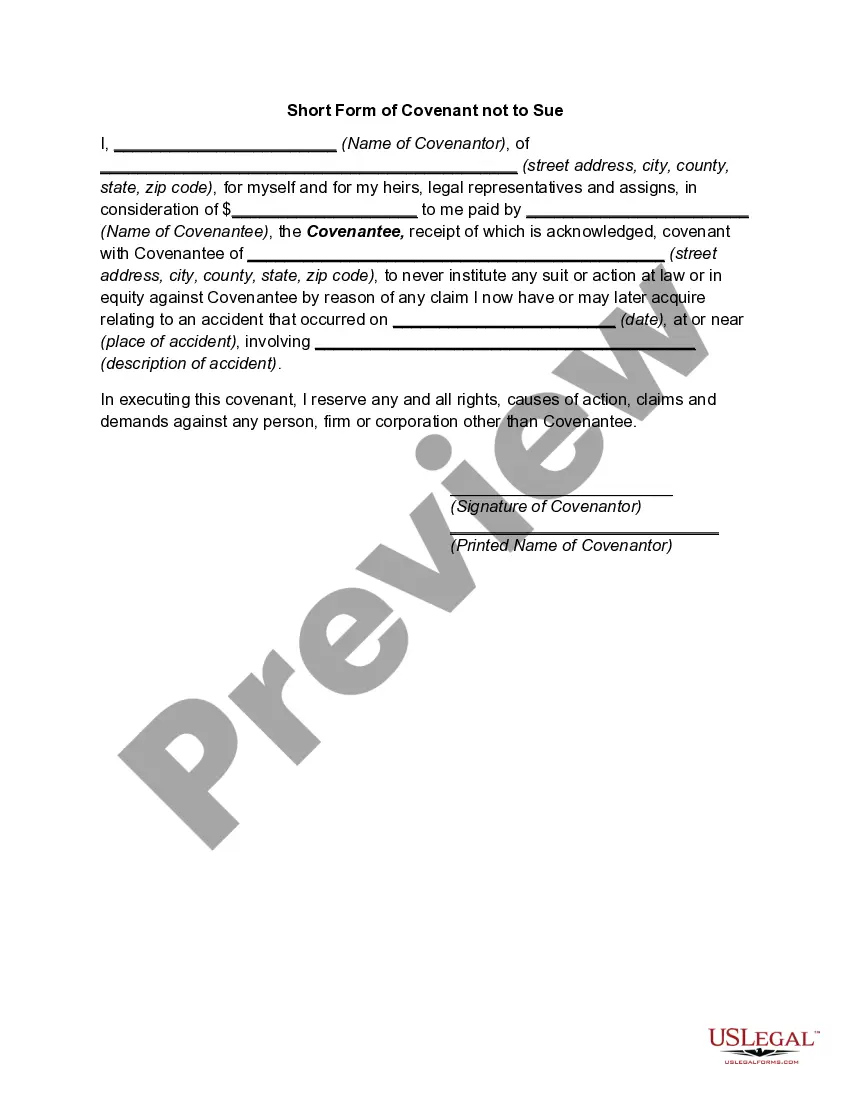
Steps to Creating a Covenant Not to Sue Search for an example of an existing covenant to base yours off of. ... Gather information for your covenant, including documents related to your interests and documents about the other party. ... Format your covenant, so it resembles a traditional contract format.
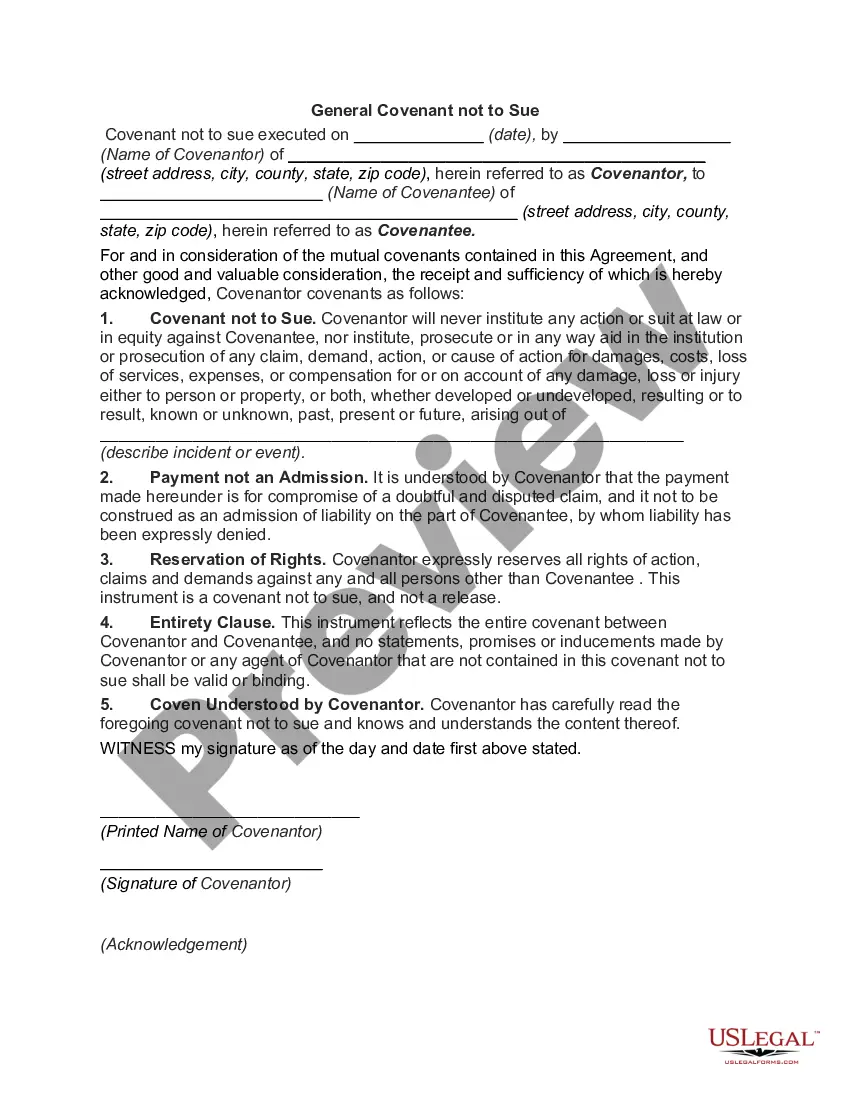
A covenant not to sue legally obliges a party that could initiate a lawsuit not to do so. The covenant is made explicitly between two parties, and any third party that wants to make a claim is legally allowed to do so. Covenants not to sue are used to settle specific legal issues outside of the court system.
I represent and agree that I have not and will not make or file or cause to be made or filed any claim, charge, allegation, or complaint, whether formal, informal, or anonymous, with any governmental agency, department or division, whether federal, state or local, relating to any Employer Affiliate in any manner, ...
A covenant not to sue typically sets out the patent owner's agreement not to sue the alleged infringer for patent infringement concerning the patent identified. It may also be limited to certain products or processes of the alleged infringer, or to a specific field or territory.
A covenant not to sue legally obliges a party that could initiate a lawsuit not to do so. The covenant is made explicitly between two parties, and any third party that wants to make a claim is legally allowed to do so. Covenants not to sue are used to settle specific legal issues outside of the court system.
I covenant and agree never, individually or with any person or in any way, to commence, aid in any way, prosecute or cause or permit to be commenced or prosecuted against any Employer Affiliate any action or other proceeding, including, without limitation, an arbitration or other alternative dispute resolution ...