Montana Notice of Appeal
What is this form?
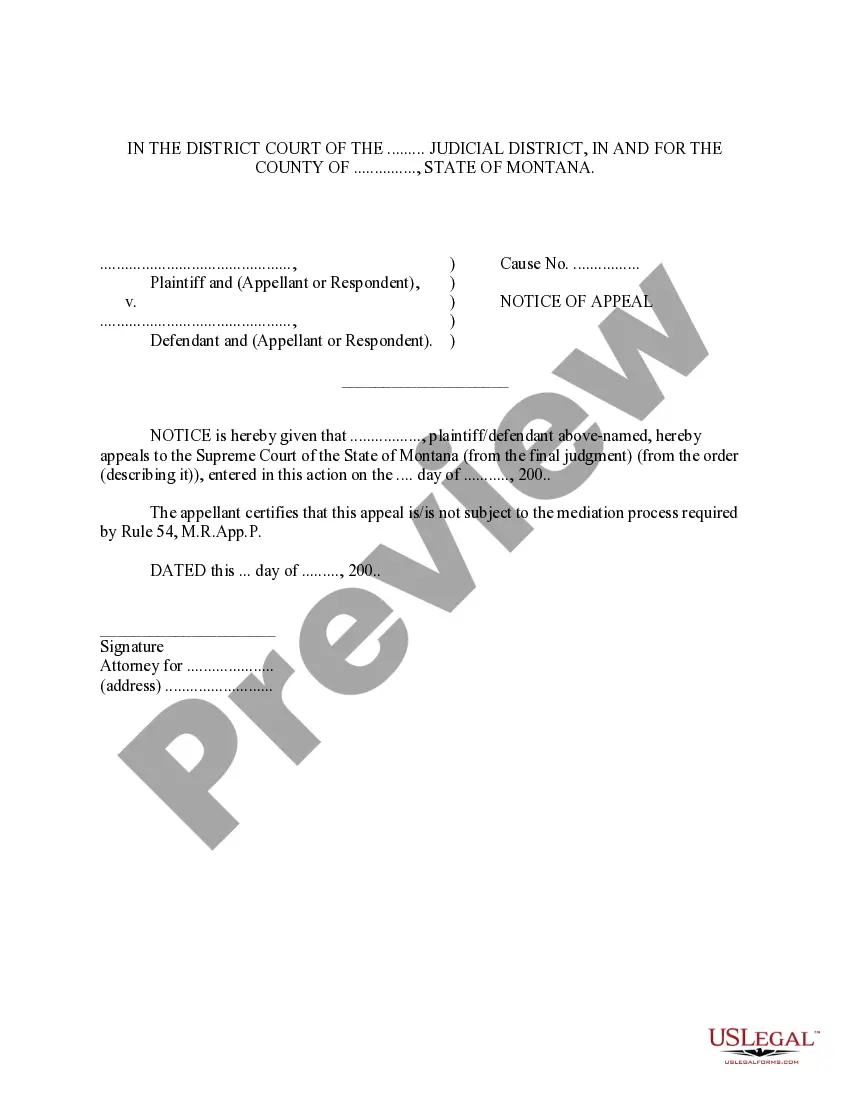
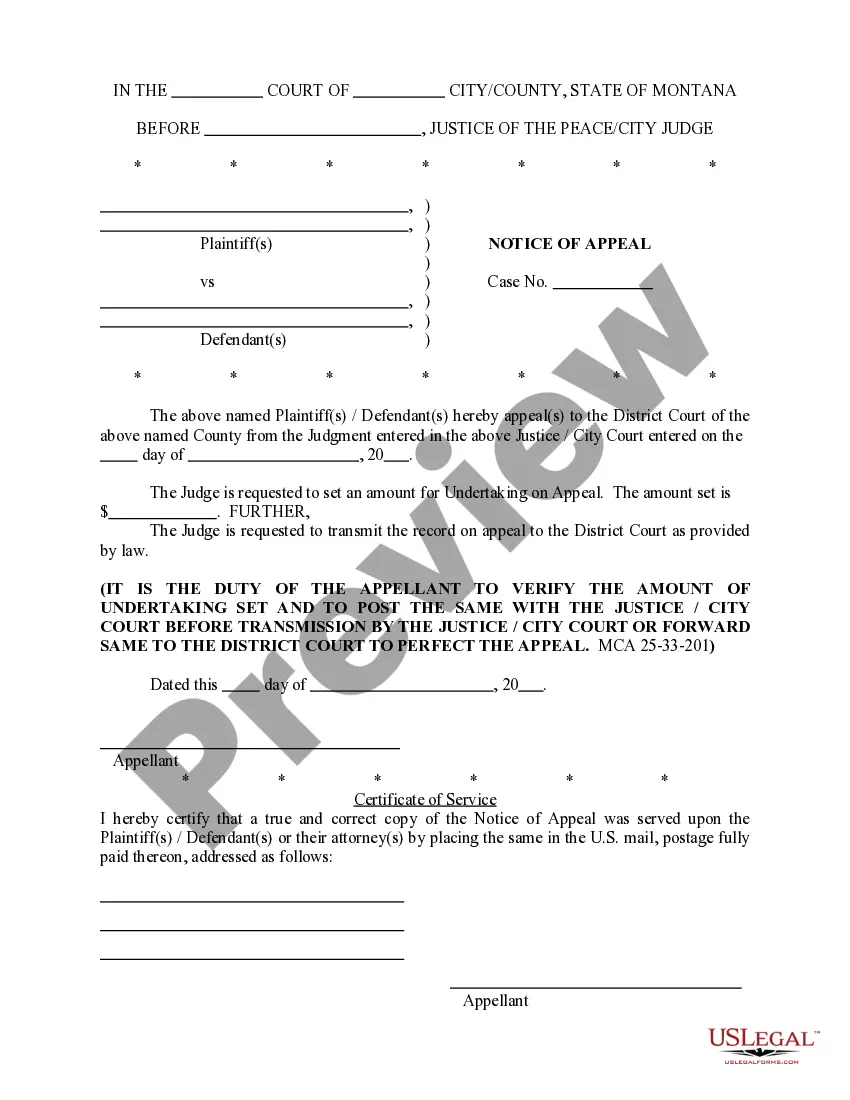
The Notice of Appeal is a legal document used in the state of Montana that formally initiates the appeals process by informing the court and opposing party of a party's intention to appeal a court decision. This form serves as an essential step in pursuing a higher court review and differs from other legal forms by focusing specifically on the appeal process rather than the substantive legal issues at hand.
Form components explained
- Case information: Includes details such as the name of the court, the involved parties, and case number.
- Notice of appeal: Declares the decision being appealed and the date of the judgment or order.
- Certification: States whether the appeal is subject to mediation.
- Signature: Requires the attorney representing the appellant to sign the document.
- Attorney details: Must include the attorney's name and address for correspondence.
When this form is needed
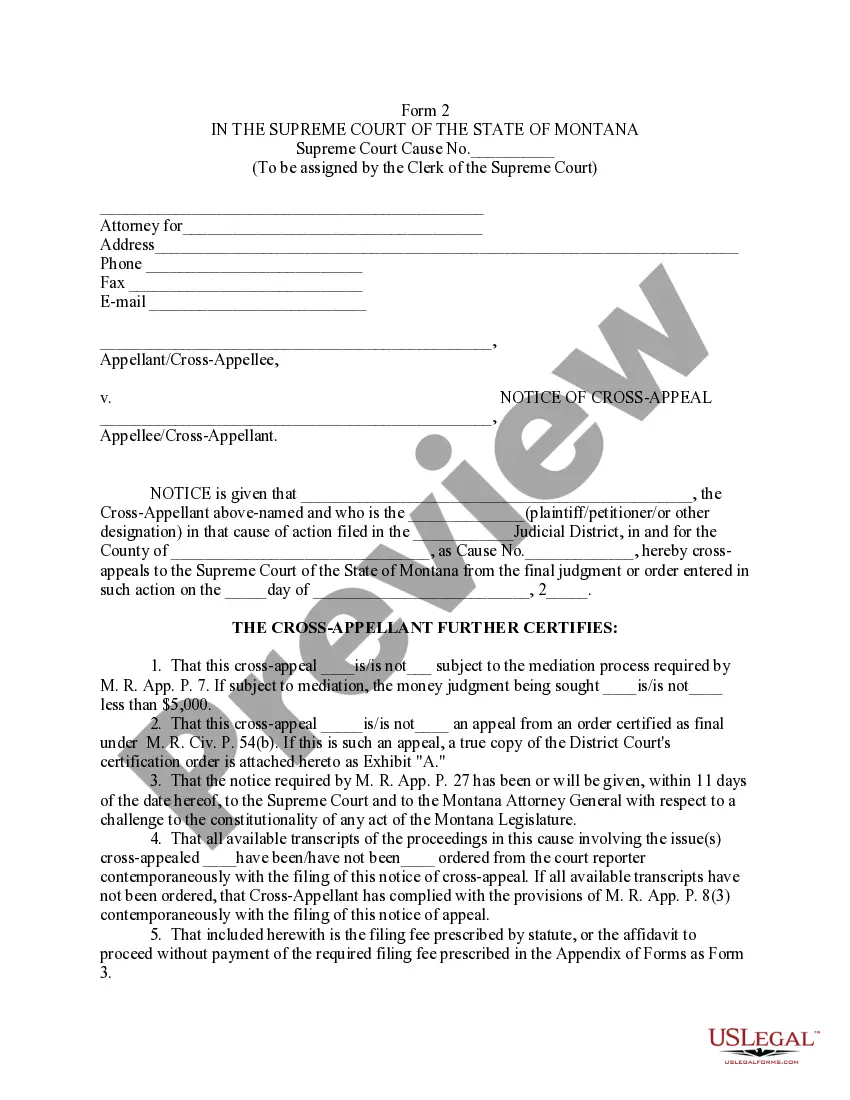
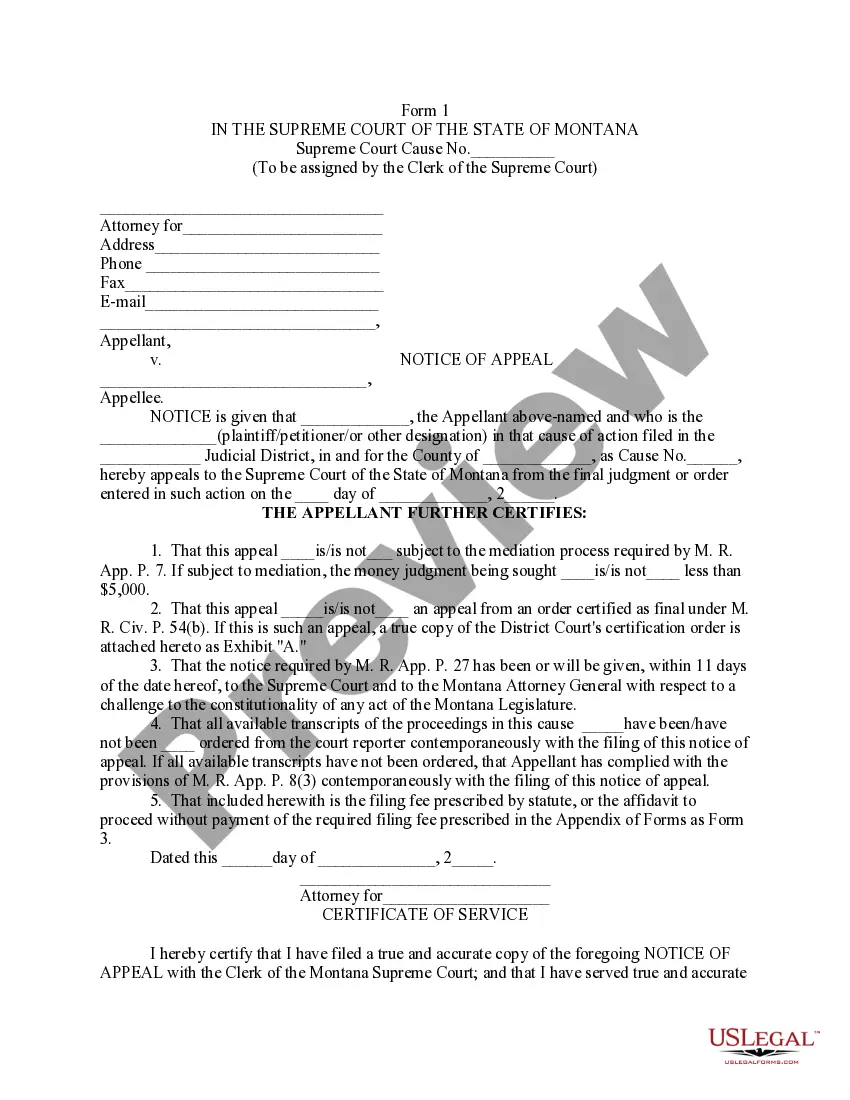
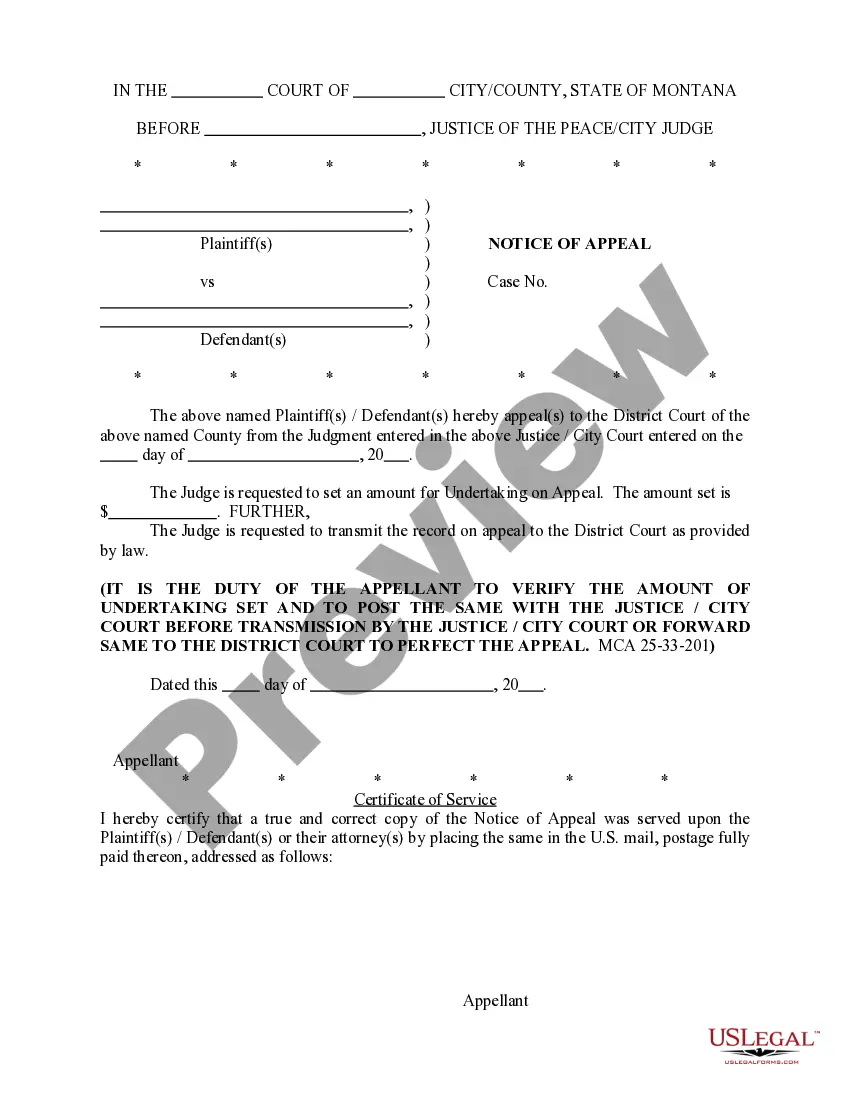
This form should be used when a party wishes to appeal a decision made by a lower court in Montana. It is necessary after receiving a final judgment or order that the party believes to be incorrect or unjust. Common scenarios include dissatisfaction with verdicts in civil cases, family law decisions, and criminal sentencing outcomes.
Who should use this form
- Parties involved in a legal case in Montana who intend to challenge a lower court's decision.
- Attorneys representing clients who need to file an appeal to the Montana Supreme Court.
- Individuals who have grounds to believe that a legal error affected the outcome of their case.
Steps to complete this form
- Fill in the court name and the judicial district at the top of the form.
- Specify the names of the plaintiff and defendant, indicating their roles as appellant or respondent.
- Insert the case number and the date of the final judgment or order being appealed.
- Certify whether the appeal is subject to mediation, as required by Rule 54, M.R.App.P.
- Sign the form and include the attorney's name and address for correspondence.
Notarization requirements for this form
Notarization is generally not required for this form. However, certain states or situations might demand it. You can complete notarization online through US Legal Forms, powered by Notarize, using a verified video call available anytime.
Get your form ready online
Our built-in tools help you complete, sign, share, and store your documents in one place.
Make edits, fill in missing information, and update formatting in US Legal Forms—just like you would in MS Word.
Download a copy, print it, send it by email, or mail it via USPS—whatever works best for your next step.
Sign and collect signatures with our SignNow integration. Send to multiple recipients, set reminders, and more. Go Premium to unlock E-Sign.
If this form requires notarization, complete it online through a secure video call—no need to meet a notary in person or wait for an appointment.
We protect your documents and personal data by following strict security and privacy standards.

Make edits, fill in missing information, and update formatting in US Legal Forms—just like you would in MS Word.

Download a copy, print it, send it by email, or mail it via USPS—whatever works best for your next step.

Sign and collect signatures with our SignNow integration. Send to multiple recipients, set reminders, and more. Go Premium to unlock E-Sign.

If this form requires notarization, complete it online through a secure video call—no need to meet a notary in person or wait for an appointment.

We protect your documents and personal data by following strict security and privacy standards.
Common mistakes
- Failing to provide the correct case number can delay the appeal process.
- Not indicating whether the appeal is subject to mediation when required.
- Omitting the attorney's signature or address may lead to rejection of the form.
Benefits of using this form online
- Convenience of accessing and downloading the form at any time.
- Ability to easily fill out the form and make edits as needed before finalizing.
- Assurance that the form is up-to-date with the latest legal requirements in Montana.
What to keep in mind
- The Notice of Appeal is crucial for initiating an appeal in Montana.
- Accurate completion of the form is essential to avoid potential delays.
- Use this form when you believe a decision made by a lower court requires further review.
Looking for another form?
Form popularity
FAQ
Your appeal begins when you file a notice of appeal or a petition for review from a final decision of a district court or agency. It will be assigned a court of appeals docket number by the Court of Appeals Clerk's Office. Any correspondence from you should indicate this number.
Step 1: Hiring an Appellate Attorney (Before Your Appeal) One of the biggest mistakes litigants make is filing their appeal before hiring an appellate attorney. Step 2: Filing the Notice of Appeal. Step 3: Preparing the Record on Appeal. Step 4: Researching and Writing Your Appeal. Step 5: Oral Argument.
There are a few things that can happen if you appeal your case: The court can keep the conviction the way it is ("affirming the conviction"). The judge can remand the case back to the trial court for additional proceedings. The judge can reverse the conviction and remand back to the trial court for a new trial.
There are a few things that can happen if you appeal your case: The court can keep the conviction the way it is ("affirming the conviction"). The judge can remand the case back to the trial court for additional proceedings. The judge can reverse the conviction and remand back to the trial court for a new trial.
Check Company Policy. Know Where to Send Your Letter. Use Business Letter Format. Use a Polite Tone. Admit Any Mistakes. State What You Would Like to Happen. Stick to the Facts. Keep it Brief.
Filing the Notice of Appeal. Abandonment or Settlement. Waiver of Fees. Designating the Record. Civil Case Information Sheet. Briefs. Oral Argument. The Court's Decision.
For criminal cases, defendant's notice must be filed in district court within 14 days after entry of judgment or within 14 days after filing of a timely appeal by the government; the government's notice of appeal must be filed within 30 days after entry of judgment or within 30 days after filing of a timely appeal by
1- Fill out all the required information on the front of the notice of appeal, which includes: a) the caption of the case: the caption will remain the same as it is in the original court; b) whether you are the Plaintiff, Petitioner, Defendant or Respondent; c) if you are appealing from an order or judgment; d) the
Review the appeal process if possible. Determine the mailing address of the recipient. Explain what occurred. Describe why it's unfair/unjust. Outline your desired outcome. If you haven't heard back in one week, follow-up. Appeal letter format.