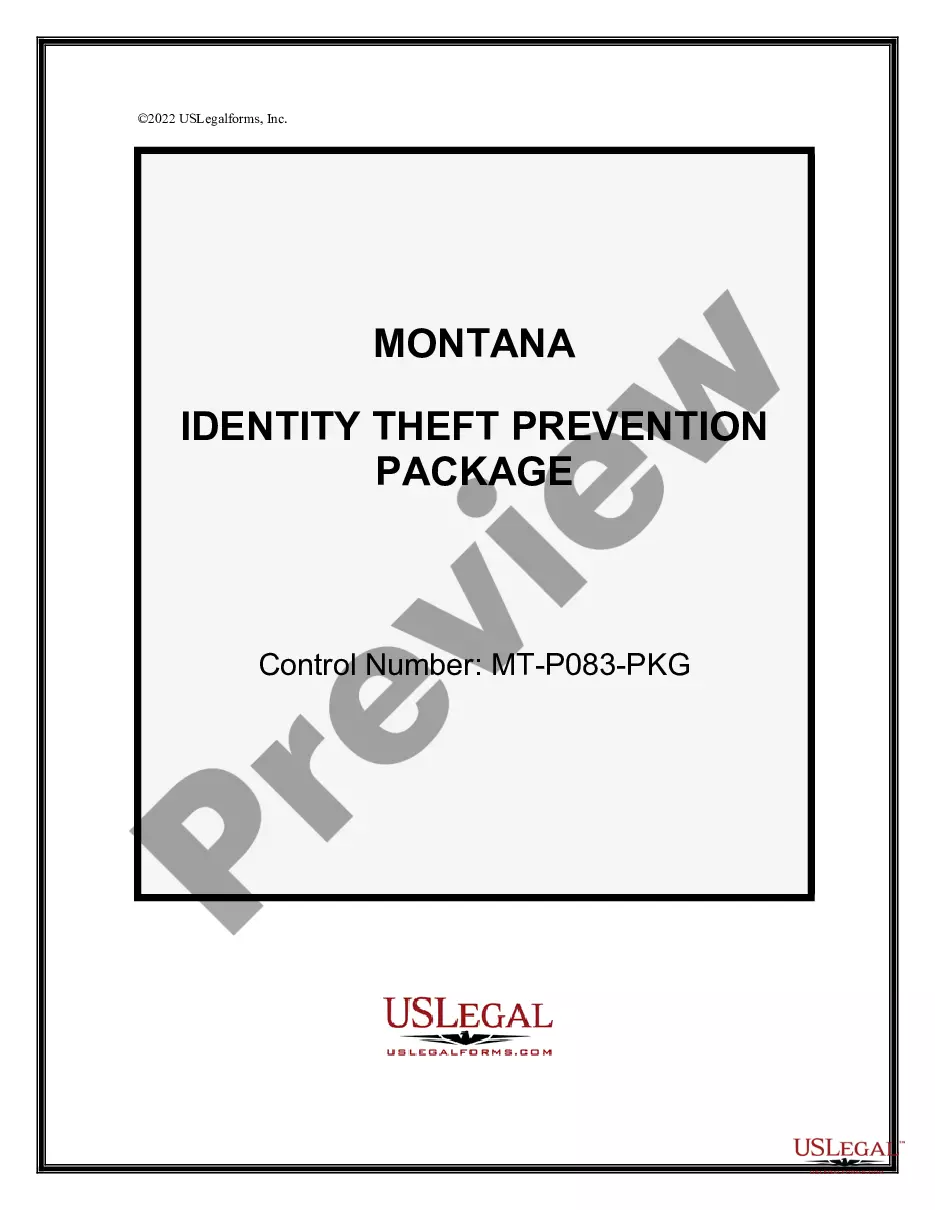
Montana Identity Theft Prevention Package
Overview of this form package
The Montana Identity Theft Prevention Package includes essential forms designed to help individuals protect their identifying information and reduce the risk of identity theft. This package stands out by providing a comprehensive set of tools specifically tailored for Montana residents, emphasizing proactive measures to secure credit, financial assets, and employment opportunities.
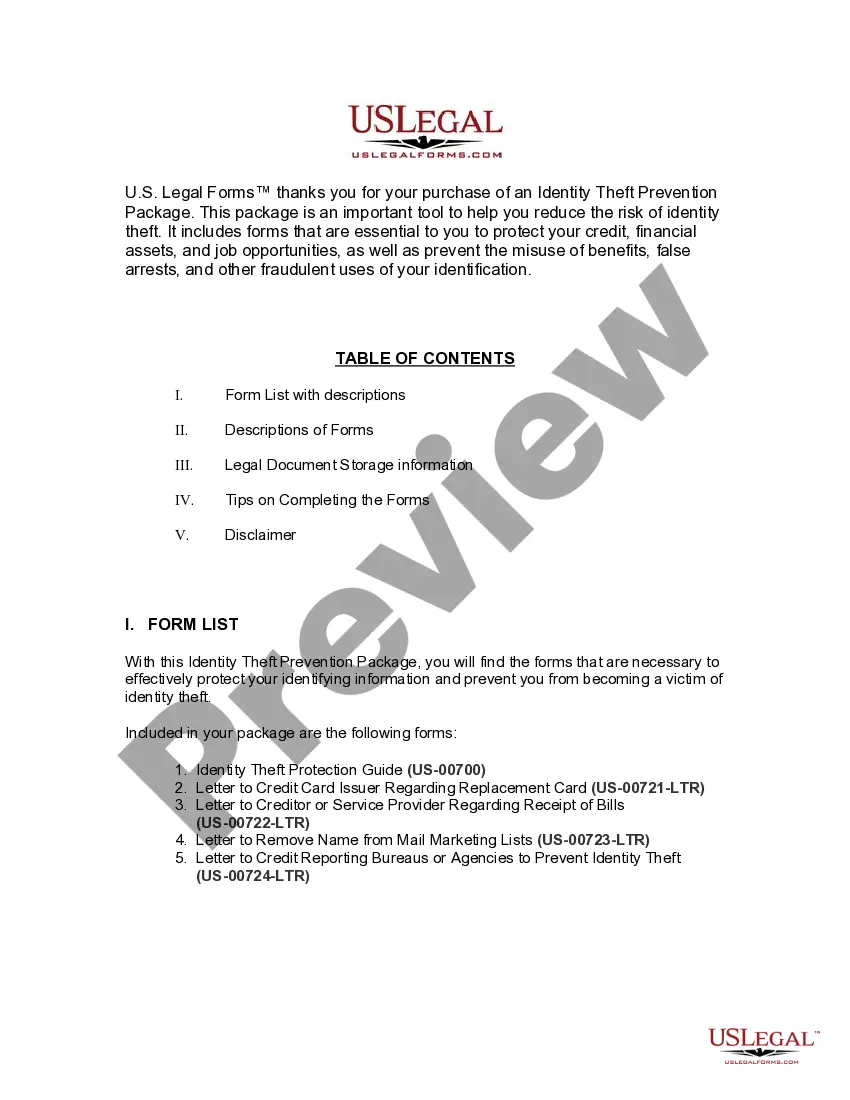
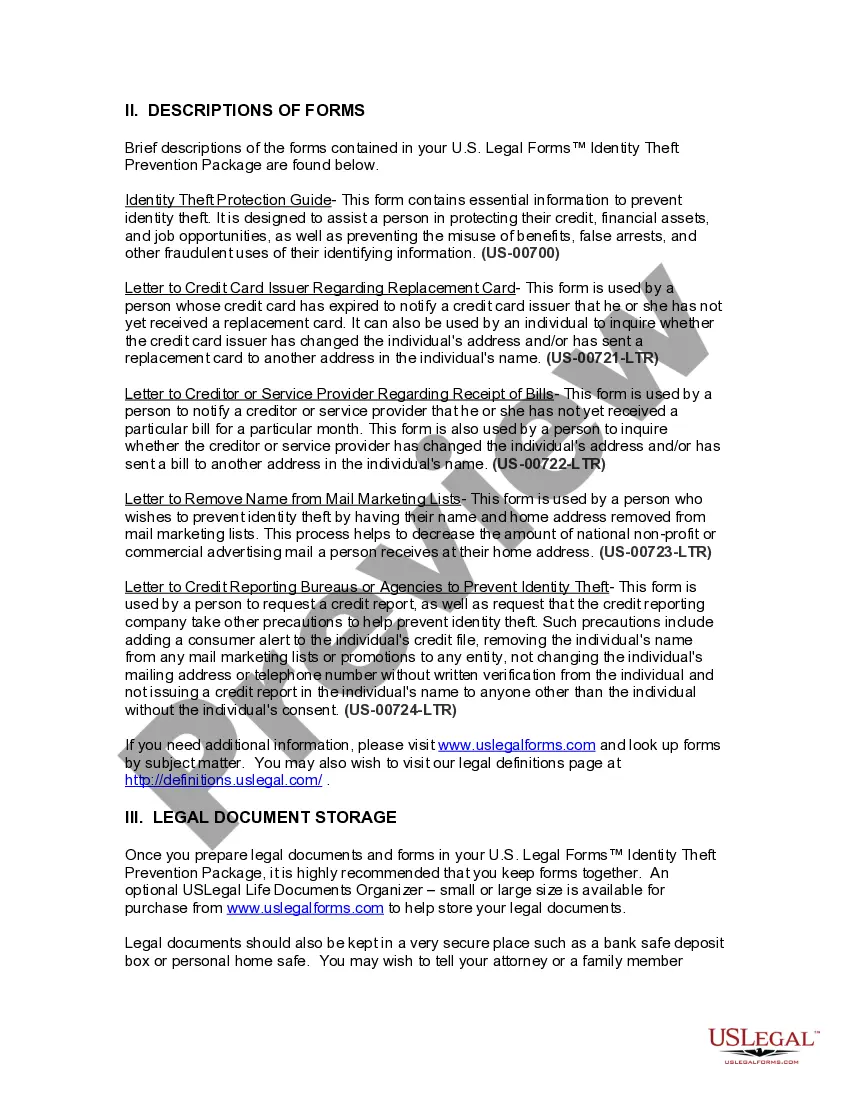
Forms provided in this package
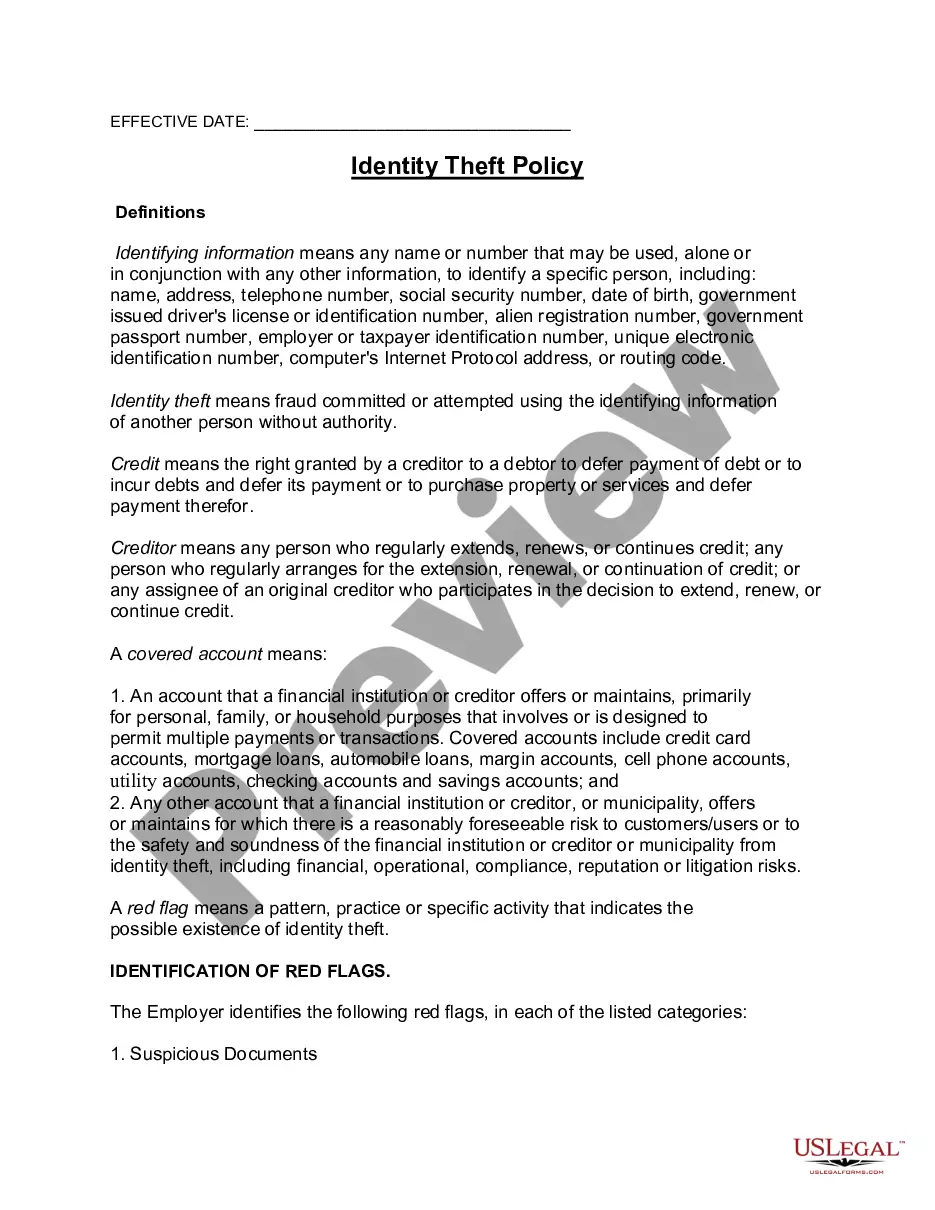
- Identity Theft Protection Guide
- Sample Letter to Credit Card Issuer Regarding Replacement Card
- Sample Letter to Creditor or Service Provider Regarding Receipt of Bills
- Sample Letter to Remove Name from Mail Marketing Lists
- Sample Letter to Credit Reporting Bureau or Agency to Help Prevent Identity Theft
Common use cases
Use this form package when you want to take steps to safeguard your identity against potential theft or misuse. Real-world scenarios include:
- You suspect that your personal information may have been compromised.
- You wish to prevent unwanted solicitations that could lead to identity theft.
- You need assistance in communicating with creditors or service providers regarding potential fraudulent activity.
- You want to establish measures with credit reporting agencies to prevent identity theft.
Who needs this form package
- Individuals residing in Montana concerned about identity theft.
- People who have experienced suspicious financial activity.
- Anyone wishing to proactively reduce their risk of identity theft.
- Individuals who need to communicate with creditors or reporting agencies about their identity protection.
Completing these forms step by step
- Review the included forms and understand their purposes.
- Gather any necessary personal information and documents required to complete each form.
- Fill out the forms using a computer or by hand, ensuring all information is accurate.
- Check for any required signatures or additional documentation needed.
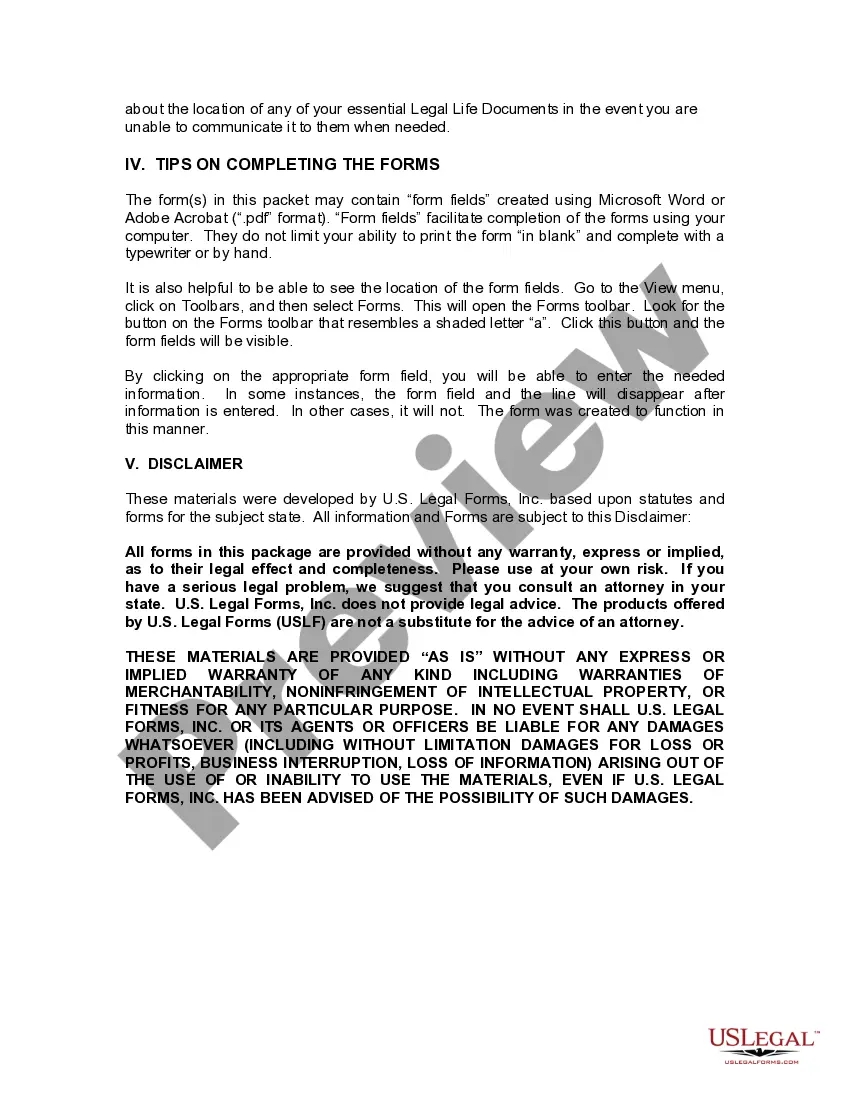
- Store your completed forms securely and notify trusted individuals of their location for future access.
Do forms in this package need to be notarized?
Notarization is generally not required for forms in this package. However, specific circumstances or local laws may require it. You can complete notarization remotely through US Legal Forms, powered by Notarize, with 24/7 availability.
Get your form ready online
Our built-in tools help you complete, sign, share, and store your documents in one place.
Make edits, fill in missing information, and update formatting in US Legal Forms—just like you would in MS Word.
Download a copy, print it, send it by email, or mail it via USPS—whatever works best for your next step.
Sign and collect signatures with our SignNow integration. Send to multiple recipients, set reminders, and more. Go Premium to unlock E-Sign.
If this form requires notarization, complete it online through a secure video call—no need to meet a notary in person or wait for an appointment.
We protect your documents and personal data by following strict security and privacy standards.

Make edits, fill in missing information, and update formatting in US Legal Forms—just like you would in MS Word.

Download a copy, print it, send it by email, or mail it via USPS—whatever works best for your next step.

Sign and collect signatures with our SignNow integration. Send to multiple recipients, set reminders, and more. Go Premium to unlock E-Sign.

If this form requires notarization, complete it online through a secure video call—no need to meet a notary in person or wait for an appointment.

We protect your documents and personal data by following strict security and privacy standards.
Avoid these common issues
- Not updating personal information regularly on forms related to identity theft prevention.
- Failing to send letters to credit reporting agencies or creditors in a timely manner.
- Not keeping copies of completed forms for personal records.
- Ignoring the need to follow up with agencies after submitting requests.
Why use this package online
- Convenience of accessing and downloading the forms anytime.
- Editable forms allow for easy customization to fit your specific situation.
- Reliability of documents drafted by licensed attorneys to ensure compliance with legal standards.
- Cost savings of up to 40% compared to purchasing forms separately.
Looking for another form?
Form popularity
FAQ
Password-Protect Your Devices. Use a Password Manager. Watch Out for Phishing Attempts. Never Give Out Personal Information Over the Phone. Regularly Check Your Credit Reports. Protect Your Personal Documents. Limit Your Exposure.
Password-Protect Your Devices. Use a Password Manager. Watch Out for Phishing Attempts. Never Give Out Personal Information Over the Phone. Regularly Check Your Credit Reports. Protect Your Personal Documents. Limit Your Exposure.
Federal identity theft charges usually carry a maximum sentence of 15 years in federal prison, but ID theft cases often include additional charges that can add to prison time.
Identity thieves can also obtain your personal information by stealing your wallet or purse. When this occurs, we recommend that you immediately contact credit card companies, bank, and credit bureaus to let them know of your situation.
10 Ways To Protect Yourself From Identity Theft. Destroy private records and statements. Secure your mail. Safeguard your Social Security number. Don't leave a paper trail. Never let your credit card out of your sight. Know who you're dealing with. Take your name off marketers' hit lists.
Consider paying for an identity theft protection service only if: You're already the victim of identity theft or at high risk of it. You are unwilling to freeze your credit reports.You have checked and don't have adequate identity theft monitoring available for free as a benefit or as a result of a data breach.
You may be able to have your identity theft charges dropped if: You didn't obtain use a person's information unlawfully If you did not obtain or use someone else's personal information unlawfully, you are not guilty of identity theft.
You may be wondering whether you, the victim, have the authority to drop domestic violence charges. The answer is no. Once the prosecutor's office has issued a domestic violence charge, the victim has no authority to drop the charges.Most people believe that victims of crime issue the charges.
Aggravated identity theft is punishable by a mandatory minimum sentence of imprisonment for two years or by imprisonment for five years if it relates to a terrorism offense. At least thus far, the government has rarely prosecuted the five-year terrorism form of the offense.