Montana Complex Will with Credit Shelter Marital Trust for Large Estates
Overview of this form
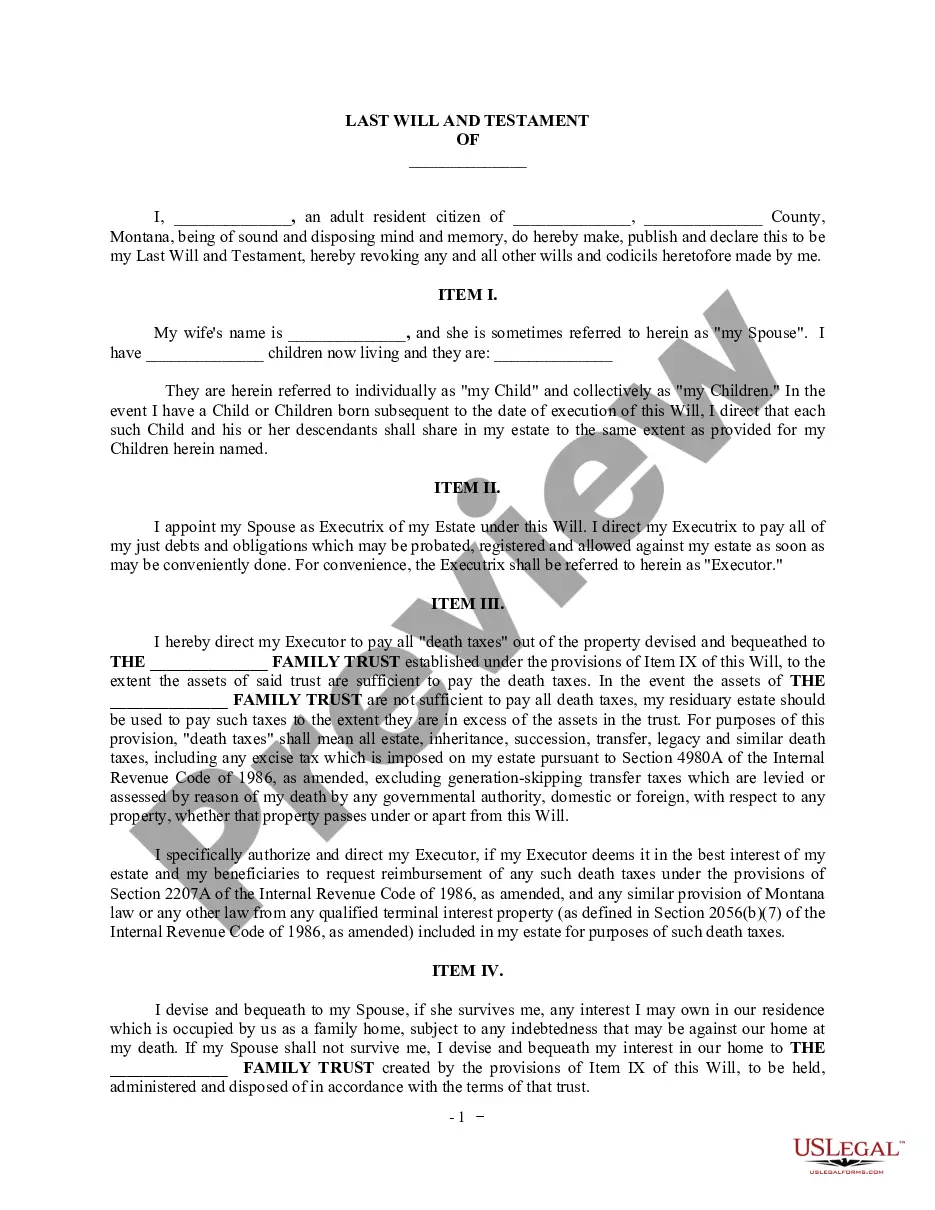
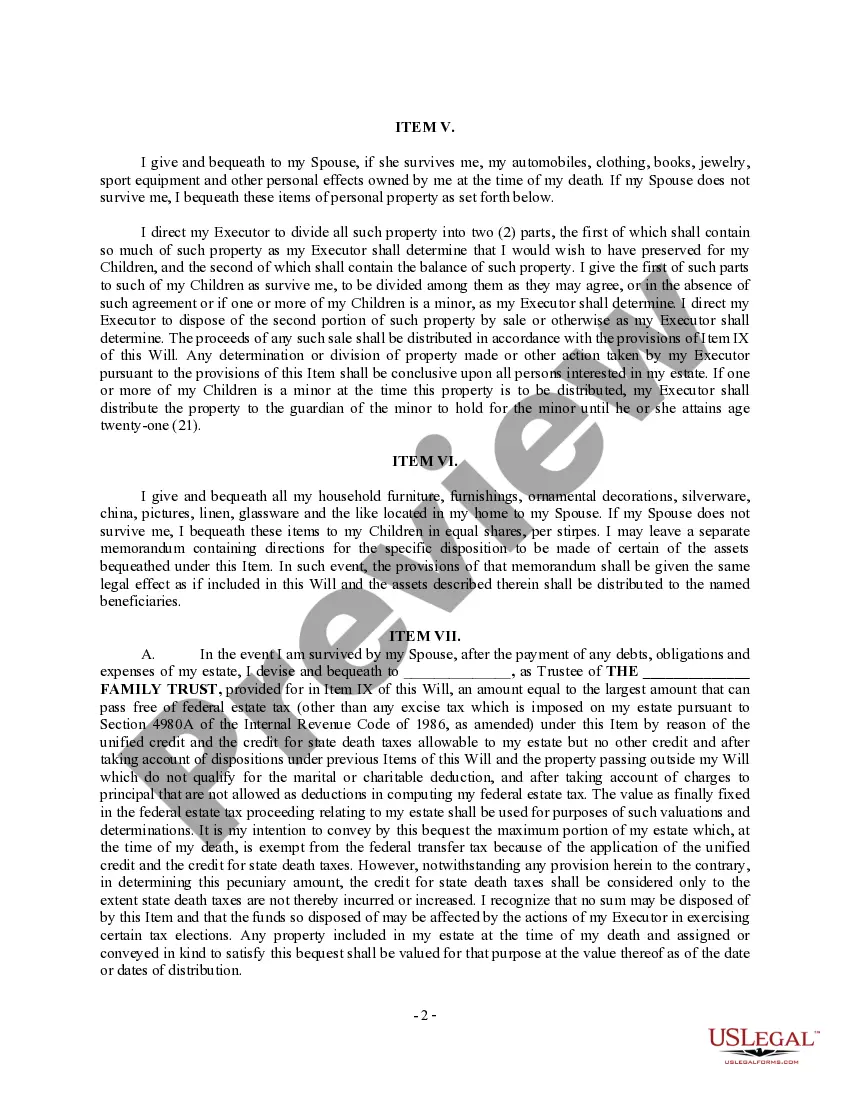
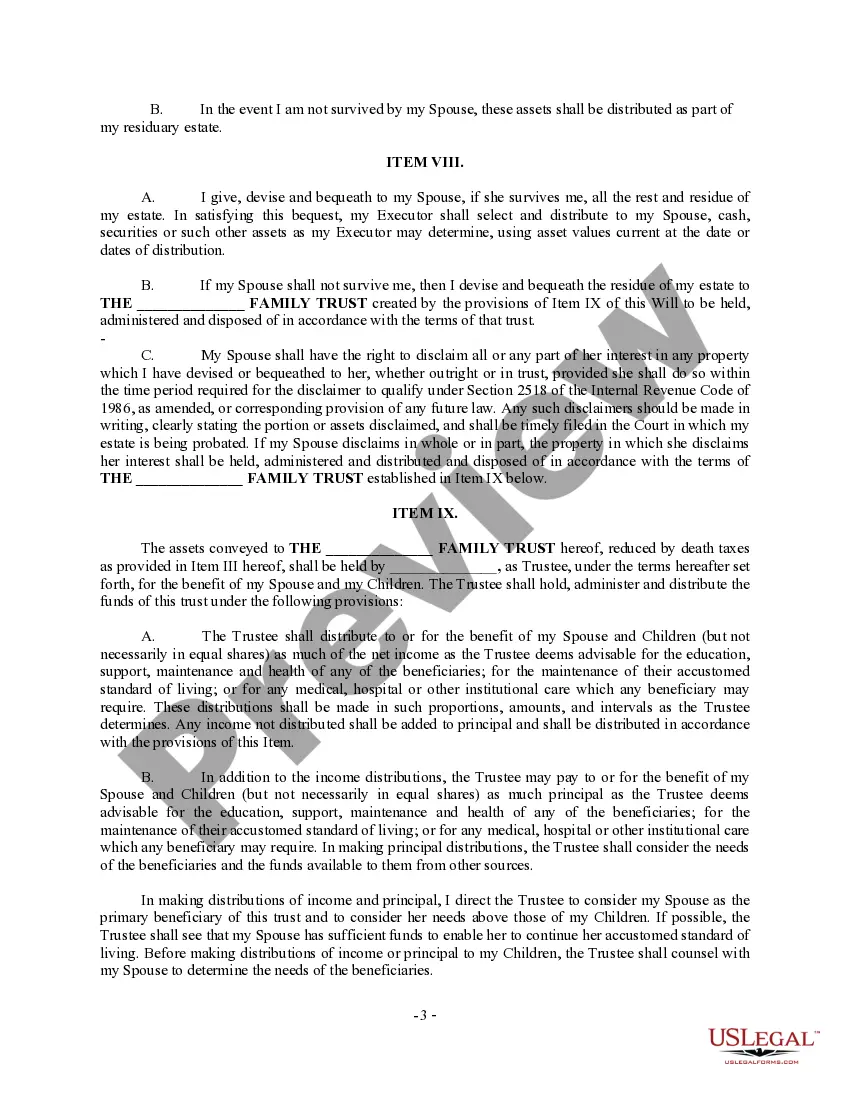
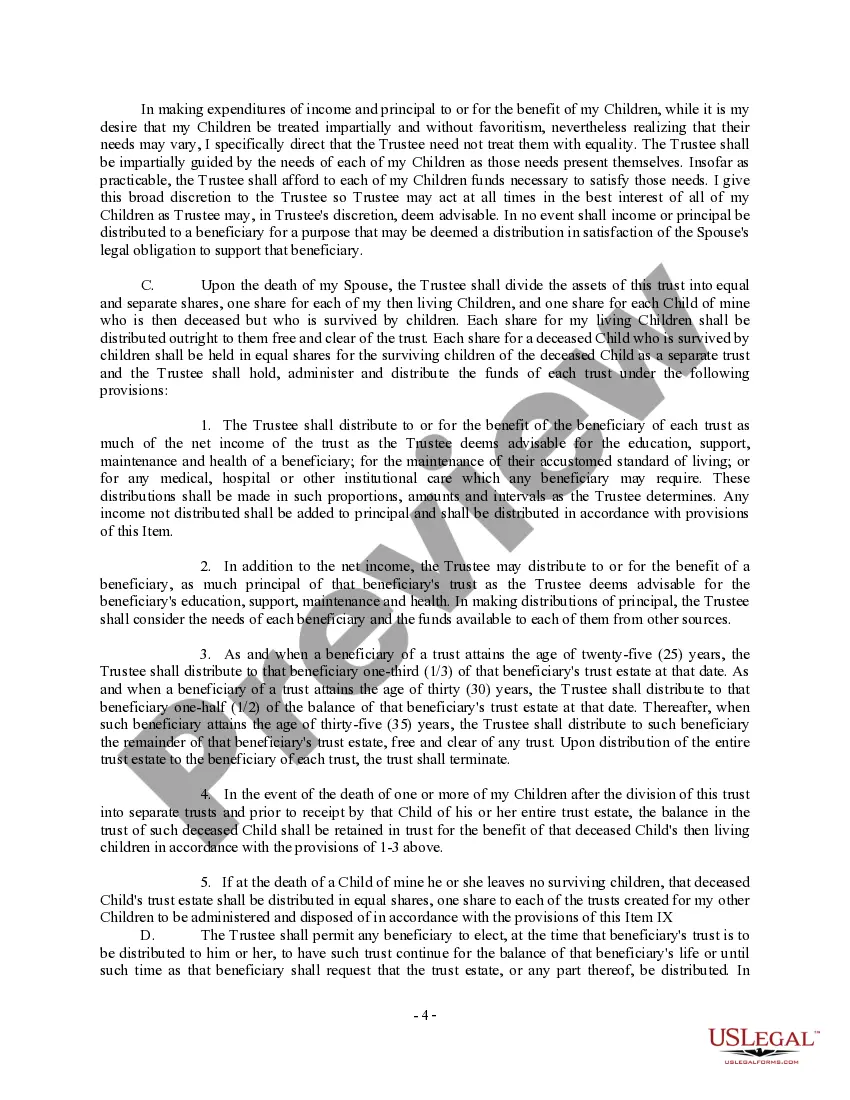
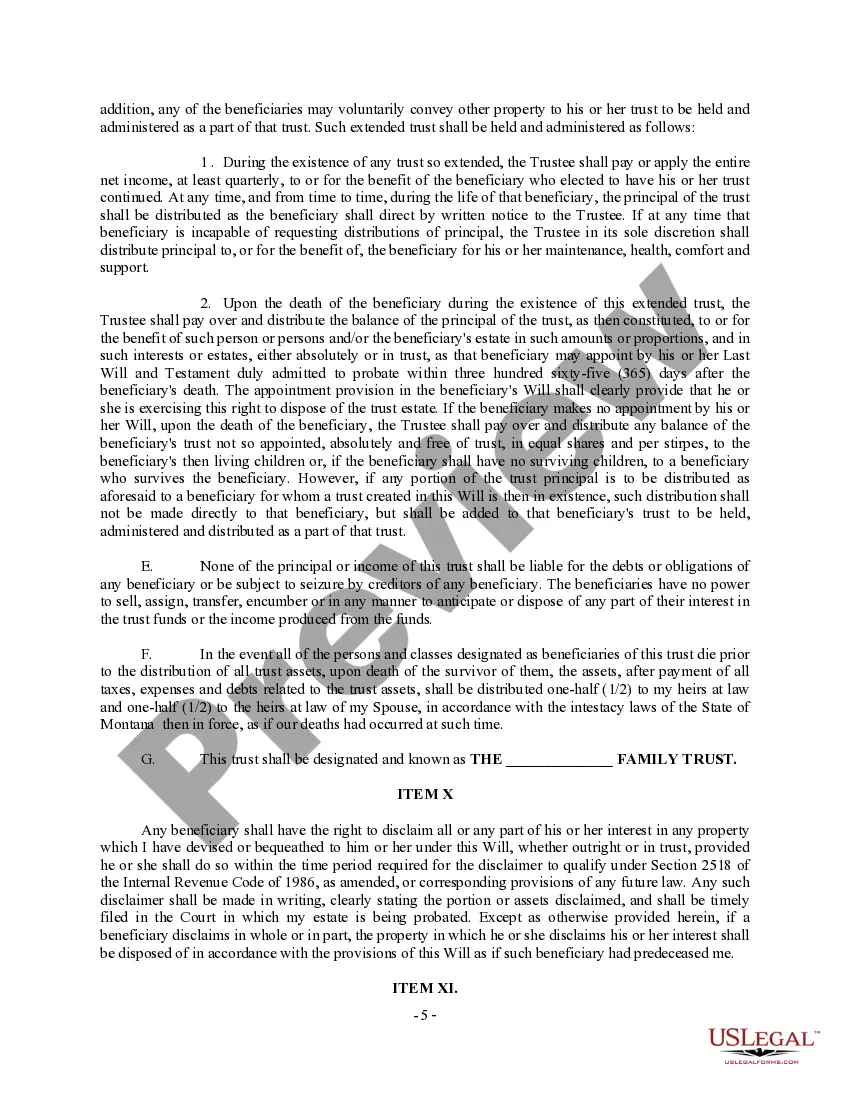
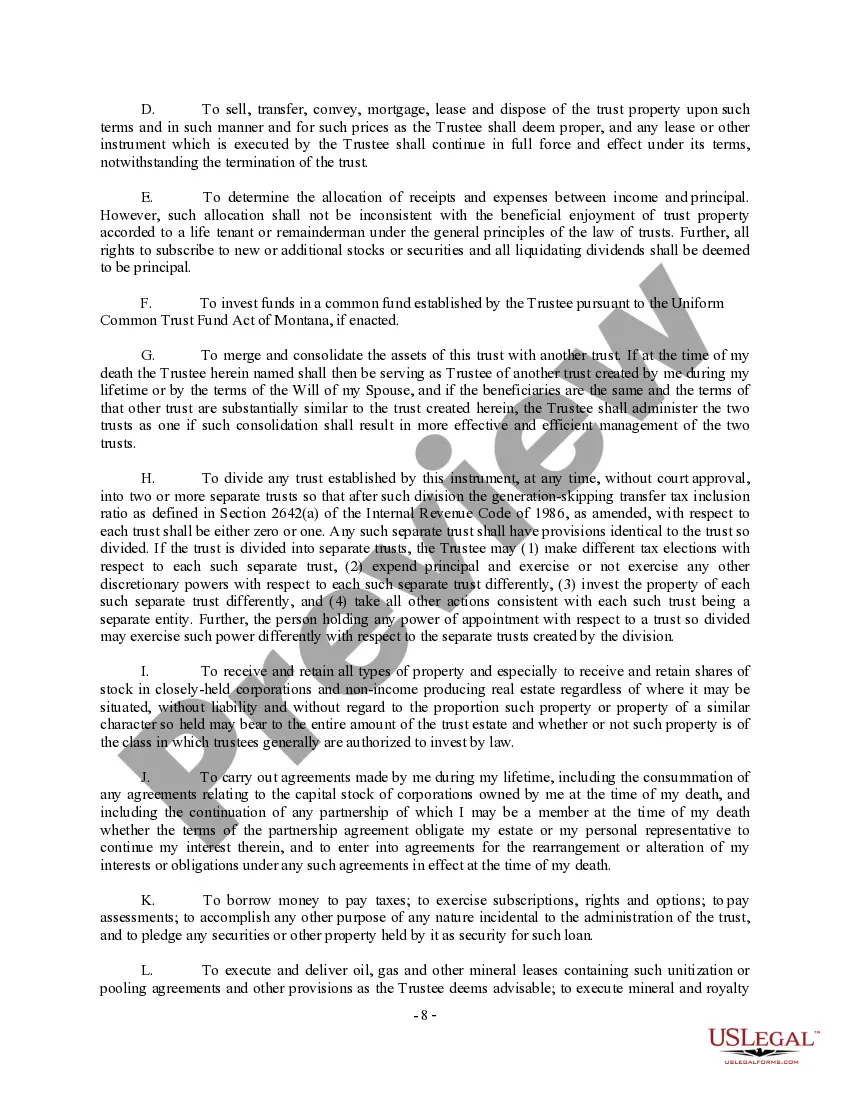
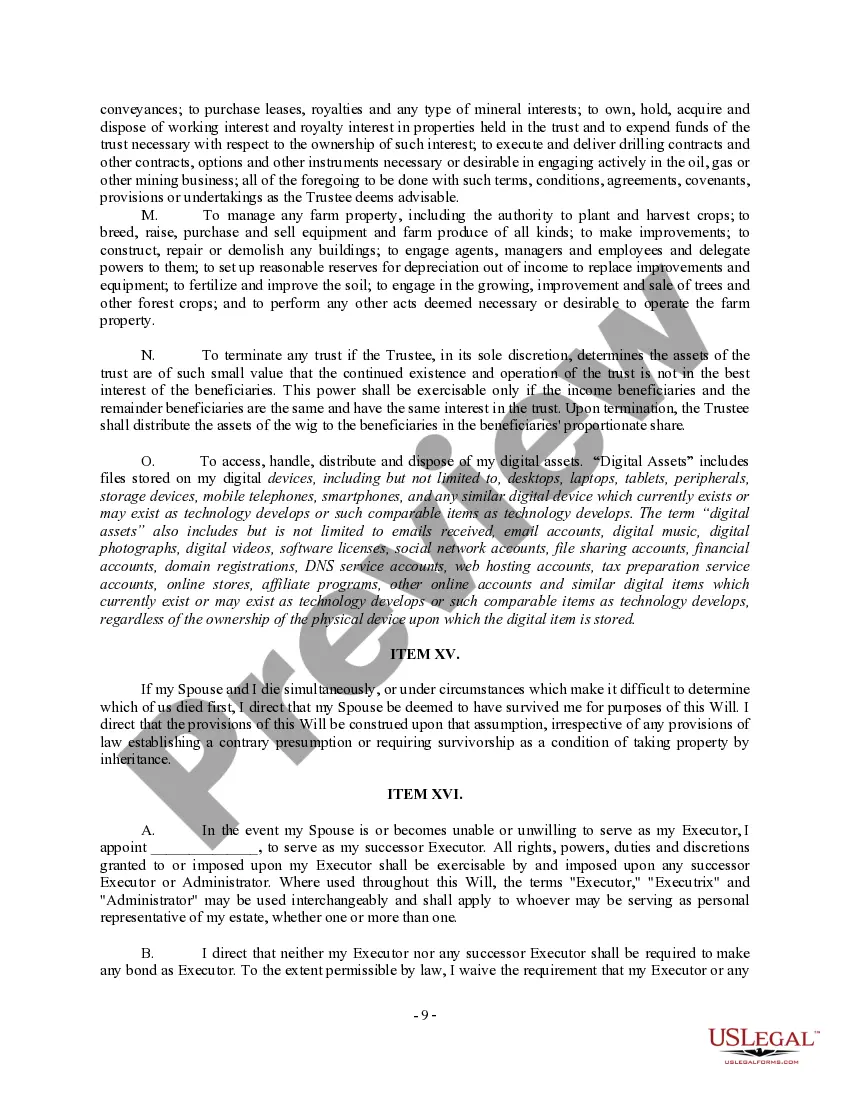
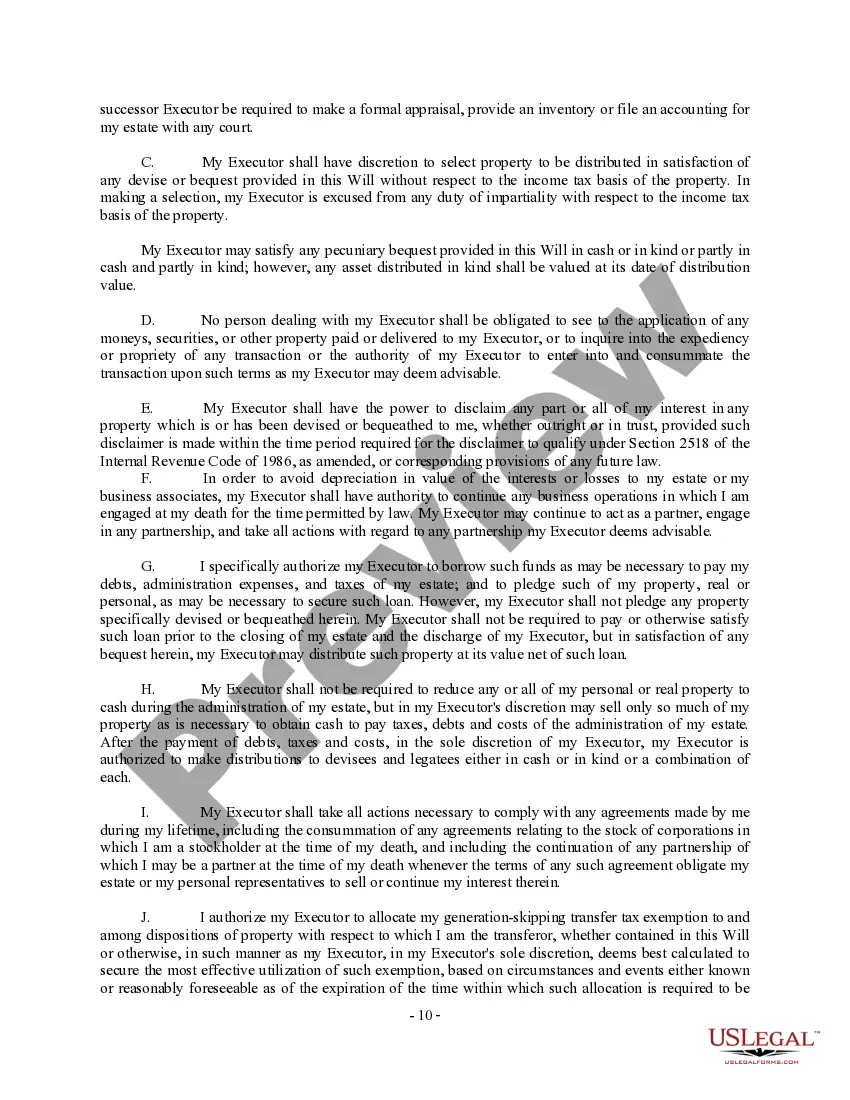
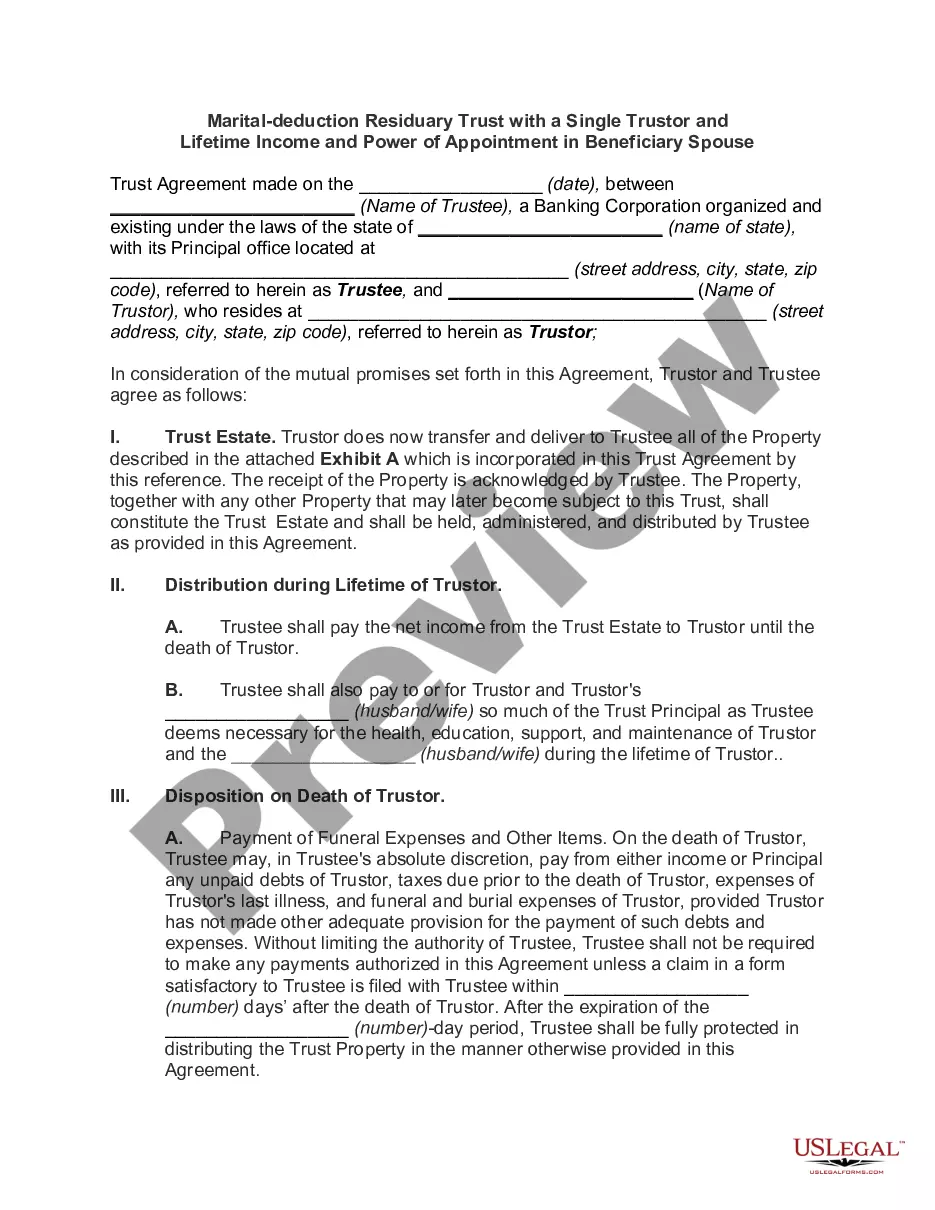
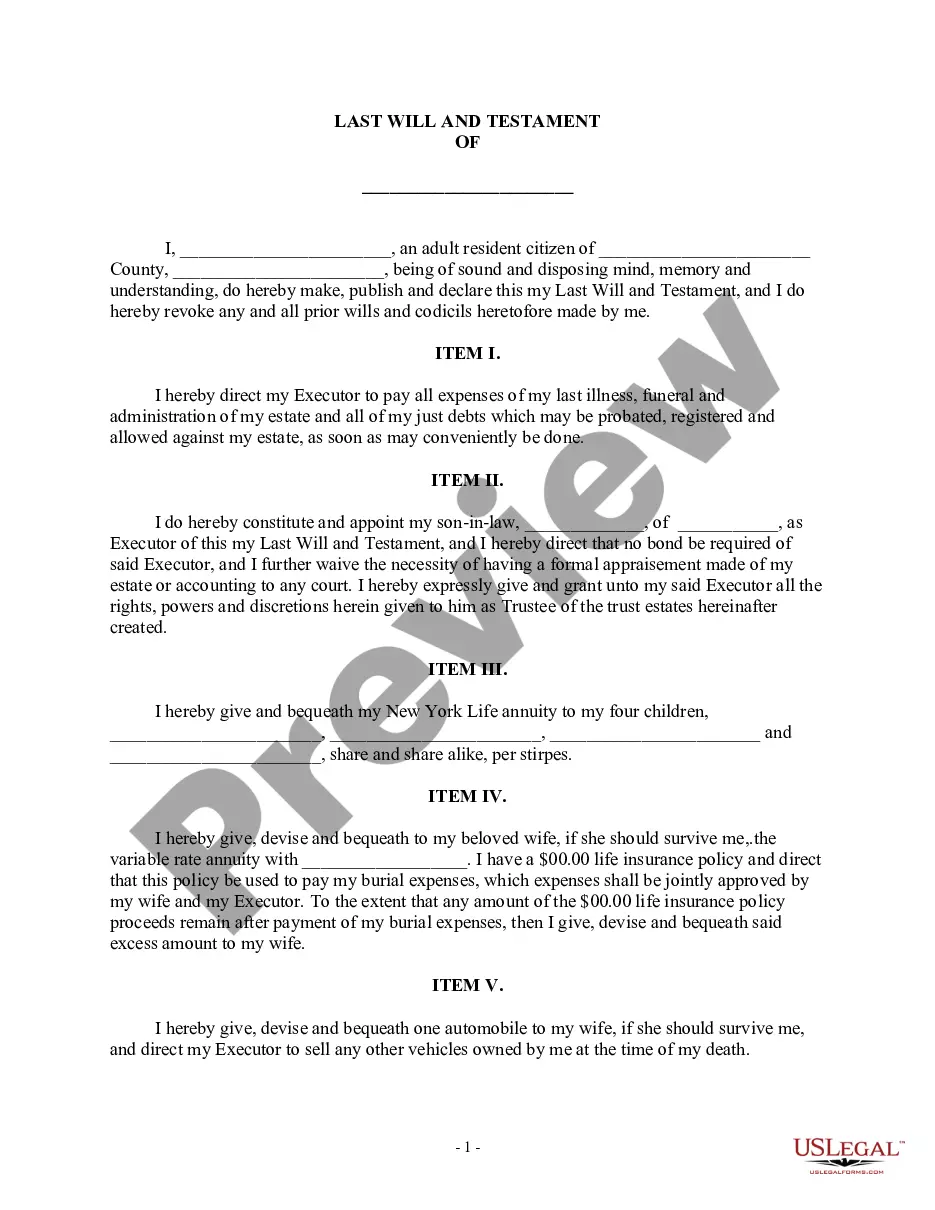
This Complex Will with Credit Shelter Marital Trust for Large Estates is a comprehensive legal document designed for couples wishing to optimize their estate's transfer to heirs while minimizing estate taxes. Unlike simpler wills, this form allows for the establishment of a credit shelter trust to hold up to one million dollars tax-free, benefiting the surviving spouse and eventually the children of the couple, enabling a total tax-free inheritance of up to two million dollars. This will provides detailed instructions on the distribution of assets, making it an essential tool for those with substantial estates.
Key components of this form
- Identification of the testator and their spouse, along with any children.
- Appointment of an executor to manage the estate.
- Detailed provisions for the distribution of assets, including a credit shelter trust.
- Instructions for payment of estate taxes from the trust or residuary estate.
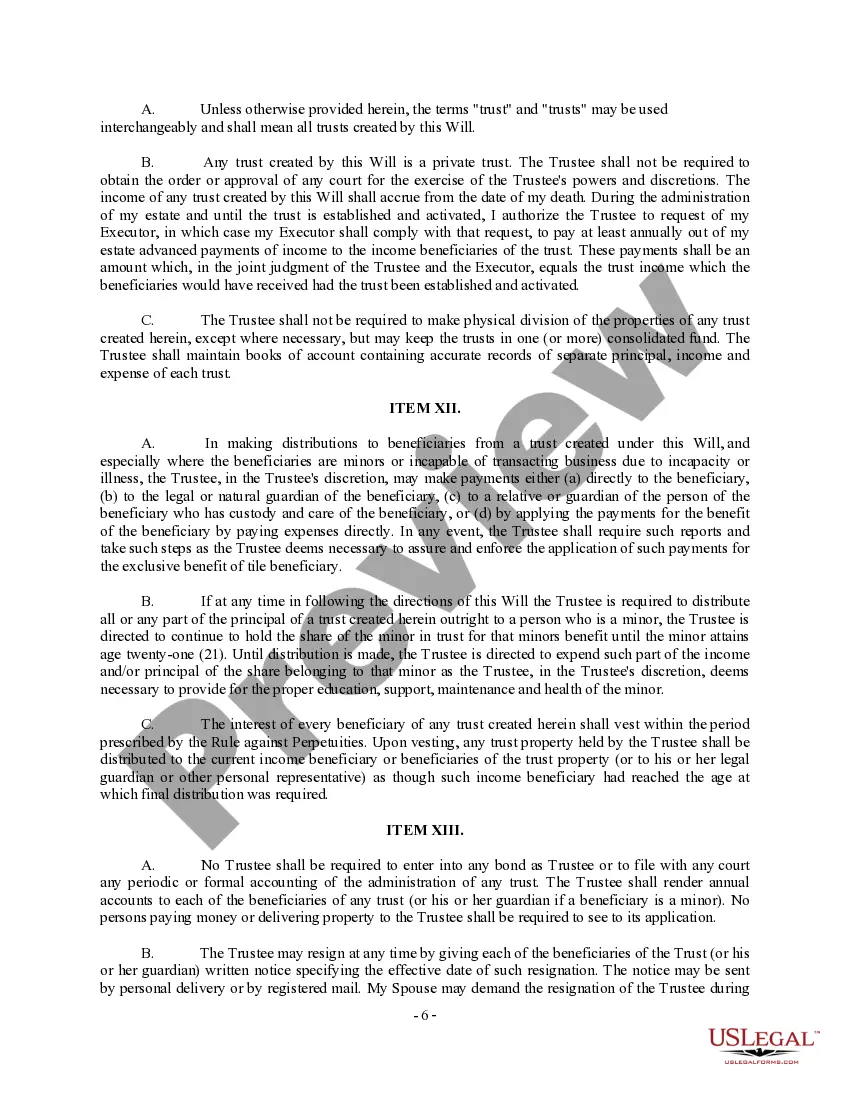
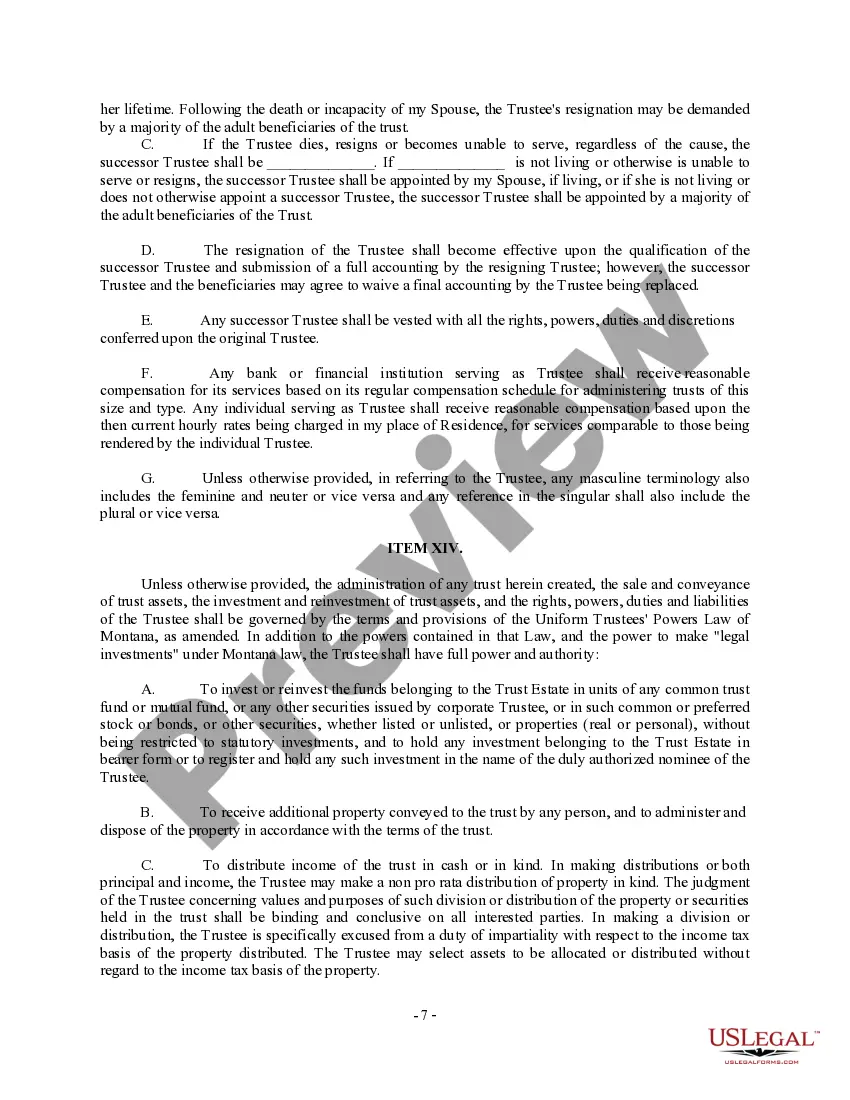
- Provisions for the management and distribution of trust income and principal to beneficiaries.




When to use this form
This form is suitable for individuals or couples with large estates looking to minimize estate taxes and ensure a smooth transition of their assets to beneficiaries after death. It is particularly relevant when the total estate value exceeds the federal estate tax exemption limits or when the testator wants to establish a strategic plan for asset distribution that supports both the surviving spouse and their children.
Who needs this form
- Married couples with a combined estate exceeding one million dollars.
- Individuals seeking to protect their children's inheritance from future estate taxes.
- Those aiming to create a structured financial plan supporting a surviving spouse and children.
- Residents of Montana or those who wish to follow the state's estate planning laws.
Instructions for completing this form
- Identify the parties involved, including the testator, spouse, and children.
- Choose an executor to manage the estate and write their details in the relevant section.
- Complete the provisions for asset distribution, specifying amounts and beneficiaries involved.
- Detail how any estate taxes should be paid, linking them to the appropriate trust or estate funds.
- Sign and date your will in front of witnesses and, if desired, a notary for added validity.
Is notarization required?
This form does not typically require notarization unless specified by local law. However, having it notarized can add an extra layer of legal validity and can be beneficial in case of disputes.
Get your form ready online
Our built-in tools help you complete, sign, share, and store your documents in one place.
Make edits, fill in missing information, and update formatting in US Legal Forms—just like you would in MS Word.
Download a copy, print it, send it by email, or mail it via USPS—whatever works best for your next step.
Sign and collect signatures with our SignNow integration. Send to multiple recipients, set reminders, and more. Go Premium to unlock E-Sign.
If this form requires notarization, complete it online through a secure video call—no need to meet a notary in person or wait for an appointment.
We protect your documents and personal data by following strict security and privacy standards.

Make edits, fill in missing information, and update formatting in US Legal Forms—just like you would in MS Word.

Download a copy, print it, send it by email, or mail it via USPS—whatever works best for your next step.

Sign and collect signatures with our SignNow integration. Send to multiple recipients, set reminders, and more. Go Premium to unlock E-Sign.

If this form requires notarization, complete it online through a secure video call—no need to meet a notary in person or wait for an appointment.

We protect your documents and personal data by following strict security and privacy standards.
Common mistakes to avoid
- Failing to adequately specify all beneficiaries, leading to confusion about asset distribution.
- Neglecting to appoint a successor executor, which can complicate estate management.
- Forgetting to update the will after major life events, such as births or deaths.
- Overlooking legal requirements for witnesses or notarization, which can affect the validity of the will.
Benefits of using this form online
- Easy access to customizable templates, allowing personalization for specific needs.
- Convenient download options for immediate access to forms.
- Structured, lawyer-drafted content ensuring legal accuracy and compliance.
- Ability to edit the document as circumstances change.
Looking for another form?


Form popularity
FAQ
Credit shelter trusts are also known as AB Trusts or Bypass Trusts. This is because CSTs are essentially bypass trusts in which each spouse has a separate "taxable" estate. These estates are known as A trust and B trust.
Yes, the surviving spouse may serve as trustee of the credit shelter trust.All of the assets in the credit shelter trust, including any appreciation in value during the surviving spouse's lifetime, pass free of estate tax to the beneficiaries.
A marital trust allows the couple's heirs to avoid probate and take less of a hit from estate taxes by taking full advantage of the unlimited marital deductiona provision that enables spouses to pass assets to each other without tax consequences.
You can be trustee of your own living trust. If you are married, your spouse can be trustee with you. Most married couples who own assets together, especially those who have been married for some time, are usually co-trustees.
Trust B is irrevocable, the surviving spouse cannot change its terms. When one spouse dies the survivor must hire a lawyer or an accountant to determine how to best divide the couple's assets between the deceased spouse's irrevocable trust and the surviving spouse's revocable trust.
At the time of your death, the assets in your family trust are protected by the exemption, and the assets in your marital trust are protected by the marital deduction. No estate taxes are due.
The "A Trust" is also commonly referred to as the "Marital Trust," "QTIP Trust," or "Marital Deduction Trust." The "B Trust" is also commonly referred to as the "Bypass Trust," "Credit Shelter Trust," or "Family Trust."
A marital trust starts as a revocable living trust. A surviving spouse can be its trustee.
The trust qualifies for the marital deduction. In a QTIP trust, the surviving spouse must receive all income generated by the trust property for life, paid at least annually.After the surviving spouse's death, the property passes to the remainder beneficiaries of the trust, who usually are the children of the couple.