Montana Authorization To Obtain Medical Treatment For Minor Child - Horse Equine Forms
Overview of this form
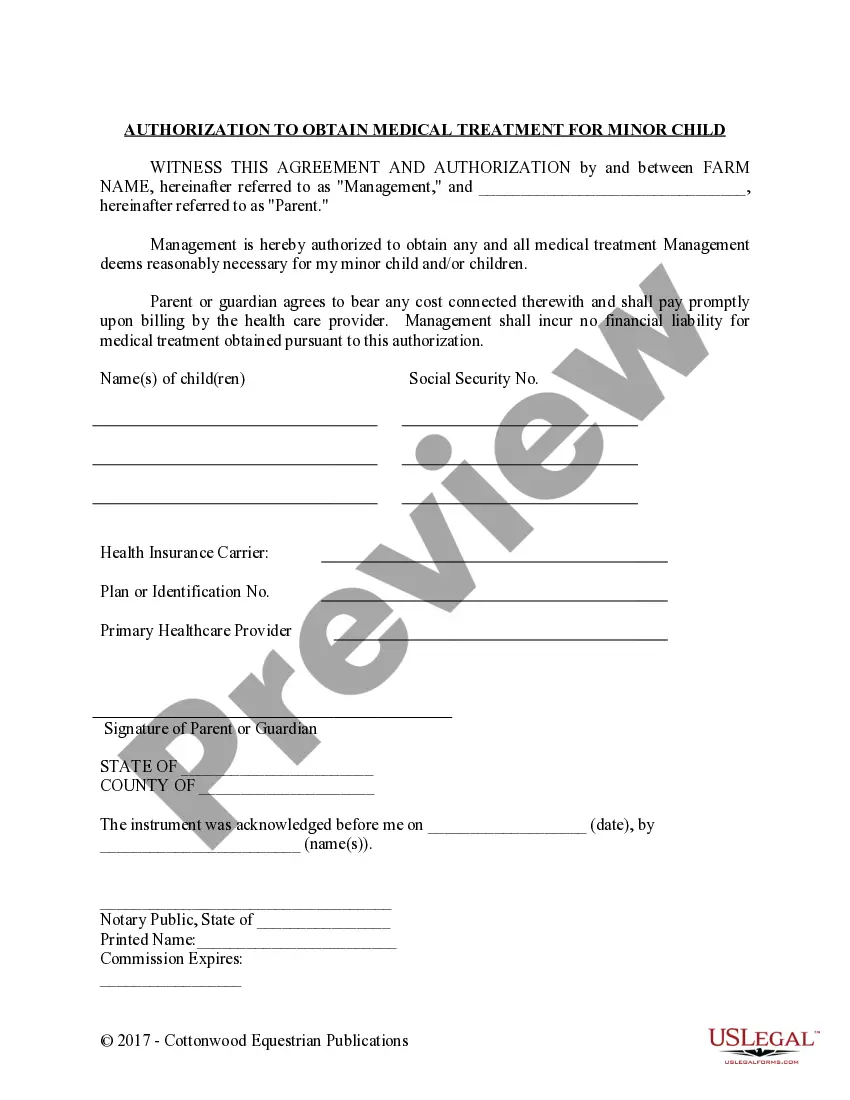
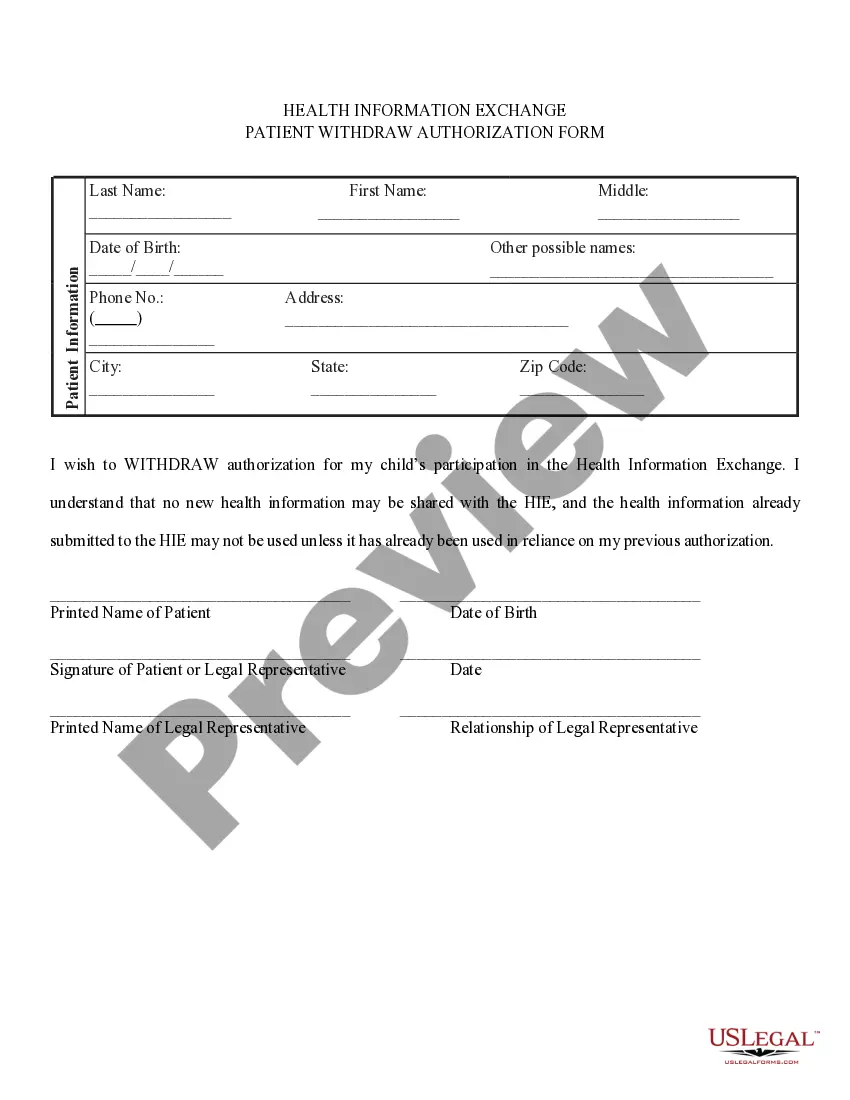
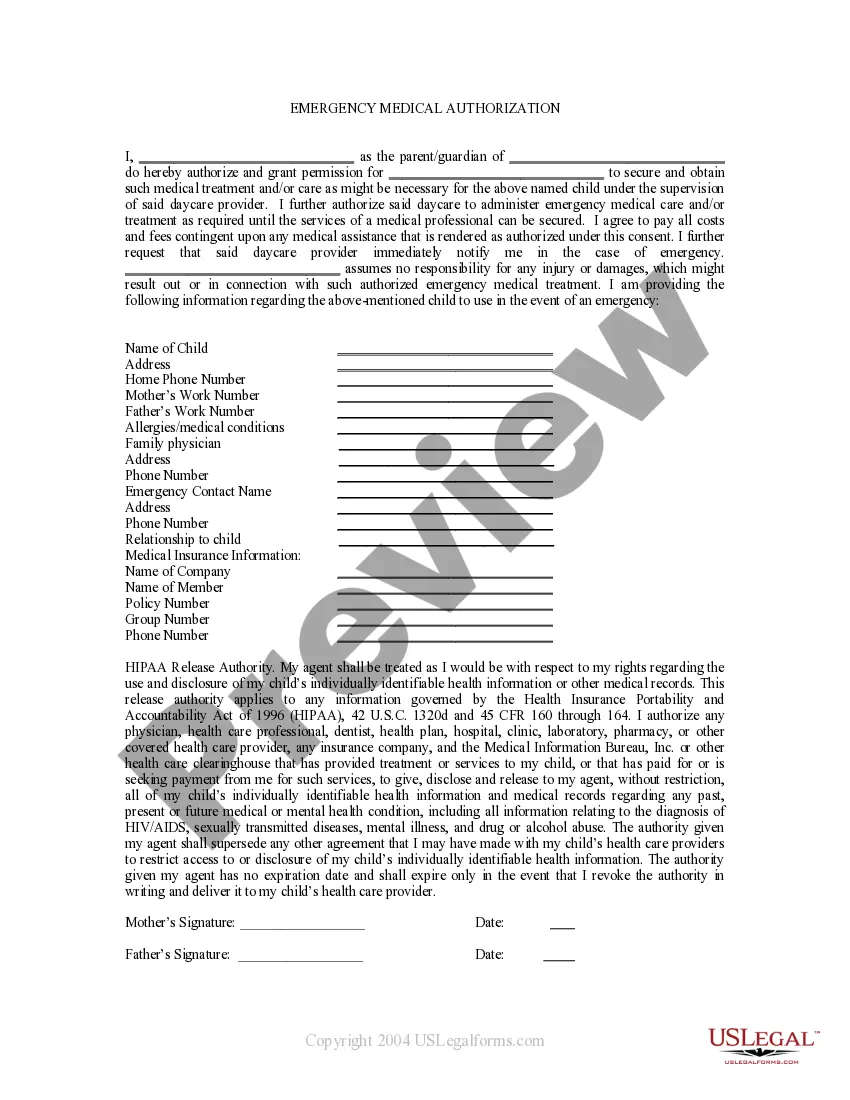
The Authorization to Obtain Medical Treatment for Minor Child is a crucial document that allows equine facility management to secure medical treatment for a child in case of an injury during equine activities. This form empowers the management to act swiftly in emergencies while ensuring that financial responsibilities are covered by the child's parents or guardians.
Main sections of this form
- Identification of the equine facility management and the child's parent or guardian.
- Authorization for management to obtain necessary medical treatment for the minor child.
- Agreement on financial responsibilities for the medical treatment incurred.
- Name(s) of the minor child(ren) covered by this authorization.
- Information regarding health insurance carrier and identification numbers.
- Signature of the parent or guardian, along with a notary acknowledgment section.
When this form is needed
This form should be used before a child participates in equine activities, such as riding lessons, horseback riding events, or any events involving horses. It is essential for ensuring that, in case of unexpected injuries, the management can promptly seek medical care without delays.
Who needs this form
- Parents or guardians of children participating in equine activities.
- Equine facility owners or operators who offer services to minors.
- Any adult responsible for overseeing equine activities involving children.
Completing this form step by step
- Identify the name of the equine facility management and the parent or guardian.
- List the name(s) of the minor child(ren) who will be covered under this authorization.
- Provide the child(ren)'s Social Security number and insurance details.
- Sign and date the form where indicated.
- Ensure the signature of a notary public is obtained, if required.
Does this document require notarization?
This form needs to be notarized to ensure legal validity. US Legal Forms provides secure online notarization powered by Notarize, allowing you to complete the process through a verified video call, available anytime.
Get your form ready online
Our built-in tools help you complete, sign, share, and store your documents in one place.
Make edits, fill in missing information, and update formatting in US Legal Forms—just like you would in MS Word.
Download a copy, print it, send it by email, or mail it via USPS—whatever works best for your next step.
Sign and collect signatures with our SignNow integration. Send to multiple recipients, set reminders, and more. Go Premium to unlock E-Sign.
If this form requires notarization, complete it online through a secure video call—no need to meet a notary in person or wait for an appointment.
We protect your documents and personal data by following strict security and privacy standards.

Make edits, fill in missing information, and update formatting in US Legal Forms—just like you would in MS Word.

Download a copy, print it, send it by email, or mail it via USPS—whatever works best for your next step.

Sign and collect signatures with our SignNow integration. Send to multiple recipients, set reminders, and more. Go Premium to unlock E-Sign.

If this form requires notarization, complete it online through a secure video call—no need to meet a notary in person or wait for an appointment.

We protect your documents and personal data by following strict security and privacy standards.
Mistakes to watch out for
- Neglecting to fill in the name(s) of the child(ren).
- Failing to include health insurance information.
- Not obtaining a notarized signature when necessary.
- Leaving the date of signing blank.
Why complete this form online
- Convenience of downloading and filling out the form at your pace.
- Editability ensures you can personalize the form easily before submitting.
- Access to professionally drafted templates enhances reliability and legal accuracy.
Legal use & context
- This form provides parents with legal authority to ensure timely medical treatment for their children.
- It mitigates potential liability for farm management when an emergency arises.
- Properly completed and notarized, this document can be crucial in legal circumstances involving medical care.
Summary of main points
- The Authorization to Obtain Medical Treatment for Minor Child is essential for equine activity safety.
- It ensures that minors receive timely medical attention during emergencies.
- Completing and notarizing the form properly protects all parties involved.
Looking for another form?
Form popularity
FAQ
Grandparents should get a power of attorney, also called a POA, granting them the legal authority to address the child's medical and other needs, particularly in an emergency when the child's parents can't be reached. This can be as simple as having the parent sign a notarized form and submitting it to the court.
Do Grandparents Need a Power of Attorney to Take Grandchildren to the Doctor?While you may not have legal guardianship or permanent custody of your grandchild, a medical power of attorney or other legal consent form, as appropriate in your state, gives you legal authority to make health-related decisions for them.
The grandparents' medical consent form allows a parent or legal guardian to hand over all responsibility regarding their child's health care decisions to one of the child's grandparents.
MINOR MUST BE EMANCIPATED (GENERALLY 14 YEARS OF AGE OR OLDER) LAW/DETAILS MAY/MUST THE HEALTH CARE PROVIDER INFORM A PARENT ABOUT THIS CARE OR DISCLOSE RELATED MEDICAL INFORMATION TO THEM? An emancipated minor may consent to medical, dental and psychiatric care.
People looking after your child like childminders or grandparents do not have parental responsibility, but you can authorise them to take medical decisions for your child, if you wish.
This may include step-parents, grandparents and childminders. You can rely on their consent if they are authorised by the parents.So while there is no specific agreement between parents and a third party in any given situation, the third party can give consent providing it is in the child's best interests.
Since the 1990s, California law has afforded minors the right to consent to certain types of medical care, such as the diagnosis and treatment of sexually transmitted diseases, without the consent of their parent or guardian.
Defining the legal age of majority at 18 years is an attempt to create conditions in which most patients can actuate the traditional notion of informed consent. This does not imply, however, that no one younger than 18 years can participate in their own health care decision making.
A care provider may perform a routine test or treatment on a minor who is over the age of 14 without parental consent and without accompaniment, on condition that the minor him/herself gives informed consent for the medical procedure.