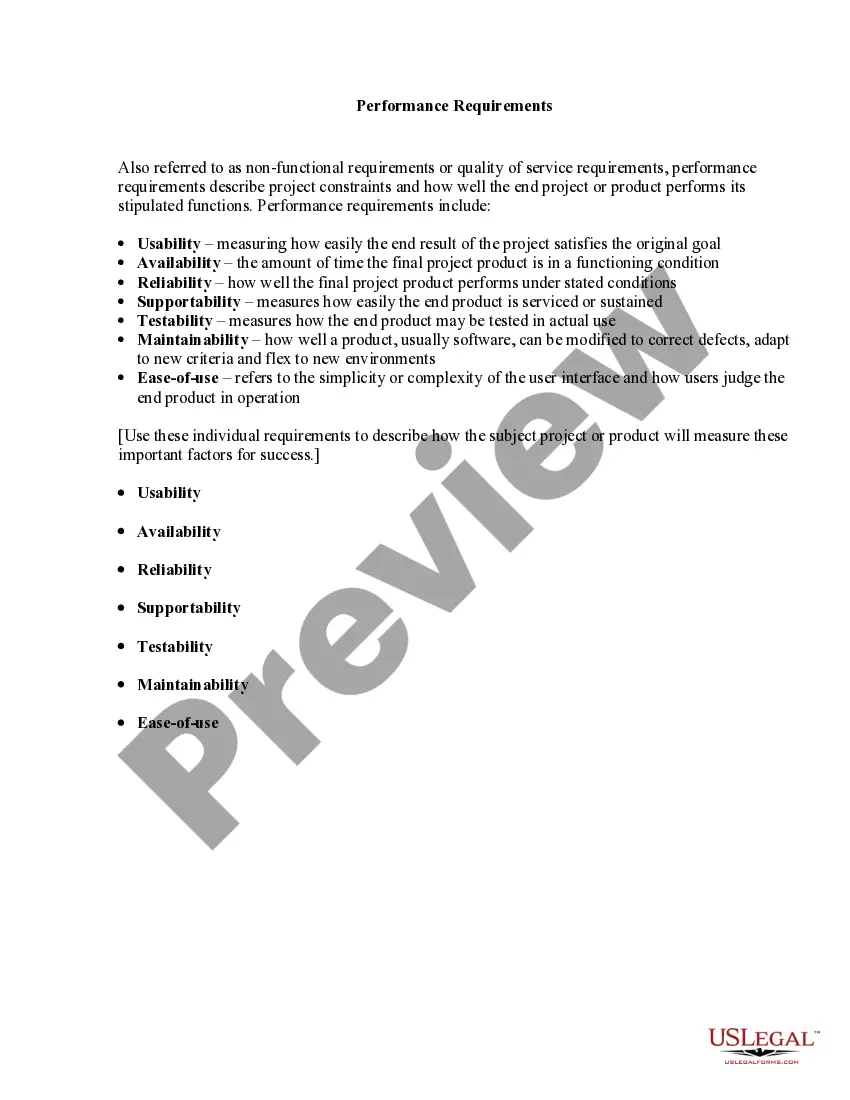
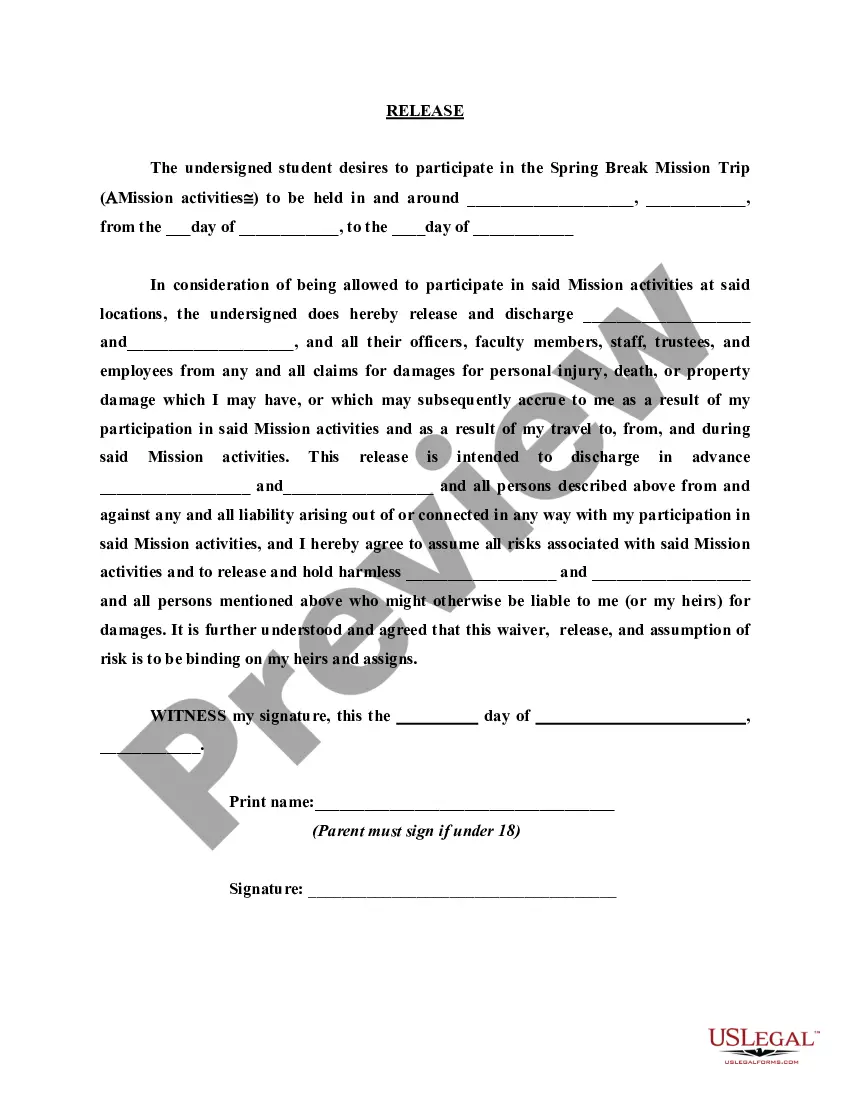
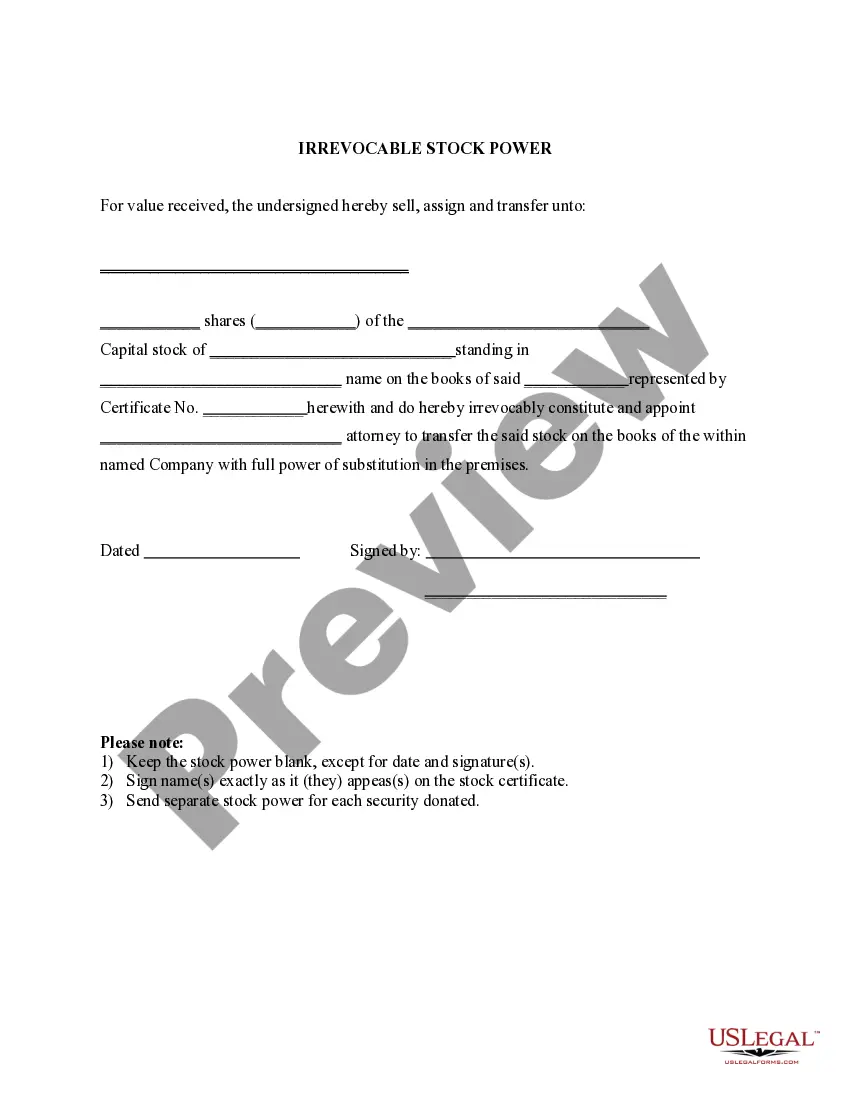
This form allows a parent or guardian to release a nonprofit facility from liability for injuries which may be incurred by a minor child while on the premises, taking part in activities, etc.
Mississippi Waiver and Release From Liability For Minor Child for Nonprofit
Category:
State:
Multi-State
Control #:
US-WAV-36M
Format:
Word;
Rich Text
Instant download
Description
Free preview
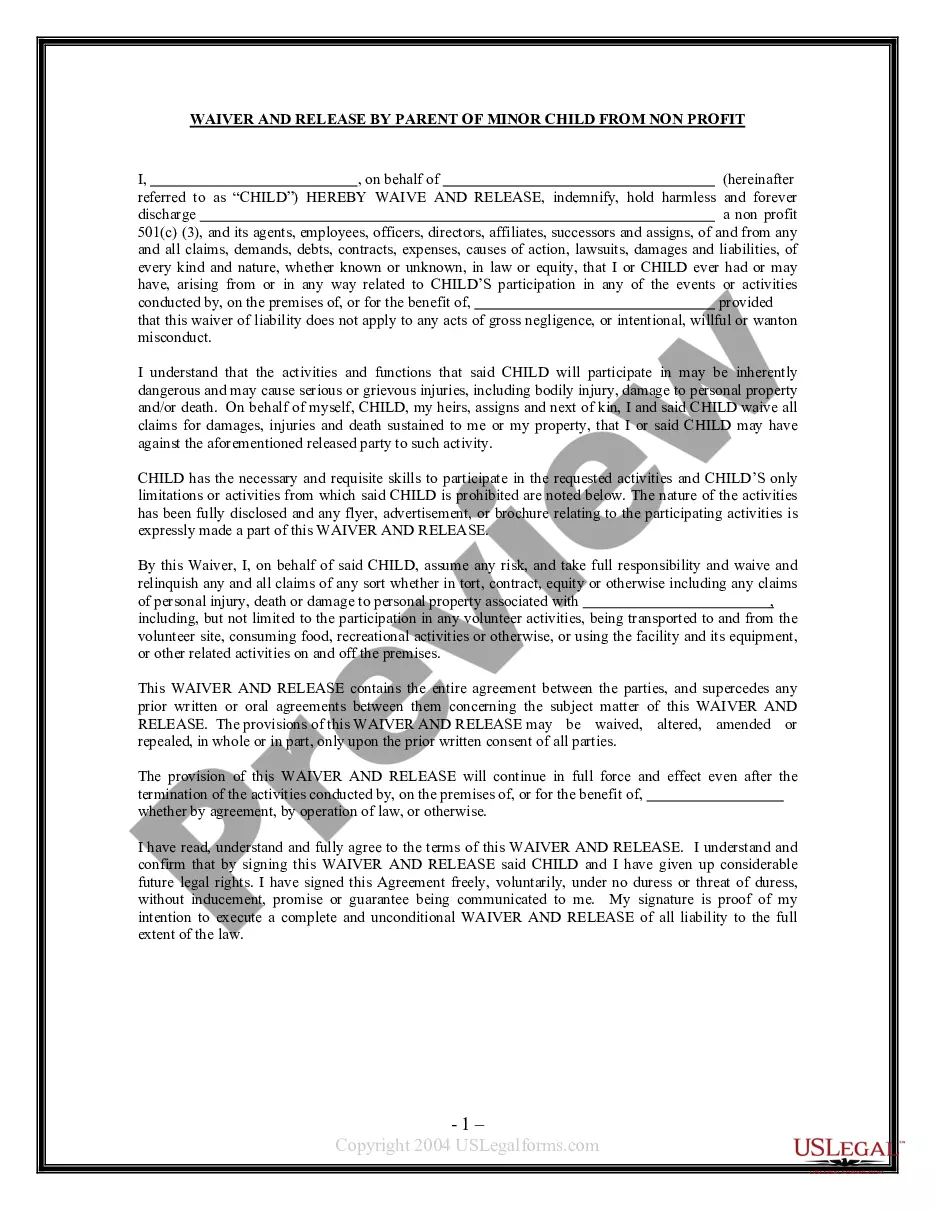
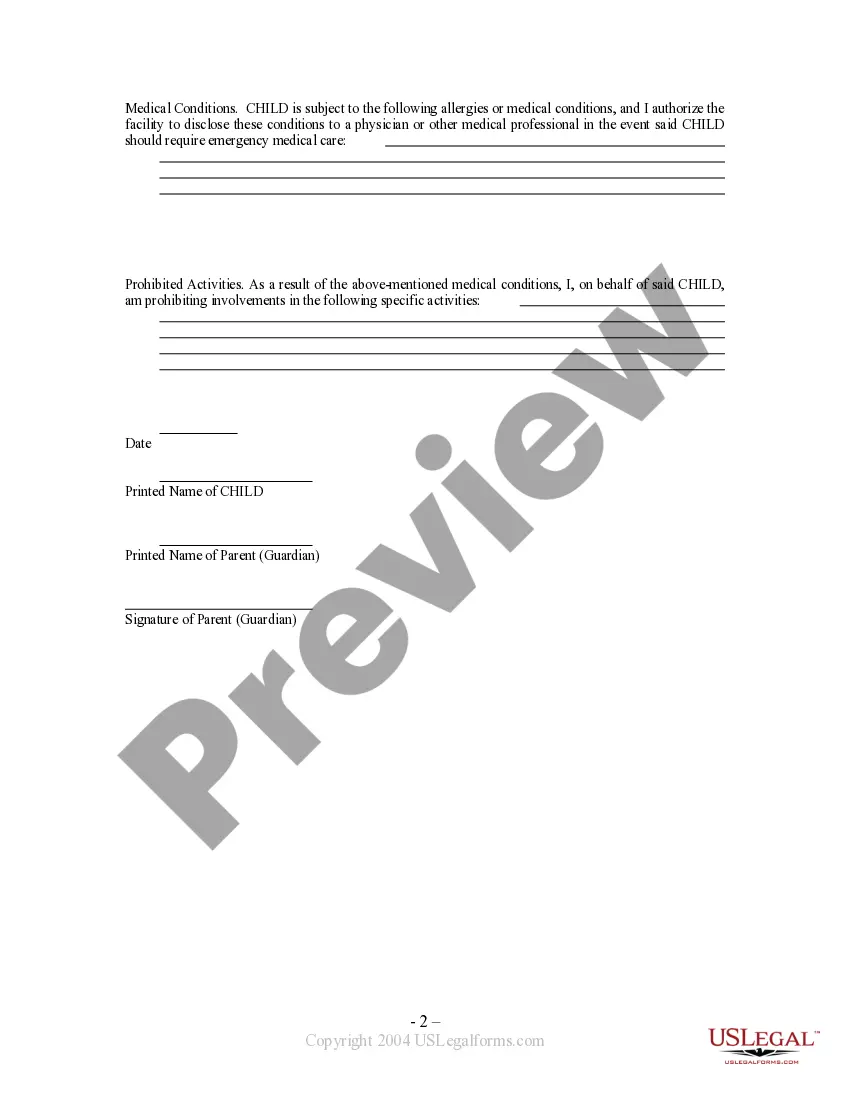
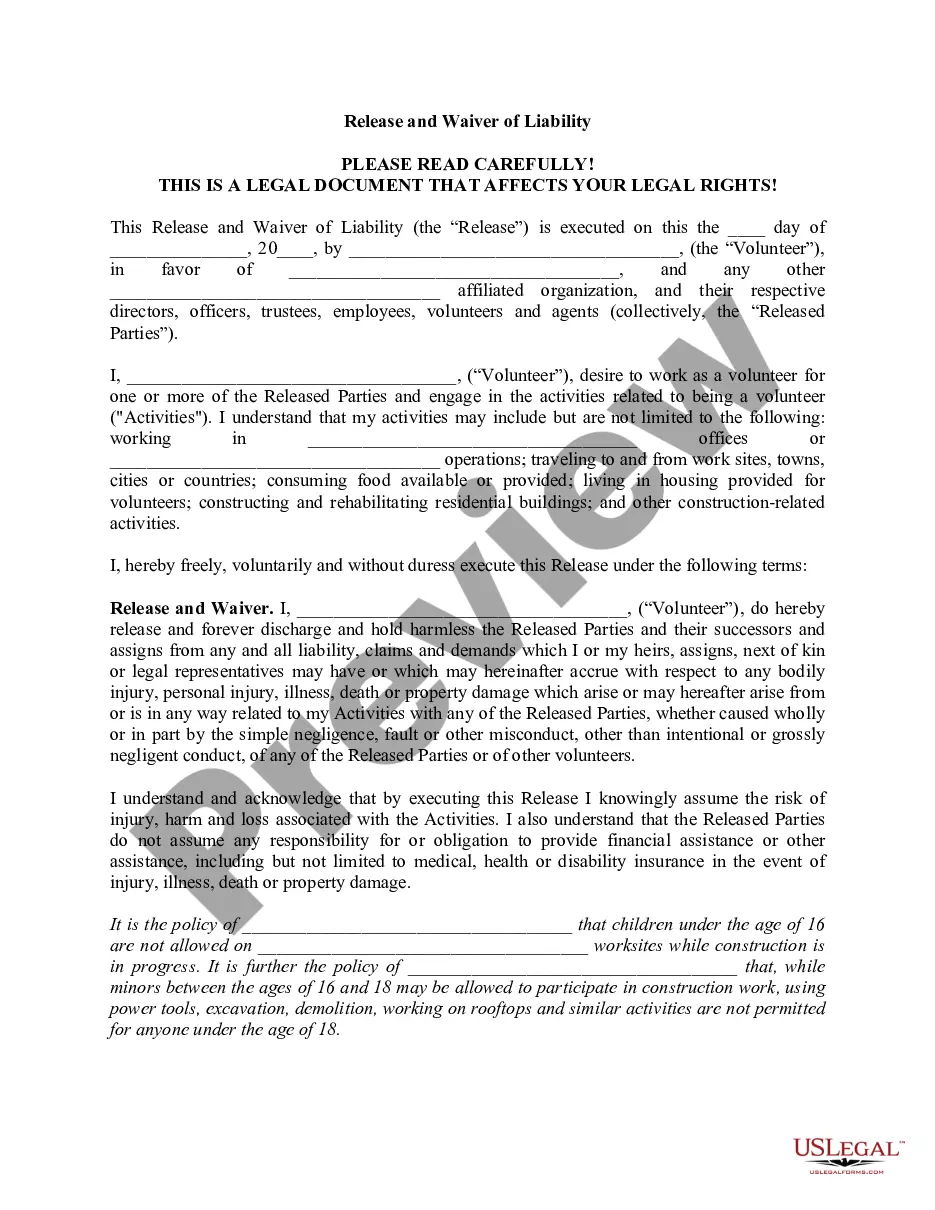
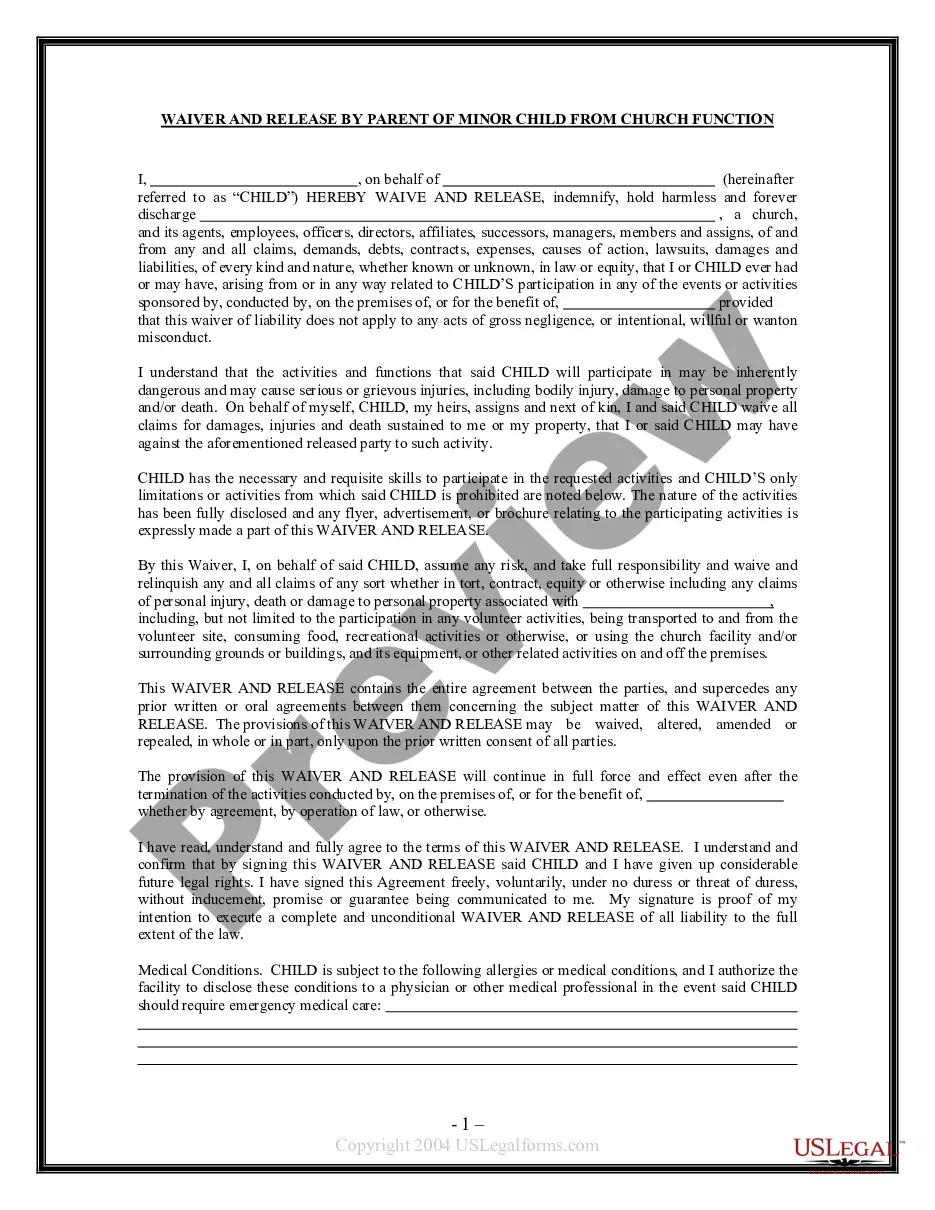
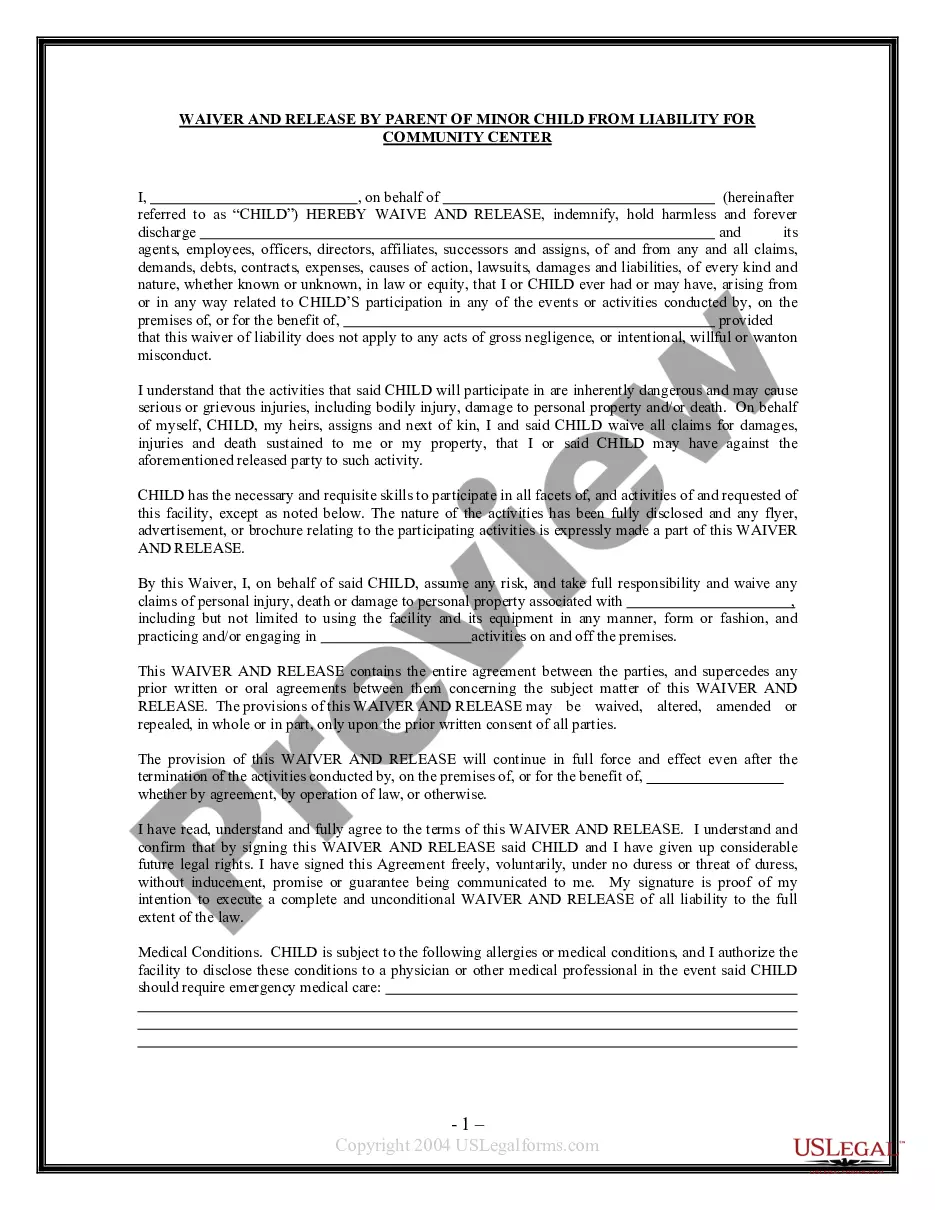
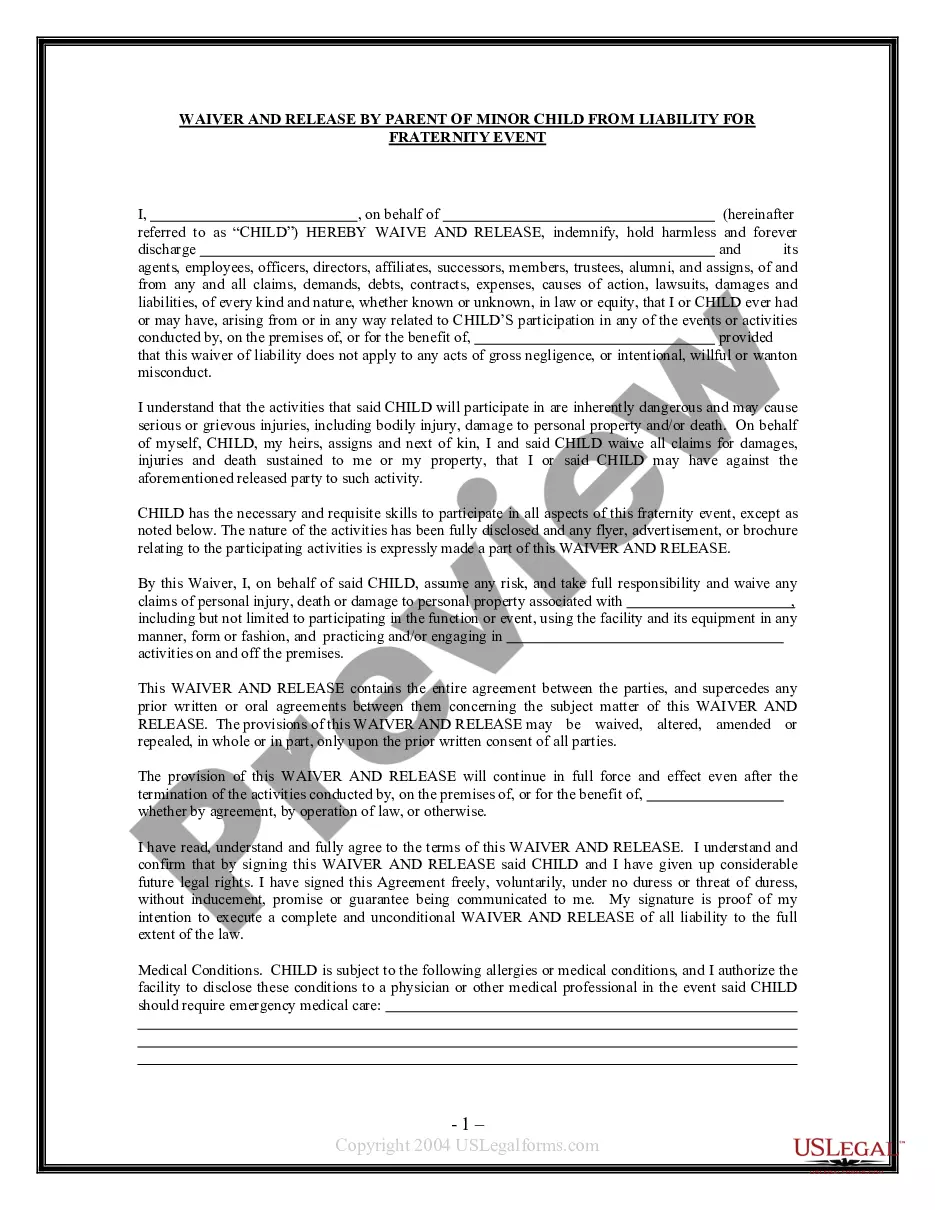
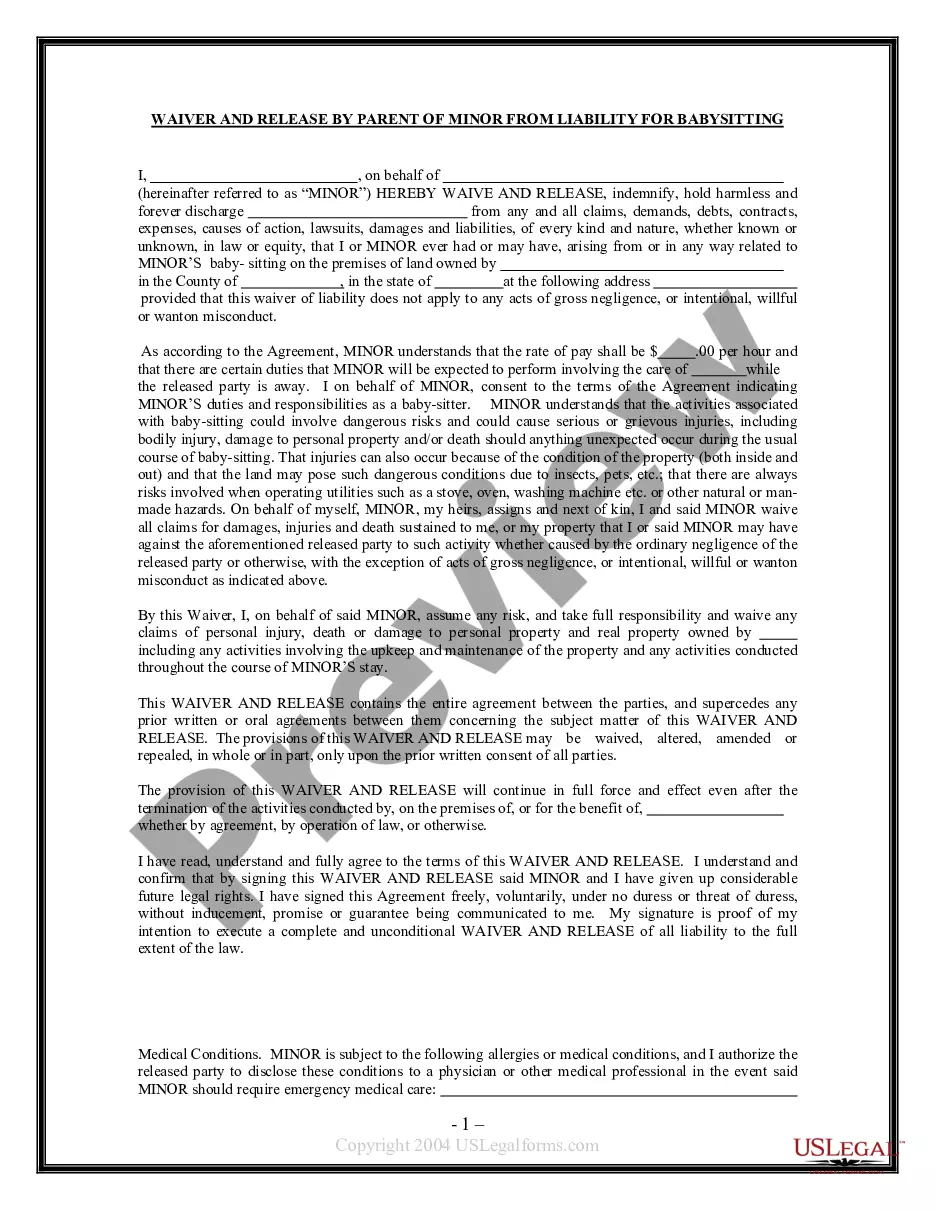
How to fill out Waiver And Release From Liability For Minor Child For Nonprofit?
Selecting the appropriate legal document format can be a challenge. Indeed, there are numerous templates available online, but how do you find the legal form you need? Utilize the US Legal Forms website. This service provides thousands of templates, including the Mississippi Waiver and Release From Liability For Minor Child for Nonprofit, that can be utilized for both business and personal purposes. All documents are reviewed by professionals and comply with federal and state regulations.
If you are already registered, Log In to your account and click the Download button to retrieve the Mississippi Waiver and Release From Liability For Minor Child for Nonprofit. Use your account to search through the legal forms you have previously purchased. Access the My documents section of your account and obtain another copy of the document you need.
If you are a new user of US Legal Forms, here are simple steps for you to follow: First, ensure you have selected the correct form for your city/state. You can review the form using the Review button and read the form description to confirm it is suitable for you. If the form does not meet your needs, use the Search field to find the correct form. Once you are confident that the form is appropriate, select the Get now button to download the form. Choose the pricing plan you want and enter the necessary information. Create your account and pay for the order using your PayPal account or credit card. Select the file format and download the legal document format to your device. Complete, modify, print, and sign the received Mississippi Waiver and Release From Liability For Minor Child for Nonprofit.
- US Legal Forms is the largest collection of legal forms where you can find numerous document templates.
- Use the service to obtain professionally-crafted documents that comply with state regulations.
- Ensure you have selected the right form for your needs.
- Review the form description to confirm its suitability.
- Use the search feature if the form does not meet your requirements.
- Download the form once you are certain it is the right one.
Form popularity
FAQ
A minor waiver form is a legal document designed to release an organization from liability for any injuries or damages that may occur to a minor child during an activity. The Mississippi Waiver and Release From Liability For Minor Child for Nonprofit specifically addresses the unique circumstances involving minors. By using a comprehensive platform like US Legal Forms, you can easily create a waiver that meets your nonprofit's needs while ensuring compliance with state regulations.
Generally, waivers are not enforceable against minors in Mississippi. This means that a minor cannot legally bind themselves to a Mississippi Waiver and Release From Liability For Minor Child for Nonprofit. To address this issue, a parent or guardian typically must sign the waiver on behalf of the minor, helping to provide the necessary protection for your organization.
Yes, in Mississippi, you can waive liability under certain conditions. The Mississippi Waiver and Release From Liability For Minor Child for Nonprofit serves as a legal document that helps protect your organization from lawsuits. It is important to make sure your waiver is clear and specific to be enforceable in court.
Yes, you can create your own waiver form, but it is important to ensure it meets legal requirements and effectively addresses the specific situation. For a Mississippi Waiver and Release From Liability For Minor Child for Nonprofit, ensure you include all necessary elements, such as the description of activities and risks involved. While creating your own form is possible, consulting a legal expert or utilizing resources like uslegalforms can help avoid pitfalls and ensure the waiver's enforceability.
Drawing up a waiver starts with understanding the specific risks associated with the activities at hand. For a Mississippi Waiver and Release From Liability For Minor Child for Nonprofit, ensure you accurately reflect the activities and potential hazards. Include a clear statement of release from liability and have it signed by the responsible party. Using professional templates from uslegalforms can help ensure that your waiver is both comprehensive and legally binding.
Writing up a liability waiver involves several key steps. Start by stating the intent of the waiver and identifying the parties involved, such as the nonprofit and the parent or guardian. Next, detail the activities and associated risks, ensuring clarity and specificity, especially for a Mississippi Waiver and Release From Liability For Minor Child for Nonprofit. Finally, provide space for signatures and dates to validate the waiver. Utilizing resources like uslegalforms can streamline this process.
To draw up a liability waiver, begin by outlining the purpose of the waiver and the activities involved. Include language that clearly states the risks associated with those activities, particularly when addressing a Mississippi Waiver and Release From Liability For Minor Child for Nonprofit. It is also essential to specify that the parent or guardian must sign the waiver to enforce it. Consider using a reputable platform like uslegalforms to access templates and ensure compliance with legal standards.
liability waiver, also known as a release of liability, is a legal document that relieves one party from responsibility for certain risks. In the case of a Mississippi Waiver and Release From Liability For Minor Child for Nonprofit, this document protects the nonprofit organization from claims made by parents or guardians in case of an incident involving their child. It is essential to understand that such waivers do not eliminate all liability but limit it under specific conditions. Always consult with legal experts to draft effective waivers.
Common mistakes on liability waivers often include vague language, lack of specificity, and not covering all potential risks. In the context of a Mississippi Waiver and Release From Liability For Minor Child for Nonprofit, it is crucial to clearly define the activities involved and the risks associated. Additionally, failing to have the waiver signed by a parent or guardian can lead to enforceability issues. Always ensure that the waiver meets state requirements and is properly executed.
An indemnity and a liability waiver serve different purposes, although they are often used together. A liability waiver, like the Mississippi Waiver and Release From Liability For Minor Child for Nonprofit, releases an organization from liability for certain risks. In contrast, an indemnity agreement involves one party agreeing to compensate another for any losses or damages incurred. Understanding the differences can help you tailor your legal documents effectively.