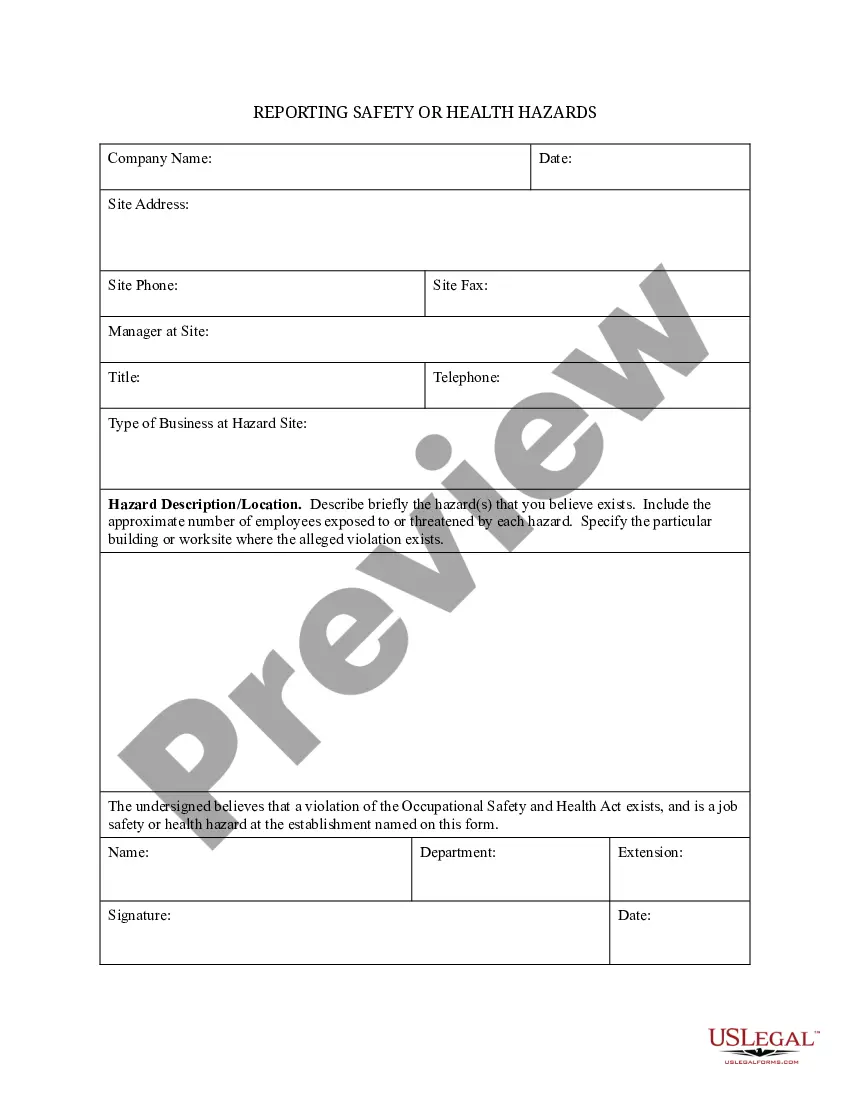
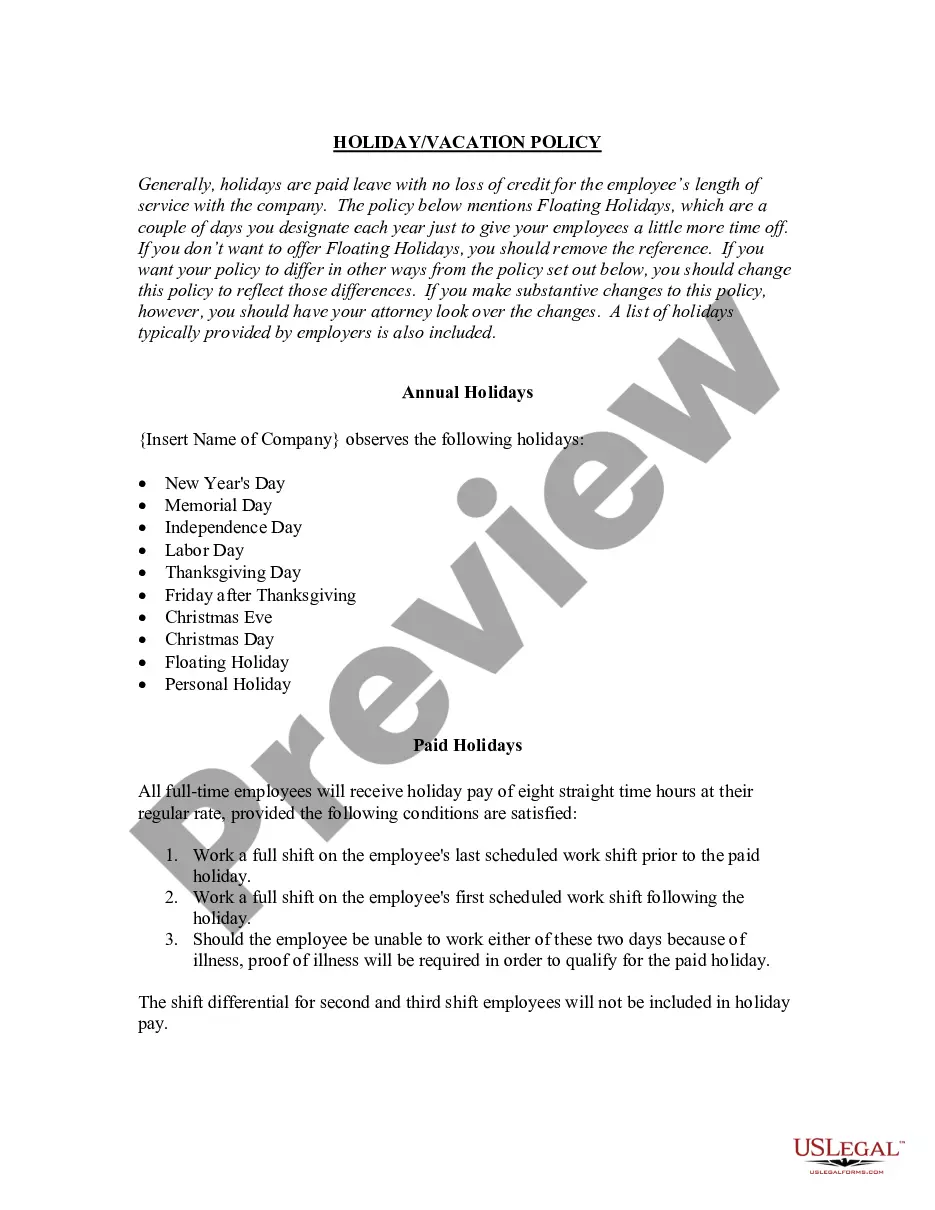
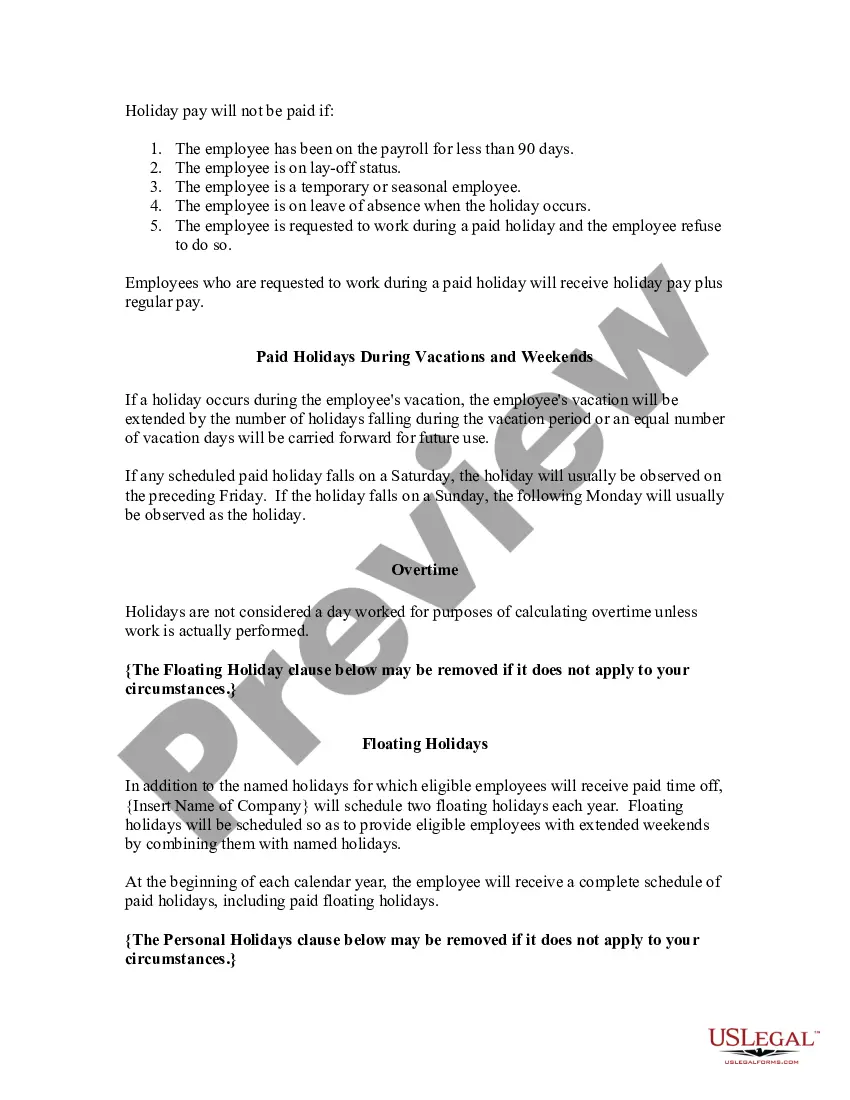
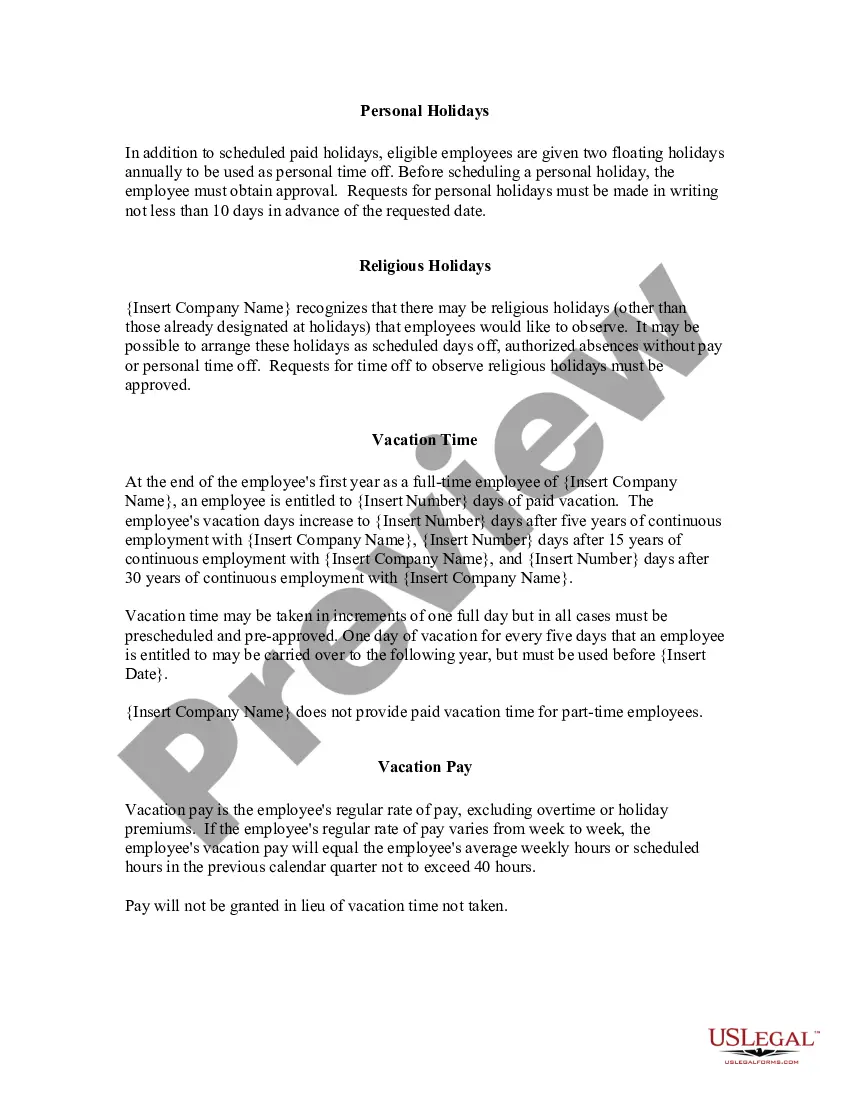
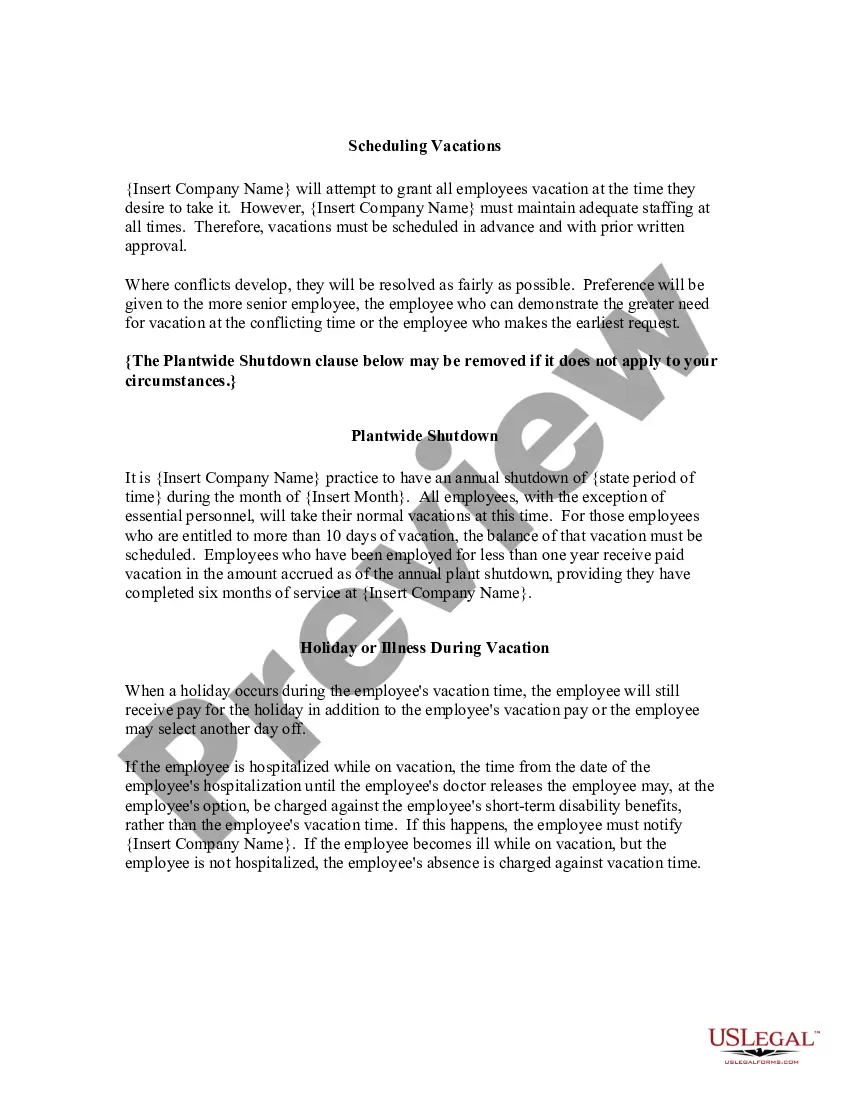
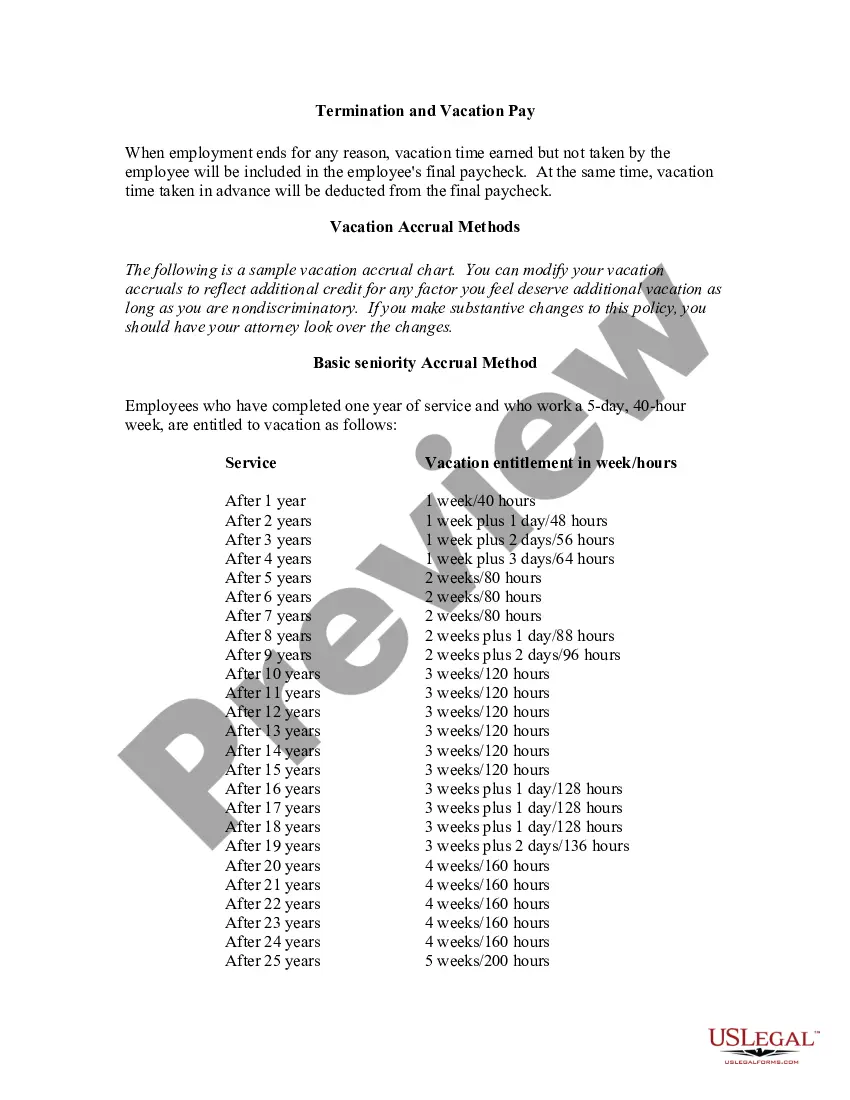
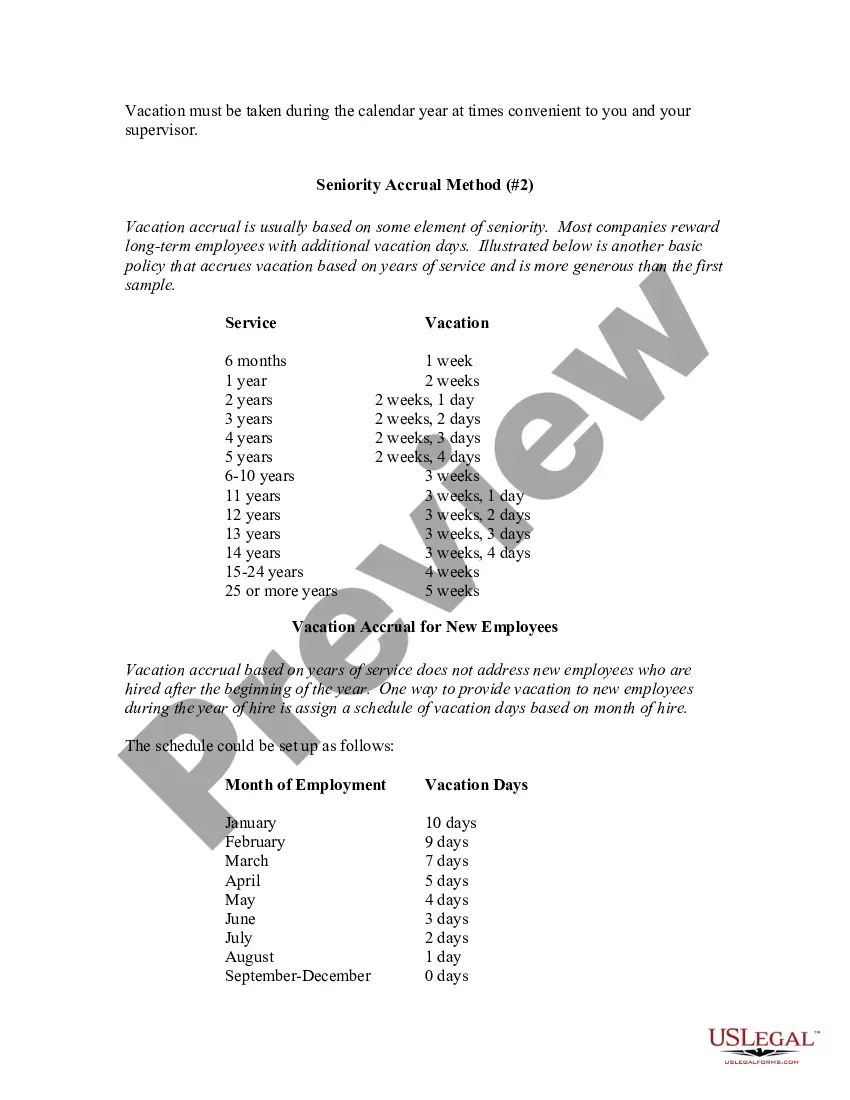
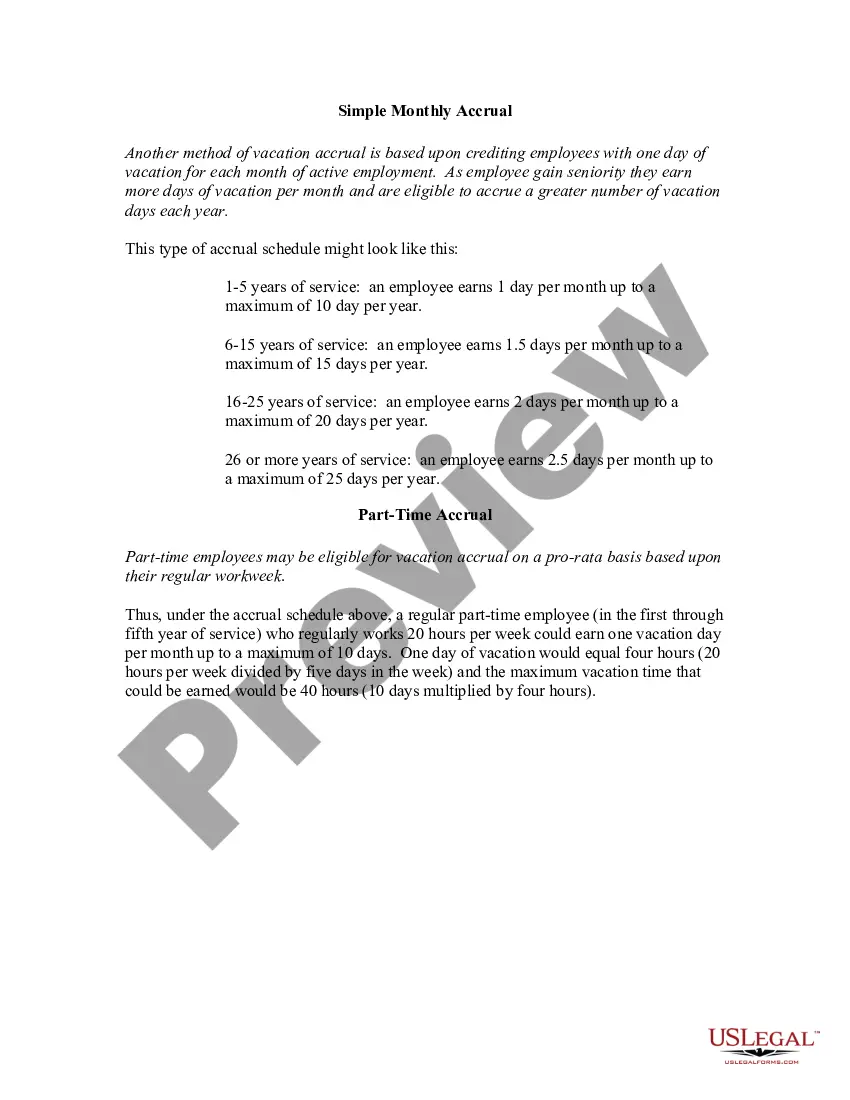
Mississippi Holiday Vacation Policy
Description
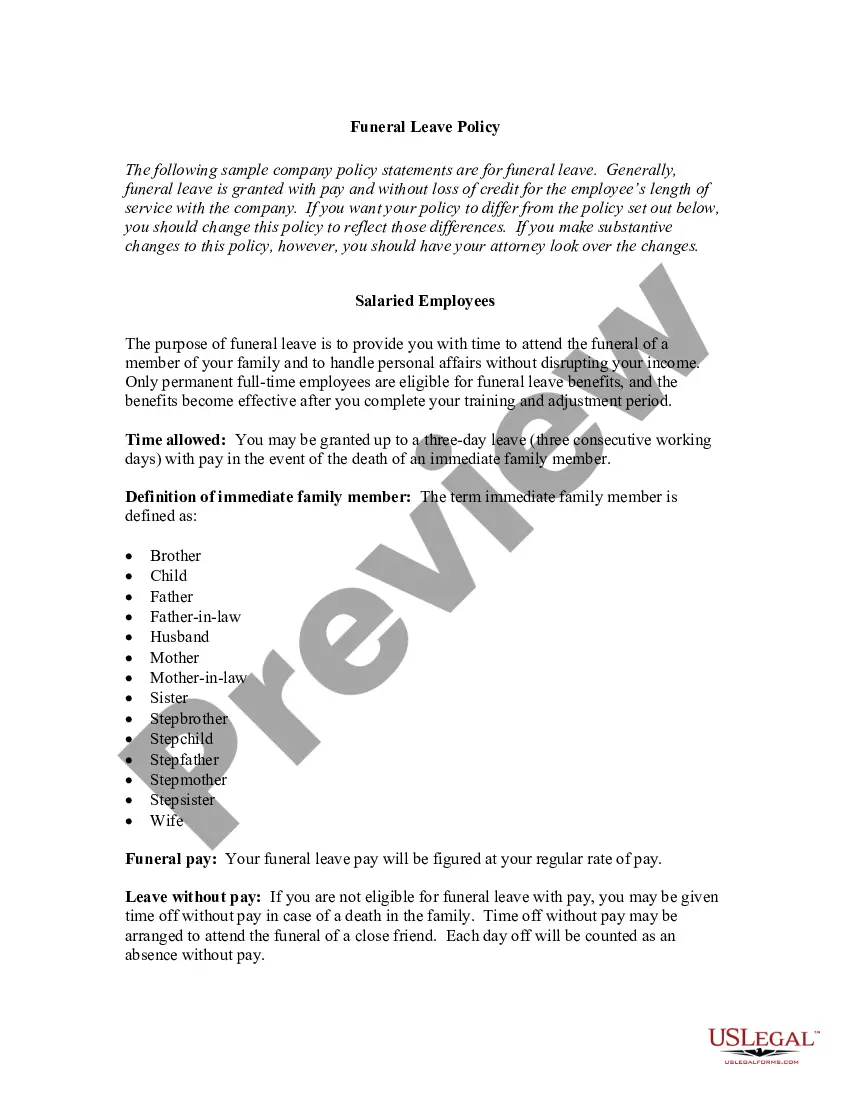
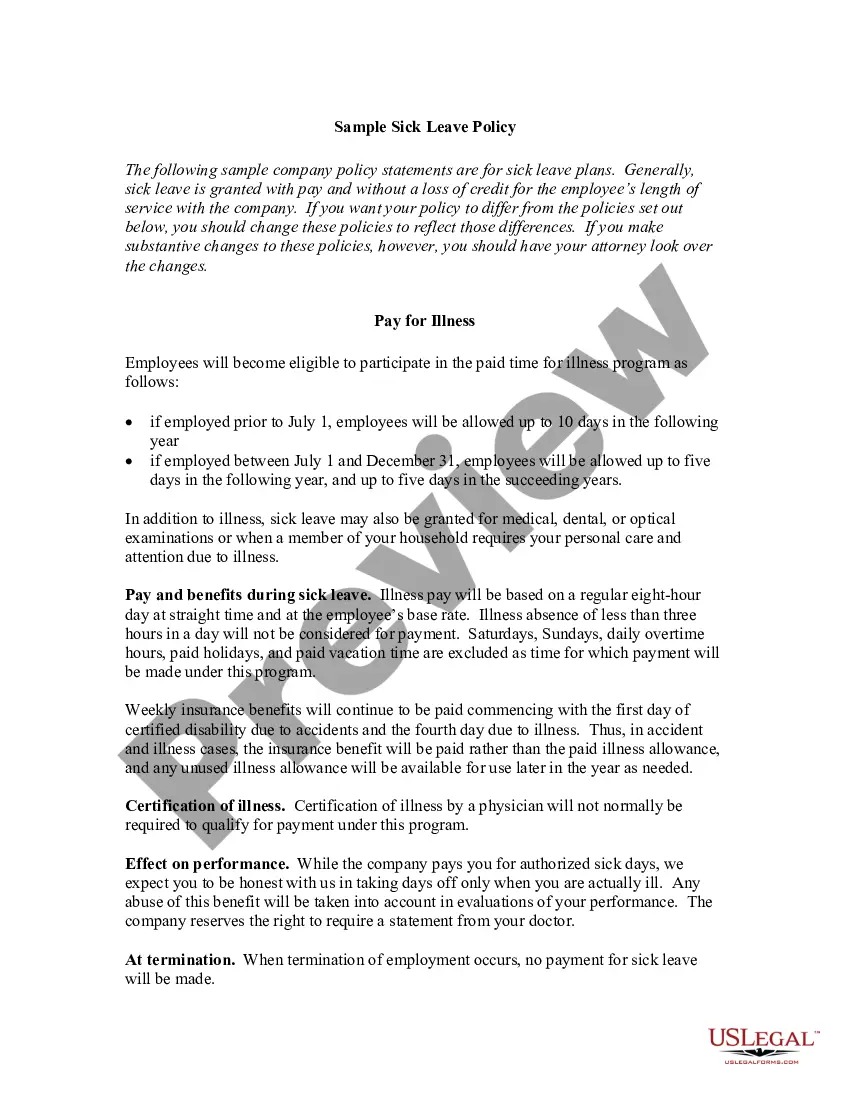

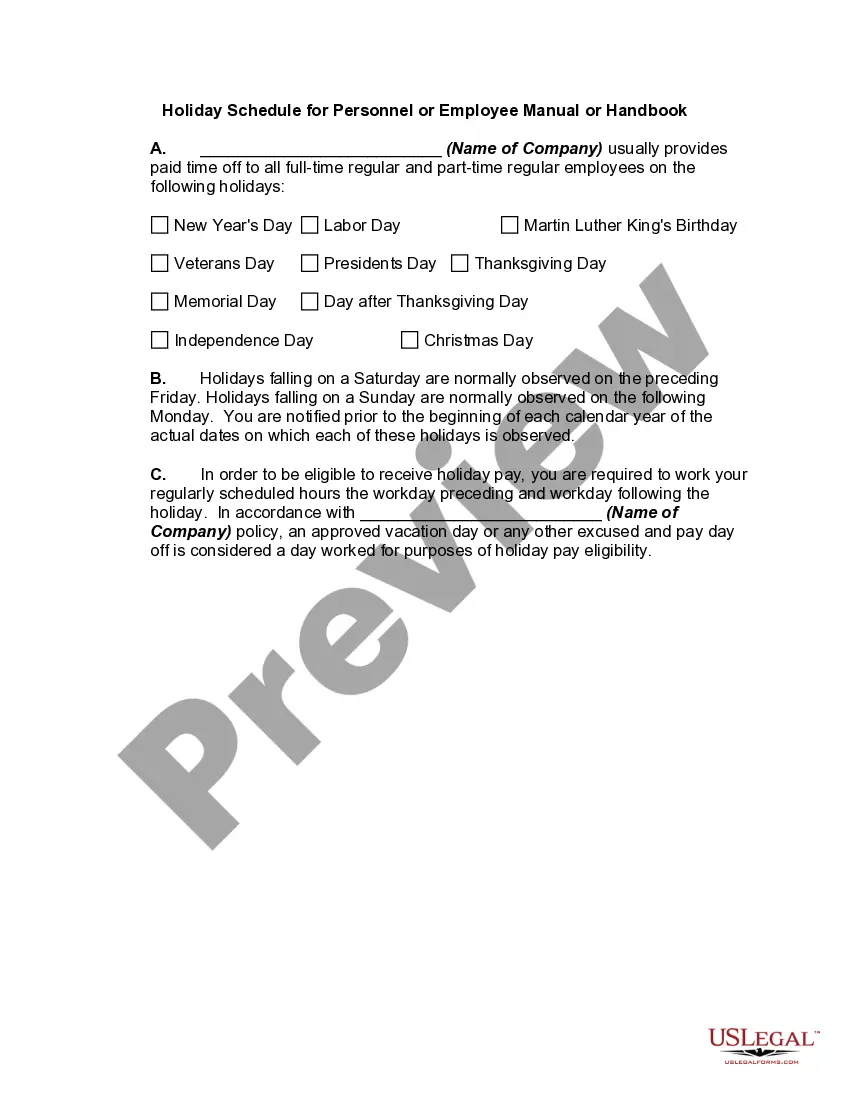

Get your form ready online
Our built-in tools help you complete, sign, share, and store your documents in one place.
Make edits, fill in missing information, and update formatting in US Legal Forms—just like you would in MS Word.
Download a copy, print it, send it by email, or mail it via USPS—whatever works best for your next step.
Sign and collect signatures with our SignNow integration. Send to multiple recipients, set reminders, and more. Go Premium to unlock E-Sign.
If this form requires notarization, complete it online through a secure video call—no need to meet a notary in person or wait for an appointment.
We protect your documents and personal data by following strict security and privacy standards.

Make edits, fill in missing information, and update formatting in US Legal Forms—just like you would in MS Word.

Download a copy, print it, send it by email, or mail it via USPS—whatever works best for your next step.

Sign and collect signatures with our SignNow integration. Send to multiple recipients, set reminders, and more. Go Premium to unlock E-Sign.

If this form requires notarization, complete it online through a secure video call—no need to meet a notary in person or wait for an appointment.

We protect your documents and personal data by following strict security and privacy standards.
Looking for another form?

How to fill out Holiday Vacation Policy?
US Legal Forms - one of the premier collections of legal documents in the United States - provides a wide range of legal form templates you can download or print. By utilizing the website, you can access thousands of forms for both business and personal needs, organized by categories, states, or keywords.
You can find the latest versions of documents such as the Mississippi Holiday Vacation Policy in mere moments.
If you already have a monthly subscription, Log In to acquire the Mississippi Holiday Vacation Policy from the US Legal Forms library. The Download button will appear for each form you view. You can access all previously downloaded forms from the My documents section of your account.
Complete the purchase. Use your Visa, MasterCard, or PayPal account to finalize the payment.
Select the format and download the form to your device. Make edits. Fill out, modify, print, and sign the downloaded Mississippi Holiday Vacation Policy. Every template added to your account does not expire and belongs to you forever. Therefore, if you want to download or print another copy, just go to the My documents section and click on the form you require. Access the Mississippi Holiday Vacation Policy with US Legal Forms, the most comprehensive collection of legal document templates. Utilize thousands of professional and state-specific templates that meet your business or personal requirements and specifications.
- Ensure you have selected the correct form for your city/region.
- Click the Review button to review the form's details.
- Check the form description to verify that you have selected the correct document.
- If the form does not meet your needs, utilize the Search field at the top of the screen to find one that does.
- If you are happy with the form, confirm your choice by clicking the Acquire now button.
- Then, choose the payment plan you prefer and provide your details to register for an account.
Form popularity
FAQ
Mississippi labor laws play a crucial role in defining employee rights and employer obligations. These laws cover various aspects including wages, hours, and working conditions. While there is no mandatory holiday vacation policy in Mississippi, businesses often provide vacation benefits to attract and retain talent. Understanding these regulations can help employees ensure they receive fair treatment under the Mississippi Holiday Vacation Policy.
In 2017, the average worker with five years of experience at a company was given 15 days of paid vacation and the average worker with 20 years of experience was given 20 paid vacation days.
According to the Bureau of Labor Statistics, on average American workers receive 10 days of paid time off per year, after they've completed one year of service. That time doesn't include sick days and holidays. While the number goes up or down a bit, depending on industry and region, 10 is the national average.
Paid Sick Leave: Mississippi and Local Law More than a dozen states require employers to give employees paid sick time to use for their own illnesses or to care for a family member. There is no statewide law in Mississippi requiring employers to provide paid sick leave.
As part of an employee's final pay, any unused annual holiday entitlements and alternative holiday entitlements must be paid to the employee. This applies to employees who have retired, been terminated, made redundant, or resigned for any other reason.
Payout of vacation at termination. For example, the Mississippi Supreme Court has ruled that a promise of paid vacation time is contractual, and that unpaid accrued vacation must be compensated unless there is an express agreement that employees will not be paid for unused time (Fuselier, Ott & McKee v.
Mississippi has no minimum wage law. That means eligible employees in Mississippi are entitled to either federal minimum wage (currently $7.25 per hour) or any local (city or county) minimum wage law that is on the books, whichever wage rate is higher.
The average paid vacation days per year for employees who have been with a business for 1-5 years is 10 days. Employees who have been with a business for 5-10 years receive an average of 15 days for vacation. The average number of vacation days employees who have worked at a business between 10-20 years receive is 17.
No federal or state law in Mississippi requires employers to pay out an employee's accrued vacation, sick leave, or other paid time off (PTO) at the termination of employment.
Under California law, earned vacation time is considered wages, and vacation time is earned, or vests, as labor is performed. For example, if an employee is entitled to two weeks (10 work days) of vacation per year, after six months of work he or she will have earned five days of vacation.