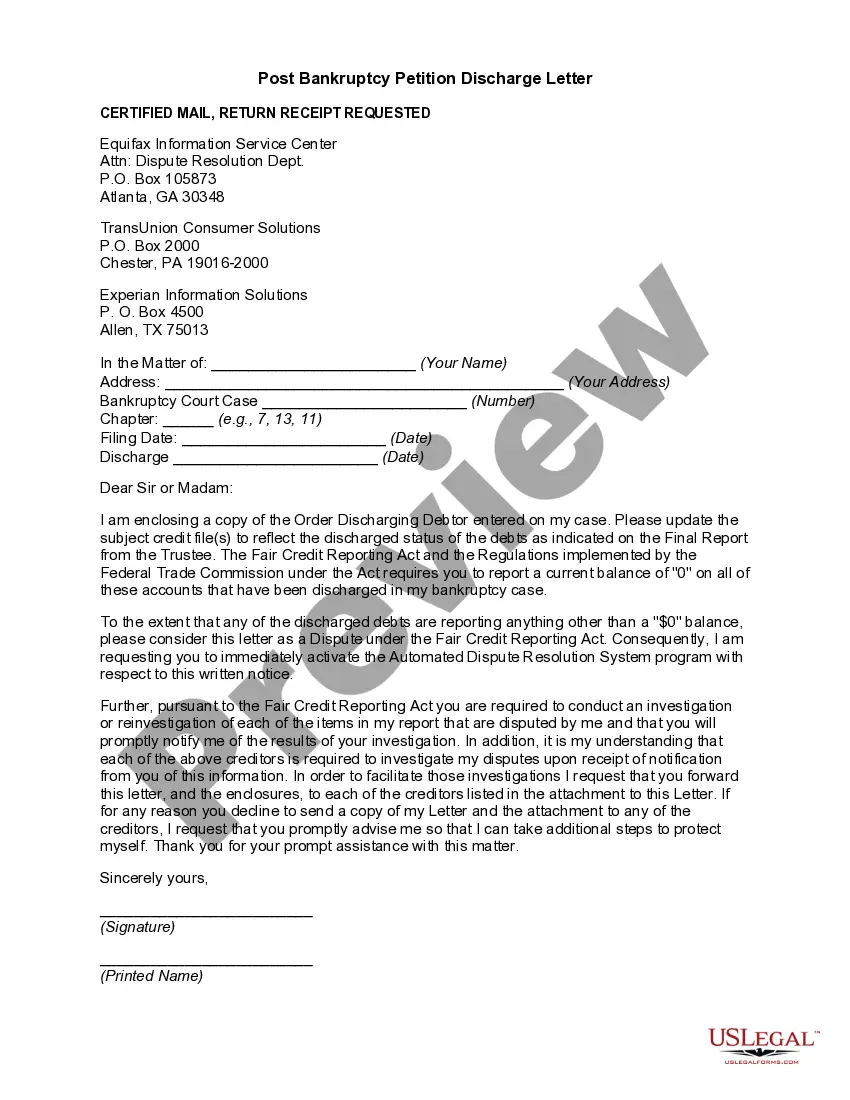
Mississippi Post Bankruptcy Petition Discharge Letter
Description
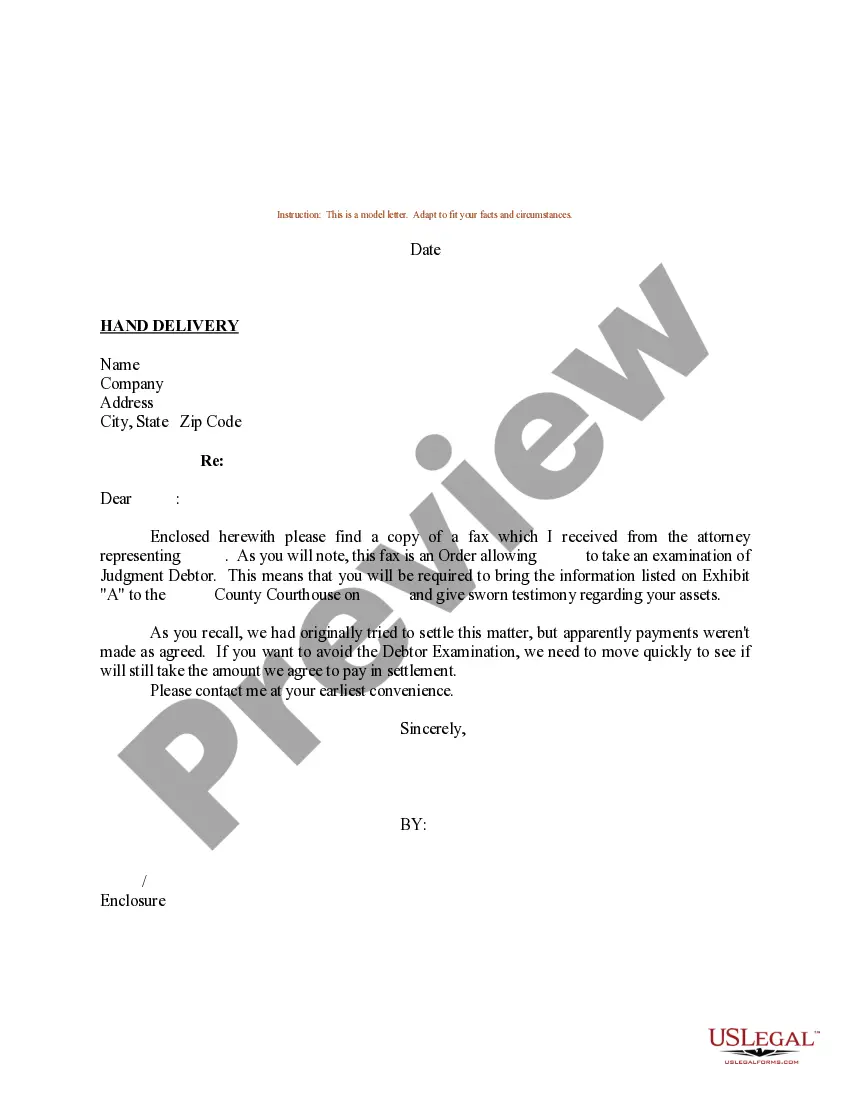
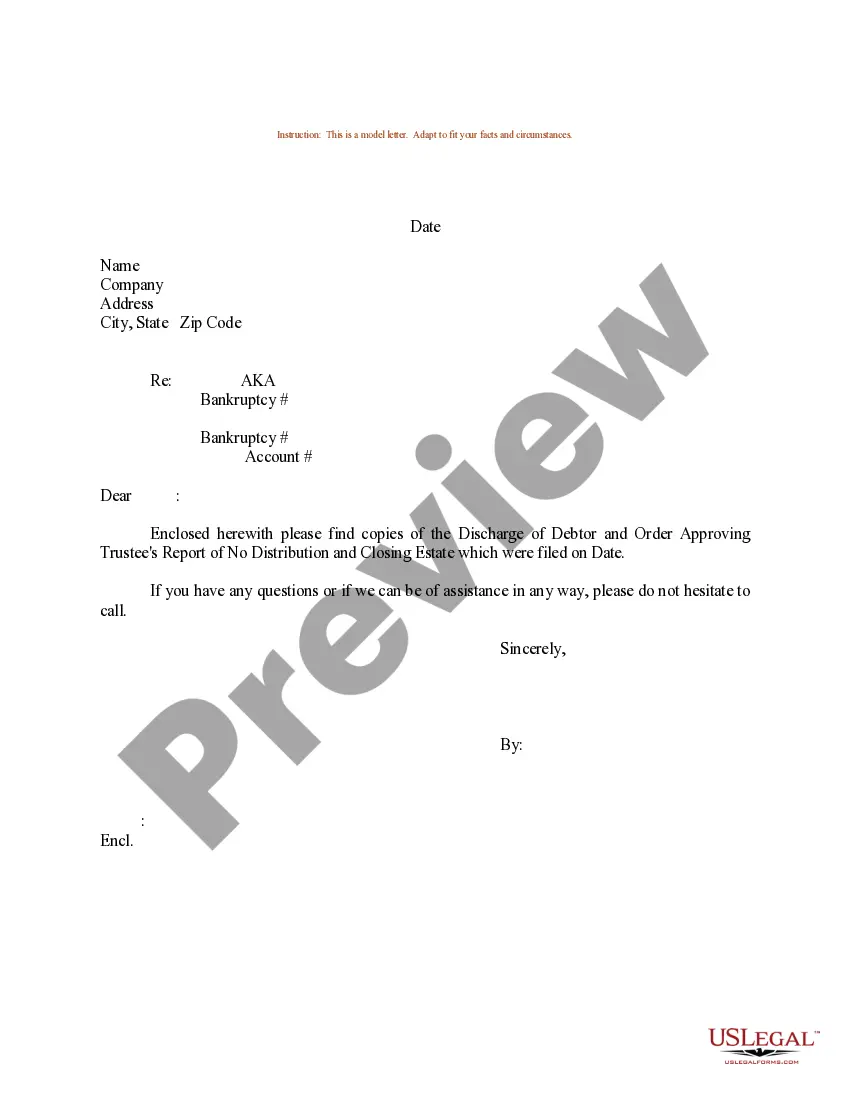
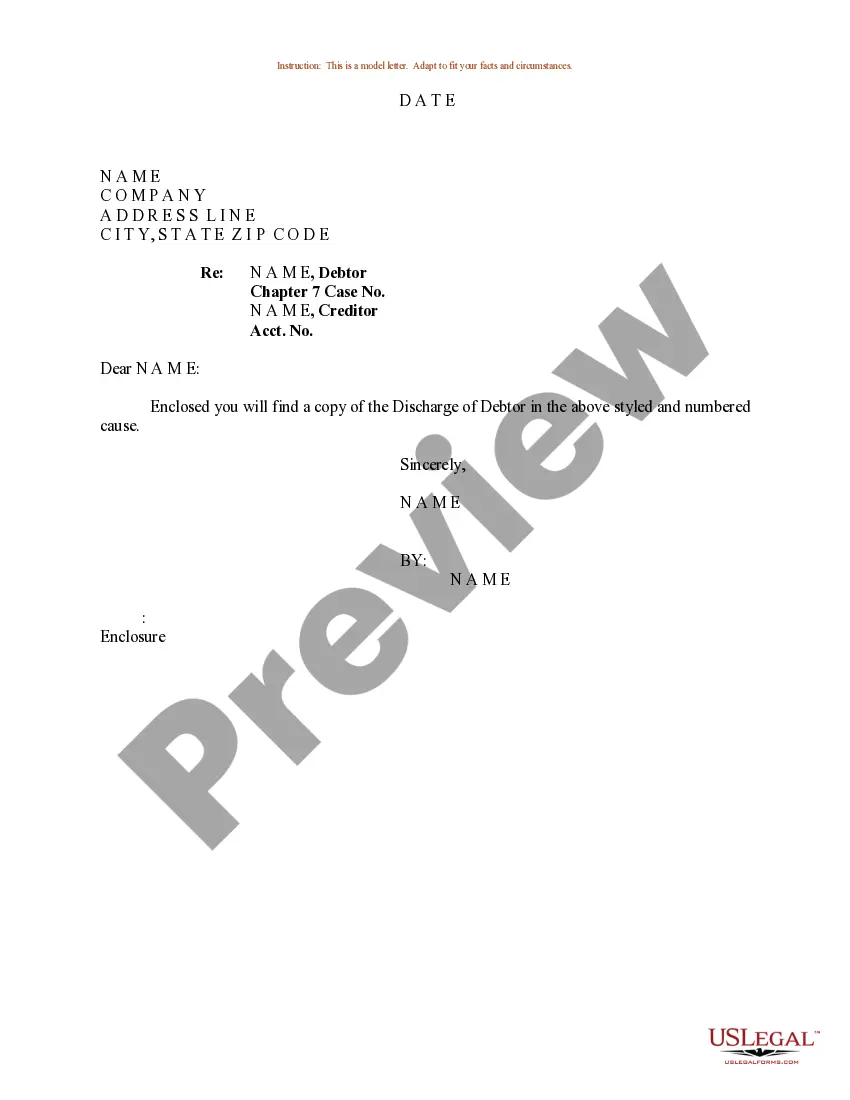
Get your form ready online
Our built-in tools help you complete, sign, share, and store your documents in one place.
Make edits, fill in missing information, and update formatting in US Legal Forms—just like you would in MS Word.
Download a copy, print it, send it by email, or mail it via USPS—whatever works best for your next step.
Sign and collect signatures with our SignNow integration. Send to multiple recipients, set reminders, and more. Go Premium to unlock E-Sign.
If this form requires notarization, complete it online through a secure video call—no need to meet a notary in person or wait for an appointment.
We protect your documents and personal data by following strict security and privacy standards.

Make edits, fill in missing information, and update formatting in US Legal Forms—just like you would in MS Word.

Download a copy, print it, send it by email, or mail it via USPS—whatever works best for your next step.

Sign and collect signatures with our SignNow integration. Send to multiple recipients, set reminders, and more. Go Premium to unlock E-Sign.

If this form requires notarization, complete it online through a secure video call—no need to meet a notary in person or wait for an appointment.

We protect your documents and personal data by following strict security and privacy standards.
Looking for another form?
How to fill out Post Bankruptcy Petition Discharge Letter?
If you require to tally, acquire, or generate sanctioned document templates, utilize US Legal Forms, the foremost compilation of sanctioned forms, which can be accessed online.
Benefit from the site's simple and convenient search to obtain the documents you need.
Various templates for corporate and personal purposes are organized by categories, states, or keywords.
Step 4. Once you have found the form you need, click the Buy now button. Choose the pricing plan you prefer and enter your details to register for an account.
Step 5. Complete the transaction. You may use your credit card or PayPal account to finalize the purchase.
- Utilize US Legal Forms to procure the Mississippi Post Bankruptcy Petition Discharge Letter in just a few steps.
- If you are currently a US Legal Forms customer, sign in to your account and click the Obtain button to locate the Mississippi Post Bankruptcy Petition Discharge Letter.
- You can also access forms you previously saved in the My documents tab of your account.
- If you are using US Legal Forms for the first time, follow the instructions below.
- Step 1. Ensure you have selected the form for the correct area/state.
- Step 2. Use the Review option to examine the details of the form. Remember to read the description.
- Step 3. If you are dissatisfied with the form, use the Search field at the top of the screen to find other types in the legal form template.
Form popularity
FAQ
A "discharge letter" is a term used to describe the order that the bankruptcy court mails out toward the end of the case. The order officially discharges (wipes out) qualifying debt, such as credit card and utility bill balances, medical debt, and personal loans.
The trustee can seize the rest. If you became entitled to receive the funds before you filed and you DID NOT report them on your bankruptcy forms, the trustee can seize all of the funds. Continue reading and learning! Will filing Chapter 7 bankruptcy help you?
Most bankruptcy cases generally receive a discharge order from the court about 60 days after the initial creditors' meeting.
Following a bankruptcy discharge, debt collectors and lenders can no longer attempt to collect the discharged debts. That means no more calls from collectors and no more letters in the mail, as you are no longer personally liable for the debt. A bankruptcy discharge doesn't necessarily apply to all of the debt you owe.
To object to the debtor's discharge, a creditor must file a complaint in the bankruptcy court before the deadline set out in the notice. Filing a complaint starts a lawsuit referred to in bankruptcy as an "adversary proceeding."
The court typically grants the discharge as soon as possible. Chapter 7 bankruptcies generally receive a discharge after about four months from the time the bankruptcy petition is filed, while a Chapter 13 bankruptcy discharge is issued after the debtor completes all payments under the plan.
Following a bankruptcy discharge, debt collectors and lenders can no longer attempt to collect the discharged debts. That means no more calls from collectors and no more letters in the mail, as you are no longer personally liable for the debt. A bankruptcy discharge doesn't necessarily apply to all of the debt you owe.
If the trustee finds hidden assets, the trustee can ask the court to revoke or take back your discharge. The trustee can do this at any time before the case closes or, even after, up to one year after the discharge date.
The trustee will use these statements to get a glimpse into your financial history. Your bankruptcy trustee can ask for up to two years of bank statements. The trustee will look at your statements to verify your monthly payments to make sure they match the expenses you put on your bankruptcy forms.
How long can Chapter 7 trustee keep case open? A. The Chapter 7 trustee can keep the case open for about four to six months after filing the bankruptcy papers. However, this does not end with discharge, but with the court's final decree.