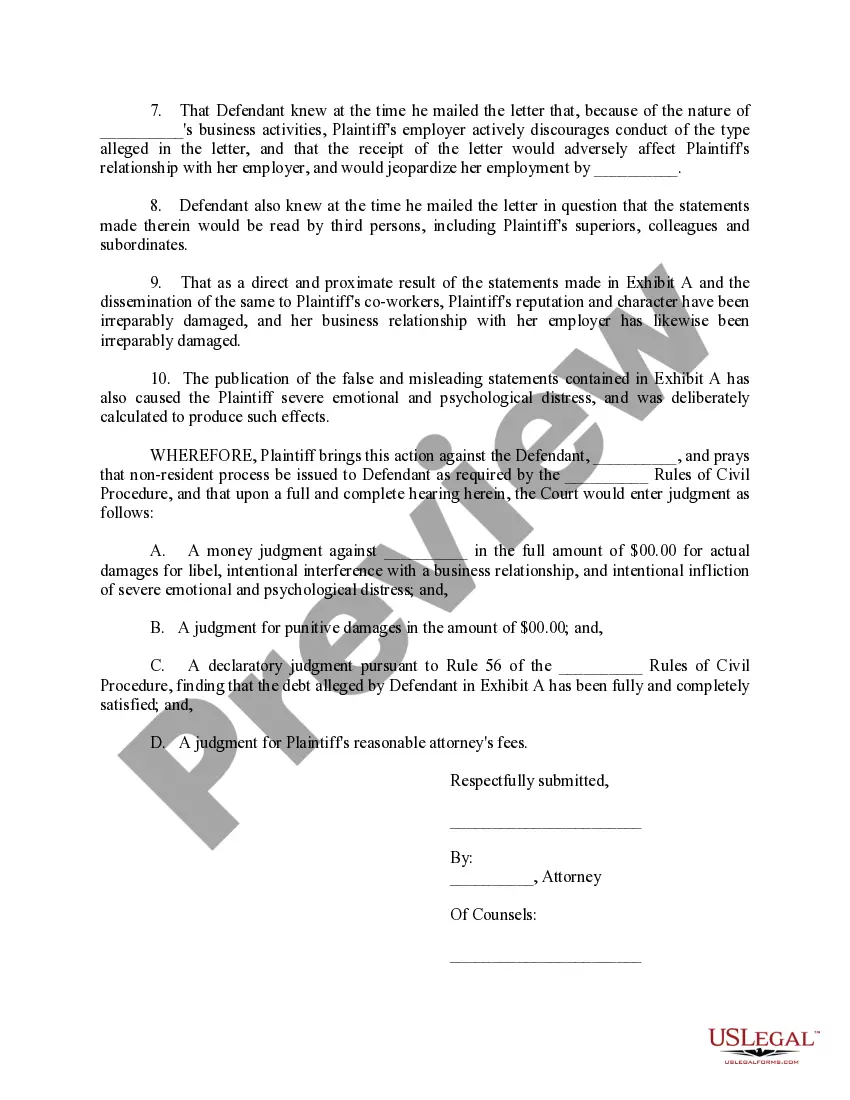
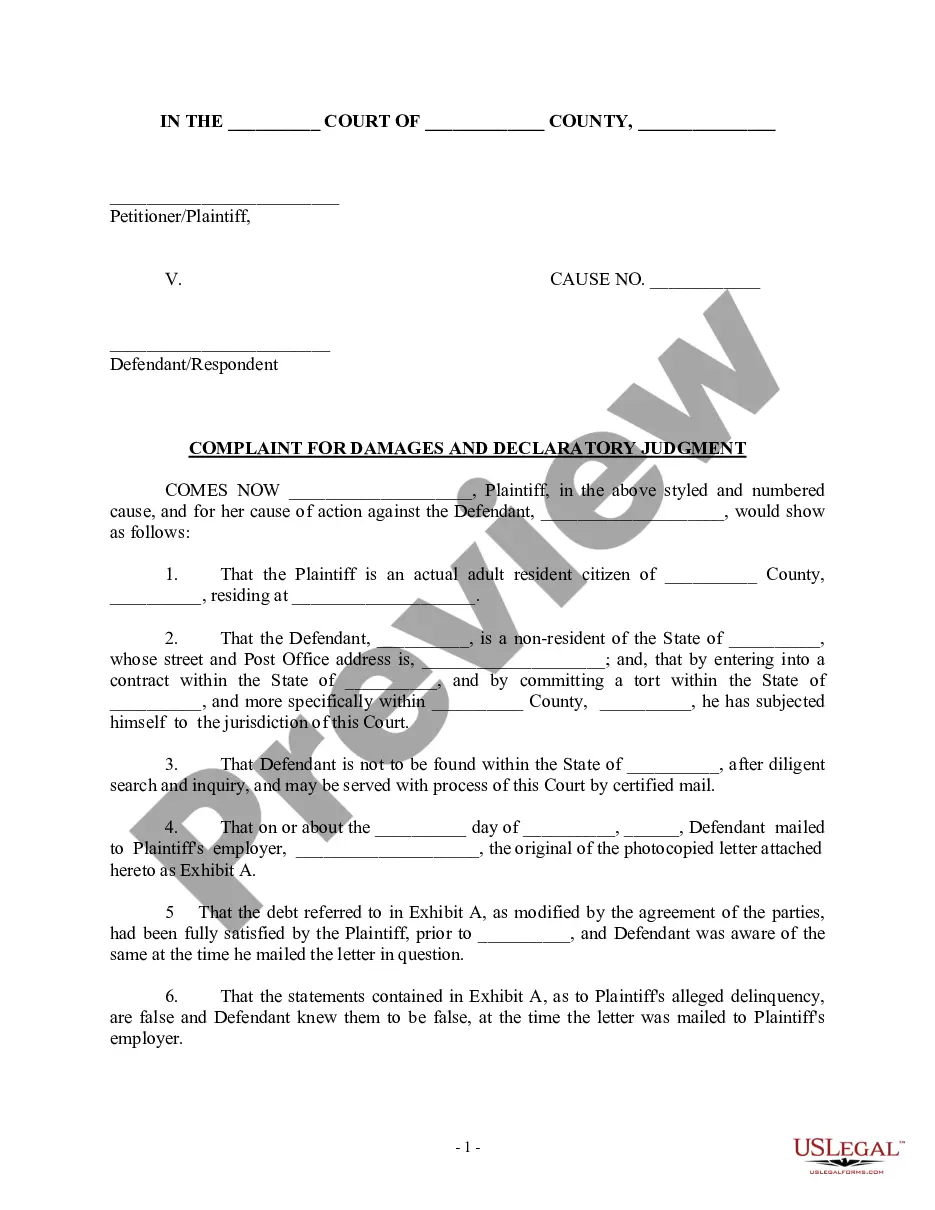
Mississippi Complaint for Damages and Declaratory Judgment
Description



Get your form ready online
Our built-in tools help you complete, sign, share, and store your documents in one place.
Make edits, fill in missing information, and update formatting in US Legal Forms—just like you would in MS Word.
Download a copy, print it, send it by email, or mail it via USPS—whatever works best for your next step.
Sign and collect signatures with our SignNow integration. Send to multiple recipients, set reminders, and more. Go Premium to unlock E-Sign.
If this form requires notarization, complete it online through a secure video call—no need to meet a notary in person or wait for an appointment.
We protect your documents and personal data by following strict security and privacy standards.

Make edits, fill in missing information, and update formatting in US Legal Forms—just like you would in MS Word.

Download a copy, print it, send it by email, or mail it via USPS—whatever works best for your next step.

Sign and collect signatures with our SignNow integration. Send to multiple recipients, set reminders, and more. Go Premium to unlock E-Sign.

If this form requires notarization, complete it online through a secure video call—no need to meet a notary in person or wait for an appointment.

We protect your documents and personal data by following strict security and privacy standards.
Looking for another form?
How to fill out Complaint For Damages And Declaratory Judgment?
Are you in a situation where you will require documents for either business or personal tasks almost every time.
There are numerous legal document templates accessible online, but finding forms you can trust is not straightforward.
US Legal Forms offers thousands of template forms, including the Mississippi Complaint for Damages and Declaratory Judgment, which can be completed to fulfill federal and state requirements.
Utilize US Legal Forms, the most extensive collection of legal forms, to save time and avoid errors.
The service provides professionally crafted legal document templates that you can use for a variety of purposes. Create an account on US Legal Forms and start simplifying your life.
- If you are already familiar with the US Legal Forms website and have an account, simply Log In.
- After that, you can download the Mississippi Complaint for Damages and Declaratory Judgment template.
- If you do not have an account and wish to start using US Legal Forms, follow these steps.
- Find the form you need and ensure it is for your correct city/county.
- Use the Review button to examine the form.
- Read the description to ensure that you have selected the correct form.
- If the form is not what you're looking for, use the Search box to find the form that meets your needs and requirements.
- If you find the correct form, click on Get now.
- Choose the pricing plan you prefer, fill in the required information to create your account, and pay for your order using your PayPal or Visa or Mastercard.
- Select a convenient file format and download your copy.
- Access all the document templates you have purchased in the My documents list. You can obtain another copy of the Mississippi Complaint for Damages and Declaratory Judgment at any time if needed. Just click on the required form to download or print the document template.
Form popularity
FAQ
Rule 81 requires use of a special summons which commands that the defendant appear and defend at a specific time and place set by order of the court and informs him or her that no answer is necessary.
A default is a failure to perform a duty in legal proceedings. A default judgment is binding, and the defaulting defendant may not litigate his case or present any evidence. A civil action default judgment will grant the amount of relief sought in a plaintiff's complaint.
Rule 55 - Default (a) Entry. When a party against whom a judgment for affirmative relief is sought has failed to plead or otherwise defend as provided by these rules and that fact is made to appear by affidavit or otherwise, the clerk shall enter his default. (b) Judgment.
Rule 57 - Declaratory Judgments (a) Procedure. Courts of record within their respective jurisdictions may declare rights, status, and other legal relations regardless of whether further relief is or could be claimed.
Discussing the discovery rule, the court held that causes of action accrue upon the discovery of the injury, not the discovery of the injury and its cause.
Rule 5 provides an expedient method of exchanging written and electronic communications between parties and an efficient system of filing papers with the clerk. This rule presupposes that the court has already gained jurisdiction over the parties.
Once a default judgment has been entered, a creditor can then use it to seek to garnish your wages and other property. In Mississippi, a default judgment acts as a lien against property you have in any county where the judgment has been properly entered.