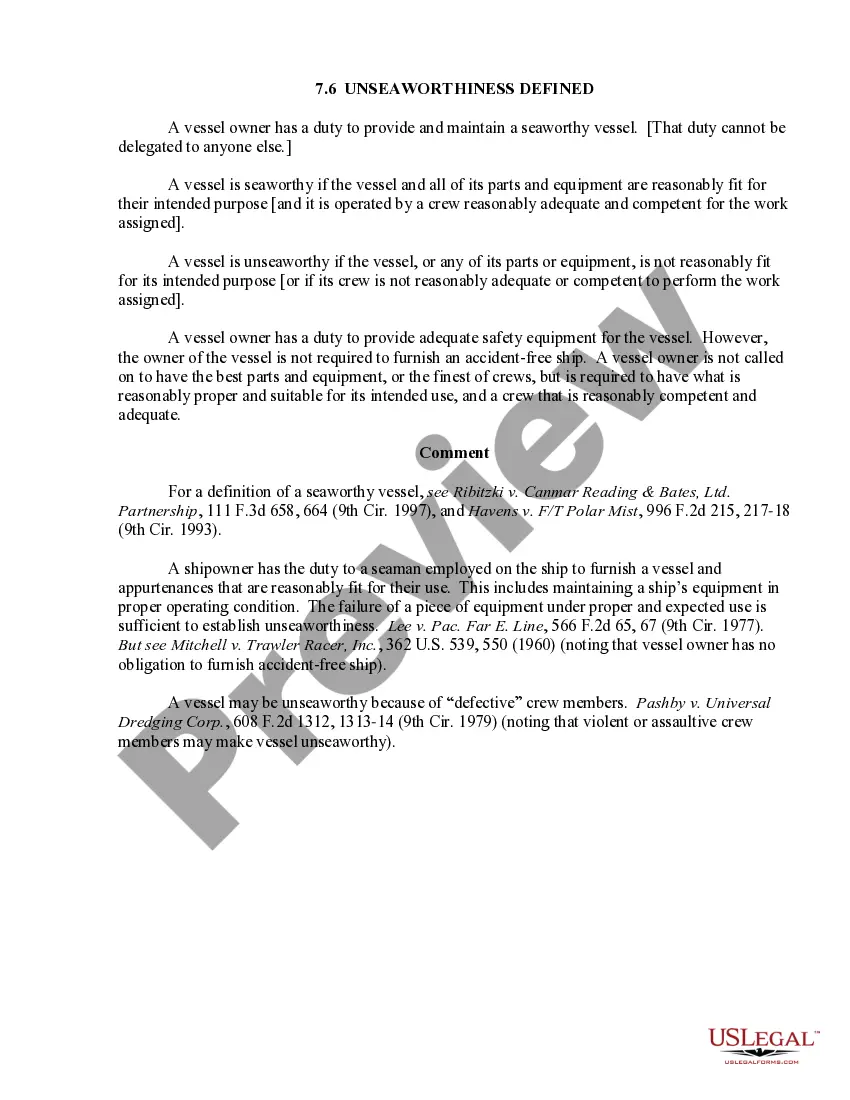
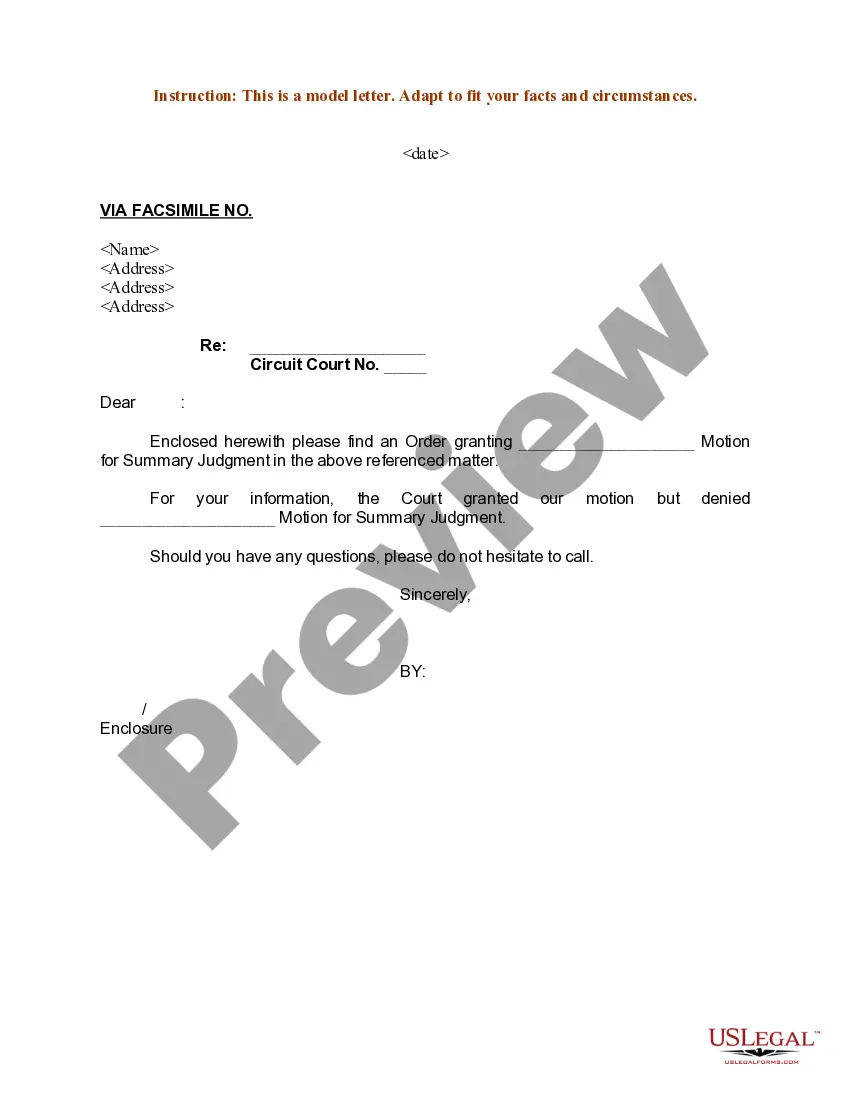
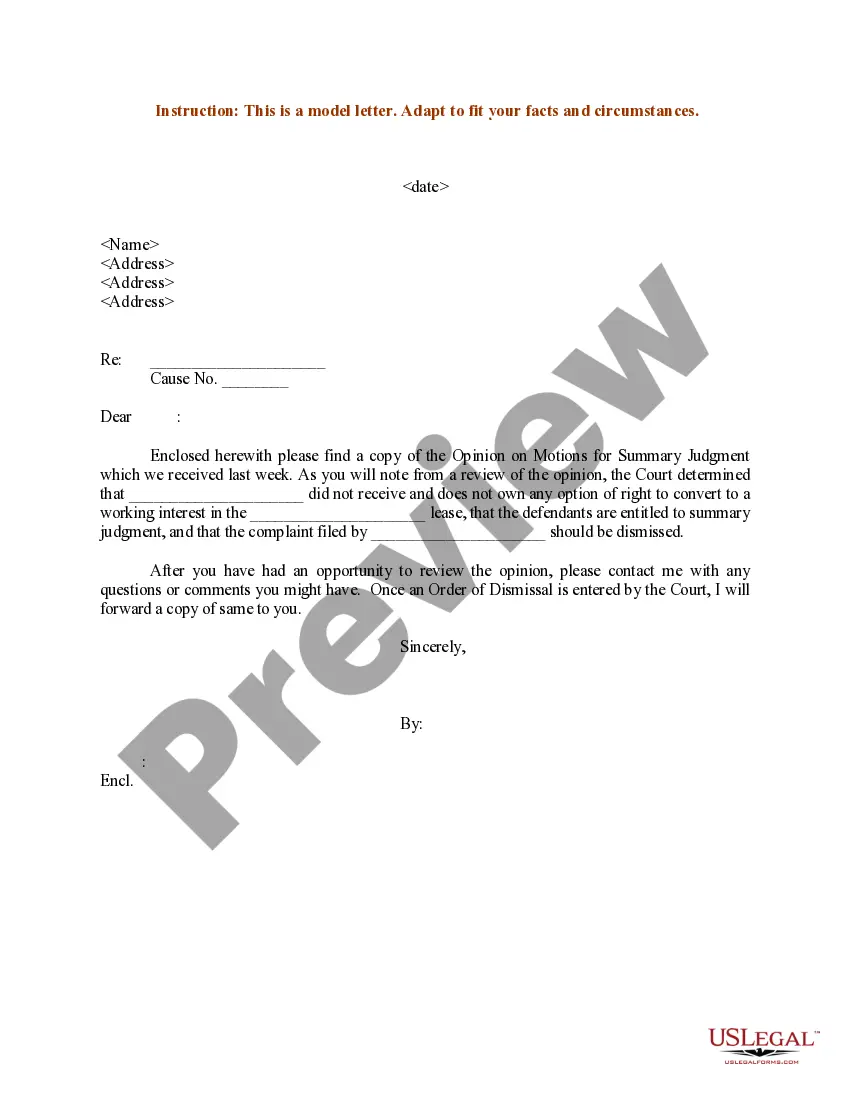
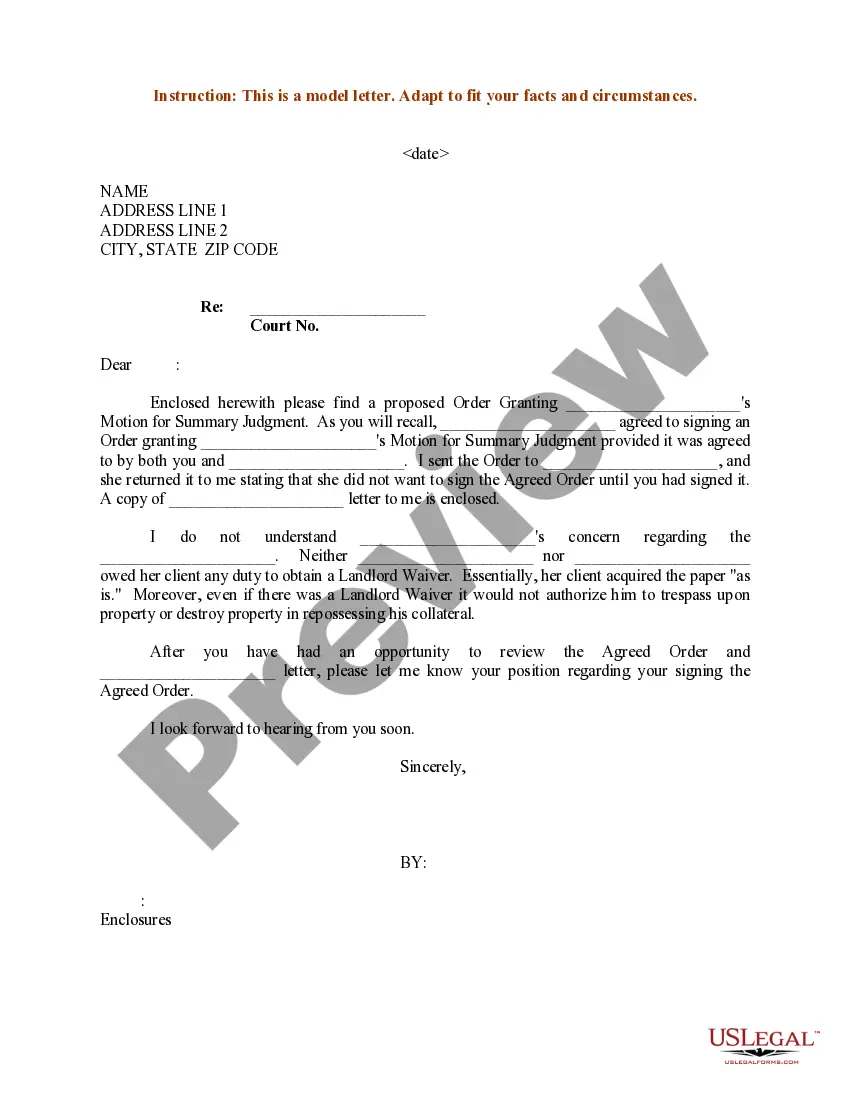
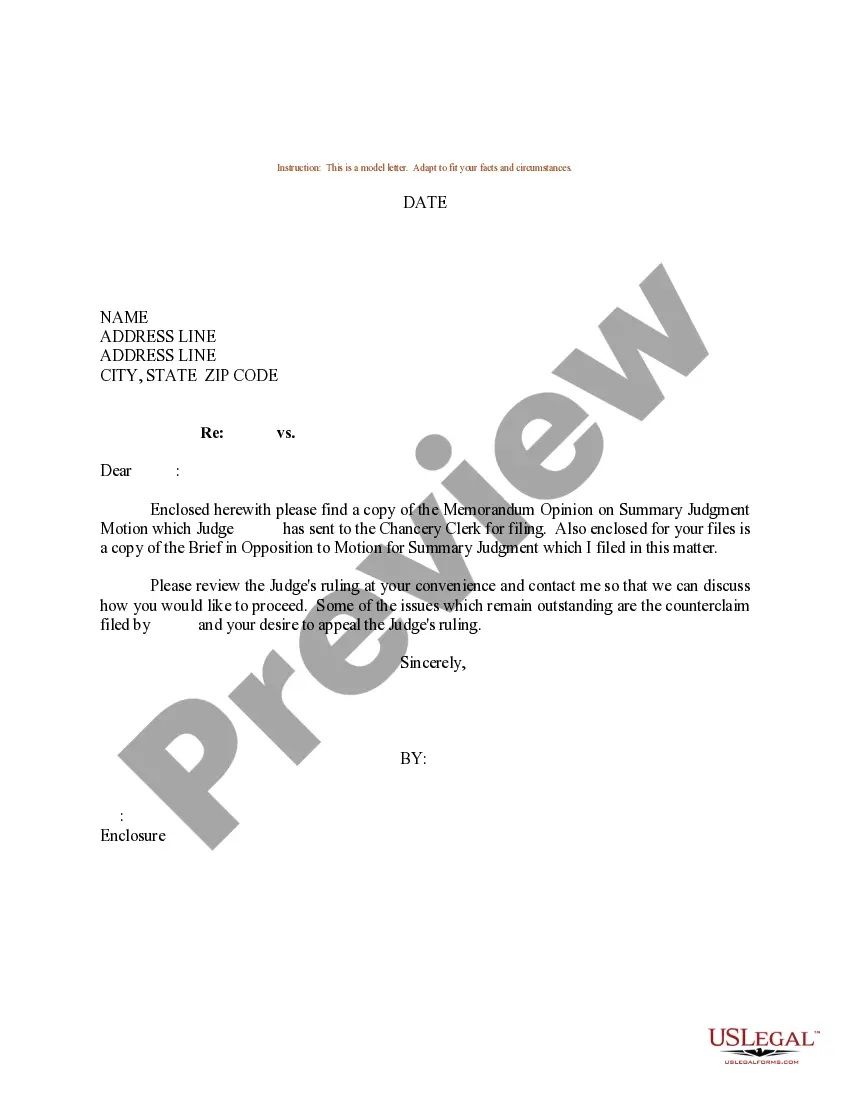
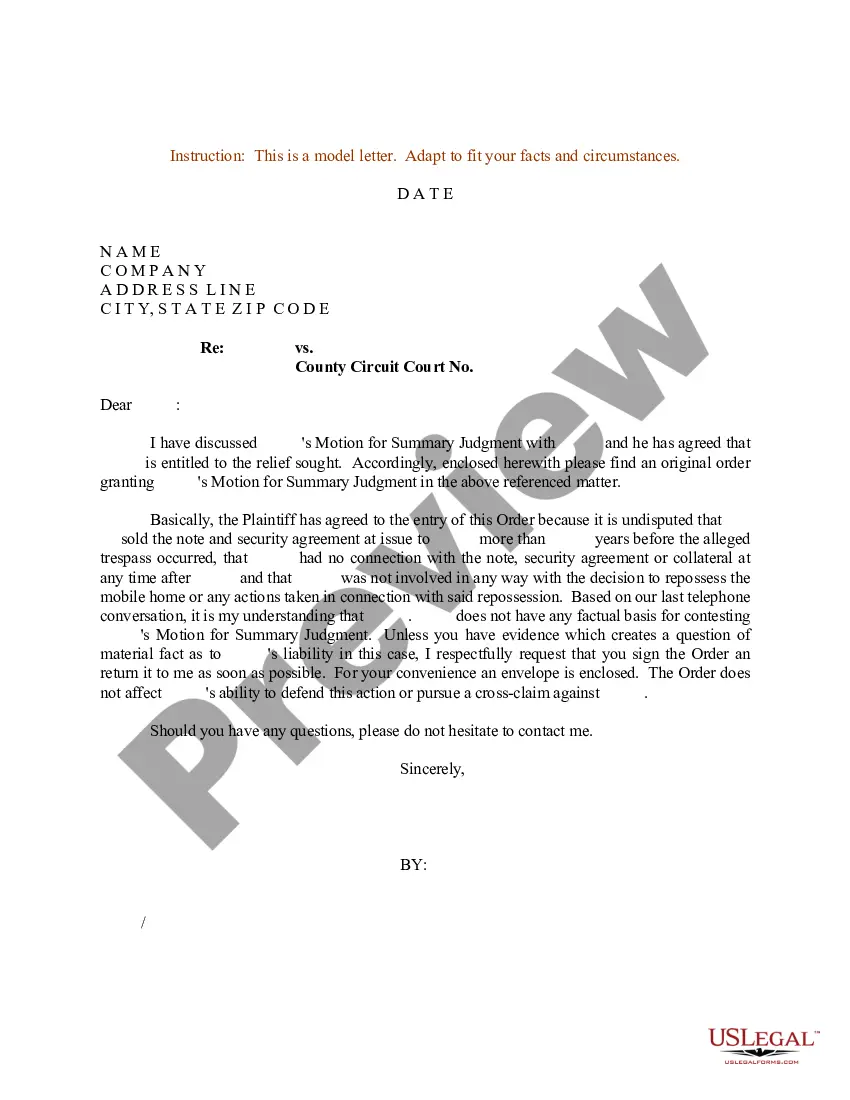
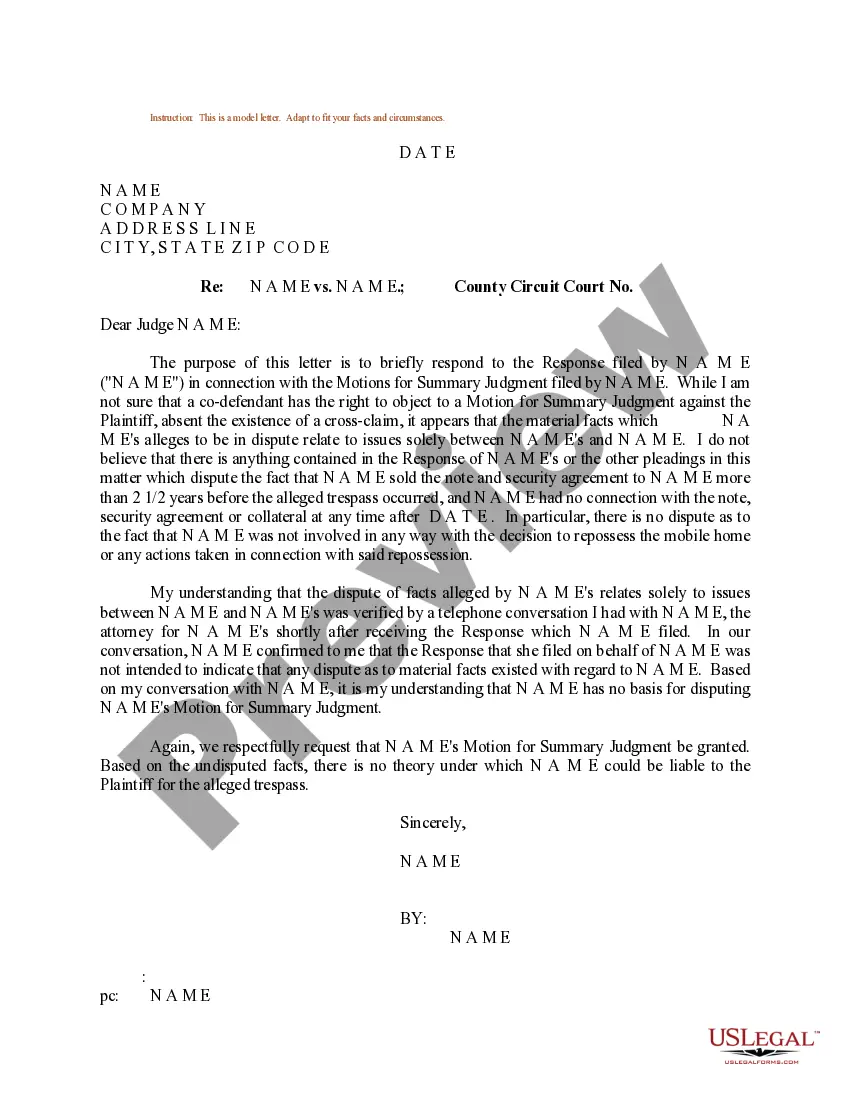
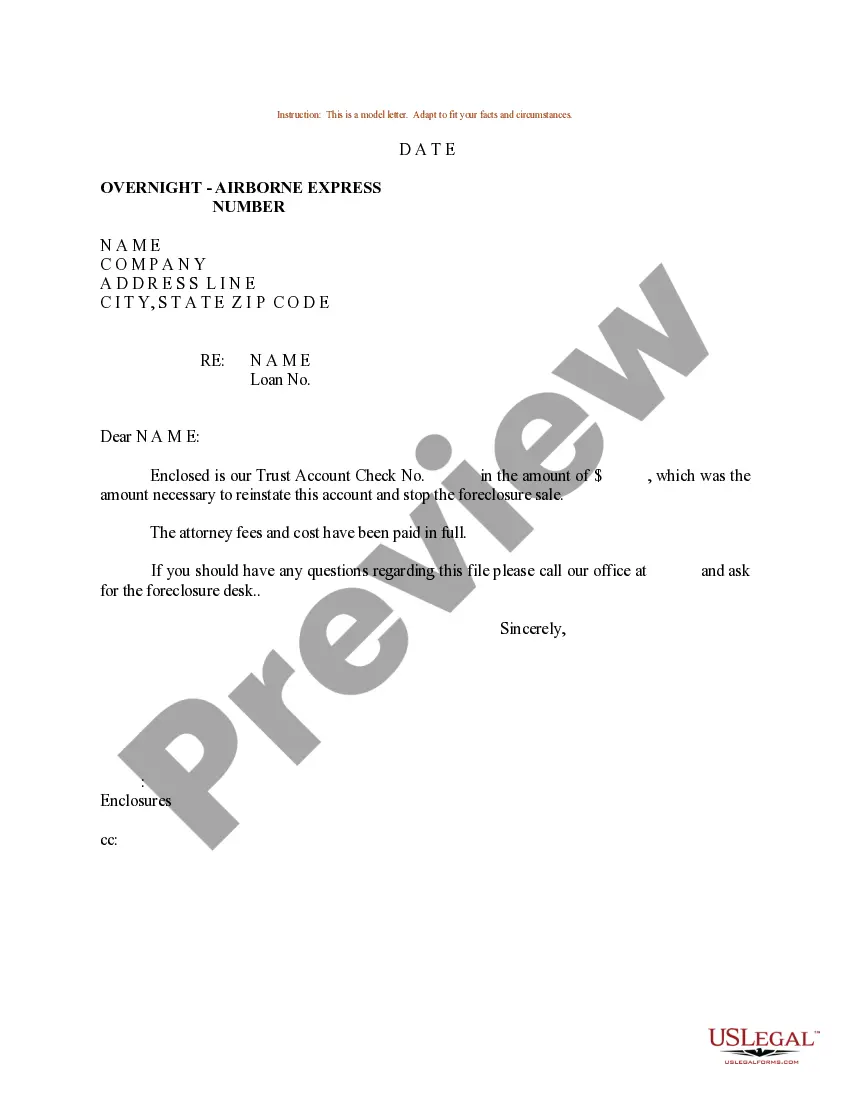
Mississippi Sample Letter for Order Granting Motion for Summary Judgment
Description
Get your form ready online
Our built-in tools help you complete, sign, share, and store your documents in one place.
Make edits, fill in missing information, and update formatting in US Legal Forms—just like you would in MS Word.
Download a copy, print it, send it by email, or mail it via USPS—whatever works best for your next step.
Sign and collect signatures with our SignNow integration. Send to multiple recipients, set reminders, and more. Go Premium to unlock E-Sign.
If this form requires notarization, complete it online through a secure video call—no need to meet a notary in person or wait for an appointment.
We protect your documents and personal data by following strict security and privacy standards.

Make edits, fill in missing information, and update formatting in US Legal Forms—just like you would in MS Word.

Download a copy, print it, send it by email, or mail it via USPS—whatever works best for your next step.

Sign and collect signatures with our SignNow integration. Send to multiple recipients, set reminders, and more. Go Premium to unlock E-Sign.

If this form requires notarization, complete it online through a secure video call—no need to meet a notary in person or wait for an appointment.

We protect your documents and personal data by following strict security and privacy standards.
Looking for another form?



How to fill out Sample Letter For Order Granting Motion For Summary Judgment?
If you want to be thorough, obtain, or create legal document templates, utilize US Legal Forms, the largest collection of legal forms available online.
Employ the site’s straightforward and user-friendly search to find the documents you need.
Numerous templates for commercial and personal purposes are organized by categories and states, or keywords. Use US Legal Forms to access the Mississippi Sample Letter for Order Granting Motion for Summary Judgment with just a few clicks.
Every legal document template you purchase is yours permanently. You will have access to every form you have downloaded in your account. Click the My documents section and choose a form to print or download again.
Complete and download, and print the Mississippi Sample Letter for Order Granting Motion for Summary Judgment with US Legal Forms. There are many professional and state-specific forms available for your business or personal needs.
- If you are already a US Legal Forms customer, Log In to your account and click the Acquire button to locate the Mississippi Sample Letter for Order Granting Motion for Summary Judgment.
- You can also access forms you have previously downloaded in the My documents section of your account.
- If you are using US Legal Forms for the first time, follow the steps below.
- Step 1. Make sure you have chosen the form for the correct city/state.
- Step 2. Use the Preview option to review the form’s content. Don’t forget to read the description.
- Step 3. If you are not satisfied with the form, use the Search field at the top of the screen to find other versions of the legal form template.
- Step 4. Once you have located the form you need, select the Get now button. Choose your preferred pricing plan and provide your details to register for the account.
- Step 5. Complete the transaction. You can use your credit card or PayPal account to finalize the purchase.
- Step 6. Select the format of the legal form and download it to your device.
- Step 7. Fill out, edit and print or sign the Mississippi Sample Letter for Order Granting Motion for Summary Judgment.
Form popularity
FAQ
Be as persuasive as possible as you write your motion in a sequential, logical format. Express your ideas clearly, and make sure you outline what steps are necessary and how they will help your case. Use facts of the case whenever you can to avoid baseless emotional appeals.
Write "Dear Judge (last name)," to start your letter. Note that you use "the Honorable" when referring to the judge, but use "Judge" when addressing him or her in person.
Remember that judges read hundreds of letters. The easier you make it for the judge to read, the most likely the judge will be able to focus on the message you are trying to convey. For most people, a typed letter is more legible than a handwritten one.
Apply each legal argument to the facts stated in the undisputed facts section, and explain why under the law and the facts summary judgment should be granted. In one paragraph, reiterate why summary judgment should be granted on each count of the complaint.
The 5 most common tips in writing an effective leniency letter to a judge include: write a clear introduction, introduce yourself and establish credibility, provide reasons for leniency, tell a story, and. provide contact information.
Rule 56(c)(4) provides that a formal affidavit or a written unsworn declaration that complies with 28 U.S.C. § 1746 can be used to support or oppose a motion for summary judgment.
General format - each motion generally consists of a case caption, a title that briefly identifies the relief sought, a series of numbered paragraphs that explains -- in a logical way -- why you are entitled to that relief, a prayer for relief, a signature block, a certification that a copy of the motion was sent to ...
The chance of success in these cases is less than 10% [1]. Another study found that summary judgment is mostly granted in Title VII cases, for example, cases involving equal pay or employment discrimination [2]. When it comes to federal cases, summary judgments are filed in 17% of total cases.