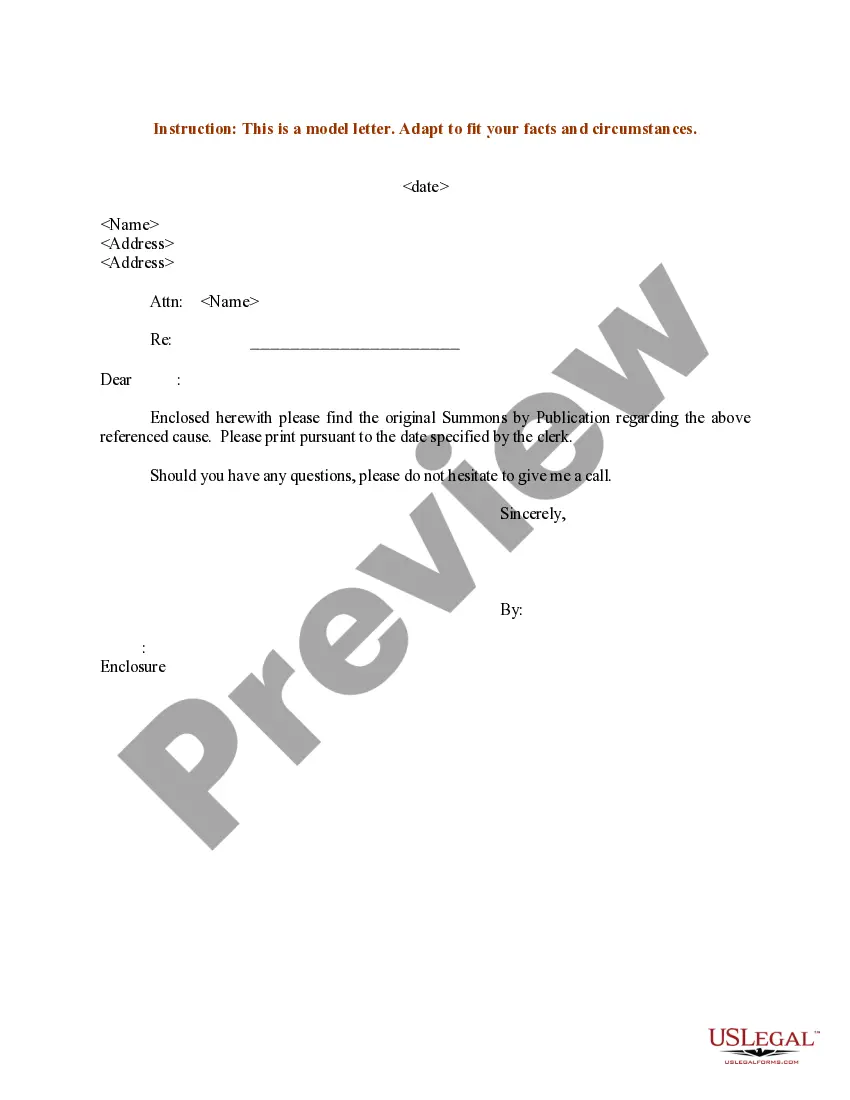
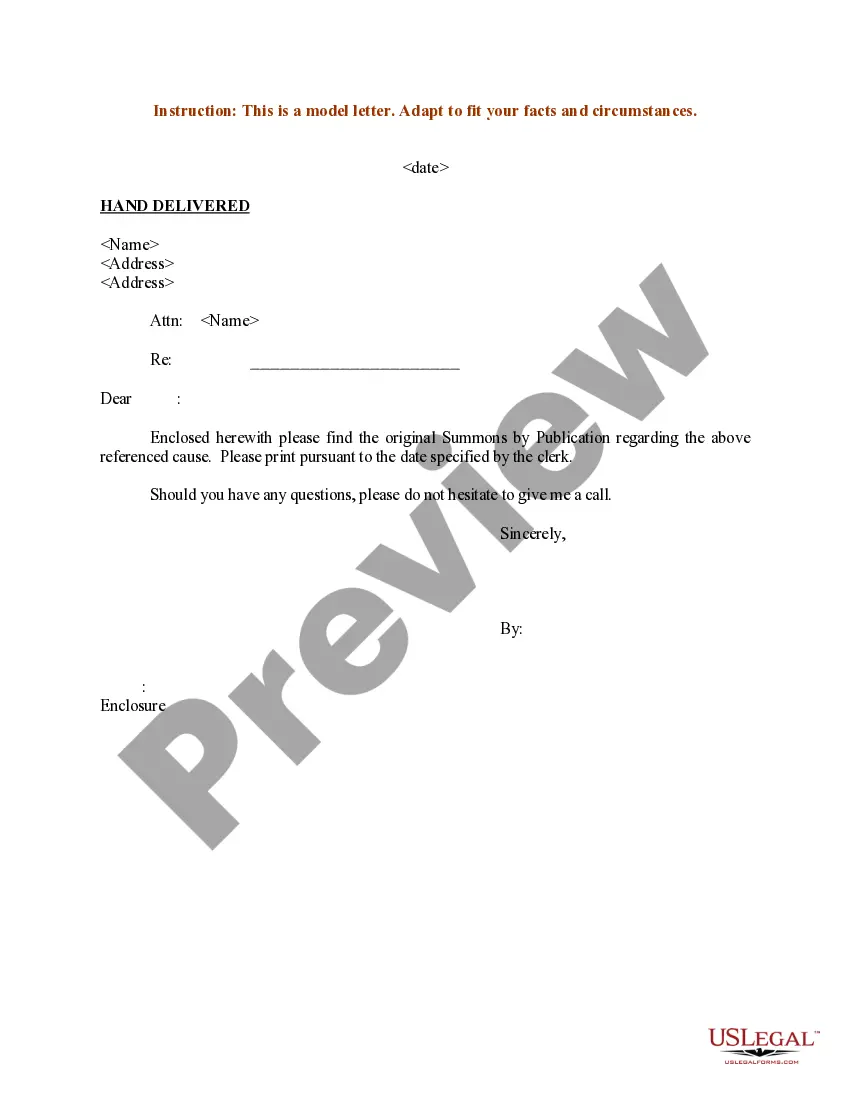
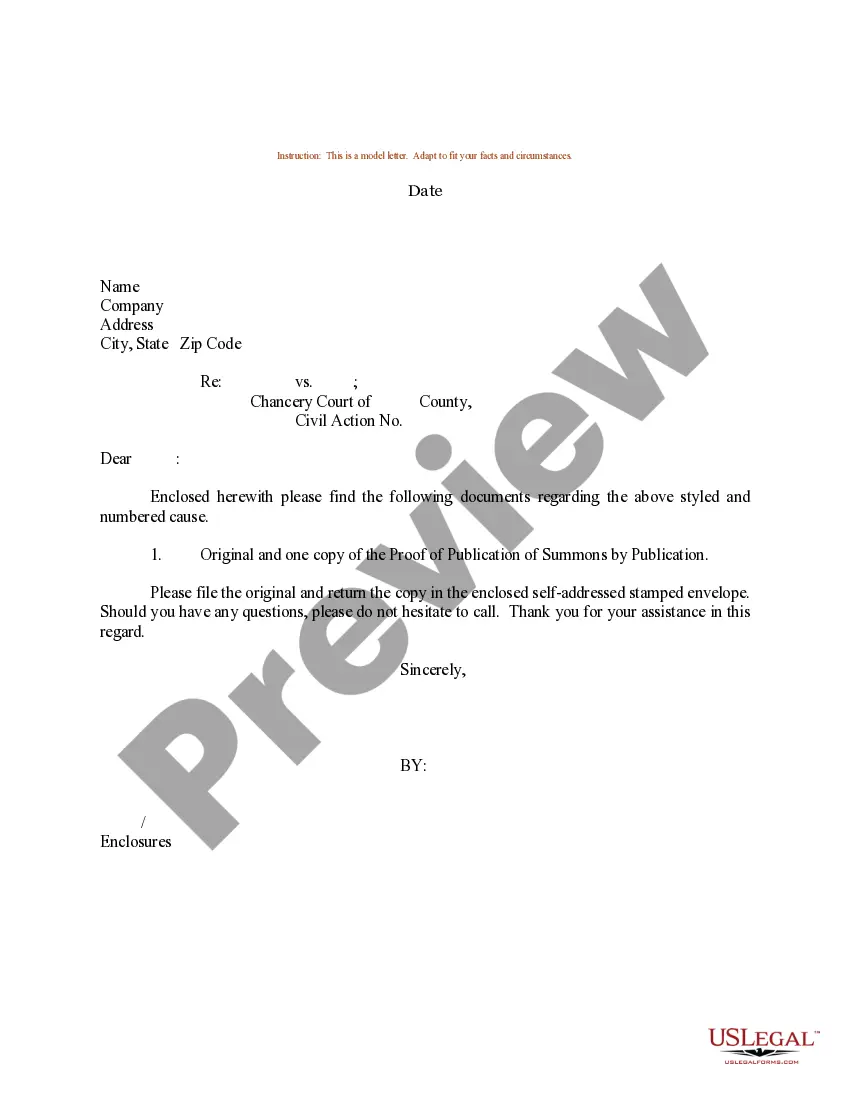
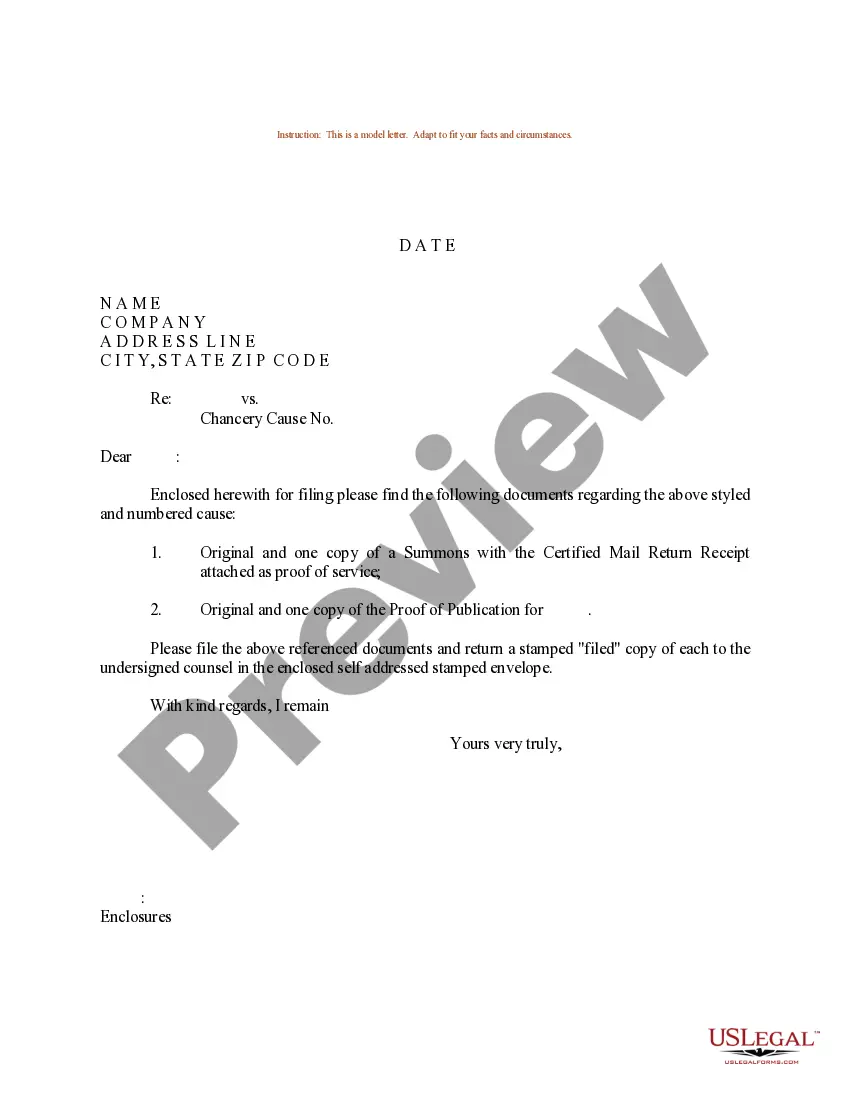
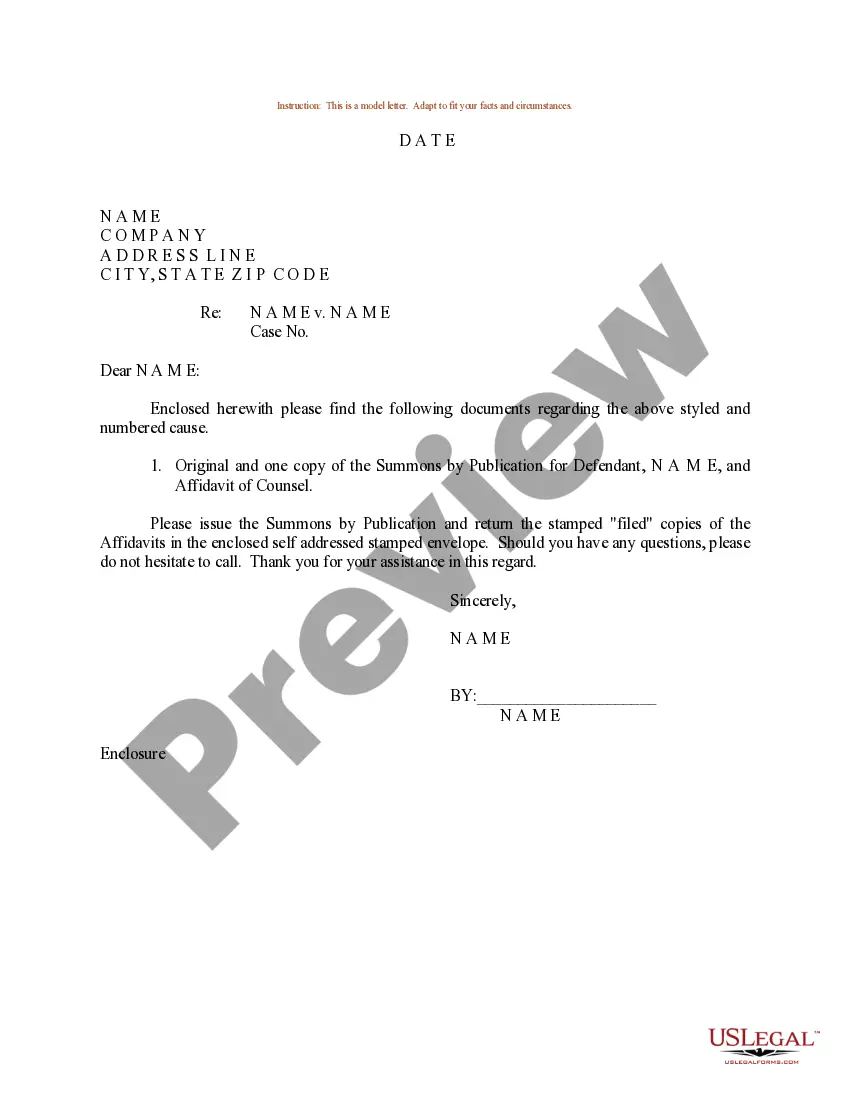
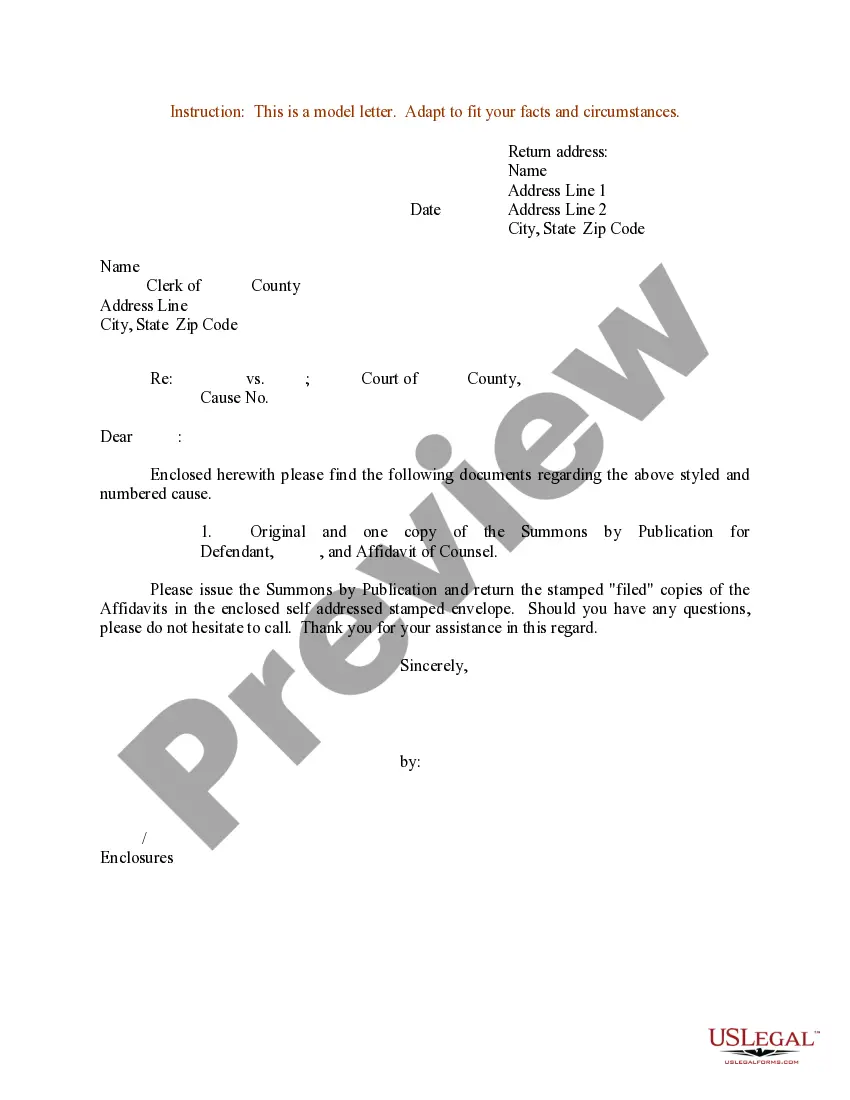
Mississippi Sample Letter for Summons by Publication
Description
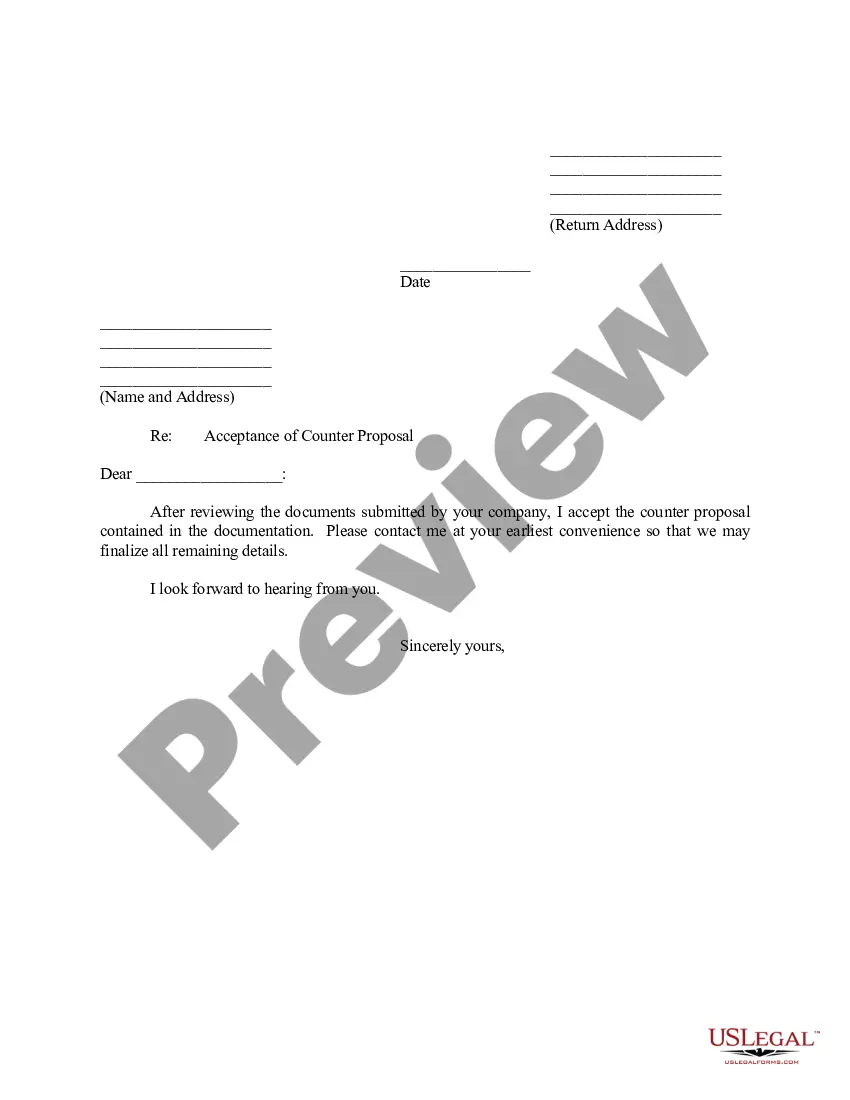
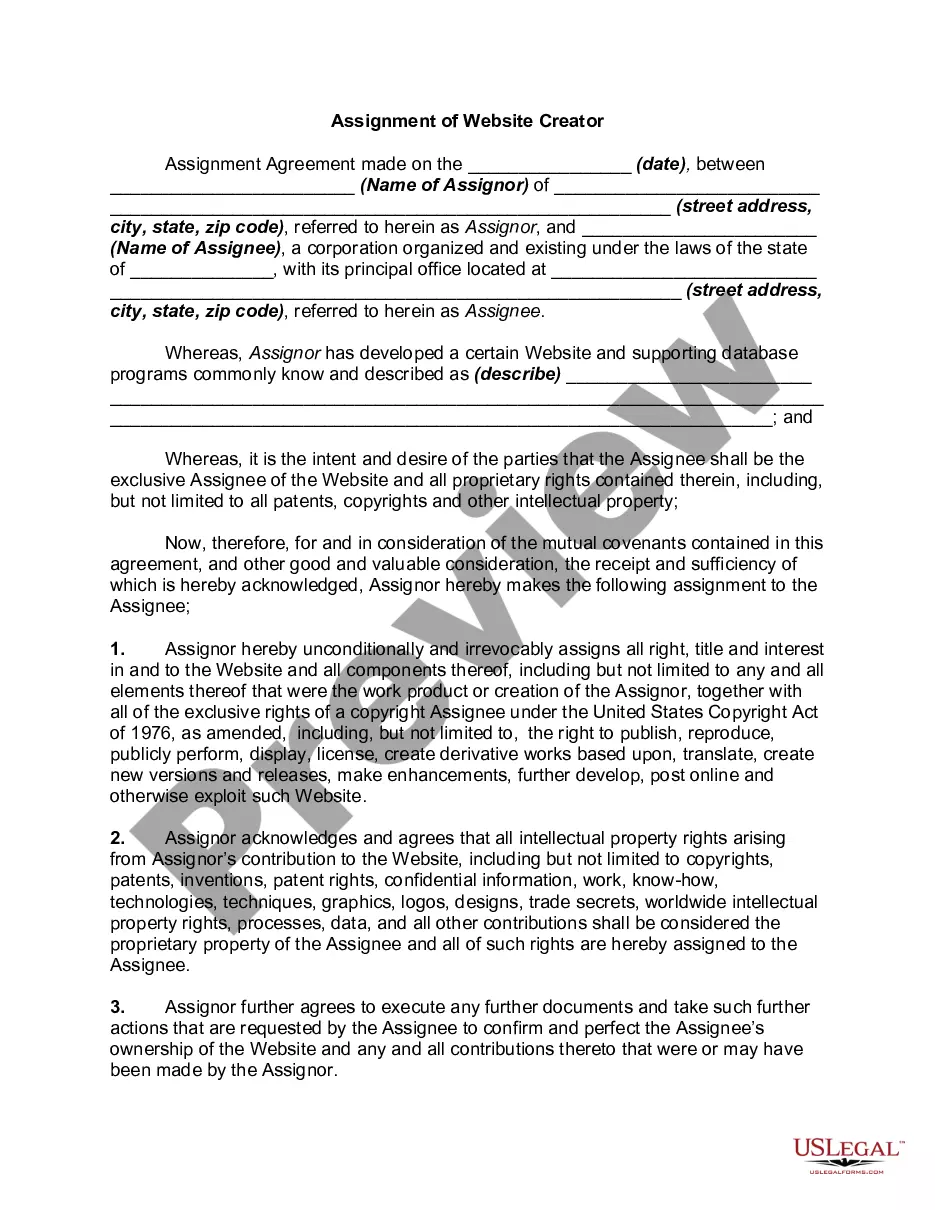

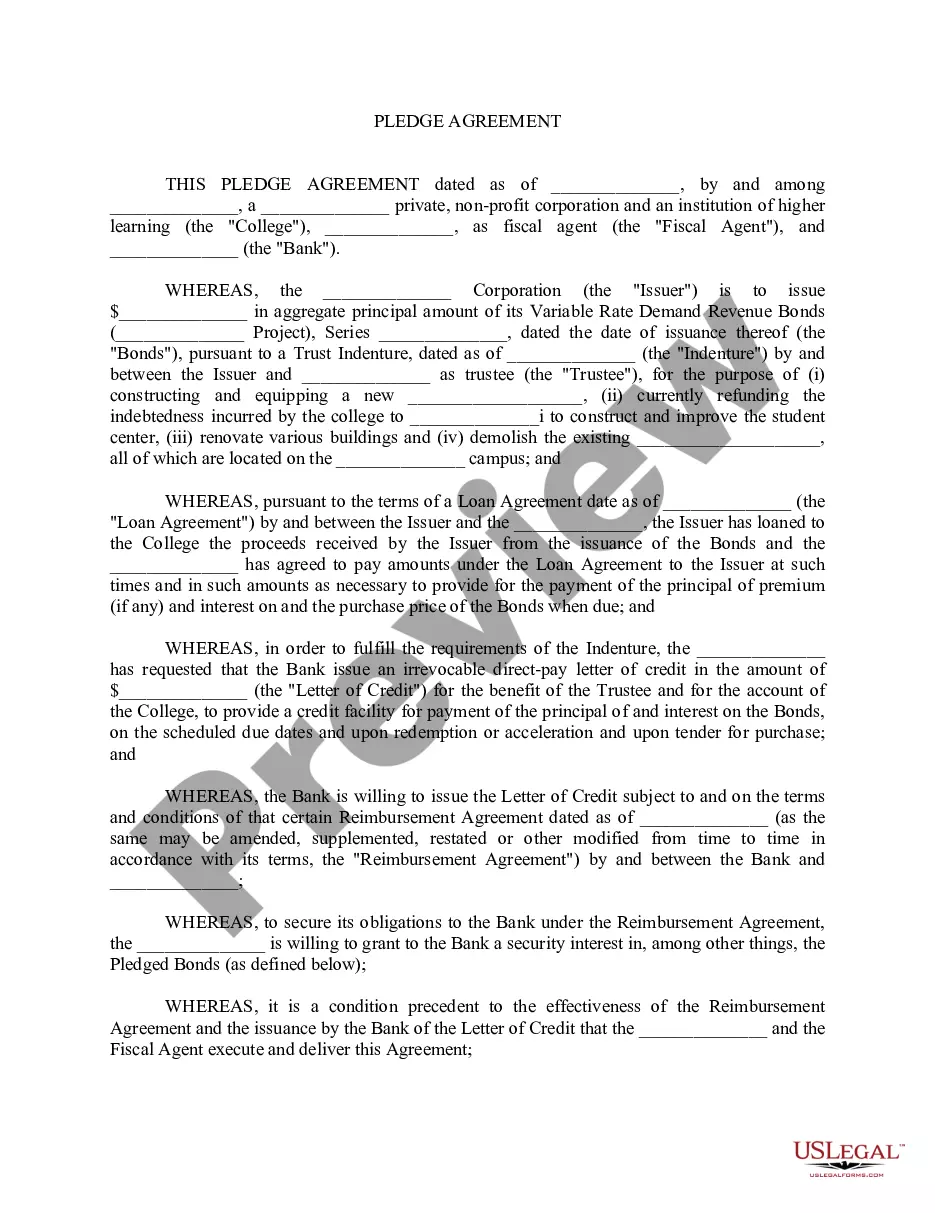
How to fill out Sample Letter For Summons By Publication?
US Legal Forms - one of the largest collections of legal documents in the United States - provides a broad selection of legal document templates that you can download or print. Through the website, you can discover thousands of forms for commercial and personal purposes, organized by categories, states, or keywords. You can find the latest versions of forms such as the Mississippi Sample Letter for Summons by Publication in just a few minutes.
If you already have a subscription, Log In and obtain the Mississippi Sample Letter for Summons by Publication from the US Legal Forms collection. The Download button will be visible on each form you view. You can access all previously saved forms in the My documents section of your account.
If you want to use US Legal Forms for the first time, here are simple instructions to help you get started: Ensure you have selected the correct form for your area/state. Click the Review button to examine the form's content. Check the form description to confirm that you have chosen the appropriate form. If the form does not meet your needs, utilize the Search field at the top of the page to find one that does. If you are satisfied with the form, confirm your selection by clicking the Purchase now button. Next, choose your preferred pricing plan and provide your details to register for an account. Complete the transaction. Use a credit card or PayPal account to finalize the purchase. Select the format and download the form to your device. Edit. Complete, modify, and print and sign the saved Mississippi Sample Letter for Summons by Publication. Every template you add to your account has no expiration date and is yours permanently. So, if you want to download or print another copy, just go to the My documents section and click on the form you need. Access the Mississippi Sample Letter for Summons by Publication with US Legal Forms, one of the most extensive libraries of legal document templates. Utilize thousands of professional and state-specific templates that meet your business or personal needs and requirements.
Form popularity
FAQ
Rule 81 requires use of a special summons which commands that the defendant appear and defend at a specific time and place set by order of the court and informs him or her that no answer is necessary. See MISS. R. CIV.
Rule 81 requires use of a special summons which commands that the defendant appear and defend at a specific time and place set by order of the court and informs him or her that no answer is necessary. See MISS.
Rule 7.1 establishes guidelines for the representation of both indigent and non-indigent criminal defendants. The basis of Rule 7.1 is the right of an accused to be represented by counsel in all criminal prosecutions.
Any party may serve as a matter of right upon any other party written interrogatories not to exceed thirty in number to be answered by the party served or, if the party served is a public or private corporation or a partnership or association or governmental agency, by any officer or agent, who shall furnish such ...
(A) A summons and complaint may be served upon a defendant of any class referred to in paragraph (1) or (4) of subdivision (d) of this rule by mailing a copy of the summons and of the complaint (by first-class mail, postage prepaid) to the person to be served, together with two copies of a notice and acknowledgment ...
(A) A summons and complaint may be served upon a defendant of any class referred to in paragraph (1) or (4) of subdivision (d) of this rule by mailing a copy of the summons and of the complaint (by first-class mail, postage prepaid) to the person to be served, together with two copies of a notice and acknowledgment ...
Rule 5 provides an expedient method of exchanging written and electronic communications between parties and an efficient system of filing papers with the clerk. This rule presupposes that the court has already gained jurisdiction over the parties.
Rule 4(h) provides that if service is not made upon a defendant within 120 days after the filing of the complaint, the claims against that defendant will be dismissed without prejudice absent good cause for the failure to timely serve the defendant.