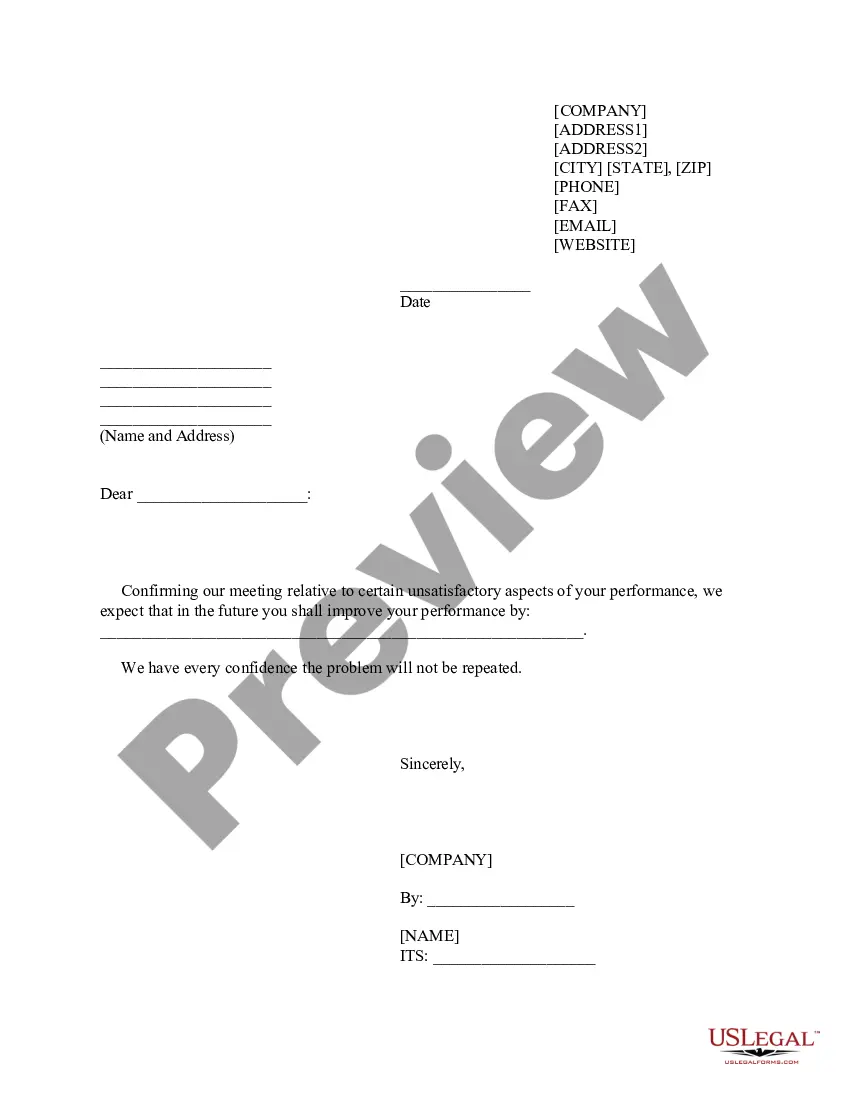
This is a multi-state form covering the subject matter of the title.
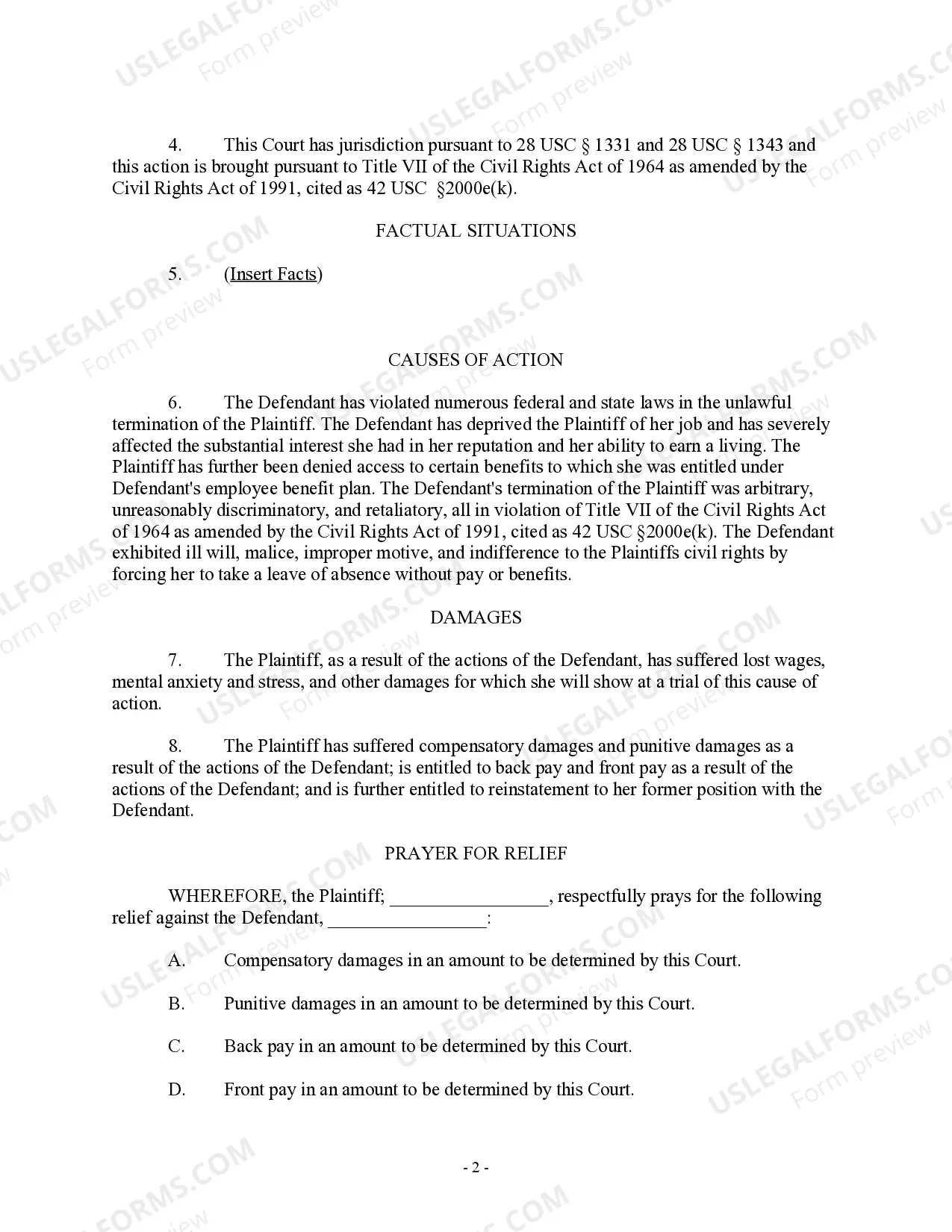
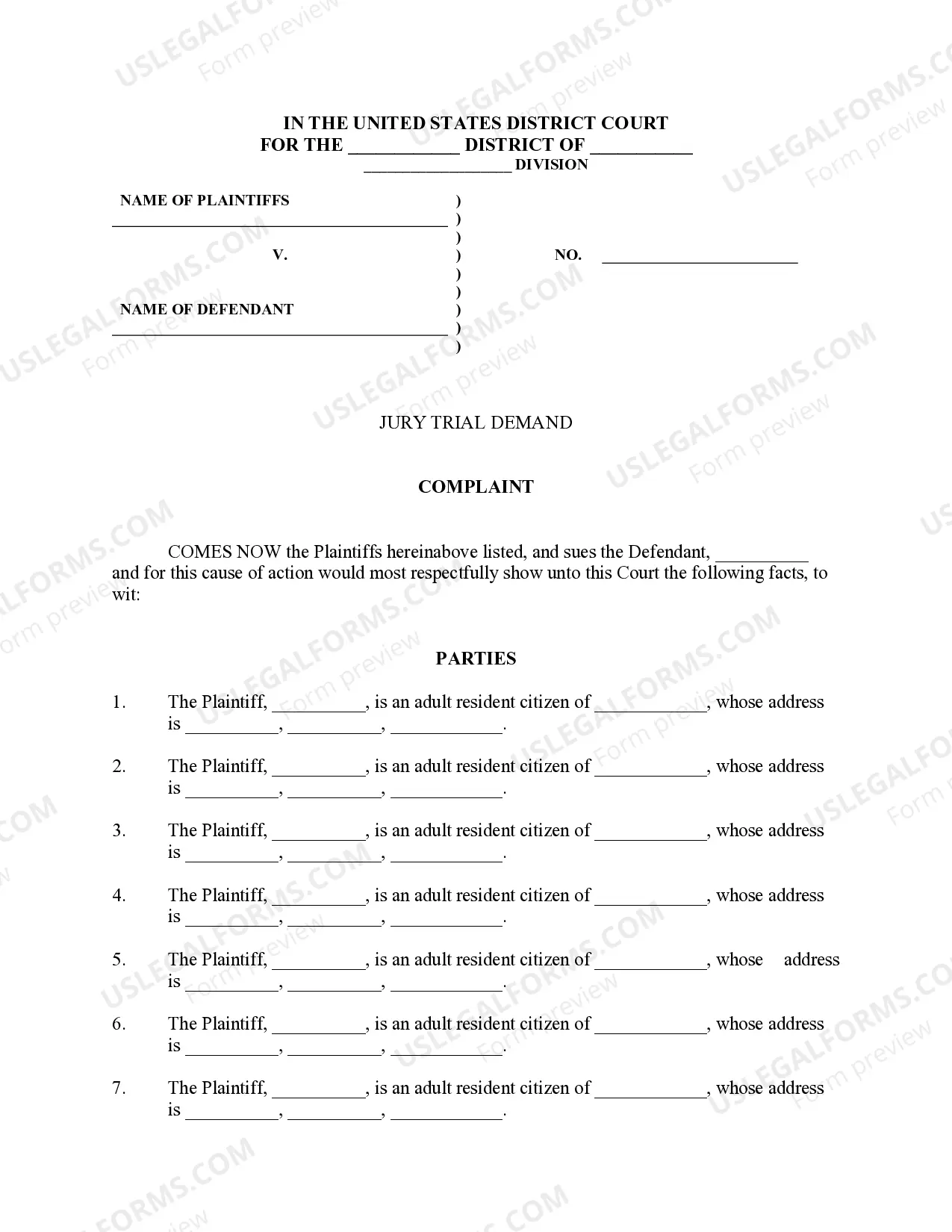
Mississippi Complaint For Wrongful Termination - Title VII Civil Rights Act - Pregnancy Discrimination Act - Jury Trial Demand
Category:
State:
Multi-State
Control #:
US-000291
Format:
Word;
Rich Text
Instant download
Description
Free preview





Get your form ready online
Our built-in tools help you complete, sign, share, and store your documents in one place.
Built-in online Word editor
Make edits, fill in missing information, and update formatting in US Legal Forms—just like you would in MS Word.
Export easily
Download a copy, print it, send it by email, or mail it via USPS—whatever works best for your next step.
E-sign your document
Sign and collect signatures with our SignNow integration. Send to multiple recipients, set reminders, and more. Go Premium to unlock E-Sign.
Notarize online 24/7
If this form requires notarization, complete it online through a secure video call—no need to meet a notary in person or wait for an appointment.
Store your document securely
We protect your documents and personal data by following strict security and privacy standards.

Make edits, fill in missing information, and update formatting in US Legal Forms—just like you would in MS Word.

Download a copy, print it, send it by email, or mail it via USPS—whatever works best for your next step.

Sign and collect signatures with our SignNow integration. Send to multiple recipients, set reminders, and more. Go Premium to unlock E-Sign.

If this form requires notarization, complete it online through a secure video call—no need to meet a notary in person or wait for an appointment.

We protect your documents and personal data by following strict security and privacy standards.
Looking for another form?




How to fill out Complaint For Wrongful Termination - Title VII Civil Rights Act - Pregnancy Discrimination Act - Jury Trial Demand?
You might spend hours online trying to locate the legal template that meets the state and federal regulations you require.
US Legal Forms offers a vast collection of legal forms that can be examined by professionals.
You can download or create the Mississippi Complaint For Wrongful Termination - Title VII Civil Rights Act - Pregnancy Discrimination Act - Jury Trial Demand from this service.
If available, use the Review option to preview the template as well. If you wish to obtain another version of your form, use the Search field to find the template that suits your needs and requirements. Once you find the template you want, click Get now to continue. Choose the pricing plan you desire, enter your credentials, and register for an account on US Legal Forms. Complete the transaction. You can use your Visa, Mastercard, or PayPal account to pay for the legal document. Select the format of your file and download it to your device. Make modifications to the document if necessary. You can complete, edit, and sign and print the Mississippi Complaint For Wrongful Termination - Title VII Civil Rights Act - Pregnancy Discrimination Act - Jury Trial Demand. Download and print a vast array of document templates using the US Legal Forms Website, which provides the largest selection of legal forms. Utilize professional and state-specific templates to address your business or personal needs.
- If you possess a US Legal Forms account, you can Log In and select the Download button.
- Then, you can complete, edit, print, or sign the Mississippi Complaint For Wrongful Termination - Title VII Civil Rights Act - Pregnancy Discrimination Act - Jury Trial Demand.
- Every legal template you purchase is yours permanently.
- To obtain another copy of the purchased form, visit the My documents section and click the relevant option.
- If you are using the US Legal Forms site for the first time, follow the simple instructions below.
- First, ensure that you have selected the correct template for the region/city of your choice.
- Review the form description to confirm you have chosen the right document.
Form popularity
FAQ
The worth of a pregnancy discrimination lawsuit can vary significantly based on several factors, including the severity of the discrimination and the impact on the employee's life. Compensation may include lost wages, emotional distress damages, and punitive damages. Filing a Mississippi Complaint For Wrongful Termination - Title VII Civil Rights Act - Pregnancy Discrimination Act - Jury Trial Demand can help you pursue appropriate compensation. Consulting with an experienced attorney can provide you with a clearer understanding of potential outcomes.
In Mississippi, wrongful termination occurs when an employee is fired for illegal reasons, such as discrimination based on race, gender, or pregnancy. Under the Title VII Civil Rights Act and the Pregnancy Discrimination Act, employees are protected from being terminated due to their pregnancy status. If you believe you have been wrongfully terminated, you can file a Mississippi Complaint For Wrongful Termination - Title VII Civil Rights Act - Pregnancy Discrimination Act - Jury Trial Demand. Seeking legal advice can help you understand your options and rights.
The value of a pregnancy discrimination case can vary widely based on the circumstances involved. Factors such as lost wages, emotional distress, and the severity of the discrimination play significant roles in determining compensation. If you file a Mississippi Complaint For Wrongful Termination related to a Pregnancy Discrimination Act violation, you may be entitled to damages. An experienced legal professional can help you assess your case's potential value.
The odds of winning a wrongful termination lawsuit depend on various factors, including the strength of your evidence and the specifics of your case. Cases that successfully demonstrate violations of the Title VII Civil Rights Act or the Pregnancy Discrimination Act often have better chances. A Mississippi Complaint For Wrongful Termination can help you present your case effectively. Engaging with a knowledgeable attorney can further enhance your prospects.
Yes, you can sue for wrongful termination in Mississippi if your termination violates federal or state laws. The Title VII Civil Rights Act and the Pregnancy Discrimination Act protect employees from unfair treatment based on certain characteristics. To initiate this process, you would typically file a Mississippi Complaint For Wrongful Termination. Consulting with a legal expert can guide you through the necessary steps.
A wrongful termination occurs when an employee is fired for illegal reasons. This may include discrimination based on race, gender, or pregnancy, as outlined in the Title VII Civil Rights Act and the Pregnancy Discrimination Act. If you believe your termination violates these laws, you may have grounds for a Mississippi Complaint For Wrongful Termination. Seeking legal assistance can help you understand your rights and options.
An example of a wrongful termination complaint would include a detailed account of an employee who was fired shortly after announcing their pregnancy, invoking the Mississippi Complaint For Wrongful Termination - Title VII Civil Rights Act - Pregnancy Discrimination Act - Jury Trial Demand. The complaint should outline the timeline of events, any witnesses, and documents that support the claim of discrimination. Utilizing platforms like USLegalForms can provide templates and resources to help you craft a compelling complaint.
Writing a wrongful termination complaint involves outlining the facts surrounding your case, including the reasons for your termination and how they relate to the Mississippi Complaint For Wrongful Termination - Title VII Civil Rights Act - Pregnancy Discrimination Act - Jury Trial Demand. Start by organizing your thoughts, then clearly describe the events that led to your termination. It’s beneficial to include relevant documentation and seek guidance from a legal professional to ensure your complaint meets all necessary legal standards.
Winning a pregnancy discrimination case can be challenging due to the need for clear evidence and a solid understanding of the laws, such as those outlined in the Mississippi Complaint For Wrongful Termination - Title VII Civil Rights Act - Pregnancy Discrimination Act - Jury Trial Demand. You must demonstrate that your termination was directly linked to your pregnancy or related circumstances. Many individuals find success by documenting incidents and seeking legal assistance to navigate the complexities of their case.
Suing for wrongful termination can be a worthwhile endeavor, especially if you believe your rights were violated under the Mississippi Complaint For Wrongful Termination - Title VII Civil Rights Act - Pregnancy Discrimination Act - Jury Trial Demand. A successful lawsuit can lead to compensation for lost wages, emotional distress, and potential reinstatement. However, consider the time, effort, and costs involved in pursuing legal action. Consulting with a legal expert can help you evaluate your specific situation.