Mississippi Order of Non-Adjudication
What this document covers
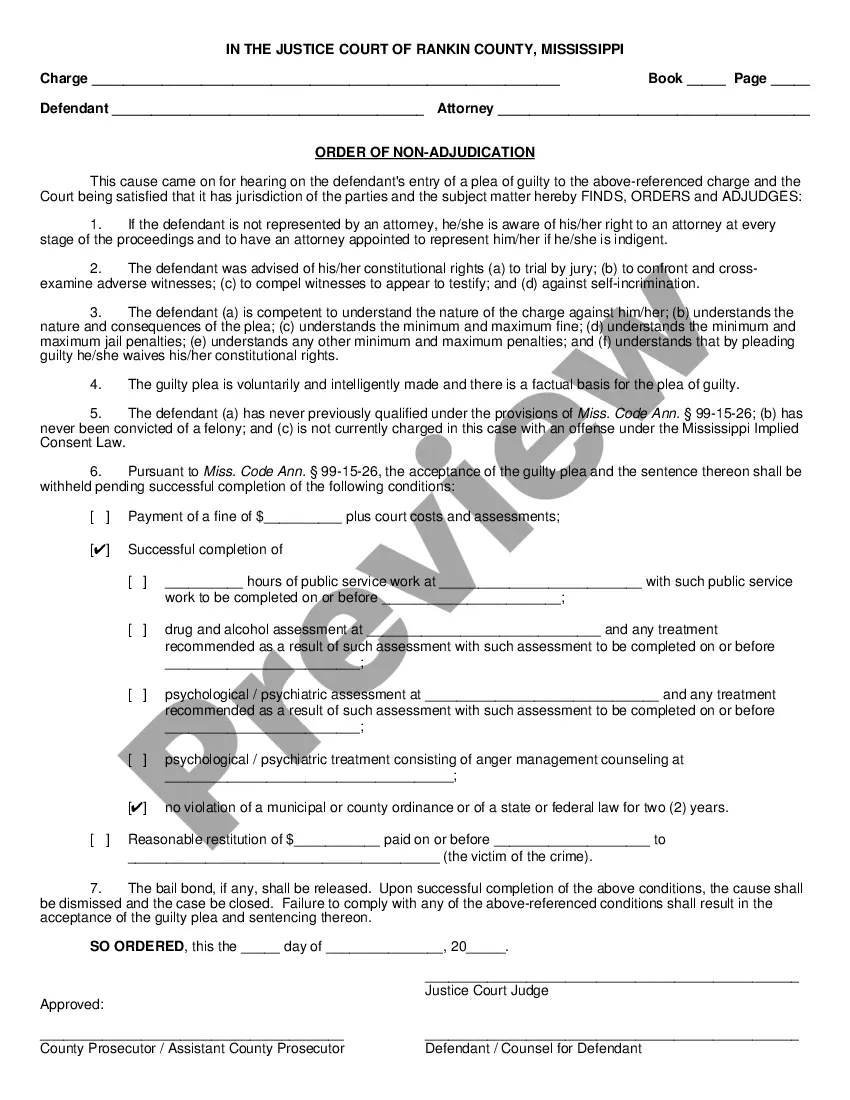
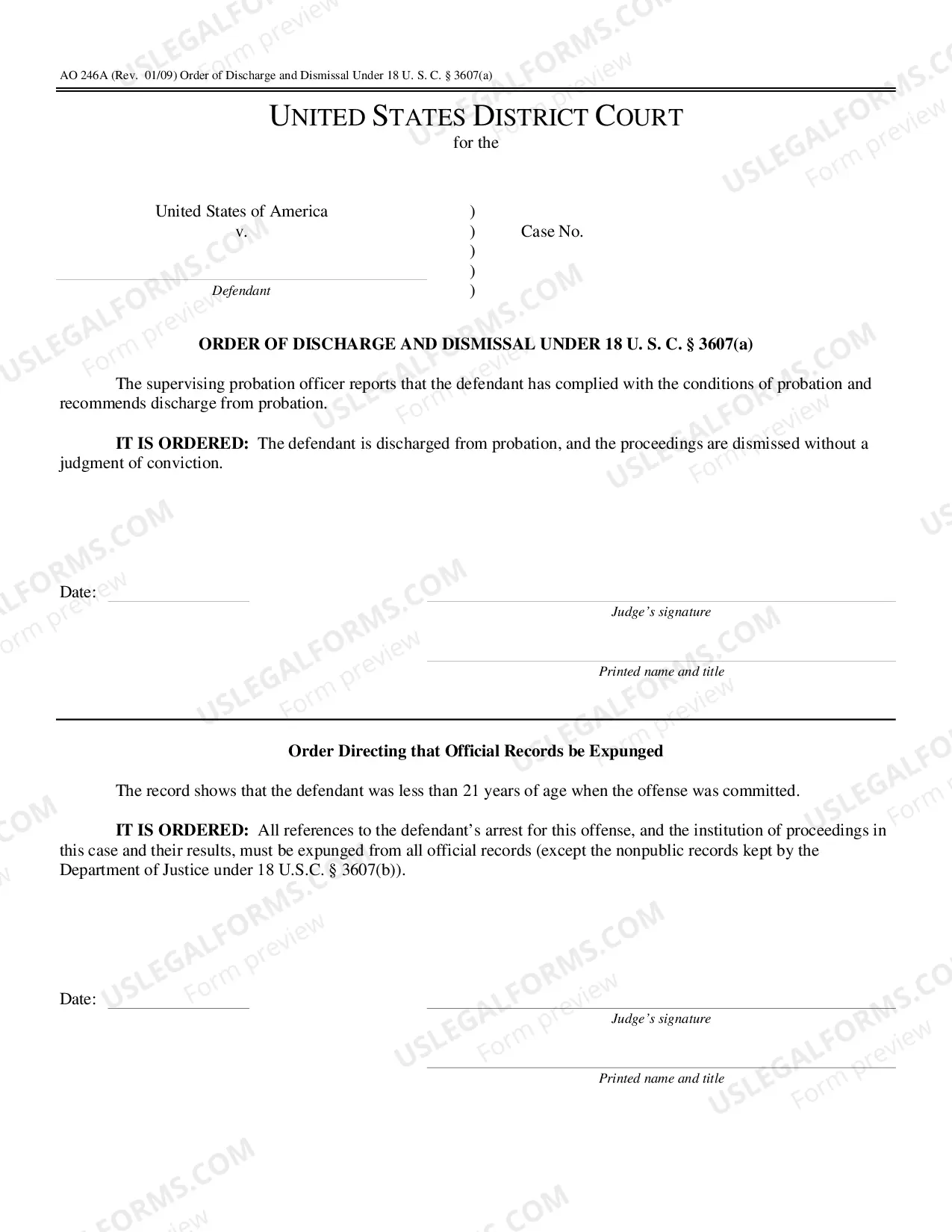
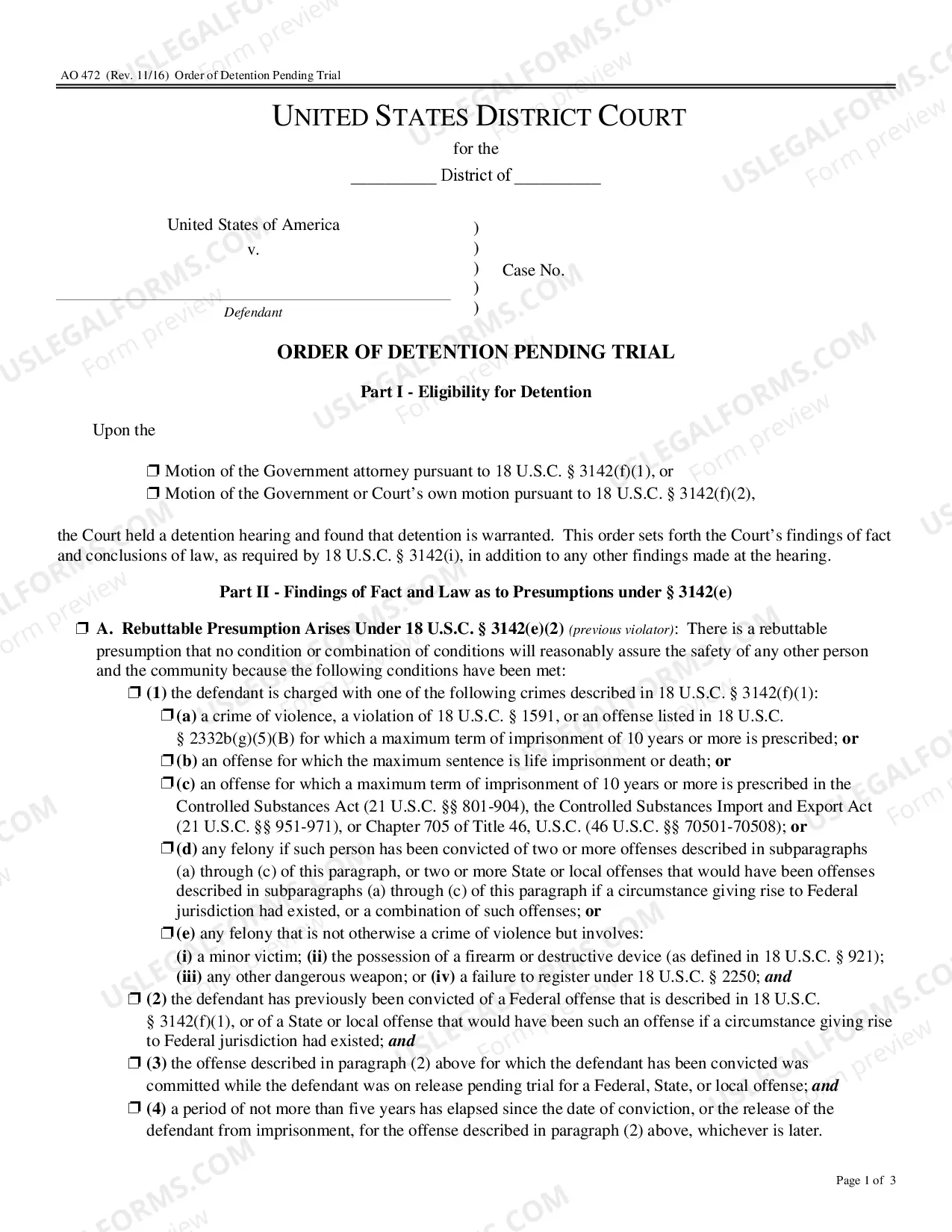
The Order of Non-Adjudication is a legal document issued by the Rankin County Justice Court in Mississippi. This form is used when a defendant pleads guilty but the court withholds adjudication of the charge, allowing the individual to complete certain conditions before potentially having the case dismissed. This differs from a standard guilty plea, as it provides an opportunity to avoid a permanent criminal record if the conditions are met successfully.
What’s included in this form
- Details of the hearing, including charge, book, and page number.
- Confirmation of the defendant's rights and understanding of the plea.
- Conditions to be met for the plea to remain non-adjudicated, including potential fines and assessments.
- Options for community service, assessments, and restitution.
- Judicial signatures to finalize the order once conditions are met.
When to use this form
This form should be used when individuals have been charged with a misdemeanor and choose to plead guilty under the conditions that allow for non-adjudication. It is particularly relevant in situations where the defendant prefers to avoid a criminal conviction, ensuring that successful completion of the outlined conditions may lead to the dismissal of the case.
Who can use this document
- Defendants in Rankin County facing misdemeanors who wish to plead guilty.
- Individuals who have not previously qualified for non-adjudication under Mississippi law.
- Those seeking to avoid a permanent criminal record upon fulfilling specific court conditions.
How to complete this form
- Enter the charge, book number, and page number as indicated at the top.
- Fill in the defendant's name and the name of their attorney, if applicable.
- Review and check the conditions that the defendant must meet, entering specific information such as payment amounts and completion deadlines.
- Sign and date the form, ensuring it is approved by the appropriate court judge and prosecutor.
- Keep a copy of the completed form for personal records and compliance tracking.
Does this form need to be notarized?
This form does not typically require notarization unless specified by local law. It is advisable to check with the local court to confirm any notarization requirements that may apply.
Get your form ready online
Our built-in tools help you complete, sign, share, and store your documents in one place.
Make edits, fill in missing information, and update formatting in US Legal Forms—just like you would in MS Word.
Download a copy, print it, send it by email, or mail it via USPS—whatever works best for your next step.
Sign and collect signatures with our SignNow integration. Send to multiple recipients, set reminders, and more. Go Premium to unlock E-Sign.
If this form requires notarization, complete it online through a secure video call—no need to meet a notary in person or wait for an appointment.
We protect your documents and personal data by following strict security and privacy standards.

Make edits, fill in missing information, and update formatting in US Legal Forms—just like you would in MS Word.

Download a copy, print it, send it by email, or mail it via USPS—whatever works best for your next step.

Sign and collect signatures with our SignNow integration. Send to multiple recipients, set reminders, and more. Go Premium to unlock E-Sign.

If this form requires notarization, complete it online through a secure video call—no need to meet a notary in person or wait for an appointment.

We protect your documents and personal data by following strict security and privacy standards.
Common mistakes to avoid
- Failing to fill in required case numbers or personal information correctly.
- Not checking all applicable conditions that need to be fulfilled.
- Overlooking signatures from all necessary parties before submission.
- Missing deadlines for completing required conditions, leading to automatic adjudication.
Advantages of online completion
- Convenient access to legal forms at any time.
- Easy to edit and customize to meet specific needs.
- Reliable templates created by licensed attorneys to ensure compliance.
- Instant availability, allowing for quick submission to the court.
Legal use & context
- The Order of Non-Adjudication serves as a protective measure for defendants in misdemeanor cases.
- Successful completion of all terms can lead to case dismissal, thus safeguarding the defendant's record.
- It is essential to adhere to the conditions set forth in the order to ensure that the benefits of non-adjudication are realized.
Key takeaways
- The Order of Non-Adjudication allows defendants to plead guilty while avoiding a criminal record under certain conditions.
- Completing all requirements is crucial for case dismissal and record sealing.
- This form must be accurately completed and submitted to the Rankin County Justice Court to be valid.
Looking for another form?

Form popularity
FAQ
Probation Violation. Deferred Adjudication in Texas is a special kind of probation that gives you the opportunity to keep your conviction off your criminal record. Following a plea of guilty or no contest, a judge may decide not to enter a finding of guilt, but instead place you on Deferred Adjudication probation.
An adjudication is a legal ruling or judgment, usually final, but can also refer to the process of settling a legal case or claim through the court or justice system, such as a decree in the bankruptcy process between the defendant and the creditors.
How long will a conviction stay on my record? A DUI conviction stays on your driving record for five years and on your criminal history (rap sheet) forever. A second offense that occurs within five years of a prior offense will increase your punishment and penalties.
What is the difference between probation and deferred adjudication? Probation is a final conviction.With deferred adjudication, you are not found guilty by the judge after completion of all requirements although, in order to receive deferred adjudication, you must begin by pleading guilty to the judge.
No. Not guilty means that you are not guilty. A first offender sentence happens when you enter a guilty plea and you are sent to prison or placed on probation without the judge adjudicating you guilty. If you then complete your sentenced you are discharged without being adjudicated guilty.
Remanded means that whatever was before the court was sent usually to a lower court but here it might be to a file.
If the Judge withholds adjudication of guilt, it means you have not been formally found guilty of the crime and there is no conviction. It is possible to plea guilty to a crime but still receive a withhold of adjudication and thus, not be convicted of the crime.
Non-adjudication is the process of allowing a first-time, nonviolent defendant to complete certain conditions and avoid a conviction on their record.You must not have a prior felony conviction, and you can only participate in the nonadjudication process one time.