Mississippi Complaint for Divorce involving psychiatric care of Defendant
About this form
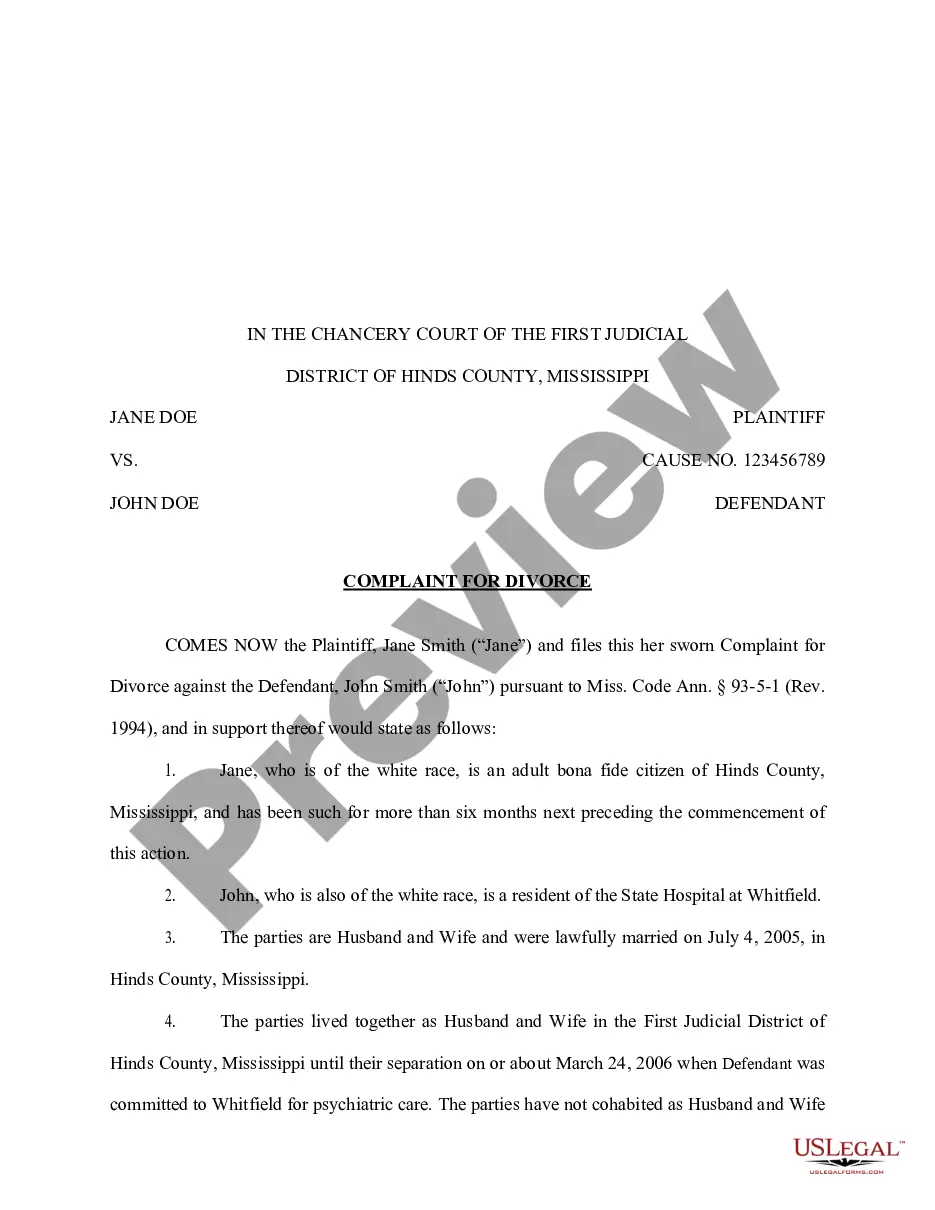
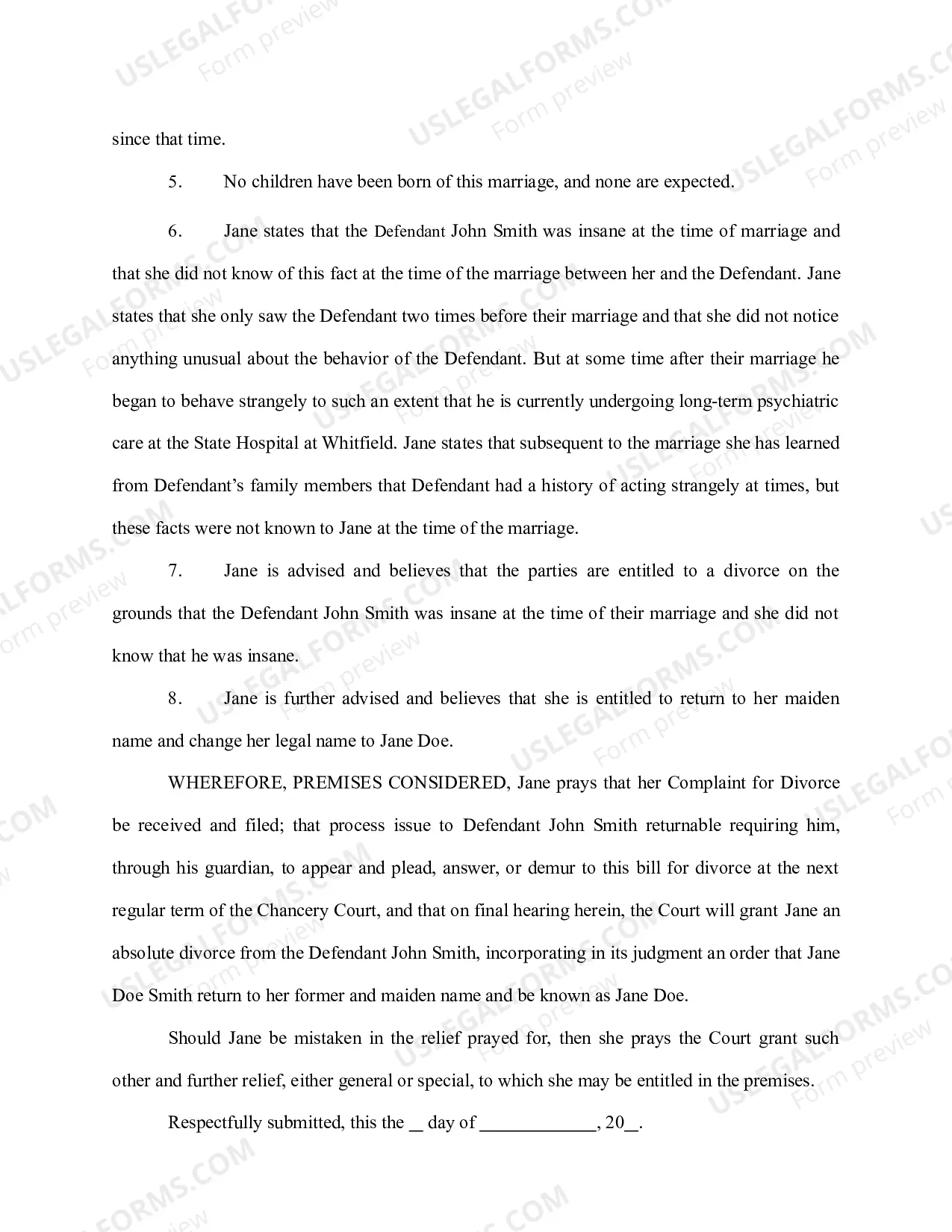
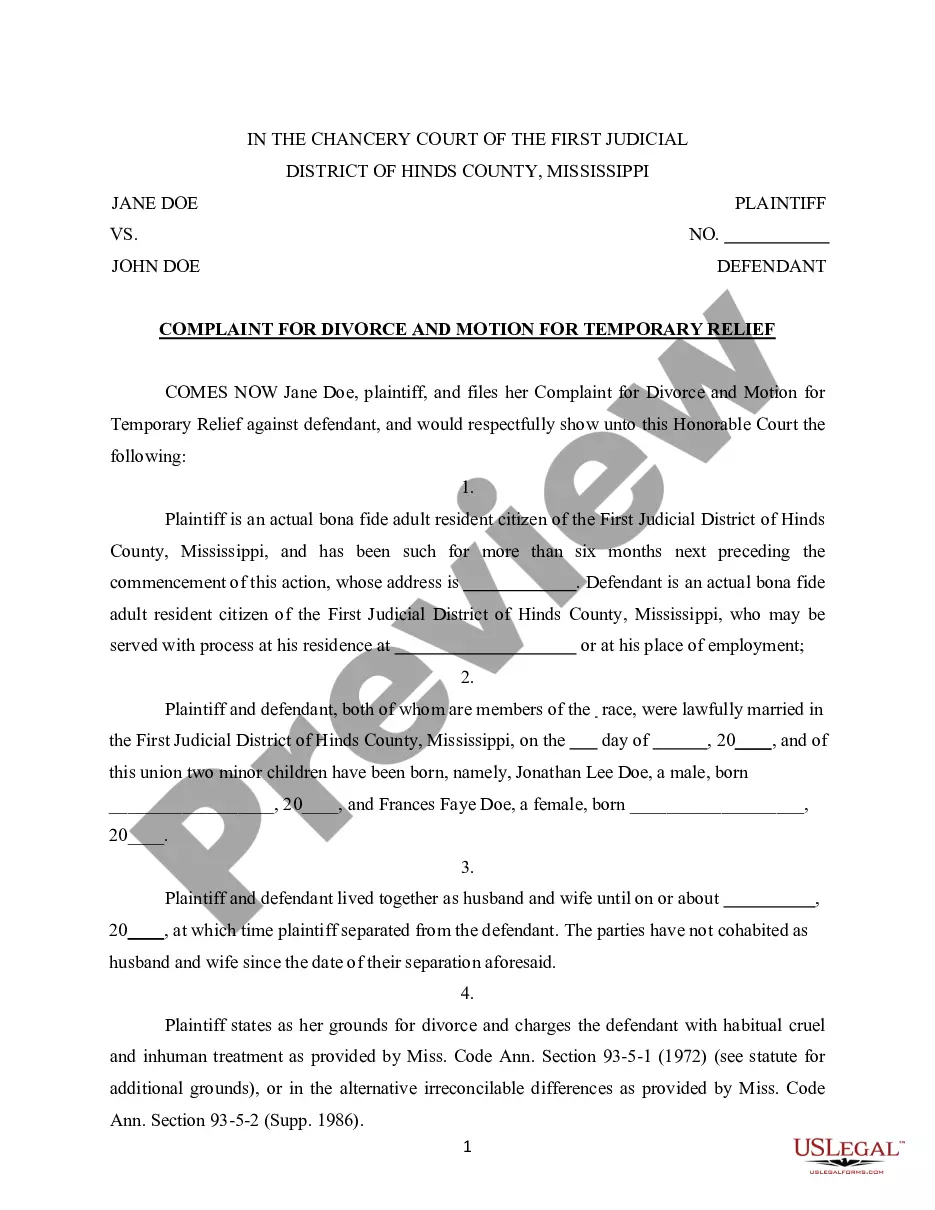
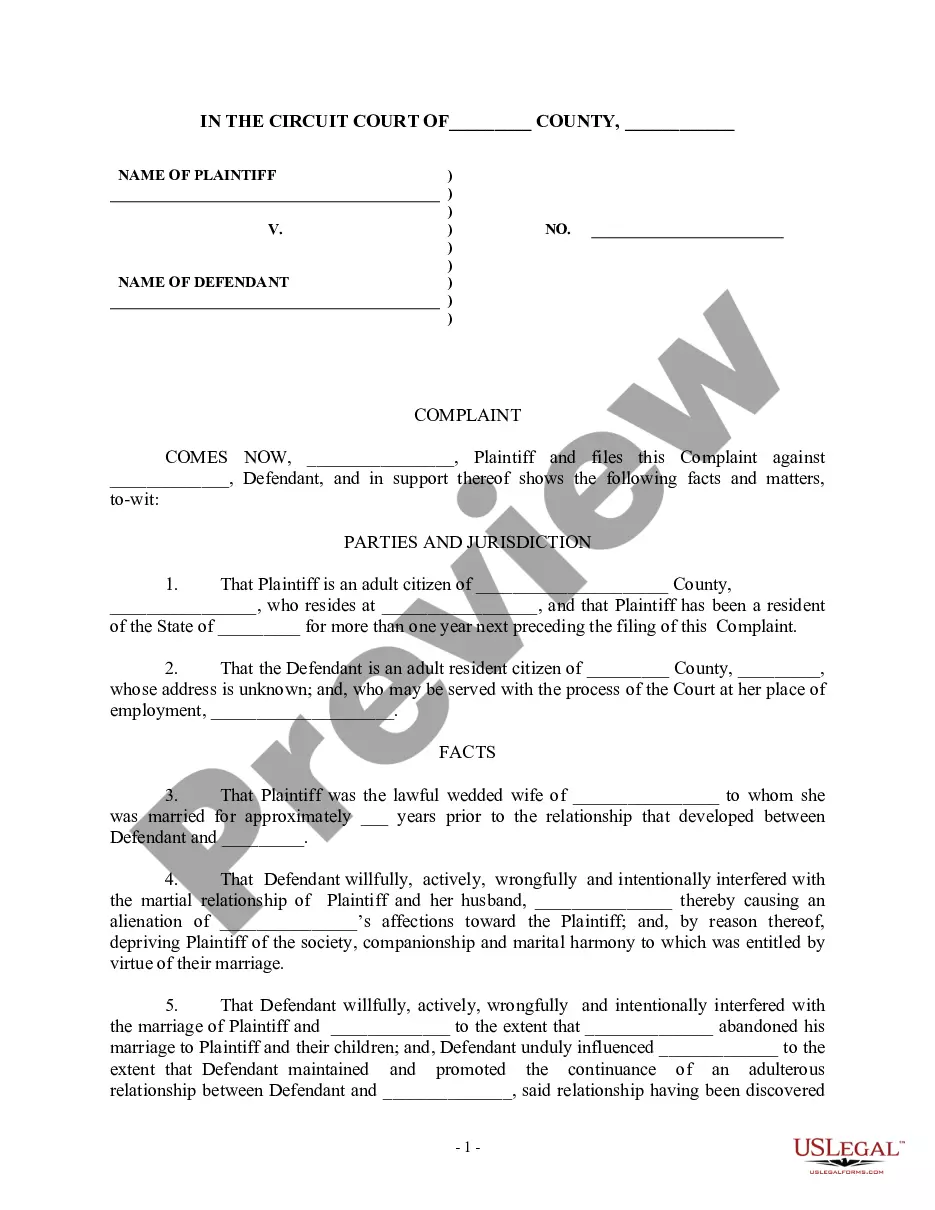
The Complaint for Divorce involving psychiatric care of Defendant is a legal document filed in court to initiate the divorce process when one spouse has been committed to a psychiatric facility. This form outlines the parties involved, the grounds for divorce, and the request for a name change. It differs from general divorce complaints by specifically addressing the psychiatric condition of one spouse, making it essential for cases where mental health issues impact the marriage.
Main sections of this form
- Identification of the plaintiff and defendant, including their residency and background information.
- Details of the marriage, including the date and location of marriage, and the grounds for divorce.
- Information about the psychiatric care of the defendant, including assertions regarding their mental health during marriage.
- A request for the court to grant divorce and a change of the plaintiffâs name back to their maiden name.
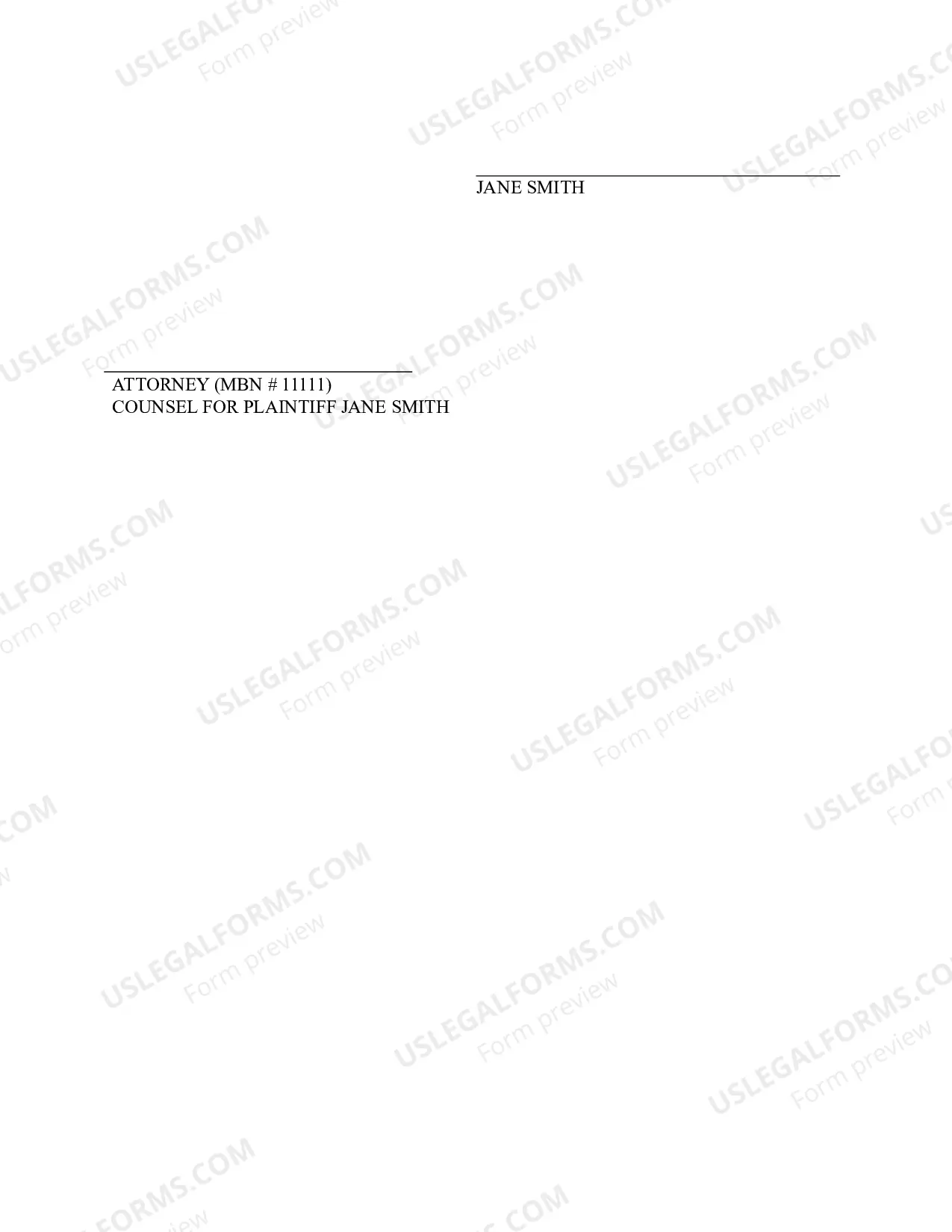
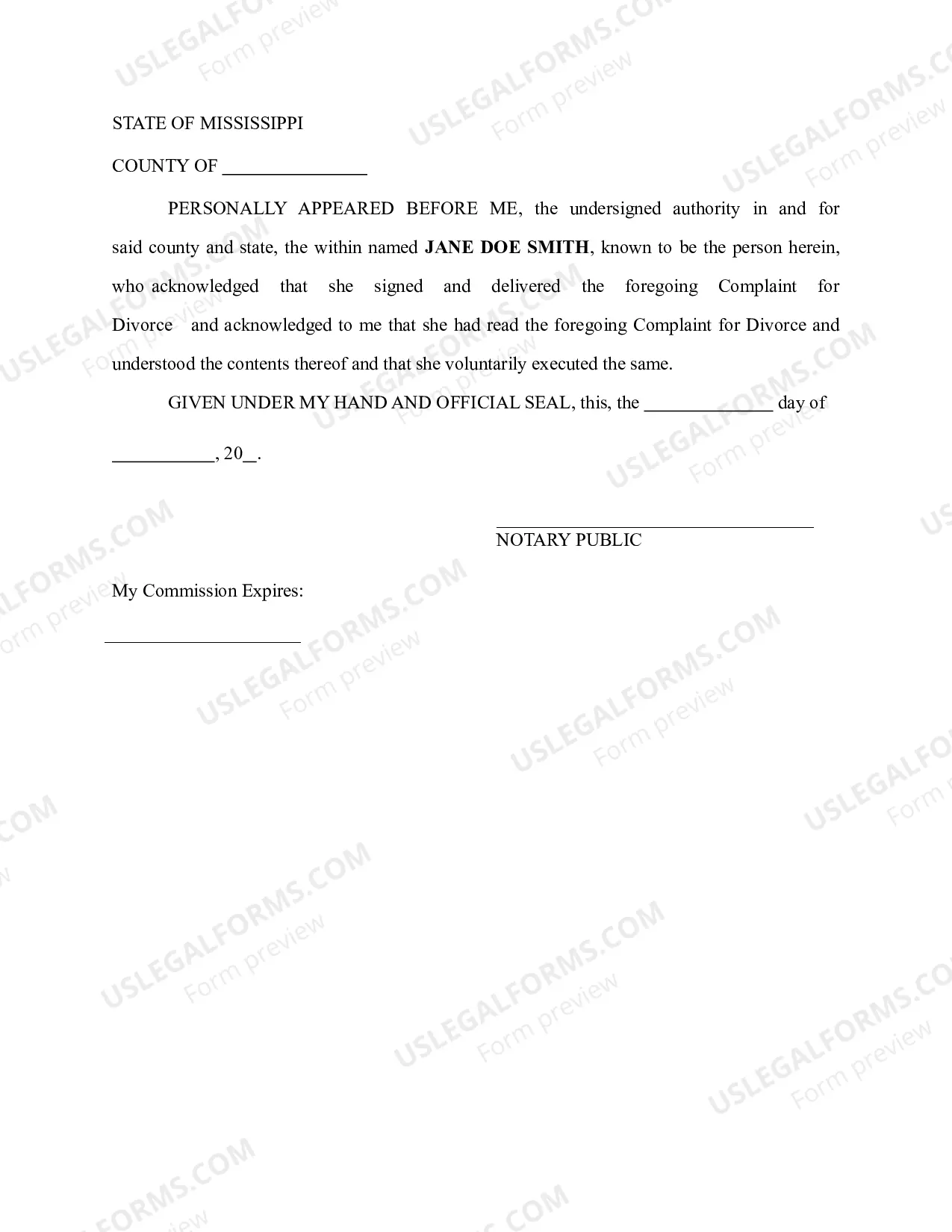
- Signature and notarization section to verify the authenticity of the complaint.
Situations where this form applies
This form should be used when one spouse is seeking a divorce from a partner who has been committed to a psychiatric facility. It is particularly relevant in circumstances where the mental health issues of the defendant have significantly impacted the marriage, such as when one spouse was unaware of the other's psychiatric condition before marriage.
Who needs this form
- Individuals residing in Hinds County, Mississippi, seeking a divorce from a spouse receiving psychiatric care.
- Parties who were married but are now separated due to mental health issues impacting their ability to live together.
- Individuals who wish to formally end their marriage and return to their maiden name.
Completing this form step by step
- Identify the parties: Clearly state the names of the plaintiff and defendant, including their current addresses and background.
- Outline the marriage details: Include information about when and where the marriage took place and the date of separation.
- Describe the grounds for divorce: Provide details regarding the defendantâs psychiatric condition and how it affects the marriage.
- Complete the prayer for relief: Specify the desired outcome, including divorce and name change.
- Sign and date the form: Ensure that all required signatures are completed and the document is notarized.
Notarization requirements for this form
Yes, this form must be notarized to be legally valid. US Legal Forms offers integrated online notarization services available 24/7, ensuring secure video calls with licensed notaries from the comfort of your home.
Get your form ready online
Our built-in tools help you complete, sign, share, and store your documents in one place.
Make edits, fill in missing information, and update formatting in US Legal Forms—just like you would in MS Word.
Download a copy, print it, send it by email, or mail it via USPS—whatever works best for your next step.
Sign and collect signatures with our SignNow integration. Send to multiple recipients, set reminders, and more. Go Premium to unlock E-Sign.
If this form requires notarization, complete it online through a secure video call—no need to meet a notary in person or wait for an appointment.
We protect your documents and personal data by following strict security and privacy standards.

Make edits, fill in missing information, and update formatting in US Legal Forms—just like you would in MS Word.

Download a copy, print it, send it by email, or mail it via USPS—whatever works best for your next step.

Sign and collect signatures with our SignNow integration. Send to multiple recipients, set reminders, and more. Go Premium to unlock E-Sign.

If this form requires notarization, complete it online through a secure video call—no need to meet a notary in person or wait for an appointment.

We protect your documents and personal data by following strict security and privacy standards.
Common mistakes to avoid
- Failure to provide accurate identification of both parties.
- Not including sufficient details regarding the psychiatric condition of the defendant.
- Skipping notarization or failing to sign the form in front of a notary public.
- Missing out on specifying the grounds for divorce clearly in the document.
Benefits of using this form online
- Convenient access to the form allows for easy downloading and customization according to individual needs.
- Provides a reliable template drafted by licensed attorneys, ensuring compliance with legal standards.
- Editable format lets users fill in their specific details without needing extensive legal knowledge.
Quick recap
- This form is essential for divorcing a spouse who is receiving psychiatric care.
- Completing the form accurately can significantly affect the outcome of the divorce process.
- Notarization is required to validate the Complaint for Divorce.
Looking for another form?
Form popularity
FAQ
Yes, Mississippi is one of the few states where a husband or wife can file suit for Alienation of Affection against their spouse's lover. Alienation of Affection is a civil lawsuit where the ?other man or woman? can be held liable for actual and punitive money damages.
Your spouse's mental condition will not prevent you from obtaining a divorce, but it can certainly slow down the process. If your spouse has a debilitating mental health issue, the judge may appoint a guardian ad litem to represent them to ensure that the ill spouse's legal interests are represented.
People with mental illness are responsible for their own treatment and well being, so don't be their ?crutch.? However, you still want to be supportive and offer comfort when your partner is recovering from distressing symptoms or getting treatment.
Mental illness, such as anxiety, depression, OCD, and addiction disorders can impact all aspects of life, and marriage is no exception. In many states a spouse can seek a divorce on the grounds of the other spouse's mental illness. Mental health can factor into custody and alimony decisions as well.
Sadly, one of those reasons is when the other spouse suffers from mental illness. Studies have shown that people who suffer from mental illness have a higher rate of divorce. One study that was conducted in 2011 actually put that divorce rate increase at between 20 to 80 percent.
Habitual cruel and inhuman treatment, the most common fault ground, is conduct that endangers life, limb, or health, or creates a reasonable apprehension of such danger. It also applies to conduct of such unnatural or infamous nature to make the marital relationship revolting to the innocent spouse.
When it comes to divorce, mental illness can be a complicating factor. During divorce proceedings, mental health conditions or other health concerns may affect decisions concerning child custody, financial support, and other issues that must be resolved before your marriage can be legally dissolved.
Some mental illnesses commonly associated with increased divorce rates include bipolar disorder, major depressive disorder, anxiety disorders, personality disorders, and substance use disorders.