Mississippi Separate Answer and Defenses to Amened Complaint
Understanding this form
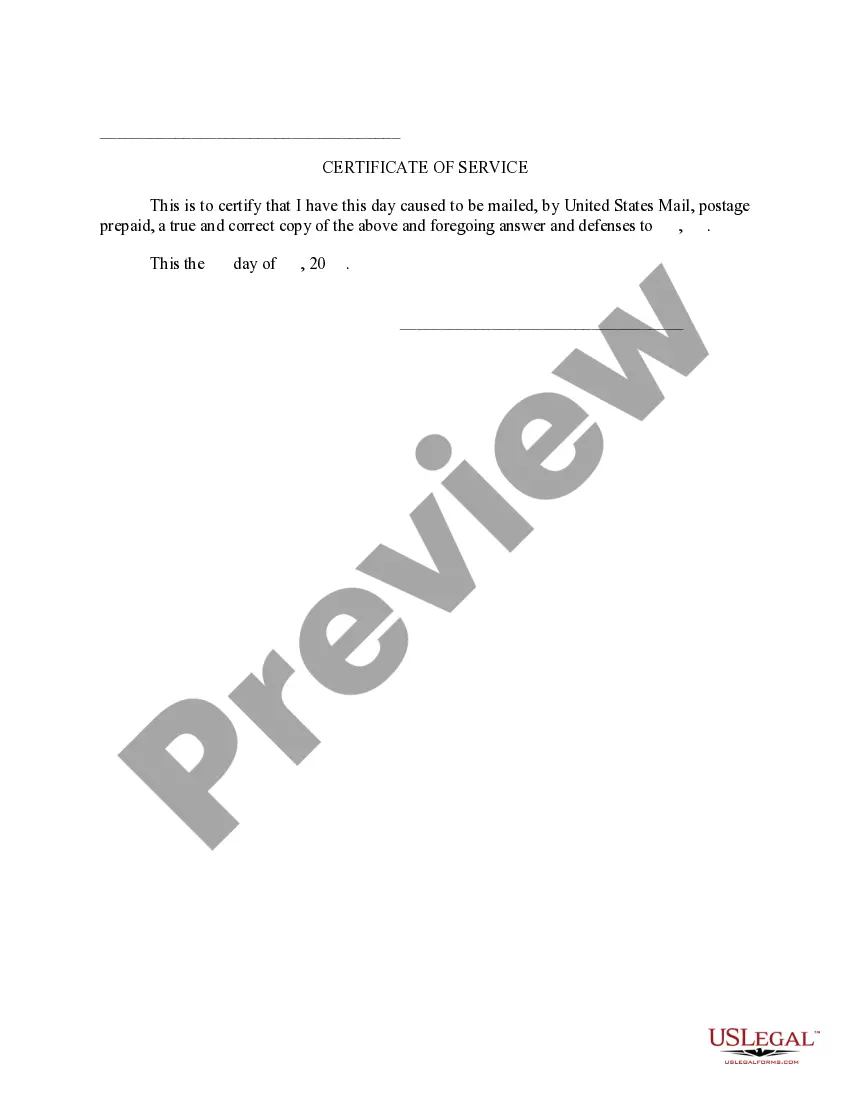
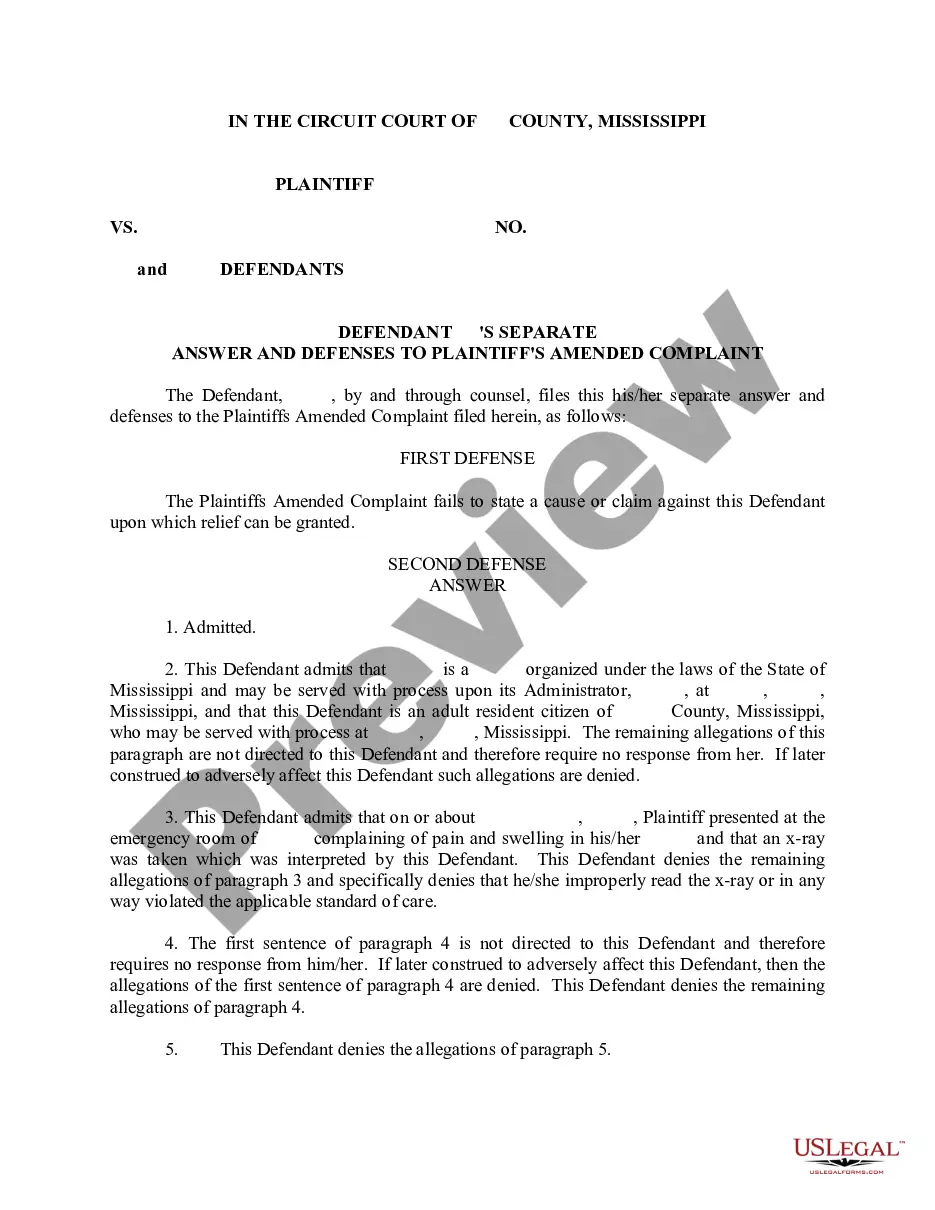
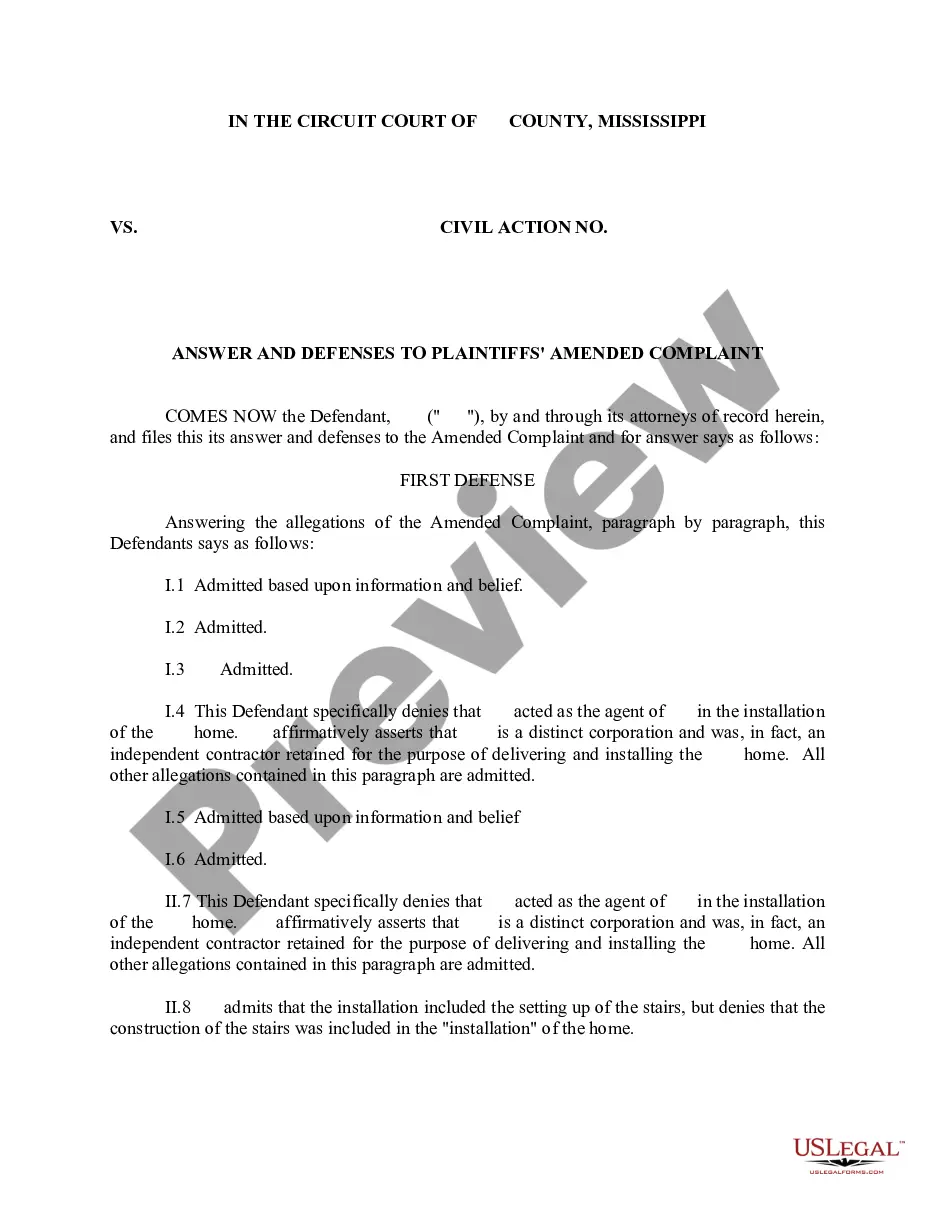
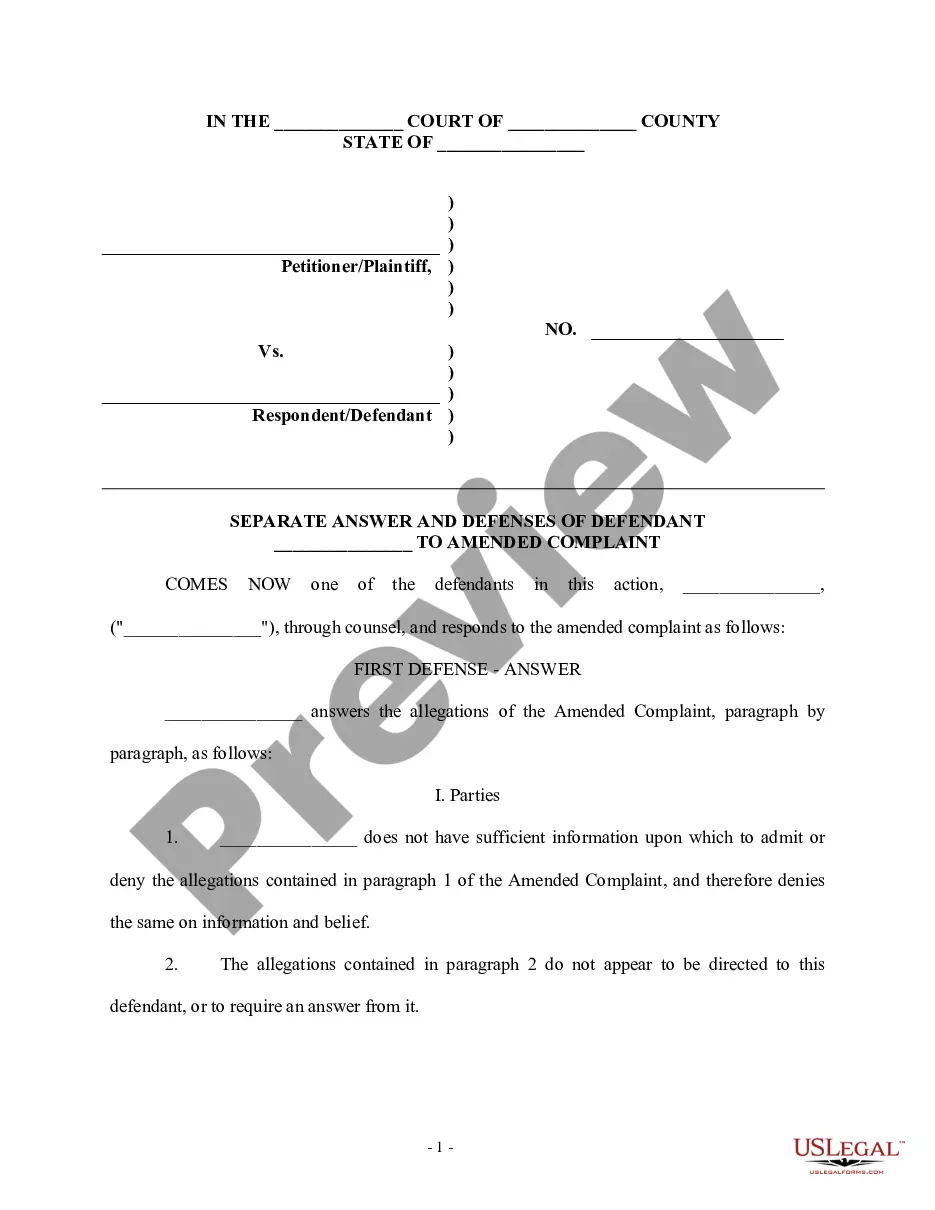
The Separate Answer and Defenses to Amended Complaint is a legal document filed by a defendant in response to an amended complaint in a civil lawsuit. This form specifically addresses cases involving negligence related to the construction of stairs and wrongful death claims. It allows the defendant to provide a formal answer to each allegation and present specific defenses, distinguishing it from other legal forms that may not allow for such detailed responses.
Main sections of this form
- Identification of the parties involved in the legal action.
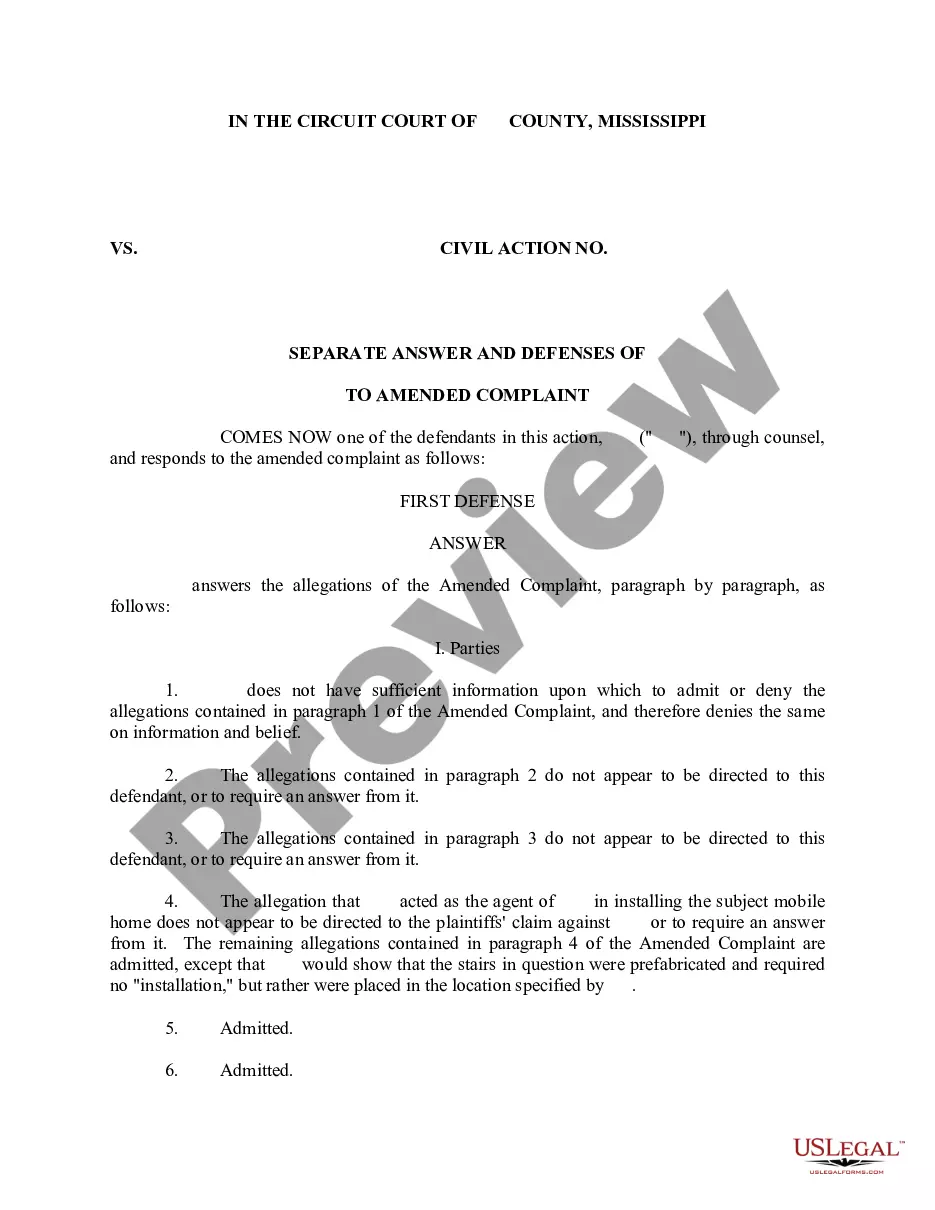
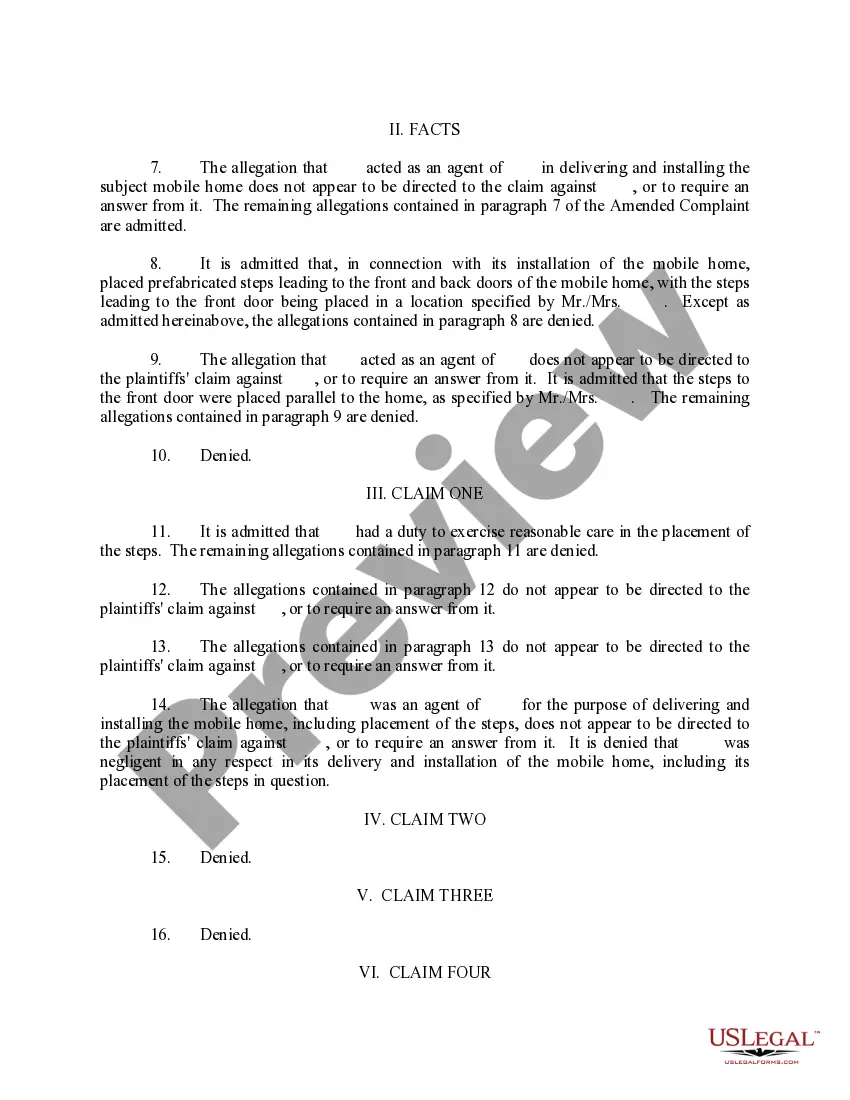
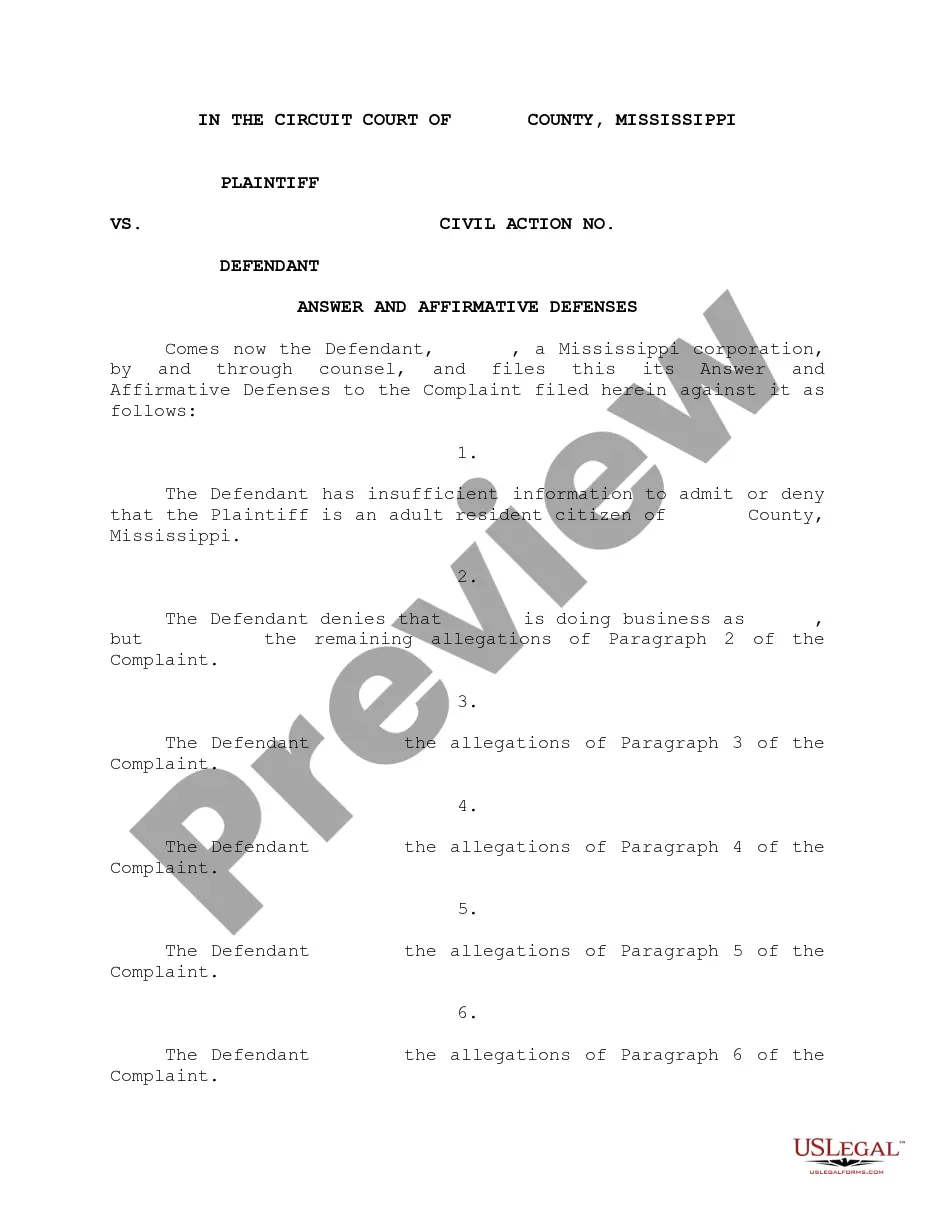
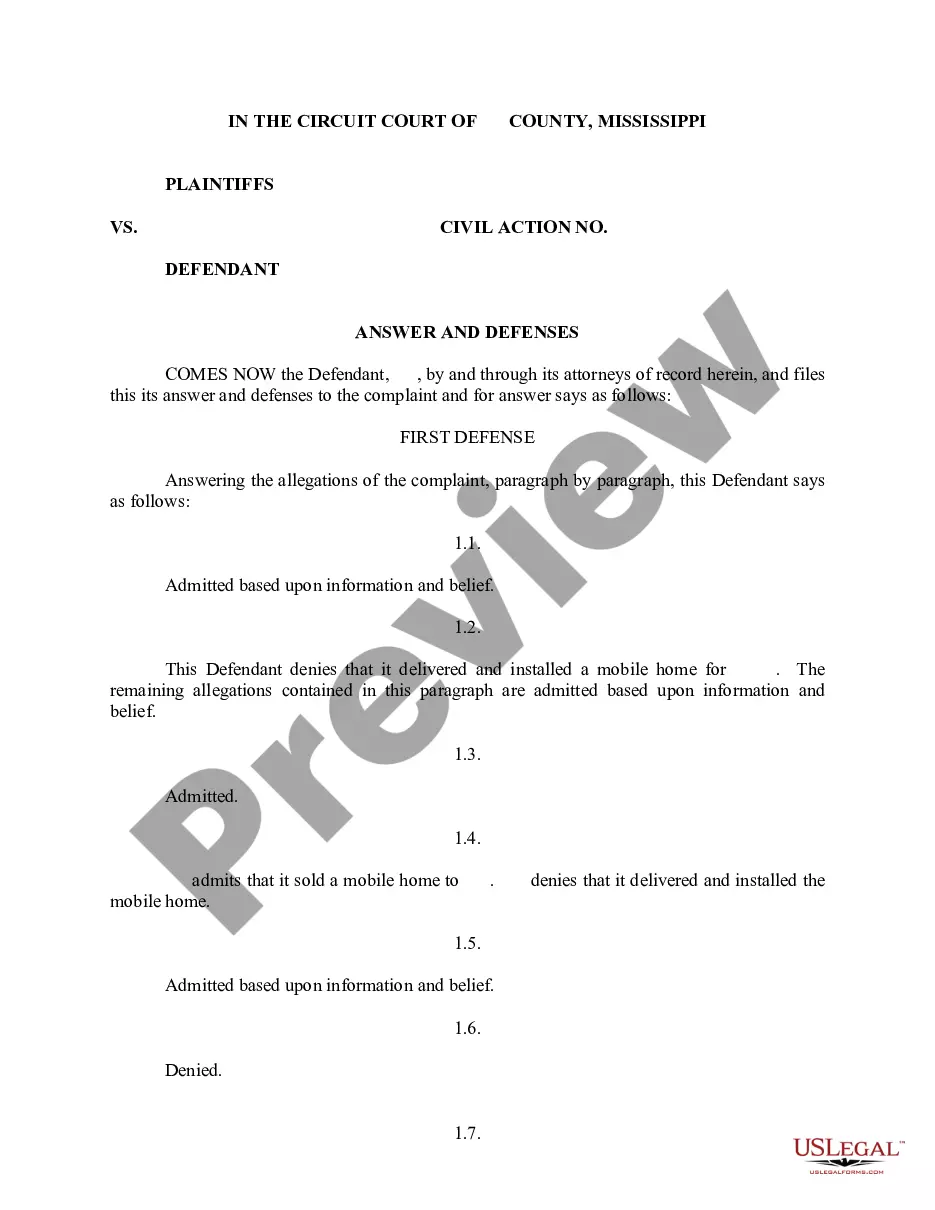
- Detailed responses to each allegation in the amended complaint.
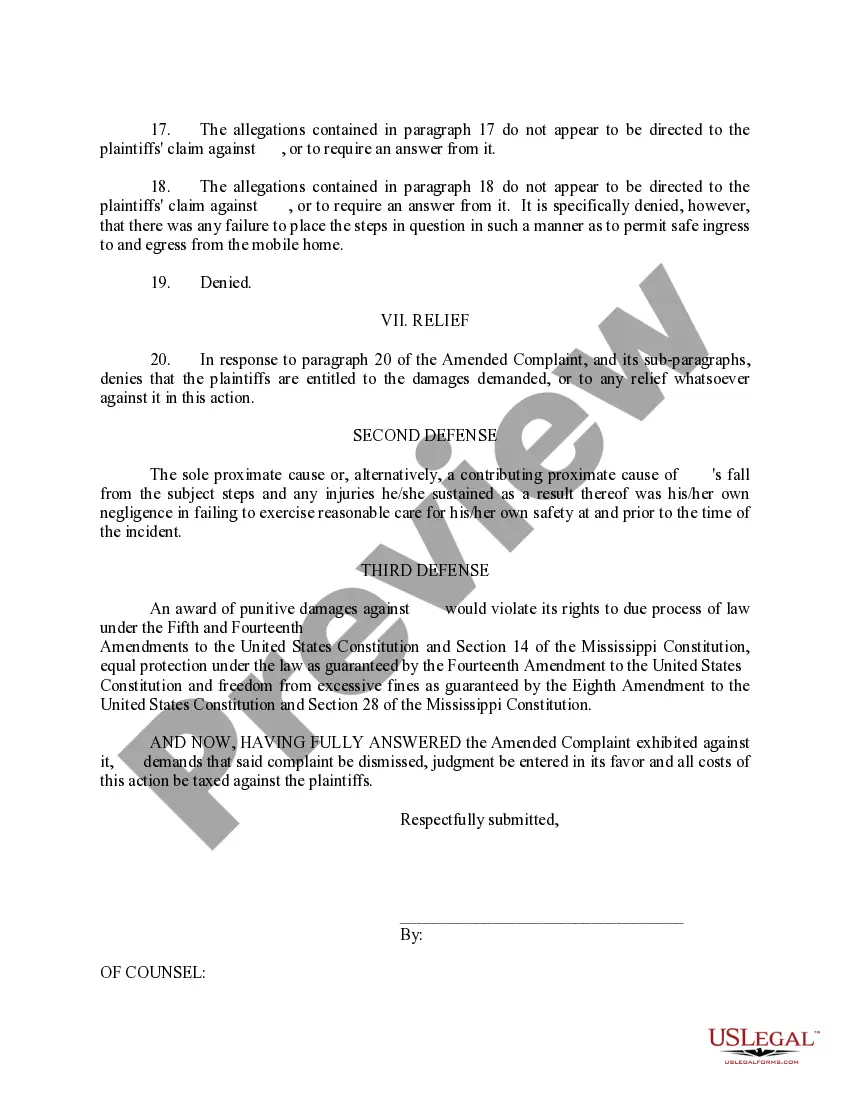
- Specific defenses raised by the defendant, including claims of the plaintiff's negligence.
- A declaration that any punitive damages sought would violate due process rights.
- Request for the complaint to be dismissed and costs taxed against the plaintiffs.
Common use cases
This form should be used when a defendant needs to formally respond to an amended complaint in a civil negligence lawsuit, especially when the case involves claims of wrongful death due to unsafe construction practices. It is appropriate when the defendant intends to dispute the allegations and assert defenses based on the events surrounding the case.
Who this form is for
- Defendants named in an amended complaint related to negligence and wrongful death.
- Legal representatives or attorneys acting on behalf of defendants.
- Individuals seeking to dispute allegations made in a civil lawsuit.
How to complete this form
- Identify all parties involved in the complaint, clearly stating the defendant's name.
- Respond to each paragraph of the amended complaint, indicating whether you admit, deny, or lack sufficient information to respond.
- Outline your defenses, citing specific instances of negligence or procedural issues.
- Review the completed response for accuracy and completeness.
- Organize the document for submission, ensuring all required signatures and dates are included.
Notarization guidance
This form does not typically require notarization unless specified by local law. It's always advisable to check with the local court for any specific requirements regarding notarization.
Get your form ready online
Our built-in tools help you complete, sign, share, and store your documents in one place.
Make edits, fill in missing information, and update formatting in US Legal Forms—just like you would in MS Word.
Download a copy, print it, send it by email, or mail it via USPS—whatever works best for your next step.
Sign and collect signatures with our SignNow integration. Send to multiple recipients, set reminders, and more. Go Premium to unlock E-Sign.
If this form requires notarization, complete it online through a secure video call—no need to meet a notary in person or wait for an appointment.
We protect your documents and personal data by following strict security and privacy standards.

Make edits, fill in missing information, and update formatting in US Legal Forms—just like you would in MS Word.

Download a copy, print it, send it by email, or mail it via USPS—whatever works best for your next step.

Sign and collect signatures with our SignNow integration. Send to multiple recipients, set reminders, and more. Go Premium to unlock E-Sign.

If this form requires notarization, complete it online through a secure video call—no need to meet a notary in person or wait for an appointment.

We protect your documents and personal data by following strict security and privacy standards.
Mistakes to watch out for
- Failing to respond to every allegation in the amended complaint.
- Using vague language that does not clearly admit or deny allegations.
- Neglecting to include all necessary signatures and dates before submission.
- Overlooking state-specific formatting requirements.
Benefits of completing this form online
- Easy access to downloadable templates for immediate use.
- Editable formats available (Word and Rich Text) for customization.
- Time-saving options to prevent delays in legal proceedings.
- Reliability of forms drafted by licensed attorneys, ensuring legal compliance.
Legal use & context
- This form is legally binding as a response to an amended complaint in civil litigation.
- Failure to file a timely answer may result in a default judgment against the defendant.
- It provides a framework for defendants to assert their defenses and clarify their positions legally.
Looking for another form?

Form popularity
FAQ
The defendant shall answer the amendments, or the complaint as amended, within 30 days after service thereof, or such other time as the court may direct, and judgment by default may be entered upon failure to answer, as in other cases.
2000) (Because a motion to dismiss for failure to state a claim is not a 'responsive pleading,' a plaintiff may amend the complaint once without leave, even during the pendency of a motion to dismiss, if the defendant has not yet served an answer.)
Four fundamental rules of pleading are; (1) Pleadings should state facts and not law; (2) The facts stated in pleadings should be material facts; (3) Pleadings should not state the evidence; and (4) The facts in pleadings should be stated in a concise form.
The court should freely give leave when justice so requires. (3) Time to Respond. Unless the court orders otherwise, any required response to an amended pleading must be made within the time remaining to respond to the original pleading or within 14 days after service of the amended pleading, whichever is later.
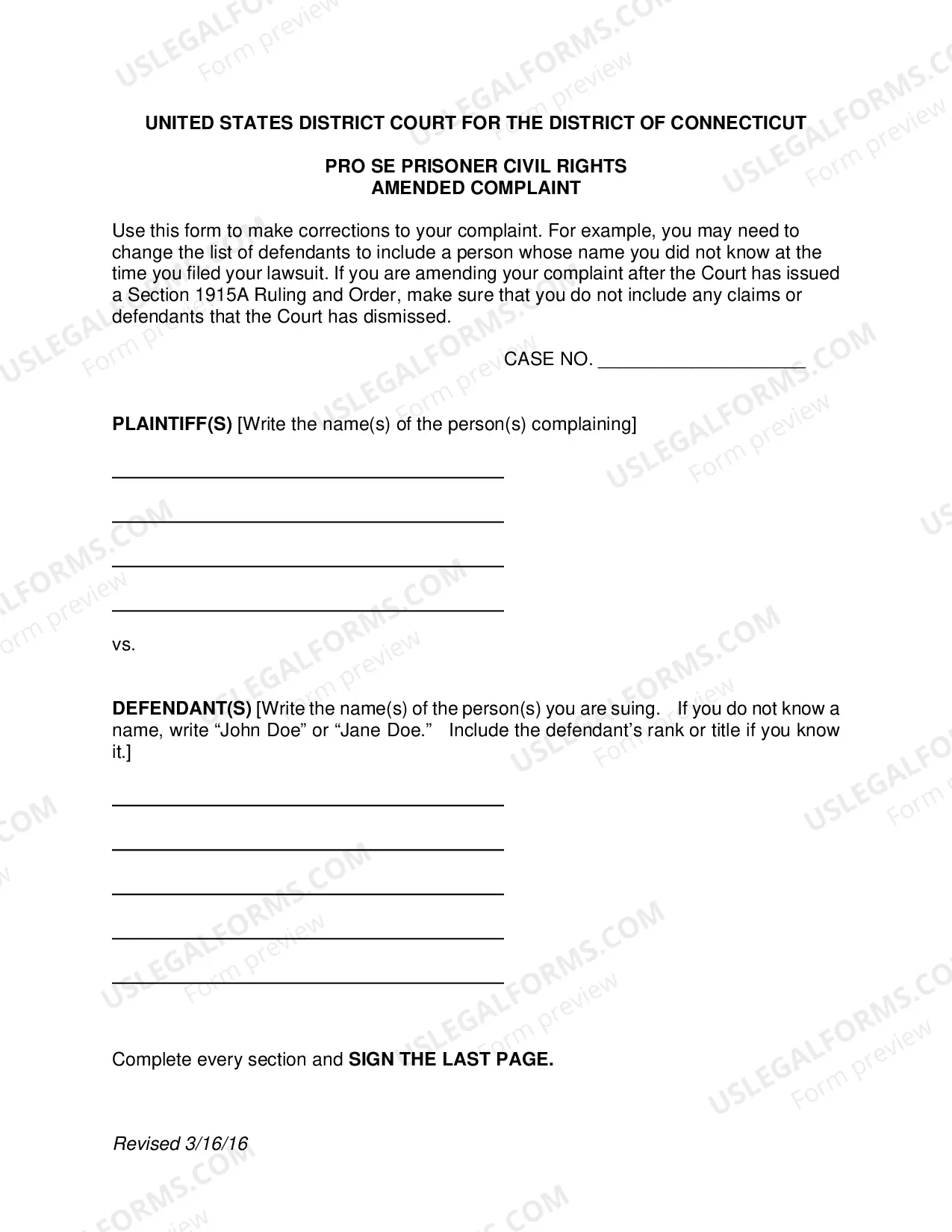
7. Ifyou have not added new defendants in your amended complaint, you must serve the amended complaint on the defendant who has not yet been properly served. If you have added new defendants, the Court will issue an amended summons which must be served with the amended complaint.
Following the admissions and denials, the answer outlines any affirmative defenses available to the defendant. Affirmative defenses, which are grounded in SUBSTANTIVE LAW, state that an allegation may or may not be true, but that even if it is true, the law provides a legal defense that defeats the plaintiff's claim.
Once a defendant has answered, a first amended complaint can only be filed and served with leave of court. If the plaintiff did not get the court's permission, it is not deemed a valid first amended complaint.
The defendant may also raise counterclaims or affirmative defenses. If a defendant does raise counterclaims in her answer, the plaintiff must respond to those counterclaims with a pleading called an "answer to a counterclaim." The form and content of an "answer to a counterclaim" is similar to that of an answer.
Amended complaint. n. what results when the party suing (plaintiff or petitioner) changes the complaint he/she has filed. It must be in writing, and can be done before the complaint is served on any defendant, by agreement between the parties (usually their lawyers), or upon order of the court.