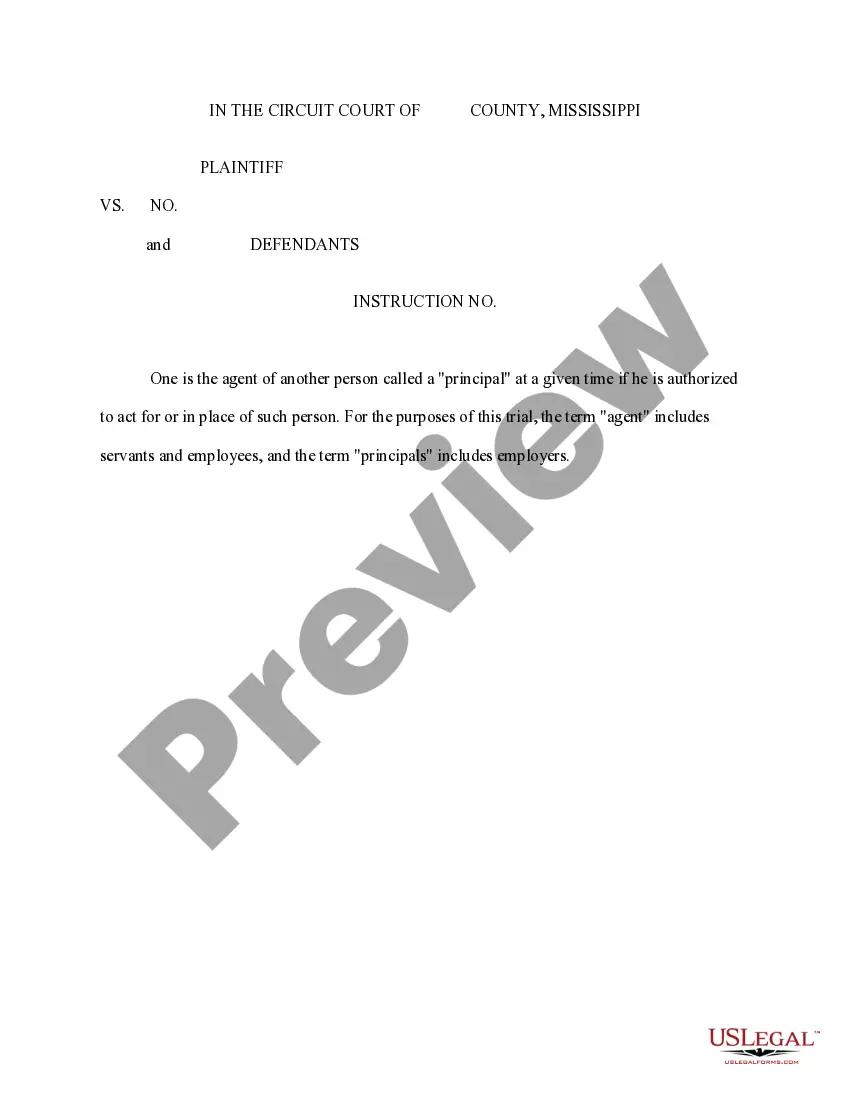
Mississippi Jury Instruction - Agent or Principal Liability Instruction
What this document covers
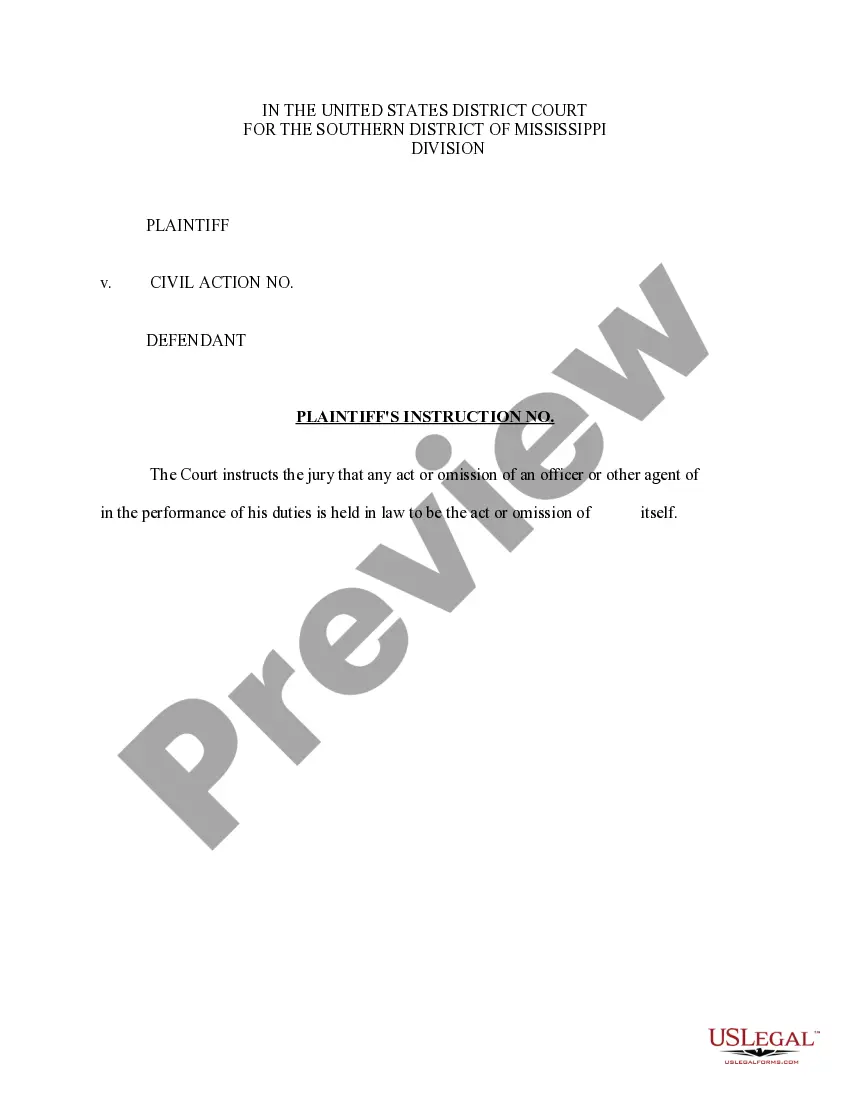
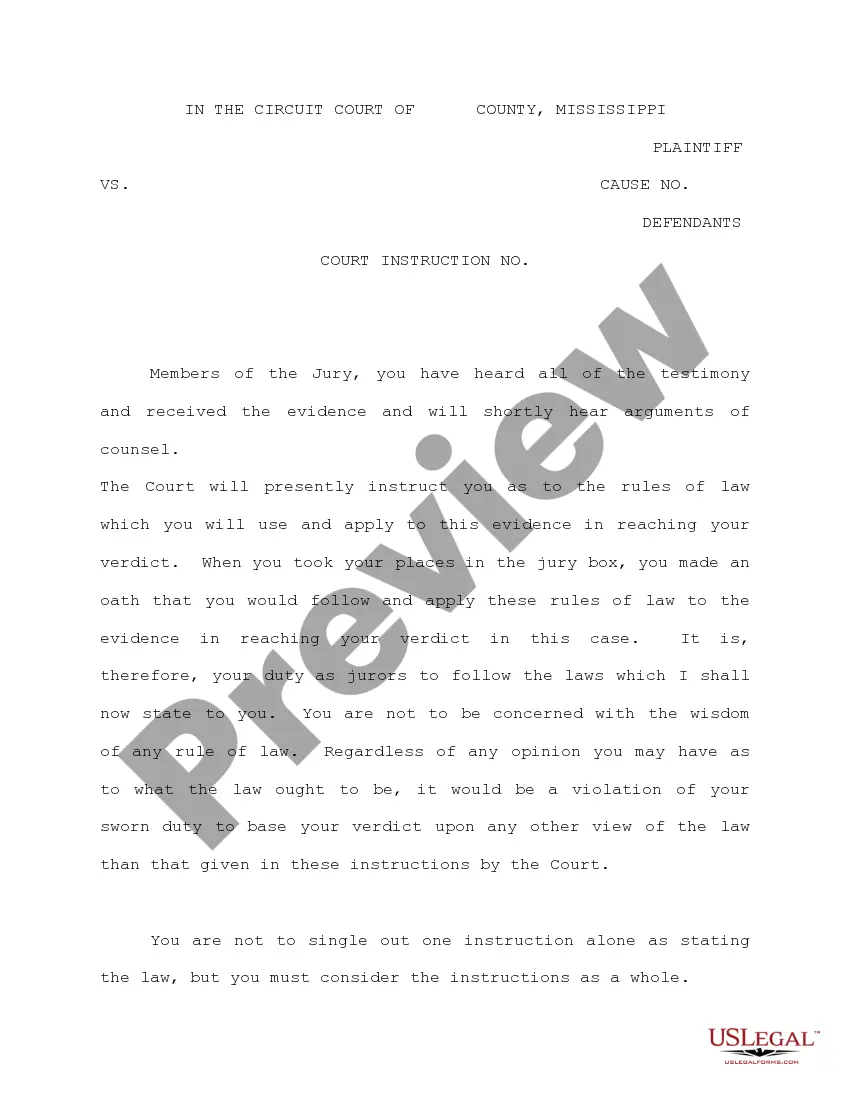
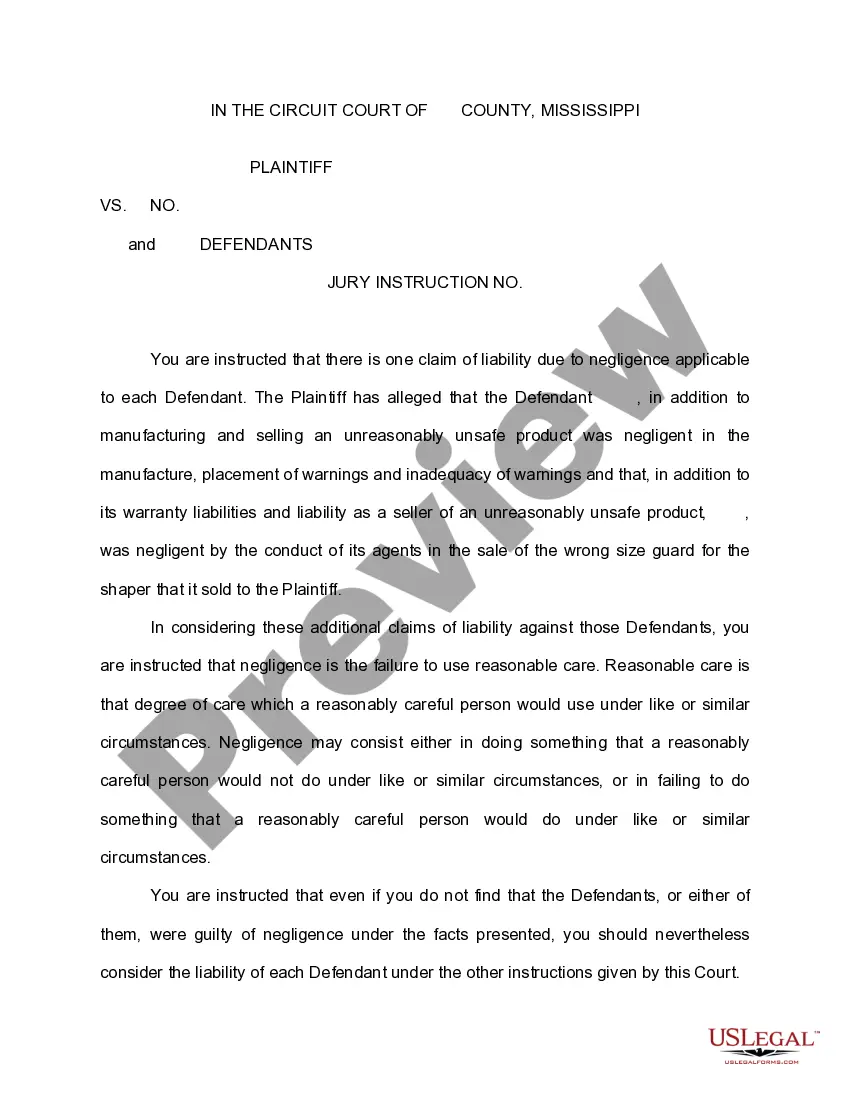
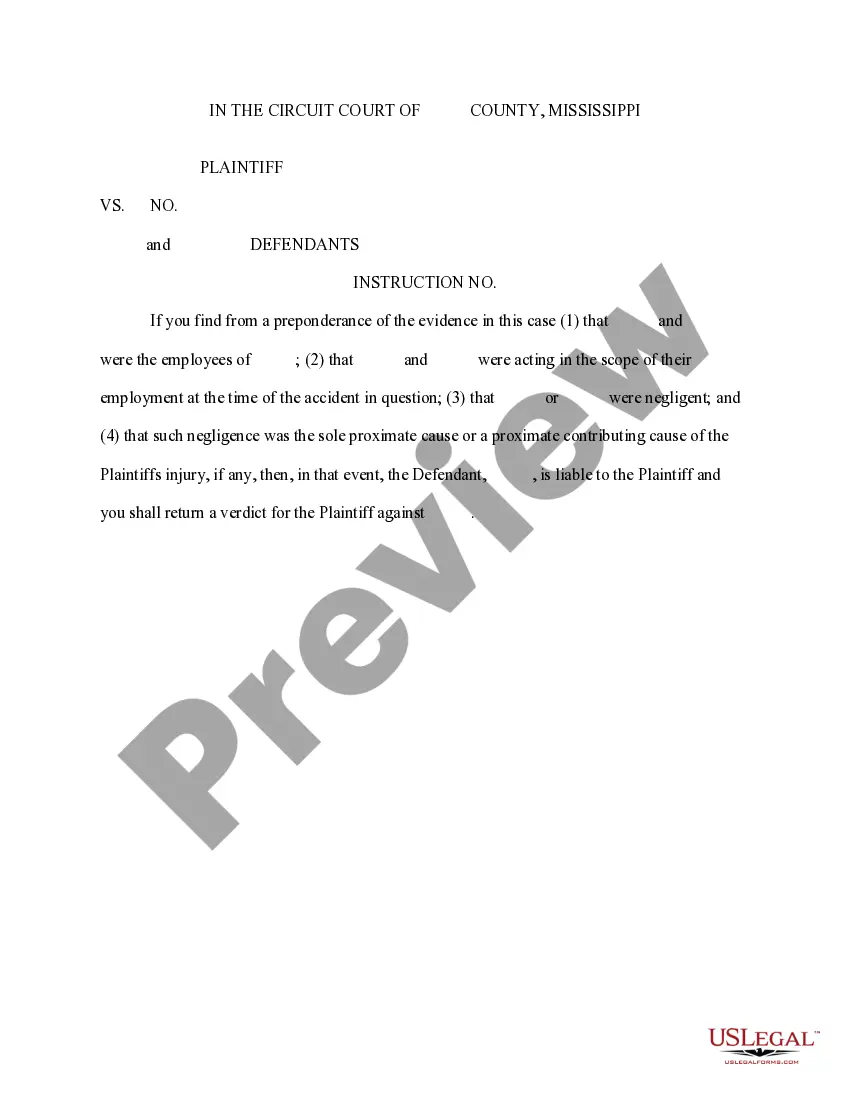
The Jury Instruction - Agent or Principal Liability Instruction is a legal document used in Mississippi courts to guide juries on evaluating cases involving the liability of agents and principals. This form provides sample language for jury instructions, helping jurors understand how to apply the law to the facts presented in a case. It is important to note that while this form serves as a template, it should be reviewed for compliance with current case law and specific legal standards in Mississippi.
What’s included in this form
- Introduction outlining the purpose of the instruction
- Definitions of key terms related to agent and principal relationships
- Guidelines for establishing liability in agent-principal situations
- Criteria for jurors to consider when assessing the evidence
- Concluding statements to guide jurors in their deliberation

When this form is needed
This jury instruction form should be used during trials where the court needs to clarify the legal responsibilities and liabilities of agents and principals to the jury. It is relevant in cases involving agency relationships, such as employment, contracts, or property management, where the actions of one party may impact the obligations of another.
Who needs this form
- Attorneys representing parties involved in litigations concerning agency relationships
- Judges presiding over trials requiring clear jury instructions
- Court clerks or legal assistants preparing jury instruction templates
Steps to complete this form
- Review the sample language for clarity and relevance to your case.
- Modify any sections as necessary to fit the legal context of the case.
- Ensure all legal terminology accurately reflects the applicable laws in Mississippi.
- Present the completed instruction to the judge for approval.
- Provide copies to jurors as instructed by the court.
Does this document require notarization?
In most cases, this form does not require notarization. However, some jurisdictions or signing circumstances might. US Legal Forms offers online notarization powered by Notarize, accessible 24/7 for a quick, remote process.
Get your form ready online
Our built-in tools help you complete, sign, share, and store your documents in one place.
Make edits, fill in missing information, and update formatting in US Legal Forms—just like you would in MS Word.
Download a copy, print it, send it by email, or mail it via USPS—whatever works best for your next step.
Sign and collect signatures with our SignNow integration. Send to multiple recipients, set reminders, and more. Go Premium to unlock E-Sign.
If this form requires notarization, complete it online through a secure video call—no need to meet a notary in person or wait for an appointment.
We protect your documents and personal data by following strict security and privacy standards.

Make edits, fill in missing information, and update formatting in US Legal Forms—just like you would in MS Word.

Download a copy, print it, send it by email, or mail it via USPS—whatever works best for your next step.

Sign and collect signatures with our SignNow integration. Send to multiple recipients, set reminders, and more. Go Premium to unlock E-Sign.

If this form requires notarization, complete it online through a secure video call—no need to meet a notary in person or wait for an appointment.

We protect your documents and personal data by following strict security and privacy standards.
Typical mistakes to avoid
- Failing to update the form to reflect recent changes in case law
- Using vague language that may confuse jurors
- Overlooking critical definitions or criteria outlined in the instruction
Advantages of online completion
- Immediate access to professionally drafted legal language
- Ability to customize the form based on specific case details
- Secure storage and downloading, ensuring confidentiality
Legal use & context
- This jury instruction may be used as a guideline to ensure that jurors understand their duties regarding agent and principal liability.
- It serves to clarify legal nuances that are critical for fair deliberation by a jury.
- Proper usage of this form enhances the legal accuracy of proceedings in Mississippi courts.
Summary of main points
- The Jury Instruction - Agent or Principal Liability Instruction provides essential guidelines for jurors in Mississippi.
- It is important to customize and verify the form according to current legal standards.
- Using this form can help clarify complex legal relationships for jurors, improving the trial process.
Looking for another form?
Form popularity
FAQ
Sixteen-year-old William Haymon has spent more than 500 days in an adult jail in rural Lexington, Mississippi. There are no state rules governing how long a person can be incarcerated without being formally charged with a crime.
Every person arrested on a felony charge in Mississippi has a right to an initial appearance before a judge within 48 hours, unless the defendant has been indicted by a grand jury or is released from custody prior to the initial appearance occurring.
A principal, according to ASU 2016-08, is the company that is providing the good or service to the customer, and an agent is the company arranging for the good or service to be provided to the customer. An agent acts on behalf of the principal and normally will receive a commission for its services.
Slavery refers to a condition in which individuals are owned by others, who control where they live and at what they work. Slavery had previously existed throughout history, in many times and most places. The ancient Greeks, the Romans, Incas and Aztecs all had slaves.
The criminal statute of limitations requires prosecutors to file criminal charges against a suspect within two years for misdemeanors and within five years for certain felonies, but there is no time limit in Mississippi for charges of murder, kidnapping, rape, burglary, robbery, larceny, and several other serious
The principal-agent relationship is an arrangement in which one entity legally appoints another to act on its behalf. In a principal-agent relationship, the agent acts on behalf of the principal and should not have a conflict of interest in carrying out the act.
An Agency relationship is: fffd The fiduciary relation which results from the manifestation of consent by one person to another that the other person shall act in his behalf and is subject to his control; and consent by the other so to act.
The general rule is that the principal is liable to the third party for any act done by the agent which falls within the agent's authority.
A principal is responsible for the tortious acts of an agent done within the Scope of Employment. This is pursuant to a doctrine known as "respondeat superior".