Mississippi Order Returning Minor to Custody of Treatment Facility
What is this form?
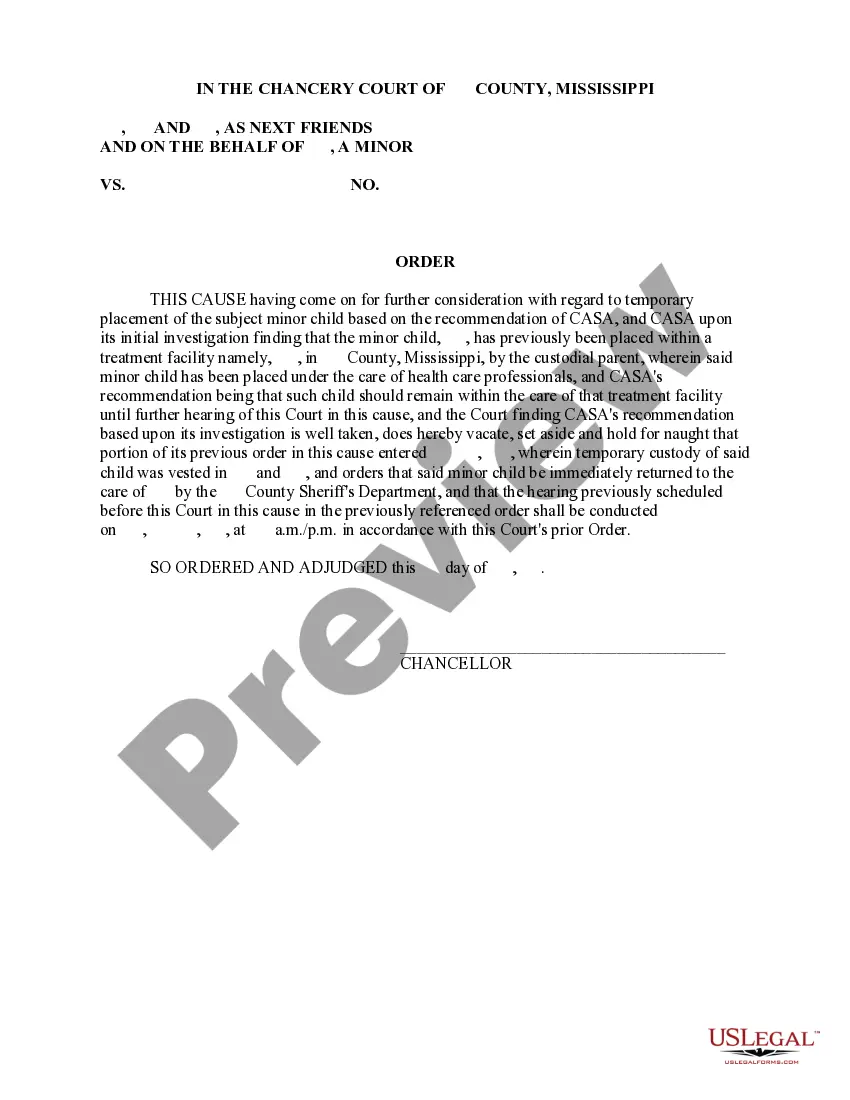
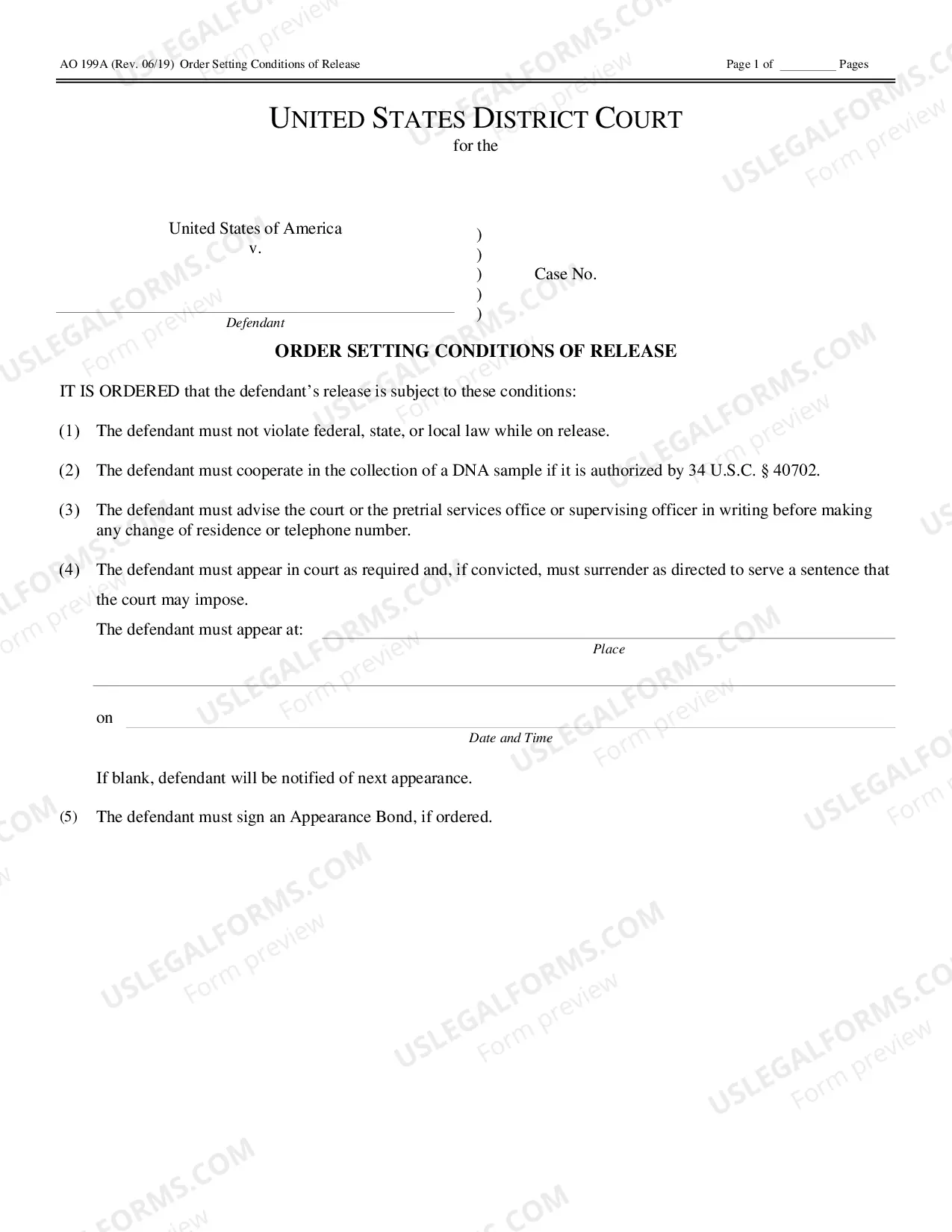
The Order Returning Minor to Custody of Treatment Facility is a legal document issued by the court. It formalizes the decision to return a minor child to a designated treatment facility. This order is different from other custody forms as it specifically addresses situations where a child has been temporarily placed under care due to health or behavioral concerns. It is crucial in ensuring the child's continued welfare while legal proceedings are pending.
Form components explained
- Case information, including names of the parties involved and case number.
- The judge's order detailing the return of the minor to the treatment facility.
- Findings and recommendations from the court-appointed special advocate (CASA).
- Directions for law enforcement to assist in the return of the minor.
- Date and signature fields for the judge.

When this form is needed
This form is typically used when a court determines it is in the best interest of a minor child to remain in a treatment facility due to health or behavioral issues. It may be necessary after a prior ruling temporarily placed the child with a different guardian or during ongoing custody proceedings. This order is essential for ensuring compliance with the judge's directives concerning the child's care.
Who needs this form
- Parents or legal guardians of the minor child.
- Attorneys representing the parties involved in custody disputes.
- Court-appointed advocates working with the child.
- Social workers or representatives from treatment facilities concerned with the child's placement.
How to prepare this document
- Fill in the names of the parties involved in the case, including the minor child.
- Specify the treatment facility name and location where the child is currently placed.
- Include the date of any prior orders that are being vacated.
- Detail the recommendations from CASA and the court's findings supporting this order.
- Have the judge sign and date the document to finalize the order.
Notarization guidance
This form does not typically require notarization unless specified by local law. Ensure you check any local requirements that may apply to your case.
Get your form ready online
Our built-in tools help you complete, sign, share, and store your documents in one place.
Make edits, fill in missing information, and update formatting in US Legal Forms—just like you would in MS Word.
Download a copy, print it, send it by email, or mail it via USPS—whatever works best for your next step.
Sign and collect signatures with our SignNow integration. Send to multiple recipients, set reminders, and more. Go Premium to unlock E-Sign.
If this form requires notarization, complete it online through a secure video call—no need to meet a notary in person or wait for an appointment.
We protect your documents and personal data by following strict security and privacy standards.

Make edits, fill in missing information, and update formatting in US Legal Forms—just like you would in MS Word.

Download a copy, print it, send it by email, or mail it via USPS—whatever works best for your next step.

Sign and collect signatures with our SignNow integration. Send to multiple recipients, set reminders, and more. Go Premium to unlock E-Sign.

If this form requires notarization, complete it online through a secure video call—no need to meet a notary in person or wait for an appointment.

We protect your documents and personal data by following strict security and privacy standards.
Avoid these common issues
- Failing to include complete names and details of all parties involved.
- Not updating the case number or dates as required.
- Leaving out the signature of the judge, which is necessary for validity.
- Omitting important recommendations from CASA that support the order.
Why complete this form online
- Convenient access to the form at any time, allowing for immediate downloads.
- Editability enables users to customize the document to fit their specific situation.
- Reliability, as the templates are drafted and reviewed by licensed attorneys to ensure compliance with legal standards.
Looking for another form?

Form popularity
FAQ
File an answer. The most common way to respond to a complaint is by filing an answer. Negotiate. Being served with a lawsuit does not automatically mean you need to appear in court. Request more information from the plaintiff. Cross-complain. File a motion to dismiss.
Listen to Your Lawyer. Eric Audras/Getty Images. Be Aware of the Evaluator's Role. The evaluator is an independent expert. Be Honest. Be completely honest. Prepare for Your Meeting. Make a Good Impression. Have a Positive Attitude. Stick to Parenting Issues. Cooperate.
To get back custody, you'll need to convince a judge that it's now in your child's best interest to be in your care. You'll need strong supporting evidence, because courts don't like to disrupt a child's stable routine.
If you and the other parent cannot reach an agreement in regards to child custody, you may have to go to court. When this happens, the judge will weigh the most important factor in your child custody decision: the best interests of your children.
All communication with your child's other parent, such as emails, text messages, voicemails, and letters. Journals. Photographs. Videos. Audio Recordings. Schedules including any times your child's other parent had to cancel or reschedule visitation.
Fill out your court forms. Have your forms reviewed. Make at least 2 copies of all your forms. File your forms with the court clerk. Serve your papers on the other parent. File your Proof of Service. Go to your court hearing.
You can file an answer or a general denial. Filing an answer. You can file a motion In certain situations, you can respond to the lawsuit by filing a motion (a request) that usually tells the court that the plaintiff made a mistake in the lawsuit. Talk to a lawyer!
Has one parent been the primary caretaker, or have the parents shared the responsibility? What is the mental and physical health status of the parents? Will the child be in a stable home environment?
Evidence of parenting ability: Courts look for evidence that the parent requesting custody is genuinely able to meet the child's physical and emotional needs, including food, shelter, clothing, medical care, education, emotional support, and parental guidance.