Mississippi Child's Preference
About this form
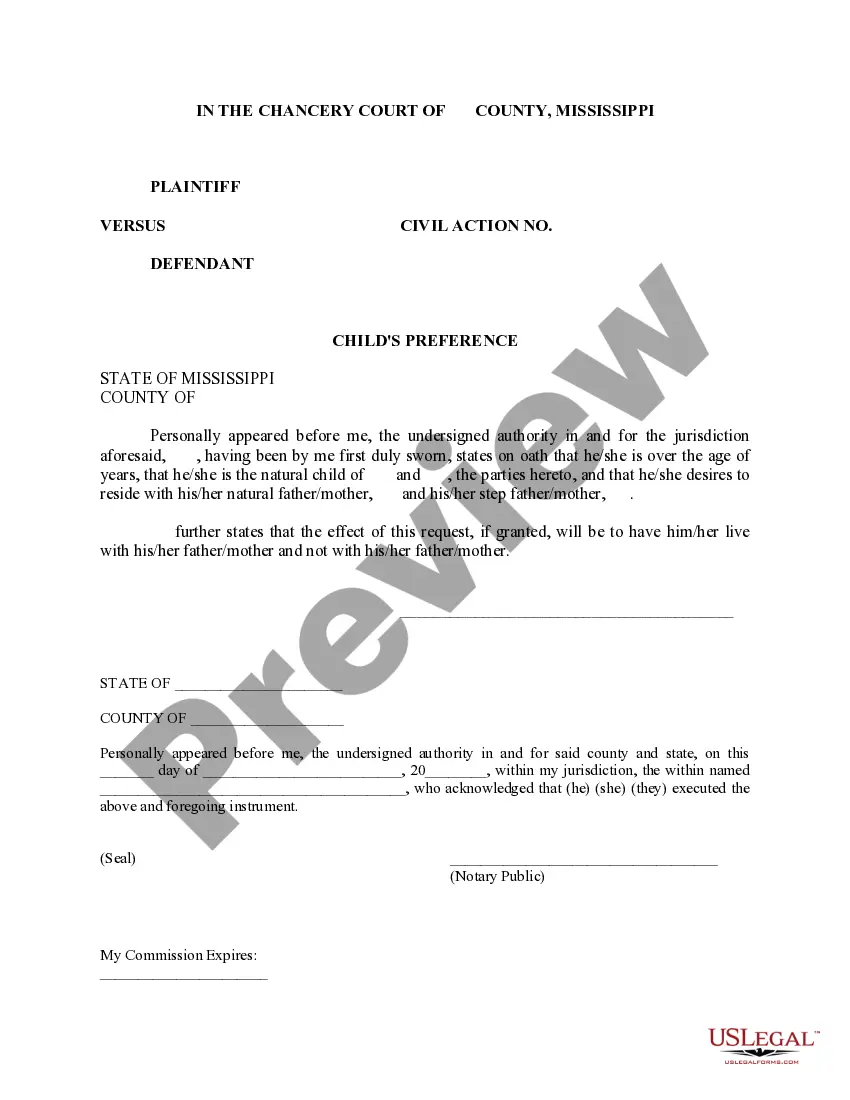
The Child's Preference form is a legal document used in divorce proceedings to express a minor child's wish regarding their residence. This form allows a child, of appropriate age, to declare their desire to live with a specific parent. Unlike other custody forms, this document specifically focuses on the child's perspective and preference in the custody arrangement, emphasizing the child's voice in the legal process.
Main sections of this form
- Parties involved: Names of the plaintiff and defendant are clearly stated.
- Child's age: The form requires the child to confirm their age, demonstrating their capability to express such a preference.
- Request for residence: The child indicates which parent they wish to reside with.
- Impact statement: A clause outlining the implications of the child's preference on custody arrangements.
- Sworn statement: This section includes an area for the child's declaration under oath and notarization.
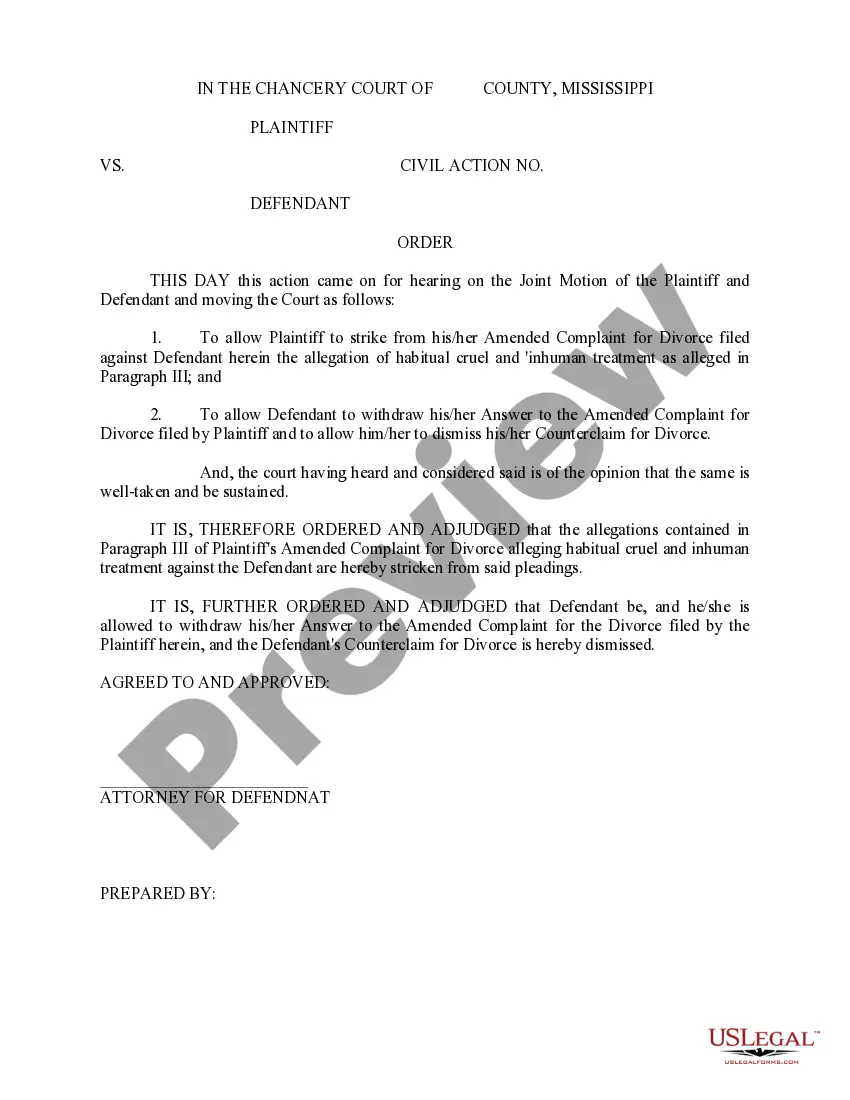
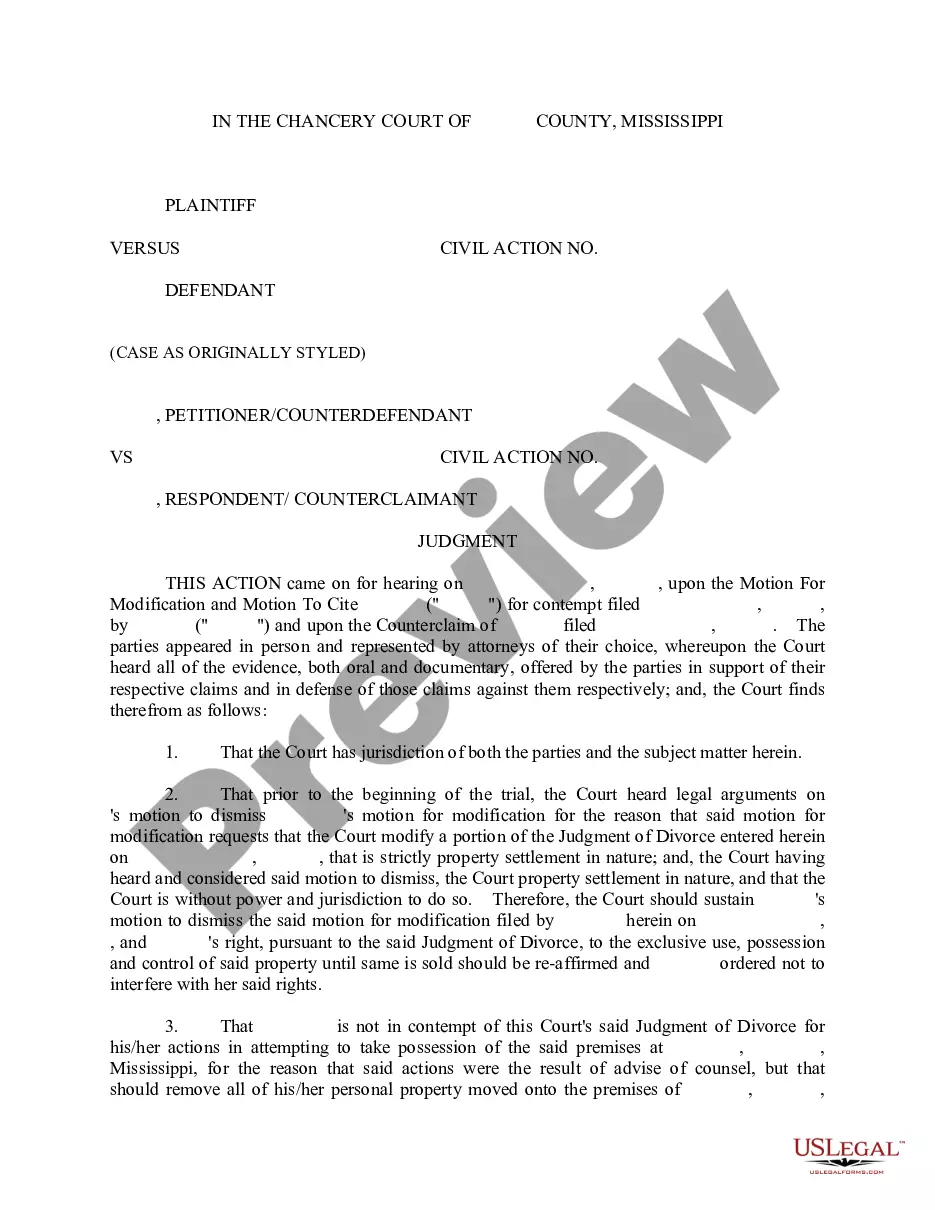


Common use cases
This form is typically used during divorce proceedings when custody arrangements are being established or modified. If a child is of sufficient age and maturity to express their residence preference, this document can facilitate the legal acknowledgment of their wishes. It becomes crucial in cases where traditional custody agreements may not reflect the child's sentiments.
Who can use this document
This form is designed for:
- Parents involved in a divorce or custody dispute.
- Minors who are at least 12 years old, as they are typically regarded as having the ability to express their preference.
- Legal guardians seeking to include the child's perspective in custody discussions.
How to prepare this document
- Identify the parties: Clearly write the names of the plaintiff and defendant at the top of the form.
- State the child's age: Enter the child's age in the designated area to confirm their eligibility.
- Express residence preference: The child must indicate which parent they wish to live with by completing the relevant fields.
- Include the names of both parents: Fill in the names of the natural and step-parents as applicable.
- Sign and notarize: The child must sign the form, and a notary must witness the signing to validate the document.
Does this form need to be notarized?
Yes, this form must be notarized to be legally valid. The notarization process ensures the authenticity of the signatures and the accuracy of the information provided. US Legal Forms offers integrated online notarization services, allowing users to complete the process through a secure video call with a notary public, available 24/7.
Get your form ready online
Our built-in tools help you complete, sign, share, and store your documents in one place.
Make edits, fill in missing information, and update formatting in US Legal Forms—just like you would in MS Word.
Download a copy, print it, send it by email, or mail it via USPS—whatever works best for your next step.
Sign and collect signatures with our SignNow integration. Send to multiple recipients, set reminders, and more. Go Premium to unlock E-Sign.
If this form requires notarization, complete it online through a secure video call—no need to meet a notary in person or wait for an appointment.
We protect your documents and personal data by following strict security and privacy standards.

Make edits, fill in missing information, and update formatting in US Legal Forms—just like you would in MS Word.

Download a copy, print it, send it by email, or mail it via USPS—whatever works best for your next step.

Sign and collect signatures with our SignNow integration. Send to multiple recipients, set reminders, and more. Go Premium to unlock E-Sign.

If this form requires notarization, complete it online through a secure video call—no need to meet a notary in person or wait for an appointment.

We protect your documents and personal data by following strict security and privacy standards.
Common mistakes to avoid
- Failing to complete all required fields, especially the child's age and preferences.
- Not having the child's signature or neglecting the notarization process.
- Overlooking the impact statement, which is crucial for understanding the implications of the request.
Why complete this form online
- Convenience: Downloadable forms allow for easy access and completion anytime.
- Editability: Users can fill out the form at their own pace, making necessary changes as needed.
- Reliable: Forms are prepared by licensed attorneys, ensuring legal soundness and compliance with state laws.
Looking for another form?





Form popularity
FAQ
The child's stated custodial preference can be understood primarily to be a psychological statement by the child of how he or she has resolved (or failed to resolve) the inevitable loyalty conflict that divorce and separation creates.The child and his parents must be evaluated both alone and together.
Each parent can receive joint legal and physical custody. Both parents might receive joint legal custody, but one parent will have physical custody. Both parents might receive joint physical custody, but one parent will have legal custody. One parent could be given both legal and physical custody.
In cases where parents can't agree, a judge will decide visitation and custody based on the child's best interests.Both parents are bound by the terms of a custody order. If your child refuses to go to visits with the other parent, you could still be on the hook for failing to comply with a custody order.
The legal definition of an unfit parent is when the parent through their conduct fails to provide proper guidance, care, or support. Also, if there is abuse, neglect, or substance abuse issues, that parent will be deemed unfit.
When can my child decide which parent to live with? A child never has an automatic right to choose which parent to live with; however, a child that is age 12 or older will have the right to state a preference that will be considered as part of the Albright best interest of the child test.
If child is 14 or older, child has the right to choose the custodial parent. If the child is 14 or older, child has the right to testify in court regarding the preference of custodial parent. If the child is 14 or older, the judge may consider the wishes of the child.
There is no legal age for a child to refuse to go to the court-ordered visitation while the child remains a minor. In the state of Mississippi, a child remains a minor until the child turns 21. Games with visitation should be AVOIDED because as the...
1 attorney answer Although a child's wishes are one factor among many the court must consider in determining the child's best interests, a minor child never gets to "decide" which parent to live with.