Mississippi Agreed Order for Contempt
Understanding this form
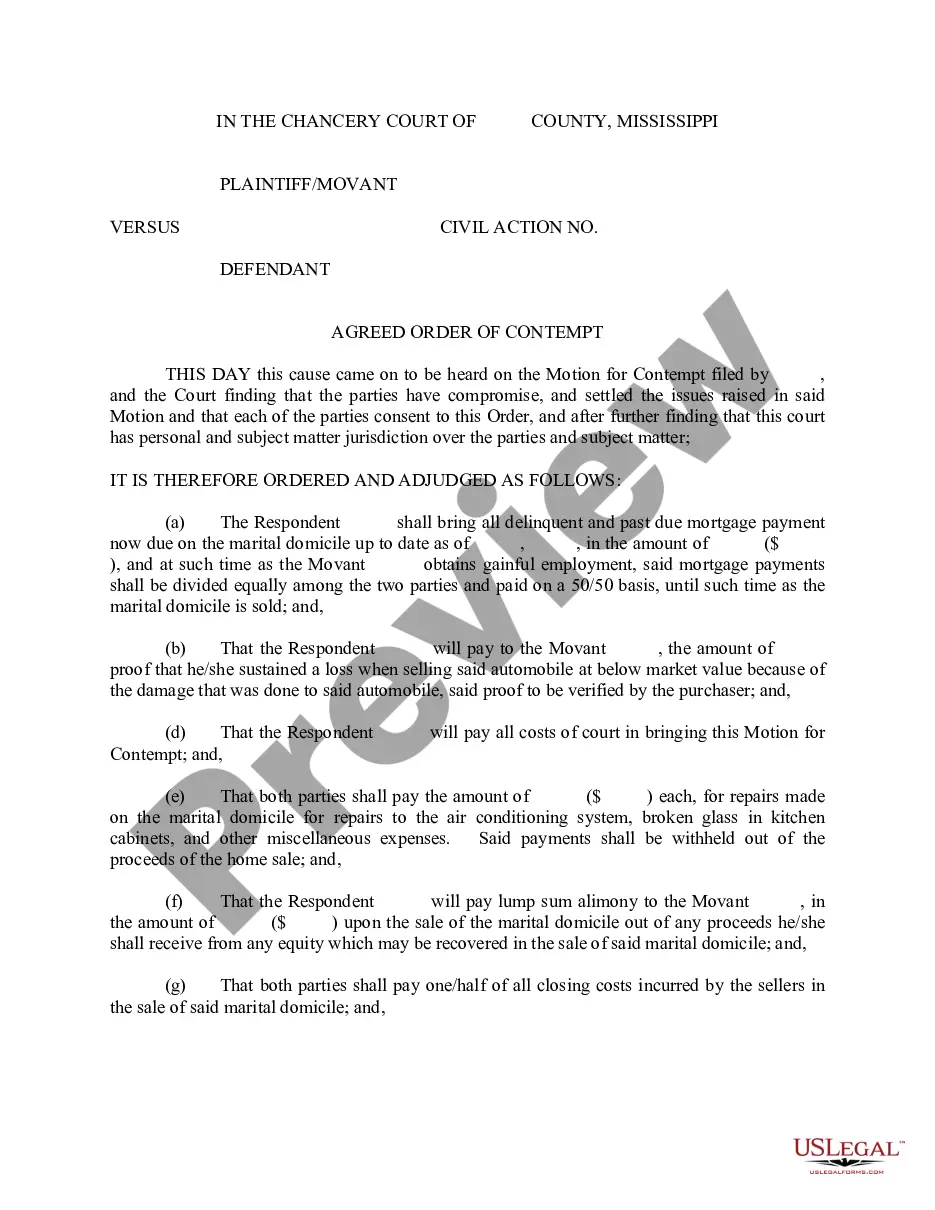
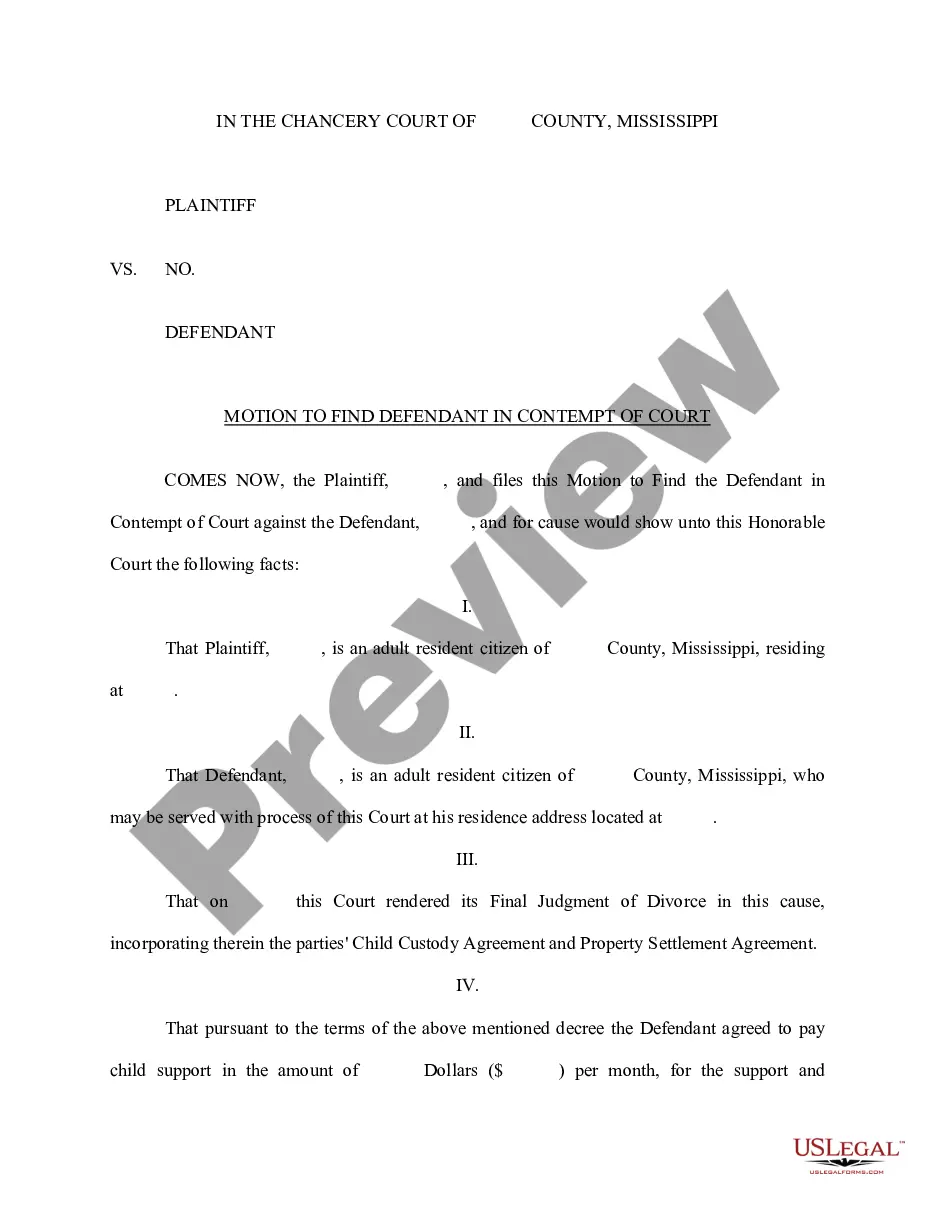
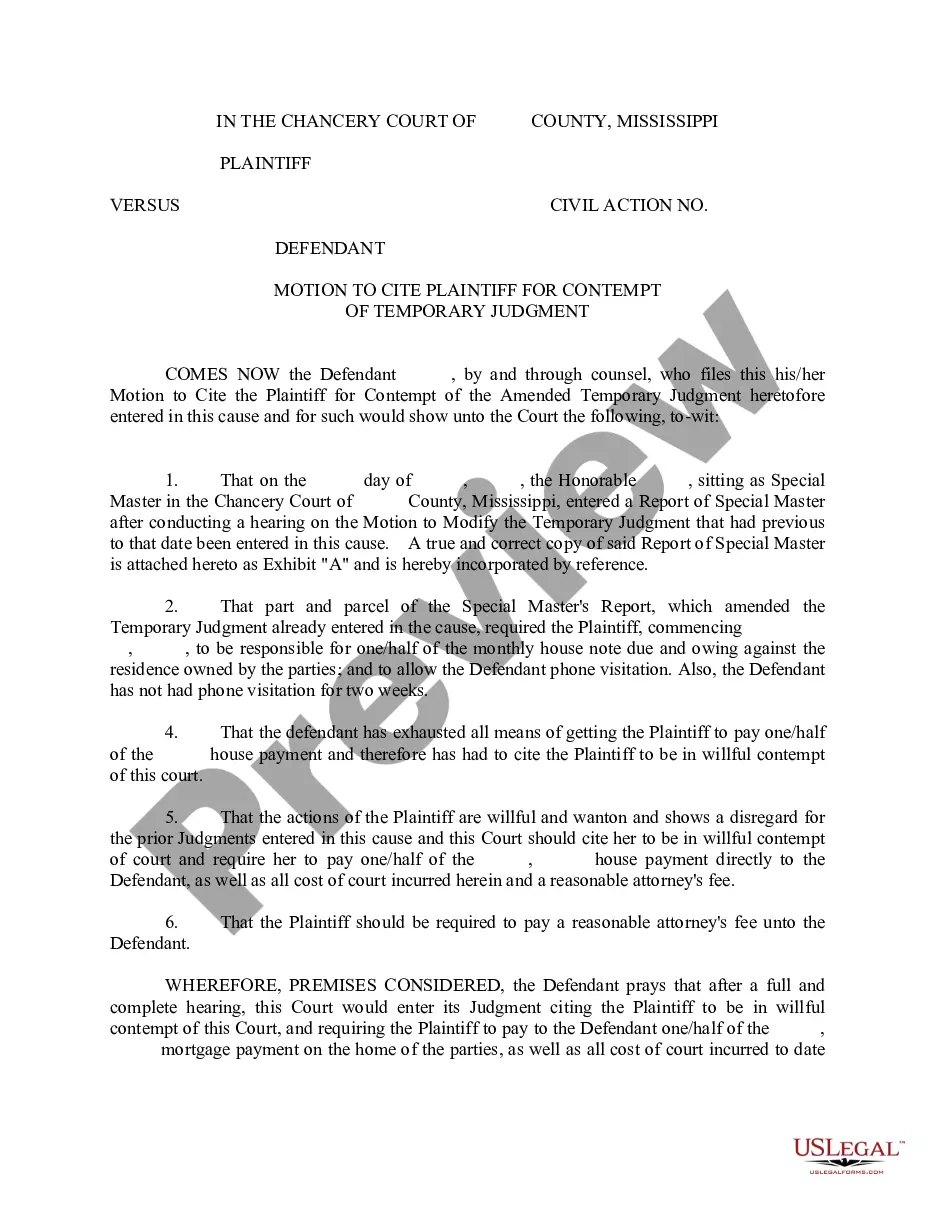
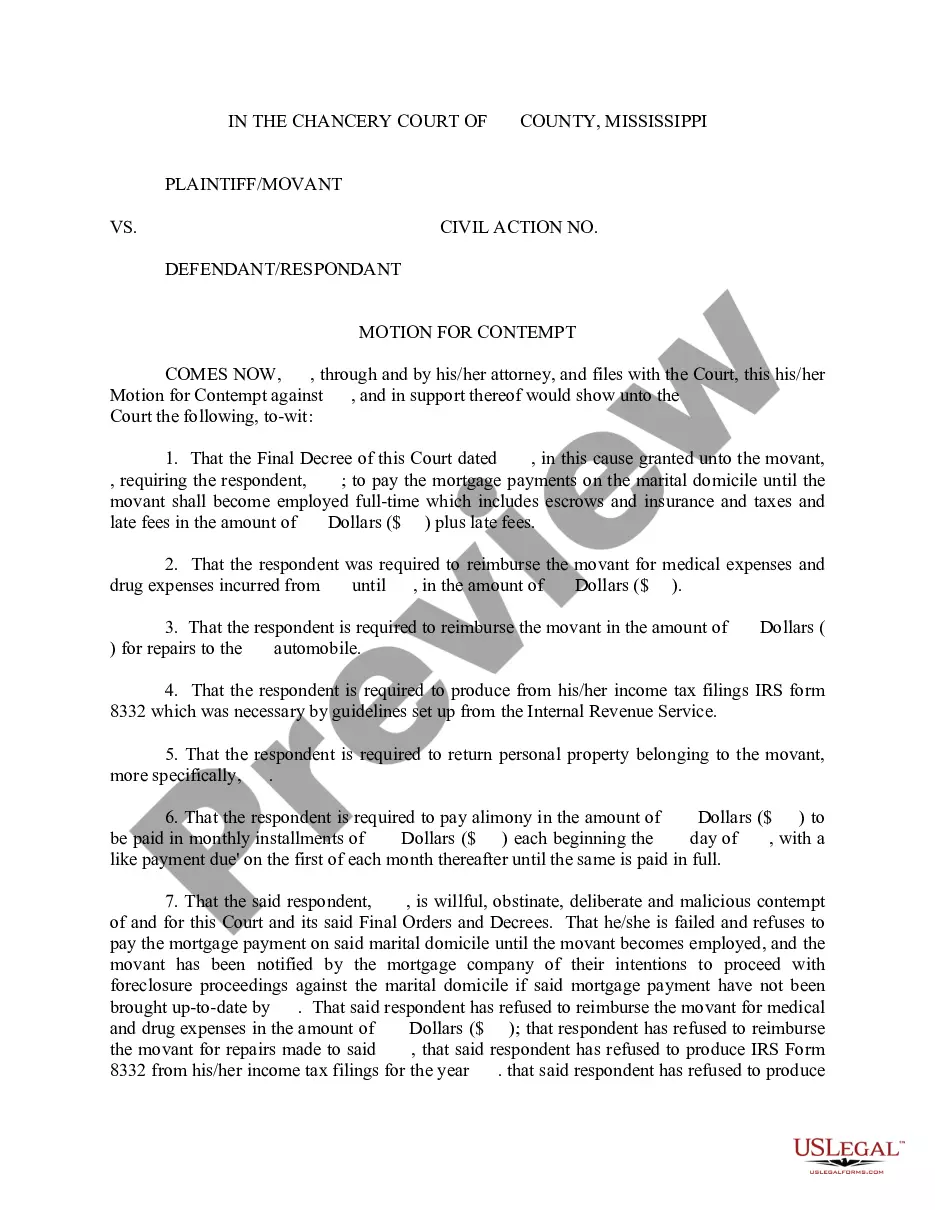
The Agreed Order for Contempt is a legal document used during divorce proceedings. It indicates that both parties have reached an agreement regarding contempt charges due to delinquent child support payments. This form is specifically useful in situations where both parents acknowledge a failure to comply with a previous order, making it different from other forms that may not require mutual agreement or address contempt specifically.
Main sections of this form
- Identification of the parties involved in the divorce.
- Details of the original child support order.
- Specifics of the contempt charge regarding delinquent payments.
- Statement of the mutual agreement reached by both parties.
- Signatures of both parties to validate the agreement.
When to use this document
You should use the Agreed Order for Contempt when both parties in a divorce have come to a consensus regarding contempt charges related to unpaid child support. This form is essential when you want to formalize the agreement in court to avoid further legal complications and ensure compliance with the child support agreement.
Who should use this form
- Individuals involved in a divorce proceeding.
- Parents who have agreed on issues regarding contempt for delinquent child support.
- Anyone requiring a formal agreement to present in court.
Completing this form step by step
- Identify the parties involved by filling in their names and contact information.
- Specify the details of the original child support order that is relevant to the contempt.
- Clearly state the terms of the agreement concerning the contempt charge.
- Ensure both parties read the agreement and understand the terms outlined.
- Have both parties sign the document in the designated areas to finalize the agreement.
Notarization requirements for this form
This form needs to be notarized to ensure legal validity. US Legal Forms provides secure online notarization powered by Notarize, allowing you to complete the process through a verified video call, available anytime.
Get your form ready online
Our built-in tools help you complete, sign, share, and store your documents in one place.
Make edits, fill in missing information, and update formatting in US Legal Forms—just like you would in MS Word.
Download a copy, print it, send it by email, or mail it via USPS—whatever works best for your next step.
Sign and collect signatures with our SignNow integration. Send to multiple recipients, set reminders, and more. Go Premium to unlock E-Sign.
If this form requires notarization, complete it online through a secure video call—no need to meet a notary in person or wait for an appointment.
We protect your documents and personal data by following strict security and privacy standards.

Make edits, fill in missing information, and update formatting in US Legal Forms—just like you would in MS Word.

Download a copy, print it, send it by email, or mail it via USPS—whatever works best for your next step.

Sign and collect signatures with our SignNow integration. Send to multiple recipients, set reminders, and more. Go Premium to unlock E-Sign.

If this form requires notarization, complete it online through a secure video call—no need to meet a notary in person or wait for an appointment.

We protect your documents and personal data by following strict security and privacy standards.
Avoid these common issues
- Not fully detailing the original child support order.
- Forgetting to include signatures from both parties.
- Using vague language that may lead to misunderstandings.
- Failing to file the order with the appropriate court after completion.
Why use this form online
- Convenience of downloading the form at any time.
- Ease of editing to suit your particular situation.
- Access to forms drafted by licensed attorneys ensuring reliability.
Looking for another form?
Form popularity
FAQ
There is a valid court order in effect. The other person knows about the court order. The facts show a plain violation of the order. You have given the person notice of the contempt hearing and a chance to be heard. Contempt is an appropriate remedy for the violation.
The Supreme, circuit, chancery and county courts and the Court of Appeals shall have power to fine and imprison any person guilty of contempt of the court while sitting, but the fine shall not exceed One Hundred Dollars ($100.00) for each offense, nor shall the imprisonment continue longer than thirty (30) days.
Depending on the infraction, contempt of court consequences can include fines, compensatory visitation, a modification to the custody arrangement, and in some instances even jail time. In most cases, if someone is held in contempt, the court will first give them the opportunity to make amends for the violation.
Penal Code 166 PC is the California statute that defines the offense of contempt of court. A person commits this crime if he or she engages in any behavior that is disrespectful to the court process. This is a misdemeanor that carries a penalty of up to 6 months in jail.
A violation of PC 166 is typically a misdemeanor. A criminal contempt action is punishable by: custody in county jail (not state prison) for up to six months, and/or. a maximum fine of $1,000.
Read the summons and make sure you know the date you must answer by. Read the complaint carefully. Write your answer. Sign and date the answer. Make copies for the plaintiff and yourself. Mail a copy to the plaintiff. File your answer with the court by the date on the summons.
High Court and Supreme Court are bestowed with the power to punish for the contempt of the court. Under Section 12 of Contempt of Court Act, 1971, a contempt of court can be punished with simple imprisonment for a term which may extend to six months, or with fine which may extend to two thousand rupees, or with both.
Depending on the infraction, contempt of court consequences can include fines, compensatory visitation, a modification to the custody arrangement, and in some instances even jail time. In most cases, if someone is held in contempt, the court will first give them the opportunity to make amends for the violation.
If a person is found to be in contempt, the court is able to impose sanctions, which may include the following: jail time (usually 1-30 days) ordering the party held in contempt to pay the money owed. ordering the party held in contempt to pay the other party's attorney's fees.