Mississippi Petition for Partition in Kind
What is this form?
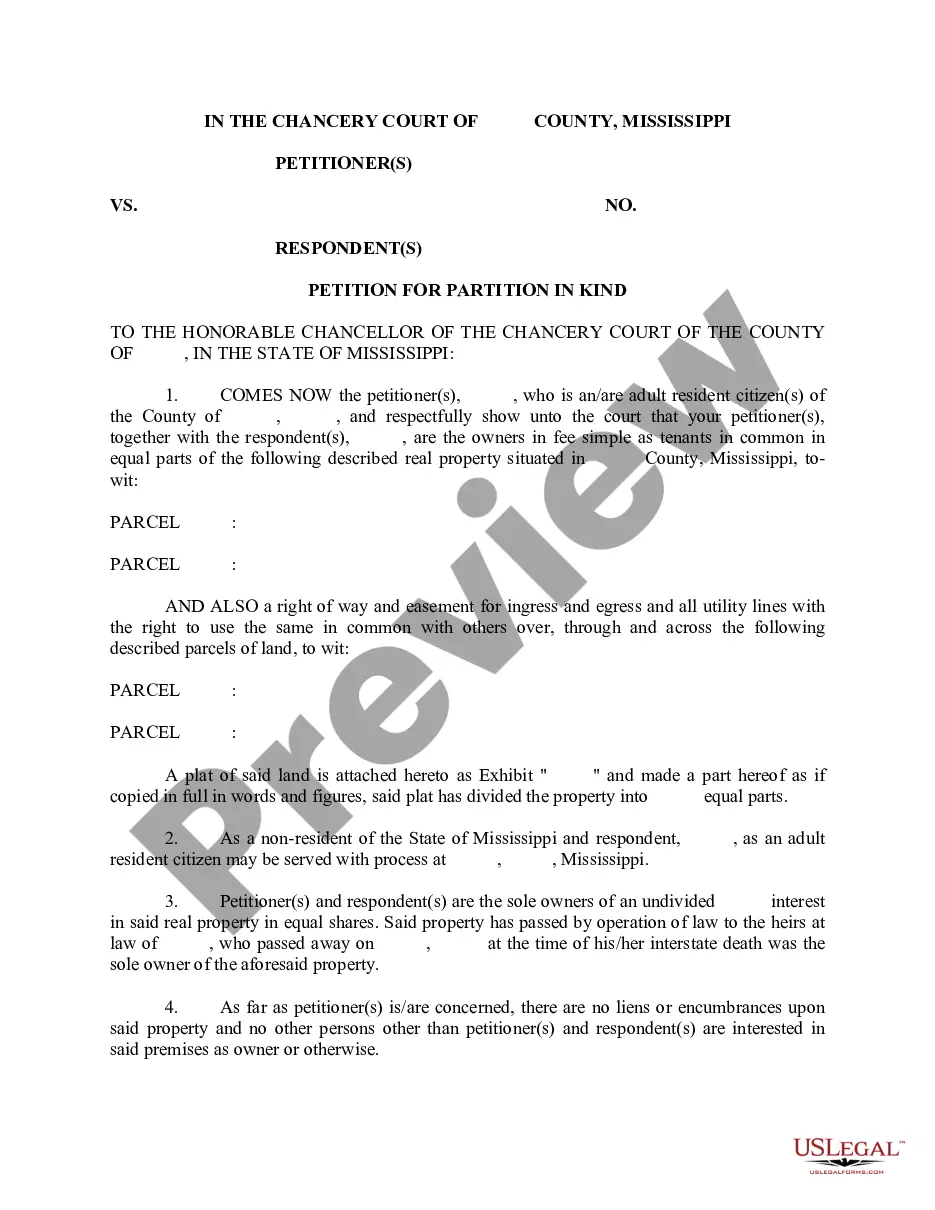
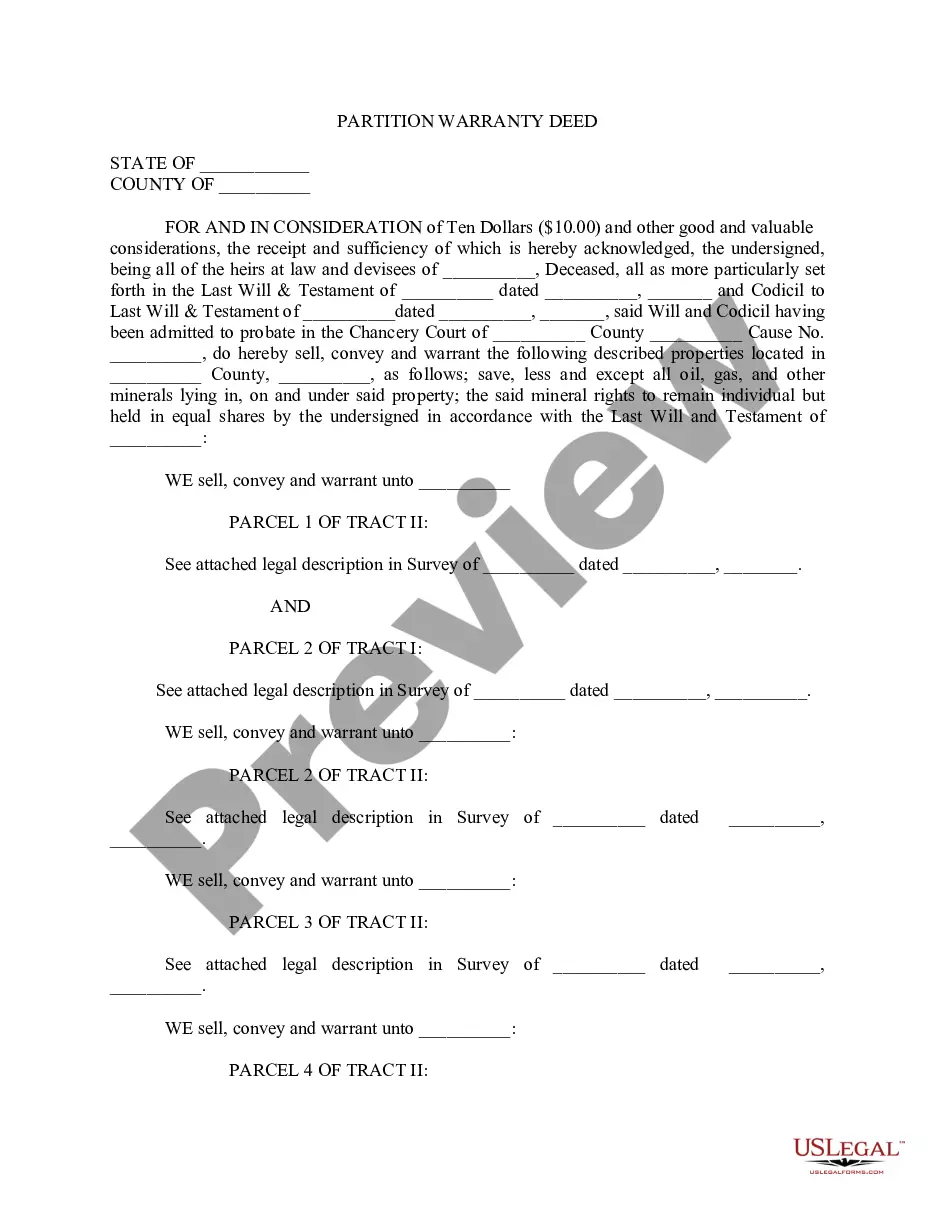
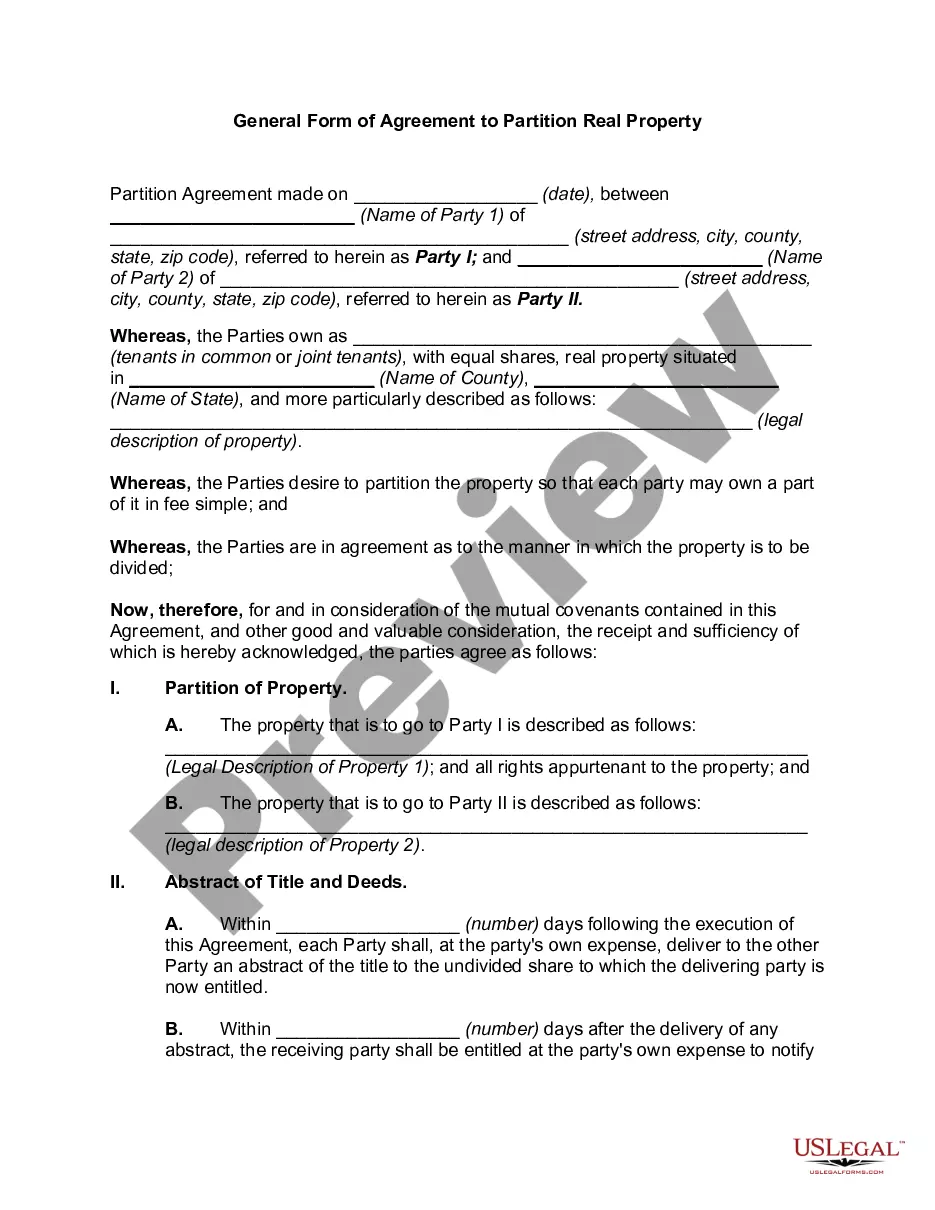
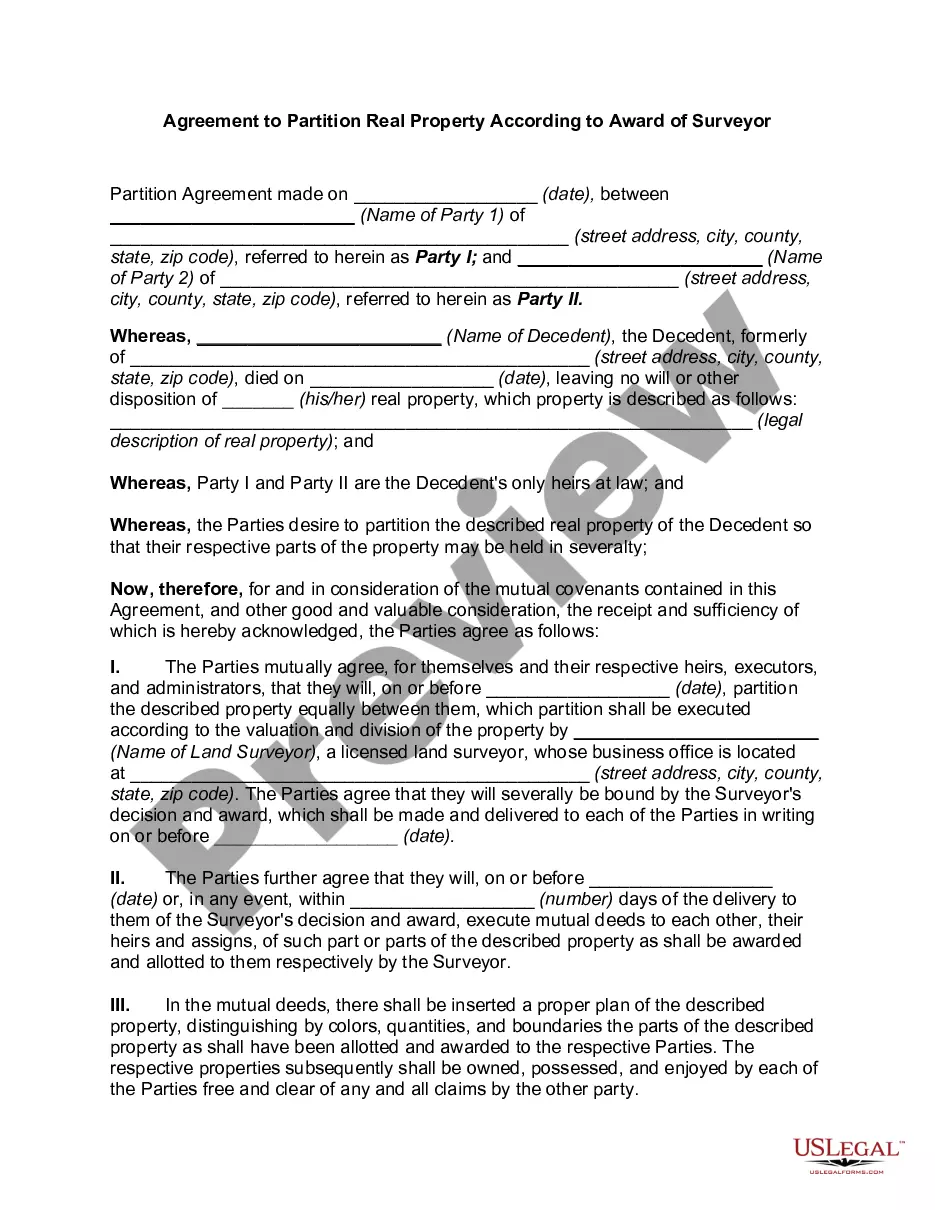
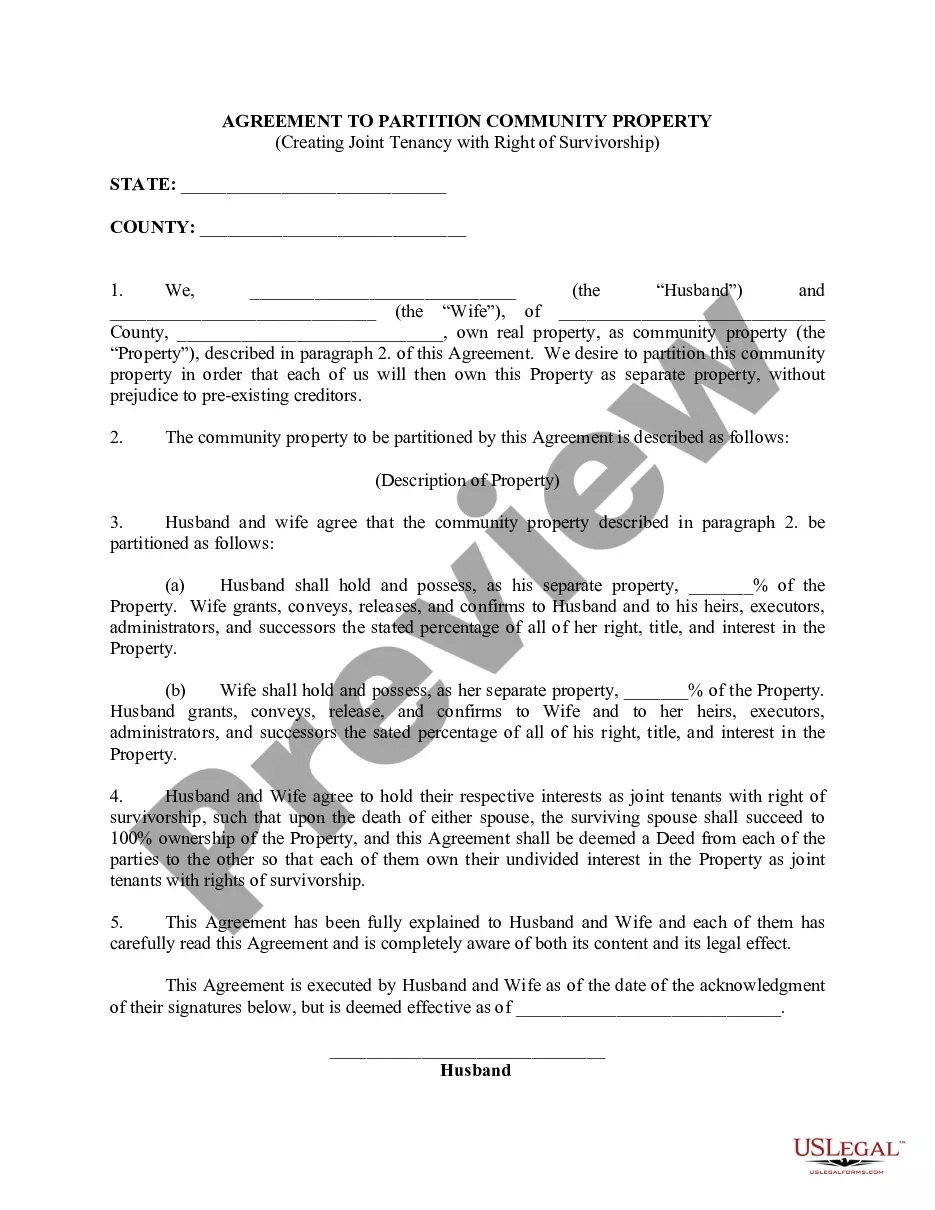
The Petition for Partition in Kind is a legal document used to request a court-ordered division of property among co-owners. This form is distinct from other partition options as it specifically addresses circumstances where co-owners cannot agree on how to divide their property voluntarily. It allows for a partition in kind, meaning the property is physically divided among the owners rather than sold and the proceeds divided.
Main sections of this form
- Petitioner's contact information and relationship to the property.
- Description of the property subject to partition.
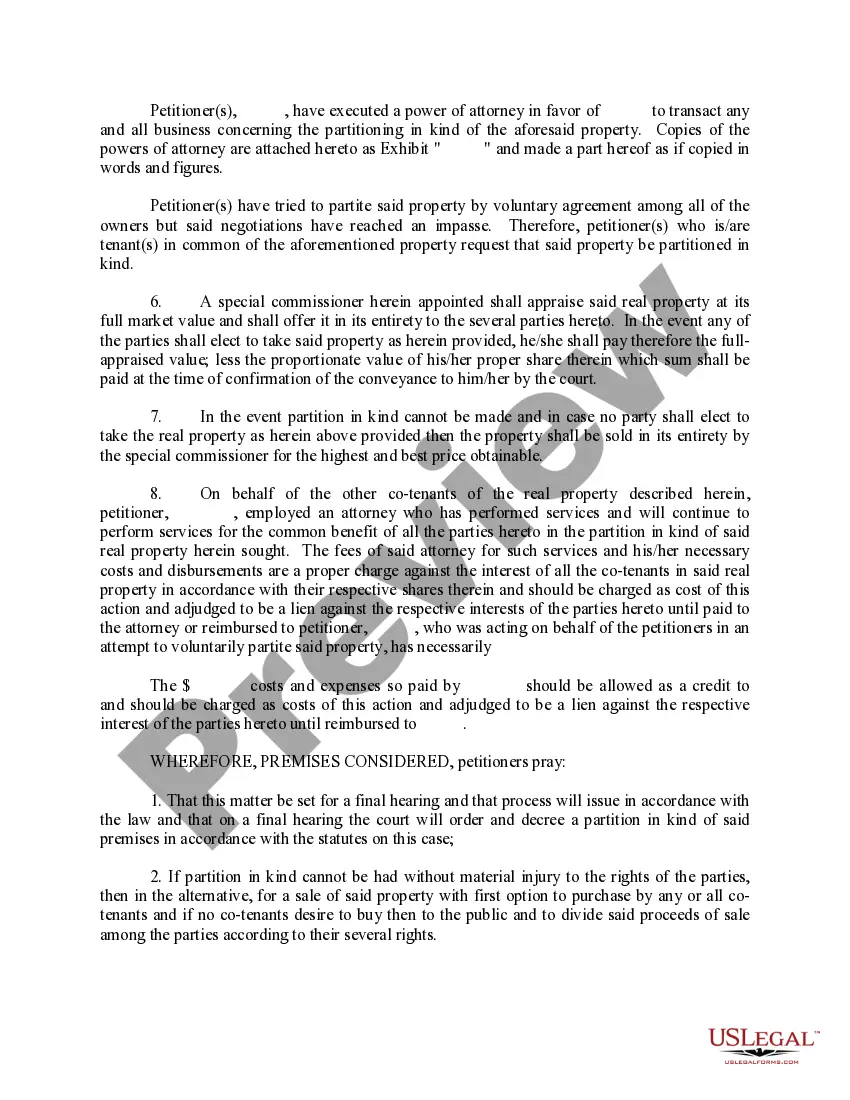
- Details regarding prior attempts to partition the property amicably.
- Request for the appointment of a special commissioner to assess market value.
- Instructions for how parties will pay for their shares if they wish to retain the property.

When to use this form
This form is essential when co-owners of property are unable to reach a mutual agreement on its division. It may arise in situations such as inherited property, jointly owned real estate, or family properties where ownership rights are shared. Use this form when negotiations have stalled and formal court intervention is necessary to resolve ownership disputes.
Who needs this form
This form is intended for:
- Individuals who jointly own real property with others.
- Co-owners who have tried to negotiate a partition but are unable to conclude an agreement.
- Parties wishing to initiate legal proceedings to resolve property disputes.
How to complete this form
- Identify the petitioner(s) and provide their contact information.
- Clearly describe the property involved in the partition.
- Outline previous attempts to partition the property voluntarily.
- Request the court to appoint a special commissioner for property appraisal.
- Specify how payments will occur if parties choose to retain their shares of the property.
Notarization requirements for this form
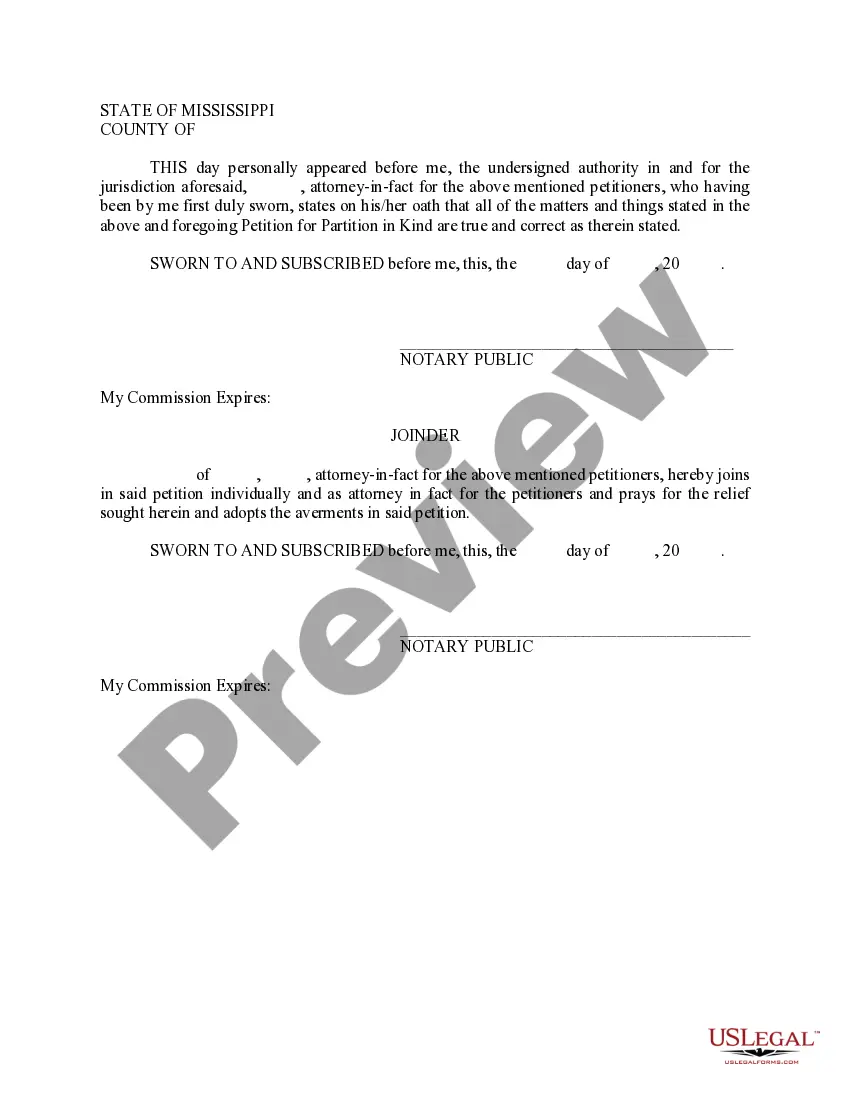
This form does not typically require notarization unless specified by local law. It is advisable to check with your local court's requirements.
Get your form ready online
Our built-in tools help you complete, sign, share, and store your documents in one place.
Make edits, fill in missing information, and update formatting in US Legal Forms—just like you would in MS Word.
Download a copy, print it, send it by email, or mail it via USPS—whatever works best for your next step.
Sign and collect signatures with our SignNow integration. Send to multiple recipients, set reminders, and more. Go Premium to unlock E-Sign.
If this form requires notarization, complete it online through a secure video call—no need to meet a notary in person or wait for an appointment.
We protect your documents and personal data by following strict security and privacy standards.

Make edits, fill in missing information, and update formatting in US Legal Forms—just like you would in MS Word.

Download a copy, print it, send it by email, or mail it via USPS—whatever works best for your next step.

Sign and collect signatures with our SignNow integration. Send to multiple recipients, set reminders, and more. Go Premium to unlock E-Sign.

If this form requires notarization, complete it online through a secure video call—no need to meet a notary in person or wait for an appointment.

We protect your documents and personal data by following strict security and privacy standards.
Avoid these common issues
- Failing to include all co-ownersâ names and addresses.
- Not providing enough detail about previous negotiation attempts.
- Omitting necessary supporting documentation related to the property.
Why complete this form online
- Convenience of downloading the form instantly.
- Editability to tailor the form to your specific situation.
- Access to forms drafted by licensed attorneys, ensuring legal reliability.
Legal use & context
- This form is enforceable in court as a legal request for partitioning property.
- Once filed, the court will review the petition and may appoint a commissioner for appraisal.
- The outcome helps ensure equitable distribution of property among co-owners.
Main things to remember
- The Petition for Partition in Kind is essential for co-owners unable to agree on property division.
- Accurate completion of the form is crucial to facilitate court proceedings.
- Understanding state-specific requirements can enhance the effectiveness of the petition.
Looking for another form?

Form popularity
FAQ
Filing a petition to partition Typically, a "lis pendens," or default notice, is also filed at the same time as the petition. This document simply notifies everyone who has been named in the partition action that the lawsuit is being filed.
A suit for partition is filed in a Civil Court having jurisdiction over the area where the property is located. If there are several properties, the lawsuit can be filed in any one of the courts. The partition suit results in a decree which ends the joint nature of the property.
You can hire a trust litigation attorney to litigate a partition action. Your attorney may fight to increase the value of your share of the property if, for example, you paid for maintenance, repairs, improvements, property taxes, mortgage payments, etc.
A Partition By Sale allows a co-owner of real property to force a sale of the entire property despite the unwillingness of any co-owner.The Court must determine that under the circumstances, sale and division of the proceeds would be more equitable than division of the property.
Partition in Kind (also known as Actual Partition) occurs simply when the property is divided, equitably and fairly, between the multiple owners. Each co-owner will own a certain percentage of the property. Courts tend to favor this approach because it does not require someone to sell their property against their will.
Identity proof of legal heir. Certified copies of all title deeds of the property, including the description of the property. Valuation of property. Birth and Residence proof of the legal heir.
A petition for partition can take 6 months to one year if ordered sold at the courthouse. The parties can always decide to sell through a realtor and the time will depend on when a buyer makes the offer.
How much does a partition action cost? In California, the cost of partition action and attorneys fees can vary greatly, depending on the complexity of the property and issues involved and the resistance of your opposing party. Attorney's fees can range from $20,000 to $100,000+ per party.
Can A Partition Be Stopped? Typically, a partition action cannot be stopped once a lawsuit is filed because anyone who wants to dissolve ownership that is jointly owned with another person has a legal right to sell his/her interest if desired.