Mississippi Easement Grant
About this form
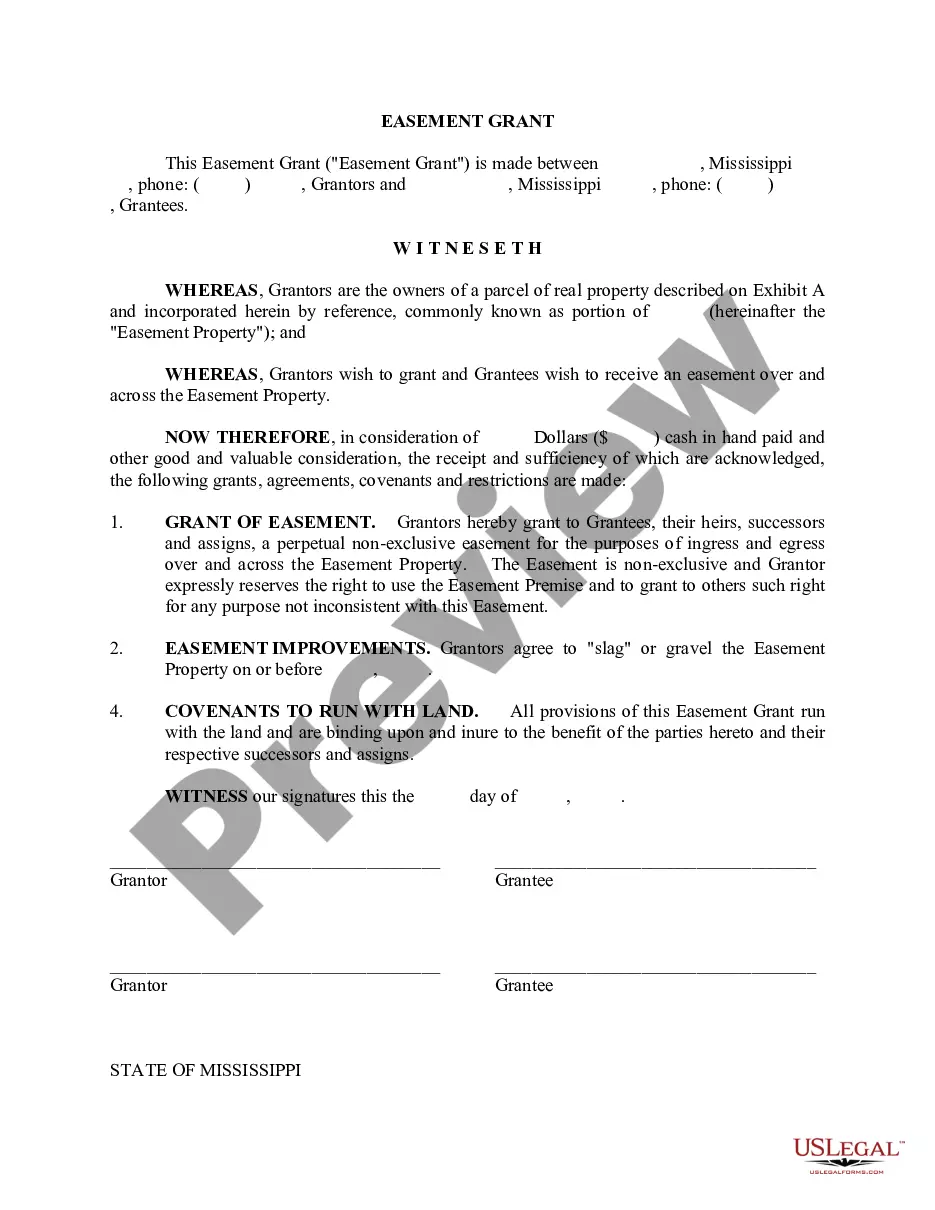
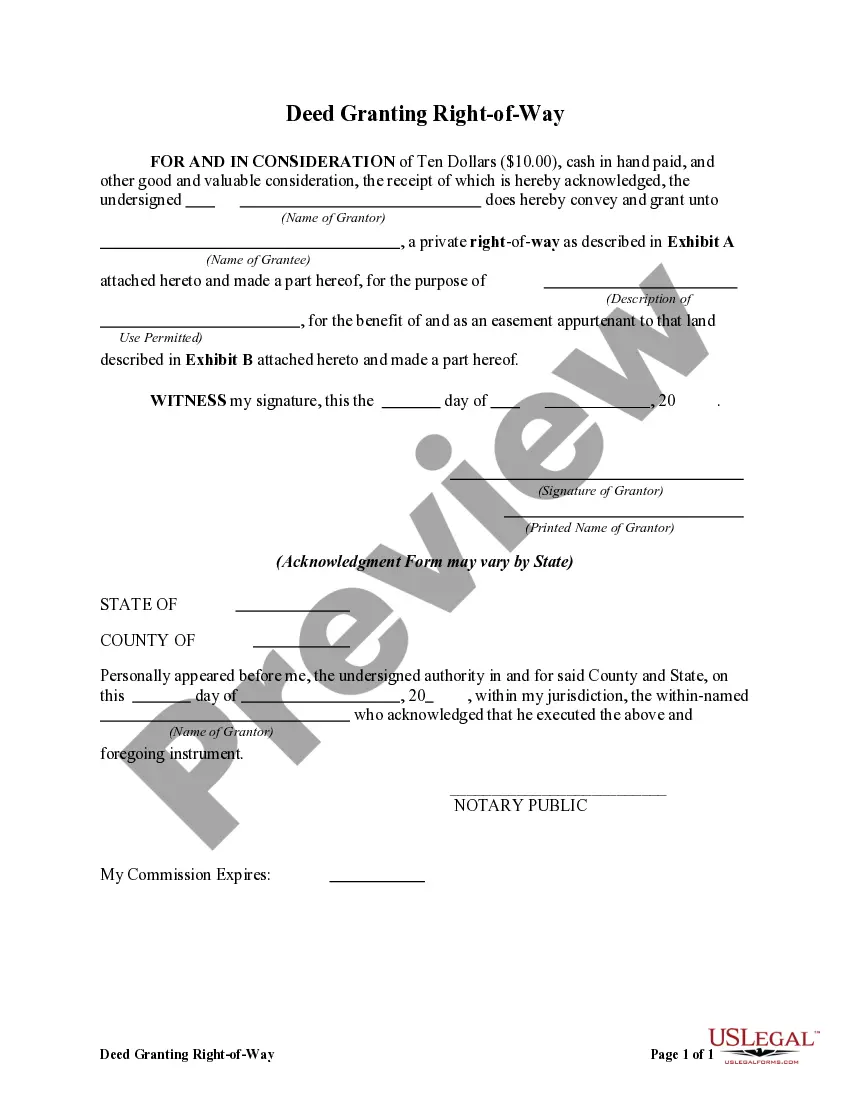
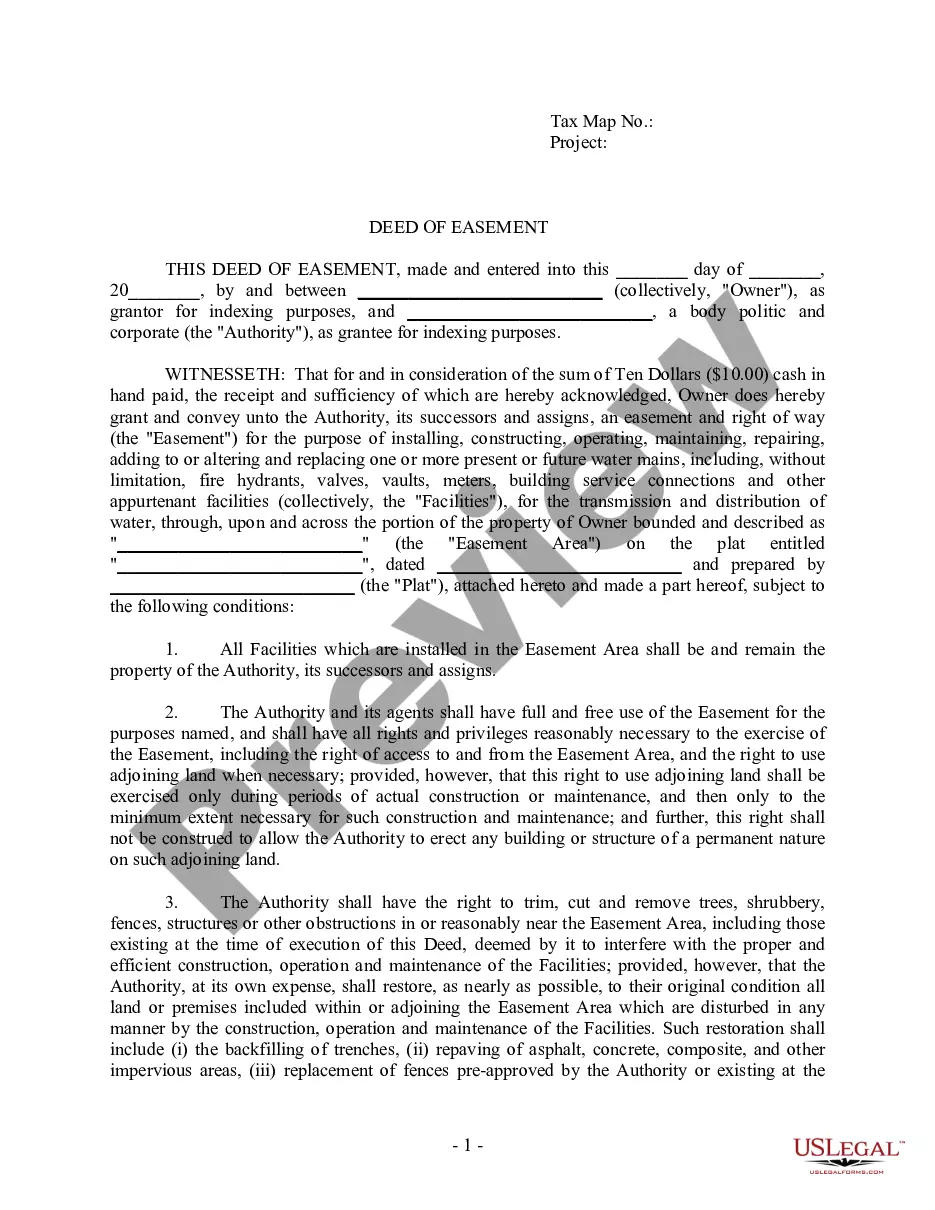
An Easement Grant is a legal document in which the Grantor permits the Grantee access to their property. It establishes a right for the Grantee to use a portion of the Grantor's land for specified purposes, often remaining valid until alternative access is provided, such as the construction of a public road. This form is particularly useful for situations involving utility services or access roads and differs from other property agreements because it specifically outlines rights to use land without transferring ownership.
Main sections of this form
- Identification of the parties involved (Grantor and Grantee).
- Description of the property covered by the easement.
- Specification of the purpose for which the easement is granted.
- Duration of the easement and conditions under which it may terminate.
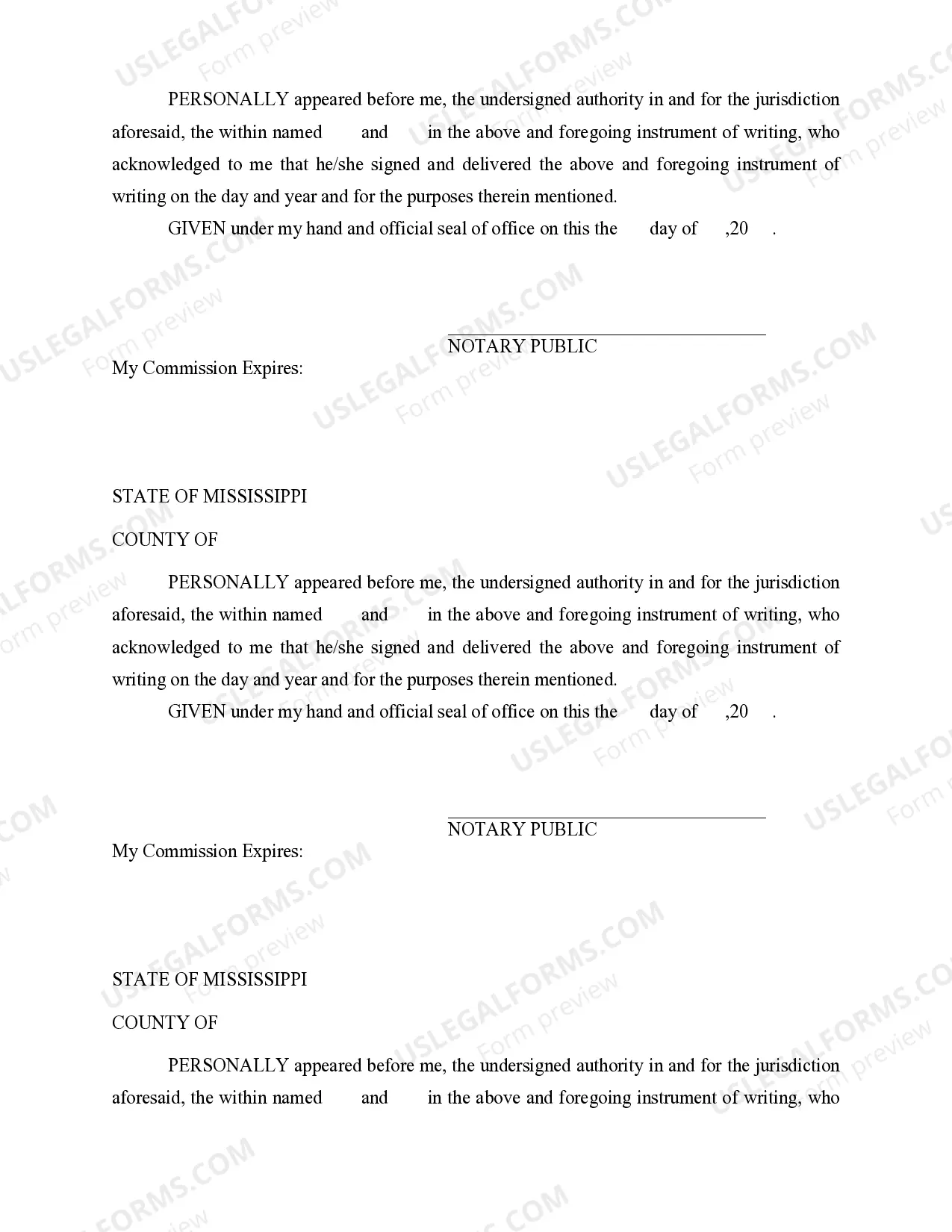
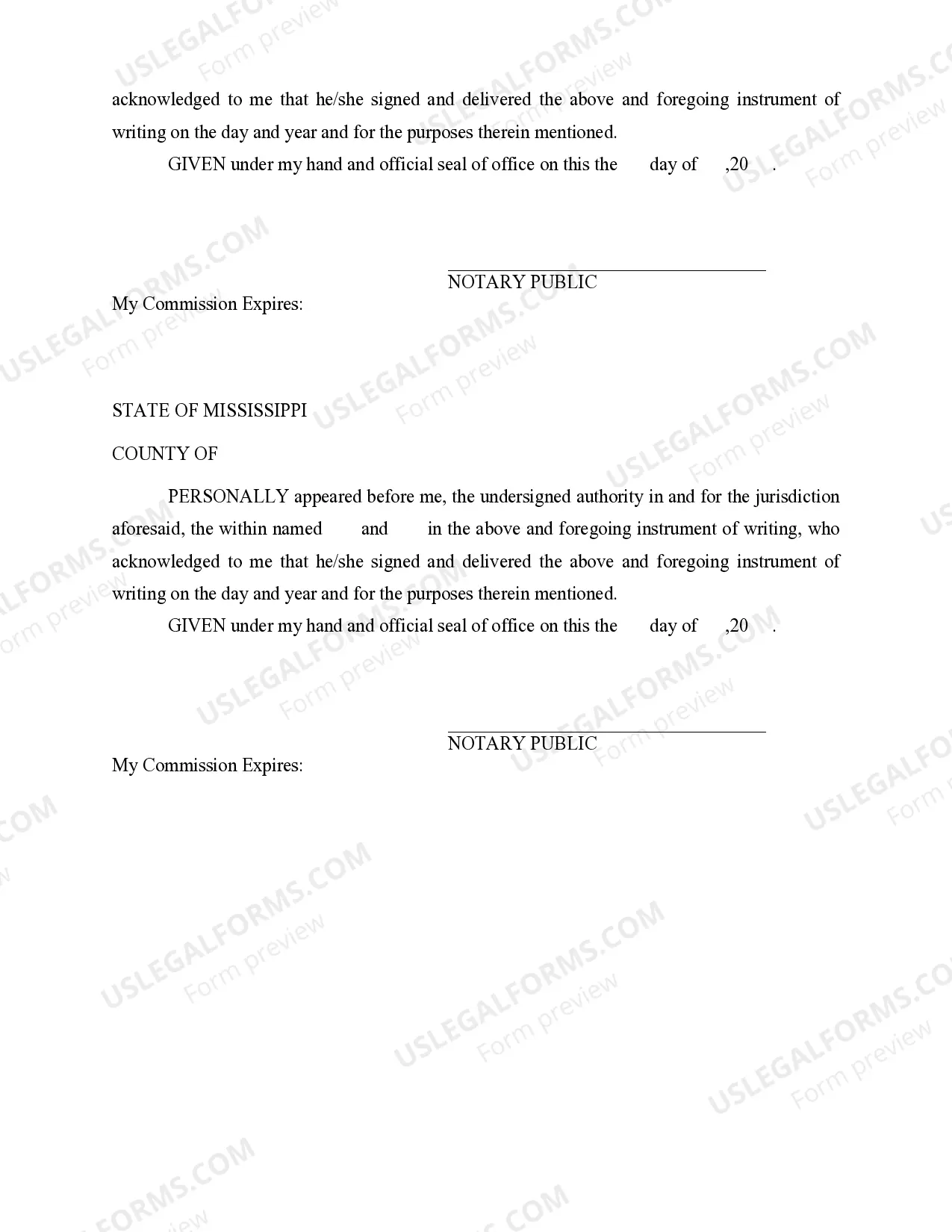
- Legal acknowledgments, including space for notary signatures.
When to use this form
This form should be used when the owner of a property (Grantor) agrees to allow another party (Grantee) to have specific access rights to their land. Common scenarios include granting permission for utility companies to install pipelines or wires, providing access for maintenance of neighboring properties, or allowing for pathways that facilitate access for travel or emergency services.
Who should use this form
- Property owners who wish to grant access to their land.
- Individuals or businesses requiring access to another property for utilities or other purposes.
- Real estate professionals facilitating transactions involving easement agreements.
How to prepare this document
- Identify and enter the names and addresses of the Grantor and Grantee.
- Clearly describe the property involved, including its boundaries and specific location.
- State the purpose of the easement, outlining what activities the Grantee is permitted to undertake.
- Specify the duration of the easement and any conditions that may apply to its use.
- Sign the document in the presence of a notary to validate the agreement.
Does this form need to be notarized?
Notarization is required for this form to take effect. Our online notarization service, powered by Notarize, lets you verify and sign documents remotely through an encrypted video session, available 24/7.
Get your form ready online
Our built-in tools help you complete, sign, share, and store your documents in one place.
Make edits, fill in missing information, and update formatting in US Legal Forms—just like you would in MS Word.
Download a copy, print it, send it by email, or mail it via USPS—whatever works best for your next step.
Sign and collect signatures with our SignNow integration. Send to multiple recipients, set reminders, and more. Go Premium to unlock E-Sign.
If this form requires notarization, complete it online through a secure video call—no need to meet a notary in person or wait for an appointment.
We protect your documents and personal data by following strict security and privacy standards.

Make edits, fill in missing information, and update formatting in US Legal Forms—just like you would in MS Word.

Download a copy, print it, send it by email, or mail it via USPS—whatever works best for your next step.

Sign and collect signatures with our SignNow integration. Send to multiple recipients, set reminders, and more. Go Premium to unlock E-Sign.

If this form requires notarization, complete it online through a secure video call—no need to meet a notary in person or wait for an appointment.

We protect your documents and personal data by following strict security and privacy standards.
Common mistakes
- Failing to clearly define the property and its boundaries may lead to disputes.
- Omitting the specific purpose of the easement can result in misunderstandings.
- Neglecting to have the document notarized, which could invalidate the agreement.
Advantages of online completion
- Convenience of downloading and completing the form at your own pace.
- Editability allows you to customize the form to fit your specific needs.
- Access to templates drafted by licensed attorneys ensures legal compliance and reliability.
Looking for another form?

Form popularity
FAQ
Being attached to the individual, the easement in gross is usually a lifetime easement.In this case, the easement in gross cannot be passed to the next property owner, which means that a new easement agreement needs to be made with the new owners of the property.
Benefits the owner of adjacent land. The easement is thus appurtenant to the holder's land. The benefited land is called the dominant tenementThe land that benefits from an easement., and the burdened landthat is, the land subject to the easementis called the servient tenement.
Generally, the owner of any easement has a duty to maintain the easement. If the easement is owned by more than one person, or is attached parcels of land under different ownership, each owner must share in the cost of maintaining the easement pursuant to their agreement.
Ask him to grant you a formal easement by deed. Your neighbor the servient, or burdened landowner can give the easement of his own accord, but he is not obligated to do this. The chances are, you will have to negotiate a price; an easement is, after all, an interest in land, which has a value attached to it.
Failure to have all three owners of the property sign the easement agreement rendered the instrument ineffective.While, the fee owner of a life estate can grant an easement, the duration and enforceability of that easement shall be limited to the term of the life estate (i.e. the lifetime of the life-estate grantor).
The Good Relationship. The person with the property often has a working or good relationship with neighbors.The easement is sometimes a necessity because of restrictions of the land the other person owns or is leasing such as a company or organizational situation.
Easements can be created in a variety of ways. They can be created by an express grant, by implication, by necessity, and by adverse possession.An easement can be terminated if it was created by necessity and the necessity ceases to exist, if the servient land is destroyed, or if it was abandoned.
A property easement is a legal situation in which the title to a specific piece land remains with the landowner, but another person or organization is given the right to use that land for a distinct purpose.Or, you could have an easement on part of your property if it blocks access to a main road.
An easement can decrease the value of a real estate, increase the value of the real estate or it can have no impact on the value of the real estate at all. The most important fact is that each property and situation should be evaluated on individual basis, taking into account all the circumstances.