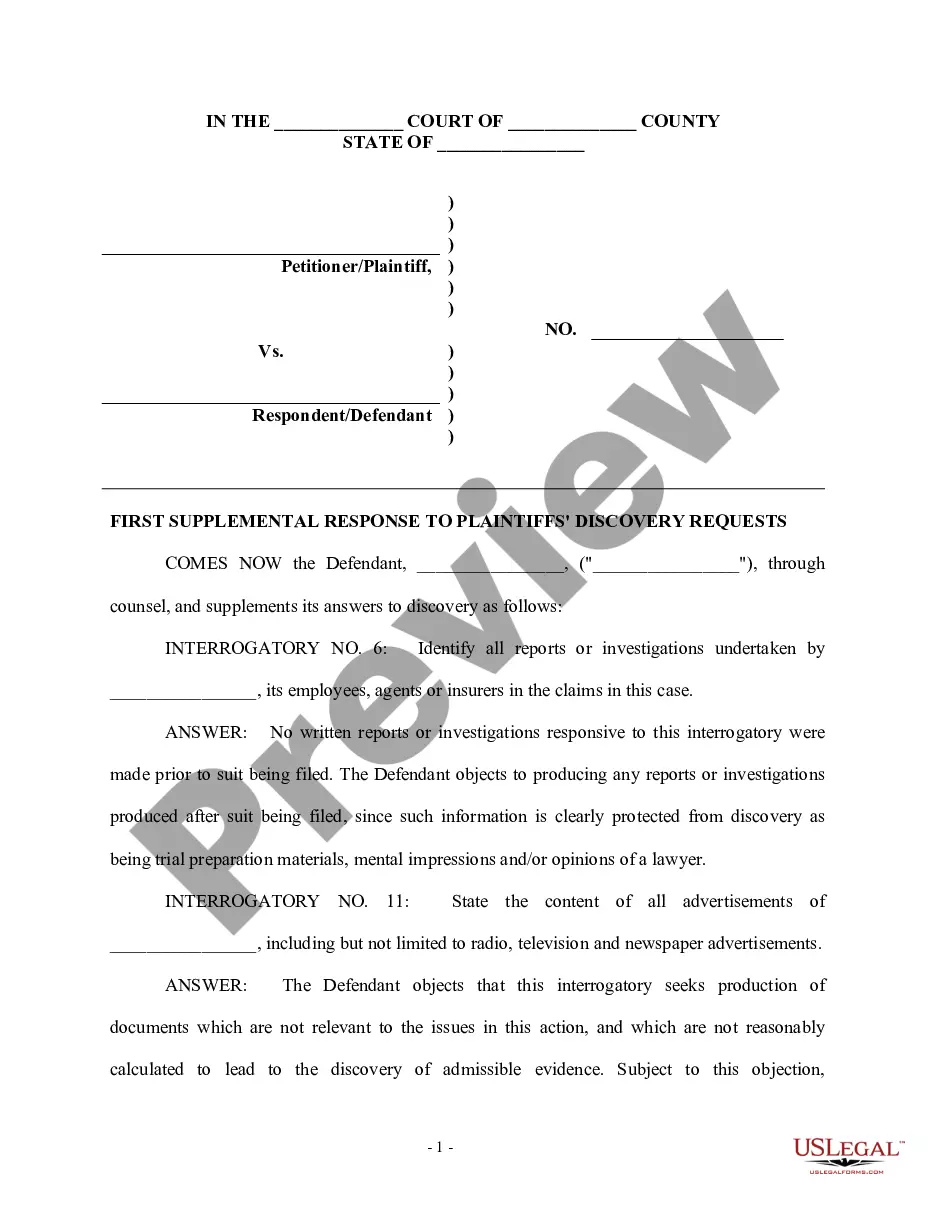
Mississippi Defendant's Supplement to Interrogatories and Request for Production of Documents
Understanding this form
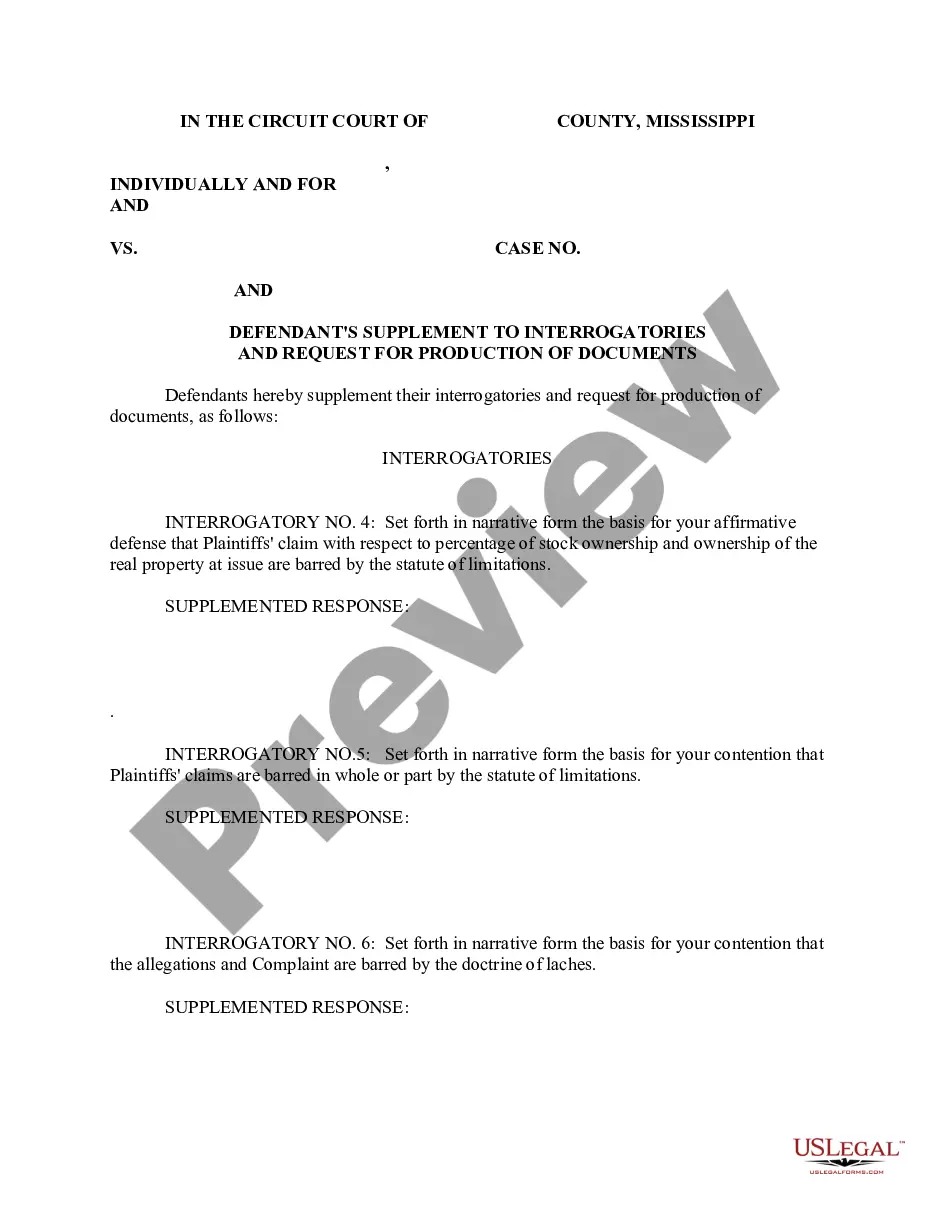
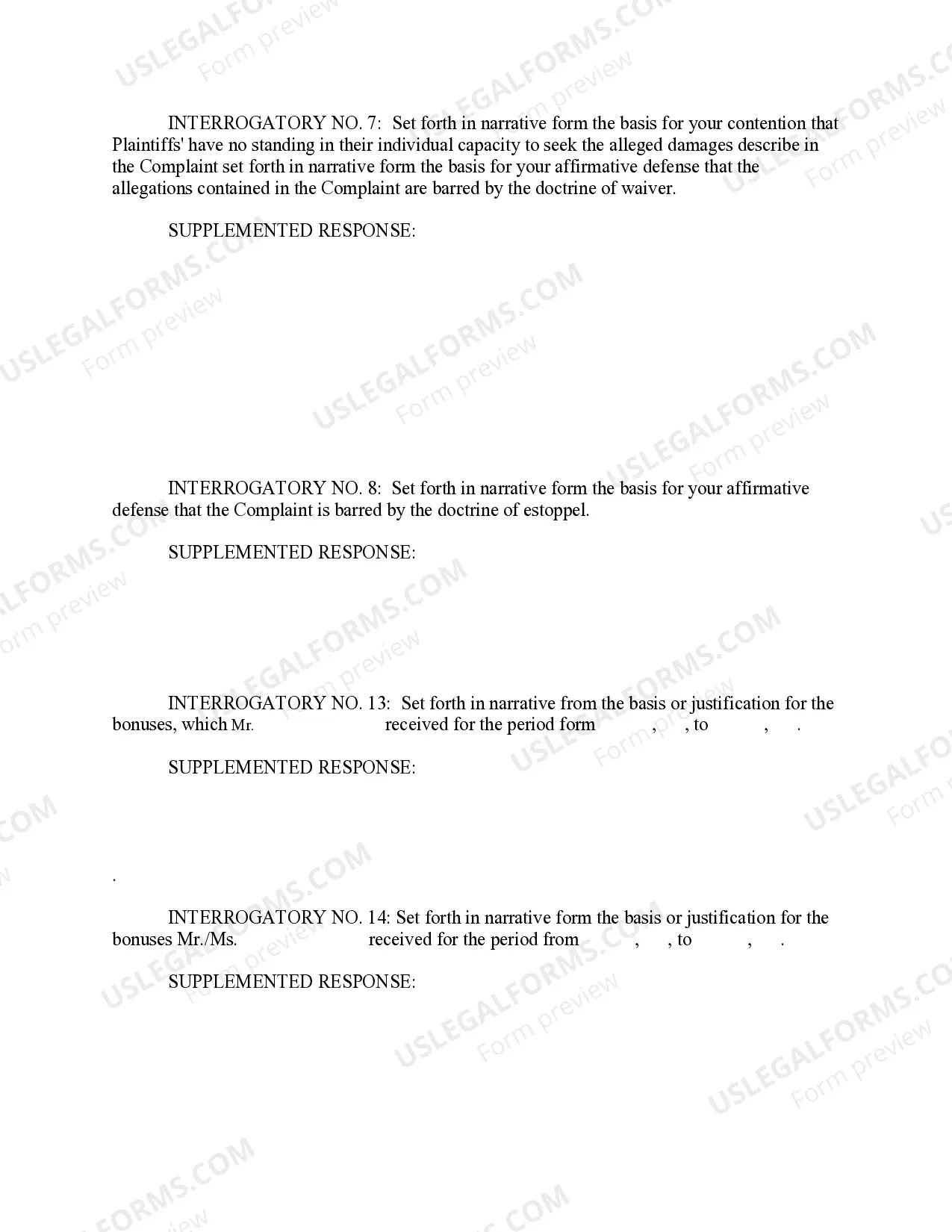
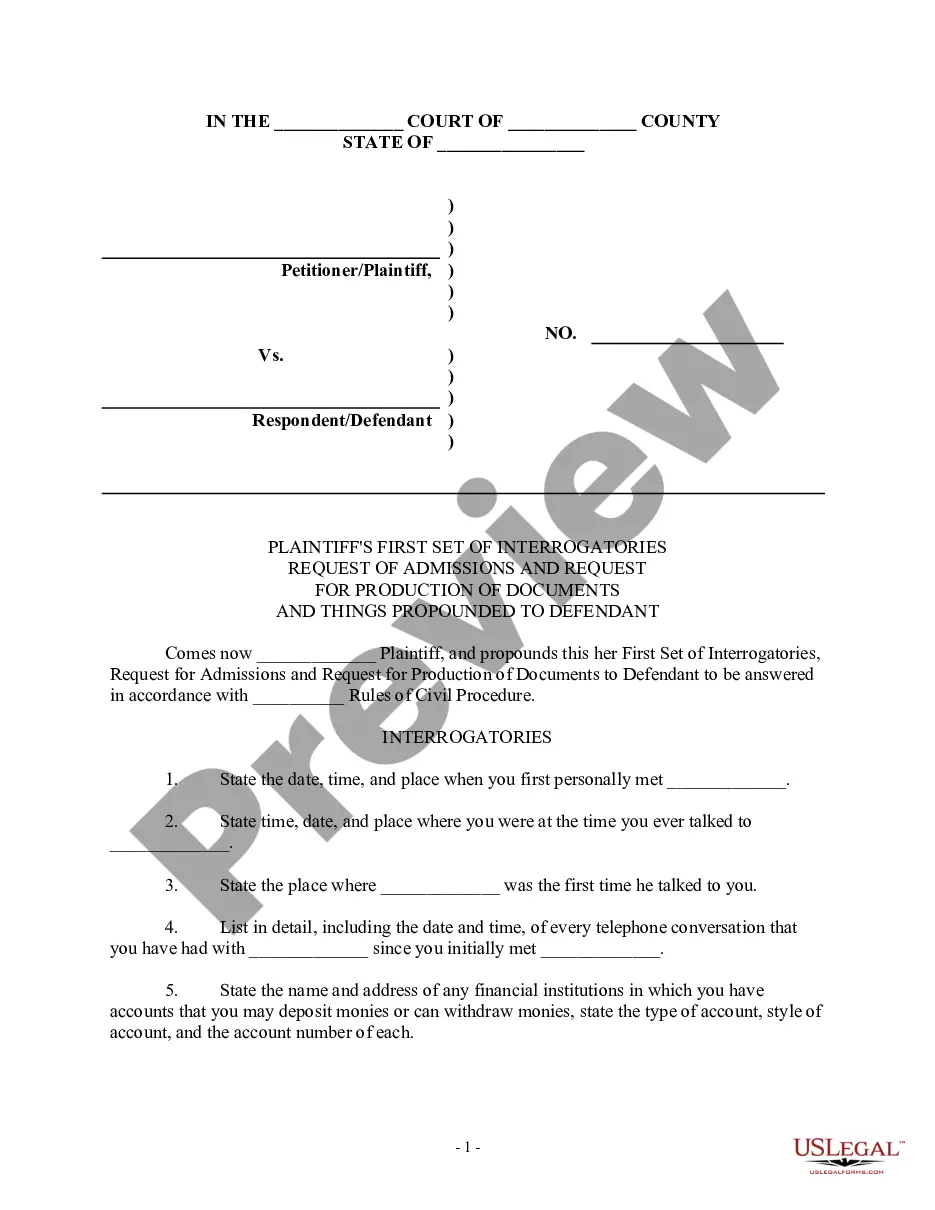
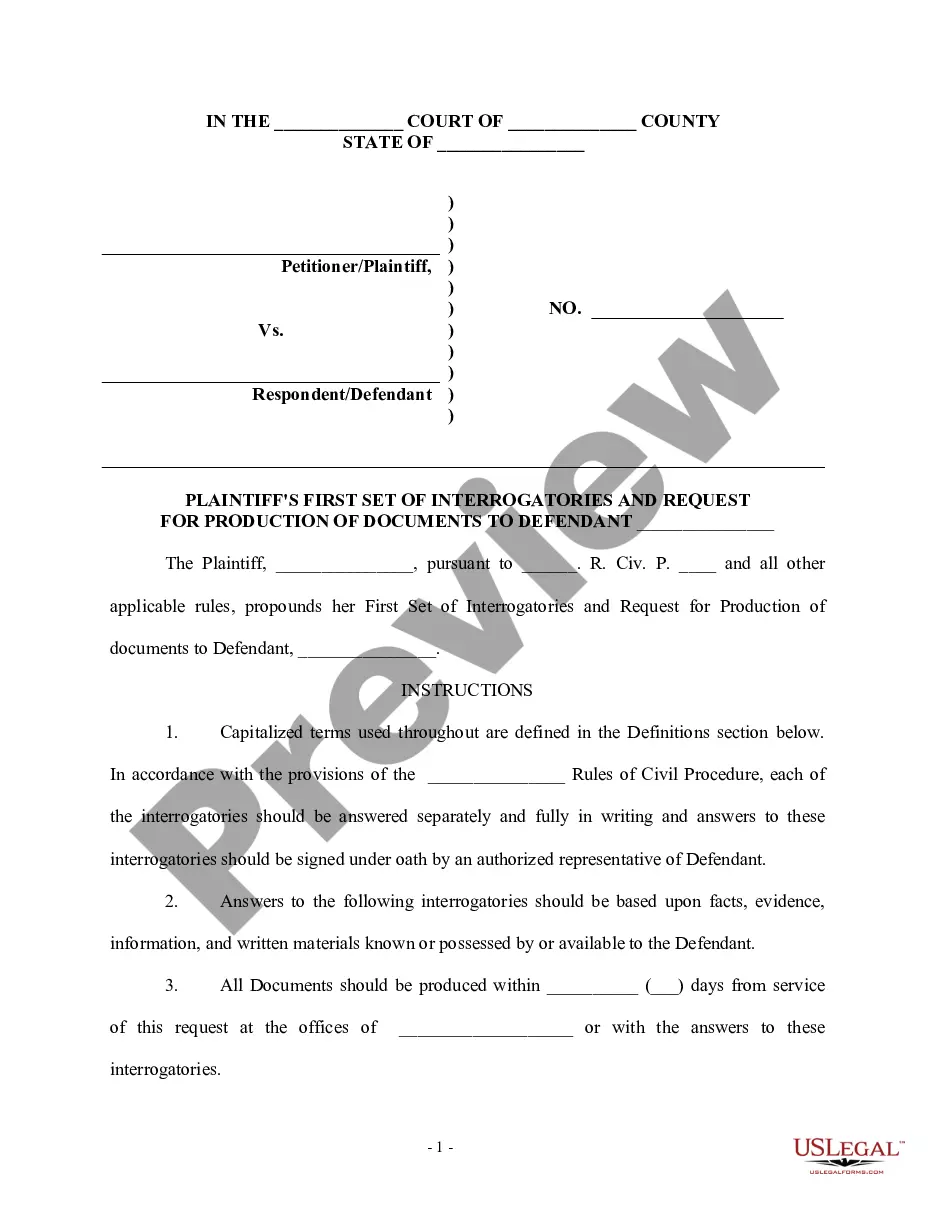
The Defendant's Supplement to Interrogatories and Request for Production of Documents is a legal document used in the discovery process of a lawsuit. Interrogatories are specific written questions a party must answer in writing, and this supplement allows defendants to provide additional information or clarification regarding their defenses. This form is essential for ensuring that all relevant facts and documents are disclosed, enabling a fair examination of the case.
Form components explained
- Interrogatory No. 4: Request to clarify the basis of affirmative defenses related to ownership claims.
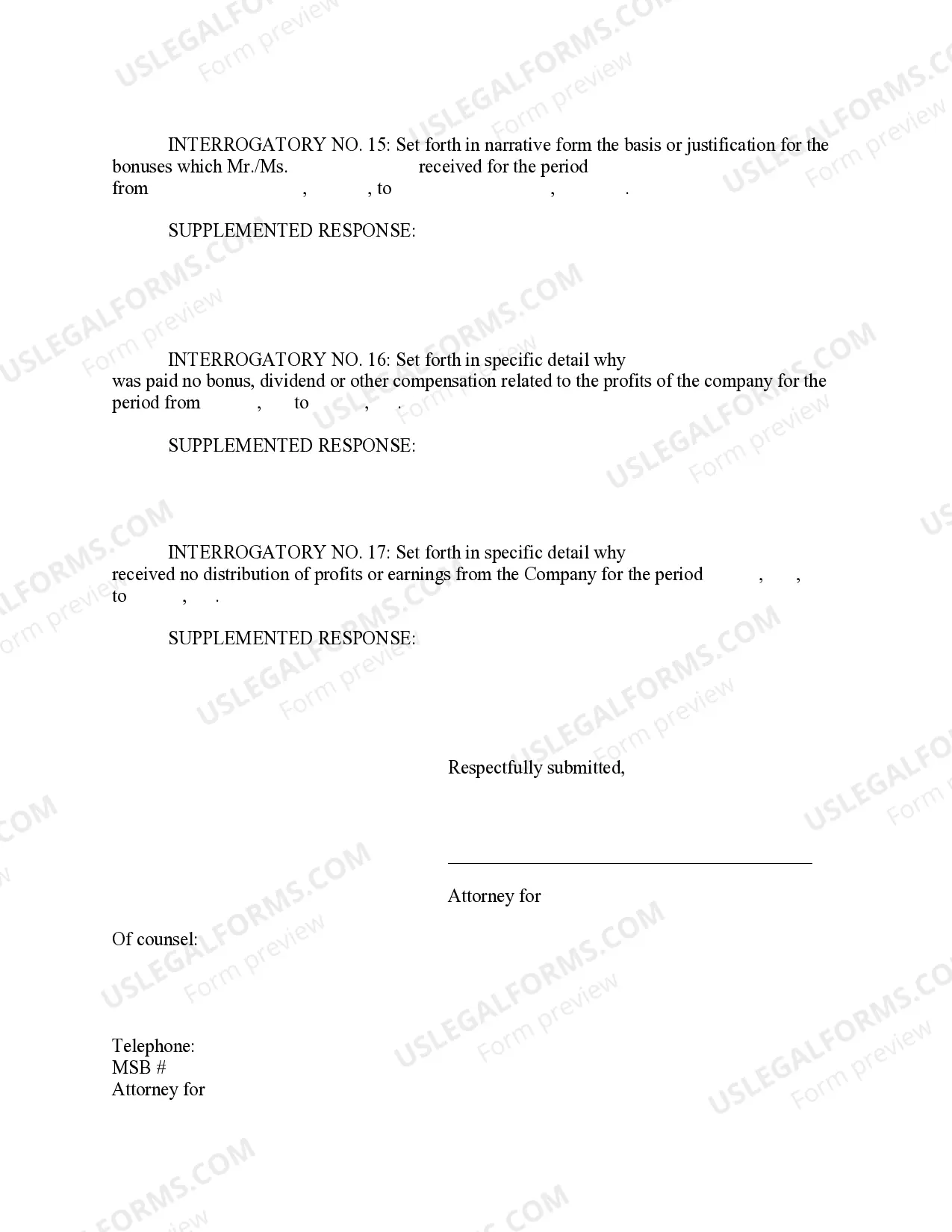
- Supplemented Response sections for detailed answers.
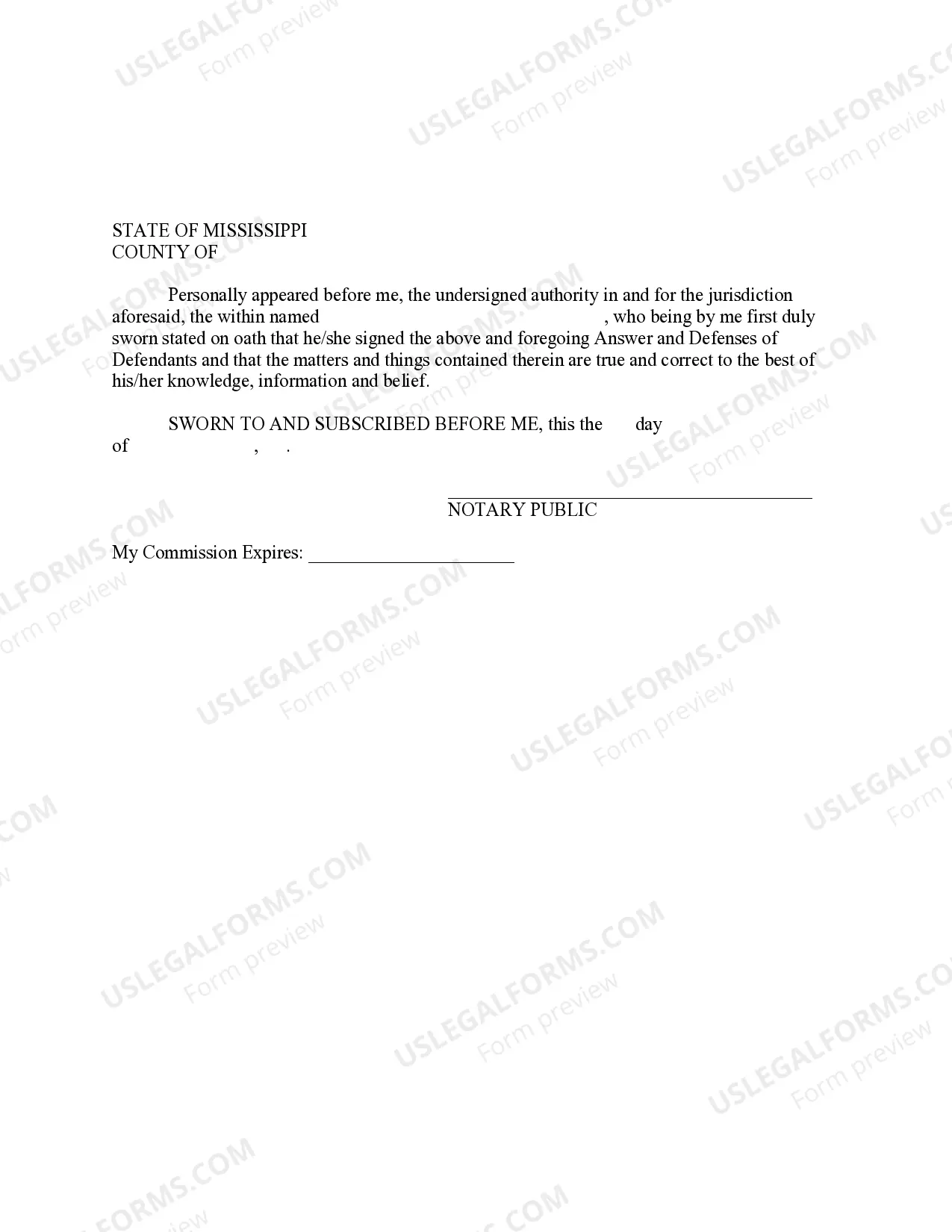
- Notary section for verification of the responses provided.
- Space for signing and dating the document to confirm submission.
When this form is needed
This form should be used when a defendant in a lawsuit needs to respond to interrogatories by providing additional context or documents relevant to the case. It is commonly employed during the discovery phase, particularly when there are complex issues surrounding affirmative defenses or when the parties require more detailed information to prepare for trial.
Who should use this form
- Defendants in a civil lawsuit seeking to clarify their responses to previously submitted interrogatories.
- Parties involved in cases where document production is necessary to support legal arguments.
- Individuals or entities needing to establish the basis for their defenses in accordance with discovery requests.
How to prepare this document
- Begin by clearly stating the name of the defendant and the case number at the top of the form.
- Respond fully to each interrogatory by providing the necessary information in the supplied sections.
- Use the Supplemented Response areas to provide additional details that support your defense.
- Ensure the form is signed and dated in the designated areas to confirm accuracy and completeness.
- If required, have the form notarized by a notary public before submission.
Is notarization required?
This form does not typically require notarization unless specified by local law. It is advisable to verify any local statutory requirements regarding notarization to ensure compliance.
Get your form ready online
Our built-in tools help you complete, sign, share, and store your documents in one place.
Make edits, fill in missing information, and update formatting in US Legal Forms—just like you would in MS Word.
Download a copy, print it, send it by email, or mail it via USPS—whatever works best for your next step.
Sign and collect signatures with our SignNow integration. Send to multiple recipients, set reminders, and more. Go Premium to unlock E-Sign.
If this form requires notarization, complete it online through a secure video call—no need to meet a notary in person or wait for an appointment.
We protect your documents and personal data by following strict security and privacy standards.

Make edits, fill in missing information, and update formatting in US Legal Forms—just like you would in MS Word.

Download a copy, print it, send it by email, or mail it via USPS—whatever works best for your next step.

Sign and collect signatures with our SignNow integration. Send to multiple recipients, set reminders, and more. Go Premium to unlock E-Sign.

If this form requires notarization, complete it online through a secure video call—no need to meet a notary in person or wait for an appointment.

We protect your documents and personal data by following strict security and privacy standards.
Typical mistakes to avoid
- Failing to provide comprehensive responses to each interrogatory.
- Not signing or dating the form, which can lead to delays.
- Neglecting to review state-specific rules regarding format or content.
Benefits of using this form online
- Convenient access: Download the form quickly from any location.
- Editability: Customize the form to suit your specific case requirements.
- Reliable drafting: The forms are created by licensed attorneys, ensuring legal accuracy.
What to keep in mind
- The Defendant's Supplement to Interrogatories and Request for Production of Documents is crucial in the discovery phase of litigation.
- Proper completion and timely submission can significantly impact the outcome of a case.
- Always verify local requirements and ensure the form is tailored to your jurisdiction's laws.
Looking for another form?

Form popularity
FAQ
Interrogatories ask questions; the responding party provides written answers. A request for production of documents requests the production of documents (or other tangible things); the responding party provides documents.
The motion to compel is used to ask the court to order the non-complying party to produce the documentation or information requested, and/or to sanction the non-complying party for their failure to comply with the discovery requests.
Motions to Compel If a party doesn't respond to interrogatories or requests for production, then the party seeking those answers must file a motion to compel with the court. If the court grants the motion to compel, then the party who objected or failed to answer must then do so.
Interrogatories, which are written questions about things that are relevant or important to the case. (NRCP 33; JCRCP 33) Requests for production of documents or things, which are written requests that demand the other side provide particular documents or items.
You must answer each interrogatory separately and fully in writing under oath, unless you object to it. You must explain why you object. You must sign your answers and objections.
Consequences of Refusing to Provide Evidence Requested in a Motion to Compel. If the court issues an order that compels your spouse to produce the discovery you are seeking but your spouse still refuses to provide evidence, the judge may impose further sanctions such as: A verdict in your favor.
A motion to compel asks the court to enforce a request for information relevant to a case.The requesting party files a motion to compel discovery responses if the opposing party continues to deny the discovery request.
In law, interrogatories (also known as requests for further information) are a formal set of written questions propounded by one litigant and required to be answered by an adversary in order to clarify matters of fact and help to determine in advance what facts will be presented at any trial in the case.
So, can you refuse to answer interrogatories? The answer is, no, you may not. You must answer a Rule 33 interrogatory within 30 days of being served with it. That answer must either permit inspection of the requested information or object to the production of the information for a specific reason.