Mississippi Motion to Reset Hearing to Complete Discovery
What is this form?
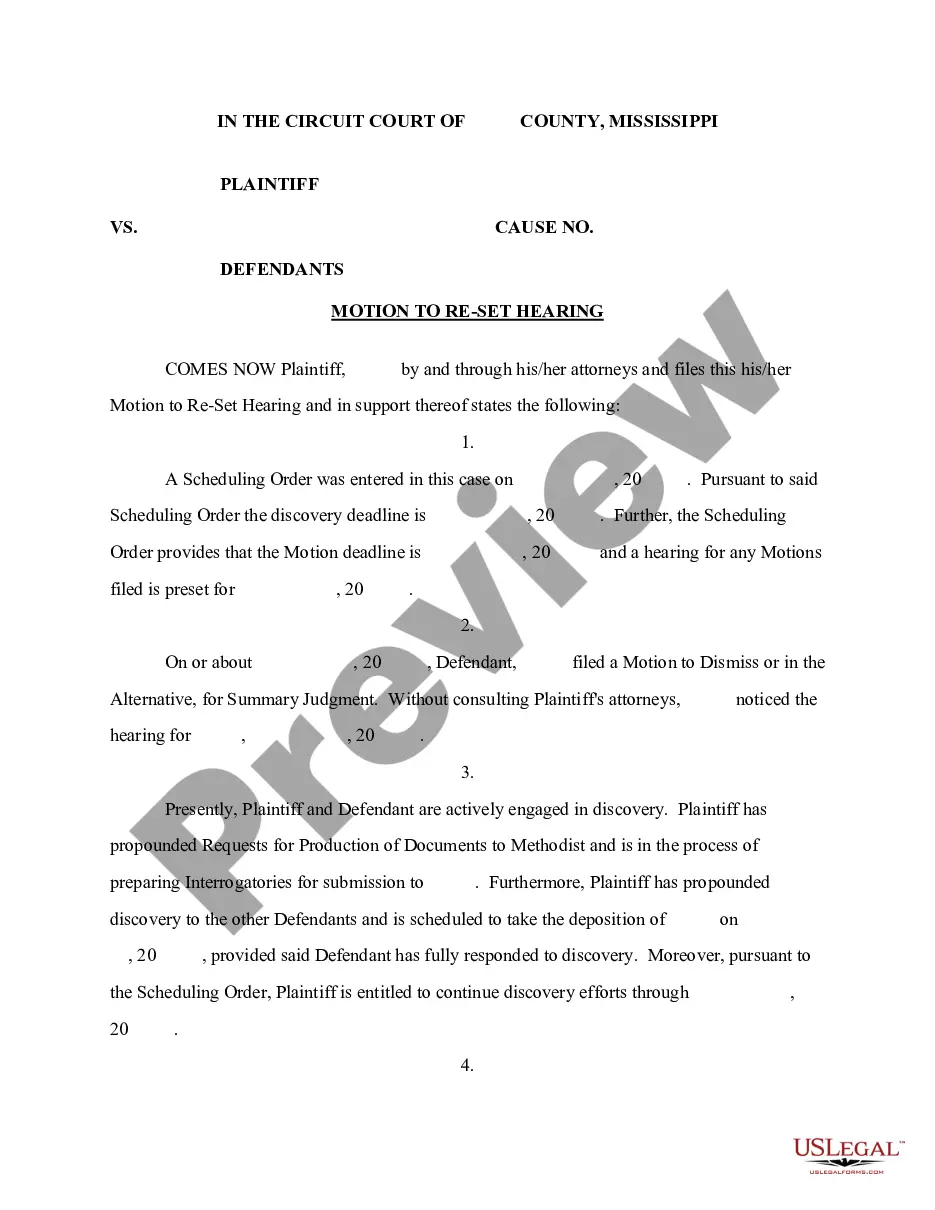
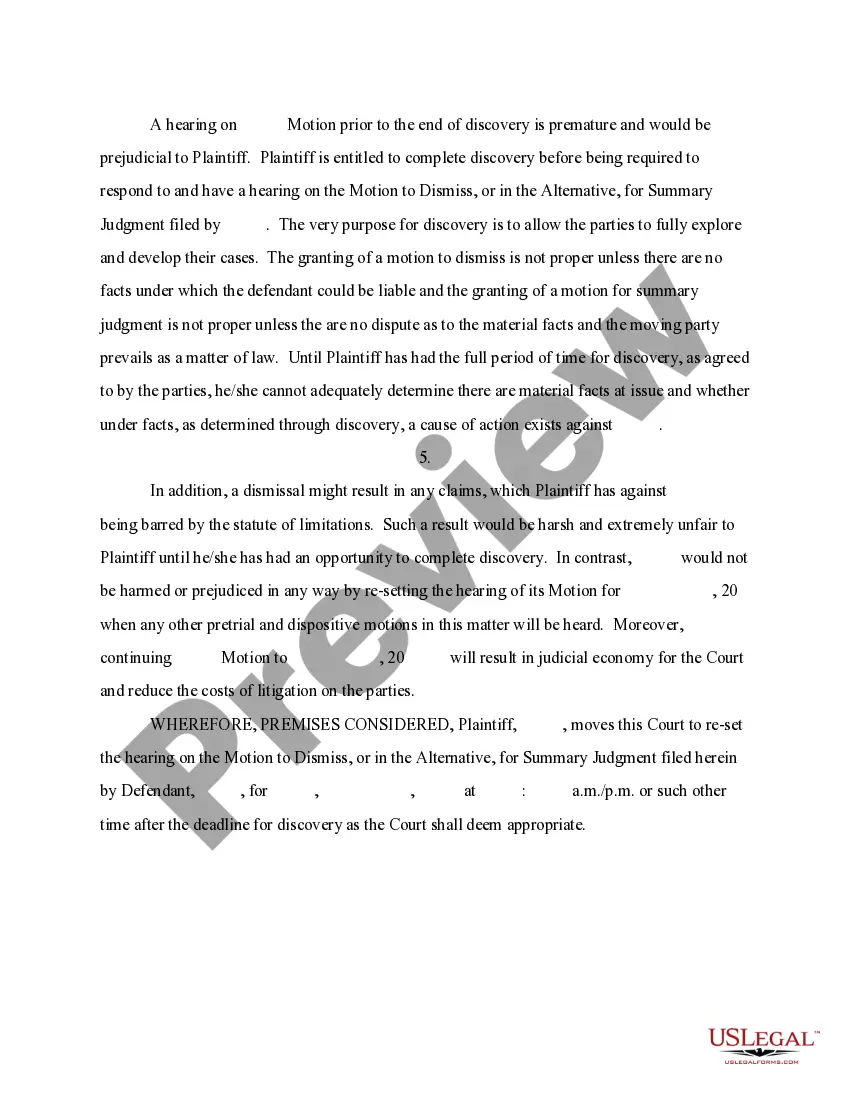
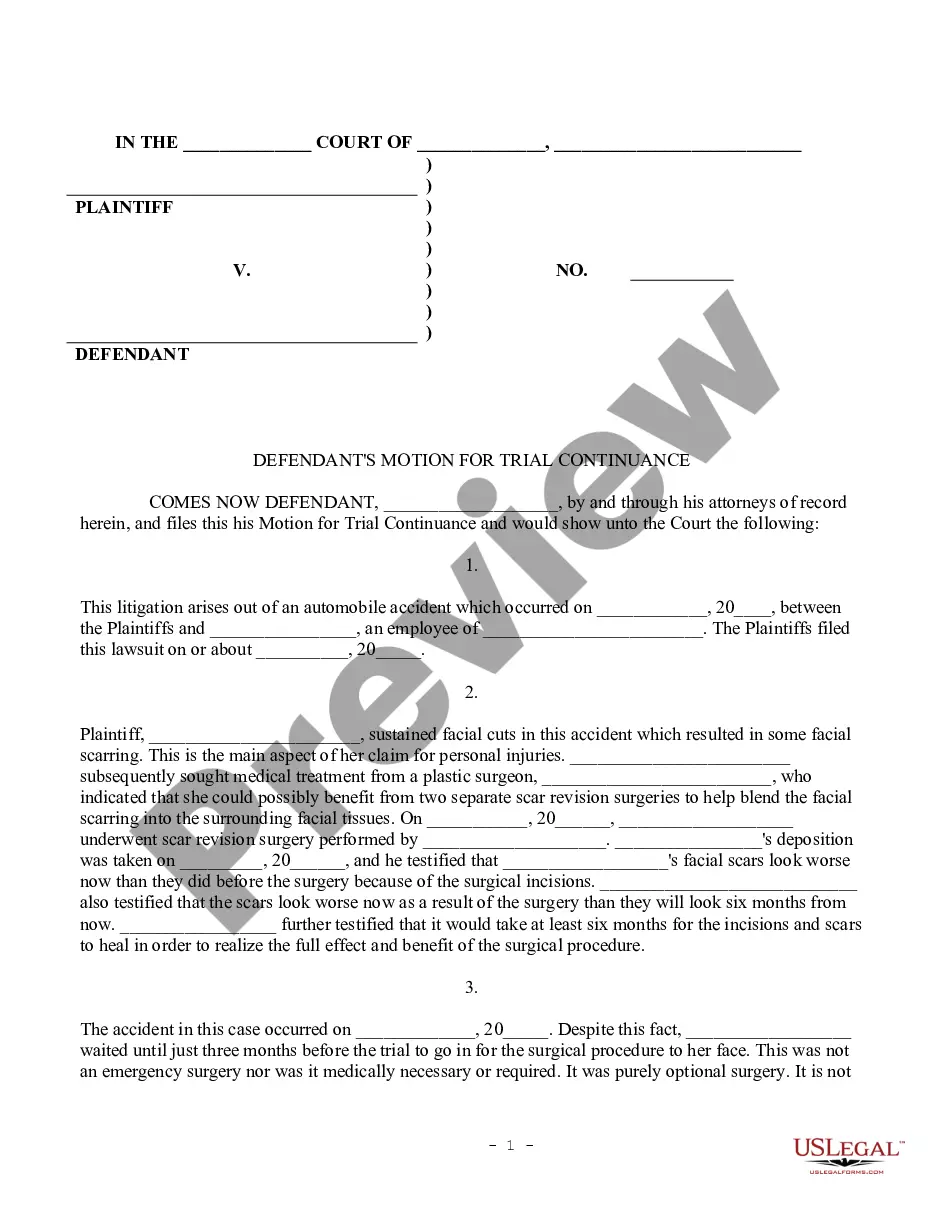
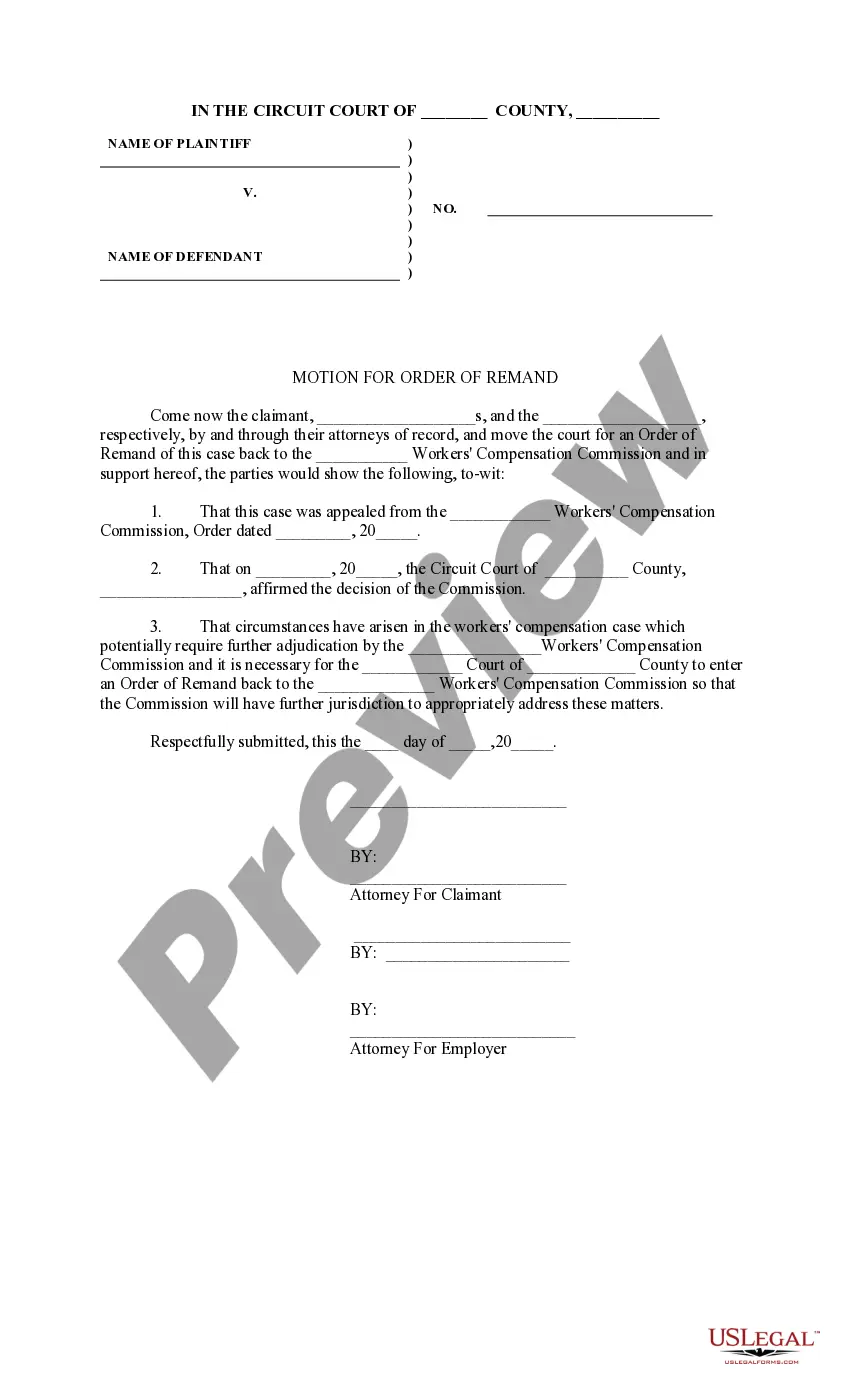
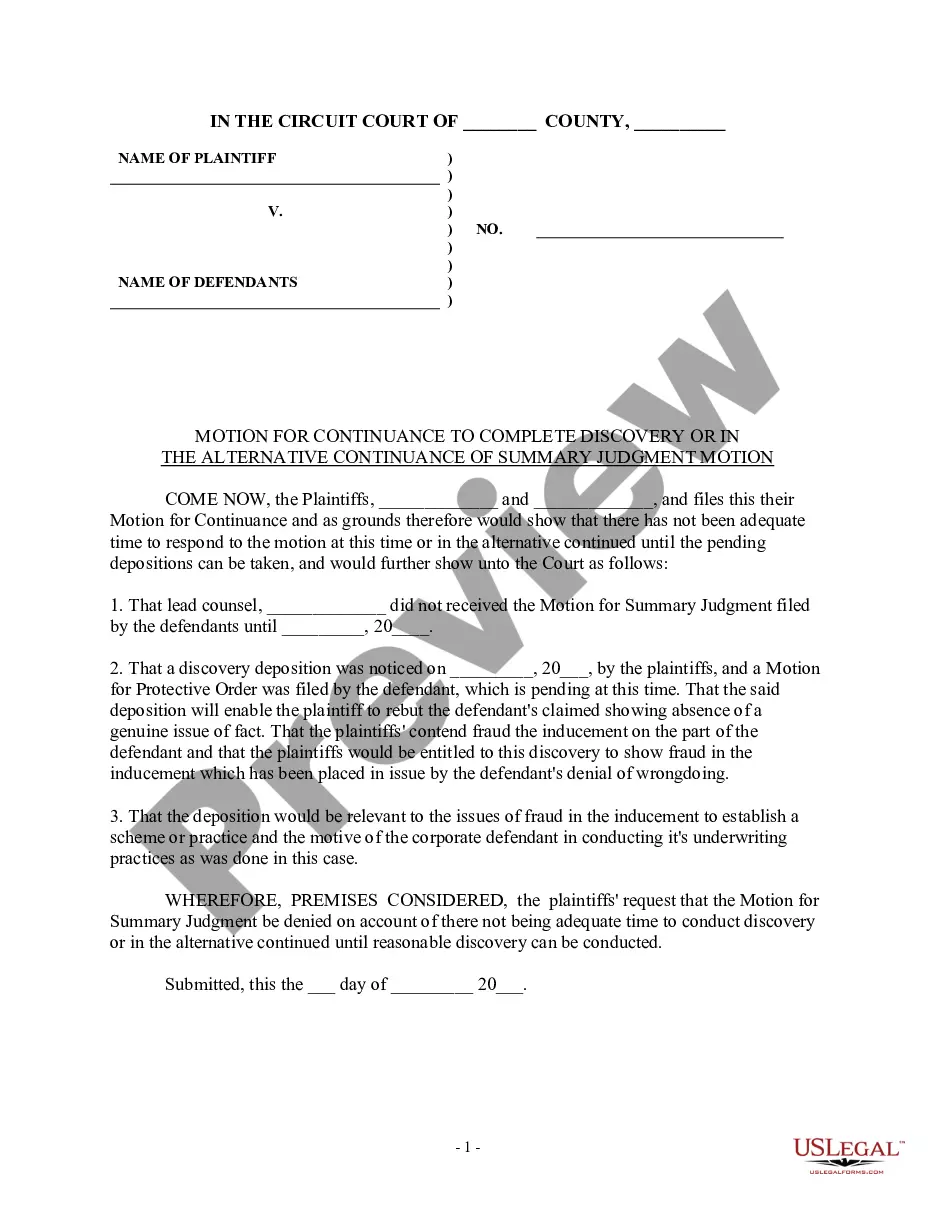
The Motion to Reset Hearing to Complete Discovery is a written request submitted to the court, asking for a change in the schedule of a hearing to allow more time for completing the discovery process. This form is specifically designed to facilitate communication with the court when additional time is necessary, distinguishing it from other motions that may address different legal issues or timelines.
Key parts of this document
- Title of the motion specifying the action being requested.
- Details about the case, including names of the parties involved and the case number.
- Reasons for the request to reset the hearing, explaining the need for additional time to complete discovery.
- Proposed new date for the hearing.
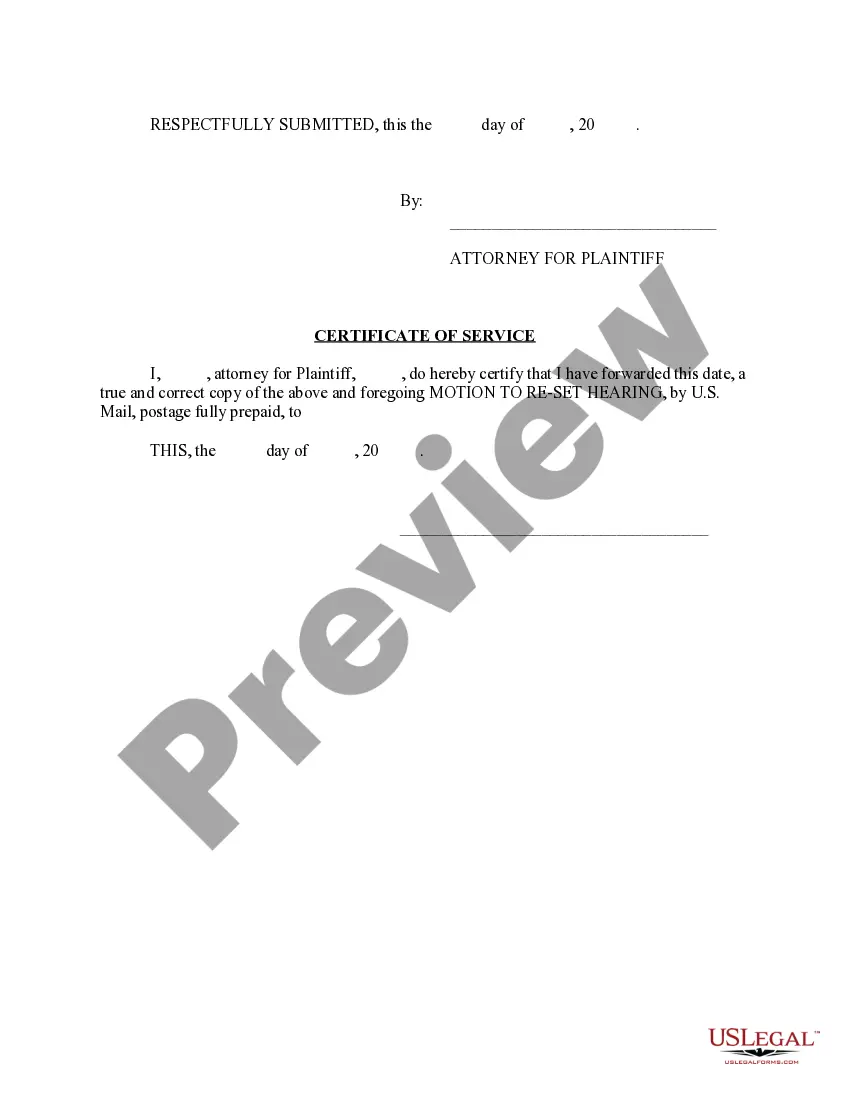
- Signature line for the attorney or party filing the motion.

When to use this form
This form is used in situations where a party requires more time to gather evidence or complete the discovery process before the scheduled hearing. Common scenarios include when new evidence emerges, when additional witnesses need to be interviewed, or when there are delays in obtaining necessary documents. Filing this motion can help ensure that the case is adequately prepared for court.
Who this form is for
- Attorneys representing clients in civil litigation.
- Individuals involved in a lawsuit who need to request additional time for discovery.
- Parties seeking to ensure a fair and thorough legal process by completing necessary pre-hearing work.
How to prepare this document
- Identify the parties involved in the case and provide their details.
- Clearly state the reason for needing to reset the hearing.
- Propose a new date for the hearing that allows adequate time for discovery.
- Sign the motion to validate the request, ensuring all required signatures are included.
- File the motion with the court and provide copies to all involved parties.
Notarization guidance
Notarization is not commonly needed for this form. However, certain documents or local rules may make it necessary. Our notarization service, powered by Notarize, allows you to finalize it securely online anytime, day or night.
Get your form ready online
Our built-in tools help you complete, sign, share, and store your documents in one place.
Make edits, fill in missing information, and update formatting in US Legal Forms—just like you would in MS Word.
Download a copy, print it, send it by email, or mail it via USPS—whatever works best for your next step.
Sign and collect signatures with our SignNow integration. Send to multiple recipients, set reminders, and more. Go Premium to unlock E-Sign.
If this form requires notarization, complete it online through a secure video call—no need to meet a notary in person or wait for an appointment.
We protect your documents and personal data by following strict security and privacy standards.

Make edits, fill in missing information, and update formatting in US Legal Forms—just like you would in MS Word.

Download a copy, print it, send it by email, or mail it via USPS—whatever works best for your next step.

Sign and collect signatures with our SignNow integration. Send to multiple recipients, set reminders, and more. Go Premium to unlock E-Sign.

If this form requires notarization, complete it online through a secure video call—no need to meet a notary in person or wait for an appointment.

We protect your documents and personal data by following strict security and privacy standards.
Typical mistakes to avoid
- Failing to provide a compelling reason for the motion.
- Neglecting to propose a new hearing date.
- Not including all necessary parties in the filing process.
- Missing signature or filing the document incorrectly.
Why use this form online
- Convenient access to legally vetted templates at any time.
- Editability allows customization to fit your specific case needs.
- Reliable format that adheres to standard legal requirements.
Legal use & context
- This motion is an essential part of the litigation process, allowing adjustments to timelines that accommodate the complexities of gathering evidence.
- Failure to submit this motion in a timely manner may result in a court denying requests for extensions.
Looking for another form?
Form popularity
FAQ
A "motion" is simply a formal request to a court that it do something or decide an issue in favor of the party that asks for it. "Granted" means the court agreed with the request, and did or decided in favor of the requester.
A motion is an application to the court made by the prosecutor or defense attorney, requesting that the court make a decision on a certain issue before the trial begins. The motion can affect the trial, courtroom, defendants, evidence, or testimony. Only judges decide the outcome of motions.
Discovery, in the law of common law jurisdictions, is a pre-trial procedure in a lawsuit in which each party, through the law of civil procedure, can obtain evidence from the other party or parties by means of discovery devices such as interrogatories, requests for production of documents, requests for admissions and
Effect of a Rule 12 Motion - Absent a court order setting a different time, a Rule 12 motion extends the time to file a responsive pleading until 14 days after the court's denial of the motion or deferral to trial or, if more definite statement ordered, 14 days after service of the more definite statement. FED.
Step 1: Prepare and exchange your initial disclosures. Within thirty days after the defendant files his answer, the plaintiff and defendant must exchange: Step 2: File the early case conference report. Step 3: Ask the court to allow more discovery if you want it.
21 provides that misjoinder of parties is not ground for dismissal of an action, and that parties may be dropped or added by court order on motion of any party or of the court's own initiative at any stage in the action and on such terms as are just.
Hearing on Motion to Compel When a motion to compel is filed with the court, a hearing is scheduled. At the hearing, the party that filed the motion will need to tell the judge why the other party should be compelled to do something.Once that happens, that party will not be able to use the documents at trial.
An application to the court for an order and notice of any hearing thereon, not presented during a hearing or trial, must be served upon all other parties not less than three days before the time specified for the hearing, unless otherwise provided by these rules or shortened by the court.
A motion to compel asks the court to enforce a request for information relevant to a case.The requesting party files a motion to compel discovery responses if the opposing party continues to deny the discovery request.