Mississippi Order Denying Motion to Dismiss
What this document covers
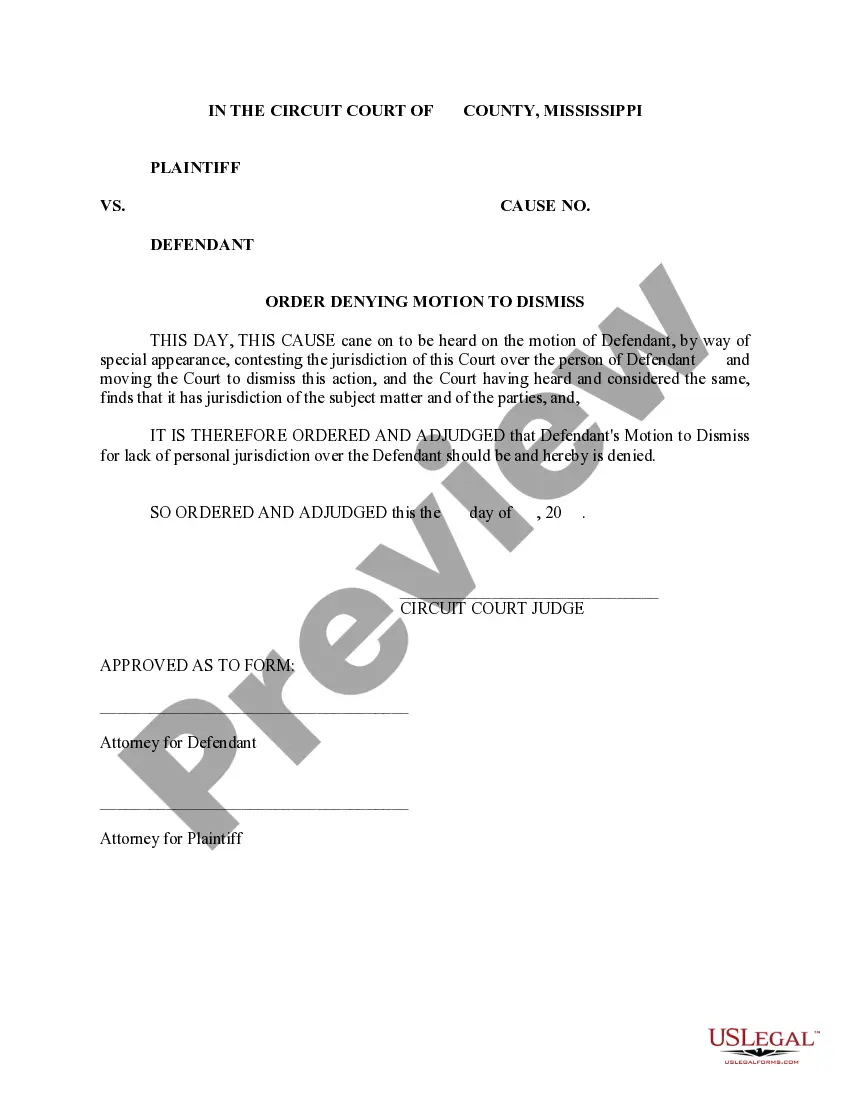
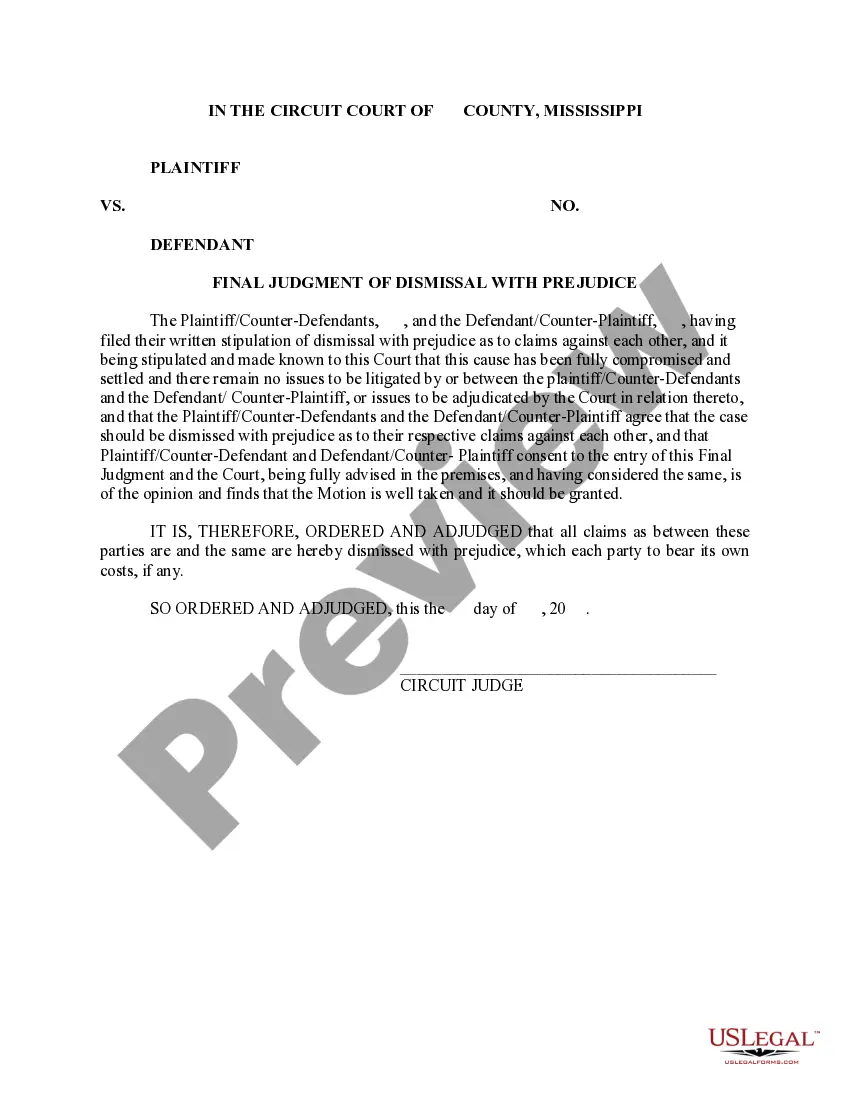
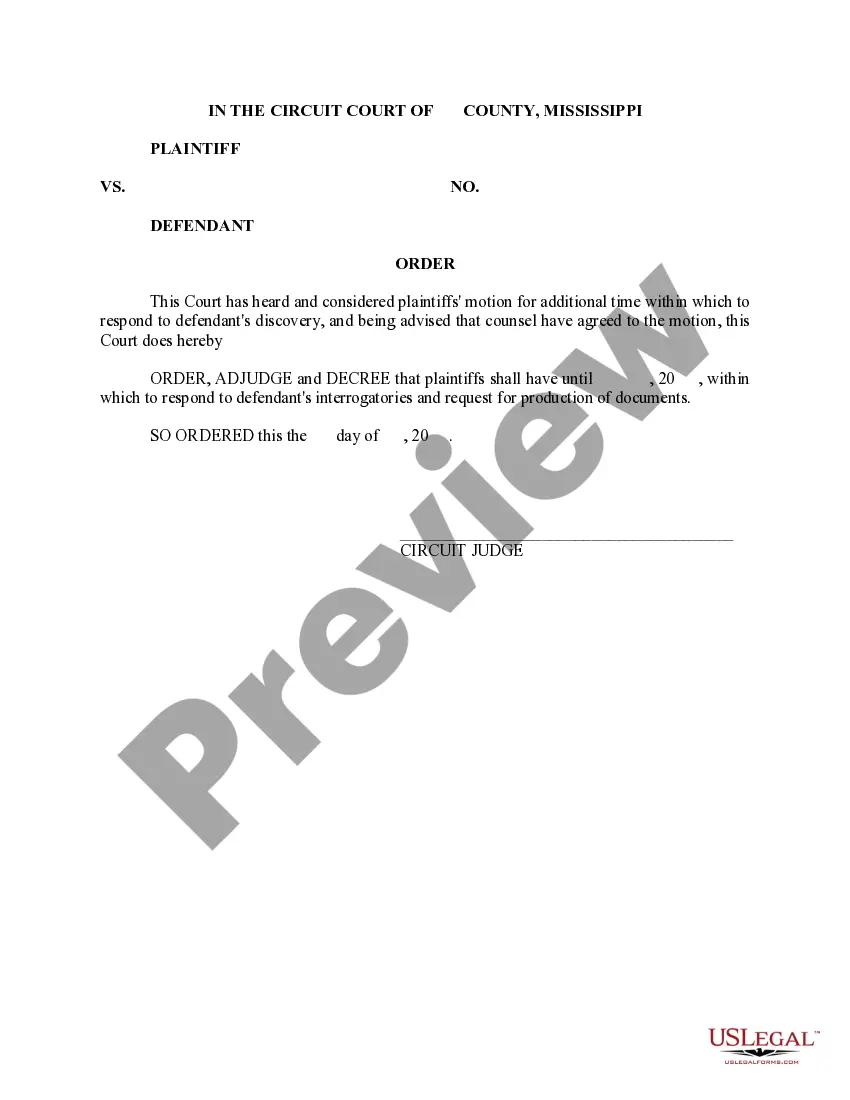
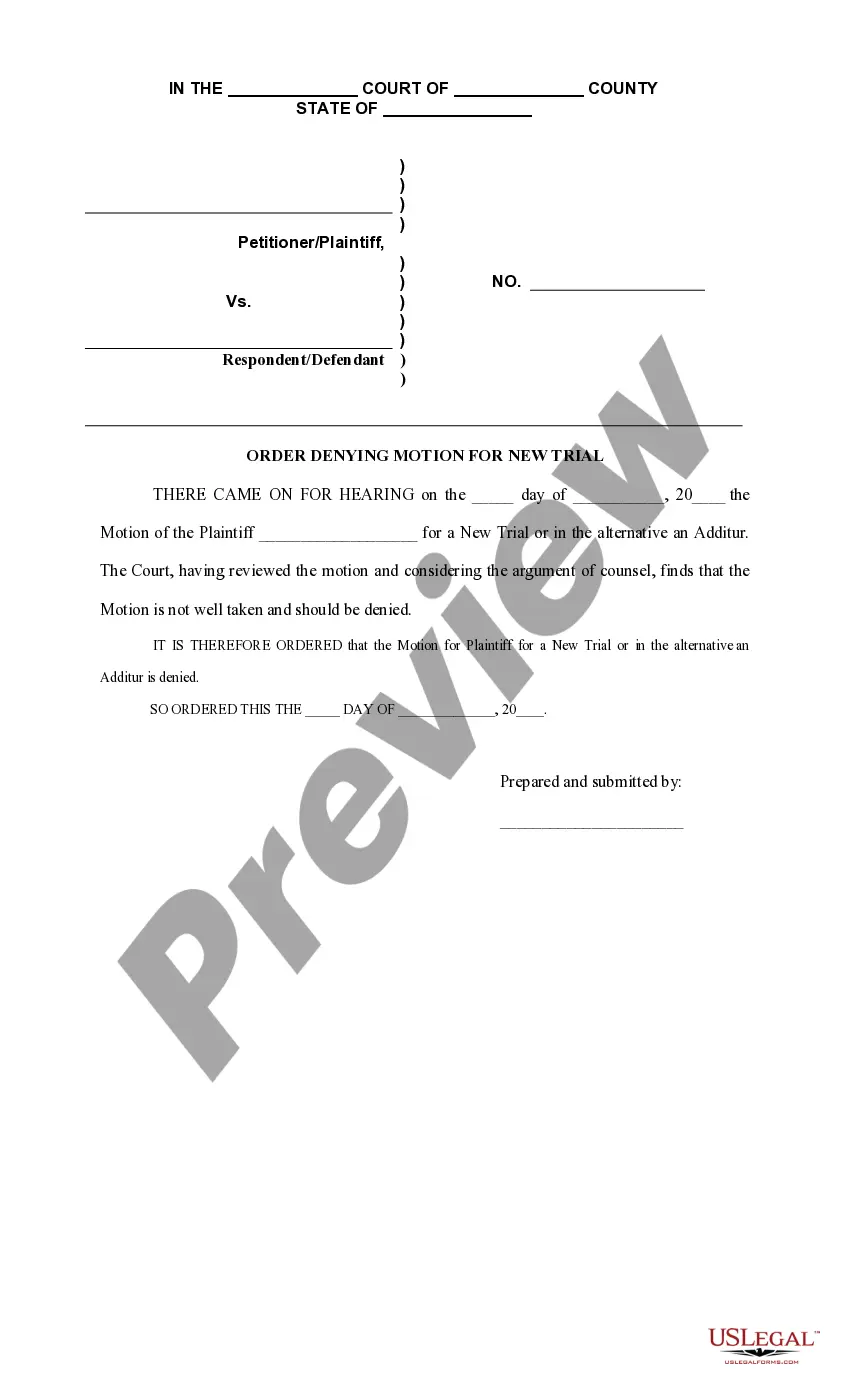
The Order Denying Motion to Dismiss is a legal document issued by a court that formally denies a defendant's request to dismiss a case due to reasons such as lack of personal jurisdiction. This form is crucial in ensuring that a case can proceed in court, as it establishes that the initial motion for dismissal has not been granted. Unlike other motions, this order specifically addresses the denial of dismissal, allowing the case to move forward.
Form components explained
- Order statement declaring the denial of the motion to dismiss.
- Date line for the order's issuance.
- Signature line for the Circuit Court Judge.
- Approval section for attorneys representing the defendant and plaintiff.
When to use this form
This form is used when a defendant has filed a motion to dismiss a case, usually claiming that the court lacks jurisdiction over them. If the court finds the motion's arguments insufficient, it will issue an Order Denying Motion to Dismiss, which allows the case to continue. Common scenarios include civil litigation disputes and cases involving claims of personal jurisdiction.
Who this form is for
This form is generally intended for:
- Legal representatives of defendants who have had their motion to dismiss denied.
- Attorneys involved in litigation who need to document the court's decision on jurisdictional matters.
- Parties in civil lawsuits seeking to understand the outcomes of motions filed within their case.
Instructions for completing this form
- Clearly state the order at the beginning, indicating the motion's denial.
- Fill in the date of issuance of the order.
- Have the designated Circuit Court Judge sign the document.
- Ensure both attorneys for the defendant and plaintiff approve the form by signing or printing their names in the provided spaces.
Does this document require notarization?
This form does not typically require notarization unless specified by local law.
Get your form ready online
Our built-in tools help you complete, sign, share, and store your documents in one place.
Make edits, fill in missing information, and update formatting in US Legal Forms—just like you would in MS Word.
Download a copy, print it, send it by email, or mail it via USPS—whatever works best for your next step.
Sign and collect signatures with our SignNow integration. Send to multiple recipients, set reminders, and more. Go Premium to unlock E-Sign.
If this form requires notarization, complete it online through a secure video call—no need to meet a notary in person or wait for an appointment.
We protect your documents and personal data by following strict security and privacy standards.

Make edits, fill in missing information, and update formatting in US Legal Forms—just like you would in MS Word.

Download a copy, print it, send it by email, or mail it via USPS—whatever works best for your next step.

Sign and collect signatures with our SignNow integration. Send to multiple recipients, set reminders, and more. Go Premium to unlock E-Sign.

If this form requires notarization, complete it online through a secure video call—no need to meet a notary in person or wait for an appointment.

We protect your documents and personal data by following strict security and privacy standards.
Mistakes to watch out for
- Failing to include the date of the order.
- Omitting the judge's signature or approval lines for attorneys.
- Incorrectly stating the grounds for the motion to dismiss.
Advantages of online completion
- Immediate access to a professionally drafted legal template.
- Easy customization to fit specific case details.
- Convenient download options in standard formats for quick use.
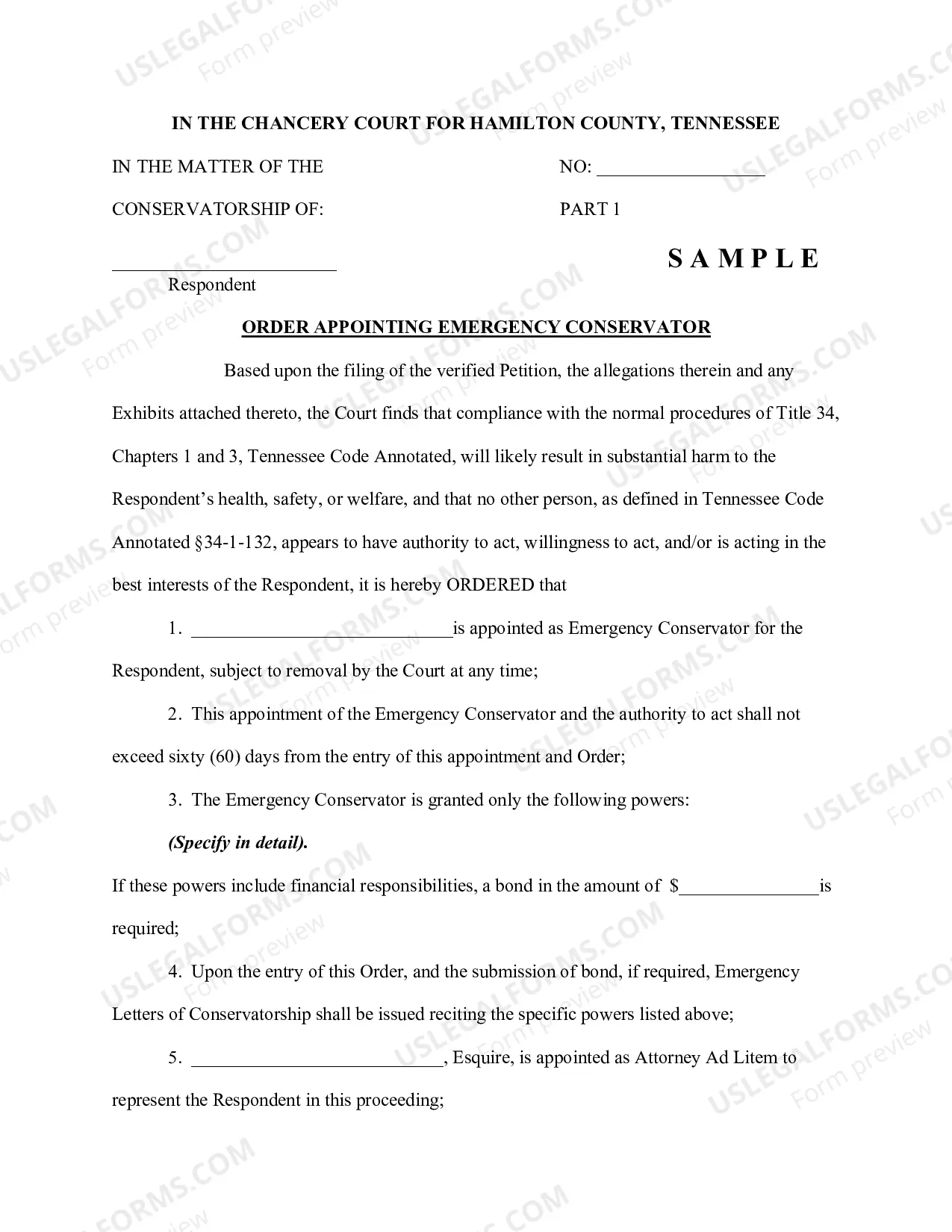
Looking for another form?

Form popularity
FAQ
Each court has different rules about how long you have to respond to this motion, but usually you will have at least two or three weeks to file an opposition to the defendant's motion to dismiss.
You do not have to file a response. However, you would be wise to do so as a motion to dsmiss , if granted, could end your suit. Motions to dimiss for failure to state a claim are rarely granted.
Generally, however, a defendant must file a motion to dismiss before filing an "answer" to the complaint. If the motion to dismiss is denied, the defendant must still file their answer, usually within a shortened amount of time.The motion to dismiss must be filed with the court and served on the other party.
If the losing party agrees it lacked sufficient evidence to prove a claim, it is required to preserve the matter by filing a motion to present the proof. If the motion was denied, it could pursue an appeal. In essence, the proof submitted at the summary judgment becomes irrelevant to the case.
In effect, in both kinds of cases, the lawyer asks the judge to direct a verdict for the defendant. The judge will either grant or deny the motion. If it is granted, the case is over and the defendant wins. If the motion is denied, as it usually is, the defense is given the opportunity to present its evidence.
To survive a motion to dismiss, a lawsuit must contain sufficient factual matter to state a claim to relief that is plausible on its face.
No, because "for the purposes of Rule 15(a), a Rule 12(b)(6) motion to dismiss is not a responsive pleading and thus does not itself terminate plaintiff's unconditional right to amend a complaint under Rule 15(a)." Op.
You simply need to request that the court deny the defendant's motion to dismiss. For example, you could write the following: For the foregoing reasons and all the others discussed in Plaintiff's Complaint, the present Motion to Dismiss should be denied.
When a judge denies a defendant's motion to dismiss, the case will continue because defendant did not convince the judge to terminate the case. The plaintiff has not won (yet).In a civil litigation, when a judge denies a defendant's motion to dismiss, the case continues instead of ending early.