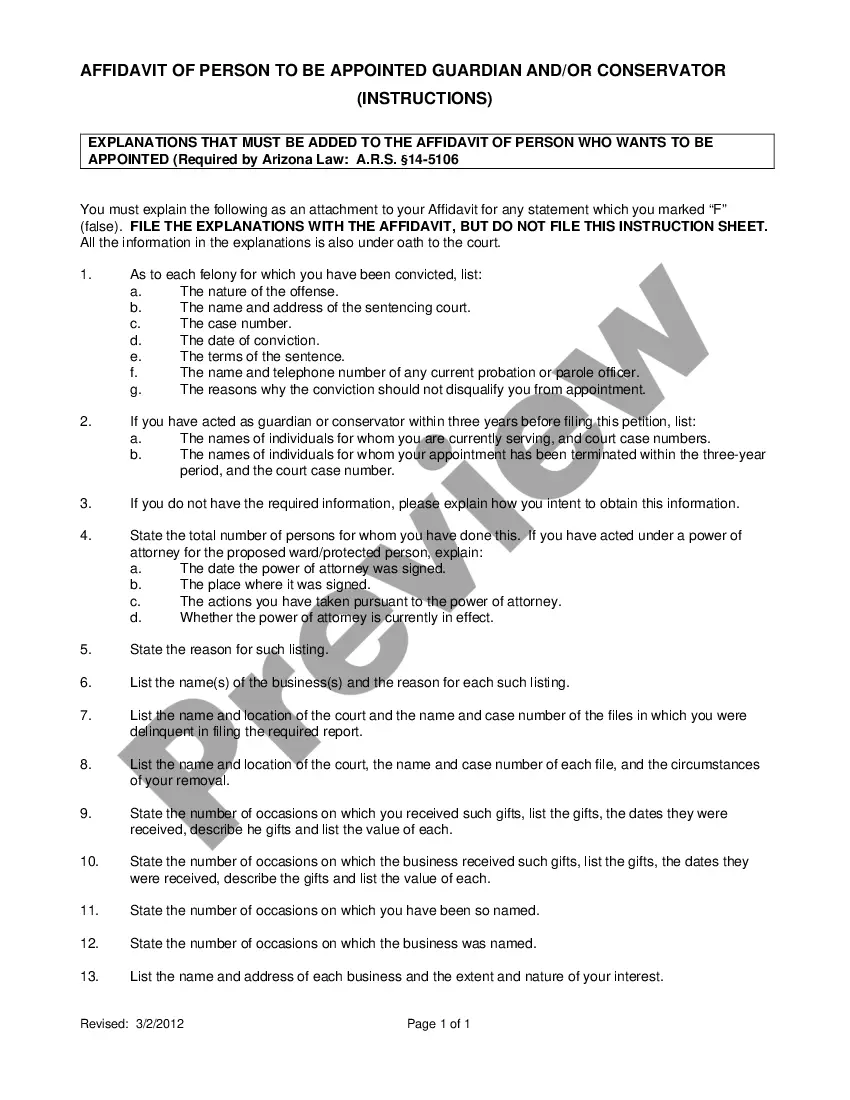
Mississippi Motion for Order Compelling Discovery
About this form
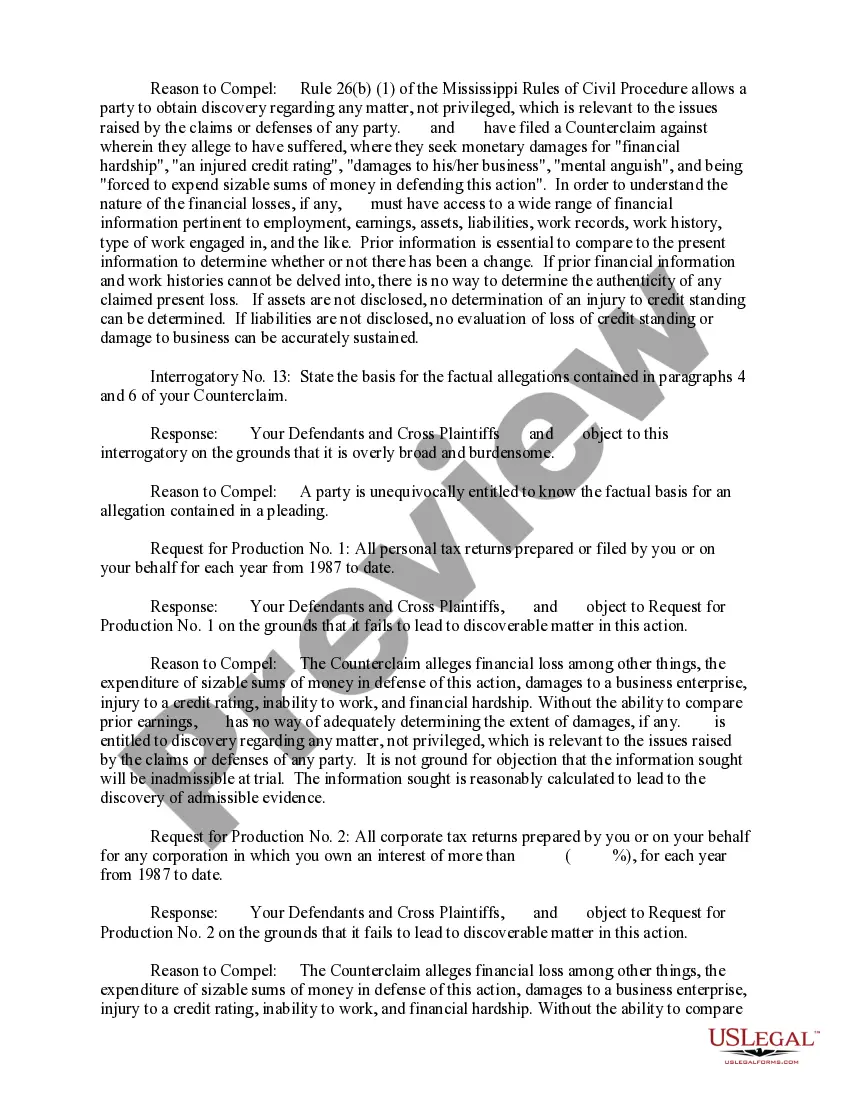
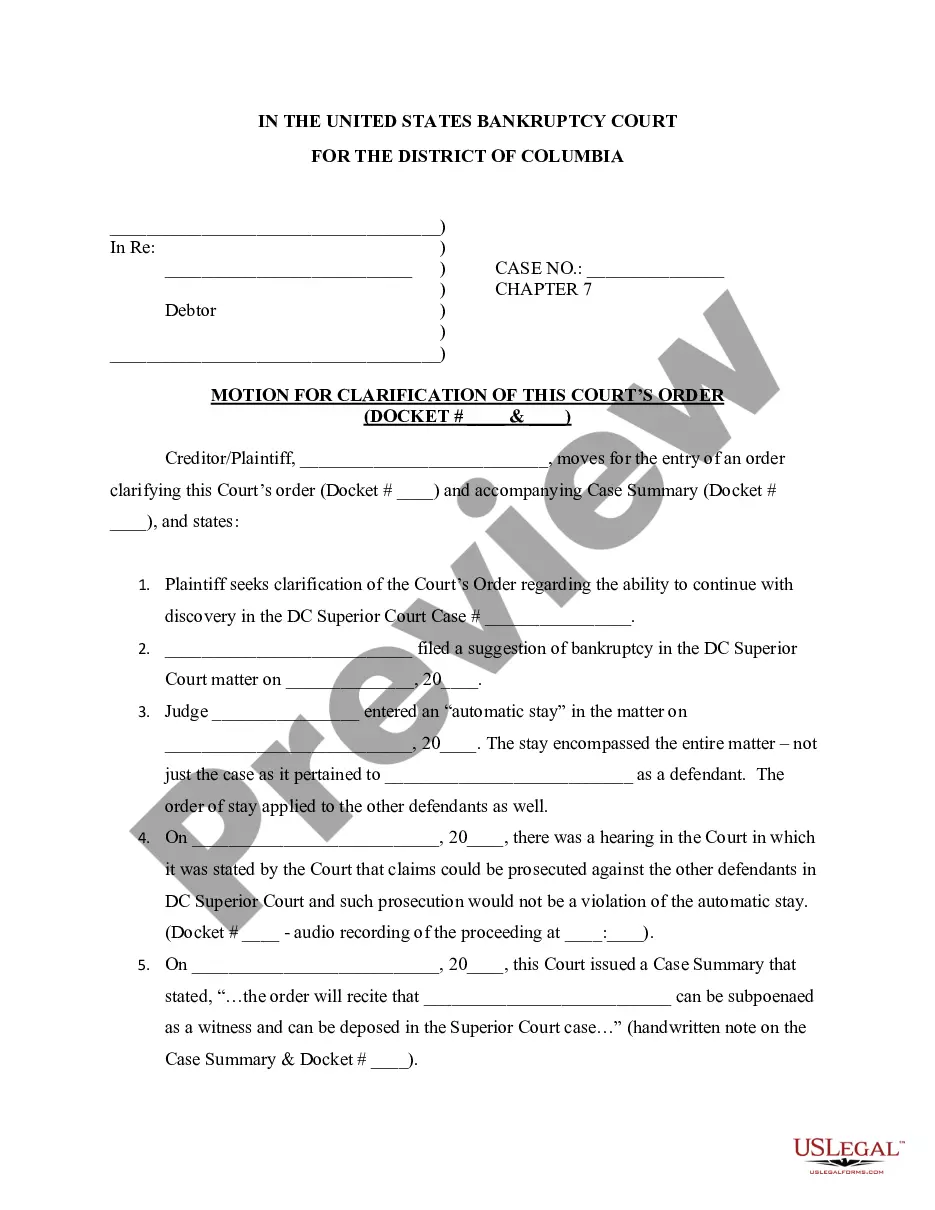
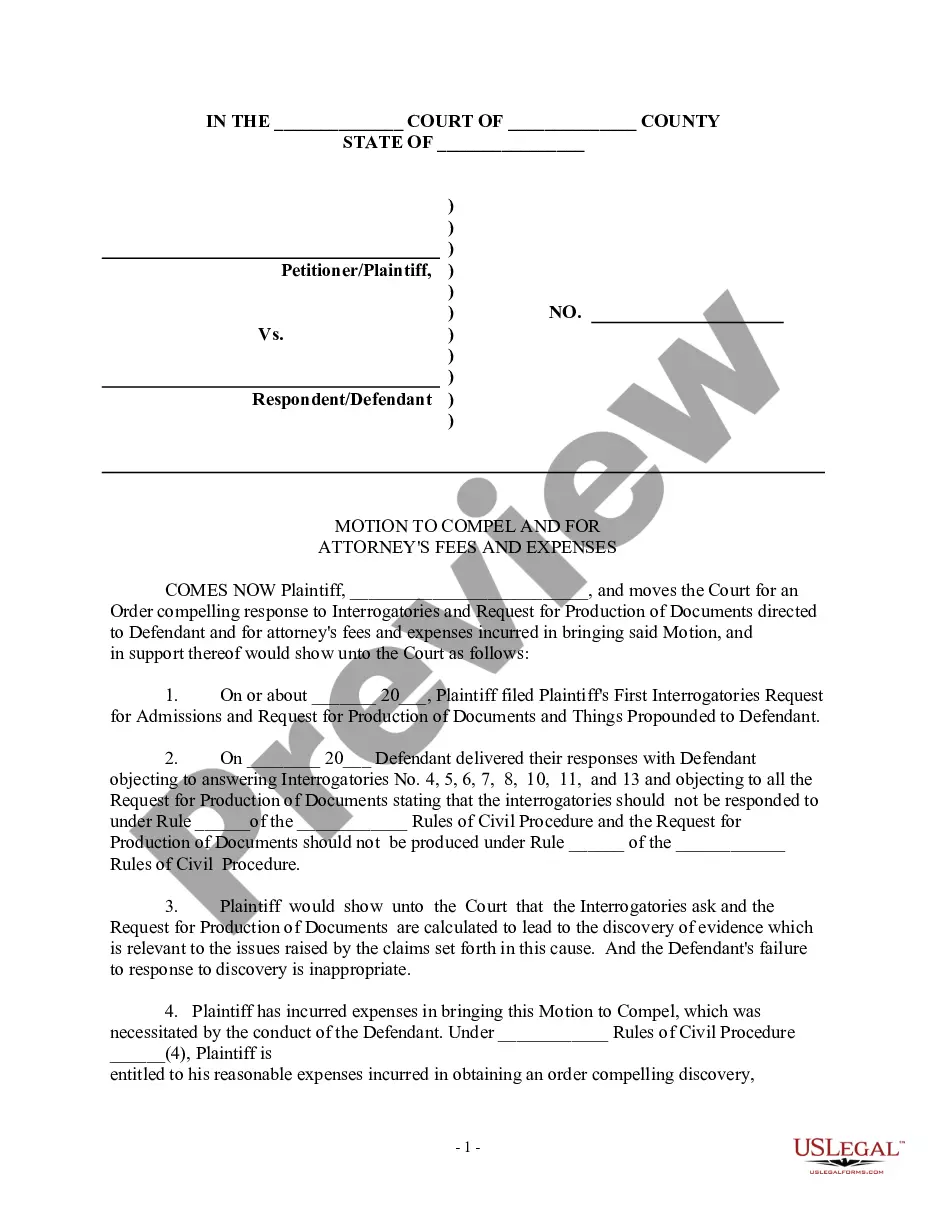
The Motion for Order Compelling Discovery is a legal document used by a plaintiff to request a court order requiring the defendant to respond to discovery requests. This form serves an essential role in civil litigation, facilitating the exchange of information crucial for both parties to substantiate their claims or defenses. Unlike other discovery forms, this motion specifically addresses the lack of response to interrogatories or requests for documents, pushing for compliance from the opposing party.
Main sections of this form
- Identification of the plaintiff and all involved parties.
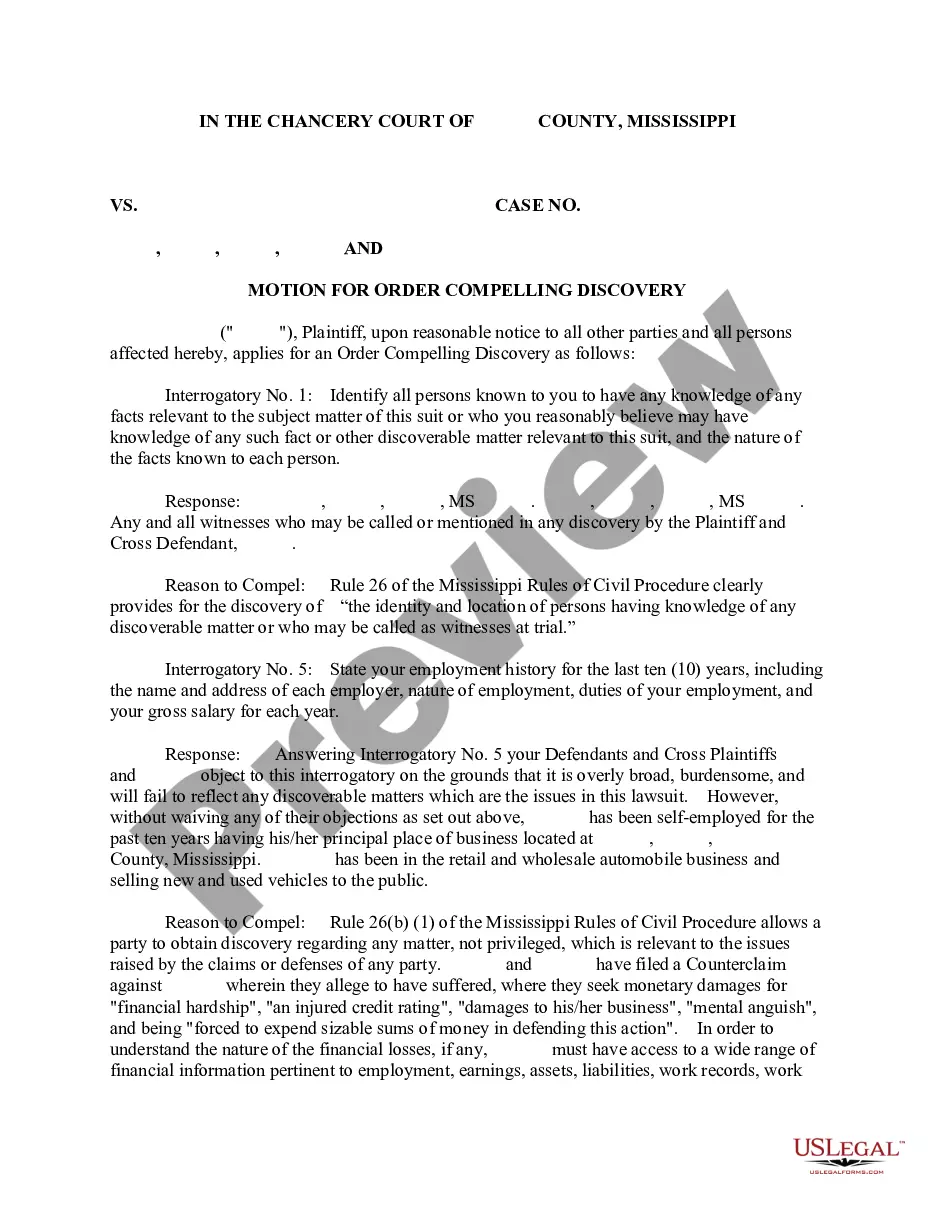
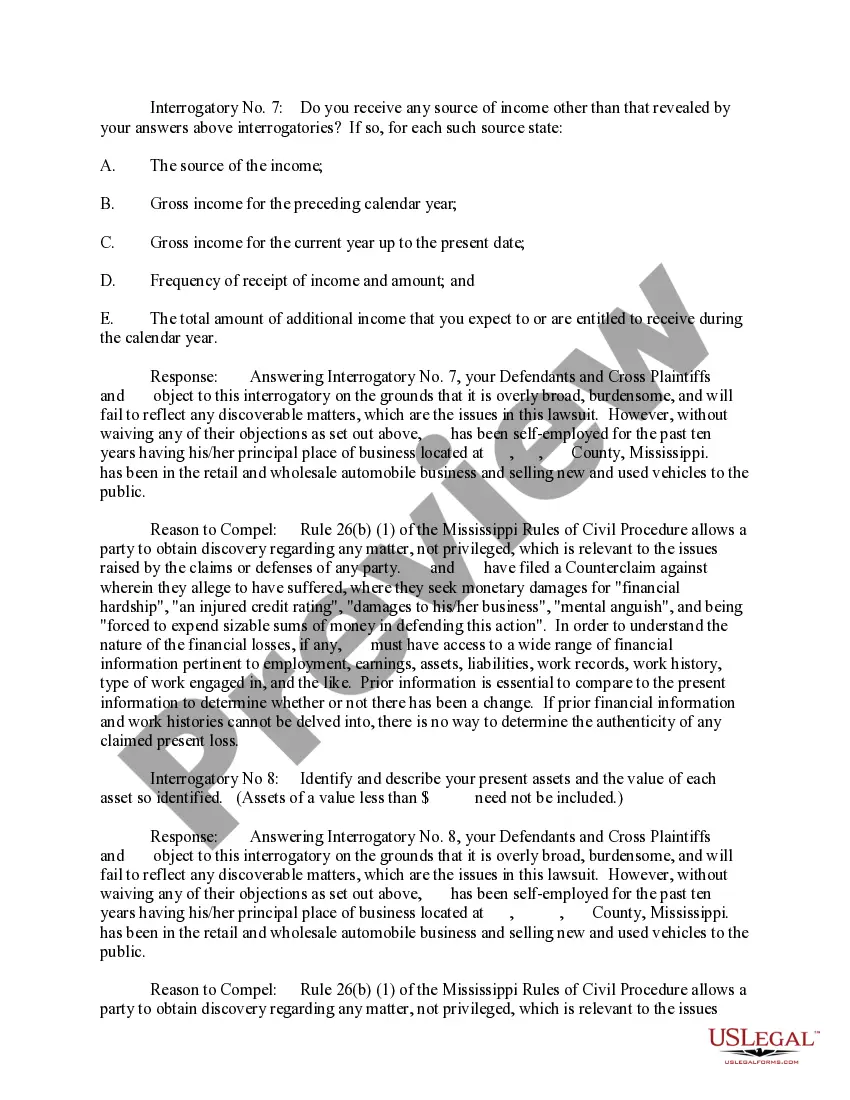
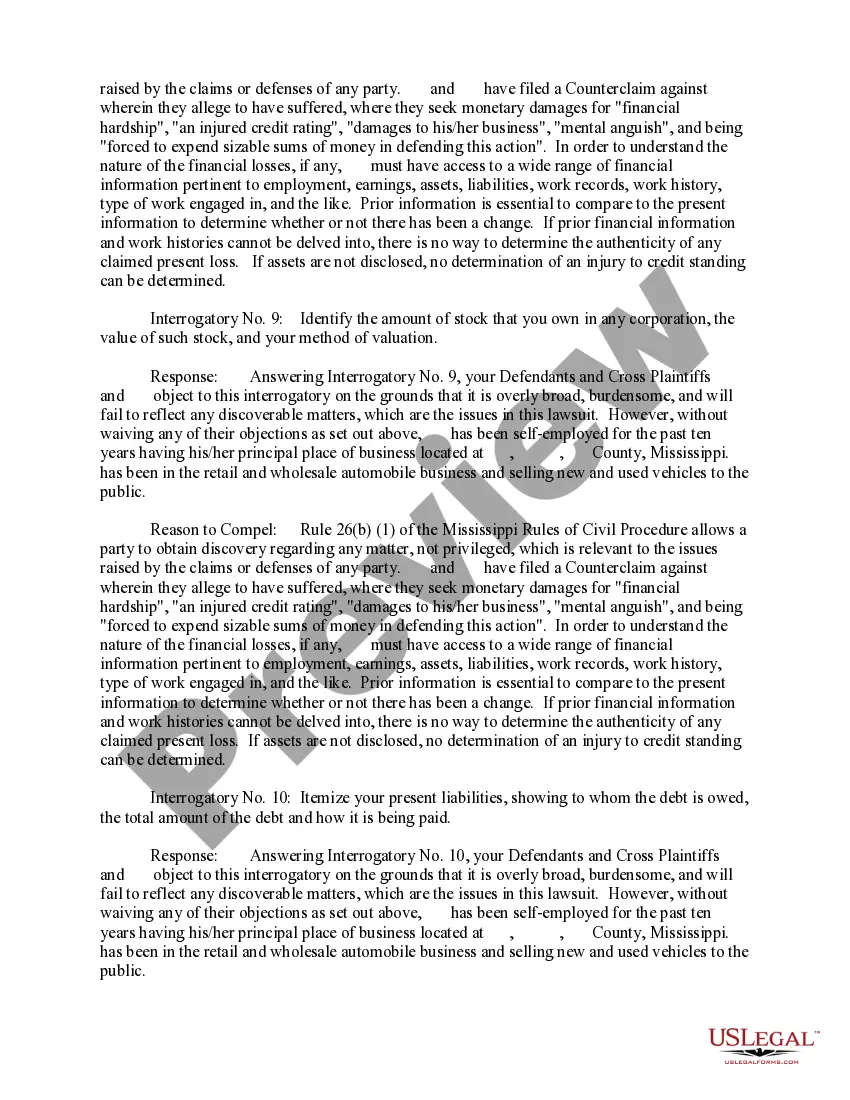
- A list of interrogatories requiring answers from the defendant.
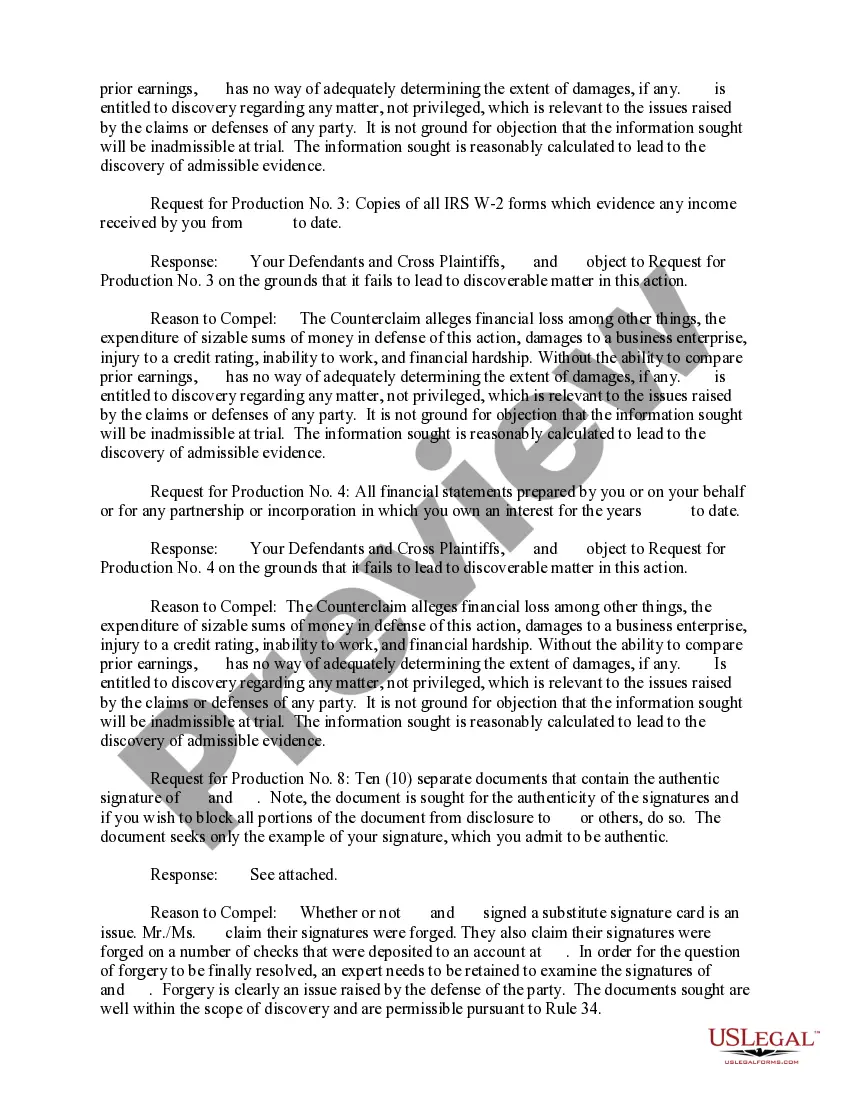
- Reasons for compelling discovery based on relevant legal rules.
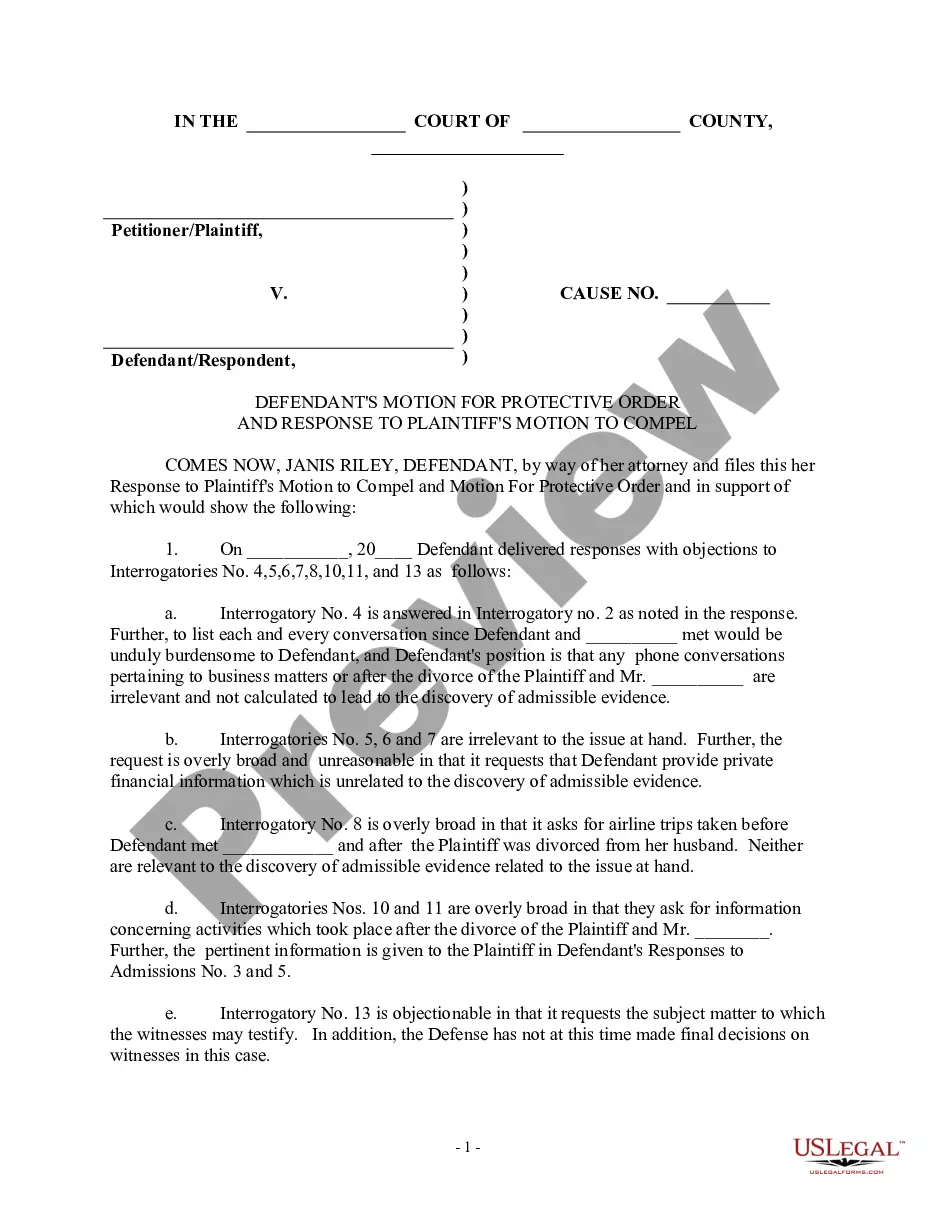
- Responses by the defendant and any objections raised.
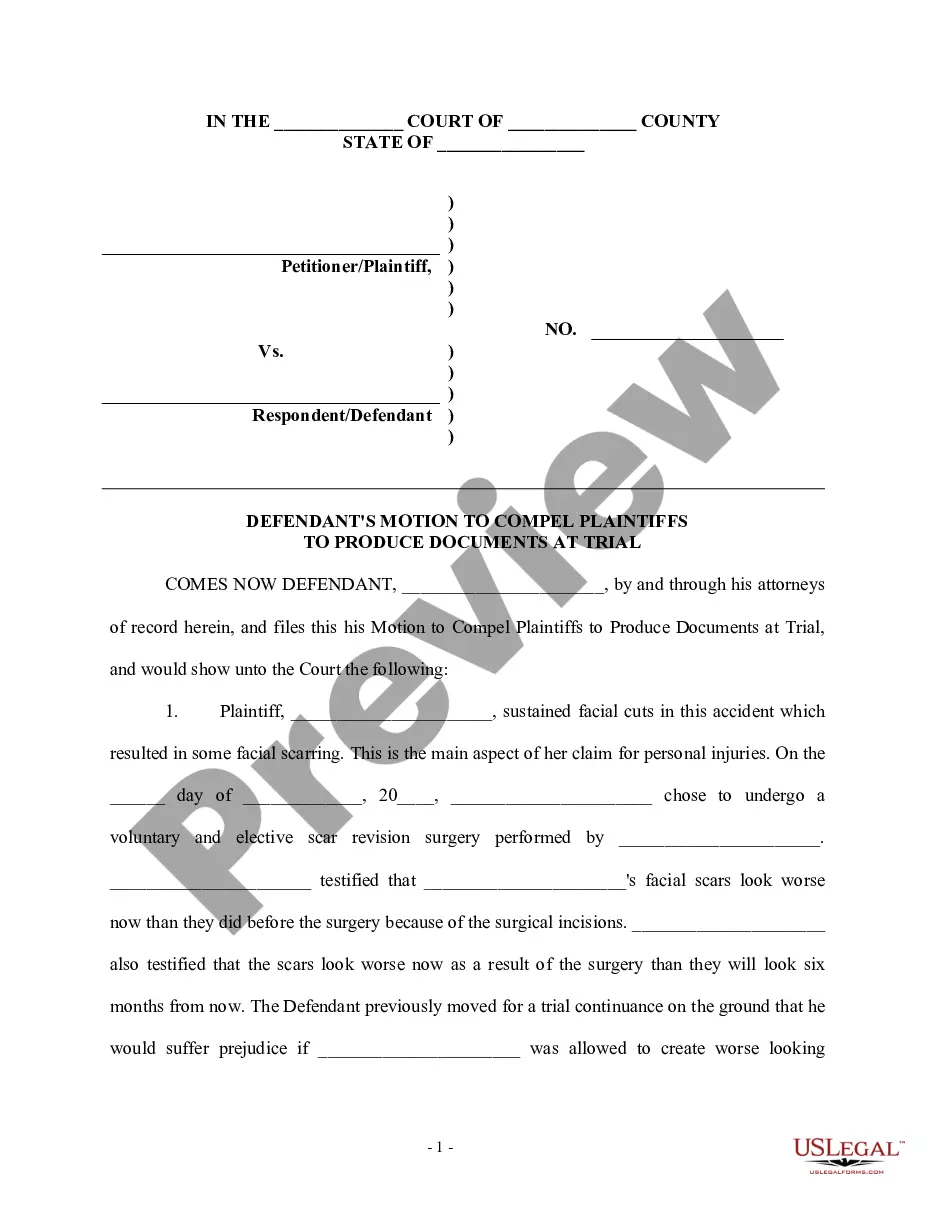
- Requests for production of documents that support the motion.
Situations where this form applies
This form is used in scenarios where the plaintiff seeks crucial information from the defendant to support their case but has not received adequate responses to previous discovery requests. It is particularly important in cases involving financial claims, where understanding the defendant's financial background and other relevant details is essential for establishing damages or defenses.
Who this form is for
- Individuals pursuing a civil lawsuit who require further information from the opposing party.
- Attorneys representing plaintiffs in cases involving disputed claims or defenses.
- Parties seeking to gather necessary evidence to support or weaken claims within litigation.
How to prepare this document
- Identify and clearly name all parties involved in the litigation.
- List all interrogatories you are requesting the defendant to answer.
- State specific reasons for compelling discovery, citing relevant legal rules.
- Include responses from the defendant and any objections to the interrogatories.
- Attach any requests for documents that support the need for the motion.
Notarization guidance
Notarization is generally not required for this form. However, certain states or situations might demand it. You can complete notarization online through US Legal Forms, powered by Notarize, using a verified video call available anytime.
Get your form ready online
Our built-in tools help you complete, sign, share, and store your documents in one place.
Make edits, fill in missing information, and update formatting in US Legal Forms—just like you would in MS Word.
Download a copy, print it, send it by email, or mail it via USPS—whatever works best for your next step.
Sign and collect signatures with our SignNow integration. Send to multiple recipients, set reminders, and more. Go Premium to unlock E-Sign.
If this form requires notarization, complete it online through a secure video call—no need to meet a notary in person or wait for an appointment.
We protect your documents and personal data by following strict security and privacy standards.

Make edits, fill in missing information, and update formatting in US Legal Forms—just like you would in MS Word.

Download a copy, print it, send it by email, or mail it via USPS—whatever works best for your next step.

Sign and collect signatures with our SignNow integration. Send to multiple recipients, set reminders, and more. Go Premium to unlock E-Sign.

If this form requires notarization, complete it online through a secure video call—no need to meet a notary in person or wait for an appointment.

We protect your documents and personal data by following strict security and privacy standards.
Mistakes to watch out for
- Neglecting to provide sufficient legal grounds for the motion.
- Failing to properly notify all parties involved before filing the motion.
- Incomplete or vague interrogatories that do not specify what information is needed.
- Not including a clear rationale for why the requested responses are essential.
Benefits of using this form online
- Easy access to customizable templates that save time.
- Ability to edit and fill out the form at your convenience.
- Reliability with professionally drafted content that meets legal standards.
Legal use & context
- This form is intended for use in civil litigation cases where discovery compliance is contested.
- It is enforceable under Mississippi law, supporting the discovery process and ensuring fair opportunity for both parties to present their cases.
- Ensure that all information disclosed in this motion is factual, as any misrepresentation can lead to legal consequences.
Quick recap
- The Motion for Order Compelling Discovery is critical for enforcing compliance in discovery requests.
- This form is specific to Mississippi and follows its discovery procedures.
- Proper completion and submission are essential for its effectiveness in court.
Looking for another form?
Form popularity
FAQ
Discovery, in the law of common law jurisdictions, is a pre-trial procedure in a lawsuit in which each party, through the law of civil procedure, can obtain evidence from the other party or parties by means of discovery devices such as interrogatories, requests for production of documents, requests for admissions and
There are basically six types of discovery in family court: 1) interrogatories; 2) requests for production of documents and inspection 3) requests for admissions; 4) depositions; 5) subpoenas duces tecum; 6) physical and mental examinations.
A motion to compel asks the court to order either the opposing party or a third party to take some action. This sort of motion most commonly deals with discovery disputes, when a party who has propounded discovery to either the opposing party or a third party believes that the discovery responses are insufficient.
Discovery is the process through which defendants find out about the prosecution's case. For example, through standard discovery procedure, they can: get copies of the arresting officers' reports and statements made by prosecution witnesses, and. examine evidence that the prosecution proposes to introduce at trial.
In both civil and criminal cases, discovery involves investigating the evidence that the other side plans to present. It can prevent any surprises at trial, narrow the issues that are disputed, and often help the two sides reach a resolution out of court rather than going through a full trial.
Discovery in a criminal case refers to the exchange of evidence and statements between opposing sides of a case.Typically, a defense attorney will file a Notice of Appearance, informing the Court and the prosecutor of his or her role in the case, and a Discovery Demand requesting particular information.
Explain to the judge that you asked the plaintiff to give you documents and, they did not. Tell the judge why you need the documents. Ask the judge to order the plaintiff to give you the documents you requested.
A motion to compel asks the court to enforce a request for information relevant to a case.Discovery requests: parties submit requests for evidence, documents, and other relevant information from the opposition. Each party is required to respond to requests by a specified deadline.
Your criminal defense attorney should be able to provide you with a copy of the discovery in your case. If you do not have a criminal defense attorney, you should immediately hire one as this is the only way you will obtain the best possible result on your case.