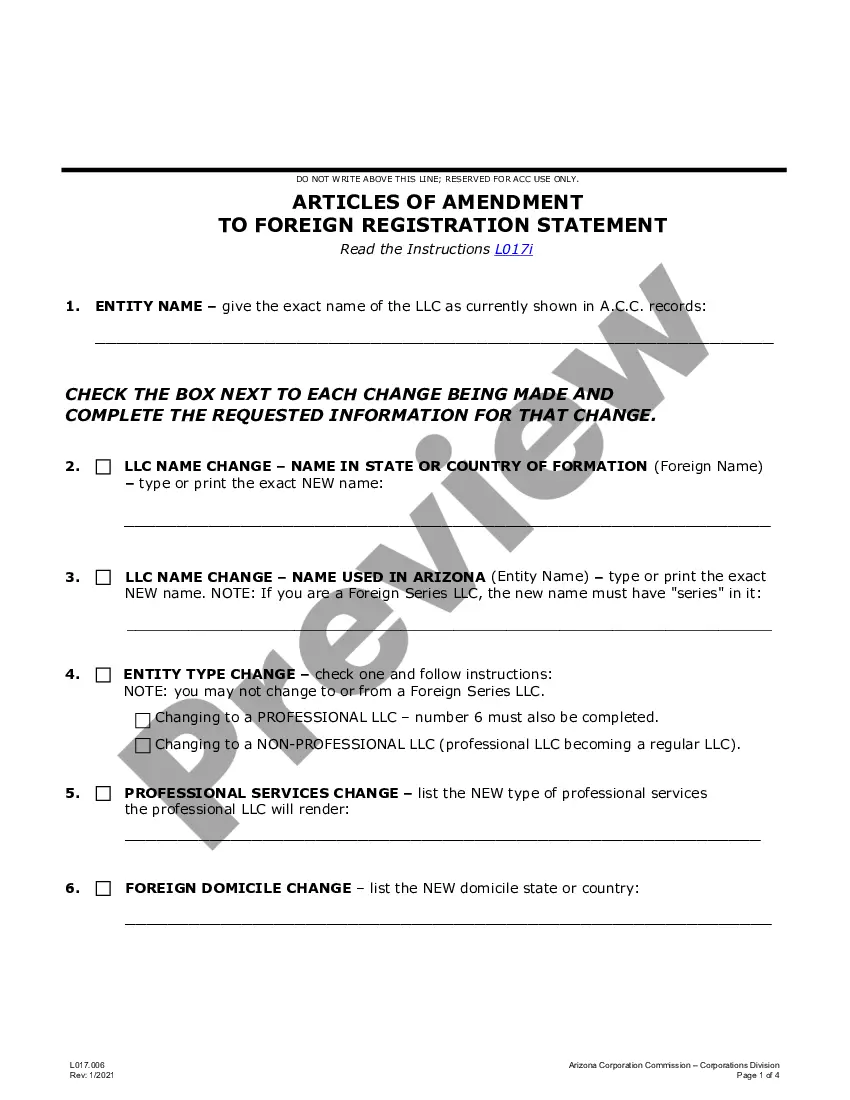
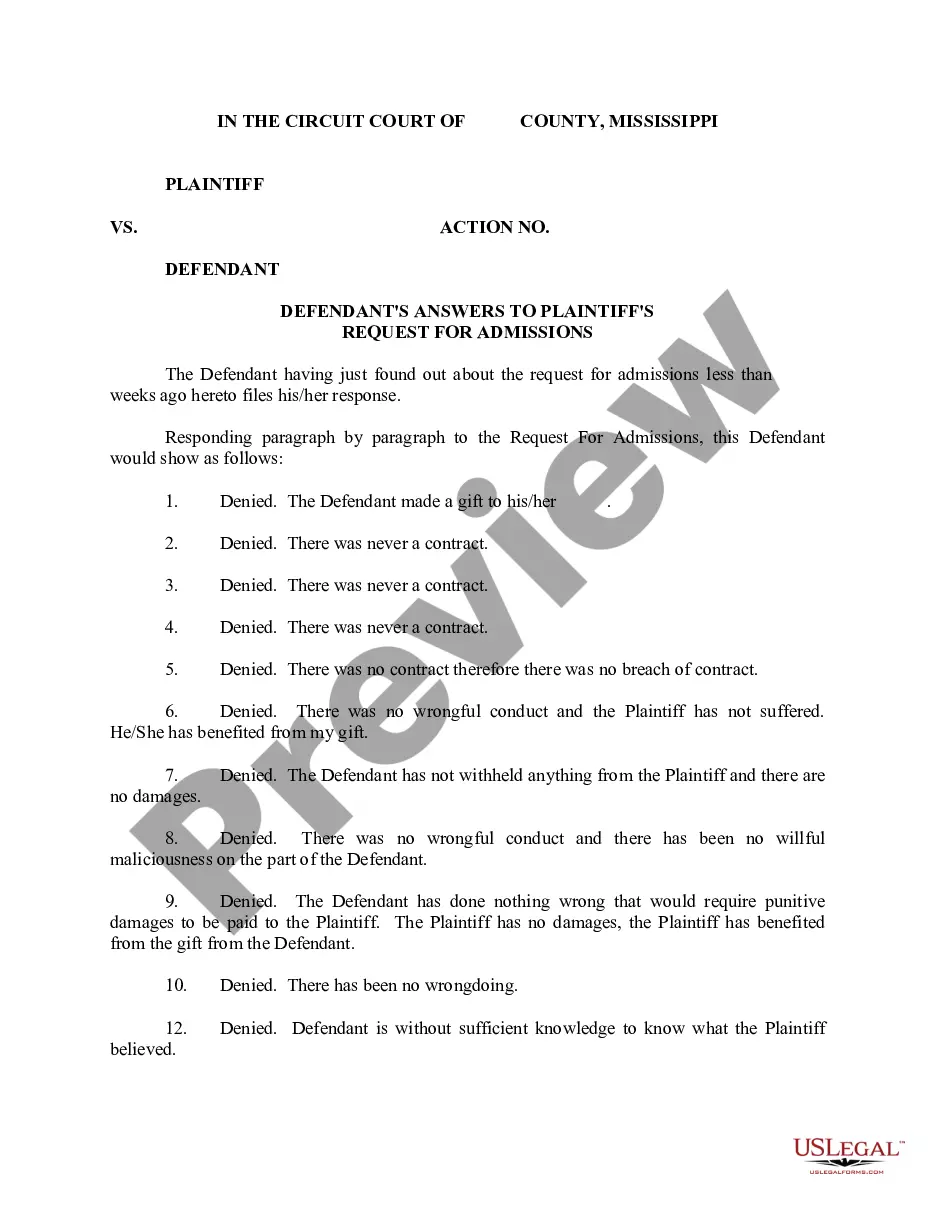
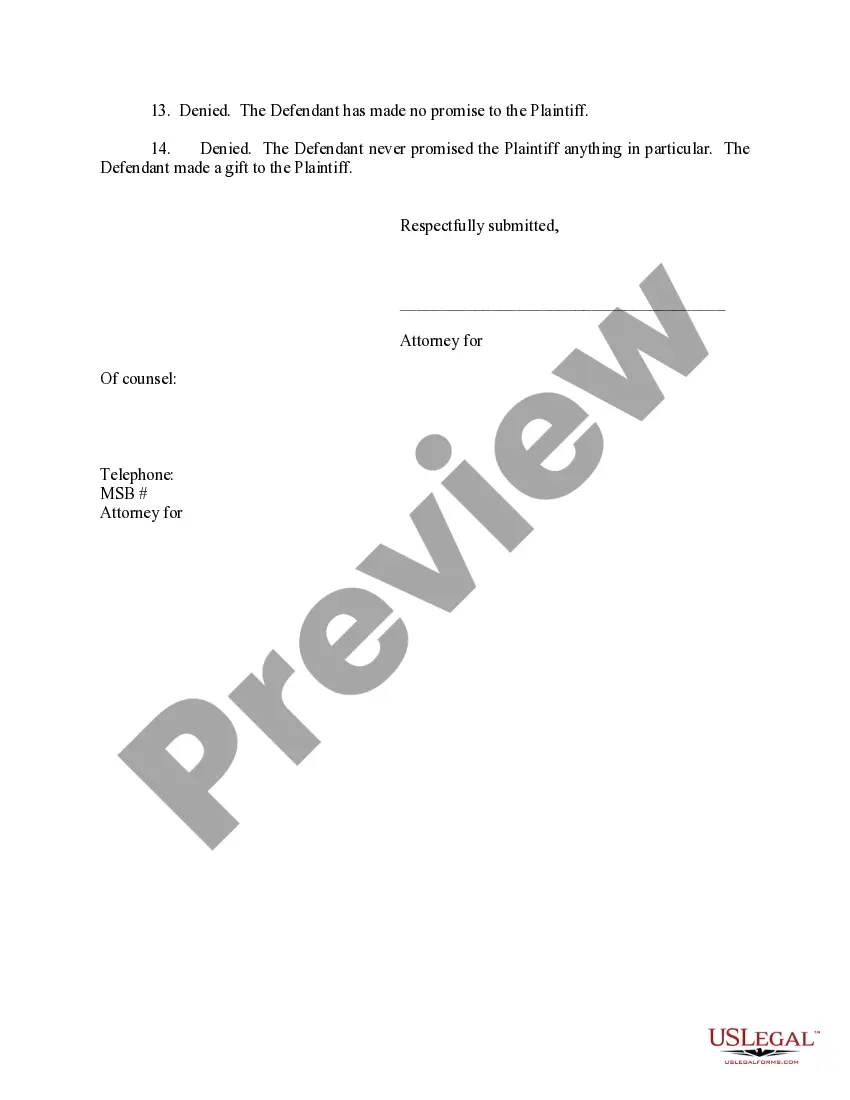
Mississippi Answers to P's Request for Admissions
What this document covers
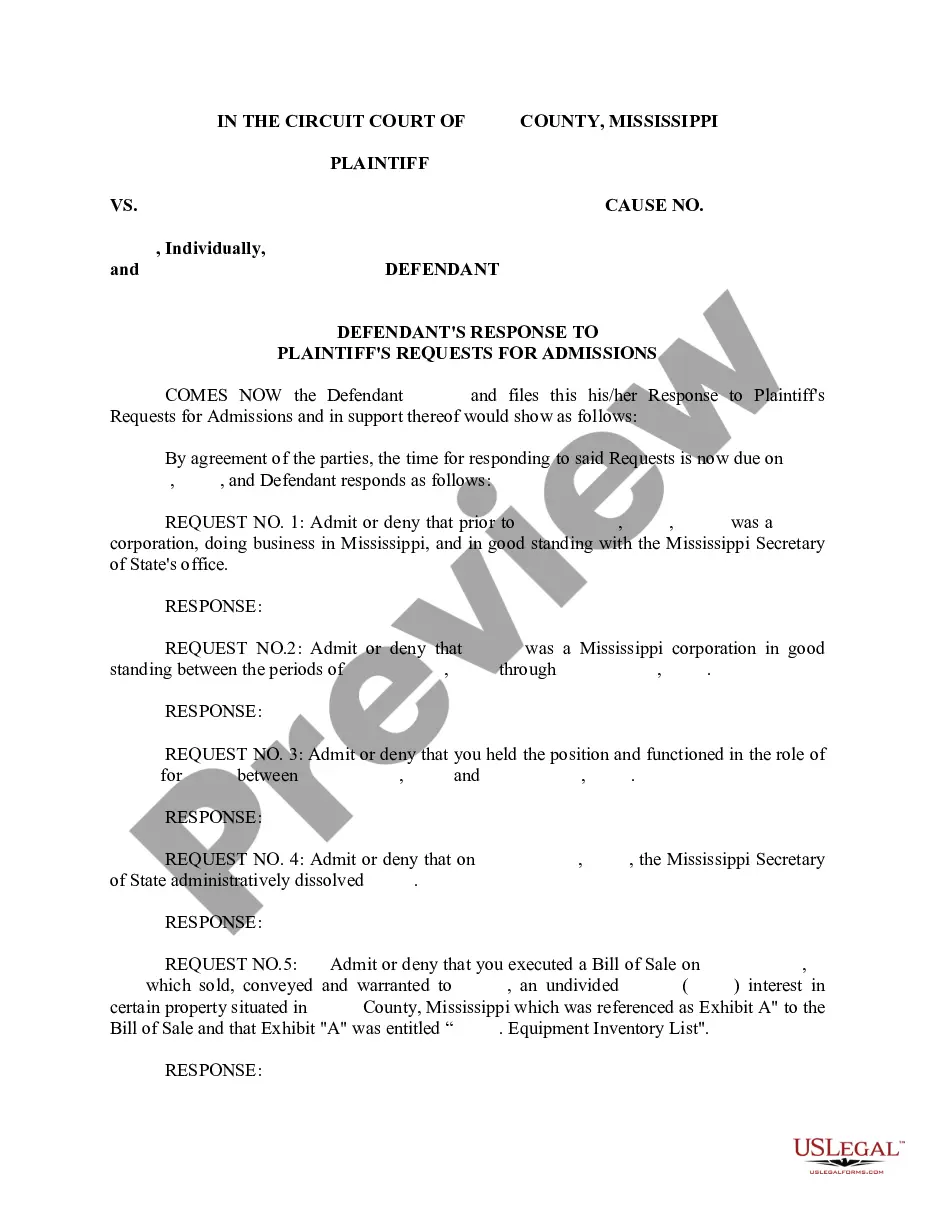
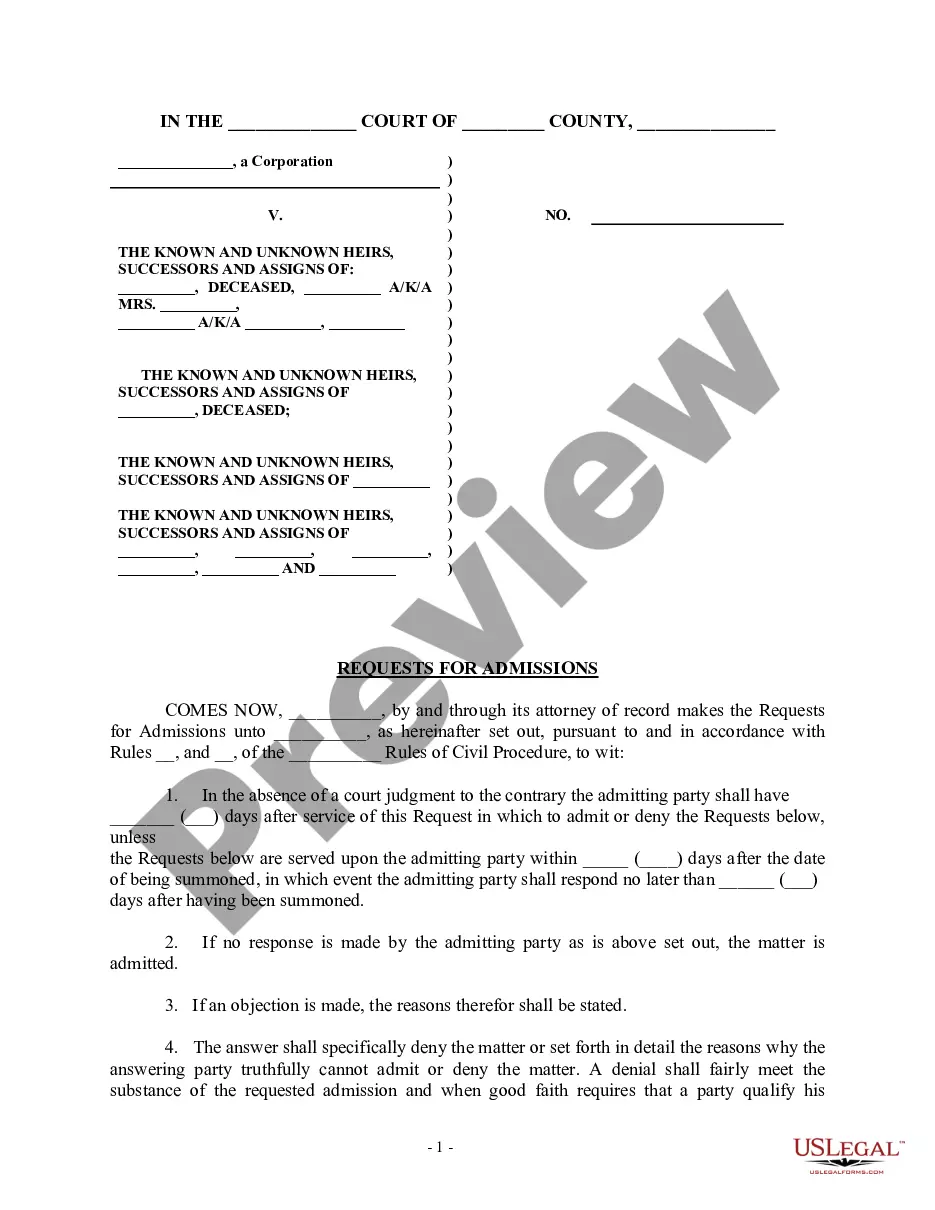
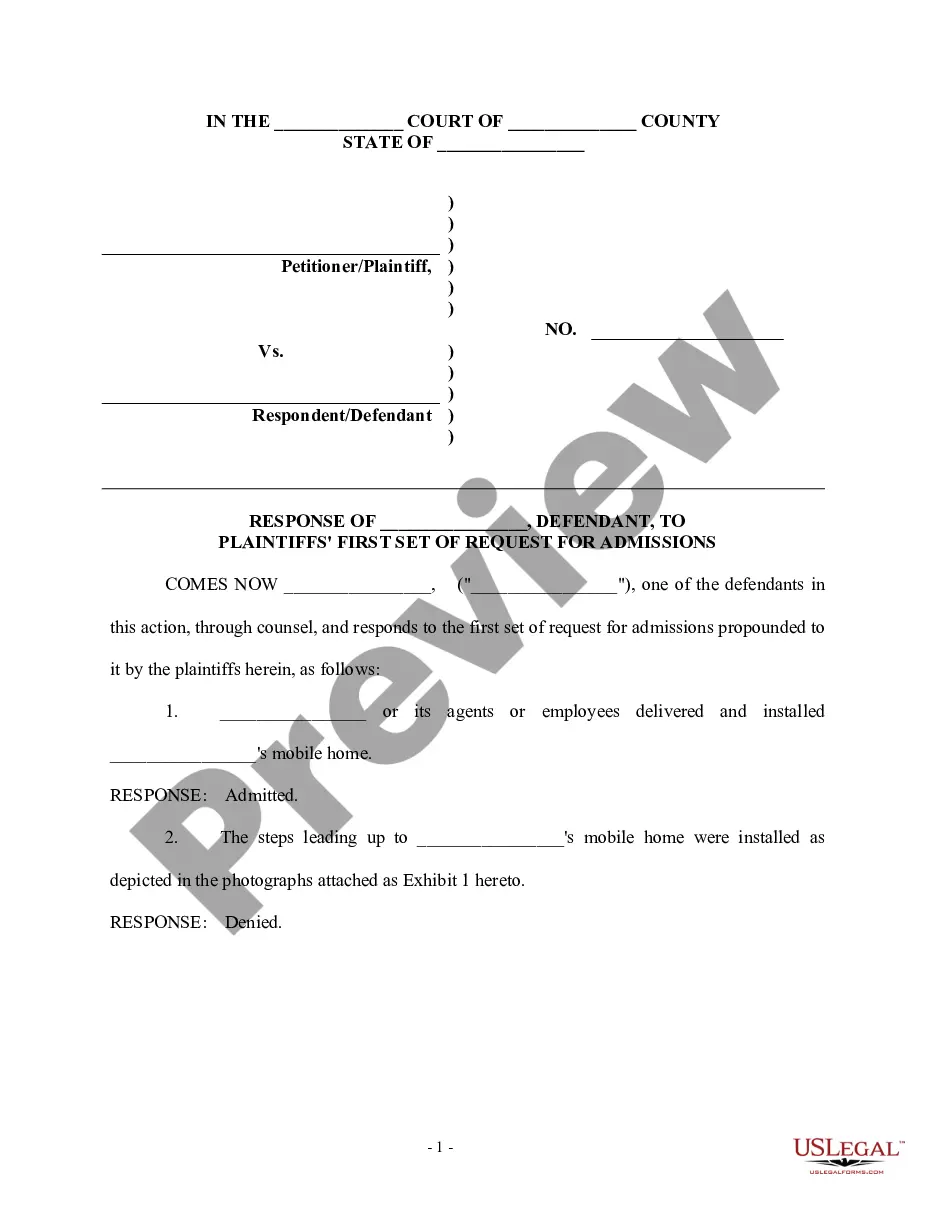
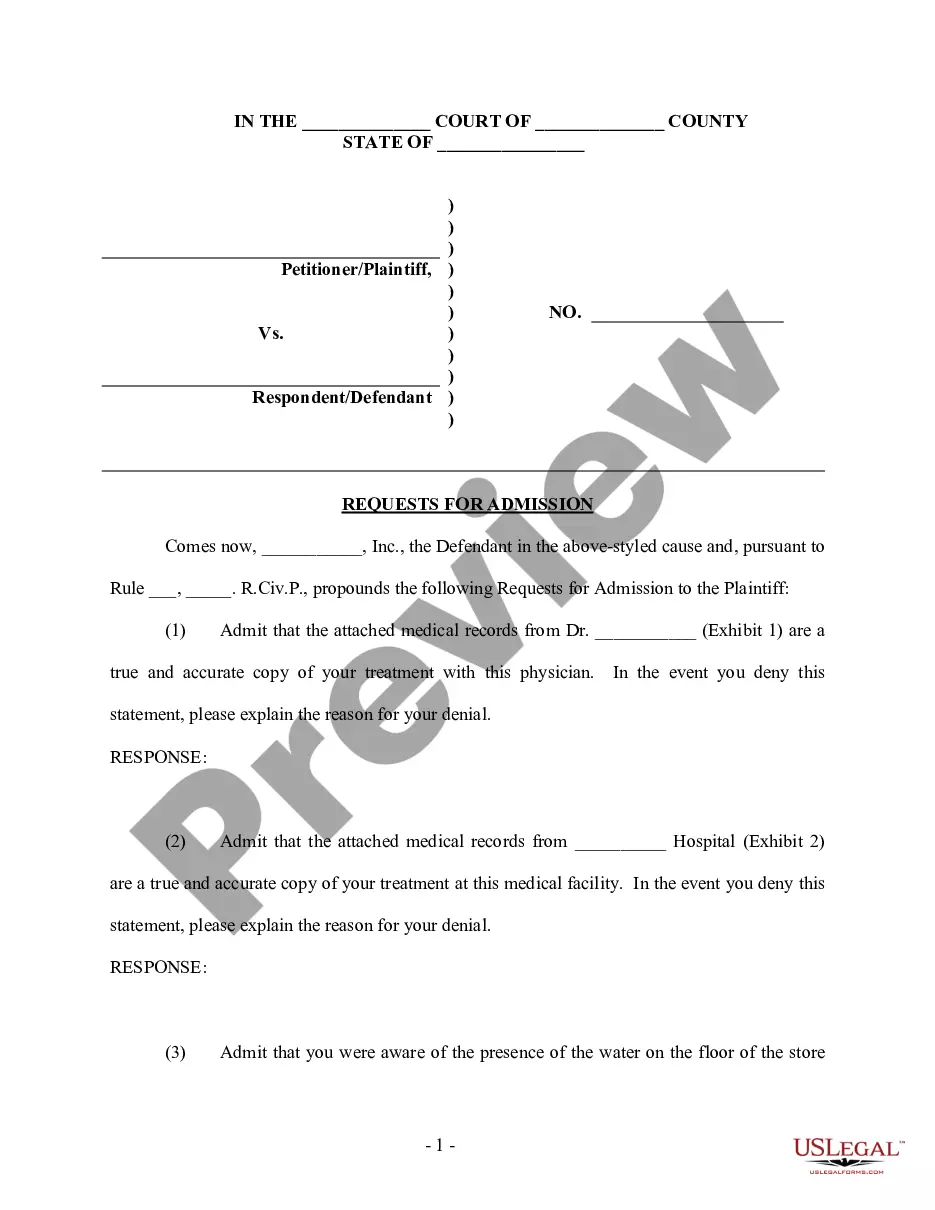
The "Answers to P's Request for Admissions" is a legal document used in litigation. This form provides a structured way for the defendant to respond to specific statements made by the plaintiff's attorney. It is designed to help clarify the issues in dispute by requiring the defendant to admit or deny various facts asserted by the plaintiff. The answers in this form serve as a model and should be tailored to fit the individual circumstances of your case.
Main sections of this form
- Formatted responses to each request for admission, specifying whether the defendant admits or denies the statements.
- Potential defenses raised by the defendant, such as lack of wrongdoing or insufficient evidence of damages.
- Signature line for the defendant to affirm the truthfulness of the responses.
- Space for additional comments or clarifications, if necessary.
Situations where this form applies
This form is typically used during the discovery phase of a legal dispute when a plaintiff has sent a series of requests for admissions to the defendant. It is essential in scenarios such as personal injury cases, contract disputes, or any situation where factual clarification is needed. Use this form when you need to respond to the plaintiff's statements and clarify your stance on the claims being made against you.
Who can use this document
- Defendants involved in a legal dispute or litigation.
- Individuals representing themselves in court who may not have legal representation.
- Legal professionals seeking a template for their clients' responses to requests for admissions.
How to prepare this document
- Identify the parties involved in the case, including the plaintiff and defendant.
- Carefully read each statement in the request for admissions.
- Decide whether to admit or deny each statement based on your knowledge and the facts of the case.
- Provide clear and concise responses, including any necessary explanations.
- Sign and date the form to affirm the truthfulness of your answers.
Does this form need to be notarized?
In most cases, this form does not require notarization. However, some jurisdictions or signing circumstances might. US Legal Forms offers online notarization powered by Notarize, accessible 24/7 for a quick, remote process.
Get your form ready online
Our built-in tools help you complete, sign, share, and store your documents in one place.
Make edits, fill in missing information, and update formatting in US Legal Forms—just like you would in MS Word.
Download a copy, print it, send it by email, or mail it via USPS—whatever works best for your next step.
Sign and collect signatures with our SignNow integration. Send to multiple recipients, set reminders, and more. Go Premium to unlock E-Sign.
If this form requires notarization, complete it online through a secure video call—no need to meet a notary in person or wait for an appointment.
We protect your documents and personal data by following strict security and privacy standards.

Make edits, fill in missing information, and update formatting in US Legal Forms—just like you would in MS Word.

Download a copy, print it, send it by email, or mail it via USPS—whatever works best for your next step.

Sign and collect signatures with our SignNow integration. Send to multiple recipients, set reminders, and more. Go Premium to unlock E-Sign.

If this form requires notarization, complete it online through a secure video call—no need to meet a notary in person or wait for an appointment.

We protect your documents and personal data by following strict security and privacy standards.
Typical mistakes to avoid
- Failing to thoroughly review each statement before responding.
- Providing vague or unclear responses that do not directly admit or deny the statements.
- Not signing the document, rendering it invalid.
- Missing deadlines for responding to the requests for admissions.
Benefits of completing this form online
- Convenient access: Download and complete the form from anywhere without the need for paper forms.
- Editability: Easily customize the document to fit your specific situation.
- Reliability: Forms drafted by licensed attorneys ensure accuracy and adherence to legal standards.
Legal use & context
- The form is designed to provide a clear vehicle for legal responses in civil litigation.
- Responses to requests for admissions can be used as evidence in court.
- Ensures that both parties are aware of the facts that are agreed upon or disputed.
Quick recap
- The form is essential for formal responses to requests for admissions in civil cases.
- Clarity in responses can impact the outcomes of litigation.
- Use this form to protect your legal rights and responsibilities effectively.
Looking for another form?
Form popularity
FAQ
When responding to Requests for Admissions, remember to answer as follows: Admit: If any portion of the Request for Admission is true then you must admit to that portion of the request. You are also allowed to have a hybrid response admit the part of the request that is true while denying another part.
Requests for Admission Are Part of DiscoveryRequests for admission allow one party to ask another party to admit or deny certain statements while under oath. That way, admitted statements can be considered true during the trial.
Primary tabs. In a civil action, a request for admission is a discovery device that allows one party to request that another party admit or deny the truth of a statement under oath. If admitted, the statement is considered to be true for all purposes of the current trial.
Similar to responses to Requests for Production, responses to Requests for Admissions do not have to be verified. It is critical to respond to Requests for Admissions because failure to respond results in the requests being deemed admitted without the need for a motion to have the responses established as admitted.
When responding to Requests for Admissions, remember to answer as follows: Admit: If any portion of the Request for Admission is true then you must admit to that portion of the request. You are also allowed to have a hybrid response admit the part of the request that is true while denying another part.
It is possible to object to all or part of a request as well, but courts do not like parties who play word games to avoid responding.A responding party can qualify an answer or deny only a part of the matter of which an admission is requested, and admit the remainder of the request.