Mississippi Notice of Appeal to Supreme Court
Description
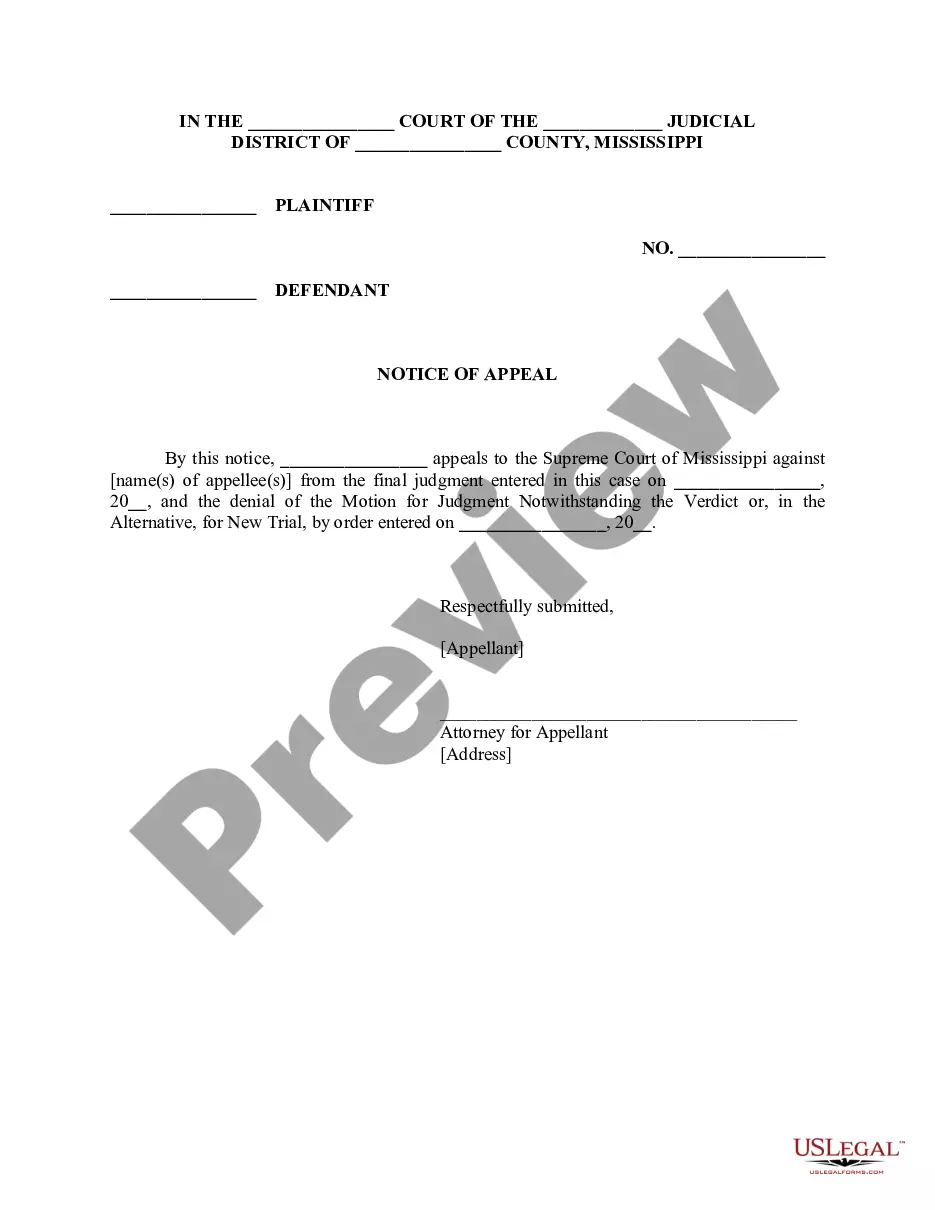
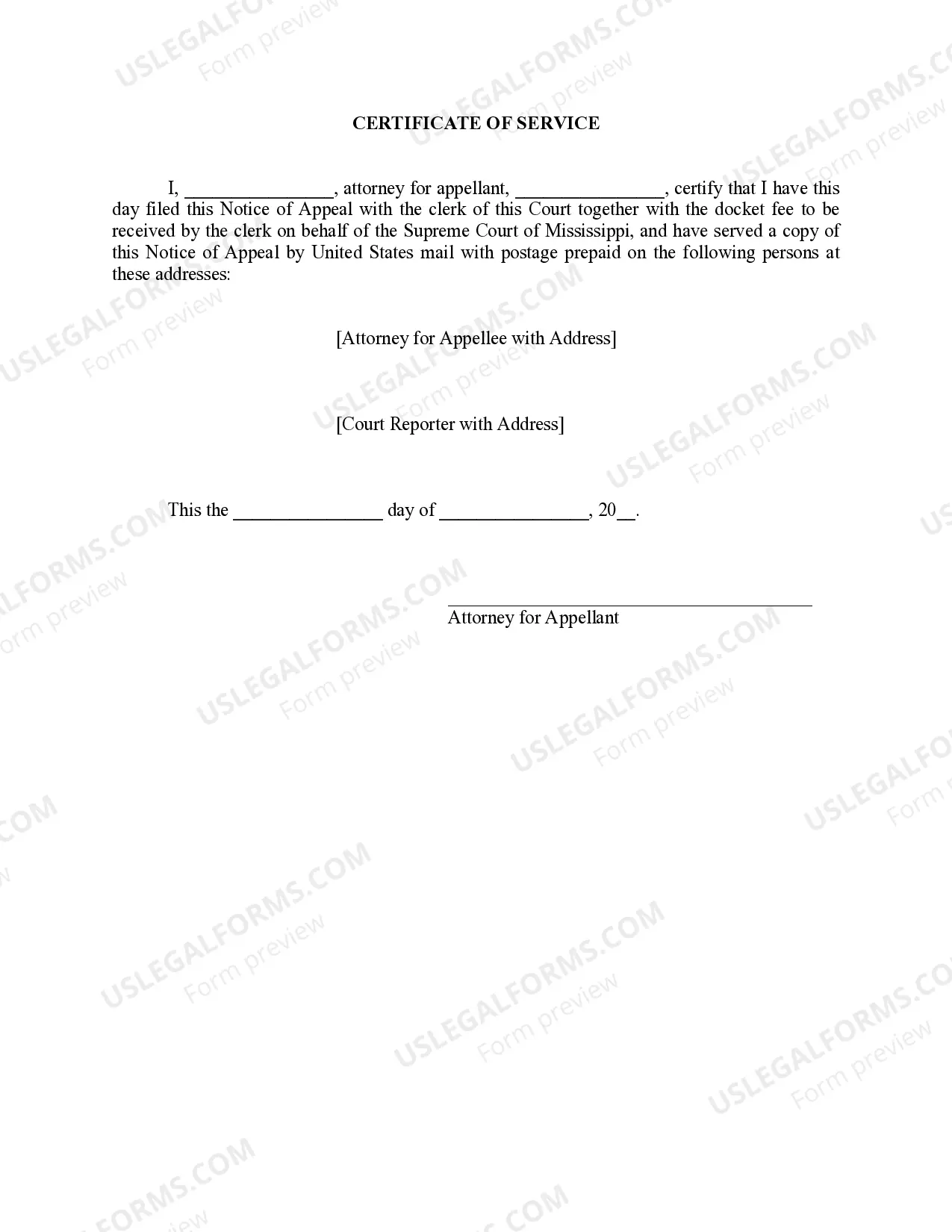
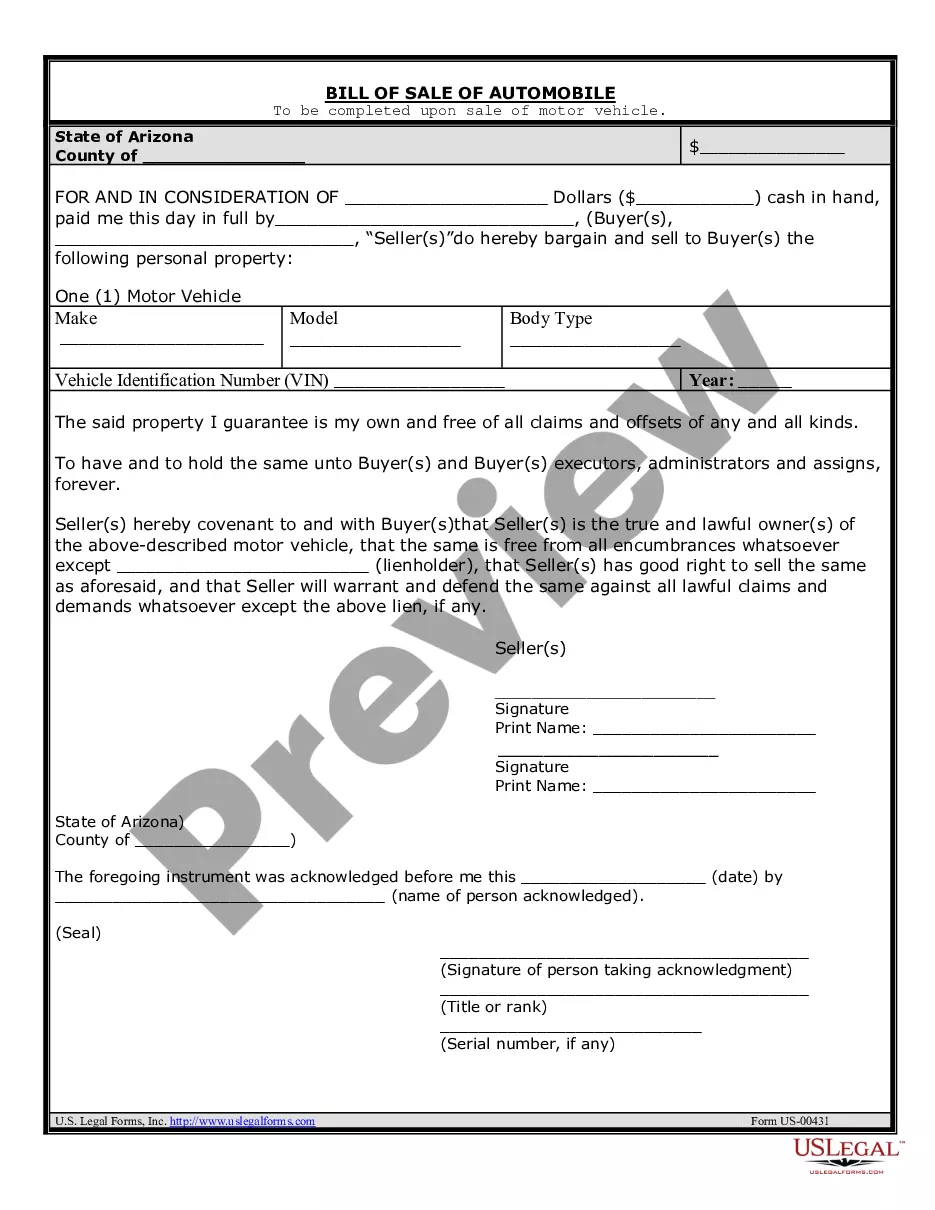
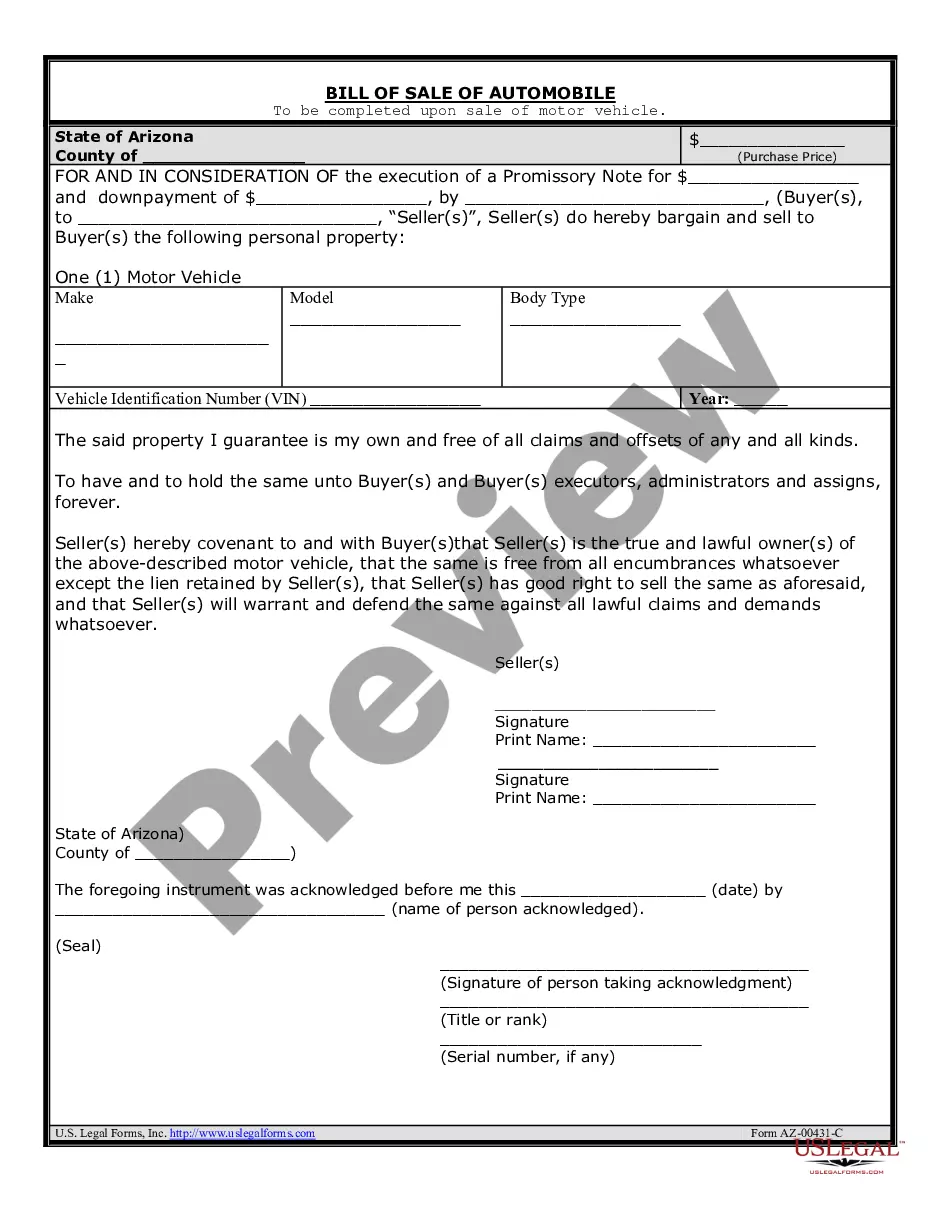

How to fill out Mississippi Notice Of Appeal To Supreme Court?
Obtain a printable Mississippi Notice of Appeal to Supreme Court in just several mouse clicks in the most complete catalogue of legal e-forms. Find, download and print out professionally drafted and certified samples on the US Legal Forms website. US Legal Forms has been the Top supplier of reasonably priced legal and tax forms for US citizens and residents on-line since 1997.
Users who have a subscription, must log in directly into their US Legal Forms account, get the Mississippi Notice of Appeal to Supreme Court see it saved in the My Forms tab. Customers who don’t have a subscription are required to follow the tips below:
- Ensure your form meets your state’s requirements.
- If provided, look through form’s description to find out more.
- If accessible, review the form to find out more content.
- As soon as you’re sure the template suits you, simply click Buy Now.
- Create a personal account.
- Pick a plan.
- Pay out via PayPal or visa or mastercard.
- Download the form in Word or PDF format.
As soon as you’ve downloaded your Mississippi Notice of Appeal to Supreme Court, you are able to fill it out in any online editor or print it out and complete it by hand. Use US Legal Forms to get access to 85,000 professionally-drafted, state-specific documents.
Form popularity
FAQ
Appeals are often referred to as creatures of statute. This is because a dissatisfied litigant does not have an automatic right of appeal. The right to appeal is governed by the applicable legislation.whether you have a right of appeal, or. whether you must seek leave (permission) of the court to appeal.
Any other direct appeal to the Supreme Court which is authorized by law, from a decision of a district court in any civil action, suit or proceeding, shall be taken within thirty days from the judgment, order or decree, appealed from, if interlocutory, and within sixty days if final.
The most common way for a case to reach the Supreme Court is on appeal from a circuit court. A party seeking to appeal a decision of a circuit court can file a petition to the Supreme Court for a writ of certiorari.
When a party brings a claim originally in a federal district court, then either party can appeal the outcome of the trial to a federal circuit court, and, after the circuit court rules, either party can appeal to the US Supreme Court, although the Supreme Court has discretion on whether to hear it (more on that below).
Is there an automatic right to appeal to the U.S. Supreme Court? No b. Regarding an appeal to the U.S. Supreme Court, indicate whether the following are "True" or "False Appeal to the U.S. Supreme Court is by Writ of Certiorari.The Court usually grants certiorari to resolve a conflict among the Courts of Appeals.
The Limitation period is of 90 days from the date of judgment or decree passed by the High Court. In case where the High Court has refused to grant the certificate against the order of the High Court, the limitation period is 60 days.
When the Supreme Court rules on a constitutional issue, that judgment is virtually final; its decisions can be altered only by the rarely used procedure of constitutional amendment or by a new ruling of the Court.
The Supreme Court functions as a last resort tribunal. Its rulings cannot be appealed. It also decides on cases dealing with the interpretation of the constitution (for example, it can overturn a law passed by Congress if it deems it unconstitutional).
Because the decision was on constitutional grounds, Congress can't overturn it simply by updating the law, and a constitutional amendment remains unlikely.