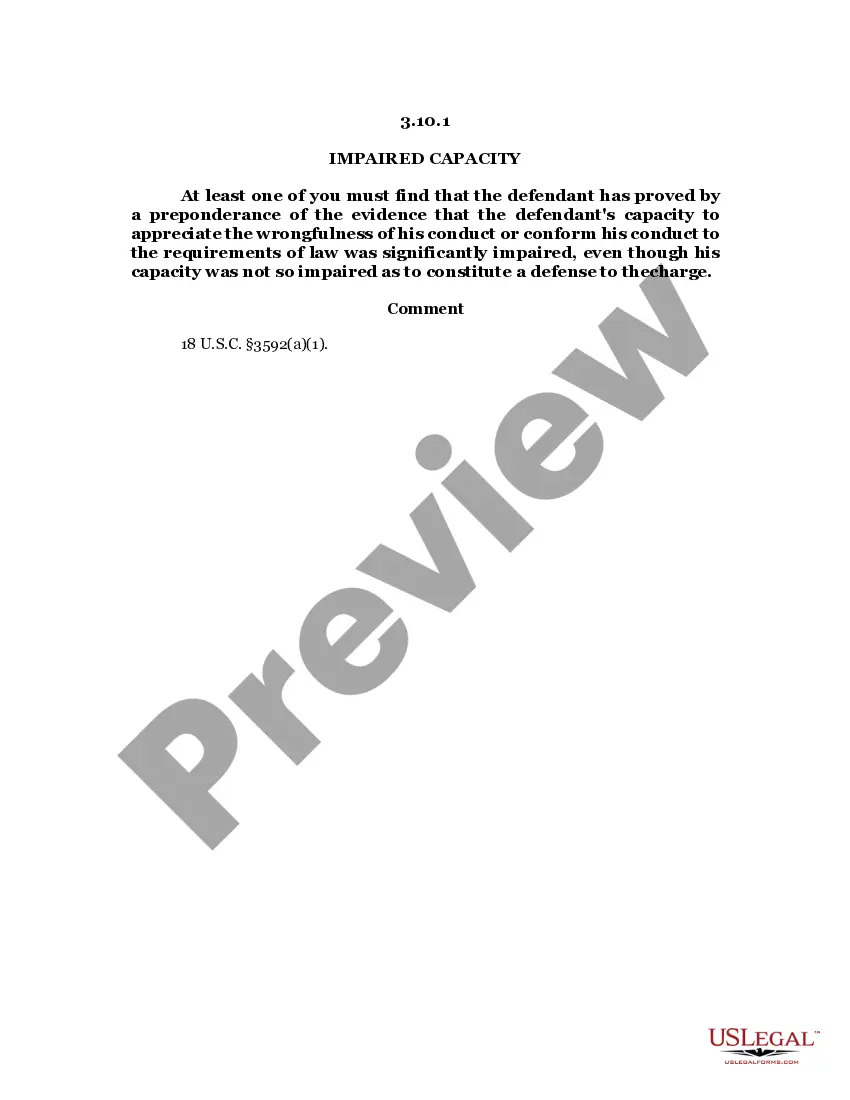
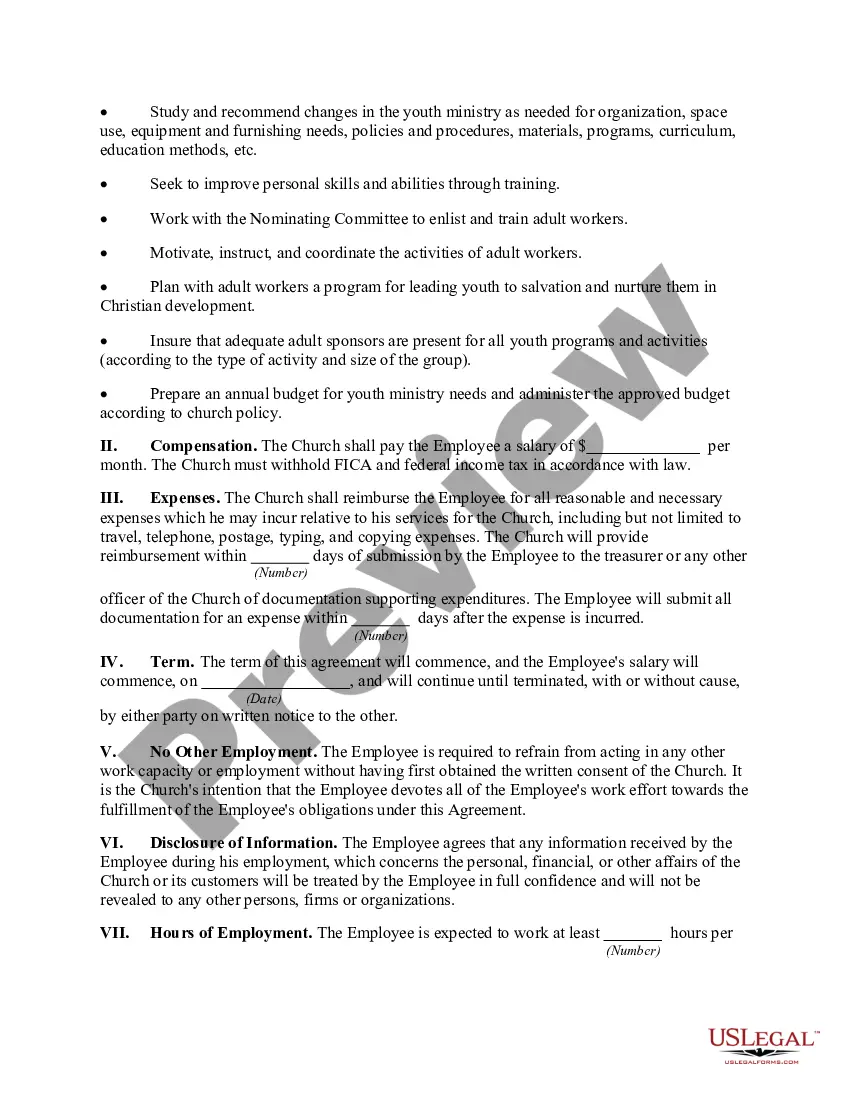
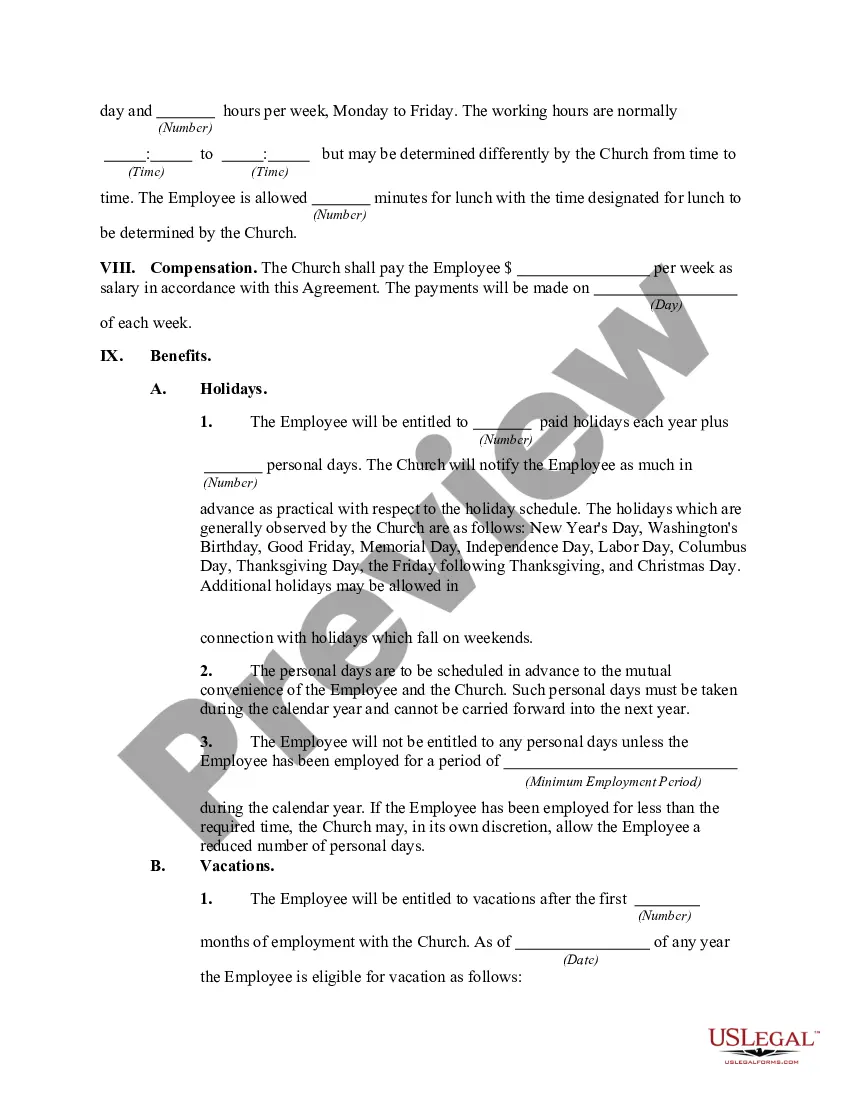
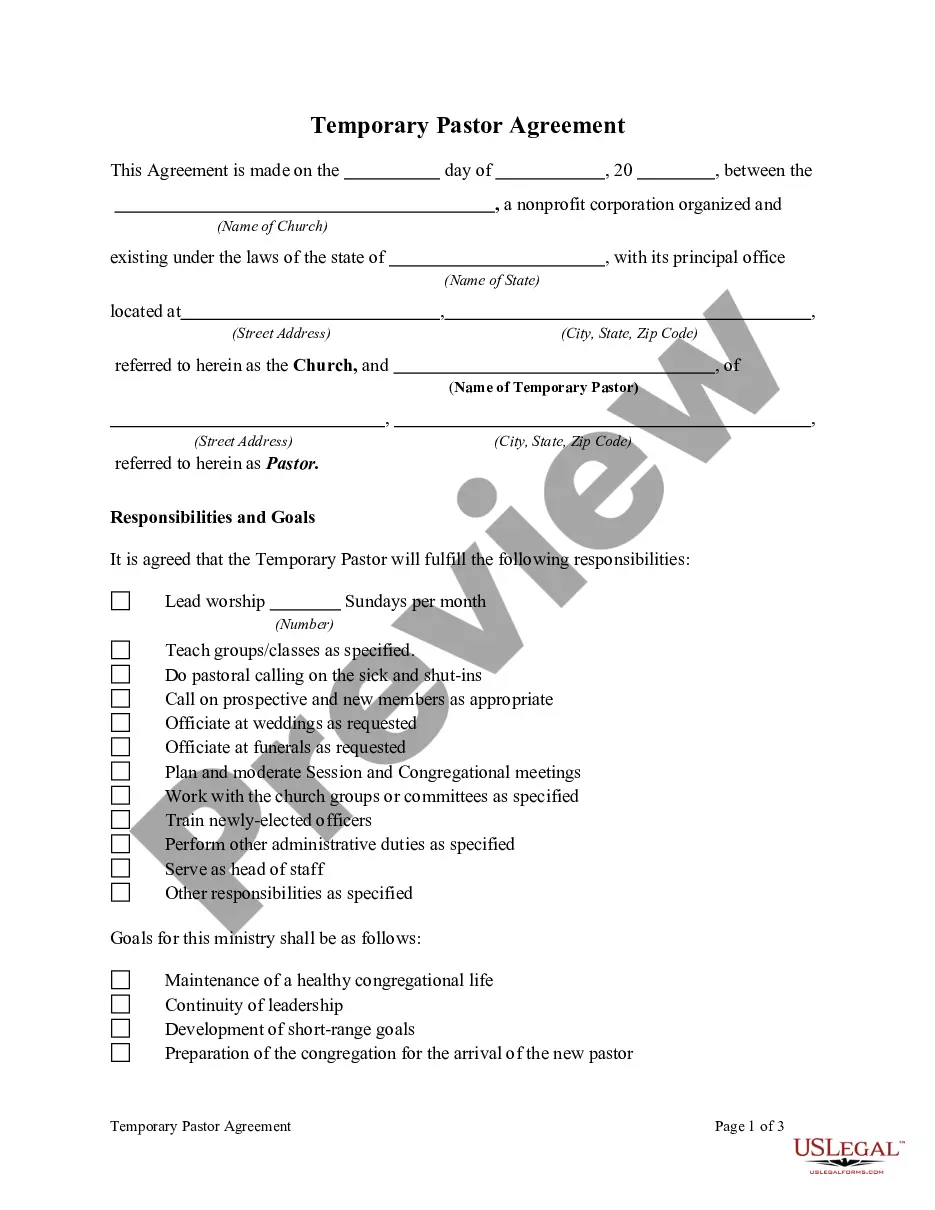
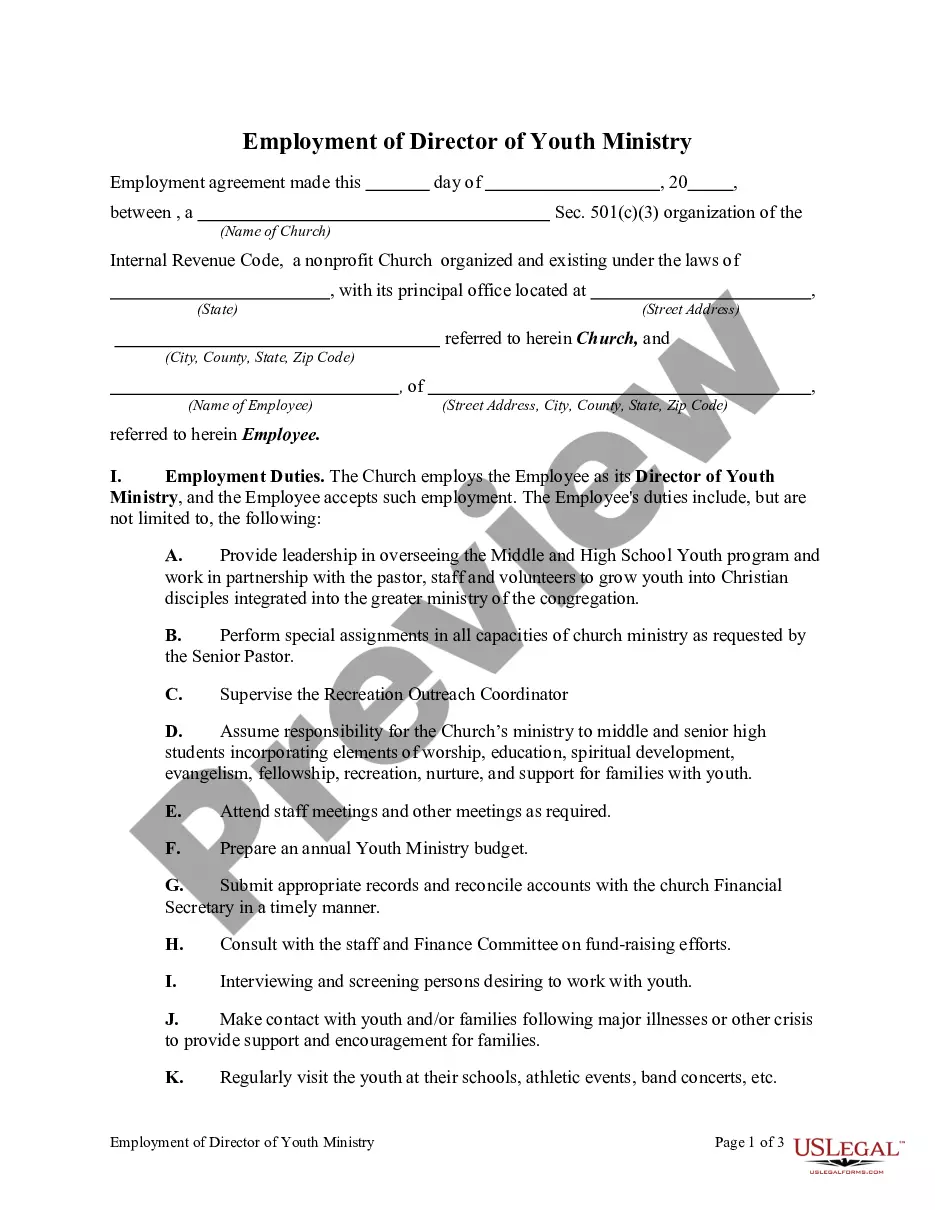
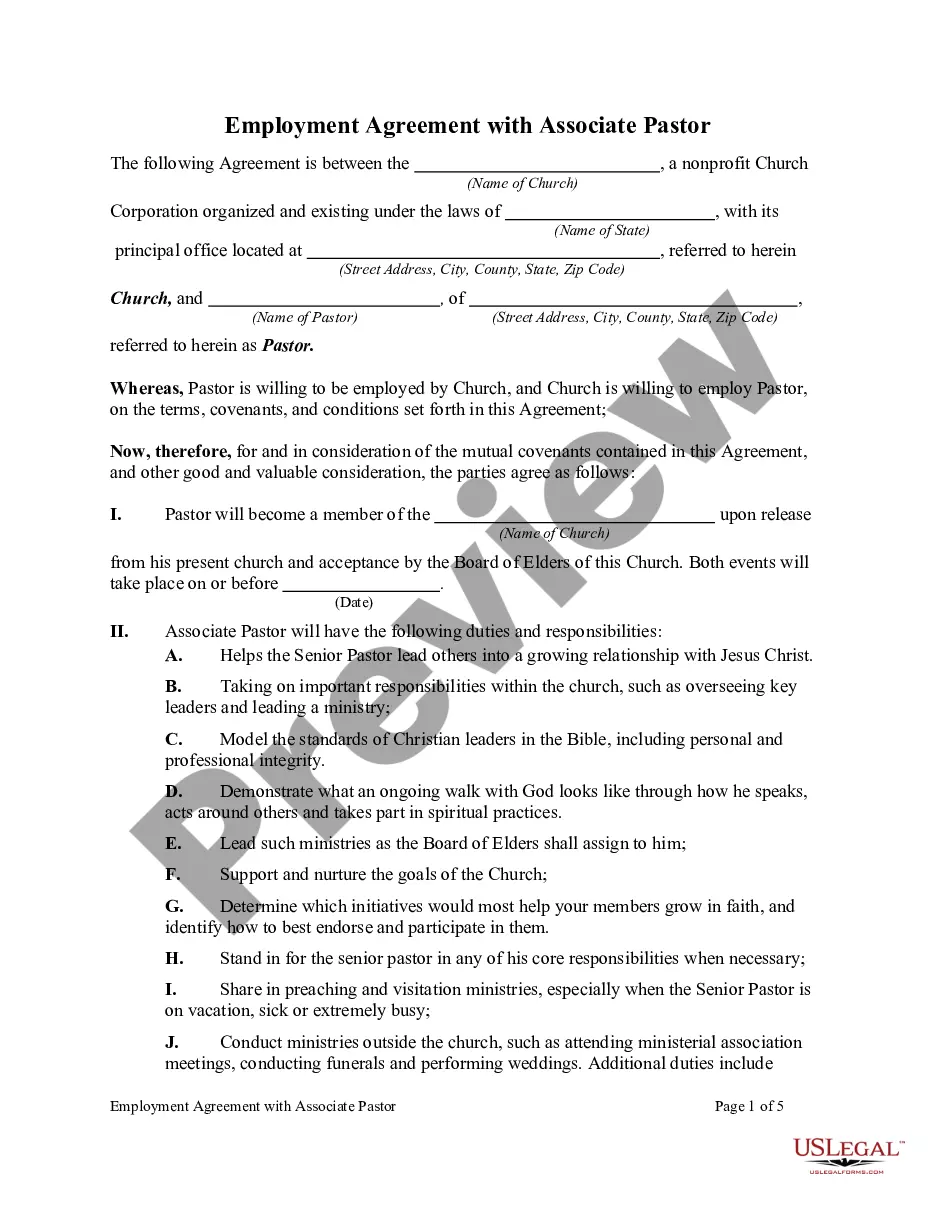
Missouri Contract for Youth Minister
Description

Get your form ready online
Our built-in tools help you complete, sign, share, and store your documents in one place.
Make edits, fill in missing information, and update formatting in US Legal Forms—just like you would in MS Word.
Download a copy, print it, send it by email, or mail it via USPS—whatever works best for your next step.
Sign and collect signatures with our SignNow integration. Send to multiple recipients, set reminders, and more. Go Premium to unlock E-Sign.
If this form requires notarization, complete it online through a secure video call—no need to meet a notary in person or wait for an appointment.
We protect your documents and personal data by following strict security and privacy standards.

Make edits, fill in missing information, and update formatting in US Legal Forms—just like you would in MS Word.

Download a copy, print it, send it by email, or mail it via USPS—whatever works best for your next step.

Sign and collect signatures with our SignNow integration. Send to multiple recipients, set reminders, and more. Go Premium to unlock E-Sign.

If this form requires notarization, complete it online through a secure video call—no need to meet a notary in person or wait for an appointment.

We protect your documents and personal data by following strict security and privacy standards.
Looking for another form?
How to fill out Contract For Youth Minister?
Are you in a situation where you occasionally need documents for various company or specific objectives almost every day.
There are countless authentic document templates available online, but finding ones you can trust is challenging.
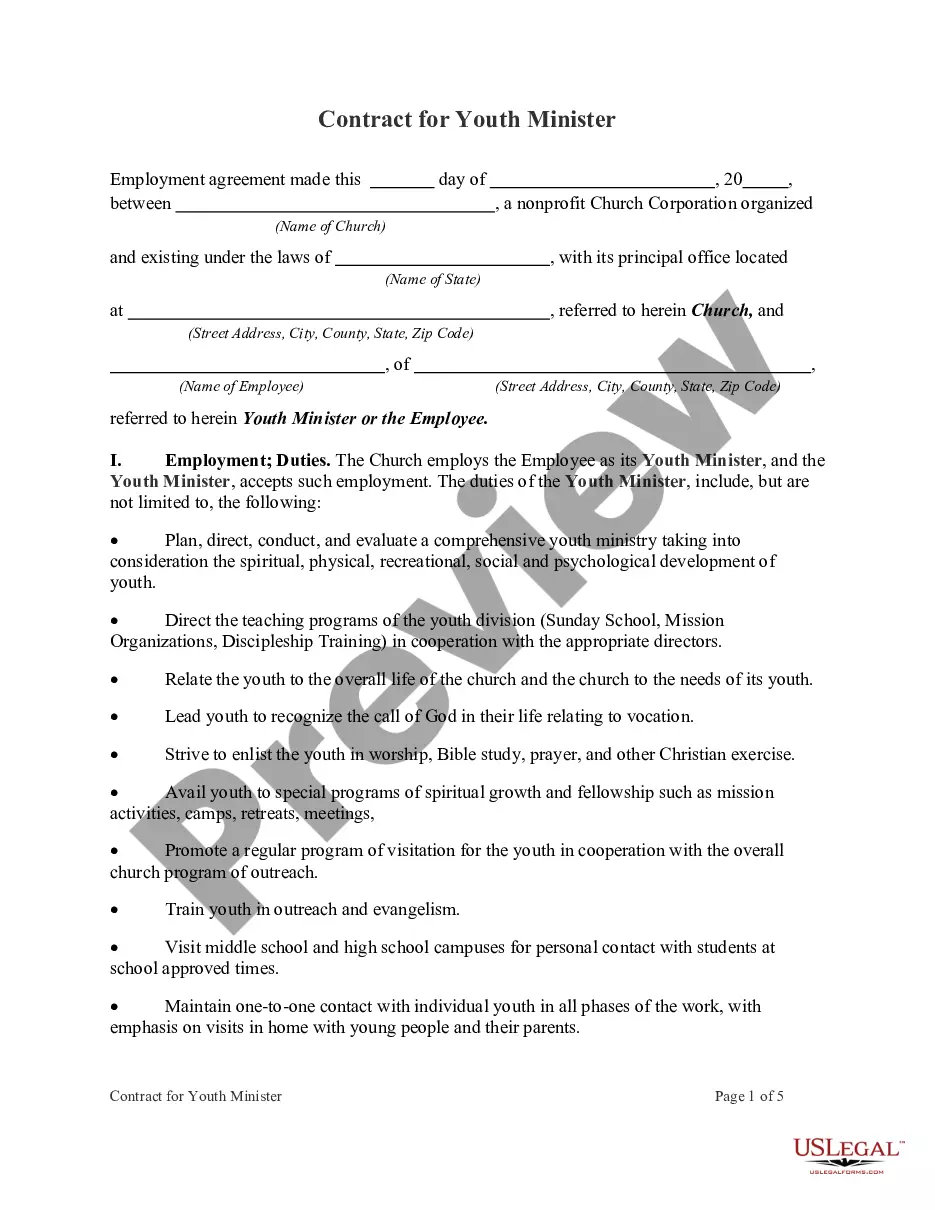
US Legal Forms provides a vast array of template forms, including the Missouri Contract for Youth Minister, specifically designed to meet state and federal regulations.
Once you find the correct form, click Purchase now.
Select the payment plan you wish, enter the necessary information to create your account, and pay for your order through PayPal or credit card.
- If you are already familiar with the US Legal Forms website and have an account, simply Log In.
- After that, you can download the Missouri Contract for Youth Minister template.
- If you do not have an account and wish to use US Legal Forms, follow these procedures.
- Find the form you need and ensure it's for the correct city/state.
- Use the Review button to review the form.
- Check the description to verify that you have selected the correct form.
- If the form does not meet your needs, utilize the Search field to find the form that fits you and your requirements.
Form popularity
FAQ
Ministers are self-employed for Social Security tax purposes with respect to their ministerial services, even though most are treated as employees for federal income tax purposes. Self-employment tax is assessed on taxable compensation and nontaxable housing allowance/parsonage.
The IRS has ruled that clergy are self-employed for purposes of paying social security taxes. This means that they must pay both the employee and the employer share of social security tax under the Self-Employed Contribution Act (SECA).
If you have a clergy housing allowance: Generally, the housing allowance is reported in box 14 of the W-2 and is not included in boxes 1, 3 or 5. The fair rental value of a parsonage or the housing allowance can be excluded from income only for income tax purposes. No exclusion applies for self-employment tax purposes.
Your housing allowance is not reported on any tax document. If your housing allowance is reported in box 7, the church needs to issue a corrected 1099-MISC. The 1099-MISC should only report your taxable wages not including the housing allowance.
A minister's housing allowance (sometimes called a parsonage allowance or a rental allowance) is excludable from gross income for income tax purposes but not for self-employment tax purposes.
If you have clergy, minister, or missionary wages reported on a W-2 that are subject to self-employment taxes, but no FICA (Social Security and Medicare) taxes were withheld: From within your TaxAct® return (Online or Desktop) click Federal.
You must exclude any parsonage or housing allowance included in your retirement pay or any other retirement benefit received after retirement pursuant to a church plan as defined in section 414(e) of the Internal Revenue Code when computing your net earnings from self-employment.
1 To determine usual requirements. Review contracts for other pastors in your denomination to determine usual requirements.2 Specify basic employment elements : start date.3 Delineate the church-specific goals and responsibilities.4 Identify additional items.5 Review the contract.
Yes. Members of the clergy (ministers, members of a religious order, and Christian Science practitioners and readers) and religious workers (church employees) must pay self-employment tax (SE tax).
While they can be considered an employee of a church, for federal income tax purposes a pastor is considered self-employed by the IRS. Some pastors are considered independent contractors if they aren't affiliated with one specific church, like traveling evangelists.