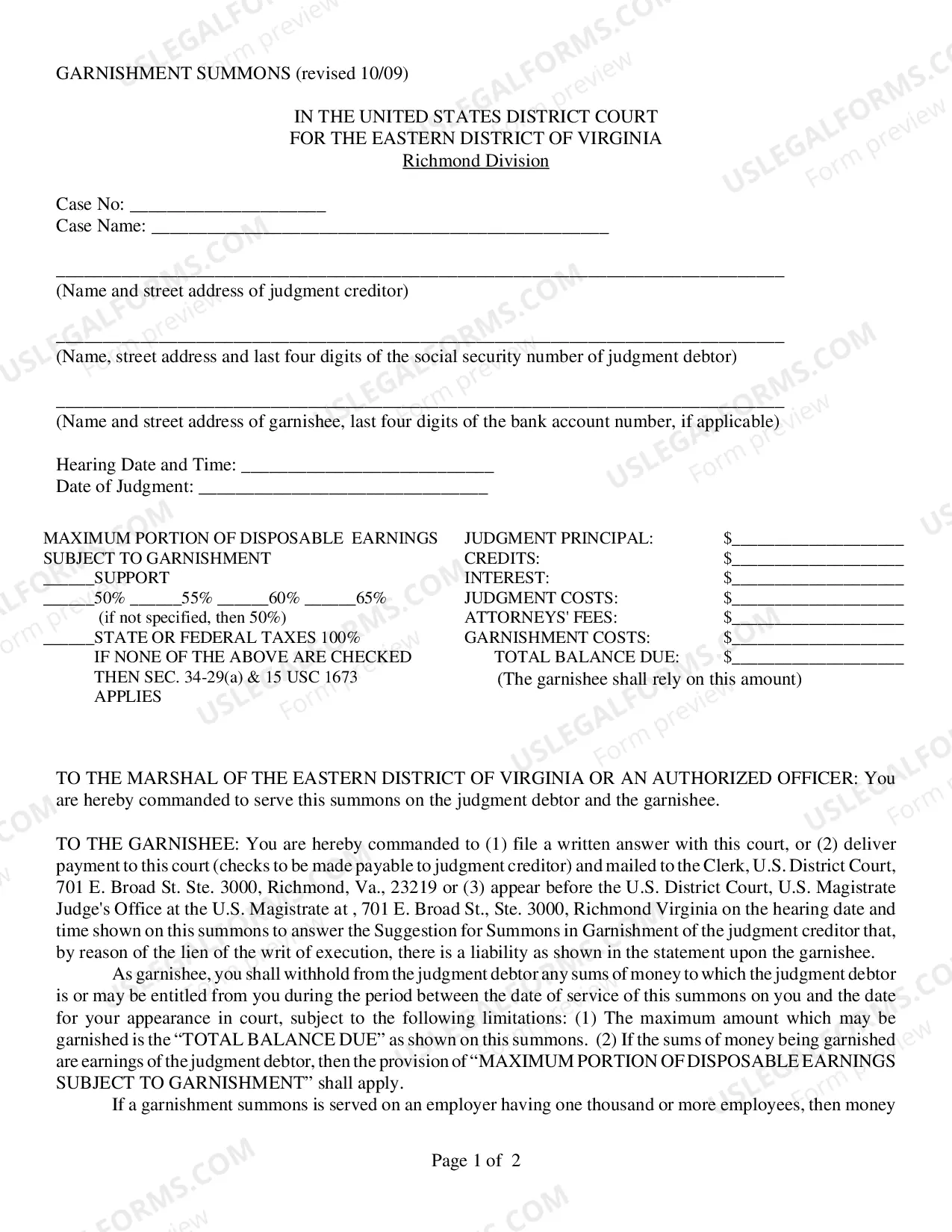
Minnesota Last Will and Testament for other Persons
What is this form?
This form is a Last Will and Testament designed for individuals who need a legal document to specify the distribution of their property upon death. It is specifically tailored for residents of Minnesota. Unlike other wills, this form serves as a catch-all option for those who don't have an appropriate existing document. A will establishes who will inherit your assets, appoints an executor to manage your estate, and may designate guardians for minor children.
Form components explained
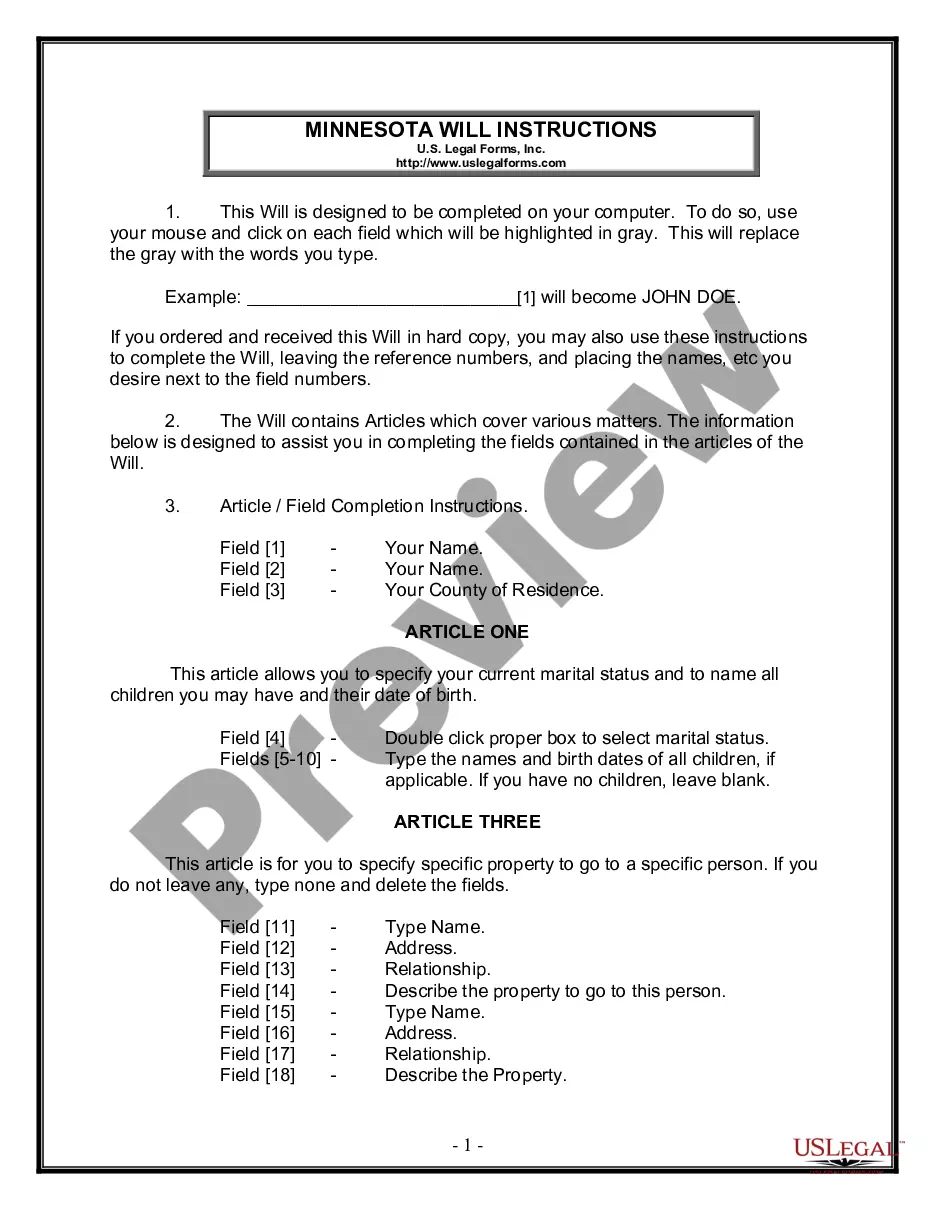
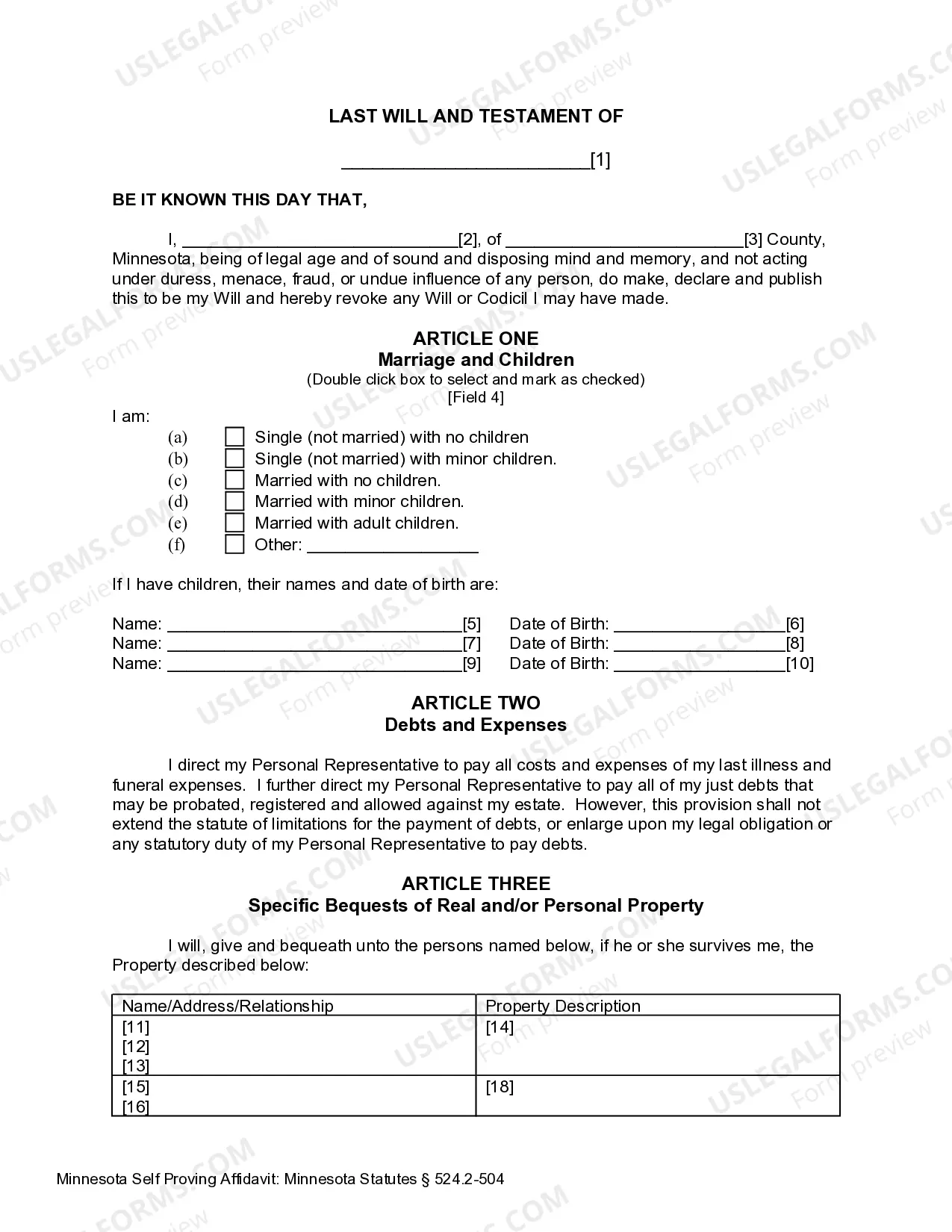
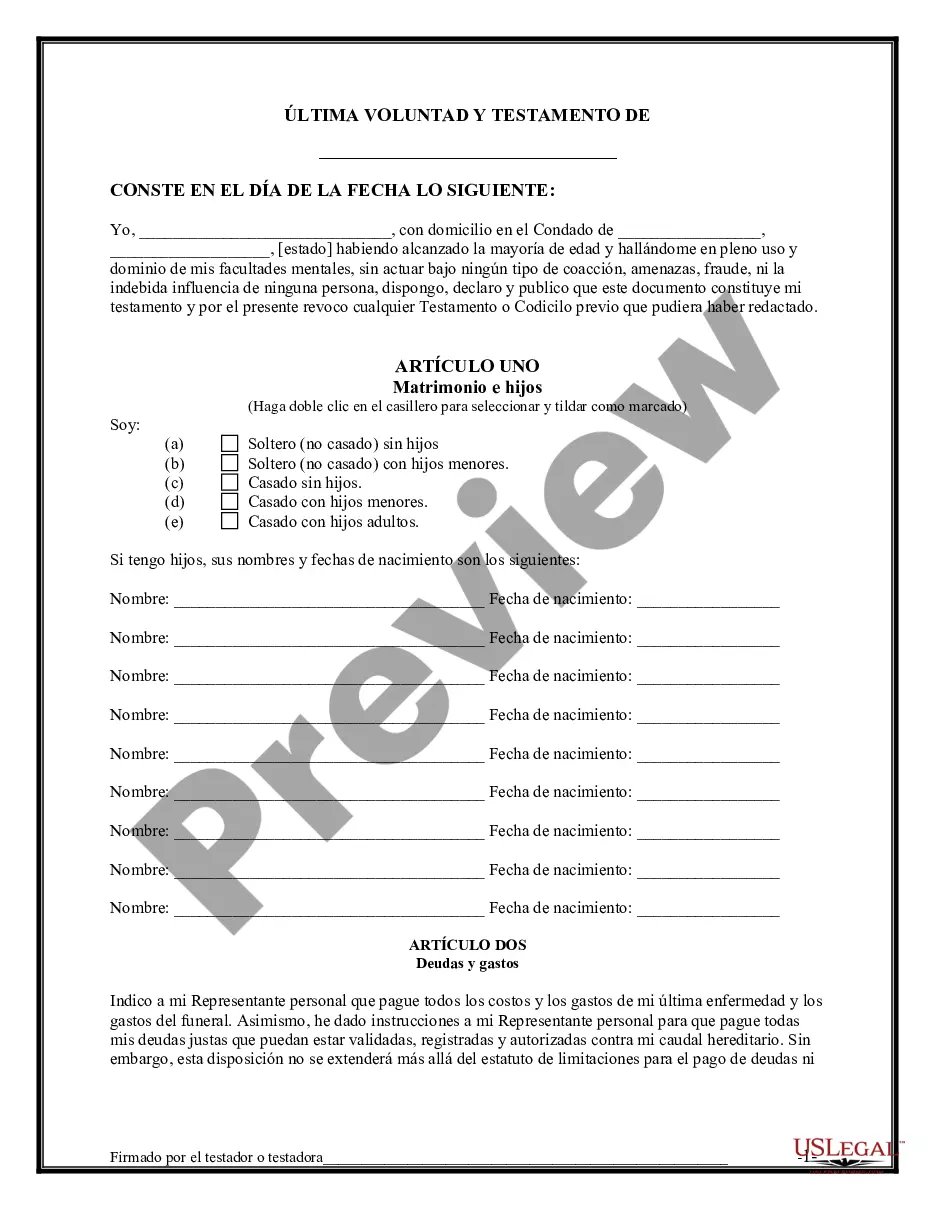
- Article One: States your marital status and childrenâs names and birthdates.
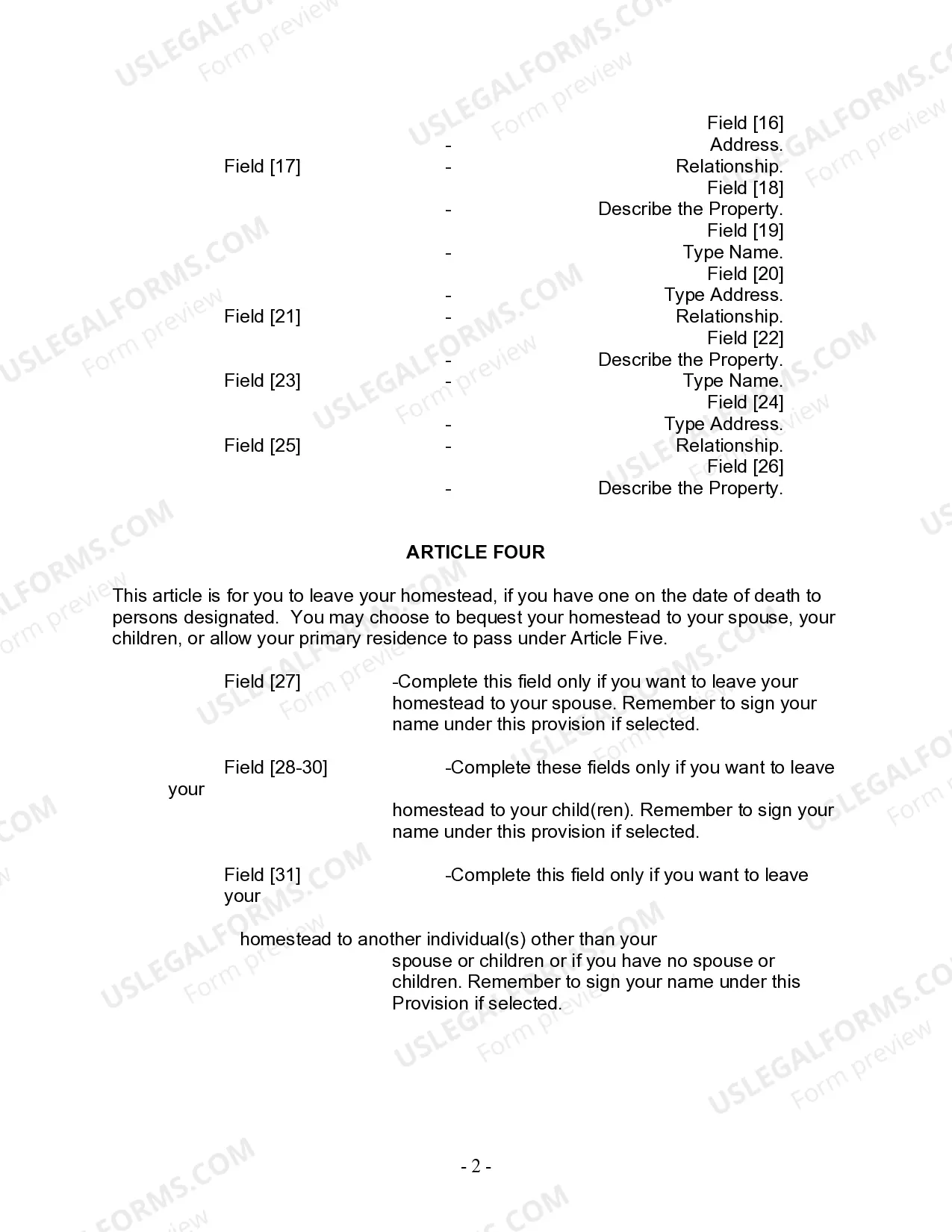
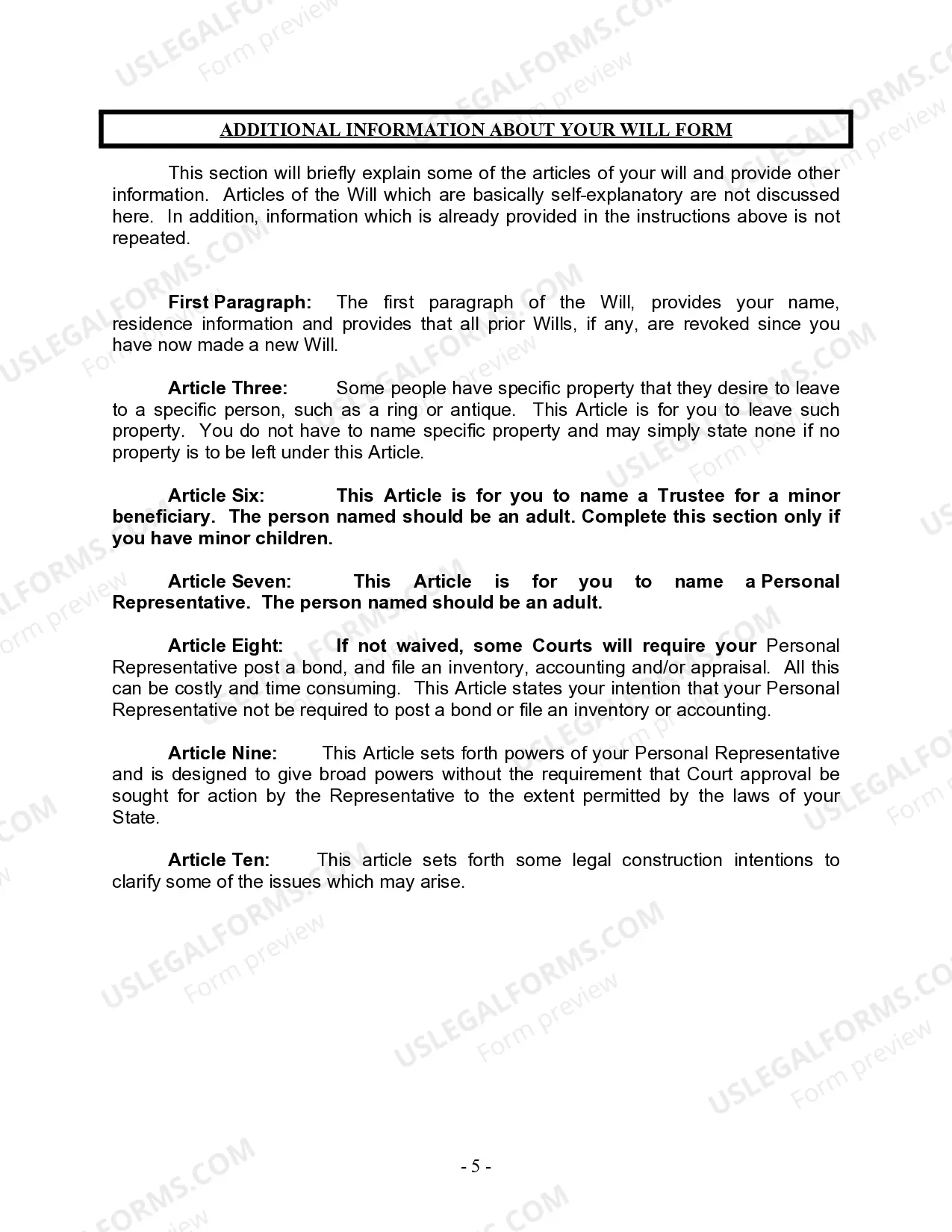
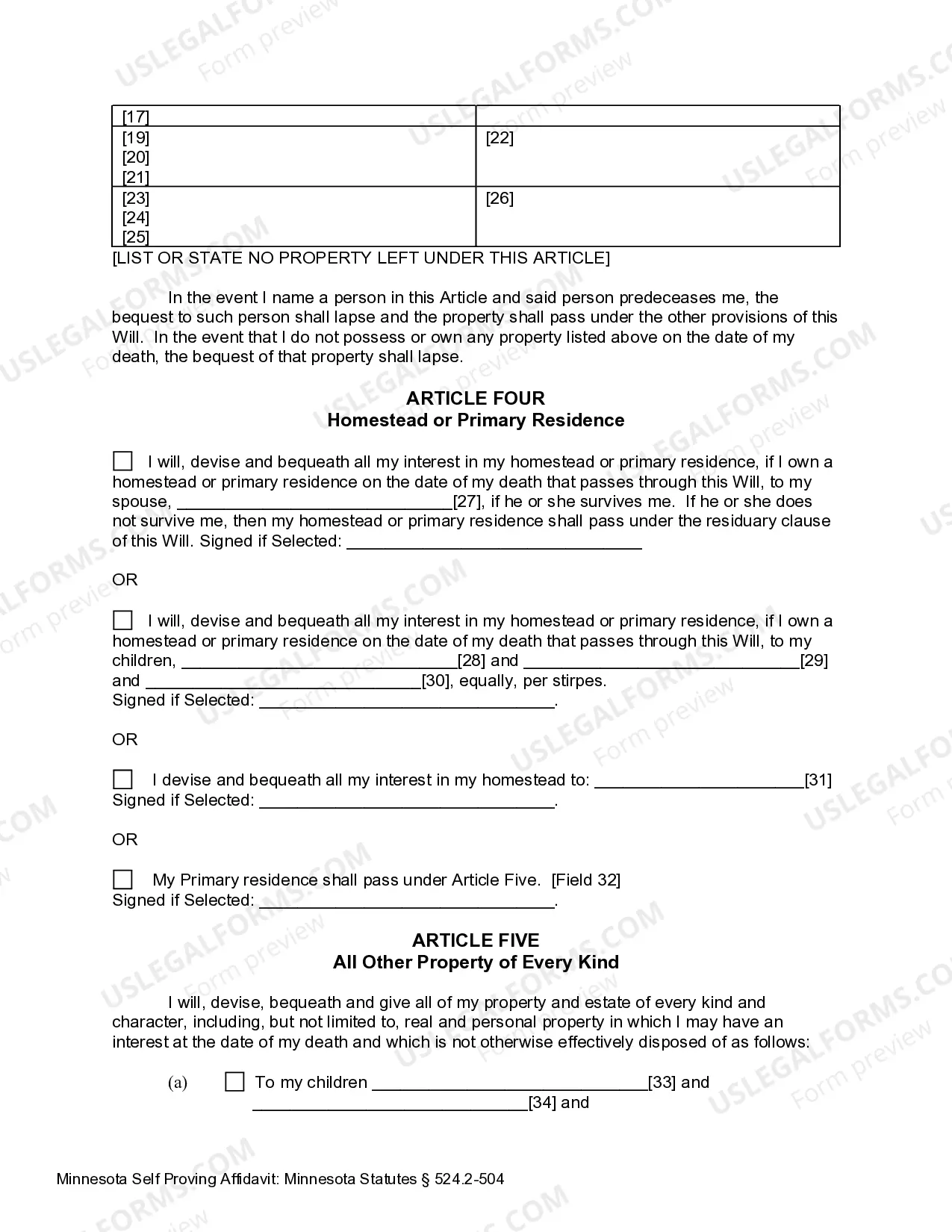
- Article Three: Allows for specific bequests of real or personal property.
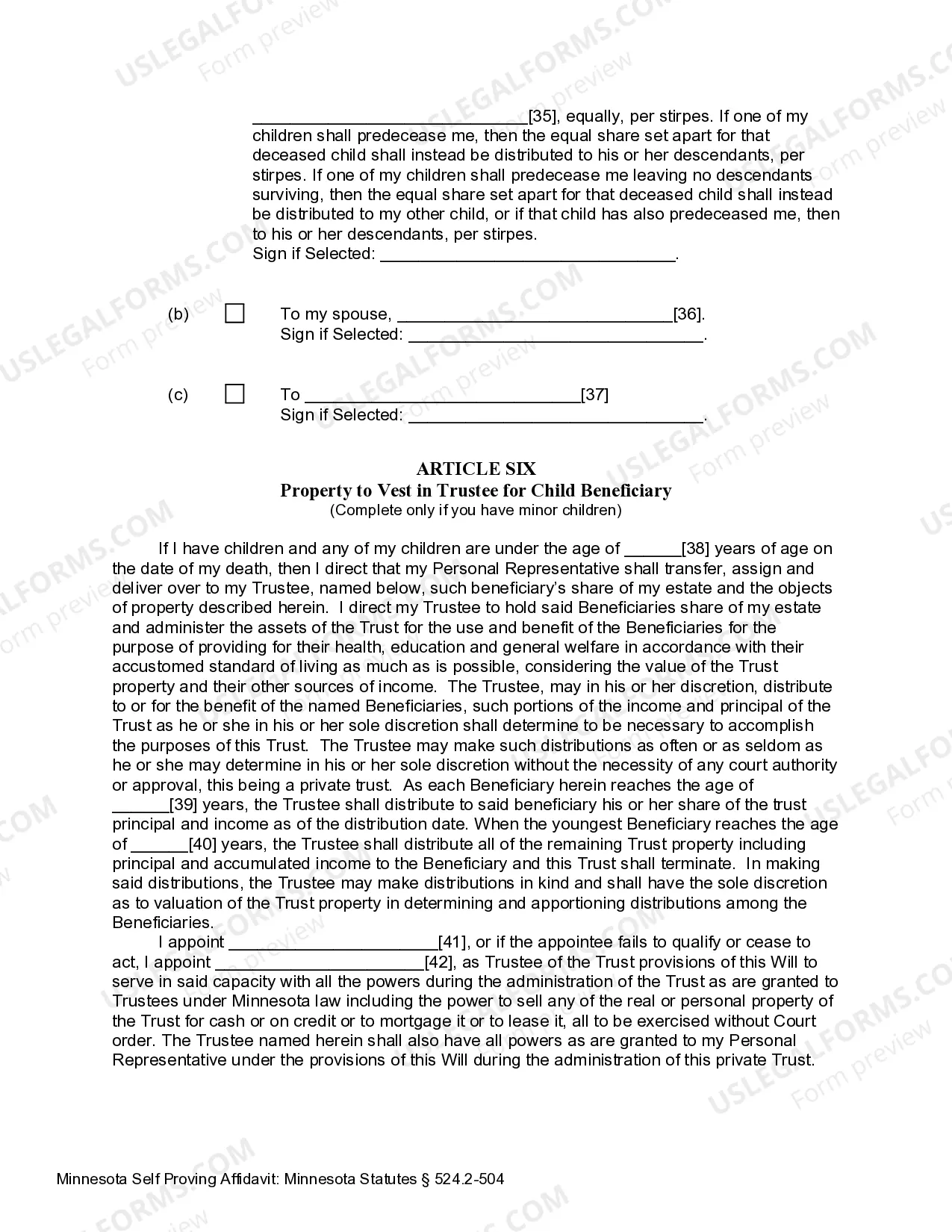
- Article Four: Addresses the inheritance of your homestead or primary residence.
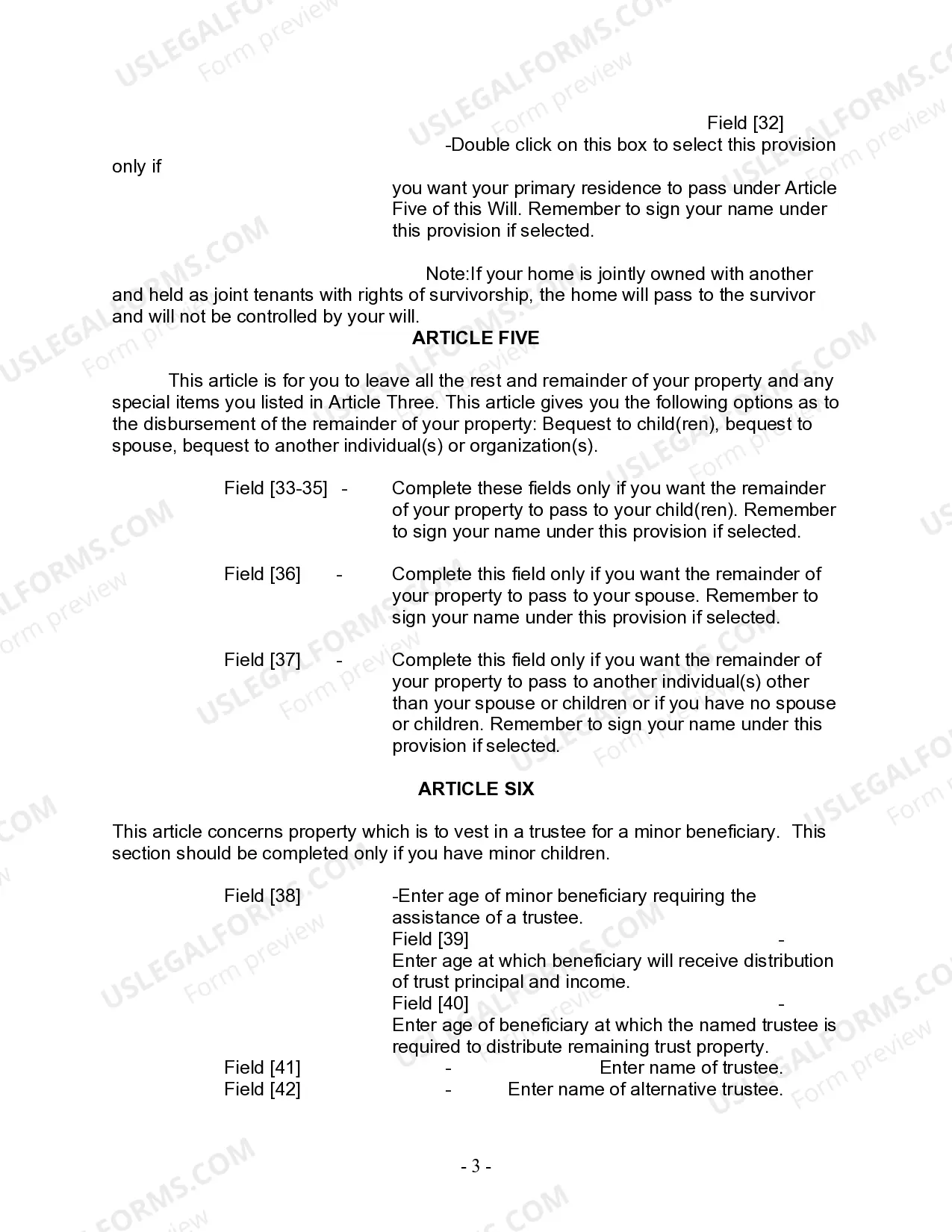
- Article Five: Covers the distribution of the remainder of your estate.
- Article Six: Designates a trustee for minor beneficiaries.
- Signature and witnessing requirements to validate the will.





Common use cases
You should use this Last Will and Testament when you want to ensure your wishes are honored regarding the distribution of your assets after your death. It is especially useful if you have specific property to leave to individuals, if you have minor children who need guardianship, or if you wish to appoint an executor for your estate. This form is ideal for anyone residing in Minnesota who does not have a prior will or needs to create a new one due to changes in family circumstances.
Who can use this document
- Individuals aged 18 and older who are of sound mind.
- Residents of Minnesota seeking a legally binding will.
- Parents wanting to designate guardians for minor children.
- Anyone wishing to specify how their property should be distributed and to whom.
How to complete this form
- Enter your name and county of residence at the top of the form.
- Specify your marital status and list the names and birthdates of your children.
- Detail any specific property bequests you would like to make in Article Three.
- Indicate your wishes regarding your homestead and primary residence in Article Four.
- Choose who will inherit the remainder of your estate in Article Five.
- Sign the will in front of two witnesses and have it notarized if the affidavit is included.
Does this form need to be notarized?
This form must be notarized to be legally valid. US Legal Forms provides secure online notarization powered by Notarize, allowing you to complete the process through a verified video call.
Get your form ready online
Our built-in tools help you complete, sign, share, and store your documents in one place.
Make edits, fill in missing information, and update formatting in US Legal Forms—just like you would in MS Word.
Download a copy, print it, send it by email, or mail it via USPS—whatever works best for your next step.
Sign and collect signatures with our SignNow integration. Send to multiple recipients, set reminders, and more. Go Premium to unlock E-Sign.
If this form requires notarization, complete it online through a secure video call—no need to meet a notary in person or wait for an appointment.
We protect your documents and personal data by following strict security and privacy standards.

Make edits, fill in missing information, and update formatting in US Legal Forms—just like you would in MS Word.

Download a copy, print it, send it by email, or mail it via USPS—whatever works best for your next step.

Sign and collect signatures with our SignNow integration. Send to multiple recipients, set reminders, and more. Go Premium to unlock E-Sign.

If this form requires notarization, complete it online through a secure video call—no need to meet a notary in person or wait for an appointment.

We protect your documents and personal data by following strict security and privacy standards.
Typical mistakes to avoid
- Failing to have the will signed by two witnesses as required by Minnesota law.
- Not properly designating a personal representative or trustee.
- Leaving fields blank, especially regarding specific property or beneficiaries.
- Neglecting to review the will for completeness before execution.
Advantages of online completion
- Convenience of completing the form from home on your computer.
- Easy editing options, allowing you to update information as needed.
- Designed by licensed attorneys to ensure compliance with Minnesota law.
- Save time and reduce legal fees compared to hiring an attorney for basic will preparation.
Legal use & context
- The will must be executed according to Minnesota law to be enforceable.
- Itâs advisable to keep the will in a secure location and inform your executor where it can be found.
- Proper execution of the will helps prevent disputes among beneficiaries after your death.
Key takeaways
- A Last Will and Testament is essential for ensuring your wishes are carried out after death.
- This form is tailored for Minnesota residents and includes specific legal instructions.
- Always have your will signed by witnesses and consider notarization for faster probate processing.
Definitions you should know
- Executor: The person responsible for managing your estate according to your will.
- Bequest: A provision in a will that states how specific assets will be distributed.
- Trustee: A person or entity appointed to manage assets for the benefit of another, often used for minor children.
- Homestead: Your primary residence, which may have specific provisions in a will.
Looking for another form?
Form popularity
FAQ
Yes, you can file a Last Will and Testament for another person in Minnesota, typically as the executor named in the will. However, you must have the legal authority to act on behalf of the deceased. When you handle a Minnesota Last Will and Testament for other Persons, following the correct legal procedures is essential. Platforms like US Legal Forms can assist you in understanding the filing process and ensuring compliance with Minnesota laws.
In Minnesota, a Last Will and Testament does not need to be notarized to be valid, but it is highly recommended. Notarization can help prevent disputes and simplify the probate process. When you create a Minnesota Last Will and Testament for other Persons, ensuring it is properly executed can provide peace of mind. Using resources like US Legal Forms can guide you through the proper steps for creating a notarized will.
What makes a will legal?The will must be signed by at least two witnesses. The witnesses must watch you sign the will, though they don't need to read it. Your witnesses, in most states, must be people who won't inherit anything under the will.
What is a will? A will is simply a legal document in which you, the testator, declare who will manage your estate after you die. Your estate can consist of big, expensive things such as a vacation home but also small items that might hold sentimental value such as photographs.
Decide what to include in your will. Be specific about where all of your stuff goes. Select your beneficiaries. Choose an executor for your will. Name guardians for your children. Sign your will in front of witnesses. Let everyone know beforehand. Store your will in a legacy drawer.
Drafting the will yourself is less costly and may put you out about $150 or less. Depending on your situation, expect to pay anywhere between $300 and $1,000 to hire a lawyer for your will. While do-it-yourself will kits may save you time and money, writing your will with a lawyer ensures it will be error-free.