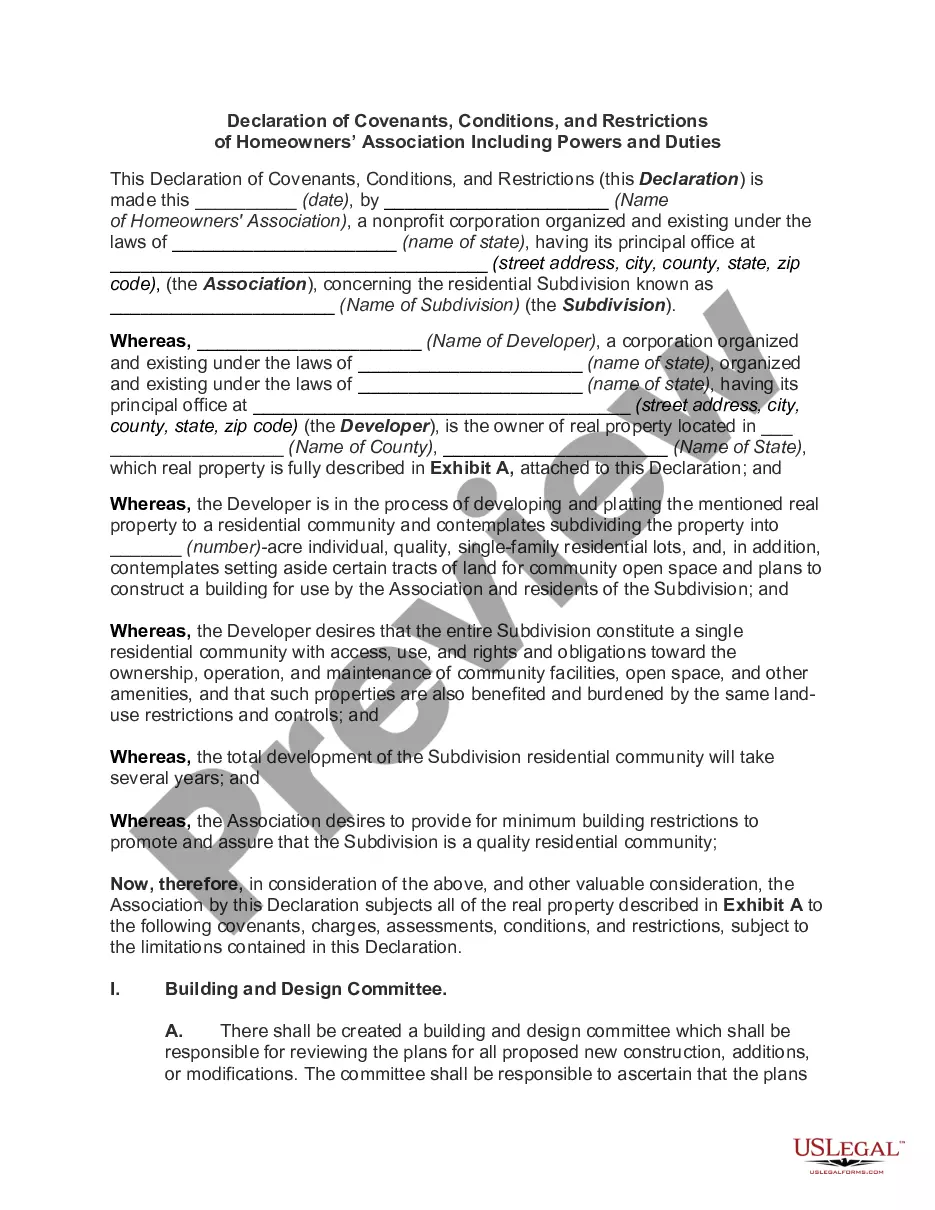
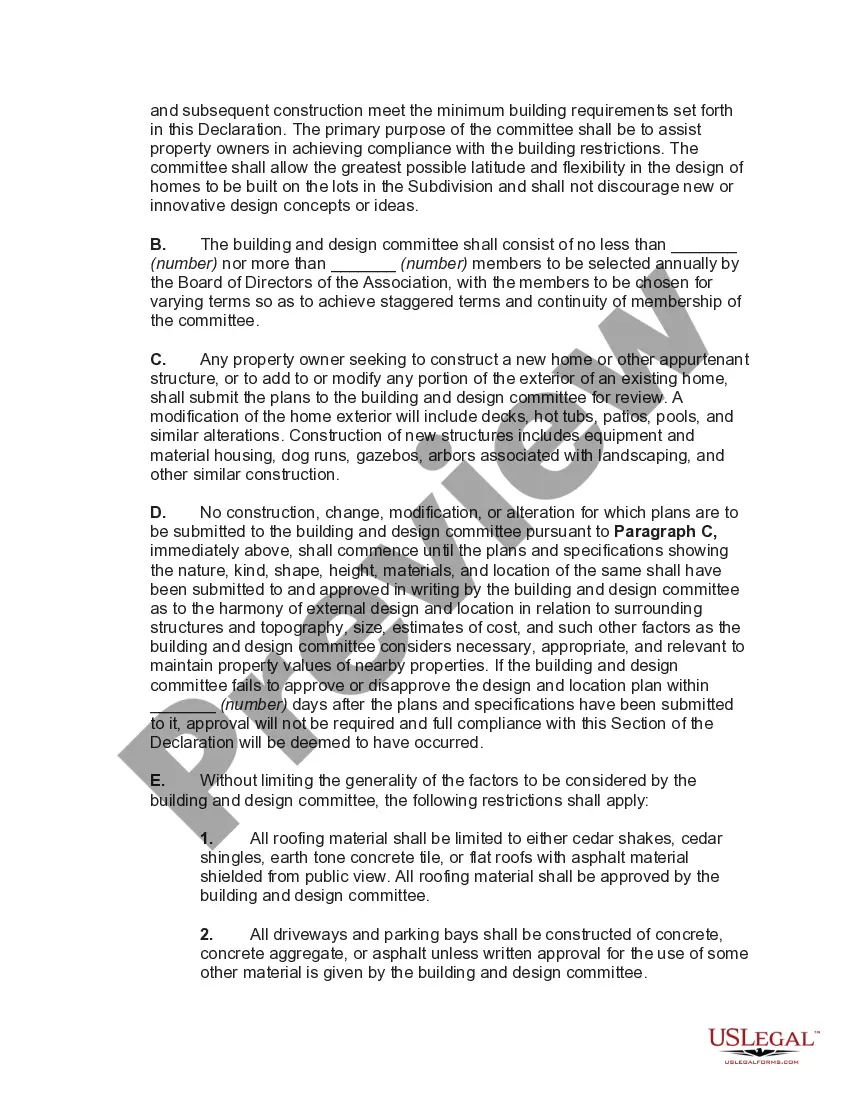
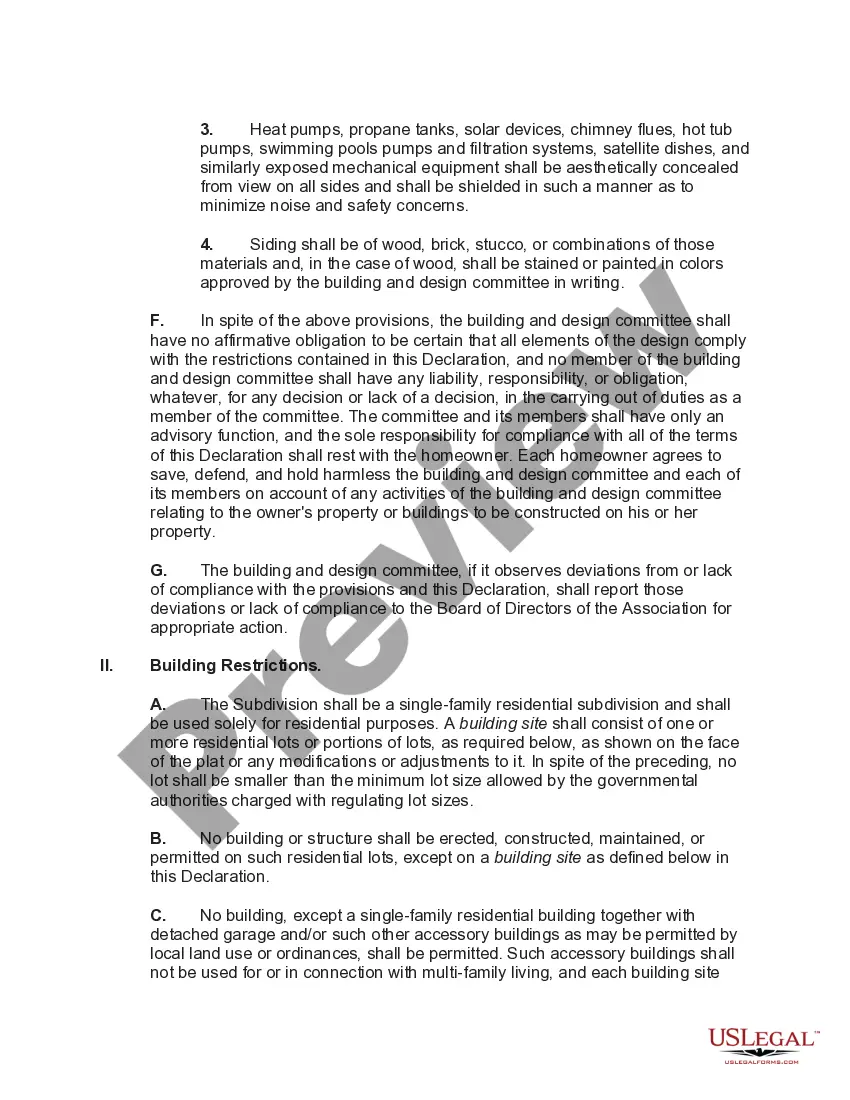
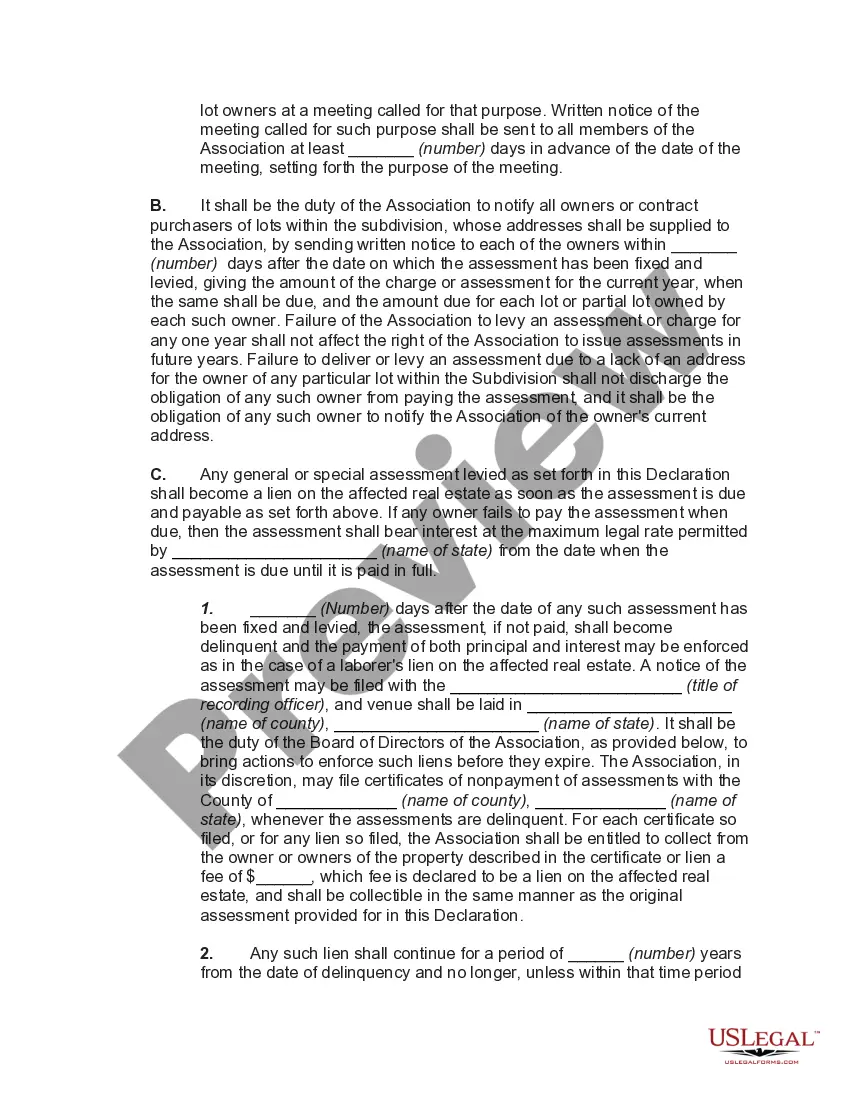
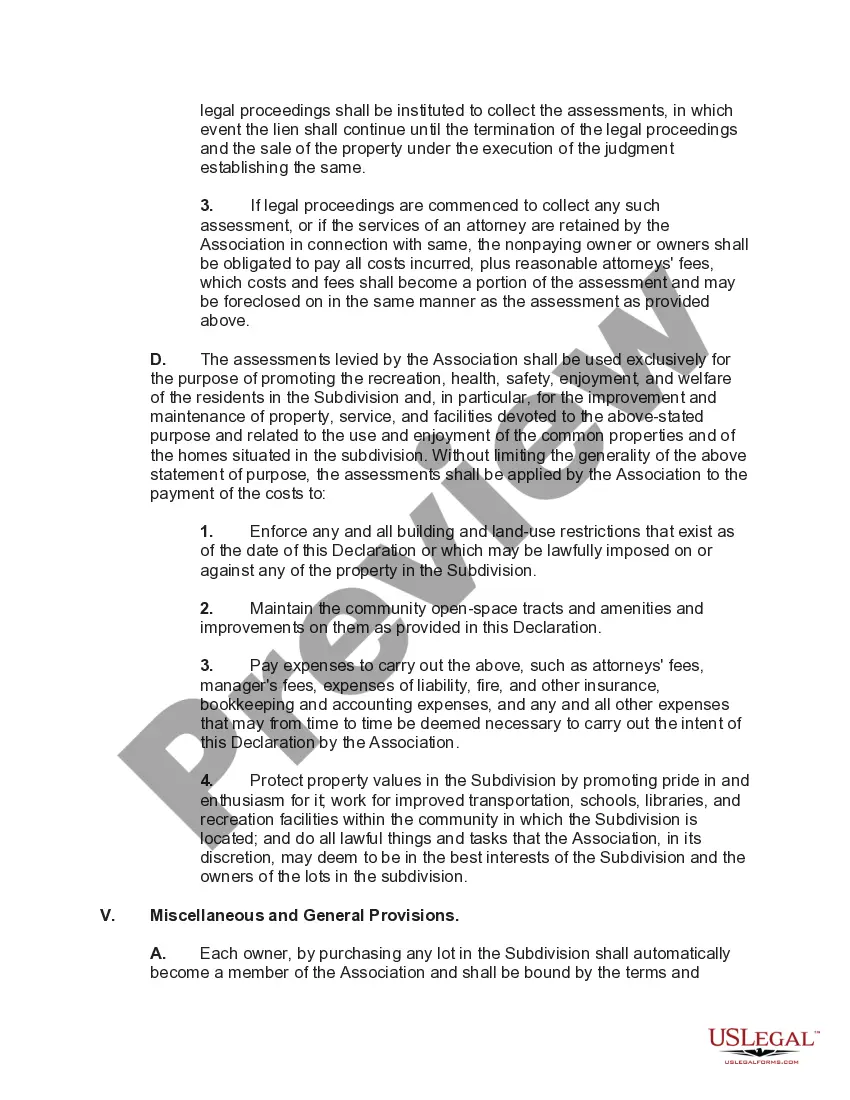
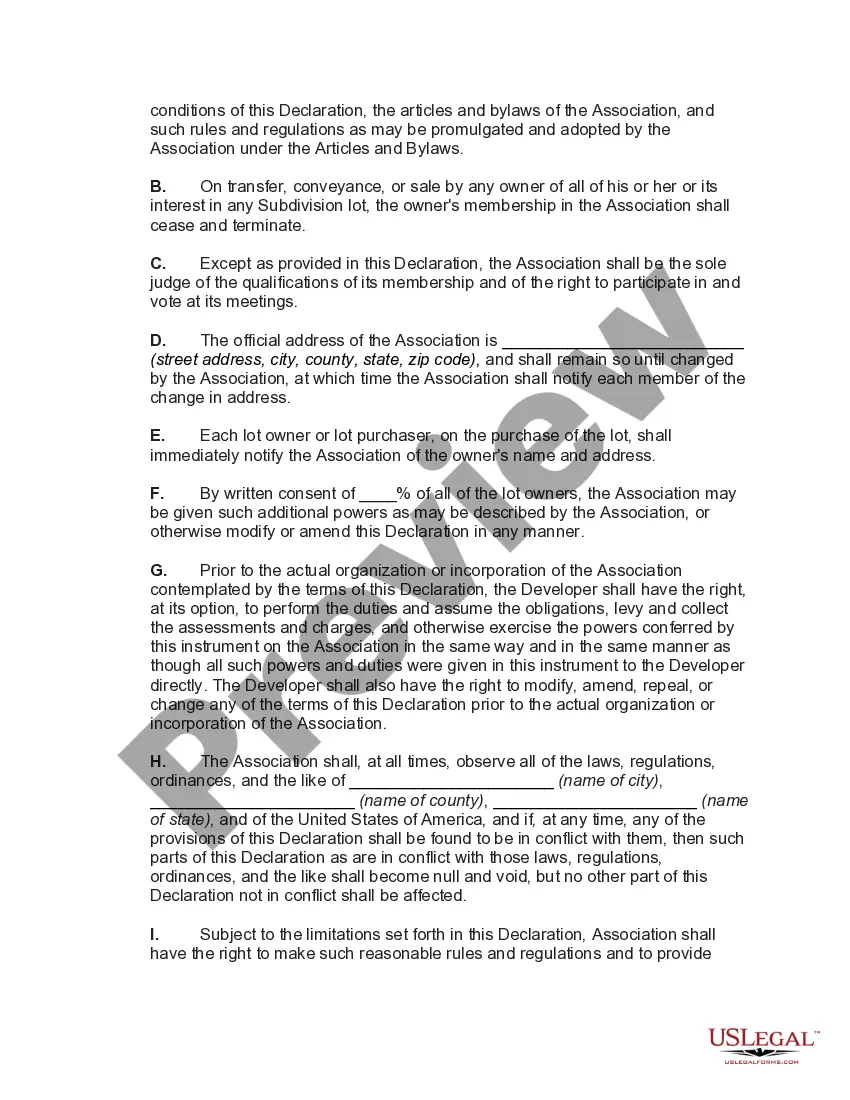
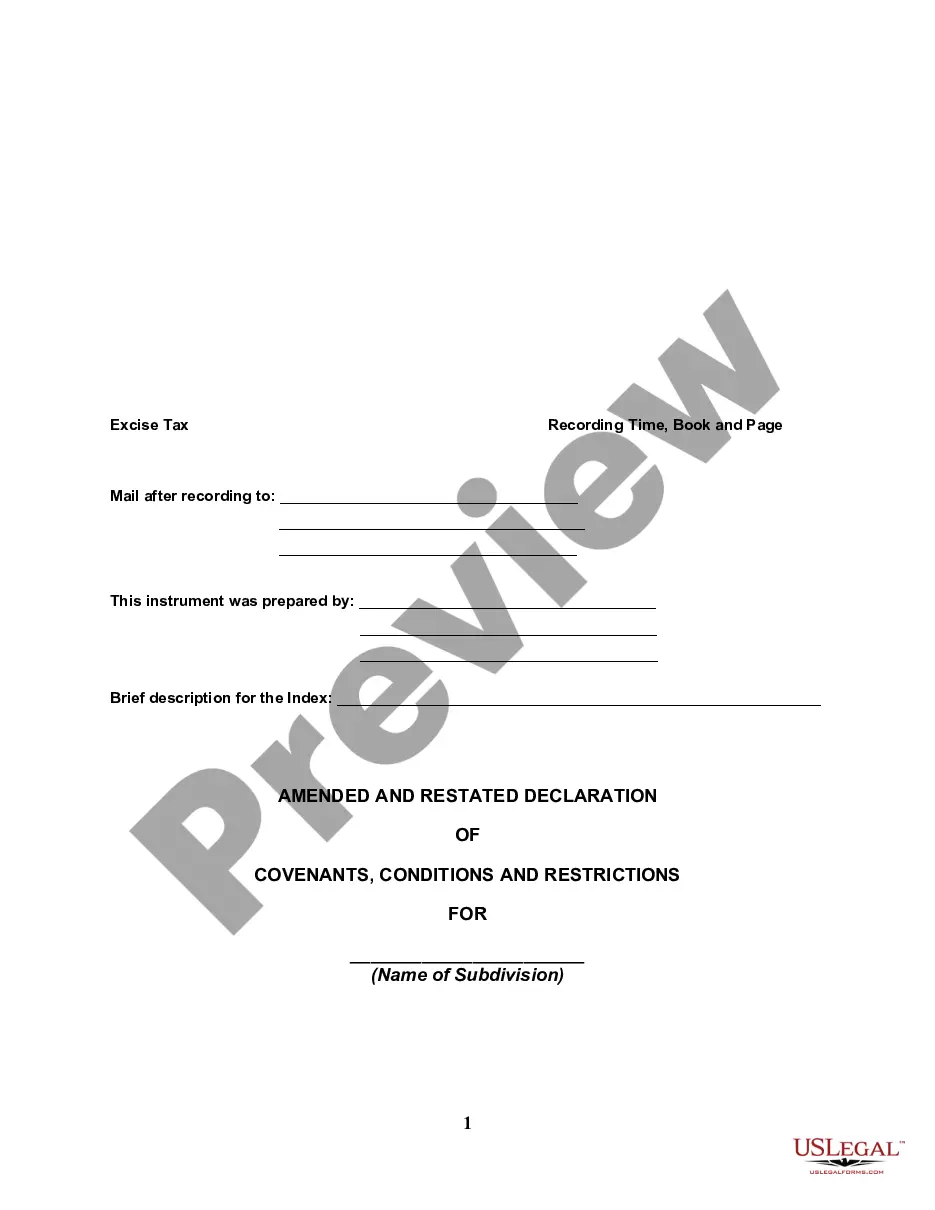
Minnesota Declaration of Covenants, Conditions, and Restrictions of Homeowners' Association Including Powers and Duties
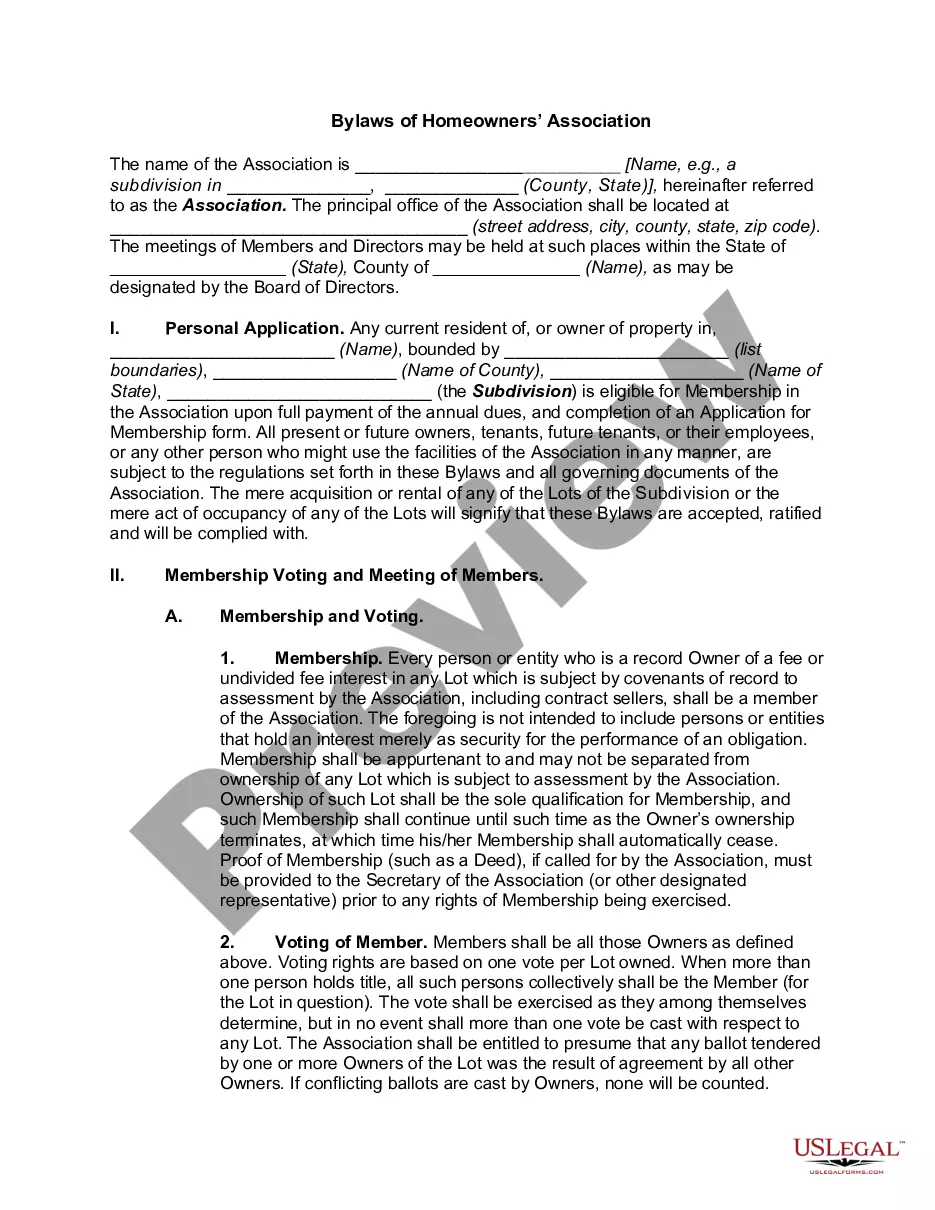
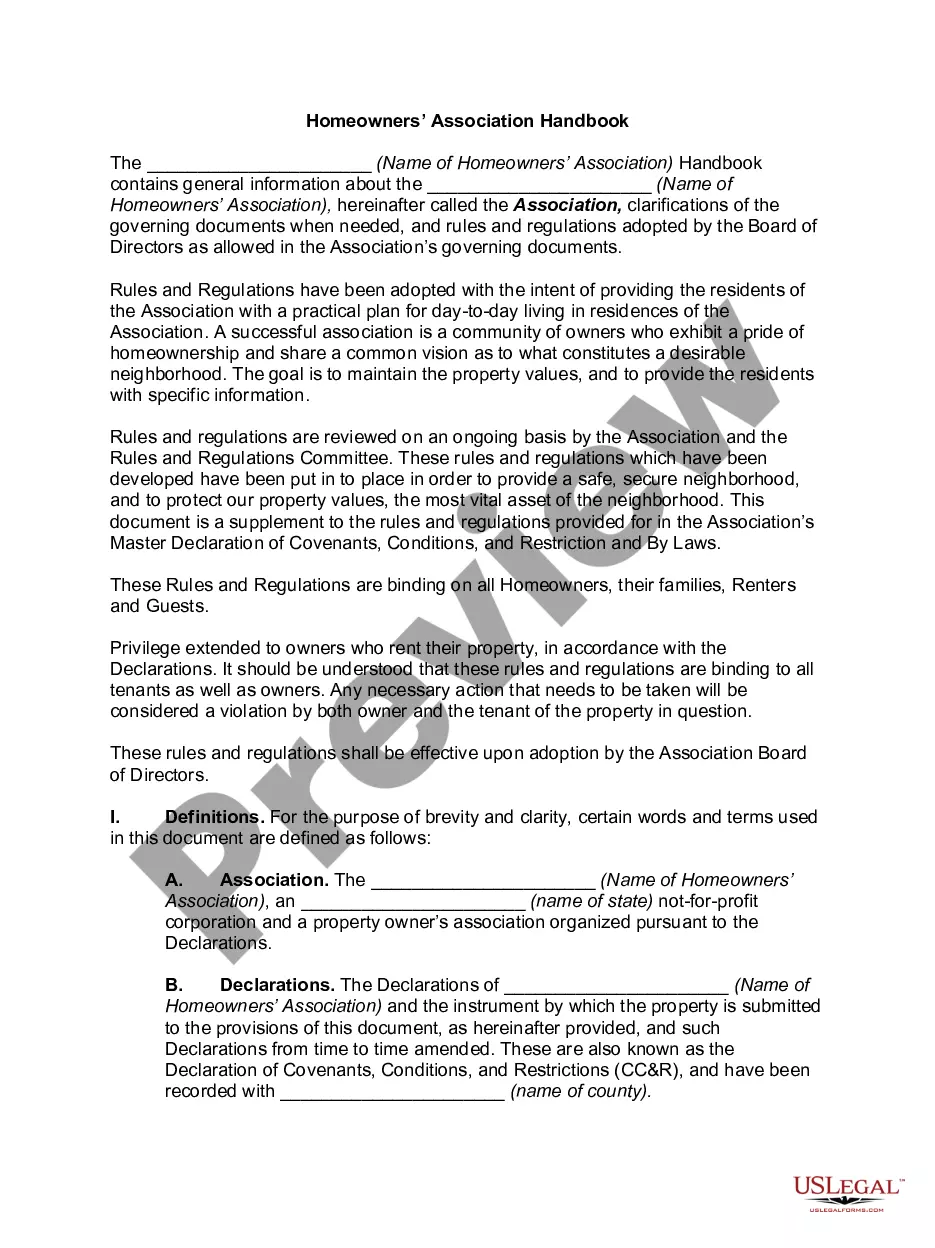
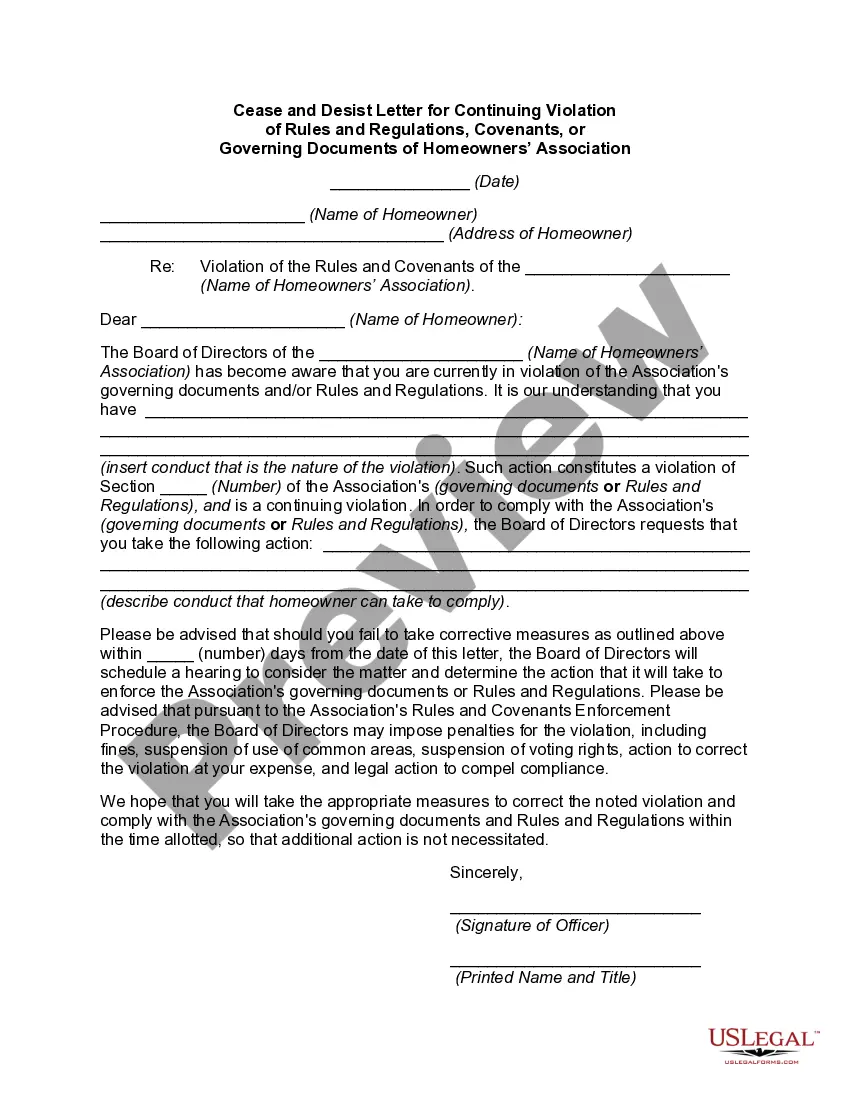
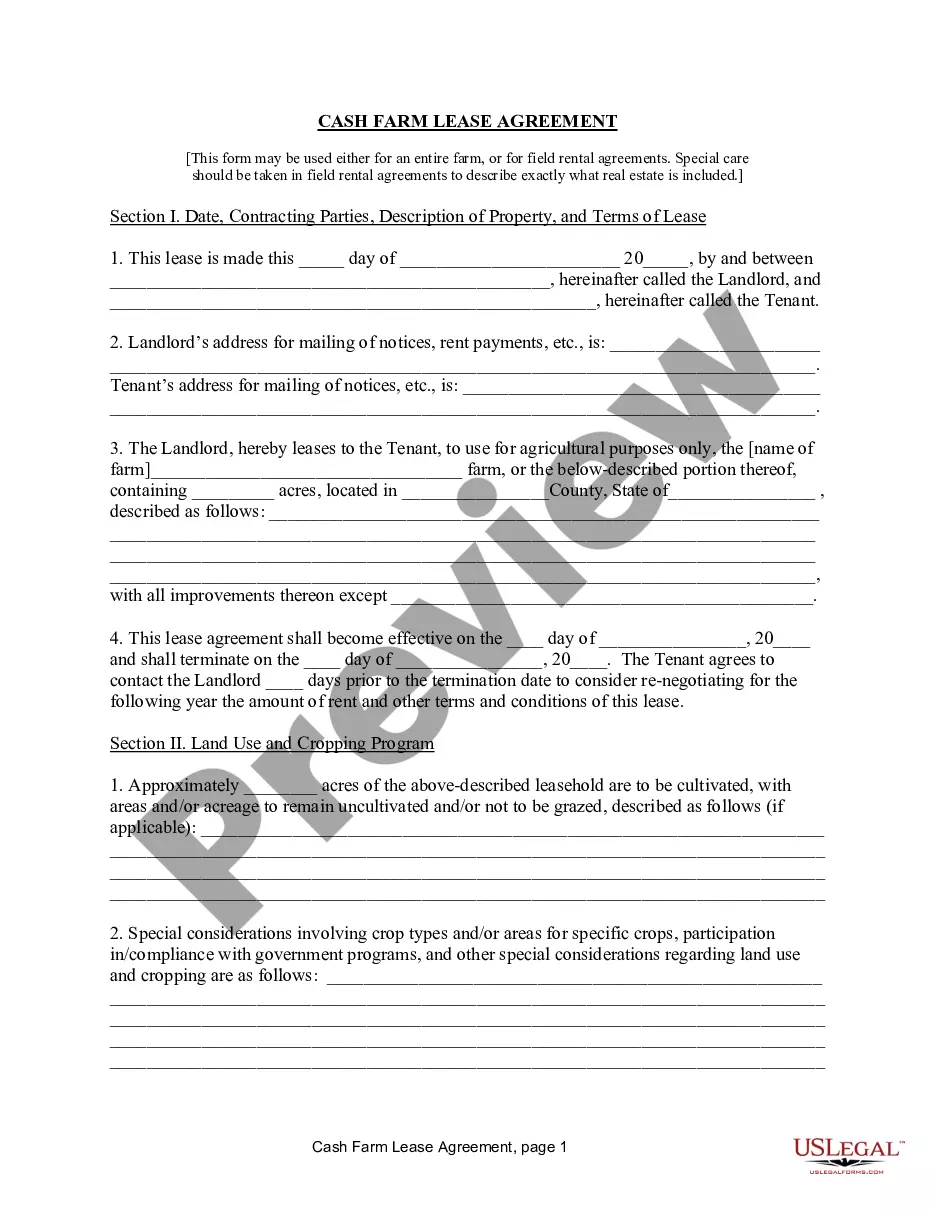
Description


Get your form ready online
Our built-in tools help you complete, sign, share, and store your documents in one place.
Make edits, fill in missing information, and update formatting in US Legal Forms—just like you would in MS Word.
Download a copy, print it, send it by email, or mail it via USPS—whatever works best for your next step.
Sign and collect signatures with our SignNow integration. Send to multiple recipients, set reminders, and more. Go Premium to unlock E-Sign.
If this form requires notarization, complete it online through a secure video call—no need to meet a notary in person or wait for an appointment.
We protect your documents and personal data by following strict security and privacy standards.

Make edits, fill in missing information, and update formatting in US Legal Forms—just like you would in MS Word.

Download a copy, print it, send it by email, or mail it via USPS—whatever works best for your next step.

Sign and collect signatures with our SignNow integration. Send to multiple recipients, set reminders, and more. Go Premium to unlock E-Sign.

If this form requires notarization, complete it online through a secure video call—no need to meet a notary in person or wait for an appointment.

We protect your documents and personal data by following strict security and privacy standards.
Looking for another form?
How to fill out Declaration Of Covenants, Conditions, And Restrictions Of Homeowners' Association Including Powers And Duties?
You might spend countless hours online searching for the legal document template that meets your federal and state requirements.
US Legal Forms offers thousands of legal templates which can be evaluated by professionals.
You can obtain or create the Minnesota Declaration of Covenants, Conditions, and Restrictions of Homeowners’ Association including Powers and Duties through your service.
Use the Preview button to review the document template as well if available. To find another version of the template, use the Search field to locate the template that fits your needs.
- If you already have a US Legal Forms account, you can sign in and then click the Obtain button.
- After that, you can complete, modify, create, or sign the Minnesota Declaration of Covenants, Conditions, and Restrictions of Homeowners’ Association including Powers and Duties.
- Every legal document template you purchase is yours permanently.
- To obtain another copy of the purchased form, visit the My documents tab and click the corresponding button.
- If you are using the US Legal Forms website for the first time, follow the simple instructions below.
- First, ensure that you have selected the correct document template for your desired area/city.
Form popularity
FAQ
In many jurisdictions, depending on applicable state law, the standard rule is that 80 percent of the members of the community must vote in favor of dissolving the HOA. This is typically the case, unless the HOA documents state otherwise or provide for a different rule.
Minnesota is home to a number of condominium and homeowners associations. These associations, though, must remain compliant with many state laws.
In general, typical association fees for condo owners in Minnesota are between 25 and 75 cents per square foot per month.
MCIOA provides statutory authority for common interest communities formed on or after June 1, 1994. MCIOA governs condominiums formed under the Minnesota Condominium Act (prior to August 1, 1980) with limited applicability.
Call an association meeting and ask for a vote on dissolving the HOA. If approved, have the agreeing members sign the termination agreement. Settle any debts, dispose of assets belonging to the HOA, and file the necessary documentation with the SOS to complete the dissolution.
Federal Laws - In addition to state law regulations, the federal government has laws that govern the operation and management of common interest communities, condominiums, cooperatives, and residential properties in the state of Minnesota. Minnesota Collection Agencies Act, Minn. Stat. ? 332.37.
Federal Laws - In addition to state law regulations, the federal government has laws that govern the operation and management of common interest communities, condominiums, cooperatives, and residential properties in the state of Minnesota. Minnesota Collection Agencies Act, Minn. Stat. ? 332.37.
The CC&Rs set out the rules of the HOA community. They describe the requirements and limitations of what you can do with your property. The goal of the CC&Rs is to protect, preserve, and enhance property values in the community. The bylaws, on the other hand, govern how the HOA operates.