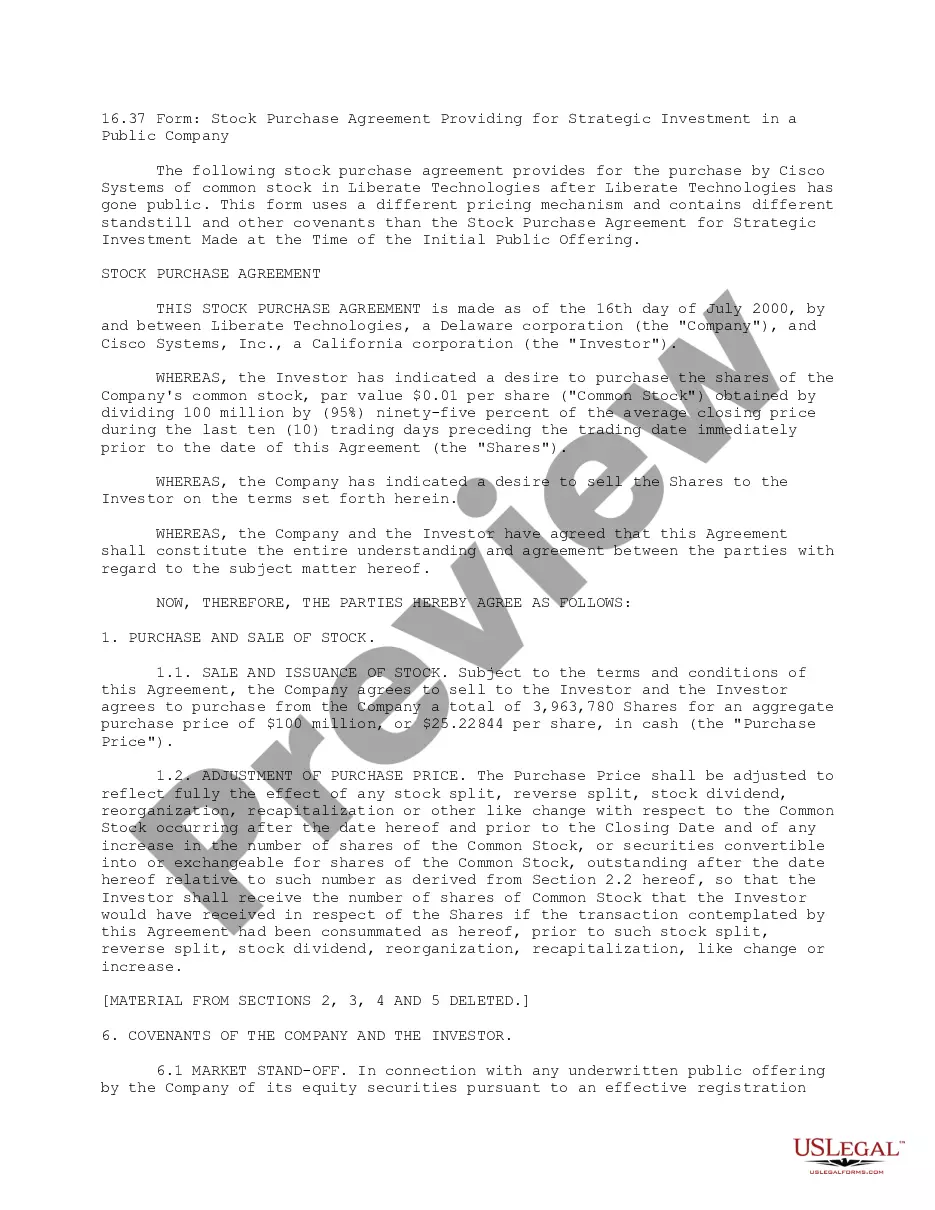
Minnesota Plumbing Services Agreement
Description
Get your form ready online
Our built-in tools help you complete, sign, share, and store your documents in one place.
Make edits, fill in missing information, and update formatting in US Legal Forms—just like you would in MS Word.
Download a copy, print it, send it by email, or mail it via USPS—whatever works best for your next step.
Sign and collect signatures with our SignNow integration. Send to multiple recipients, set reminders, and more. Go Premium to unlock E-Sign.
If this form requires notarization, complete it online through a secure video call—no need to meet a notary in person or wait for an appointment.
We protect your documents and personal data by following strict security and privacy standards.

Make edits, fill in missing information, and update formatting in US Legal Forms—just like you would in MS Word.

Download a copy, print it, send it by email, or mail it via USPS—whatever works best for your next step.

Sign and collect signatures with our SignNow integration. Send to multiple recipients, set reminders, and more. Go Premium to unlock E-Sign.

If this form requires notarization, complete it online through a secure video call—no need to meet a notary in person or wait for an appointment.

We protect your documents and personal data by following strict security and privacy standards.
Looking for another form?



How to fill out Plumbing Services Agreement?
You can dedicate multiple hours online trying to locate the sanctioned document format that complies with the federal and state requirements you need.
US Legal Forms offers thousands of official templates that have been vetted by professionals.
You can easily obtain or create the Minnesota Plumbing Services Agreement from their service.
- If you already possess a US Legal Forms account, you can sign in and press the Obtain button.
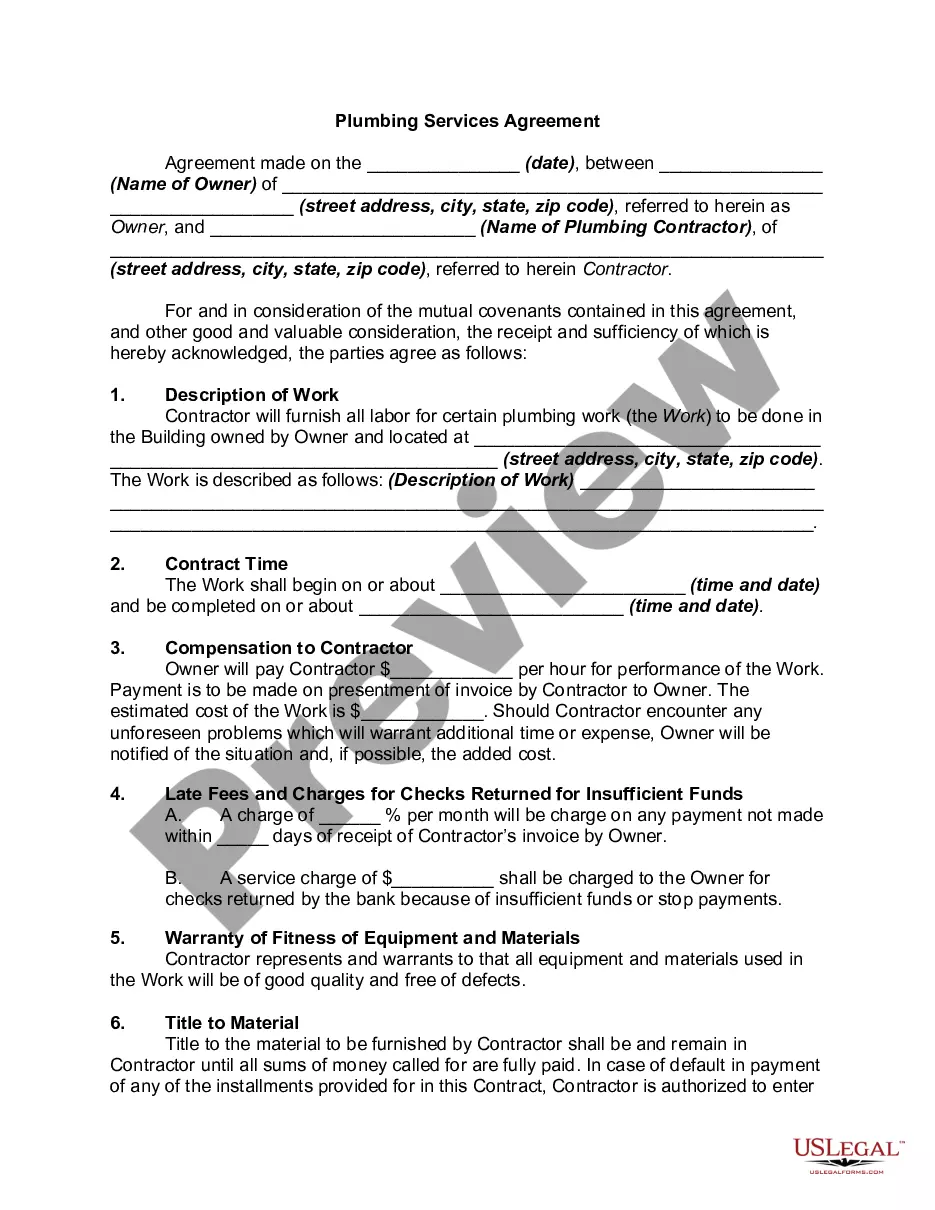
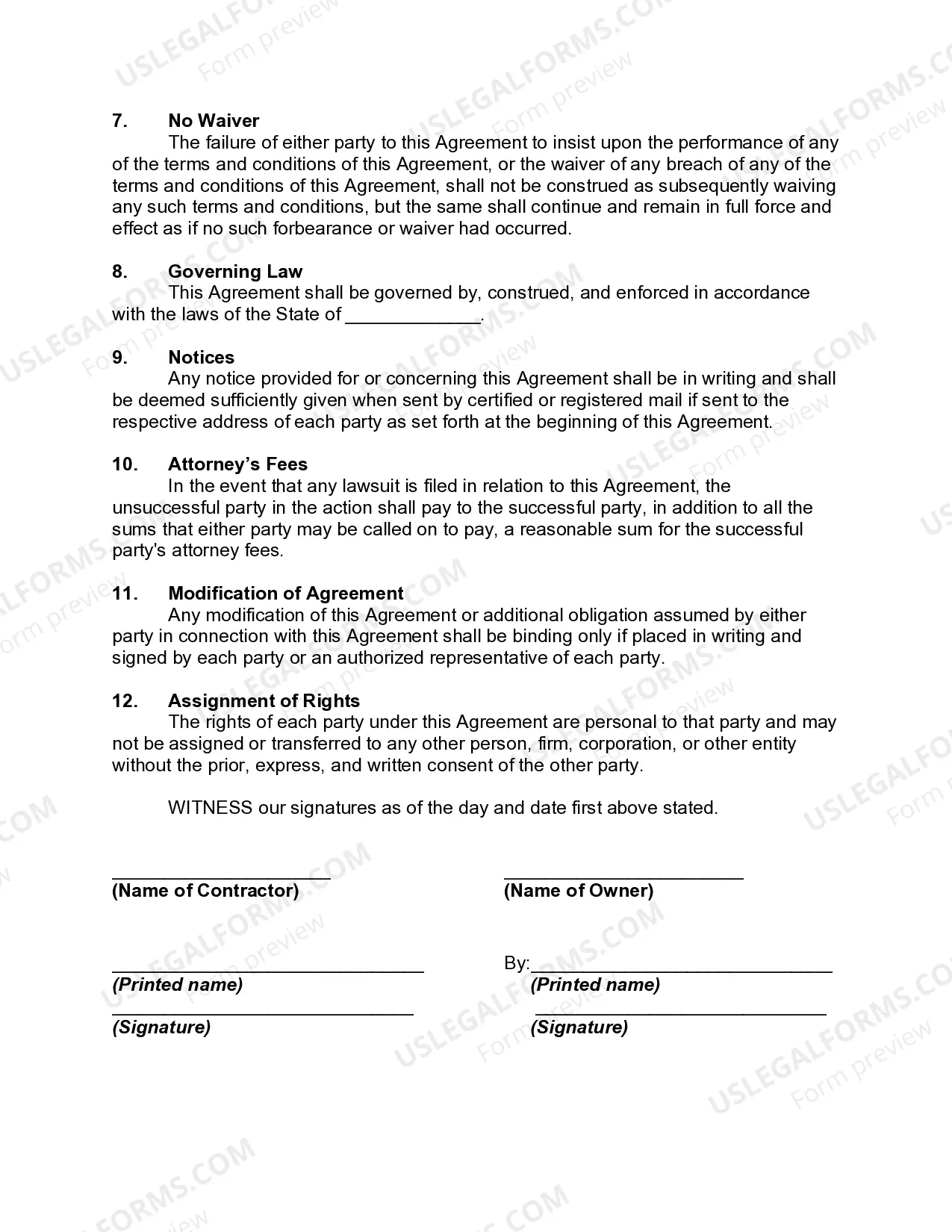
- Then, you can complete, modify, print, or sign the Minnesota Plumbing Services Agreement.
- Every official document format you receive is yours forever.
- To get another copy of a purchased template, navigate to the My documents tab and choose the appropriate button.
- If you are using the US Legal Forms website for the first time, follow the simple steps below.
- First, ensure you have selected the correct document format for the state/city of your choice.
Form popularity
FAQ
In Minnesota, certain minor plumbing tasks can generally be performed without a license. These may include simple repairs, such as fixing faucets or unclogging drains, as long as they do not significantly alter the plumbing system. However, for more comprehensive projects or changes, it is advisable to follow a Minnesota Plumbing Services Agreement to ensure you meet local regulations and protect your interests.
Creating a contract for plumbing starts with outlining the scope of work and the responsibilities of each party. You should include key details such as payment terms, project timeline, and the specific plumbing services being provided. For a solid foundation, consider using a Minnesota Plumbing Services Agreement template from US Legal Forms, which can guide you through the process and ensure compliance with state laws.
Minnesota adopts the Minnesota State Plumbing Code, which governs all plumbing installations. This code outlines the standards for materials, design, and installation practices to ensure public health and safety. Understanding this code is essential when drafting a Minnesota Plumbing Services Agreement. To stay compliant, consult with licensed professionals familiar with these regulations.
In Minnesota, homeowners can perform their own plumbing work, but there are regulations to consider. It's important to follow plumbing codes to ensure safety and compliance. A Minnesota Plumbing Services Agreement can guide you through the necessary permits and inspections. If you're unsure, seeking professional help can save you time and potential costly mistakes.
A contract agreement covers the overall terms of an engagement between two parties, while a Service Level Agreement (SLA) focuses specifically on service expectations and performance metrics. In the context of plumbing, a Minnesota Plumbing Services Agreement could serve as both a contract and include SLA elements by outlining service commitments and response times. Understanding these differences helps you choose the right contract for your needs.
The purpose of a service agreement is to define the terms of service, responsibilities, and expectations between the provider and the client. By utilizing a Minnesota Plumbing Services Agreement, both parties have clear guidelines on service delivery, payment structure, and coverage of repairs. This clarity helps avoid misunderstandings and ensures a smooth transaction.
In Minnesota, homeowners can pull plumbing permits for specific projects, but it often depends on the work type and local regulations. Before starting any plumbing task, review the requirements stipulated in the Minnesota Plumbing Services Agreement for proper permitting. Always check with your local jurisdiction to avoid any violations.
Plumbing service plans can provide peace of mind and financial savings over time. Many homeowners find that a Minnesota Plumbing Services Agreement offers value through preventive maintenance and priority service, which can reduce unexpected expenses. Weigh your options and consider your plumbing needs to determine if a plan fits your budget.
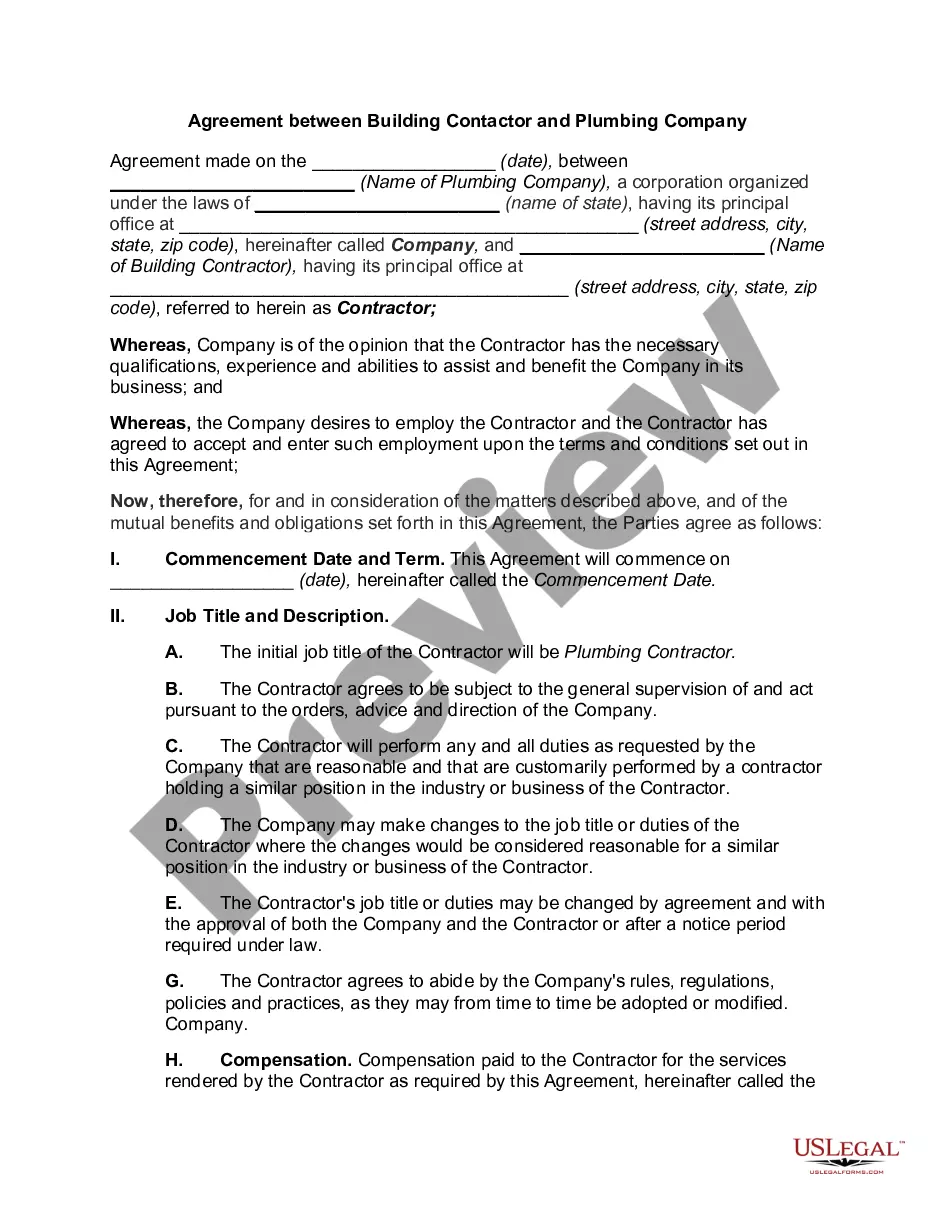
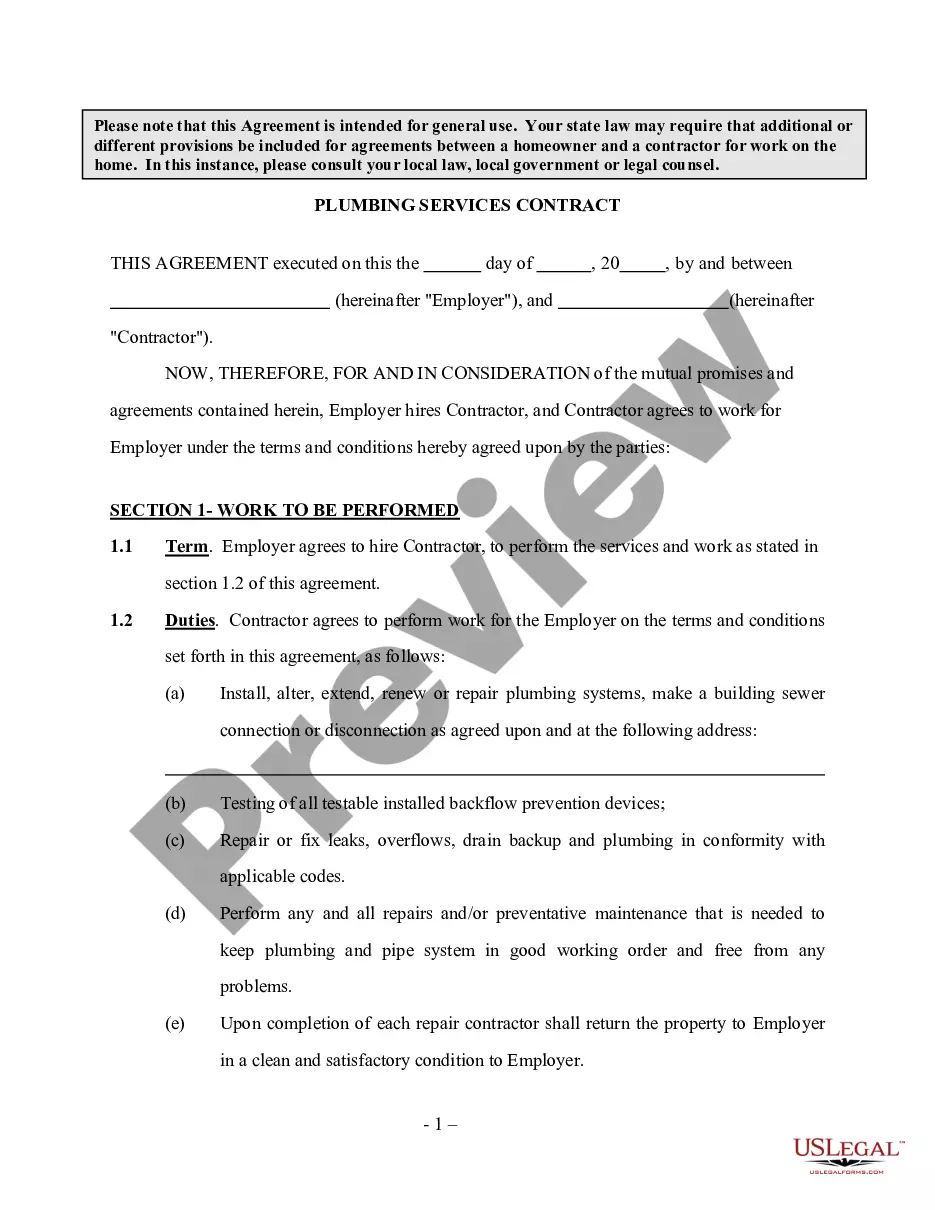
A plumbing service agreement is a contract that outlines the responsibilities, services, and costs associated with plumbing maintenance for a specified period. This agreement typically addresses routine repairs, inspections, and emergencies. Utilizing a Minnesota Plumbing Services Agreement helps you secure reliable service and protects your investment.
In Minnesota, a handyman can perform minor plumbing tasks, but larger jobs typically require a licensed plumber. For any plumbing service, it's wise to refer to a Minnesota Plumbing Services Agreement to confirm the scope of work allowed. Hiring a licensed professional ensures quality and compliance with state regulations.