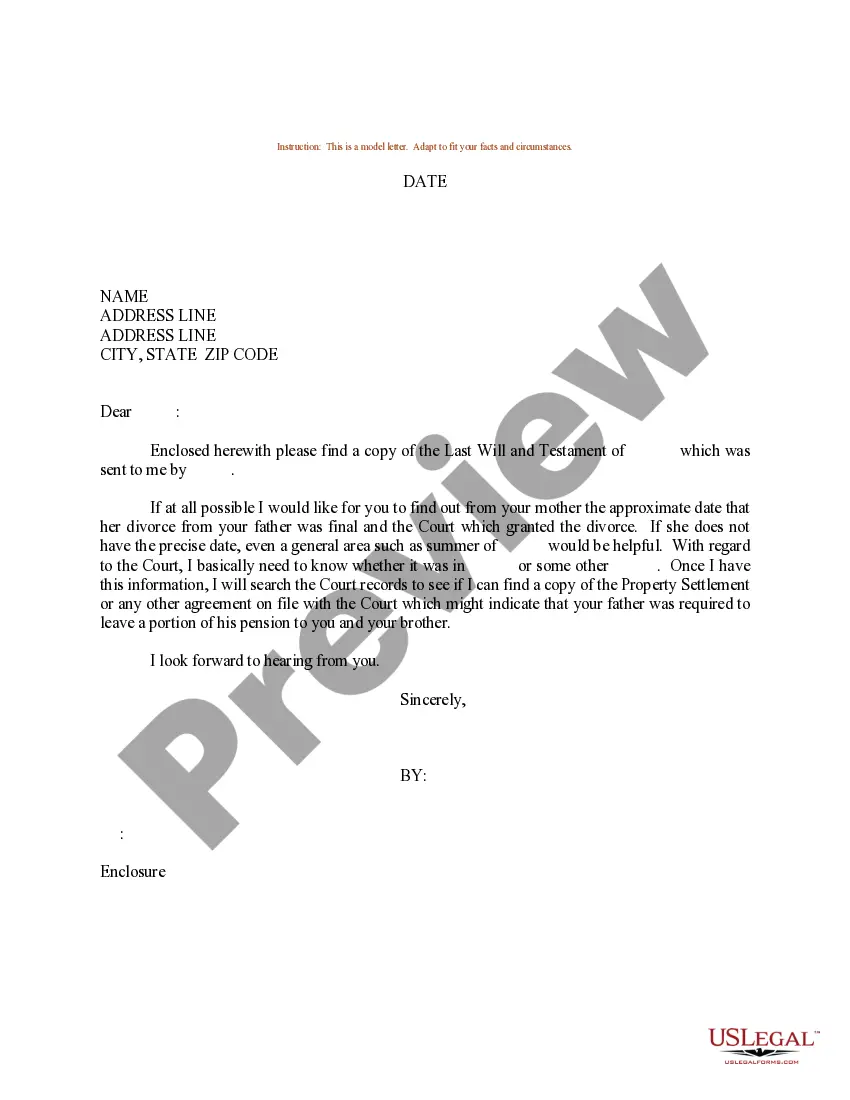
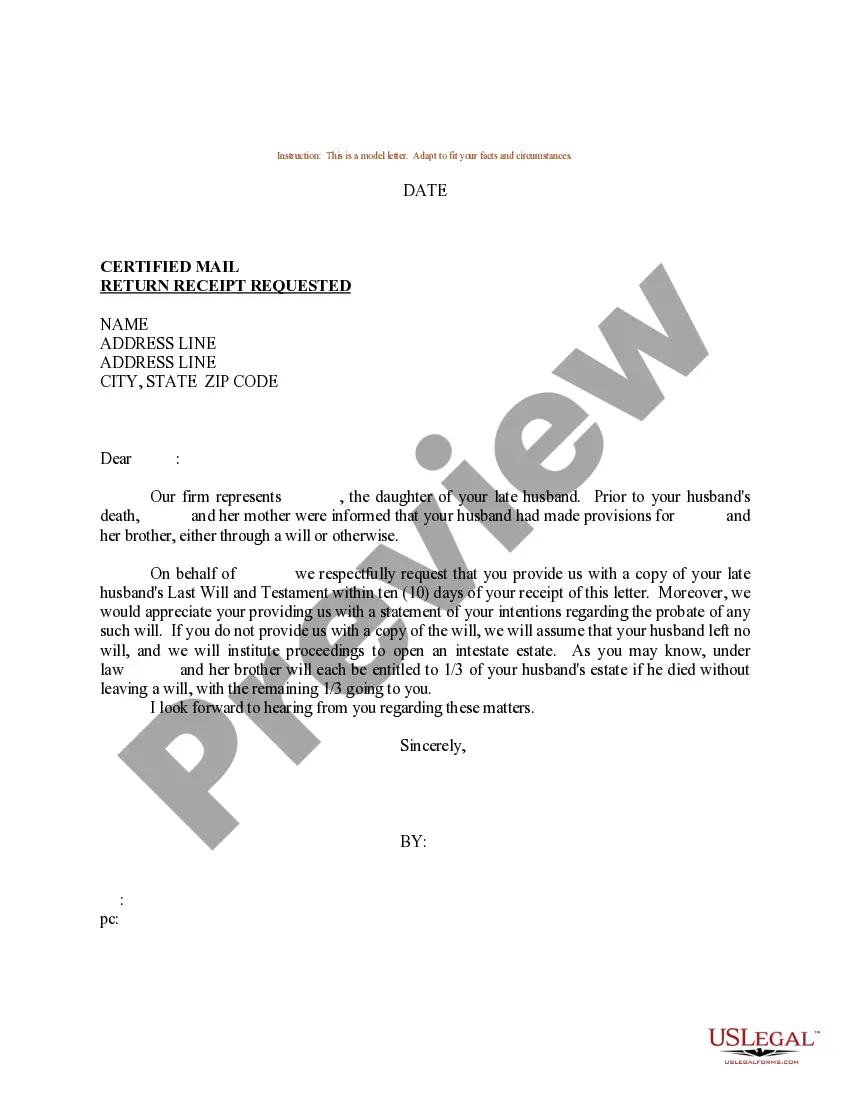
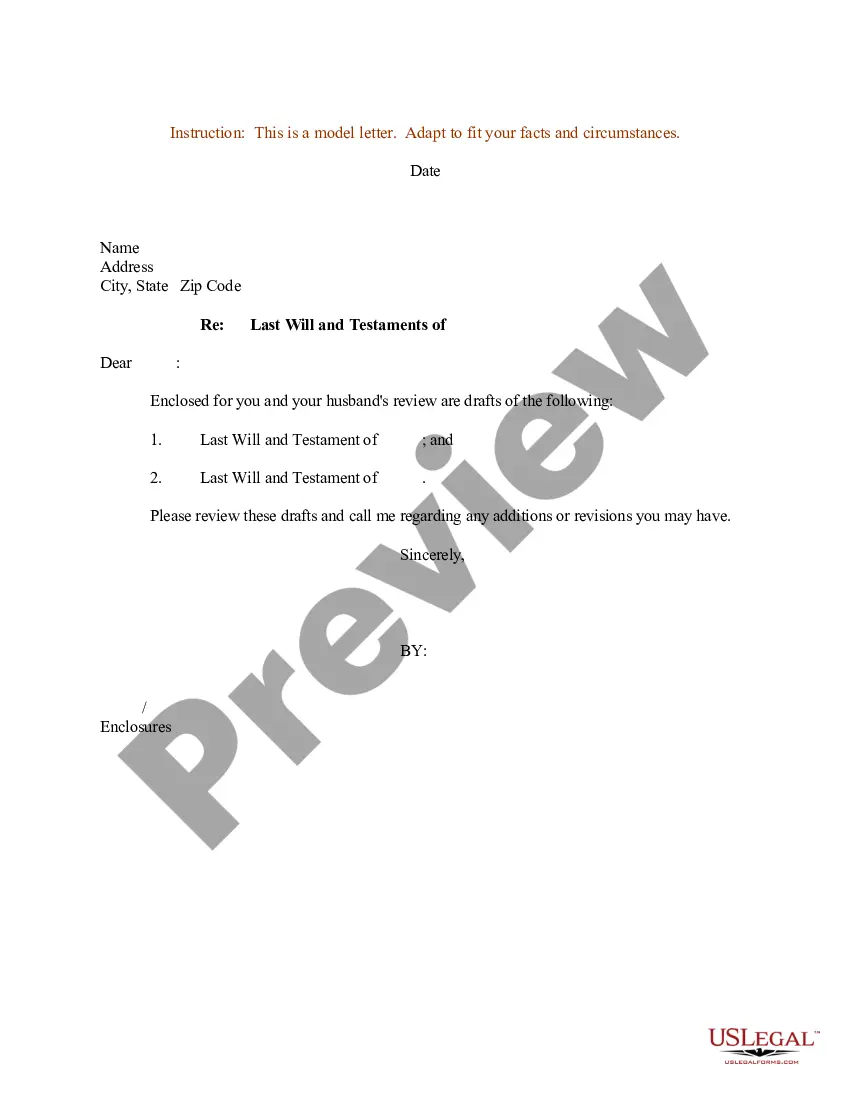
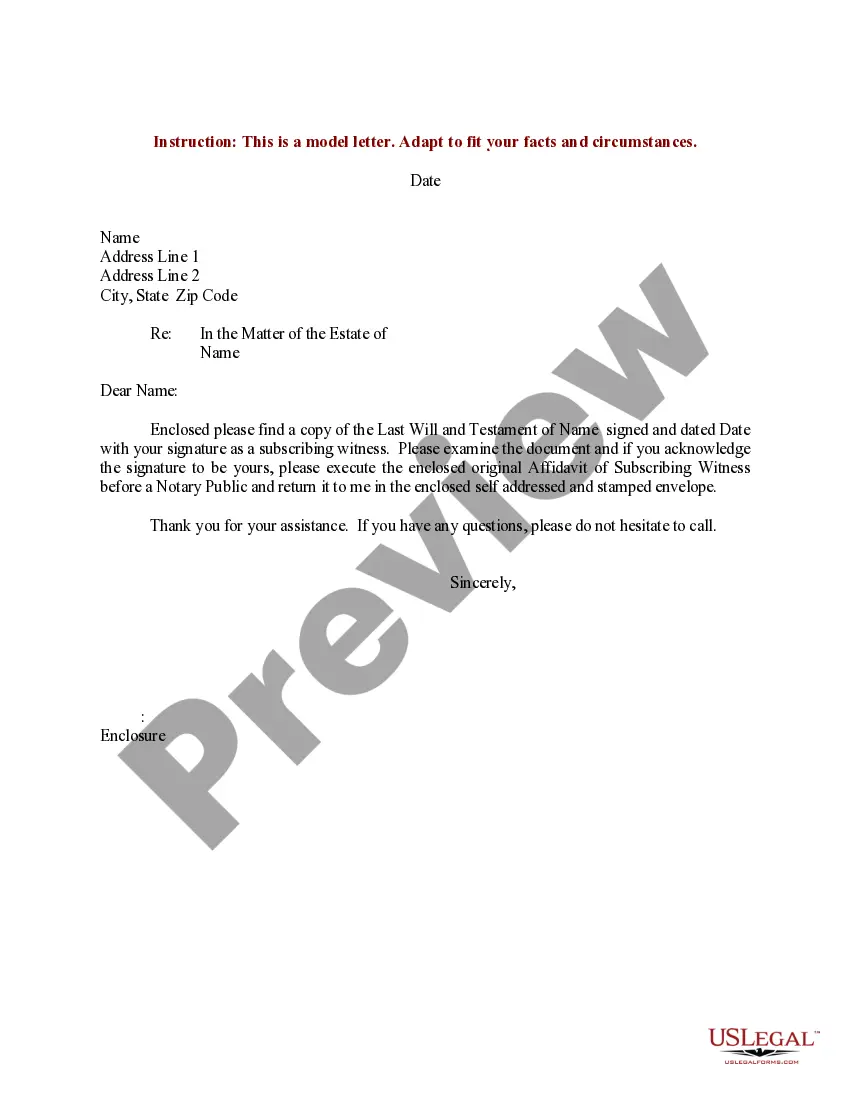
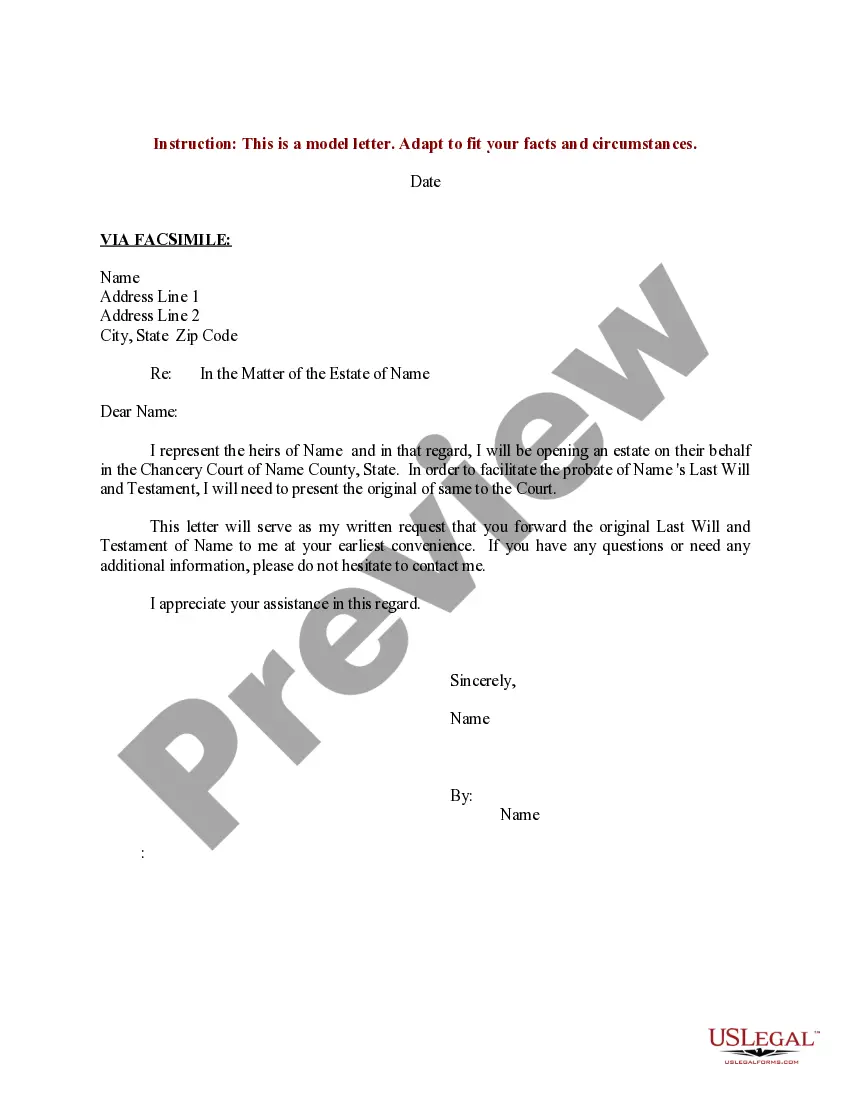
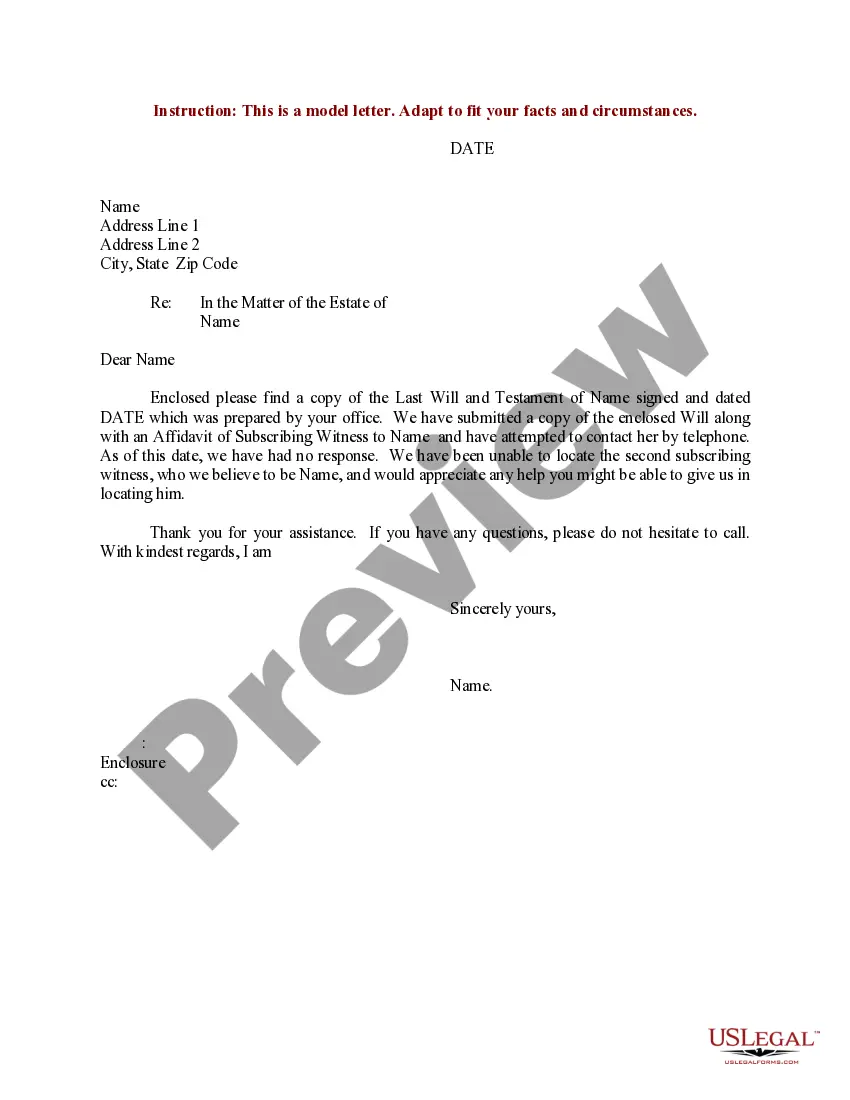
Minnesota Sample Letter transmitting Last Will and Testament of Decedent
Description
Get your form ready online
Our built-in tools help you complete, sign, share, and store your documents in one place.
Make edits, fill in missing information, and update formatting in US Legal Forms—just like you would in MS Word.
Download a copy, print it, send it by email, or mail it via USPS—whatever works best for your next step.
Sign and collect signatures with our SignNow integration. Send to multiple recipients, set reminders, and more. Go Premium to unlock E-Sign.
If this form requires notarization, complete it online through a secure video call—no need to meet a notary in person or wait for an appointment.
We protect your documents and personal data by following strict security and privacy standards.

Make edits, fill in missing information, and update formatting in US Legal Forms—just like you would in MS Word.

Download a copy, print it, send it by email, or mail it via USPS—whatever works best for your next step.

Sign and collect signatures with our SignNow integration. Send to multiple recipients, set reminders, and more. Go Premium to unlock E-Sign.

If this form requires notarization, complete it online through a secure video call—no need to meet a notary in person or wait for an appointment.

We protect your documents and personal data by following strict security and privacy standards.
Looking for another form?

How to fill out Sample Letter Transmitting Last Will And Testament Of Decedent?
US Legal Forms - one of the most important collections of legal documents in the USA - offers a broad selection of legal document templates that you can download or print.
On the website, you can discover thousands of forms for business and personal purposes, organized by categories, states, or keywords. You can find the latest versions of forms such as the Minnesota Sample Letter transmitting Last Will and Testament of Decedent in just seconds.
If you have a membership, Log In and download the Minnesota Sample Letter transmitting Last Will and Testament of Decedent from the US Legal Forms collection. The Download button will appear on every form you view. You can access all previously saved forms in the My documents section of your account.
Choose the format and download the form to your device.
Make modifications. Fill in, edit, and print and sign the saved Minnesota Sample Letter transmitting Last Will and Testament of Decedent. Each document you add to your account does not expire and is yours permanently. So, if you wish to download or print another copy, simply navigate to the My documents section and click on the form you need.
- If you are using US Legal Forms for the first time, here are simple steps to get started.
- Ensure you have selected the appropriate form for your city/state.
- Click on the Preview button to review the form’s details.
- Check the form summary to ensure you have selected the correct form.
- If the form doesn’t meet your needs, use the Search box at the top of the screen to find one that does.
- Once you are satisfied with the form, confirm your choice by clicking the Get now button. Then, select the payment plan you prefer and provide your details to register for an account.
- Process the payment. Use your credit card or PayPal account to complete the payment.
Form popularity
FAQ
Heirs may not take your personal property until 30 days after your death. If your personal property exceeds $75,000 or you own real estate in your name alone, your estate must be probated.
Does my will need to be notarized? No, in Minnesota, you do not need to notarize your will to make it legal. But Minnesota lets you to make your will "self-proving." If you want to do that you need to go to a notary. A self-proving will helps prove that your will is valid if it is contested in court.
The will must be in writing; The will must be signed by you, by another person at your direction and in your presence, or by your conservator pursuant to a court order; The will must be witnessed by at least two people, both of whom must also sign the will; and. You must intend for the document to operate as a will.
If you are of legal age and of sound mind, you can draft your own will.
No, in Minnesota, you do not need to notarize your will to make it legal. But Minnesota lets you to make your will "self-proving." If you want to do that you need to go to a notary. A self-proving will helps prove that your will is valid if it is contested in court.
The will must be in writing; The will must be signed by you, by another person at your direction and in your presence, or by your conservator pursuant to a court order; The will must be witnessed by at least two people, both of whom must also sign the will; and. You must intend for the document to operate as a will.
It is important to note that Minnesota does not recognize holographic wills, which are handwritten wills that do not have witnesses. Therefore, if you choose to write your own will, it must be typewritten or printed and witnessed by two individuals.
Probate is a county court process that occurs within three years after the date of death. To collect tax debt, we must file a claim with probate to receive money from the estate. Probate ends when the personal representative or court issues a final account detailing the assets and how they were distributed.