Minnesota Mutual Aid Contract for Emergencies
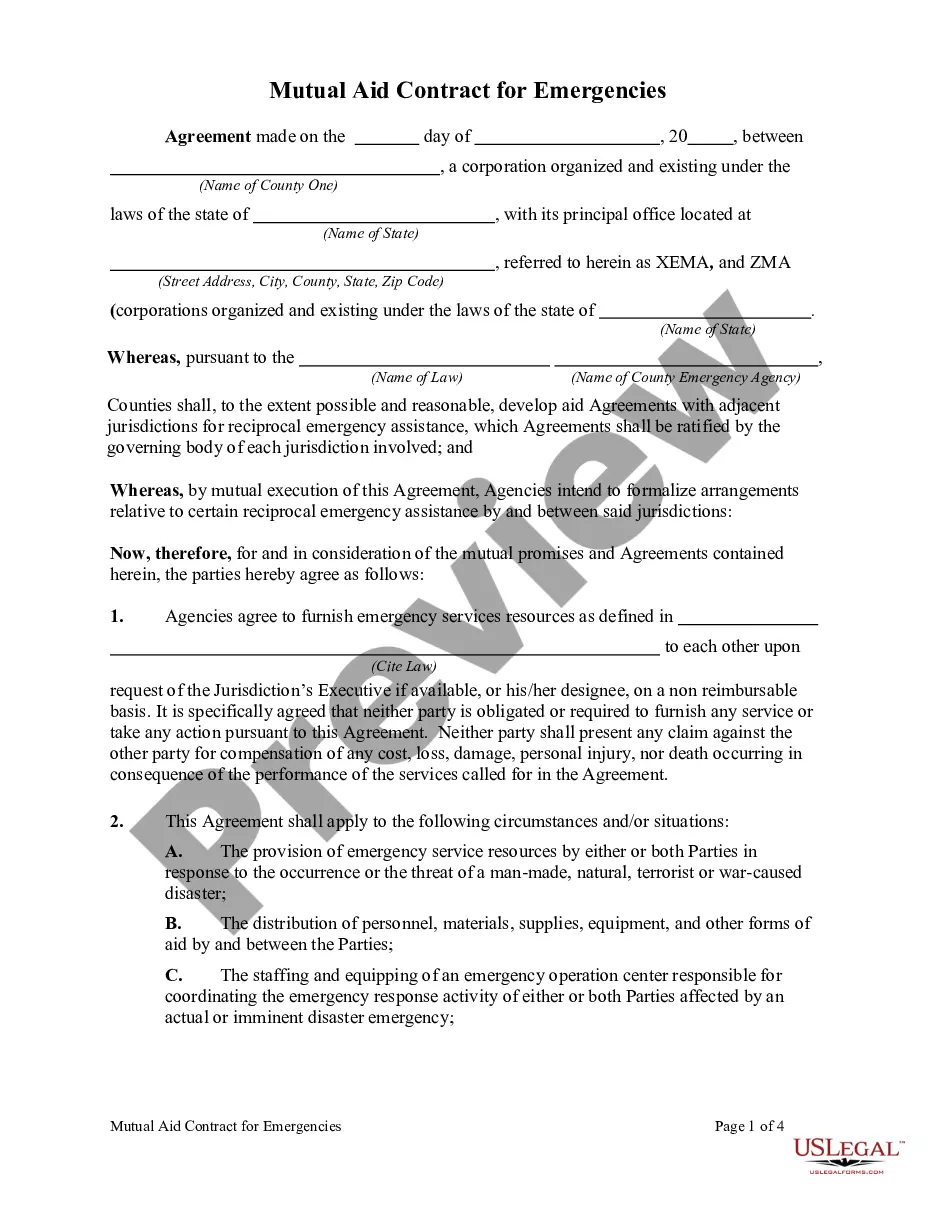
Description

Get your form ready online
Our built-in tools help you complete, sign, share, and store your documents in one place.
Make edits, fill in missing information, and update formatting in US Legal Forms—just like you would in MS Word.
Download a copy, print it, send it by email, or mail it via USPS—whatever works best for your next step.
Sign and collect signatures with our SignNow integration. Send to multiple recipients, set reminders, and more. Go Premium to unlock E-Sign.
If this form requires notarization, complete it online through a secure video call—no need to meet a notary in person or wait for an appointment.
We protect your documents and personal data by following strict security and privacy standards.

Make edits, fill in missing information, and update formatting in US Legal Forms—just like you would in MS Word.

Download a copy, print it, send it by email, or mail it via USPS—whatever works best for your next step.

Sign and collect signatures with our SignNow integration. Send to multiple recipients, set reminders, and more. Go Premium to unlock E-Sign.

If this form requires notarization, complete it online through a secure video call—no need to meet a notary in person or wait for an appointment.

We protect your documents and personal data by following strict security and privacy standards.
Looking for another form?
How to fill out Mutual Aid Contract For Emergencies?
Selecting the appropriate legal document template can be a challenge.
It's evident that there are numerous formats accessible online, but how can you locate the legal form you need.
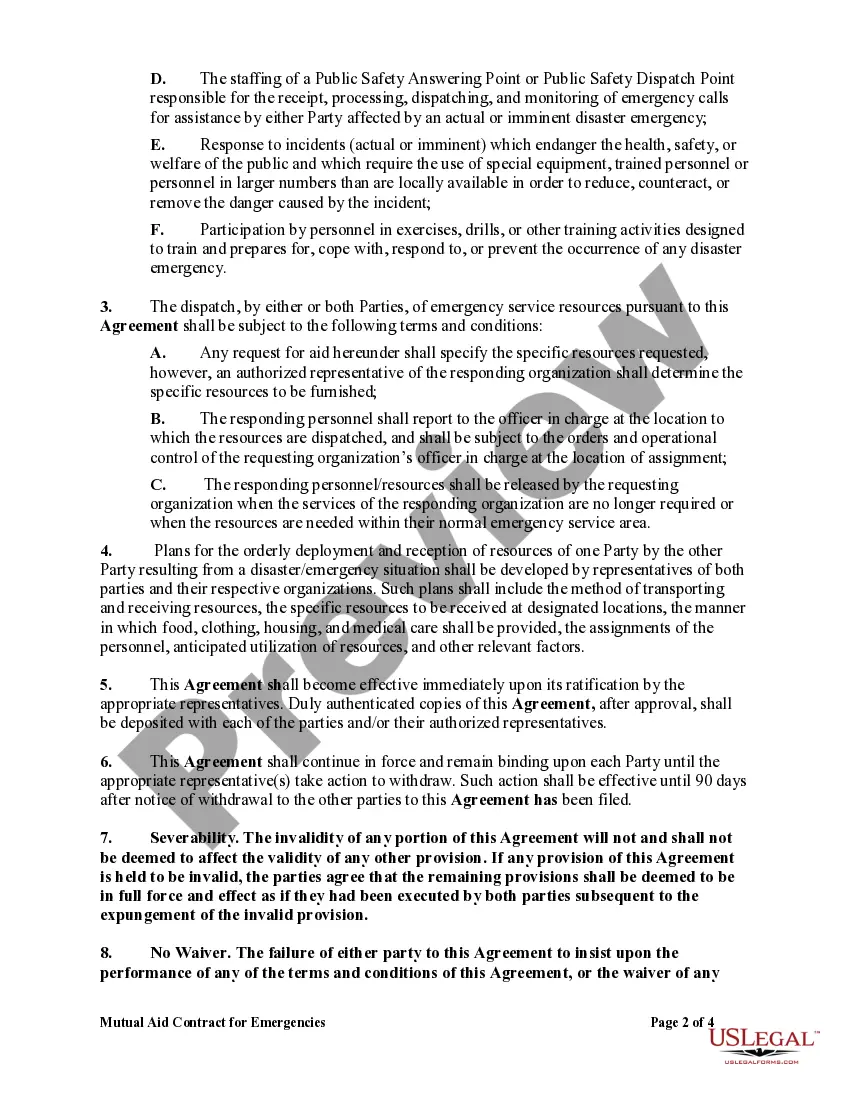
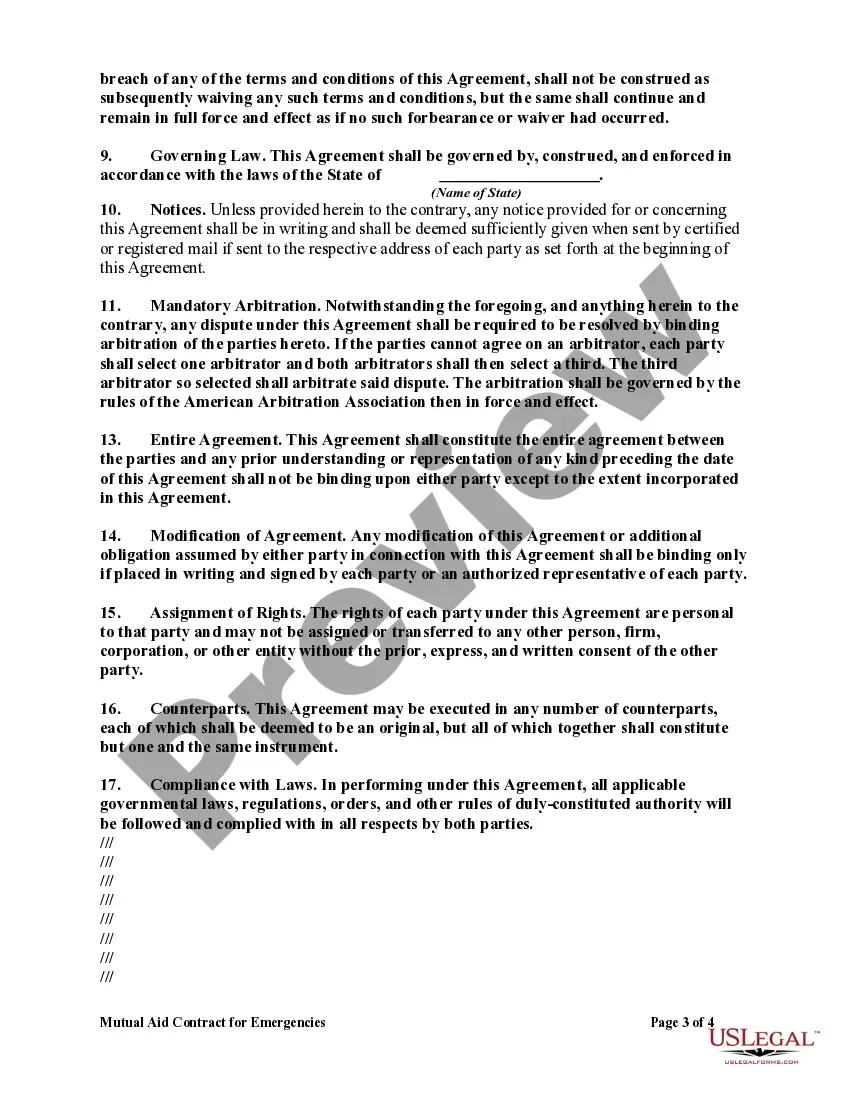
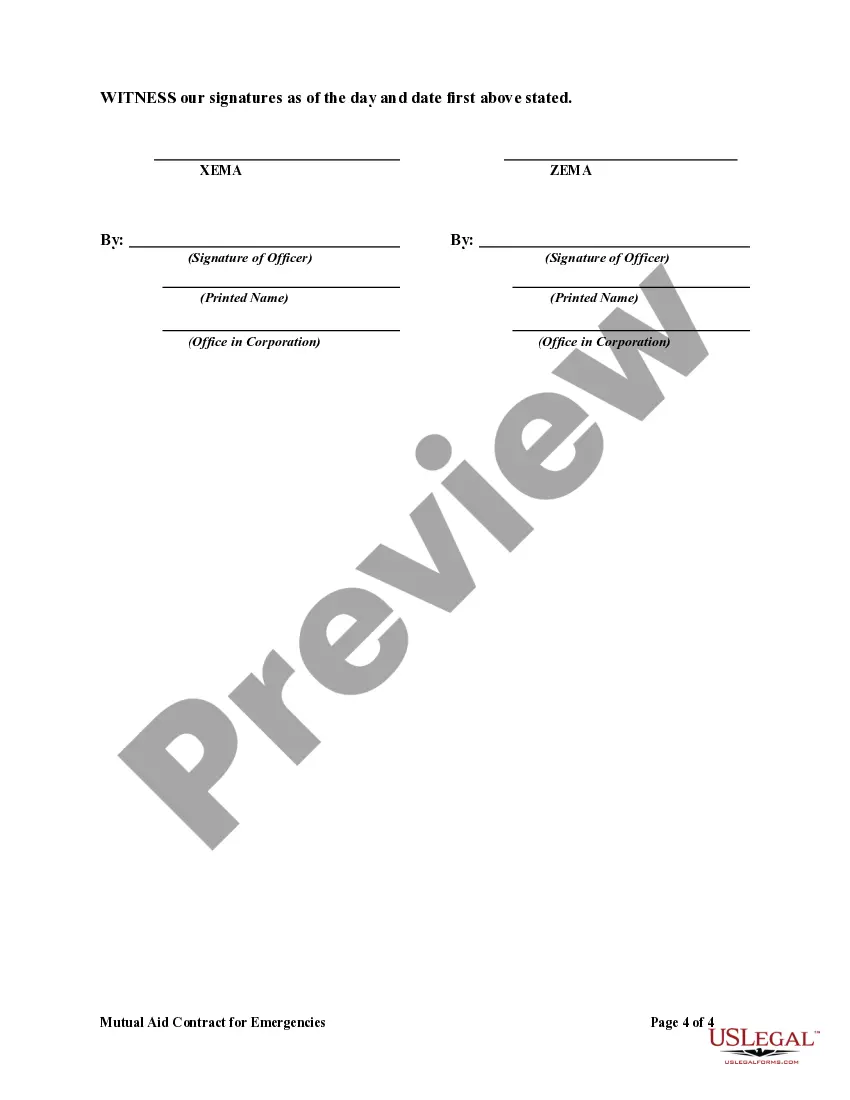
Utilize the US Legal Forms website. The platform offers a wide selection of templates, including the Minnesota Mutual Aid Agreement for Emergencies, suitable for both business and personal requirements.
First, ensure you have selected the correct form for your city/state. You can view the form using the Preview option and read the form description to confirm it meets your needs.
- Each of the documents is reviewed by professionals and meets state and federal regulations.
- If you are already registered, Log In to your account and click the Download option to access the Minnesota Mutual Aid Agreement for Emergencies.
- Use your account to check the legal documents you have previously purchased.
- Navigate to the My documents tab in your account to obtain another copy of the documents you need.
- If you are a new user of US Legal Forms, follow these simple instructions.
Form popularity
FAQ
To effectively request mutual aid, start by documenting your emergency situation and the assistance required. Then, contact your local emergency management agency or relevant authority and mention the Minnesota Mutual Aid Contract for Emergencies. Clear communication about your needs will facilitate a faster and more precise response, ensuring you receive the help you need during critical times.
The correct steps for mutual aid requests include identifying the specific resources needed, contacting the appropriate emergency management agency, and formally submitting your request. Referencing the Minnesota Mutual Aid Contract for Emergencies can help clarify the process. Finally, staying in touch with responding agencies ensures a coordinated and effective response to your request.
Requesting mutual aid typically involves reaching out to your local emergency management agency or fire department. Be sure to reference the Minnesota Mutual Aid Contract for Emergencies in your communication to streamline the process. Having a clear outline of the resources you need will help responders assess the situation efficiently and provide the necessary assistance.
To get started with mutual aid, first familiarize yourself with the local emergency services and community resources. Engage in conversations with local leaders about the Minnesota Mutual Aid Contract for Emergencies, as this will provide a solid foundation for collaboration. Additionally, establishing clear communication channels can enhance your mutual aid efforts, ensuring everyone is prepared when emergencies arise.
Automatic aid involves agreements between jurisdictions for immediate assistance without needing a request, while mutual aid is based on requests made during emergencies. The Minnesota Mutual Aid Contract for Emergencies facilitates these requests, ensuring a swift response from neighboring agencies. Understanding this difference helps communities develop effective emergency plans under the mutual aid framework.
The initial step in creating a mutual aid agreement involves identifying potential partners and assessing their needs. Agencies should examine their capacities and the types of support they can offer. By utilizing the Minnesota Mutual Aid Contract for Emergencies, organizations can streamline this process, ensuring clarity and effectiveness from the start.
A mutual aid agreement with FEMA outlines collaboration between local agencies and federal assistance in emergencies. These agreements formalize the processes by which resources can flow seamlessly in times of need. Engaging in a Minnesota Mutual Aid Contract for Emergencies enhances your agency’s capacity to operate effectively under FEMA guidelines.
The principles of mutual aid include cooperation, reciprocity, and shared responsibility. Agencies commit to helping each other during emergencies, fostering a culture of trust and collaboration. By adhering to the Minnesota Mutual Aid Contract for Emergencies, participants reinforce these principles, ensuring effective and timely responses to crises.
Mutual aid agreements are usually established by local governments, emergency service agencies, and organizations involved in disaster response. They collaborate to create frameworks that allow for immediate assistance in times of need. The Minnesota Mutual Aid Contract for Emergencies serves as a foundation for these agreements, ensuring alignment among all involved.
A mutual aid agreement typically includes defined roles, roles of each participating agency, and protocols for resource sharing. It outlines the conditions under which assistance is provided, covering aspects like financial responsibilities and liability. The Minnesota Mutual Aid Contract for Emergencies ensures that all parties clearly understand their commitments and responsibilities.