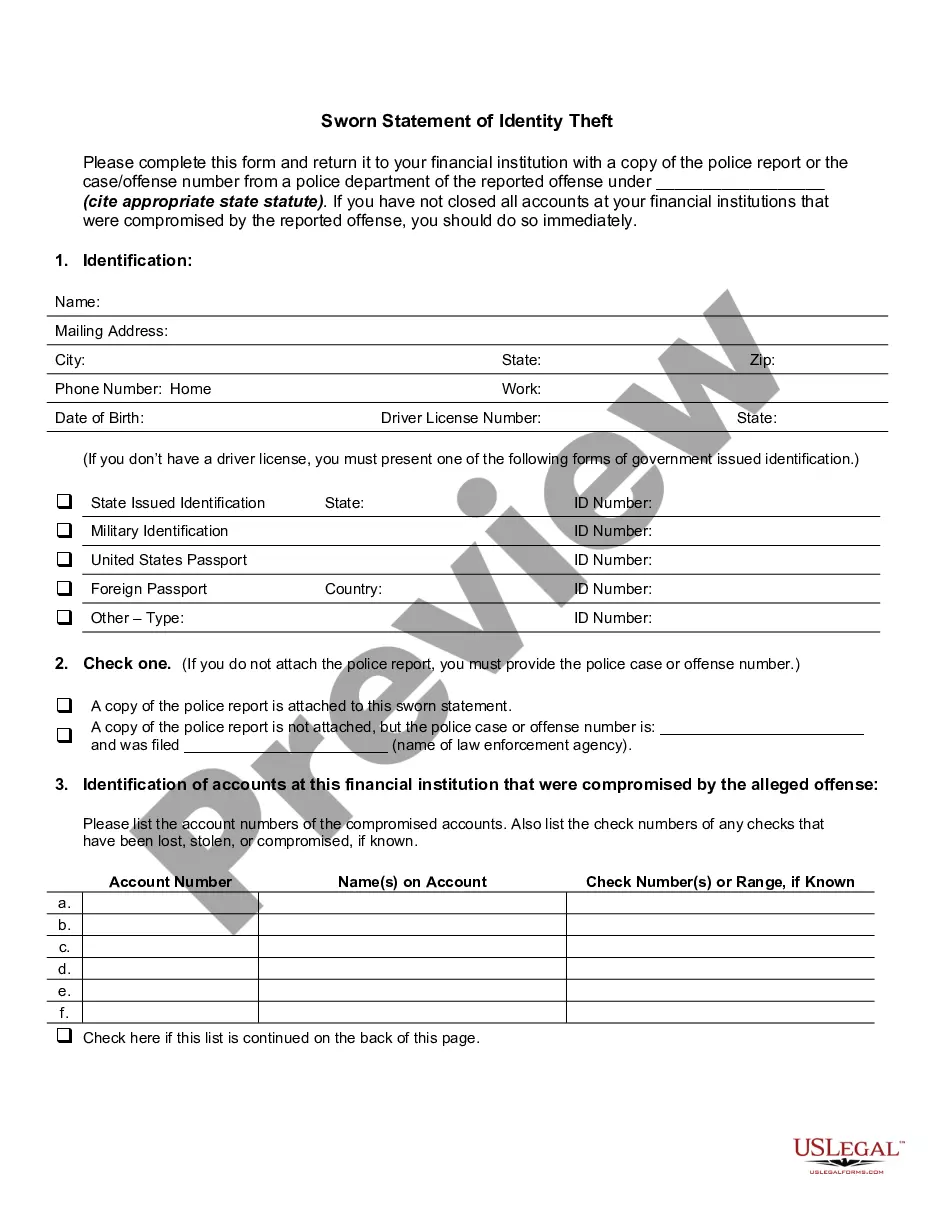
Minnesota Affidavit of Forgery
Description

Get your form ready online
Our built-in tools help you complete, sign, share, and store your documents in one place.
Make edits, fill in missing information, and update formatting in US Legal Forms—just like you would in MS Word.
Download a copy, print it, send it by email, or mail it via USPS—whatever works best for your next step.
Sign and collect signatures with our SignNow integration. Send to multiple recipients, set reminders, and more. Go Premium to unlock E-Sign.
If this form requires notarization, complete it online through a secure video call—no need to meet a notary in person or wait for an appointment.
We protect your documents and personal data by following strict security and privacy standards.

Make edits, fill in missing information, and update formatting in US Legal Forms—just like you would in MS Word.

Download a copy, print it, send it by email, or mail it via USPS—whatever works best for your next step.

Sign and collect signatures with our SignNow integration. Send to multiple recipients, set reminders, and more. Go Premium to unlock E-Sign.

If this form requires notarization, complete it online through a secure video call—no need to meet a notary in person or wait for an appointment.

We protect your documents and personal data by following strict security and privacy standards.
Looking for another form?
How to fill out Affidavit Of Forgery?
Locating the appropriate official document template can be a challenge. Clearly, there are numerous templates available online, but how can you acquire the official form you need? Utilize the US Legal Forms website. The service offers thousands of templates, including the Minnesota Affidavit of Forgery, suitable for both business and personal needs. All forms are reviewed by specialists and comply with federal and state regulations.
If you are already registered, Log In to your account and click the Download button to retrieve the Minnesota Affidavit of Forgery. Use your account to reference the official forms you have purchased previously. Navigate to the My documents section of your account to obtain another copy of the document you require.
If you are a new user of US Legal Forms, here are simple instructions for you to follow: First, ensure you have selected the correct form for your city/county. You can review the form using the Preview button and examine the form details to confirm it is the right one for you. If the form does not meet your requirements, use the Search box to find the suitable form. Once you are confident that the form is accurate, click the Purchase now button to obtain the form. Choose the pricing plan you prefer and provide the necessary information. Create your account and pay for the order using your PayPal account or credit card. Select the document format and download the official document template to your device. Finally, complete, modify, print, and sign the acquired Minnesota Affidavit of Forgery.
- US Legal Forms is the largest collection of official forms where you can find a wide range of document templates.
- Utilize the service to download professionally crafted documents that adhere to state regulations.
- Access numerous templates for various legal needs.
- Simplify your document acquisition process with expert-reviewed forms.
- Ensure compliance with federal and state standards effortlessly.
- Experience a user-friendly interface for easy navigation.
Form popularity
FAQ
Proving forgery can be challenging, as it often requires substantial evidence to support your claims. You must establish that the signature or document is not authentic and that it was created without permission. With a well-prepared Minnesota Affidavit of Forgery, you can strengthen your case by outlining the facts clearly. Utilizing resources from platforms like US Legal Forms can provide guidance and templates to help you present a compelling argument.
Yes, you can write an affidavit yourself, but it is essential to follow specific guidelines to ensure its effectiveness. A well-drafted Minnesota Affidavit of Forgery should include all pertinent details, such as the circumstances surrounding the forgery and any evidence you have. However, for legal assurance, you might want to consider using templates or services like US Legal Forms to avoid common pitfalls and ensure compliance with the law.
The affidavit of forgery form is a legal document used to declare that a signature or document has been forged. This form is crucial when you need to assert your rights and protect yourself against fraudulent activities. If you're facing issues related to a Minnesota Affidavit of Forgery, using a standardized form can simplify the process. US Legal Forms offers various templates that can help you create a legally sound affidavit.
In Minnesota, an affidavit typically requires notarization to ensure its legal validity. Notarization adds an extra layer of authenticity, confirming that the signer is who they claim to be. If you are dealing with a Minnesota Affidavit of Forgery, having it notarized is often essential for it to hold up in court. You can easily find notary services that can assist you in this process.
An affidavit for transfer without probate in Minnesota is a legal document that allows the transfer of property without going through the probate process. This affidavit simplifies the transfer of assets when the deceased's estate is small or straightforward. By using an affidavit, heirs can efficiently claim their inheritance. For anyone navigating this process, the Minnesota Affidavit of Forgery can serve as a valuable resource for understanding the necessary steps.
Yes, forgery is considered a felony in Minnesota. The law defines forgery as the act of falsely making or altering a document with the intent to defraud. If you face charges related to forgery, it is essential to understand your rights and legal options. Utilizing resources like the Minnesota Affidavit of Forgery can help clarify your situation and guide you through the legal process.
In criminal cases, the defendant is presumed innocent and the burden of proof rests with the prosecutor. To convict a defendant in a forgery case, the prosecutor must prove: The defendant committed forgery by creating a false document, materially altering an existing document, or by using an unauthorized document; and.
Challenging the prosecution's evidence is one of the most effective defense strategies for forgery crimes and proving that there was no intent to commit fraud.
Forgery is a serious crime in Minnesota that carries harsh penalties. You could face up to a three-year prison time if you are found guilty of this felony-level offense. The court could also slap you with a fine of up to $5,000. You could also end up serving jail time and paying the fine.
Whoever, with intent to injure or defraud, does any of the following is guilty of forgery and may be sentenced to imprisonment for not more than three years or to payment of a fine of not more than $5,000, or both: (1) uses a false writing, knowing it to be false, for the purpose of identification or recommendation; or.