Minnesota Judgment of Divorce
Understanding this form
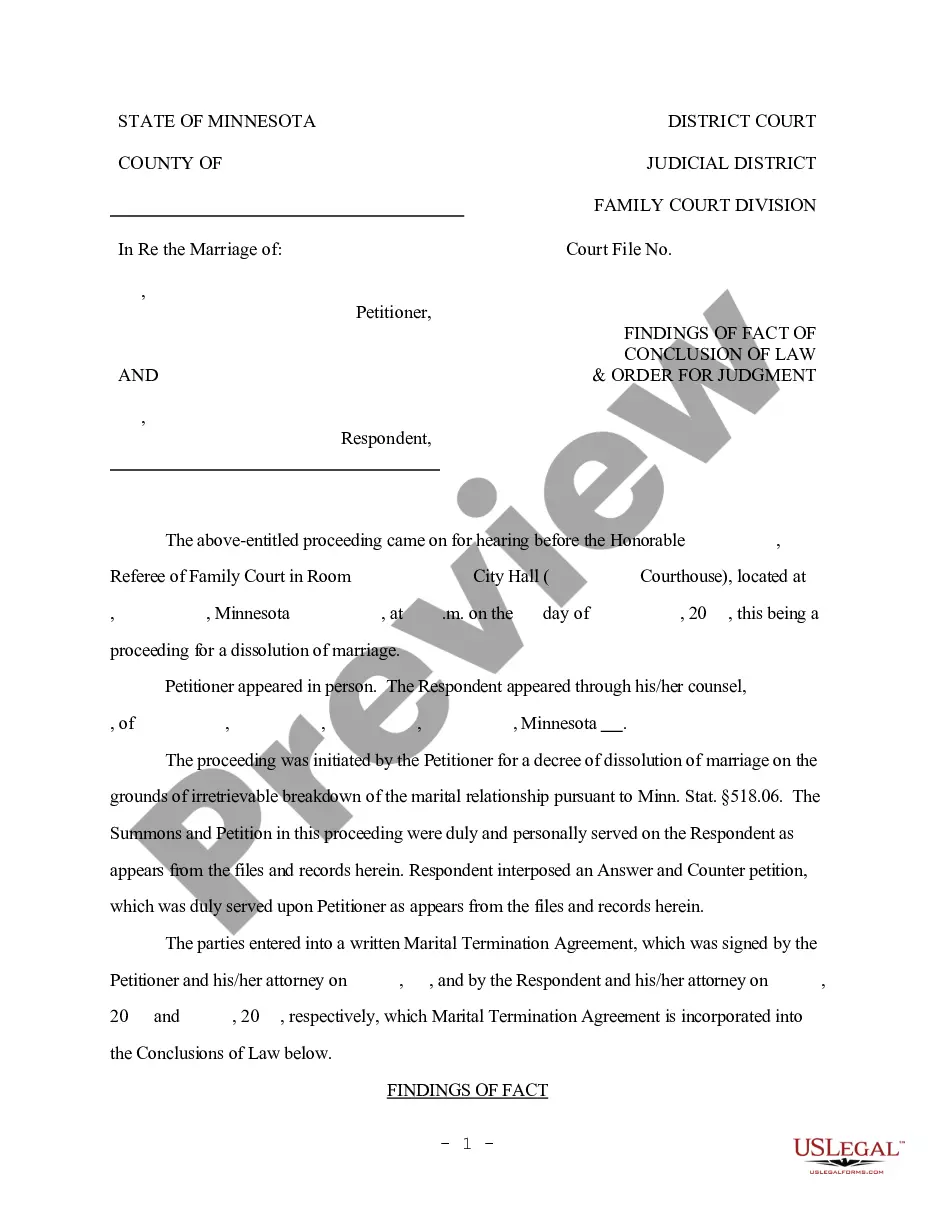
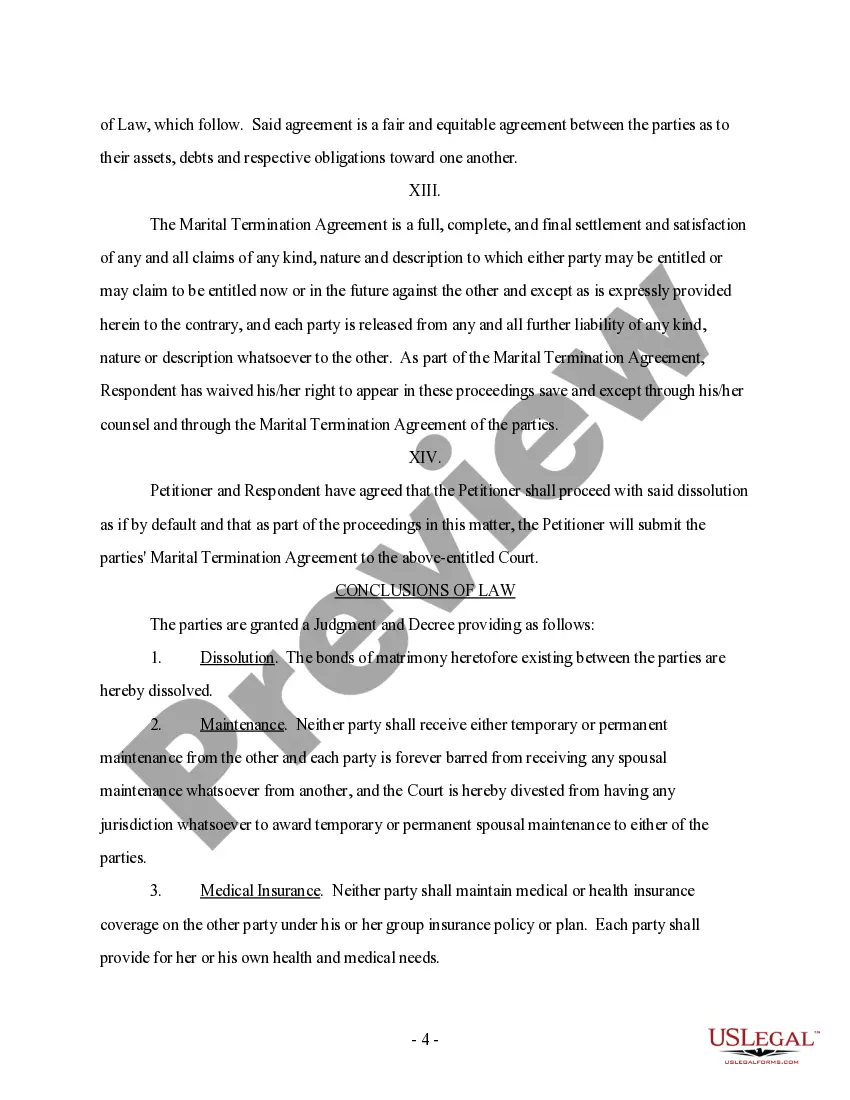
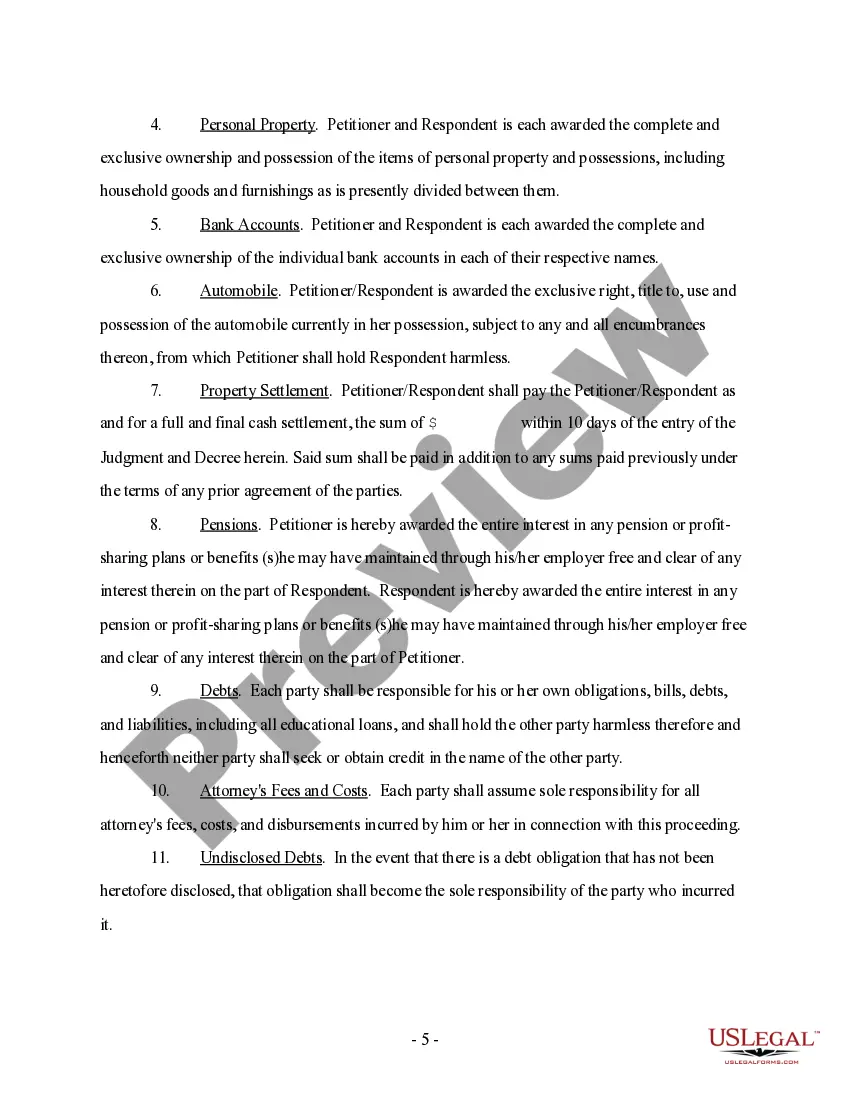
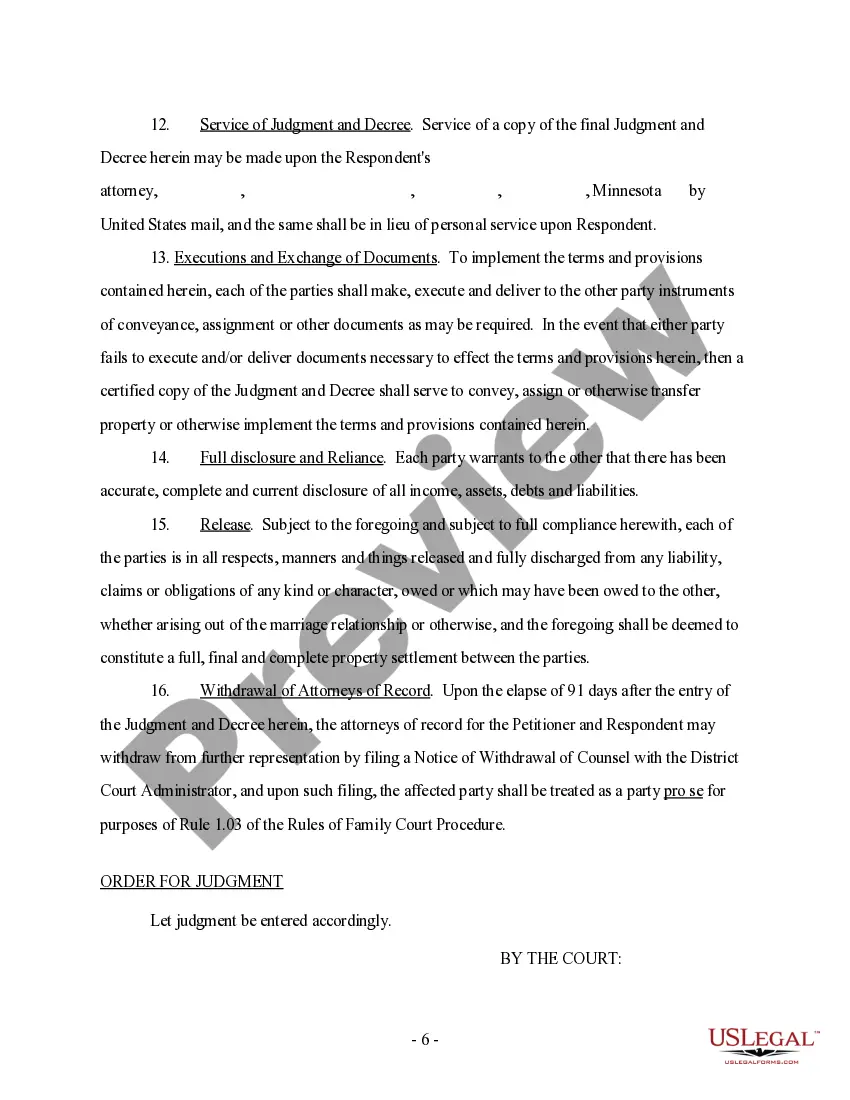
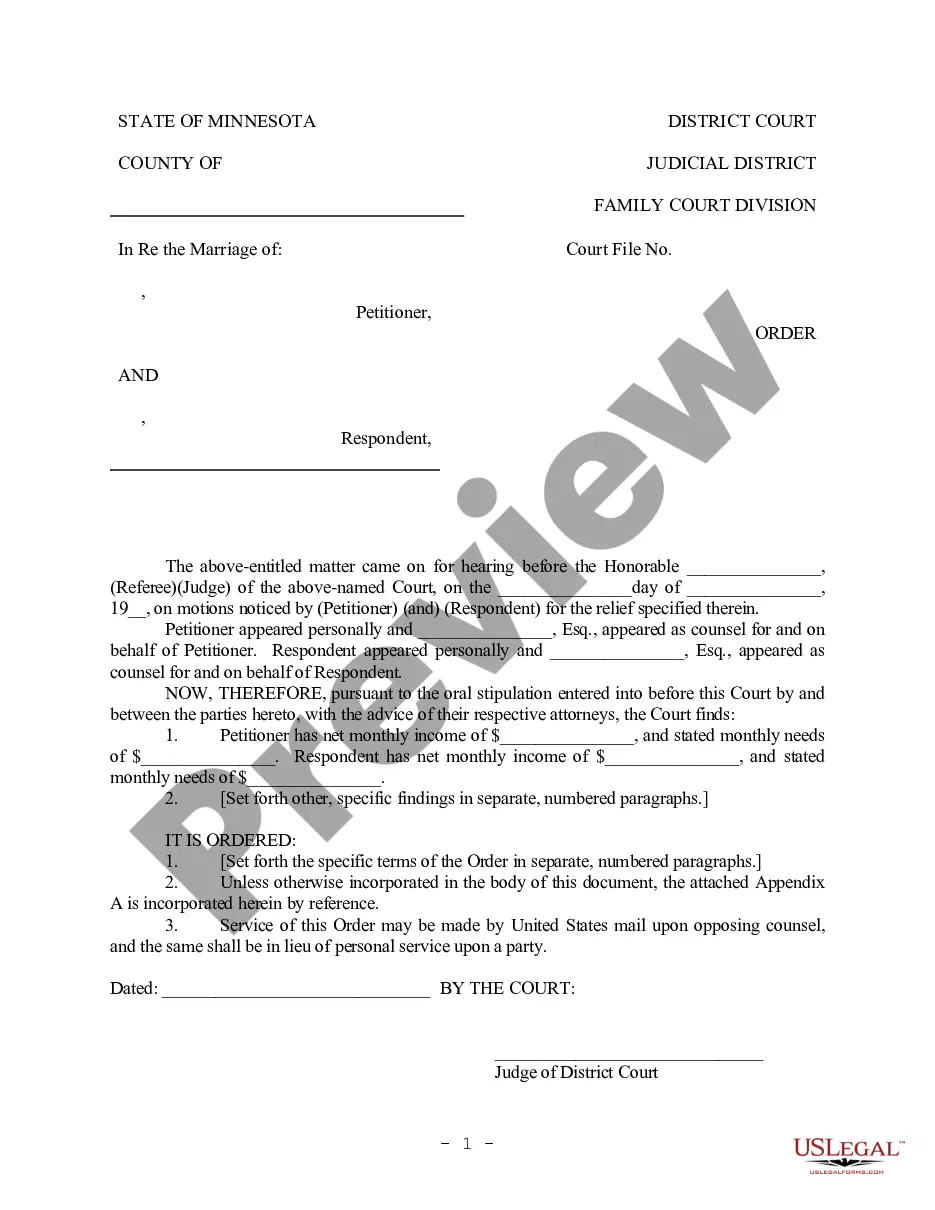
The Judgment of Divorce form is a legal document that provides a formal declaration for the dissolution of marriage. It includes essential components such as findings of fact, conclusions of law, and an order for judgment. This form is designed to streamline the divorce process and ensure that all relevant issues, such as maintenance and property division, are addressed. Unlike informal arrangements, this form holds legal weight, making it enforceable in court.
Key components of this form
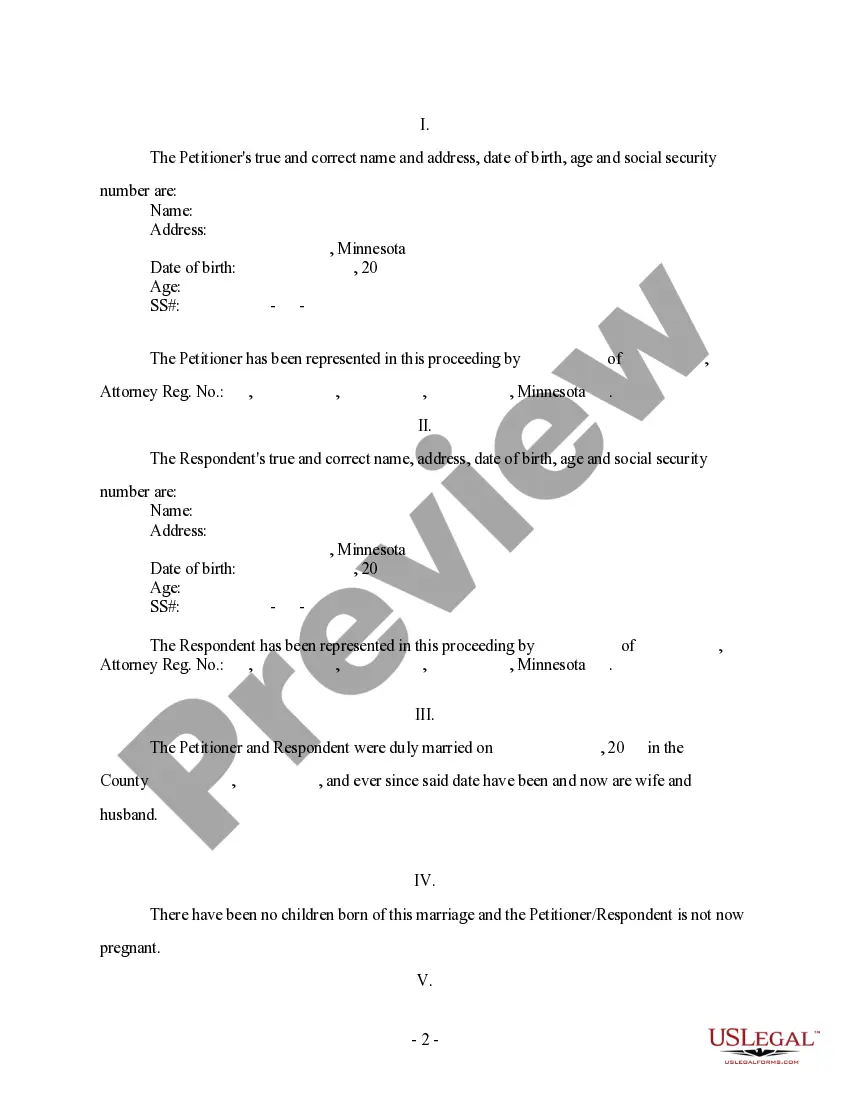
- Petitioner and respondent details, including names, addresses, and legal representation.
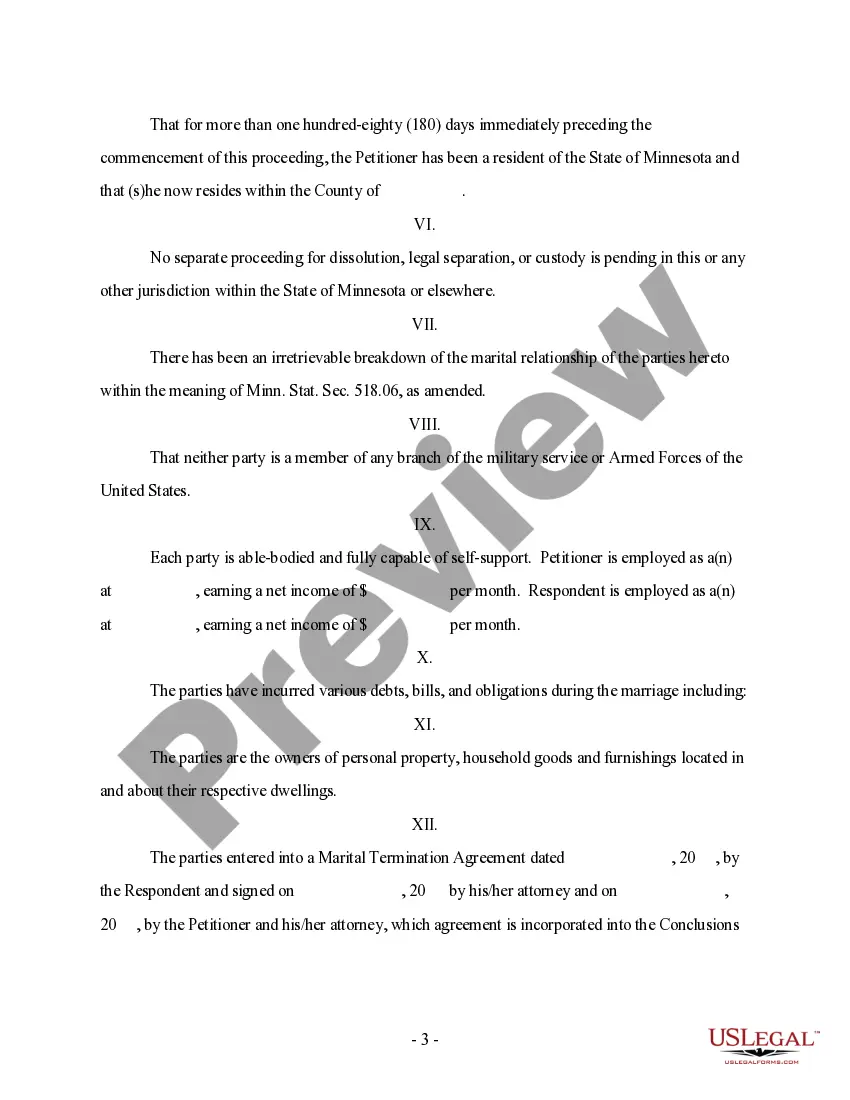
- Findings of fact regarding the marriage, including dates and grounds for divorce.
- Details of any marital termination agreements, including financial and property arrangements.
- Conclusions of law stating the terms of dissolution, maintenance, and asset distribution.
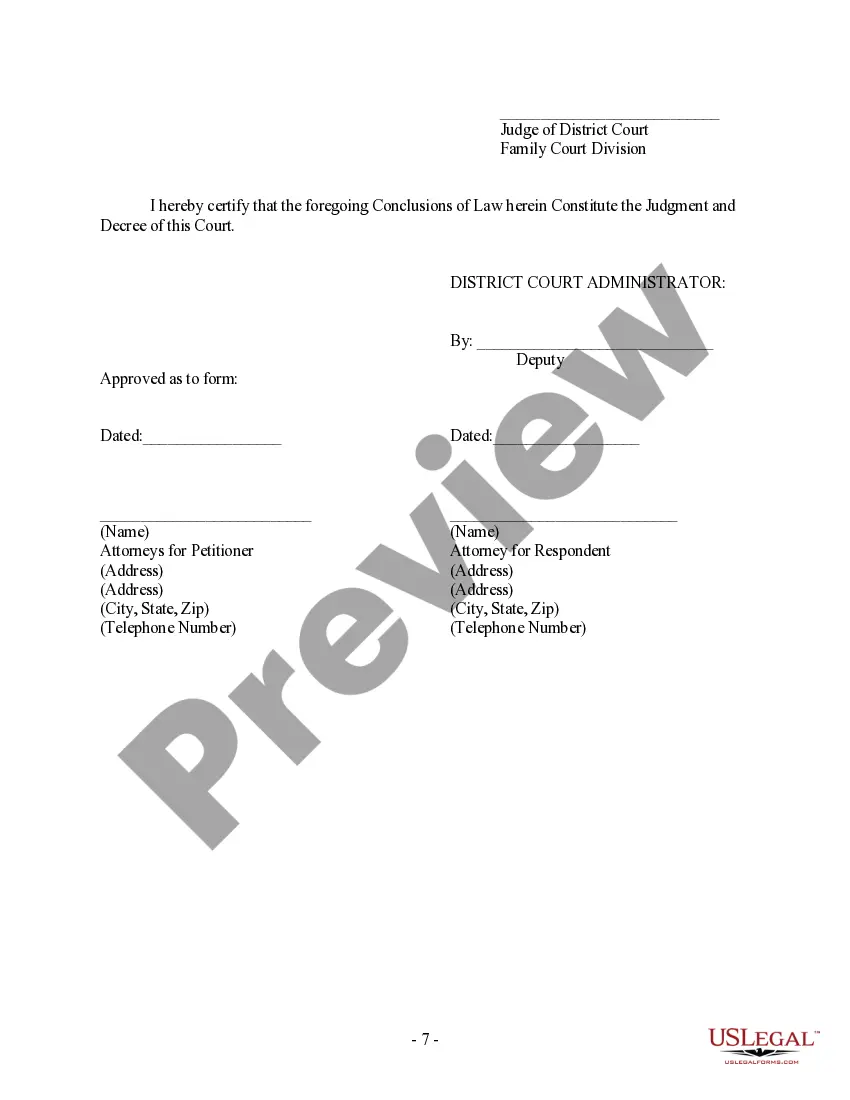
- Final judgment and order from the judge confirming the dissolution of marriage.
Situations where this form applies
This form is necessary when a couple decides to legally end their marriage and seeks to formalize the divorce through the court. It should be utilized when both parties can agree on the terms of the divorce, including division of assets and debts, and when there are no children involved. It's also required to document any agreements reached during negotiations.
Who this form is for
This form is intended for:
- Individuals seeking a legal dissolution of marriage in Minnesota.
- Couples without children who have settled their property and financial matters amicably.
- Either party in a divorce proceeding who has reached an agreement with the other spouse.
Completing this form step by step
- Identify and enter the names and addresses of both the petitioner and respondent.
- Detail the grounds for divorce, including the date of marriage and verification of residency in Minnesota.
- Incorporate any marital termination agreements that outline property division and other settlements.
- Fill in the financial and employment details of both parties, including income and debts.
- Sign the form before a judge or appropriate court officials as required.
Does this form need to be notarized?
This form usually doesn’t need to be notarized. However, local laws or specific transactions may require it. Our online notarization service, powered by Notarize, lets you complete it remotely through a secure video session, available 24/7.
Get your form ready online
Our built-in tools help you complete, sign, share, and store your documents in one place.
Make edits, fill in missing information, and update formatting in US Legal Forms—just like you would in MS Word.
Download a copy, print it, send it by email, or mail it via USPS—whatever works best for your next step.
Sign and collect signatures with our SignNow integration. Send to multiple recipients, set reminders, and more. Go Premium to unlock E-Sign.
If this form requires notarization, complete it online through a secure video call—no need to meet a notary in person or wait for an appointment.
We protect your documents and personal data by following strict security and privacy standards.

Make edits, fill in missing information, and update formatting in US Legal Forms—just like you would in MS Word.

Download a copy, print it, send it by email, or mail it via USPS—whatever works best for your next step.

Sign and collect signatures with our SignNow integration. Send to multiple recipients, set reminders, and more. Go Premium to unlock E-Sign.

If this form requires notarization, complete it online through a secure video call—no need to meet a notary in person or wait for an appointment.

We protect your documents and personal data by following strict security and privacy standards.
Avoid these common issues
- Failing to include all necessary parties' details, such as accurate names and addresses.
- Not fully disclosing all financial information, including debts and assets.
- Neglecting to sign the form or obtain required signatures from attorneys.
- Using outdated versions of the form that do not comply with current state laws.
Benefits of completing this form online
- Convenience of downloading and completing the form at your own pace.
- Access to legally vetted templates drafted by licensed attorneys.
- Editable format allows for easy customization to fit your specific situation.
- Immediate availability reduces the time and effort compared to traditional legal services.
Looking for another form?

Form popularity
FAQ
To start the divorce process in Minnesota, you need to file a petition for divorce with the court in your county. This petition outlines your marriage details and the reasons for the divorce. Additionally, you should gather any necessary documents, such as financial records. Using US Legal Forms can help you access the right templates and ensure you meet all legal requirements.
Yes, you can file for a Minnesota Judgment of Divorce online. Minnesota offers an online filing system that simplifies the process for you. By using approved websites and platforms, you can complete the necessary forms quickly and efficiently. Consider exploring US Legal Forms for comprehensive support and guidance.
The time it takes to receive a Minnesota Judgment of Divorce varies depending on several factors, including the complexity of the case and the court's schedule. Generally, it can take anywhere from a few months to over a year. If both parties agree on the terms, the process may be quicker. Utilizing resources like US Legal Forms can help streamline your experience.
To collect a judgment on someone in Minnesota, you must first secure a court order that confirms the debt. After obtaining the Minnesota Judgment of Divorce, you can pursue various collection methods, such as wage garnishment or bank levies. It is advisable to consult legal resources for the most effective approach. US Legal Forms can offer the necessary forms and information to assist you in this process.
To get a copy of a divorce judgment, you typically need to contact the court that issued the judgment. For a Minnesota Judgment of Divorce, you can visit the Minnesota court's website or go in person to request a copy. Make sure to have relevant information ready, such as the case number or names involved. Platforms like US Legal Forms can provide templates and guidance for requesting these documents.
Yes, you can obtain Minnesota divorce records online. The Minnesota Department of Health provides online access to divorce records, including the Minnesota Judgment of Divorce. You will need to provide specific information about the case to facilitate your request. US Legal Forms also offers resources to help you navigate the online process with ease.
Yes, Colorado divorce records are public. Anyone can request copies of these records, including the Minnesota Judgment of Divorce, if it pertains to a case involving Minnesota residents. You can obtain Colorado divorce records through the Colorado State Judicial website or local county court. Using US Legal Forms can simplify your search and provide the necessary forms to request these documents.
Yes, divorce judgments are public records. This means anyone can access these documents, including the Minnesota Judgment of Divorce, if the divorce occurred in Minnesota. Public access allows individuals to verify information or research legal histories. If you need assistance obtaining these records, US Legal Forms can guide you through the process smoothly.
Yes, you can look up divorces in Alabama. The state maintains public records for divorce cases, including the Minnesota Judgment of Divorce if the case involves Minnesota residents. You can access these records through the Alabama Department of Public Health or local courthouses. For a more efficient search, consider using platforms like US Legal Forms, which provide easy access to divorce records nationwide.
The 3 C's of divorce refer to Communication, Cooperation, and Compromise. Effective communication helps both parties express their needs and concerns clearly. Cooperation fosters a sense of teamwork during a challenging time, while compromise encourages finding middle ground on difficult issues. Emphasizing these elements can lead to smoother proceedings and a more amicable outcome, especially when pursuing a Minnesota Judgment of Divorce.