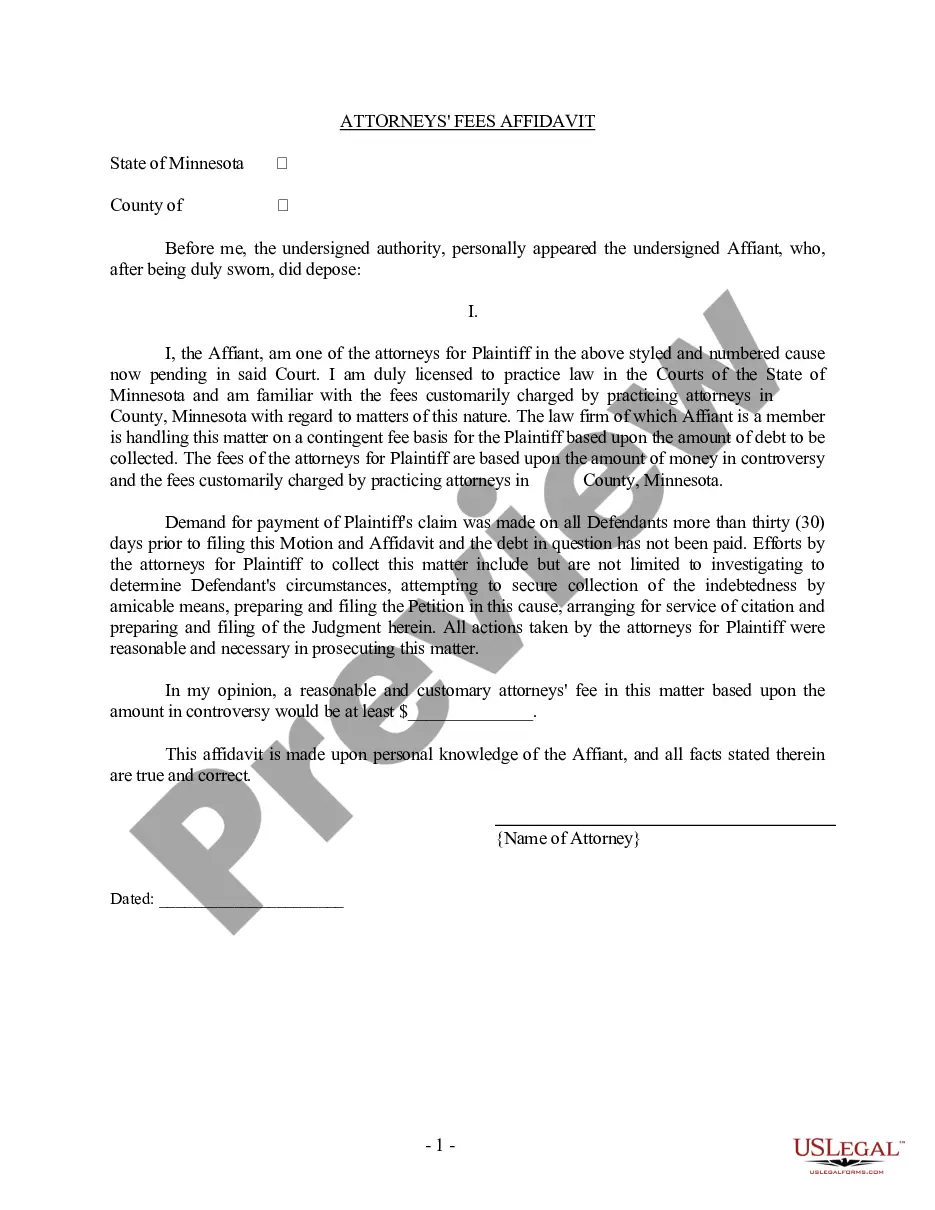
Minnesota Affidavit regarding factors relevant to attorneys' fee application - experience, etc.
About this form
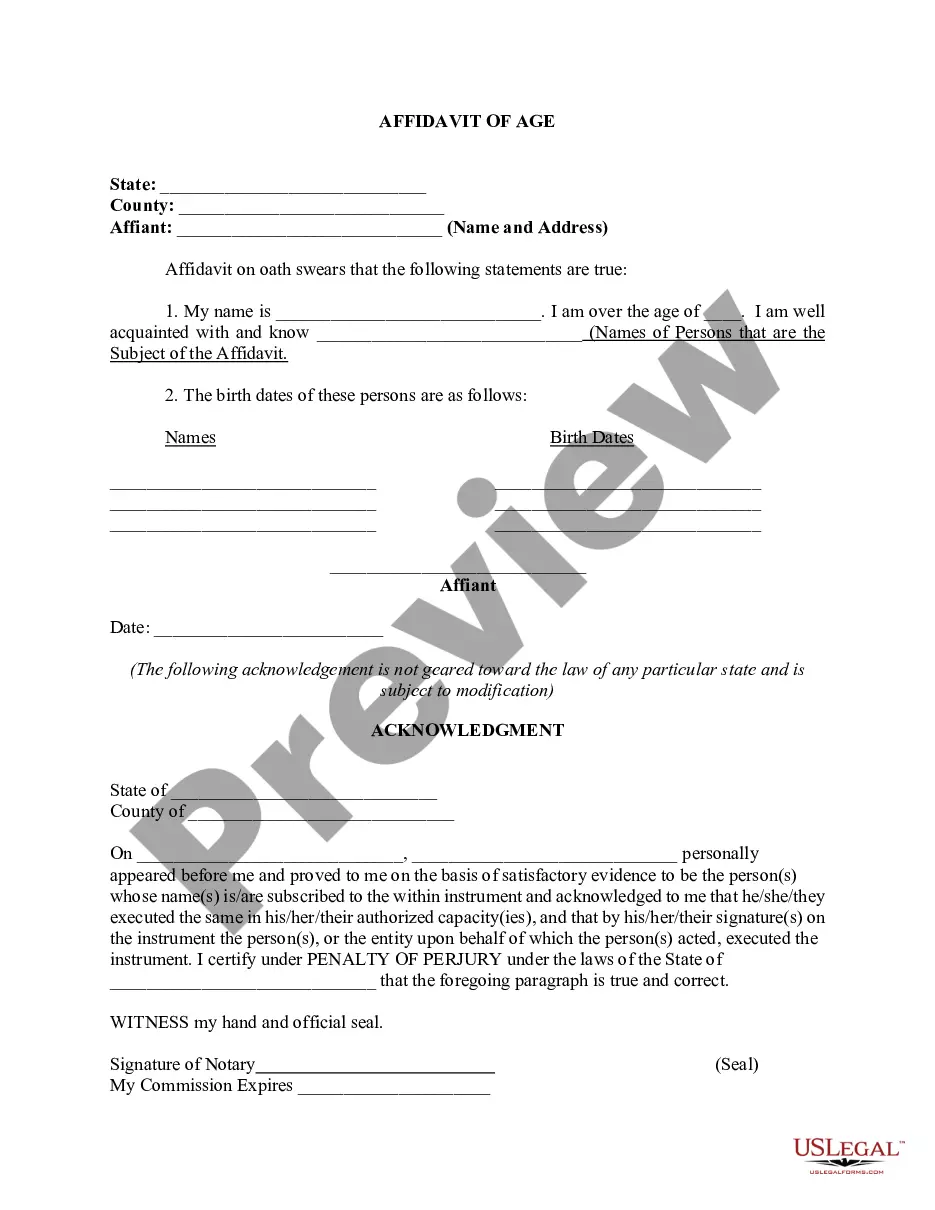
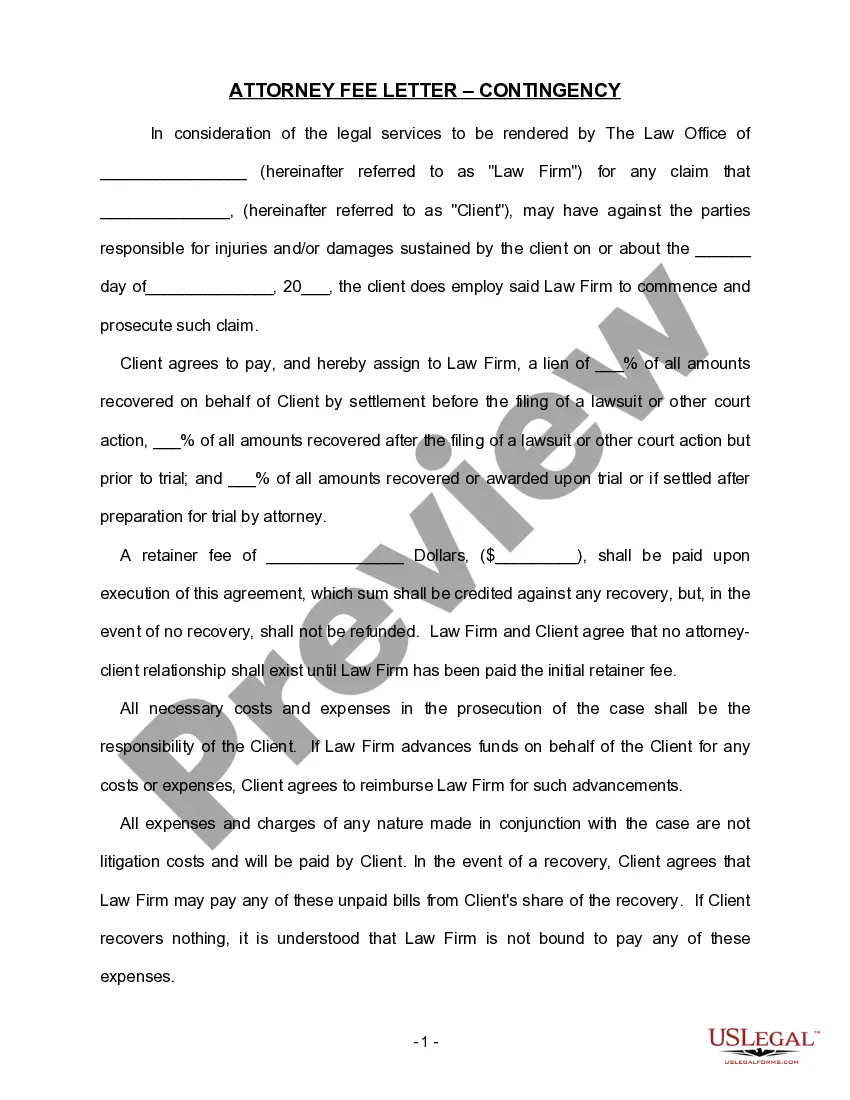
The Affidavit regarding factors relevant to attorneys' fee application is a legal document that provides an affidavit detailing the factors to be considered when applying for attorney fees. This form is distinct from other legal forms as it specifically serves to illustrate the attorneyâs experience, billing records, and estimated fees connected to a case. It ensures transparency regarding the legal charges incurred by the petitioner or respondent.
Key parts of this document
- Personal education details, including law school and clerkship experience.
- Information on how the attorney accepted the client and initial retainer fees.
- Estimates of additional charges expected throughout the case.
- Attachments of slip reports representing primary billing records for transparency.
- Signatures and notarization for legal affirmation of the affidavit.



When to use this form
This affidavit should be used when an attorney needs to formally communicate the basis for their fee application, particularly in situations where the court requires detailed documentation of the fees associated with representation. It's commonly utilized when the attorney seeks compensation for their services in cases involving dispute resolution, litigation, or any legal proceedings where fees need to be justified.
Who this form is for
- Attorneys seeking to apply for their fees in a legal case.
- Petitioners or respondents involved in litigation where fees may be disputed.
- Clients who need to understand their attorney's billing practices and fees.
Steps to complete this form
- Begin by filling in your educational background, including the law school attended and any clerkship experience.
- Indicate whether you accepted the client before or after the motions were served and specify the initial retainer paid.
- Estimate additional fees that may occur, based on anticipated court appearances and necessary communications.
- Attach your slip report, ensuring it accurately reflects billing records for the client.
- Sign and date the affidavit, and then arrange for notarization to validate the document.
Does this form need to be notarized?
Yes, this form must be notarized to be legally valid. It ensures that the affidavit is properly authenticated, adding credibility to the claims made regarding fees and service provided. US Legal Forms offers integrated online notarization, making it easy to get this completed through secure video calls, available twenty-four seven.
Get your form ready online
Our built-in tools help you complete, sign, share, and store your documents in one place.
Make edits, fill in missing information, and update formatting in US Legal Forms—just like you would in MS Word.
Download a copy, print it, send it by email, or mail it via USPS—whatever works best for your next step.
Sign and collect signatures with our SignNow integration. Send to multiple recipients, set reminders, and more. Go Premium to unlock E-Sign.
If this form requires notarization, complete it online through a secure video call—no need to meet a notary in person or wait for an appointment.
We protect your documents and personal data by following strict security and privacy standards.

Make edits, fill in missing information, and update formatting in US Legal Forms—just like you would in MS Word.

Download a copy, print it, send it by email, or mail it via USPS—whatever works best for your next step.

Sign and collect signatures with our SignNow integration. Send to multiple recipients, set reminders, and more. Go Premium to unlock E-Sign.

If this form requires notarization, complete it online through a secure video call—no need to meet a notary in person or wait for an appointment.

We protect your documents and personal data by following strict security and privacy standards.
Common mistakes
- Failing to accurately estimate additional fees can lead to disputes.
- Neglecting to include documentation of billing records as required.
- Not notarizing the affidavit, which may render it ineffective in legal contexts.
Benefits of using this form online
- Convenience of filling out the form at your own pace without unnecessary delays.
- Editability allows for adjustments before finalizing the affidavit.
- Access to legal templates drafted by licensed attorneys ensures compliance with legal standards.
Summary of main points
- This affidavit is essential for attorneys seeking to justify their fees in legal proceedings.
- Careful completion and notarization of the form are crucial for its acceptance.
- Providing detailed billing records and estimates enhances the credibility of the fee application.
Looking for another form?




Form popularity
FAQ
The court can modify a custody order if (1) the child is at least 12 years of age and expresses a preference of which parent he or she prefers to live with in chambers to the court, and (2) it is in the best interest of the child.
In cases where parents can't agree, a judge will decide visitation and custody based on the child's best interests.Both parents are bound by the terms of a custody order. If your child refuses to go to visits with the other parent, you could still be on the hook for failing to comply with a custody order.
There's no specific age when a child is old enough to have a custodial preference, but it's somewhat rare for a court to consider the opinion of a child less than seven years old. It's not unusual for an eight-year-old child to have an opinion that impacts the custody decision.
In the state of Minnesota, there is no set age where a child can choose which parent to live with, so it is generally left to the parents and the courts, if needed and the older the child, the more weight this opinion (or preference) carries.
Currently, there is no restriction on moving with a child within Minnesota. No permission is needed from the other parent nor from the court, even if the other parent has parenting time.
Something else that may catch unmarried fathers off guard is the fact that Minnesota law automatically awards an unmarried mother sole custody of the child until the court issues a child custody order. This means that an unmarried father could be denied the right to see the child before such a time.
Can a child choose not to visit a parent? The mere age of your child will not determine your family law matter. There have been cases before the Court where a 17 year old child's wishes were given limited weight because the basis for this child's decision was not balanced.
Being unwilling to meet your child's basic needs for food, shelter, clean water, and a safe environment (examples of unsafe environments include: your child living in cars or on the street, or in homes where they are exposed to poisonous materials, convicted sex offenders, temperature extremes, or dangerous objects
Unfit parent- You are seen as unfit if your behavior shows that you can't or won't take care of the children's physical, emotional, and mental health.