Minnesota Bill of Sale in Connection with Sale of Business by Individual or Corporate Seller
Description
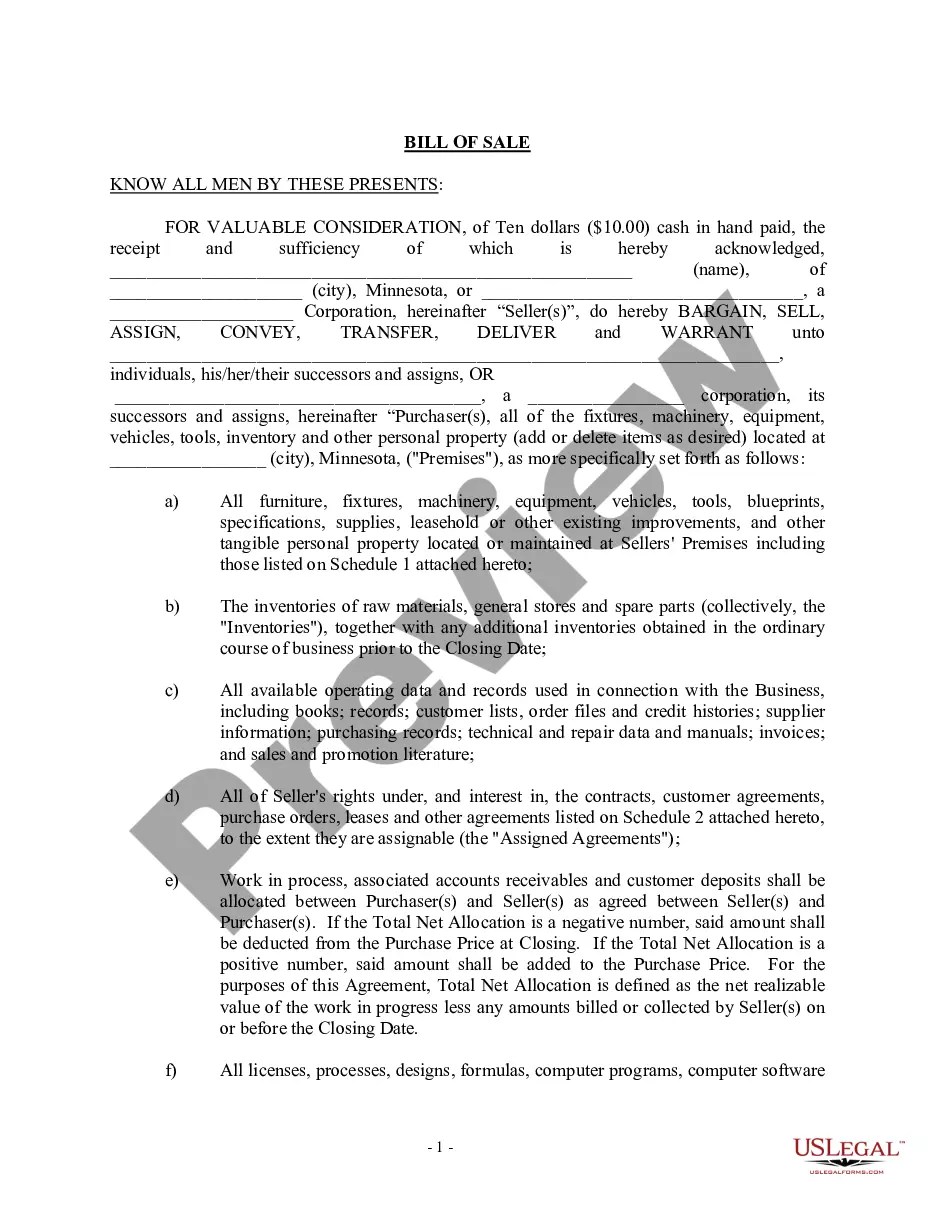
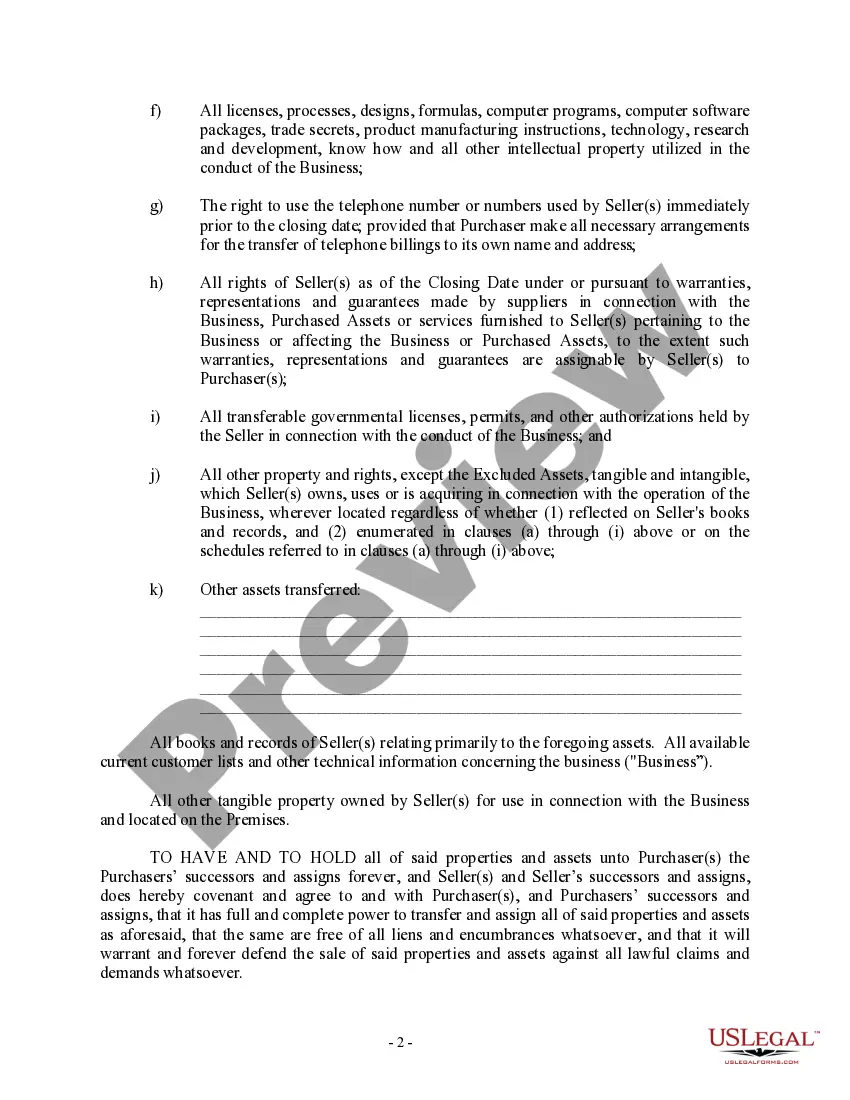
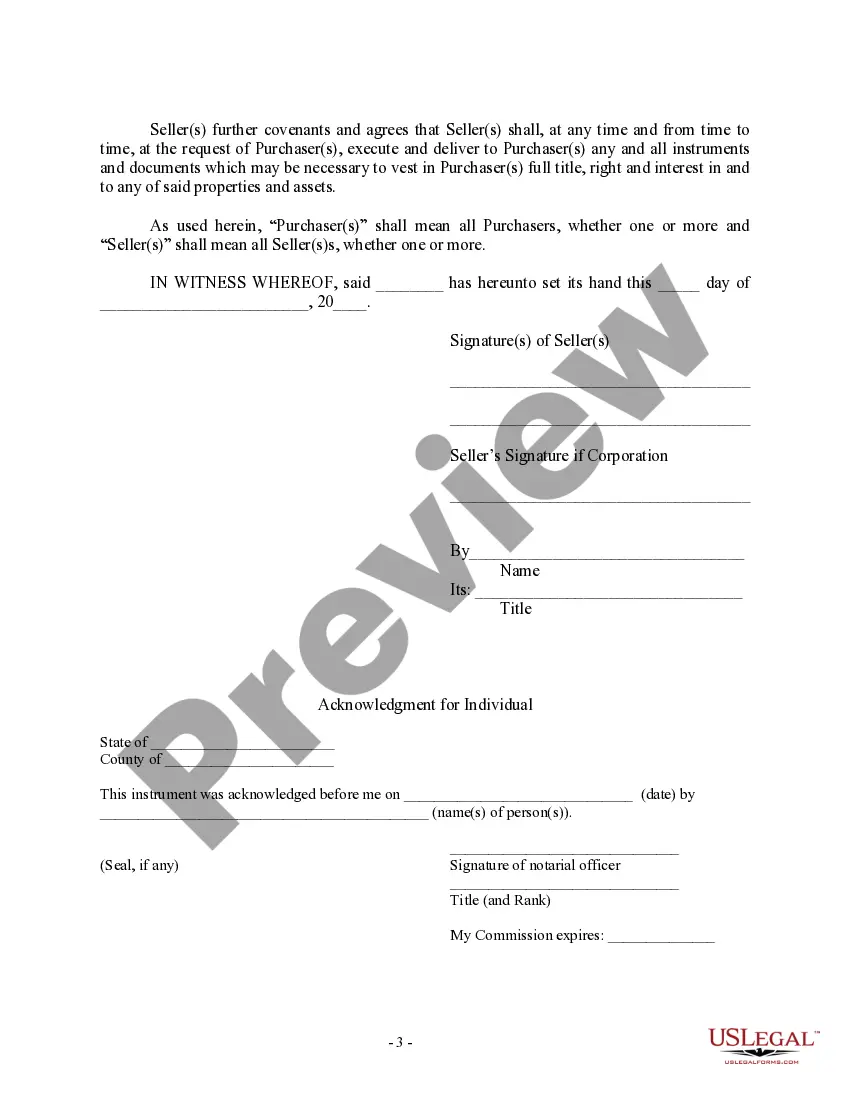


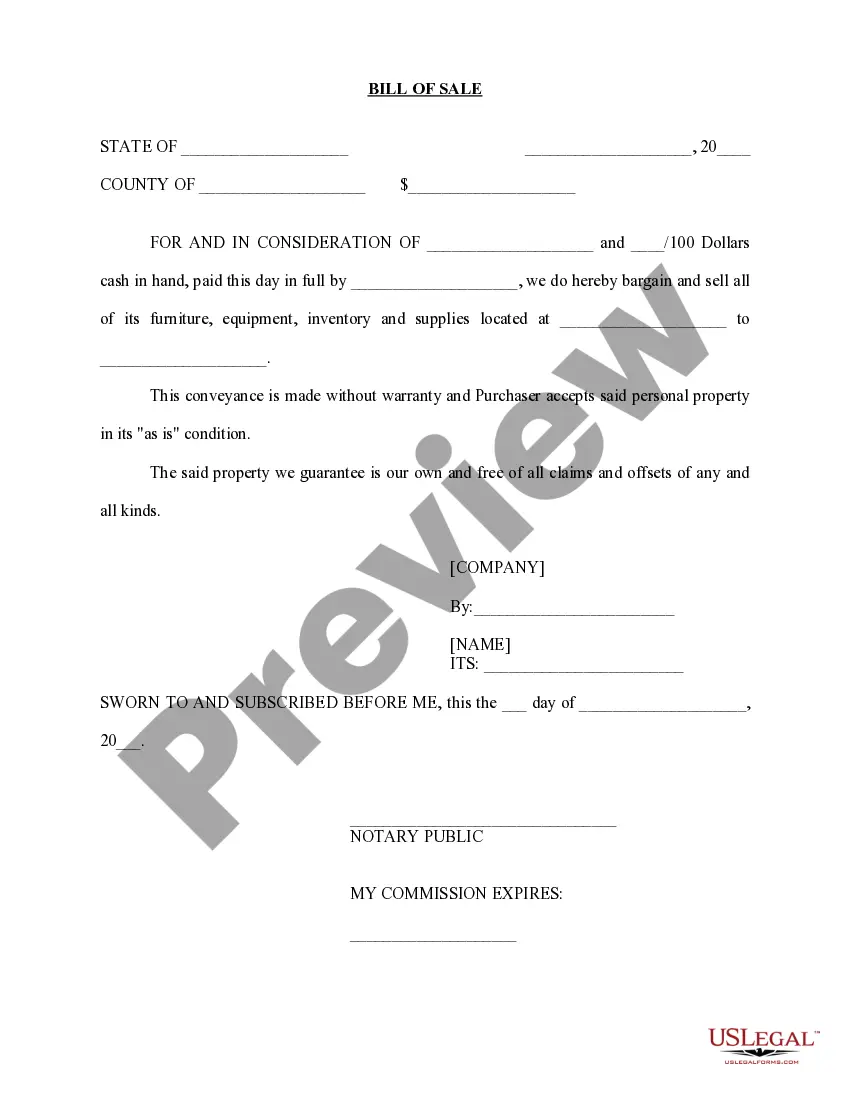
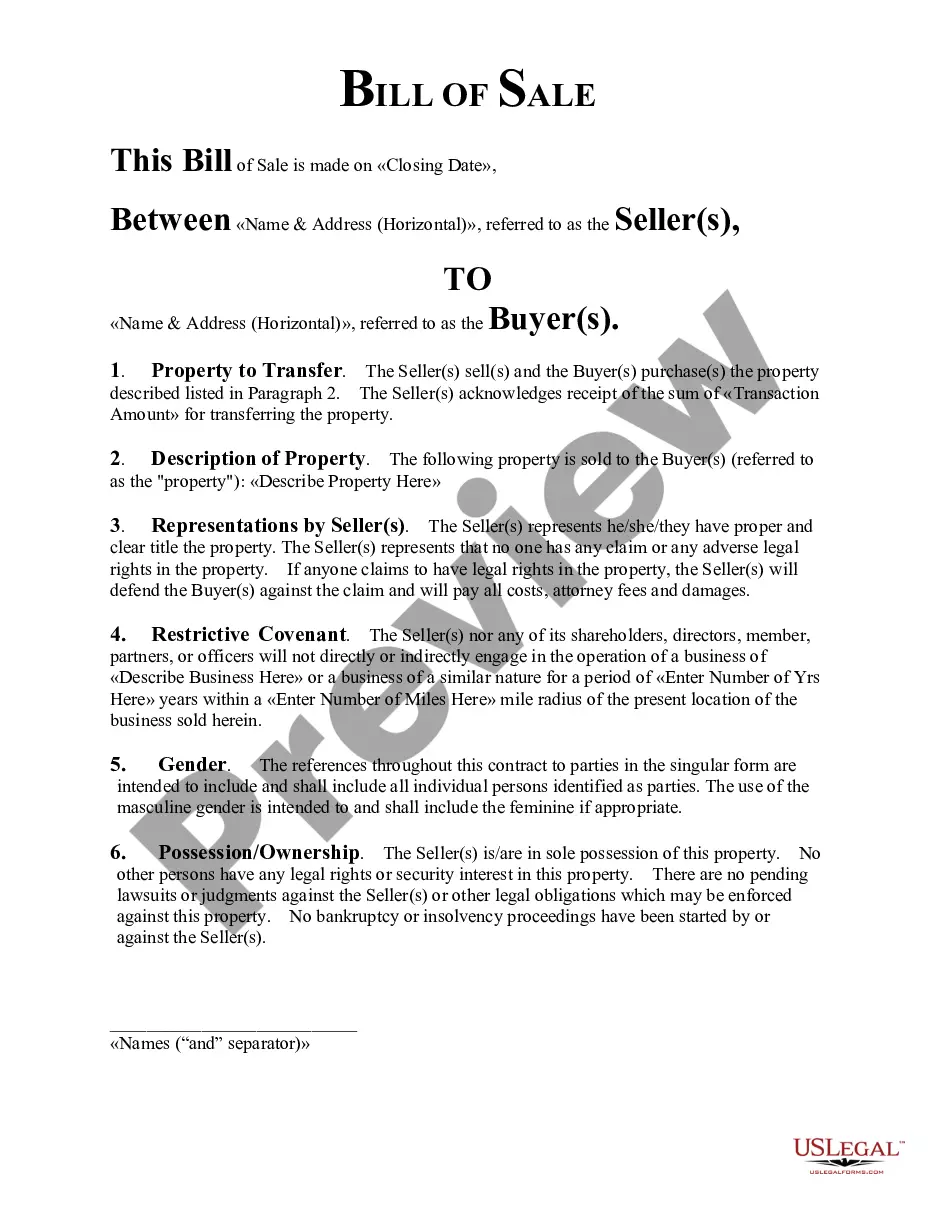
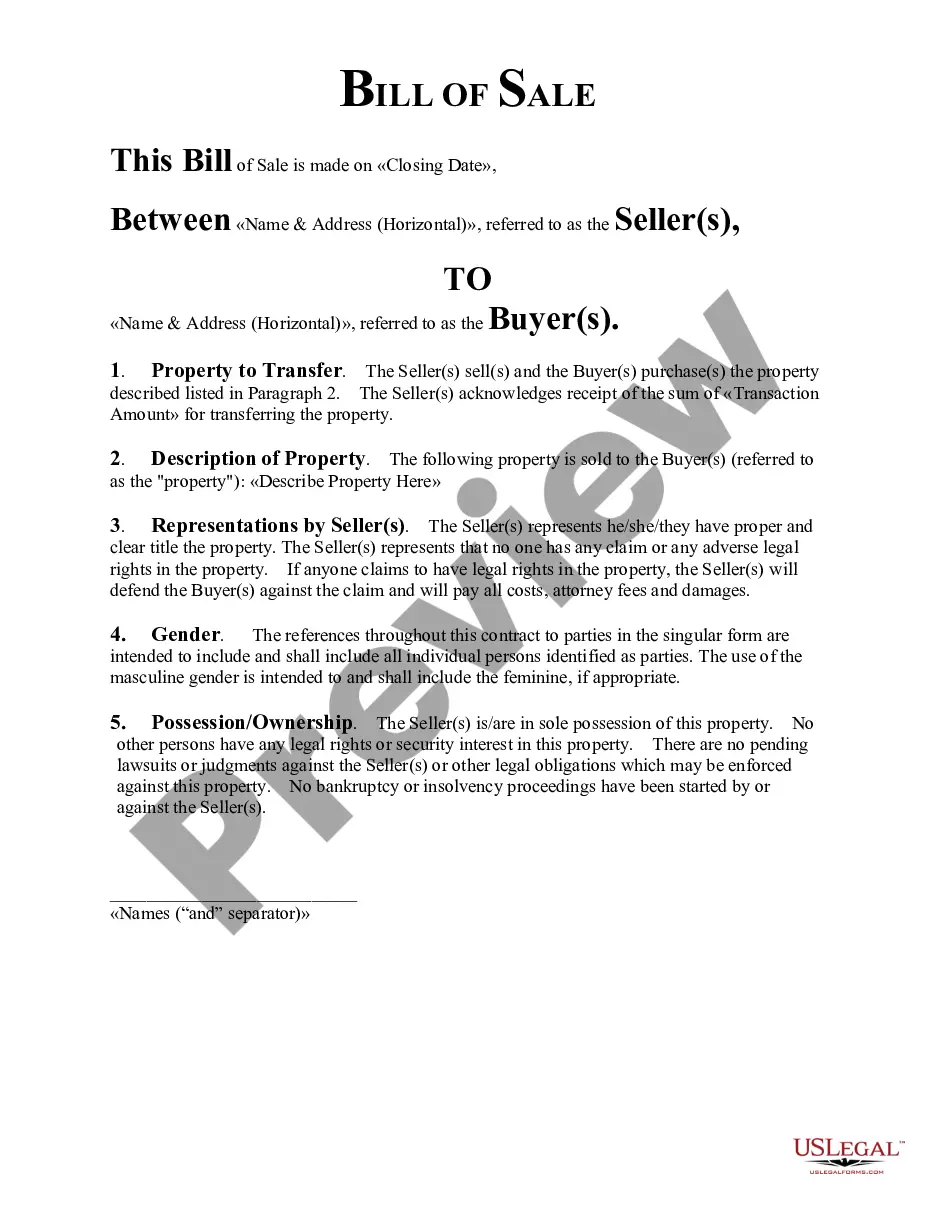
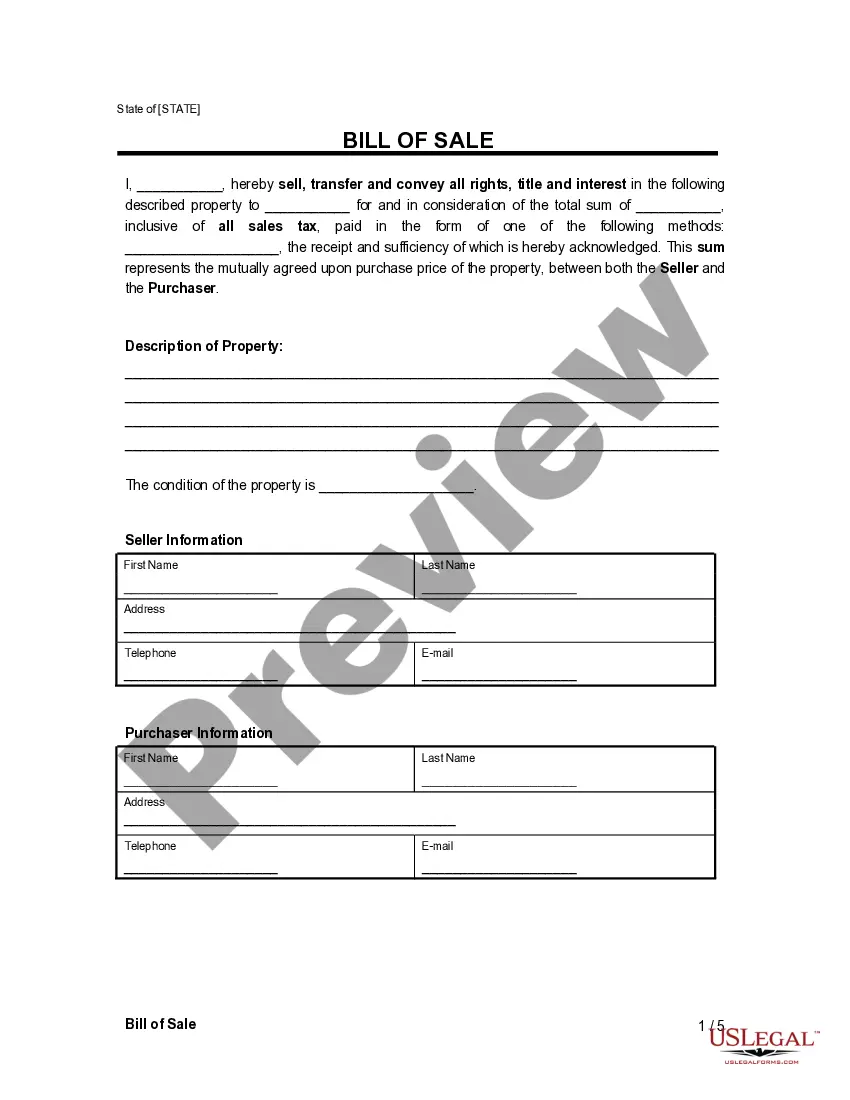
How to fill out Minnesota Bill Of Sale In Connection With Sale Of Business By Individual Or Corporate Seller?
Obtain any version from 85,000 lawful documents such as Minnesota Bill of Sale related to Business Sale by Individual or Corporate Seller online through US Legal Forms. Each template is crafted and refreshed by state-certified legal experts.
If you possess a subscription, Log In. Upon reaching the form’s page, click the Download button and navigate to My documents to retrieve it.
If you haven’t subscribed yet, adhere to the instructions outlined below: Check the state-specific requirements for the Minnesota Bill of Sale related to Business Sale by Individual or Corporate Seller you wish to utilize. Review the description and preview the sample. Once you are confident that the template meets your needs, click Buy Now. Select a subscription plan that suits your budget. Create a personal account. Make a payment in one of two acceptable ways: by card or through PayPal. Choose a format to download the file in; two options are available (PDF or Word). Download the file to the My documents section. After your reusable form is downloaded, print it or save it to your device.
With US Legal Forms, you will consistently have immediate access to the suitable downloadable template. The platform provides access to forms and categorizes them to streamline your search. Utilize US Legal Forms to acquire your Minnesota Bill of Sale related to Business Sale by Individual or Corporate Seller quickly and effortlessly.
- Obtain any version from 85,000 lawful documents.
- If you possess a subscription, Log In.
- Upon reaching the form’s page, click the Download button.
- Check the state-specific requirements.
- Review the description and preview the sample.
- Once you are confident that the template meets your needs, click Buy Now.
- Select a subscription plan that suits your budget.
- Create a personal account.
- Make a payment in one of two acceptable ways.
Form popularity
FAQ
Filling out a Minnesota title for a private sale requires specific information to be included. Begin by entering the names of the seller and buyer, along with their addresses. Next, provide details about the business, including the title number and any relevant identification numbers. Using a Minnesota Bill of Sale in Connection with Sale of Business by Individual or Corporate Seller can help ensure you have the necessary documentation for a smooth transaction.
Many individuals make mistakes when creating a Minnesota Bill of Sale in Connection with Sale of Business by Individual or Corporate Seller. Common errors include leaving out essential details such as the buyer's and seller's information, neglecting to include a clear description of the business being sold, and failing to provide signatures. These mistakes can lead to confusion and disputes later on, so it’s important to double-check all entries.
Common mistakes when creating a bill of sale include failing to provide accurate information about the buyer or seller, omitting critical details about the business, or not specifying payment terms clearly. Another mistake is neglecting to include signatures or dates, which can render the document invalid. By using a Minnesota Bill of Sale in Connection with Sale of Business by Individual or Corporate Seller template from uslegalforms, you can avoid these pitfalls and create a comprehensive document.
In Minnesota, a bill of sale does not typically need to be notarized to be valid. However, having it notarized can provide additional legal protection and establish that both parties agreed to the terms outlined in the document. When using a Minnesota Bill of Sale in Connection with Sale of Business by Individual or Corporate Seller, consider notarization for added peace of mind.
Yes, in Minnesota, a seller disclosure statement is often required when selling a business. This document provides potential buyers with important information about the business's condition, liabilities, and operational history. Using a Minnesota Bill of Sale in Connection with Sale of Business by Individual or Corporate Seller can help facilitate this disclosure, ensuring transparency and trust between the parties.
To sell a business in Minnesota, you typically need a Minnesota Bill of Sale in Connection with Sale of Business by Individual or Corporate Seller. This document formally transfers ownership from the seller to the buyer, ensuring both parties understand the terms and conditions of the sale. You can find templates for this form on platforms like uslegalforms, which simplify the process and ensure compliance with state laws.
A Minnesota Bill of Sale in Connection with Sale of Business by Individual or Corporate Seller can become invalid for several reasons, such as lack of signatures from both parties or failure to include essential details. If the document is not notarized when required, or if it includes false information, it may also be deemed invalid. To ensure your bill of sale holds up legally, consider using verified templates from US Legal Forms to cover all necessary aspects.
The biggest mistakes in sales often stem from a lack of preparation and communication. In the context of a Minnesota Bill of Sale in Connection with Sale of Business by Individual or Corporate Seller, failing to disclose all relevant information about the business can lead to mistrust. It's crucial to be transparent about the business's financial health and legal obligations to foster a successful transaction and maintain a good relationship with the buyer.
Common mistakes in a Minnesota Bill of Sale in Connection with Sale of Business by Individual or Corporate Seller often involve incomplete or inaccurate information. Sellers may forget to include critical details like the business's legal structure, while buyers might overlook necessary contingencies. To avoid these pitfalls, consider using templates from US Legal Forms, which guide you in creating a thorough and compliant document.