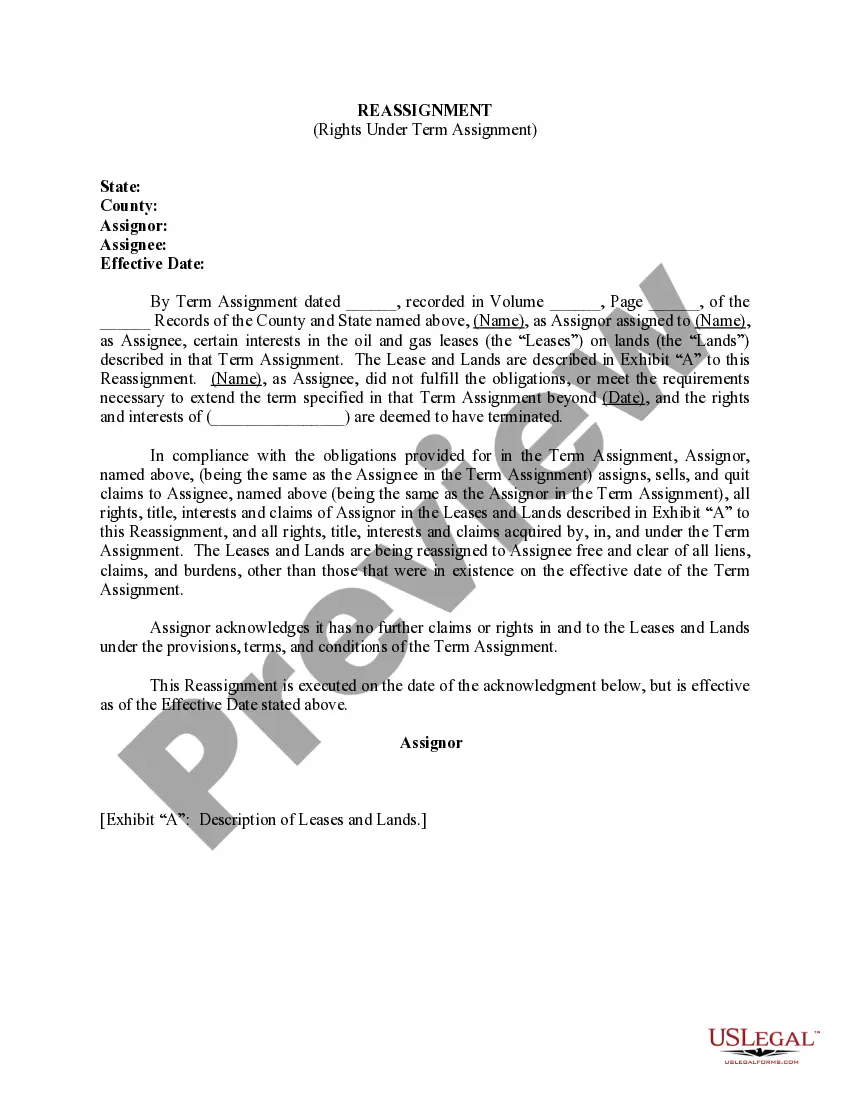
Michigan Right of Way Agreement
Description
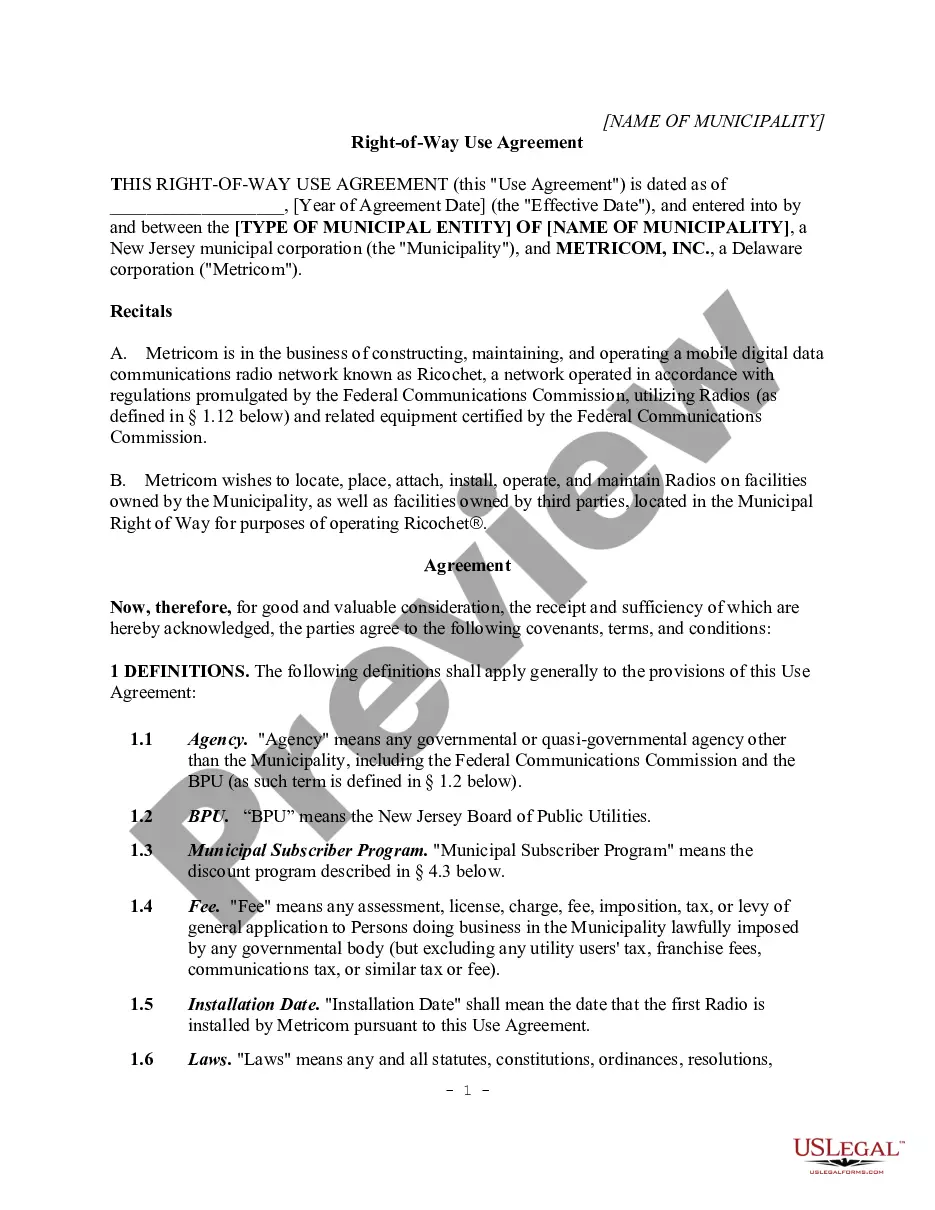
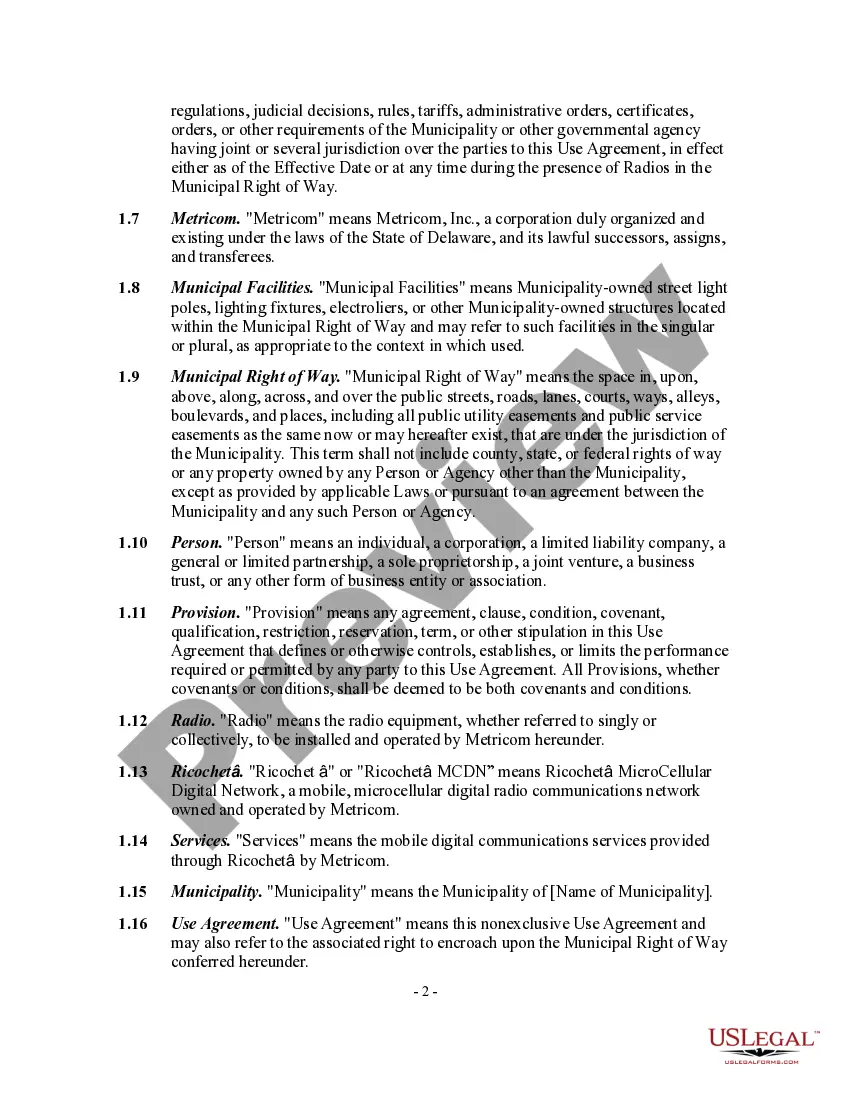
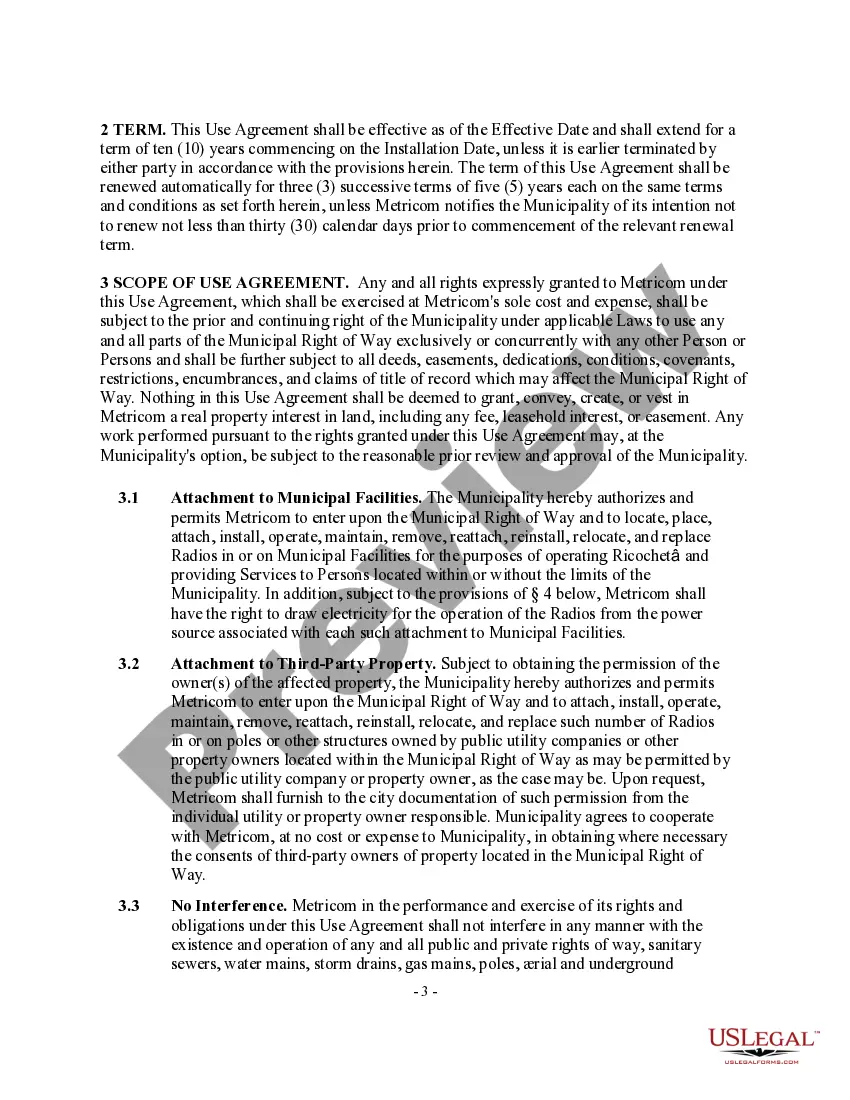
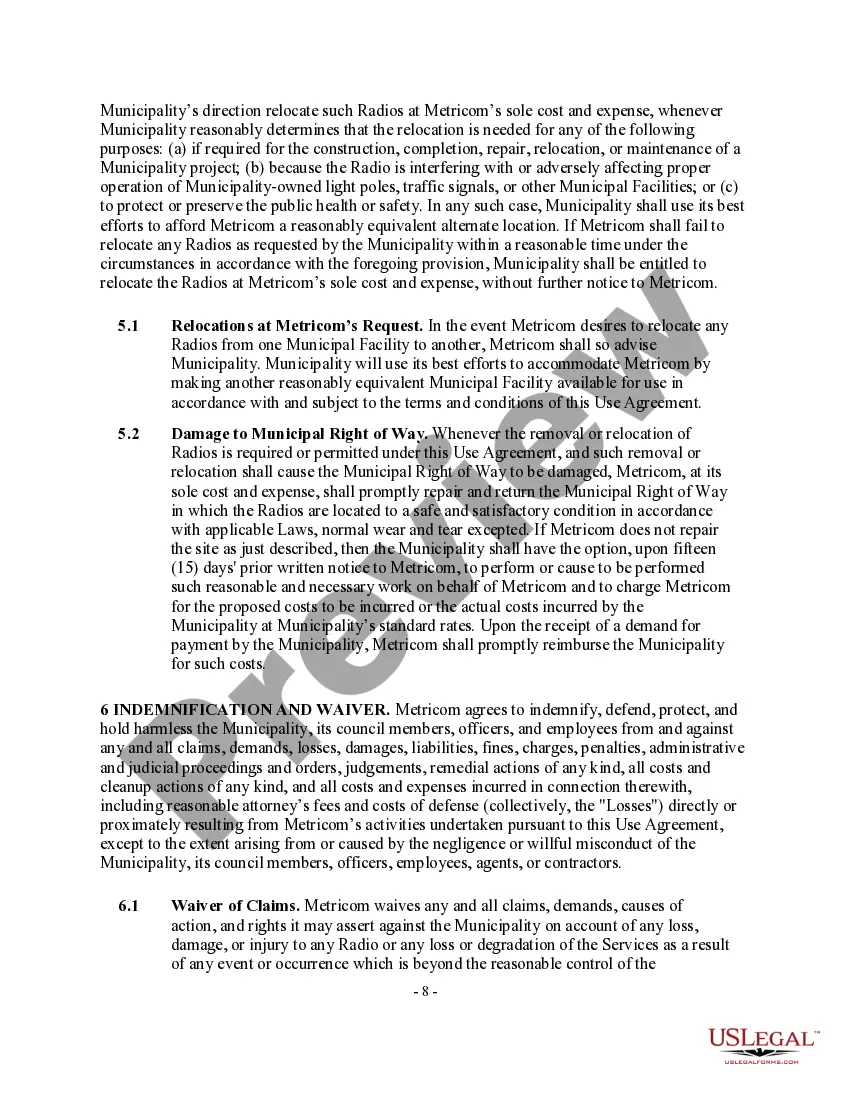
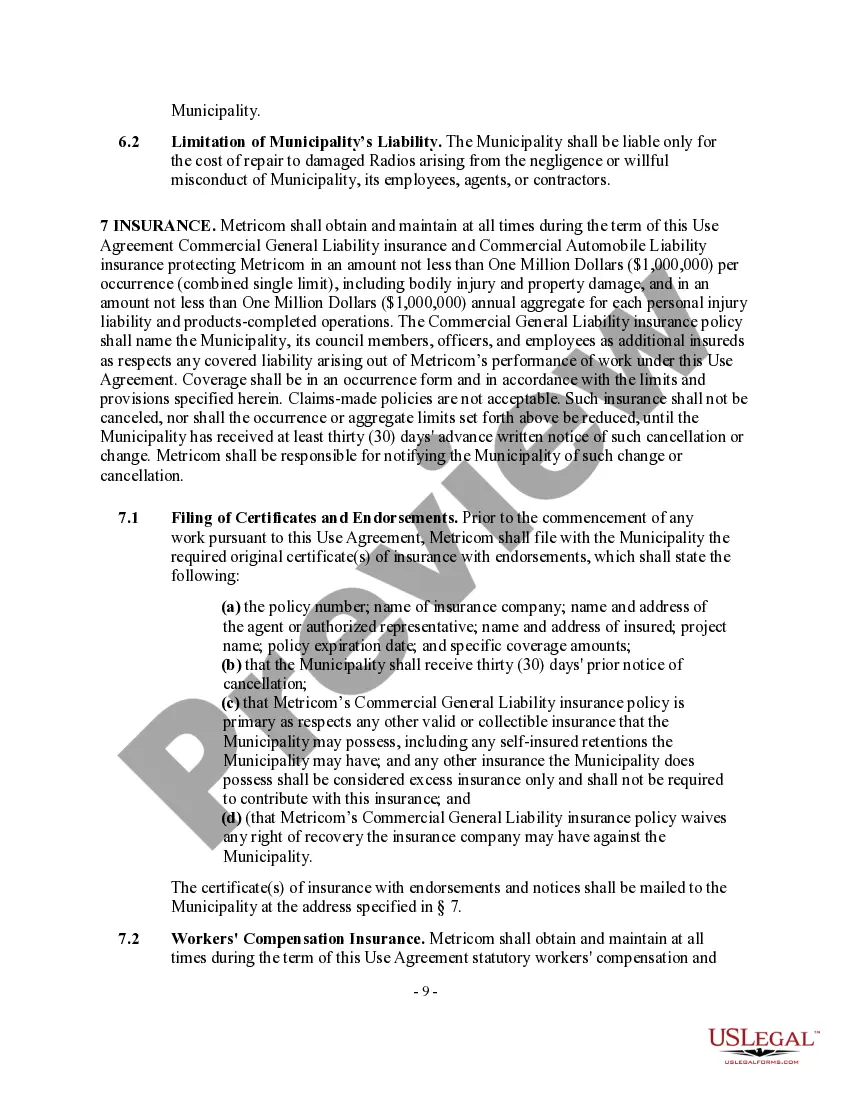
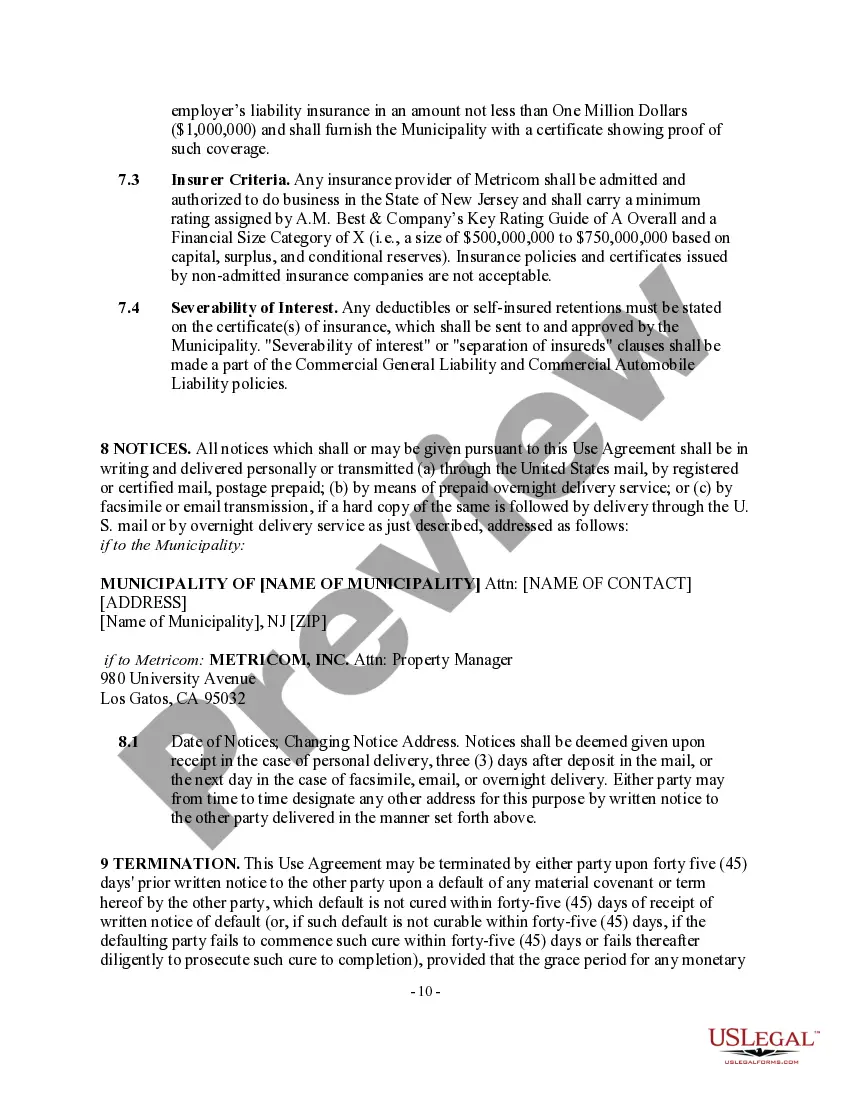

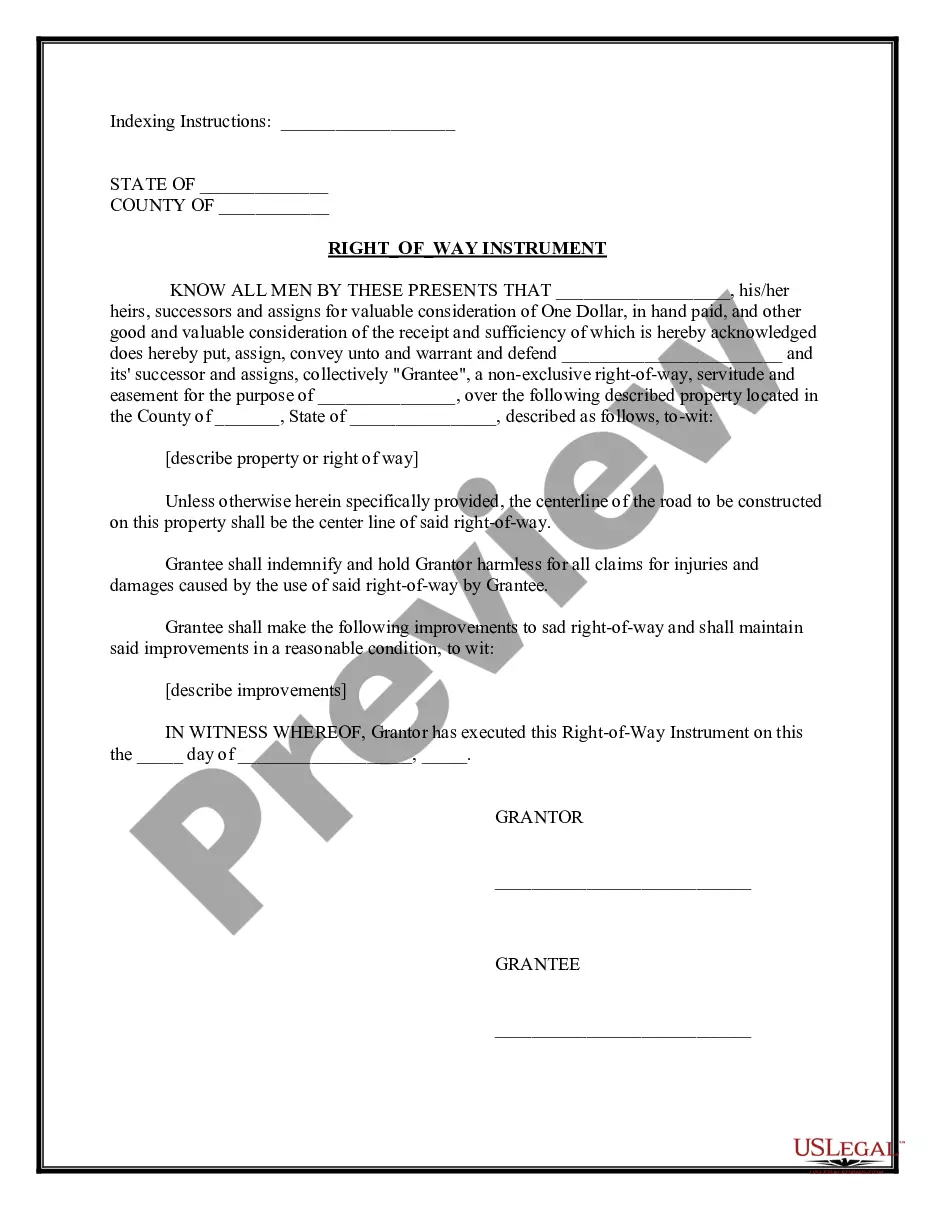
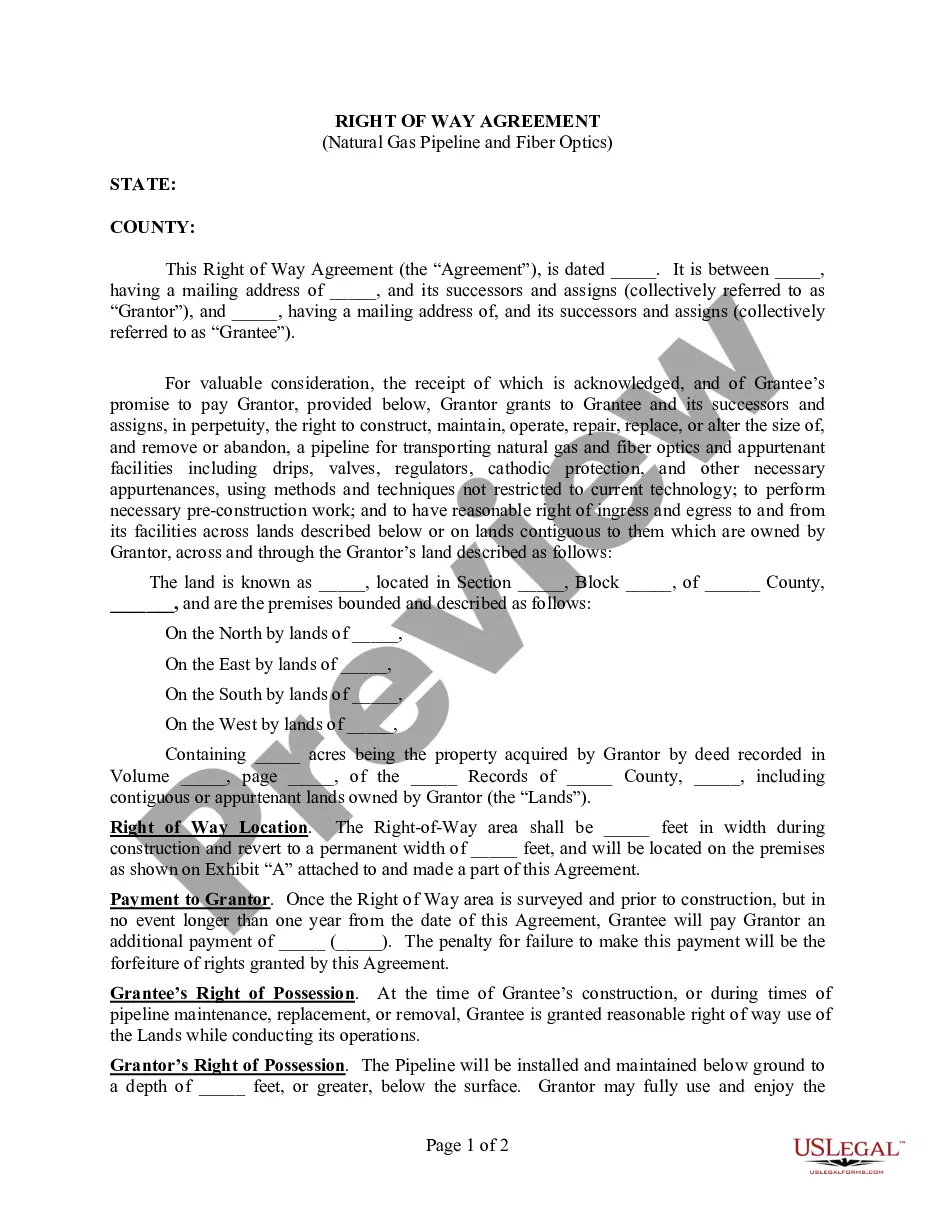
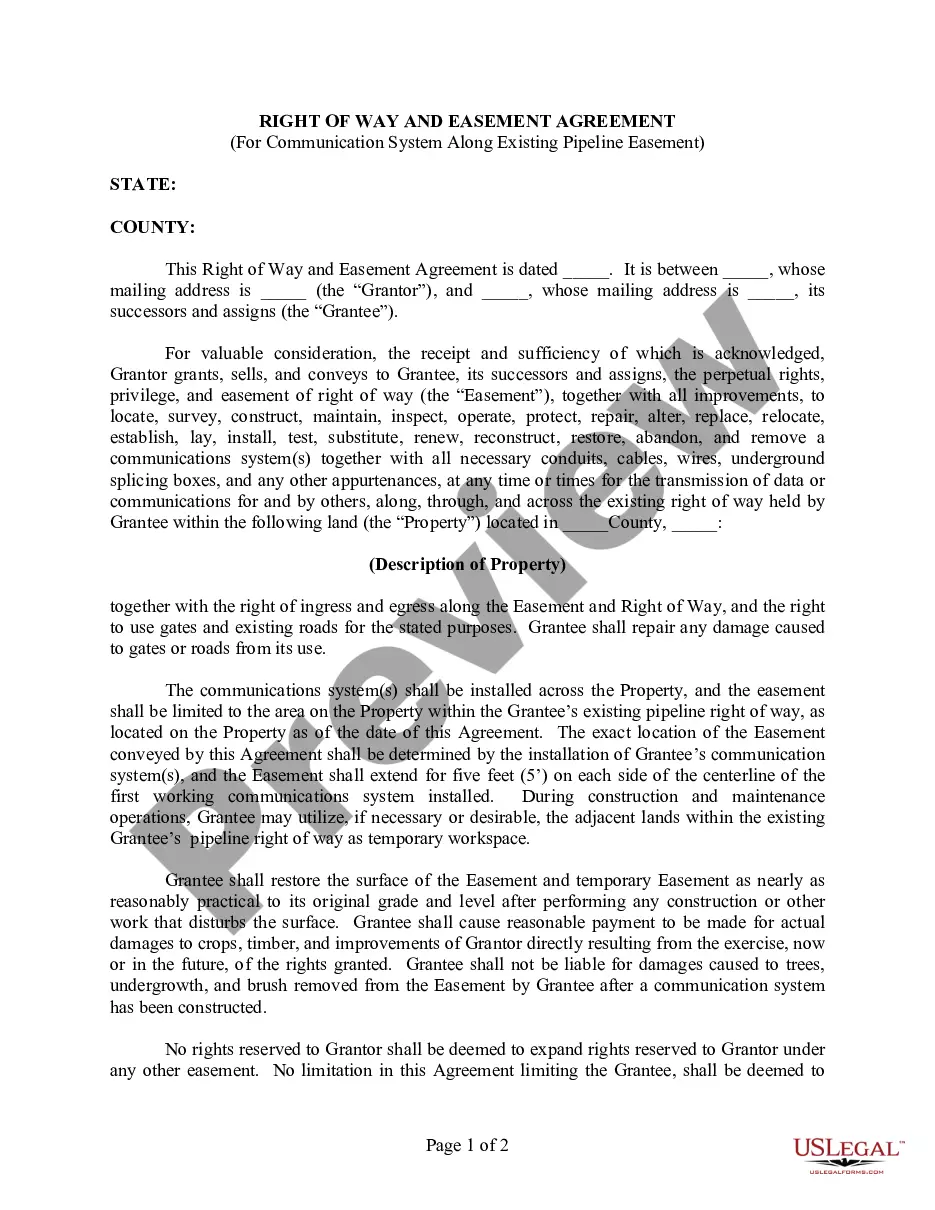
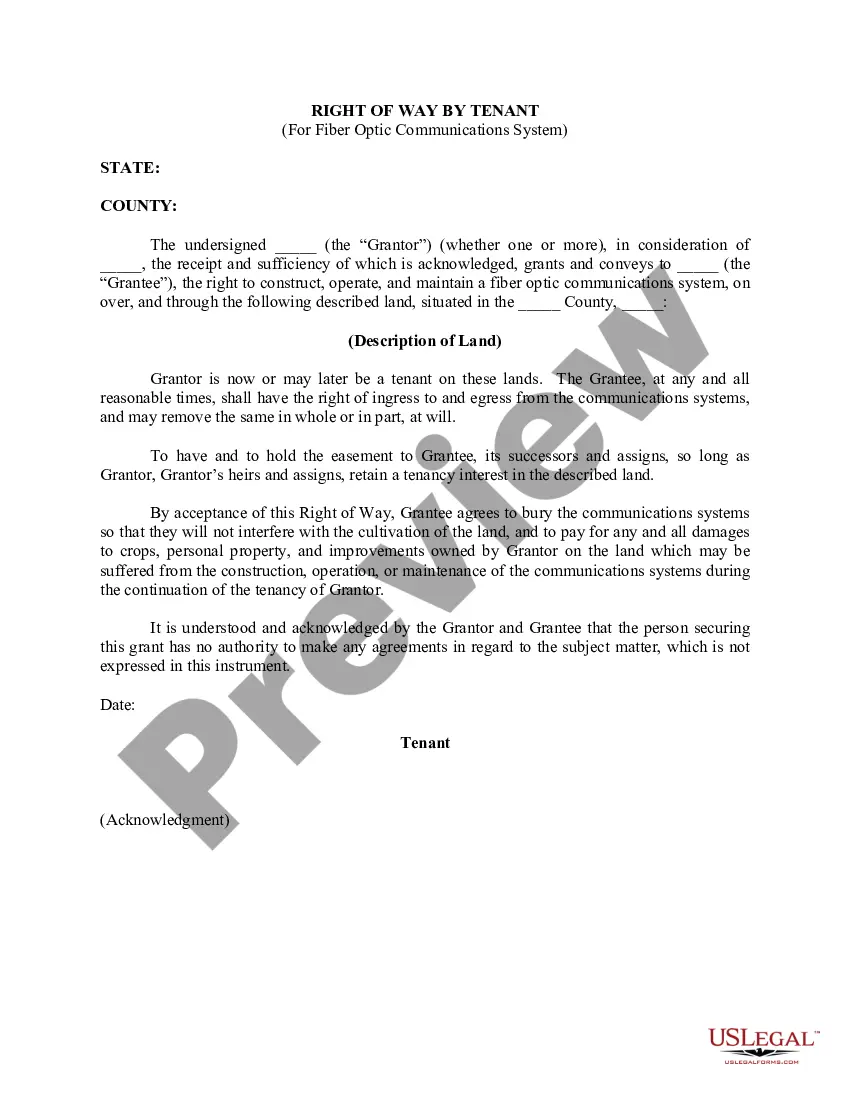
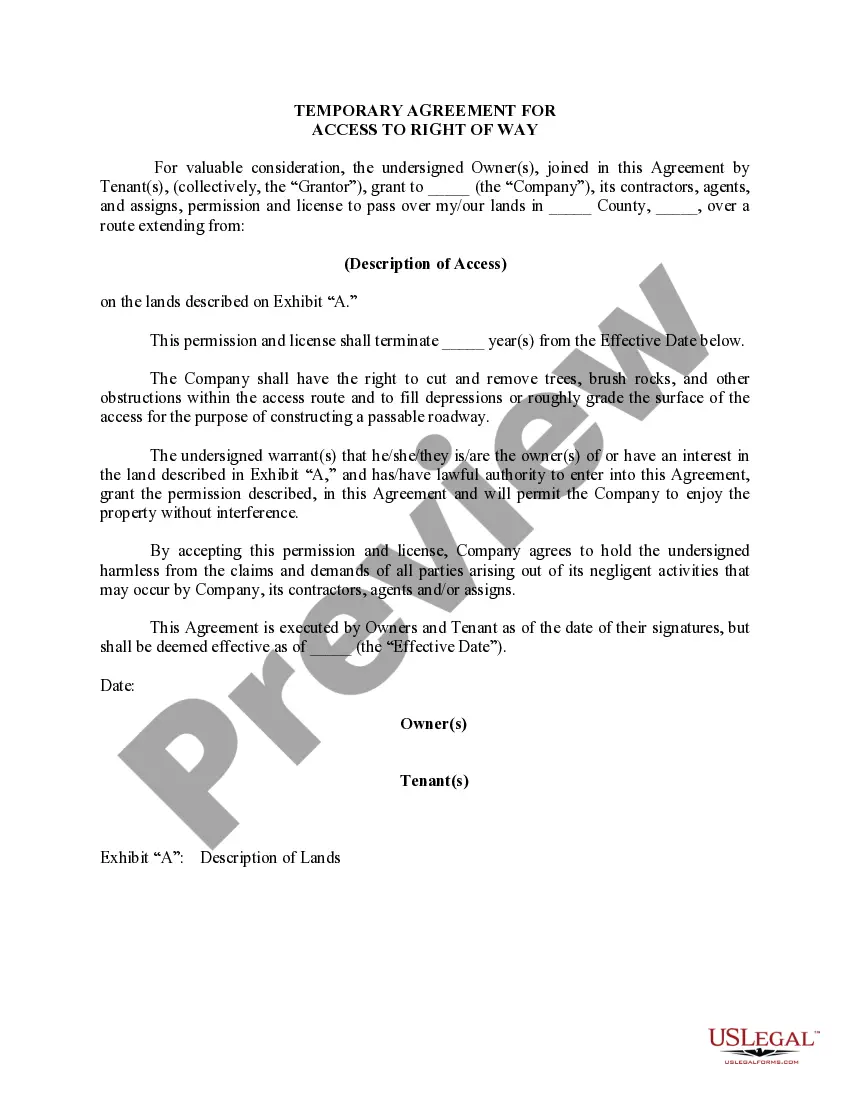
How to fill out Right Of Way Agreement?
If you need to thorough, obtain, or print official document templates, utilize US Legal Forms, the foremost collection of legal forms available online.
Employ the site's straightforward and convenient search to find the documents you need.
Numerous templates for business and personal needs are categorized by types and states, or keywords. Use US Legal Forms to acquire the Michigan Right of Way Agreement with just a few clicks.
Every legal document template you purchase is yours permanently. You have access to each form you acquired in your account. Choose the My documents section and select a form to print or download again.
Complete and download, and print the Michigan Right of Way Agreement with US Legal Forms. There are many professional and state-specific forms you can use for your business or personal needs.
- If you are already a US Legal Forms customer, Log In to your account and click on the Download option to obtain the Michigan Right of Way Agreement.
- You can also access forms you previously acquired in the My documents tab of your account.
- If you are using US Legal Forms for the first time, follow the instructions below.
- Step 1. Ensure you have selected the form for the correct area/land.
- Step 2. Use the Review option to browse through the form's content. Remember to read the description.
- Step 3. If you are not satisfied with the form, use the Search field at the top of the screen to find other versions of the legal form template.
- Step 4. Once you have found the form you need, click the Acquire now option. Choose the pricing plan you prefer and enter your information to register for an account.
- Step 5. Complete the transaction. You can use your Visa or MasterCard or PayPal account to finalize the transaction.
- Step 6. Select the format of the legal form and download it to your device.
- Step 7. Complete, edit, and print or sign the Michigan Right of Way Agreement.
Form popularity
FAQ
A right of way easement in Michigan grants permission to use a portion of land for specific purposes, such as accessing utilities or transportation. Unlike ownership, an easement allows for shared use while maintaining the property rights of the landowner. When drafting a Michigan Right of Way Agreement, understanding easements is essential to avoid conflicts and ensure smooth operations.
A right of way bond in Michigan is a financial guarantee that ensures compliance with local laws and regulations when working within a designated right of way. This bond protects the municipality from potential damages or failures associated with the project. It's an important aspect of securing a Michigan Right of Way Agreement, as it demonstrates your commitment to responsible development.
A right of way in Michigan refers to the legal right to use a specific piece of land for transportation or utility purposes. This area can include roads, sidewalks, and pathways. Understanding the terms of a Michigan Right of Way Agreement is vital for property owners and developers, as it outlines the rights and responsibilities associated with land use.
Yes, you typically need a permit to install a driveway in Michigan. This requirement ensures that your driveway complies with local standards and does not interfere with existing infrastructure. When you pursue a Michigan Right of Way Agreement, obtaining the proper permits helps avoid complications and aligns your project with state regulations.
A right of way in Michigan generally spans from 30 to 50 feet, but this can differ based on specific local laws and the road classification. It's essential to confirm the exact measurements for your area to ensure compliance with a Michigan Right of Way Agreement. This information helps you avoid potential disputes or legal issues during construction or land use.
In Michigan, the width of a road right of way can vary depending on the type of road and local regulations. Typically, it ranges from 33 to 66 feet for local roads, while state highways may have wider rights of way. Understanding these dimensions is crucial when considering a Michigan Right of Way Agreement, especially if you plan to build or modify property near the road.
The minimum width for a right of way can differ based on jurisdiction and the type of easement. In many cases, the minimum width is around 20 feet, especially for private access roads. When establishing a Michigan Right of Way Agreement, it's crucial to verify local ordinances to ensure compliance with width requirements.
In Michigan, the width of a right of way can vary based on the type of road and local regulations, generally ranging from 33 to 66 feet. These measurements ensure adequate space for road construction, maintenance, and public utilities. When drafting a Michigan Right of Way Agreement, it's essential to reference local guidelines to comply with state requirements.
In Minnesota, easements function similarly to other states, granting specific rights over another person's land. They can be temporary or permanent and should be documented through legal agreements. For anyone navigating the complexities of a Michigan Right of Way Agreement, using platforms like US Legal Forms can provide clarity and legal assurance.
A typical easement can vary significantly in width, often ranging from 10 to 50 feet depending on its purpose and location. For instance, utility easements might be narrower, while road access easements could be wider. When establishing a Michigan Right of Way Agreement, consider local regulations and consult legal guidelines to determine the appropriate width for your specific needs.